Skip to content
Giallo

AI models and tools

What they are and how to use the main models and tools of artificial intelligence, explained for those who have to use them in the company.

113 guides in this category
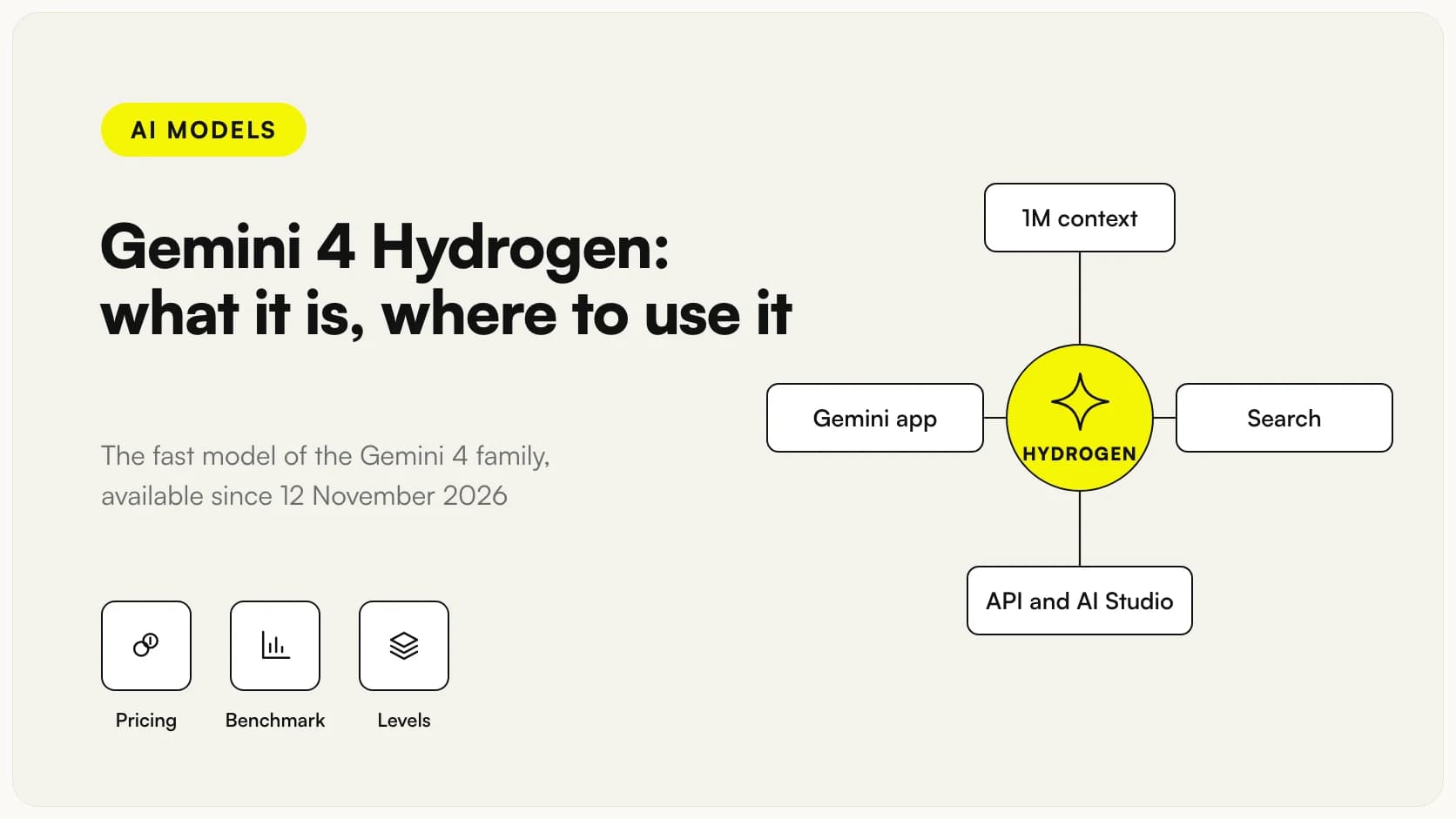
Gemini 4 Hydrogen at the center of a diagram linking it to a 1 million token context window, the Gemini app, Google Search, the API and AI StudioGemini 4 Hydrogen: What It Is, How It Works, Where to Use ItGemini 4 Hydrogen explained: Google's fast model from 12 November 2026. Specs, availability by product, pricing, Search and Italy.
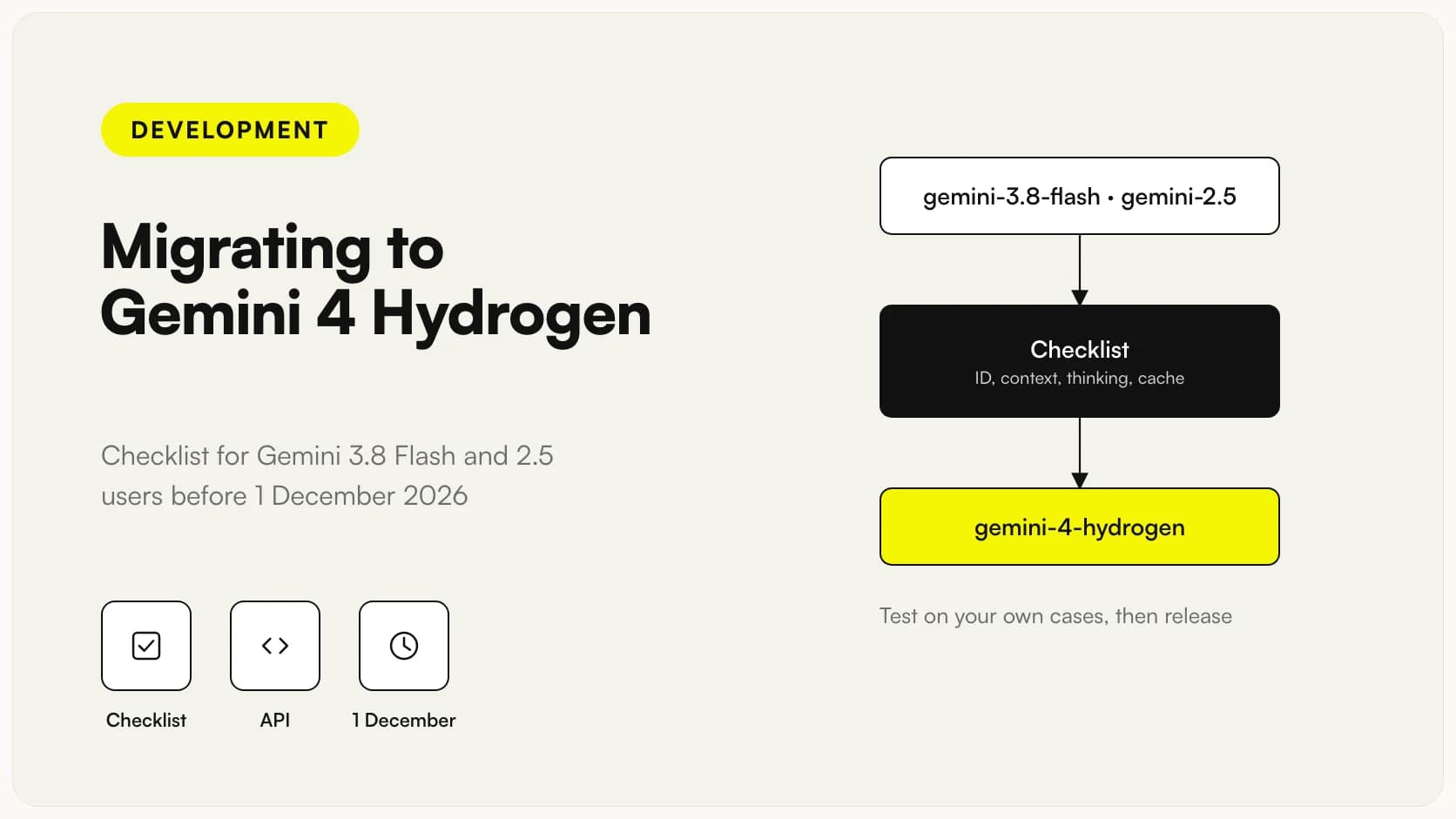
Diagram to migrate to Gemini 4 Hydrogen: from gemini-3.8-flash and gemini-2.5 through the checklist to gemini-4-hydrogenMigrate to Gemini 4 Hydrogen: Checklist From Gemini 3.8 Flash and 2.5 Before 1 DecemberHow to migrate to Gemini 4 Hydrogen from Gemini 3.8 Flash and 2.5: parameters to change, test plan, rollback and what happens on 1 December 2026.
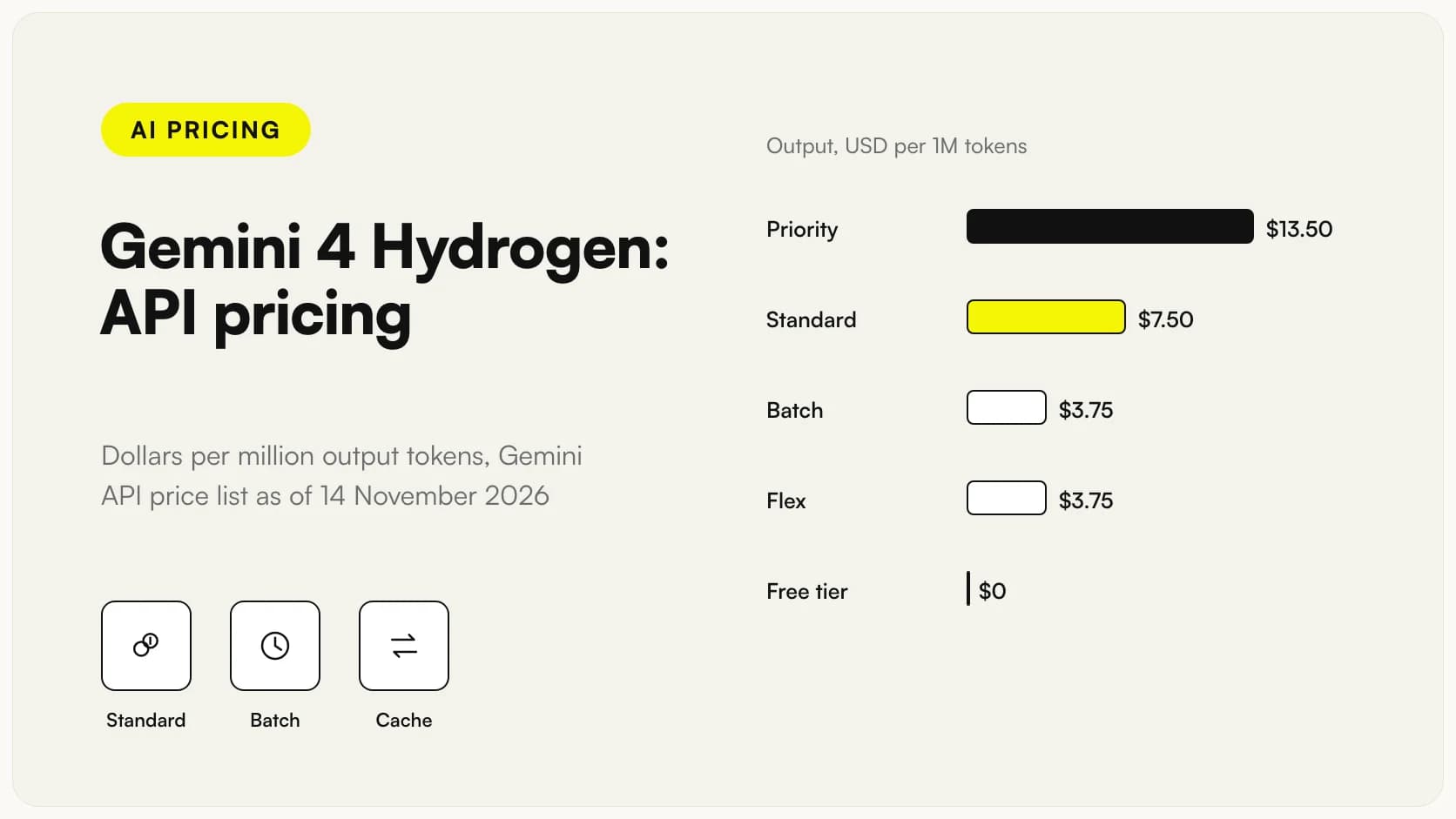
Chart of Gemini 4 Hydrogen pricing: output cost per million tokens on the Priority, Standard, Batch, Flex and free tiersGemini 4 Hydrogen pricing: how much the API costs and how to estimate spendGemini 4 Hydrogen pricing: $1.50 input and $7.50 output per million tokens, Batch at half price, worked examples and spend caps.
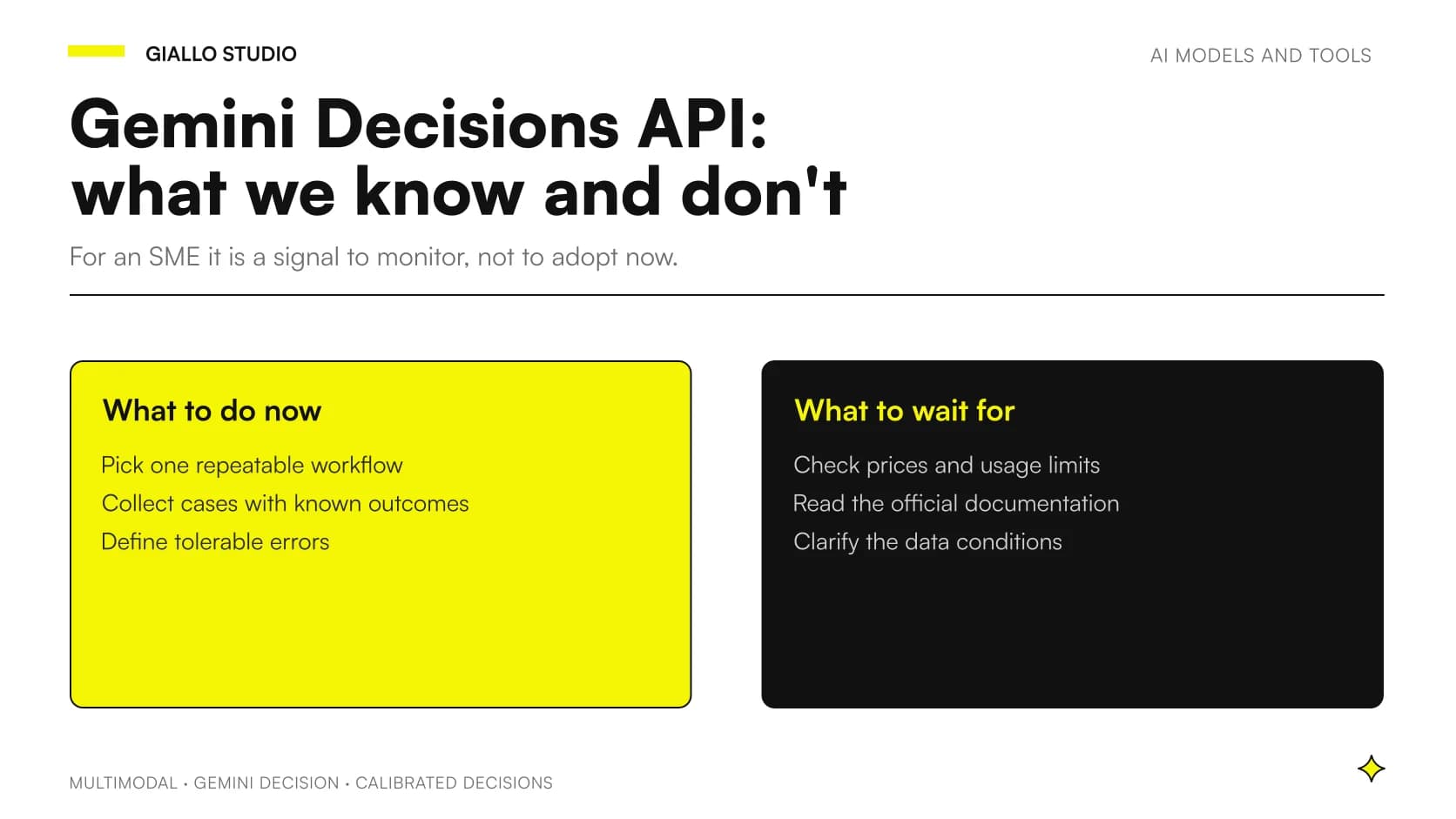
Diagram of an API that receives text, images and documents and returns a decision to be verifiedGemini Decisions API: What It Is and What It Could Change for an SMEGoogle announces the Gemini Decisions API for fast, calibrated multimodal decisions. What is known, what is missing and how to prepare without rushing.
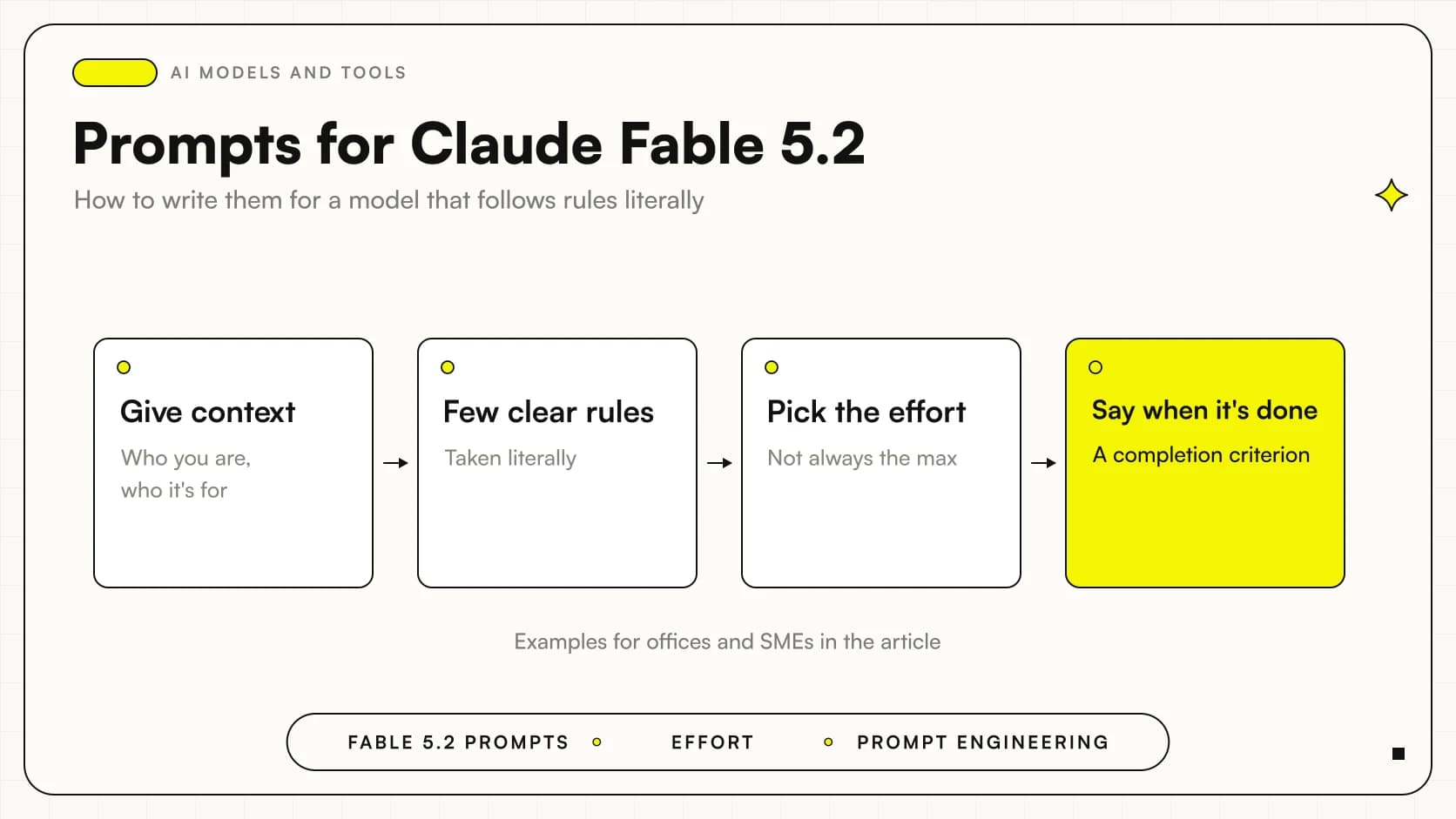
Claude Fable 5.2 prompts: diagram of a prompt with effort, finish line and style rulesClaude Fable 5.2 prompts: how to write them, with 5 ready-made examplesHow to write Claude Fable 5.2 prompts: effort, finish line, style rules and 5 examples for an HR office, based on Anthropic's official guide.
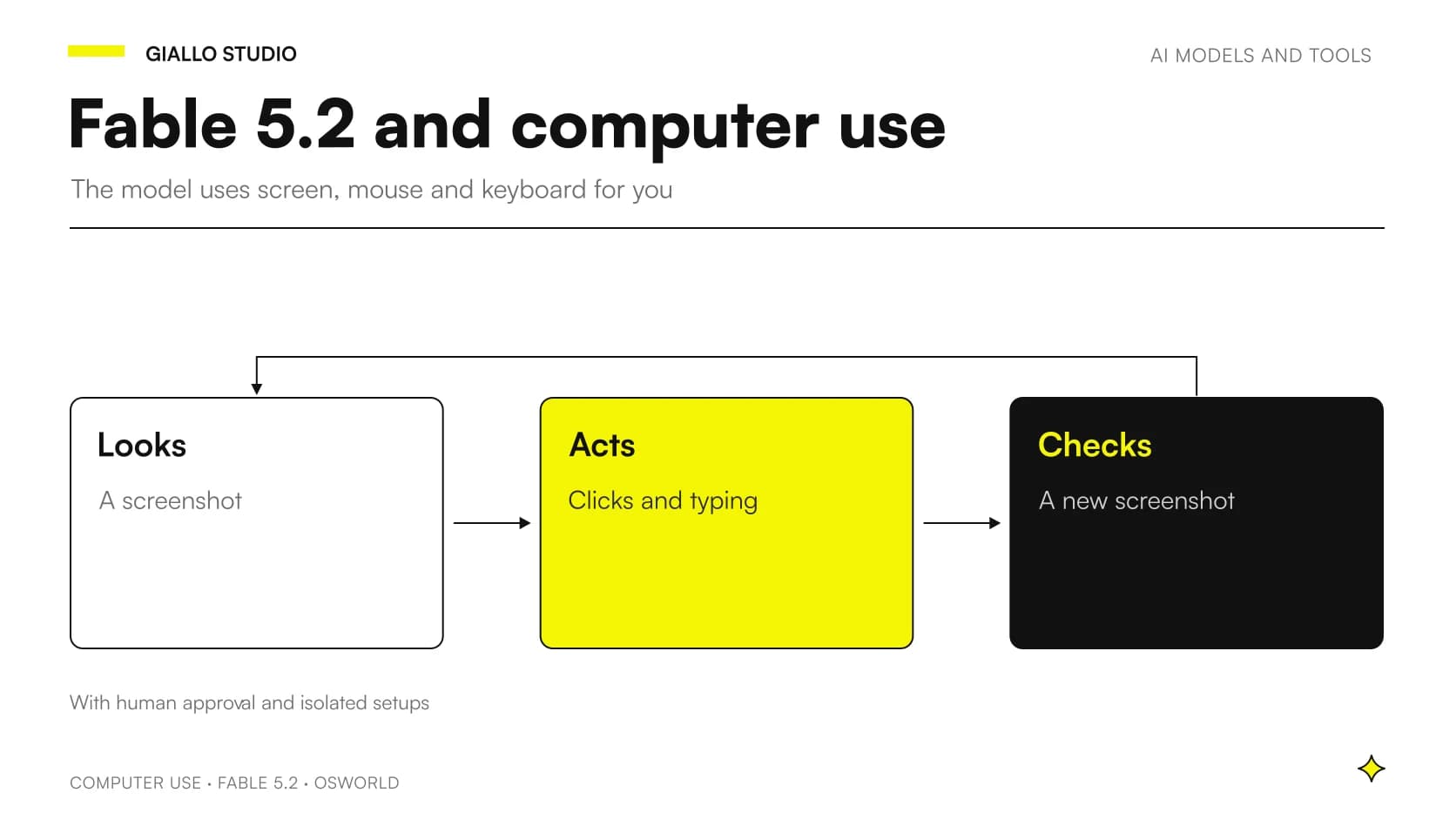
Claude computer use with Fable 5.2: the model looks at the screen and proposes an action, a person approves it, and the business software runs it in an isolated environmentClaude computer use with Fable 5.2: letting the model operate a PC on its ownClaude computer use with Fable 5.2: 89.3% on OSWorld 2.1, the new computer_toolset_20260801 and the 400 error on the old tool. What to automate, and how safely.
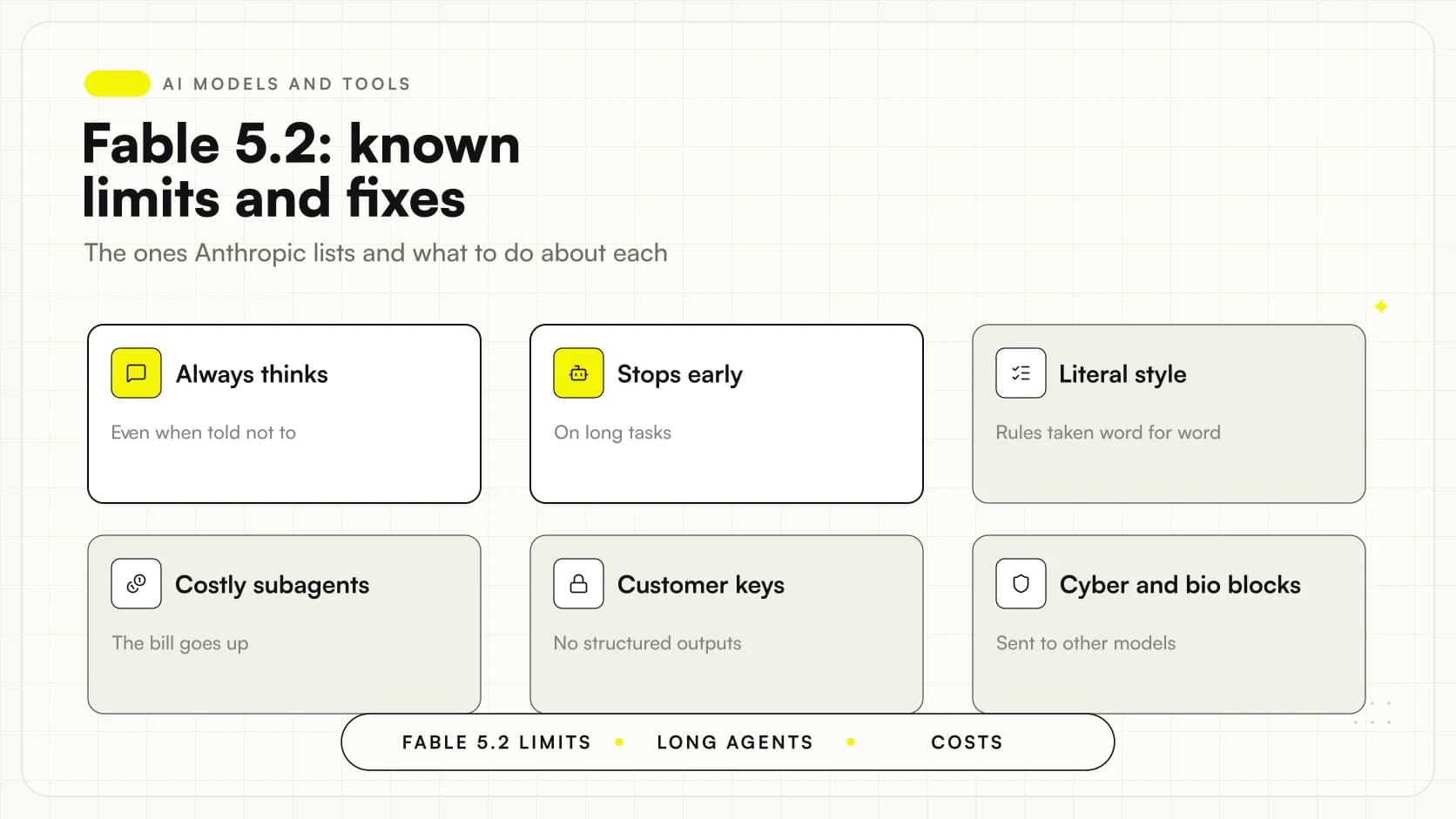
Claude Fable 5.2 limitations: diagram of the model's known behaviors and countermeasures, from always-on thinking to cyber and biology blocksClaude Fable 5.2 limitations: the known ones and how to work around themClaude Fable 5.2 limitations stated by Anthropic: it thinks even when told not to, stops early, costly subagents. Read what to do about each one.
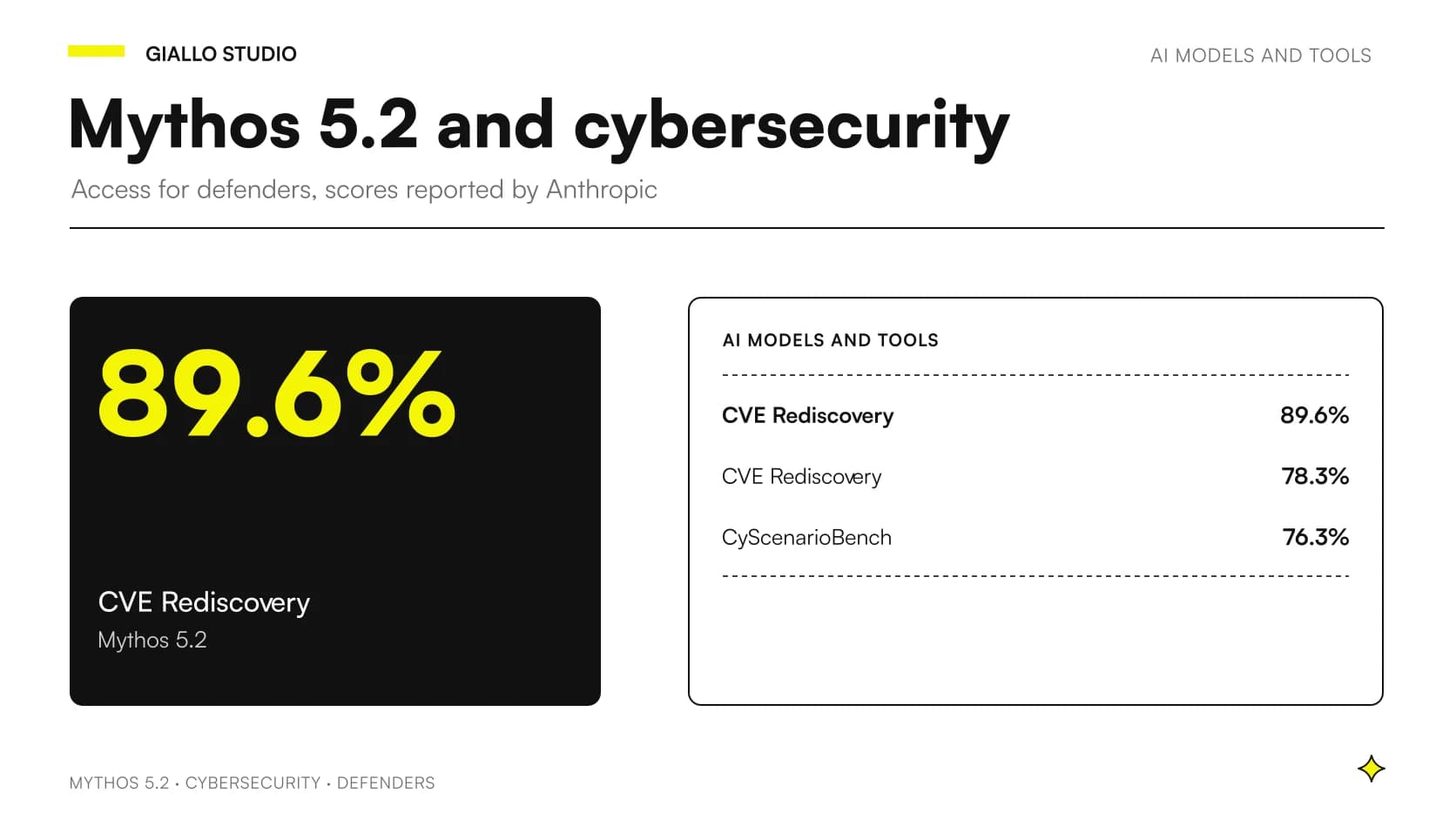
Claude Mythos cybersecurity: the access path through the Cyber Verification Program and Claude Security for defendersClaude Mythos cybersecurity: who can use it and what it really doesClaude Mythos cybersecurity explained: the Cyber Verification Program, who gets Mythos 5.2 access, what the benchmarks say and what SMEs should do.
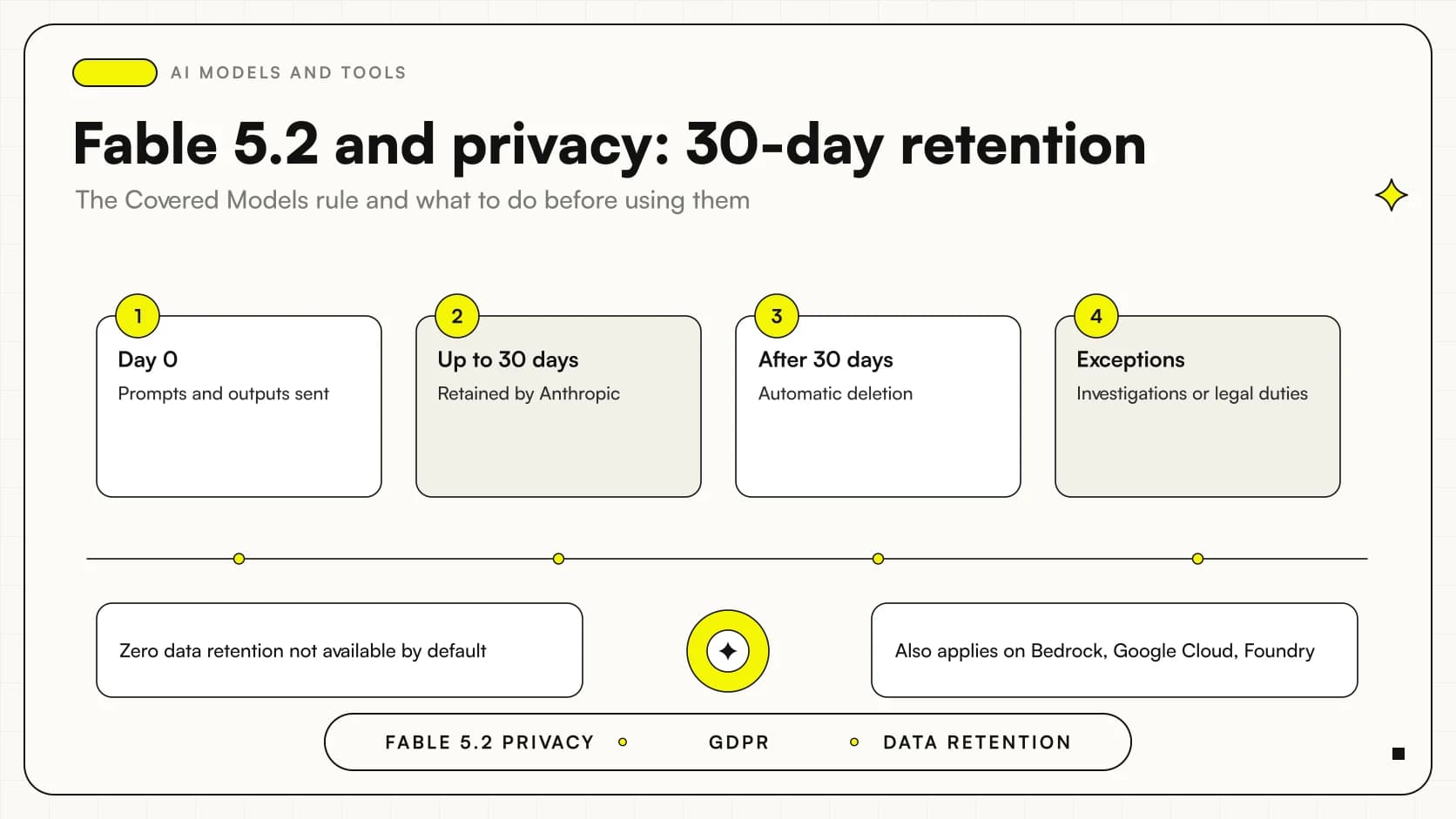
Fable 5.2 privacy: diagram of the 30-day retention of prompts and responses and the questions to ask your data protection officerFable 5.2 Privacy: 30-Day Data Retention and What an SME Should DoFable 5.2 privacy: Anthropic keeps prompts and responses for at least 30 days, with no zero data retention. What it means for an SME's GDPR duties.
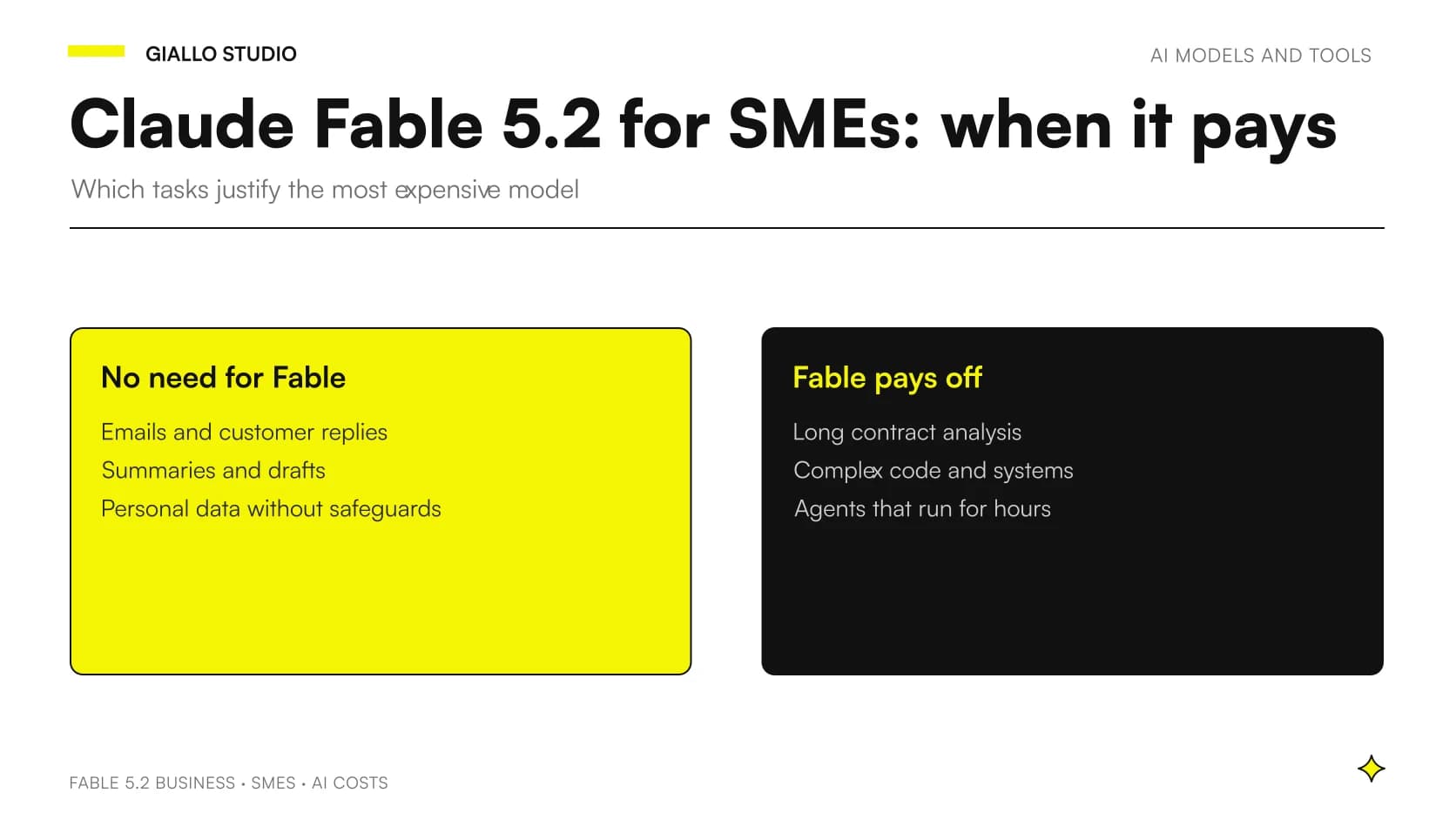
Claude Fable 5.2 for business: diagram assigning an SME's tasks to Fable, Opus, Sonnet and Haiku by difficulty and costClaude Fable 5.2 for Business: When It Pays Off for SMEsClaude Fable 5.2 for business: which tasks justify $8/$40 per million tokens, which stay on Opus 5.5 or Sonnet, and a 4-step adoption plan.
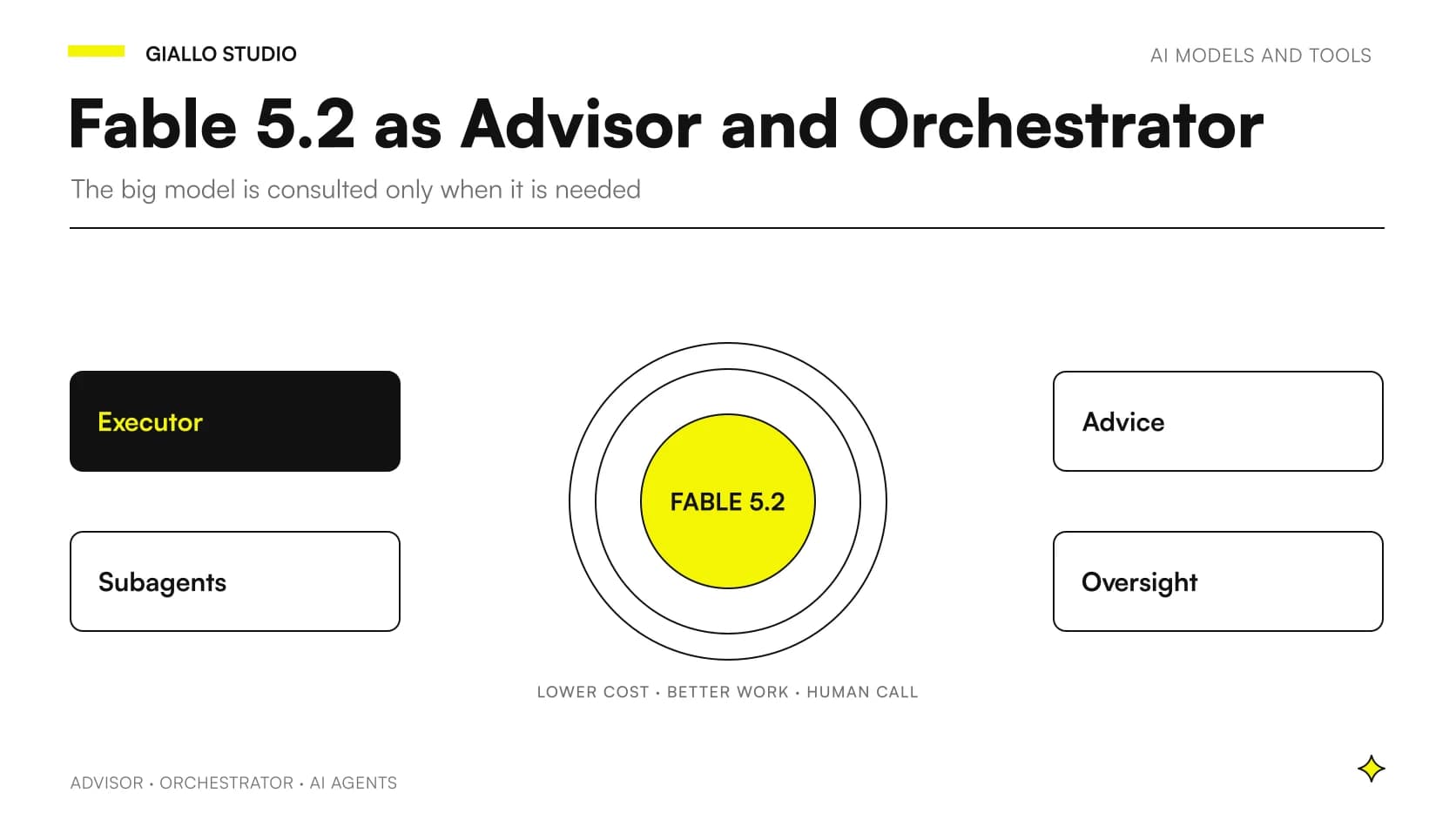
Claude Advisor Orchestrator: diagram of Fable 5.2 advising a smaller executor model (Advisor) and coordinating several subagents (Orchestrator)Claude Advisor Orchestrator: How to Use Fable 5.2 in AI AgentsClaude Advisor Orchestrator: Fable 5.2 can advise smaller models or coordinate them. Rules, costs and an SME example, from Anthropic's docs.
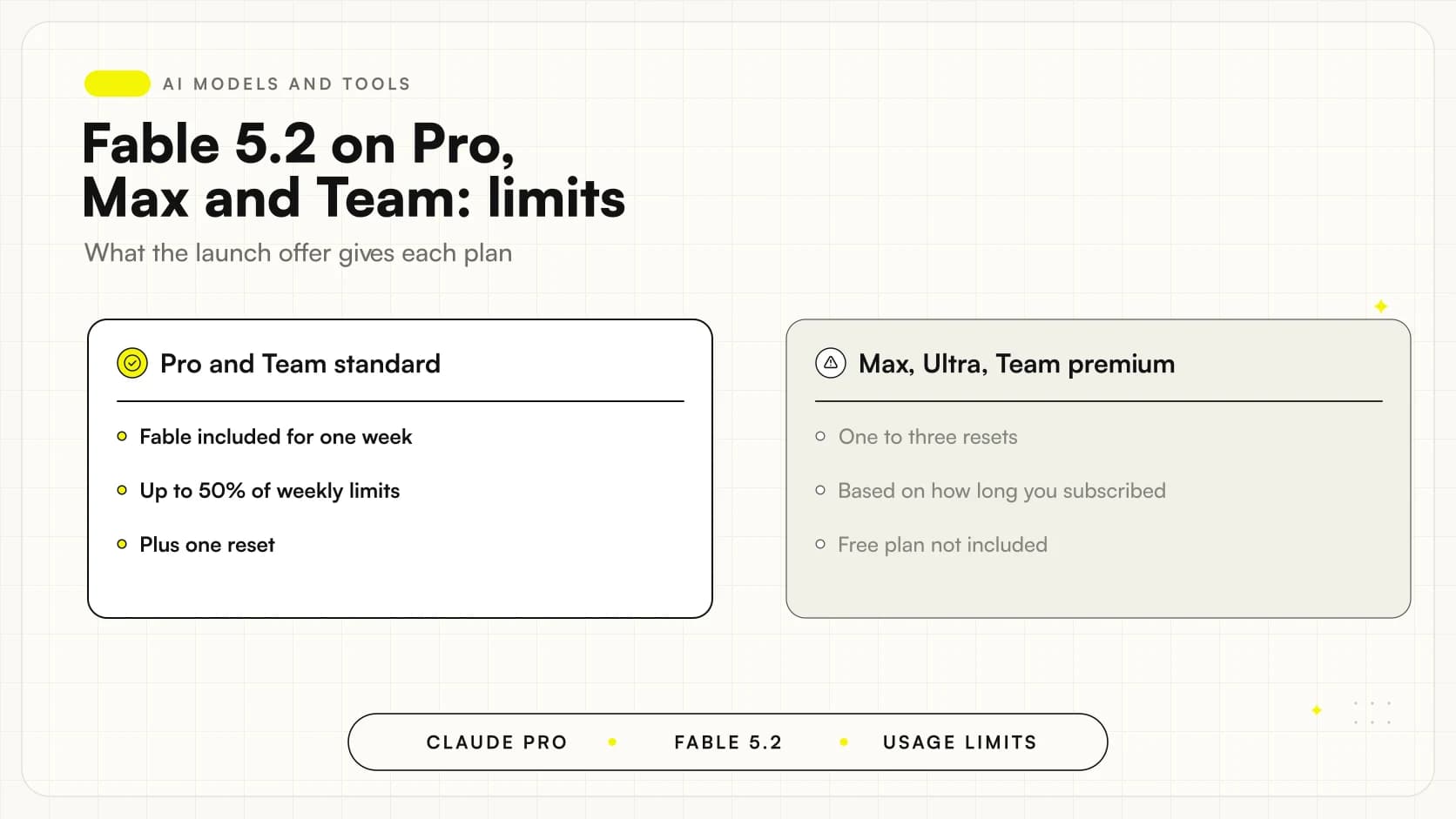
Claude Fable 5.2 Pro, Max and Team: diagram of the plans, the one-week launch offer and usage limit resetsClaude Fable 5.2 Pro, Max and Team: Usage Limits, Resets and Launch OfferClaude Fable 5.2 Pro, Max and Team: which plans include Fable, how limit resets work and what the 9 November 2026 launch offer covers.
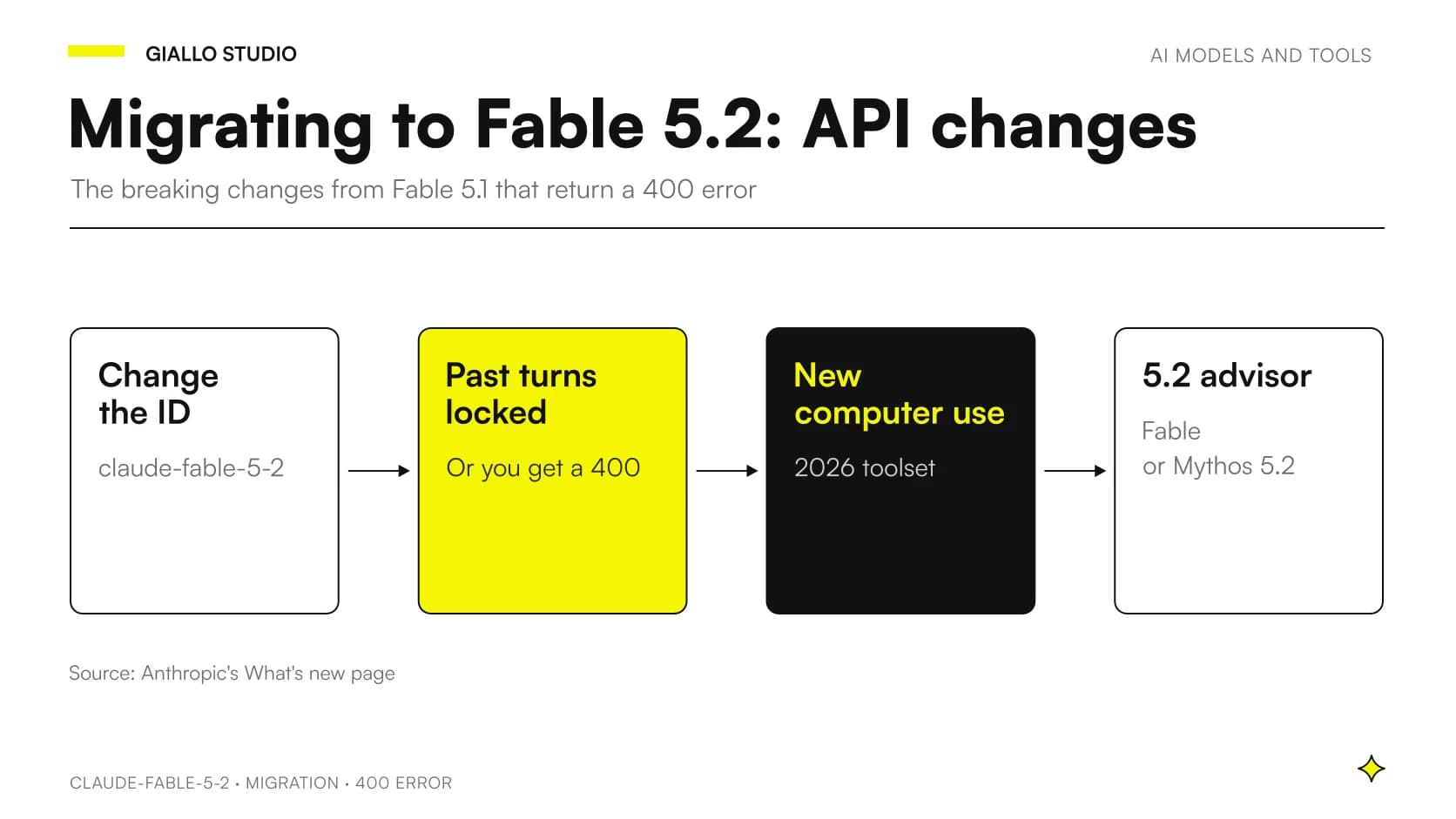
Fable 5.2 migration: diagram of the move from Fable 5.1 to Fable 5.2 with the API changes that cause 400 errorsFable 5.2 migration: what changes in the API and why you get 400 errorsFable 5.2 migration from 5.1: model IDs by platform, four breaking changes, 400 errors and a developer checklist. Data as of 9 November 2026.
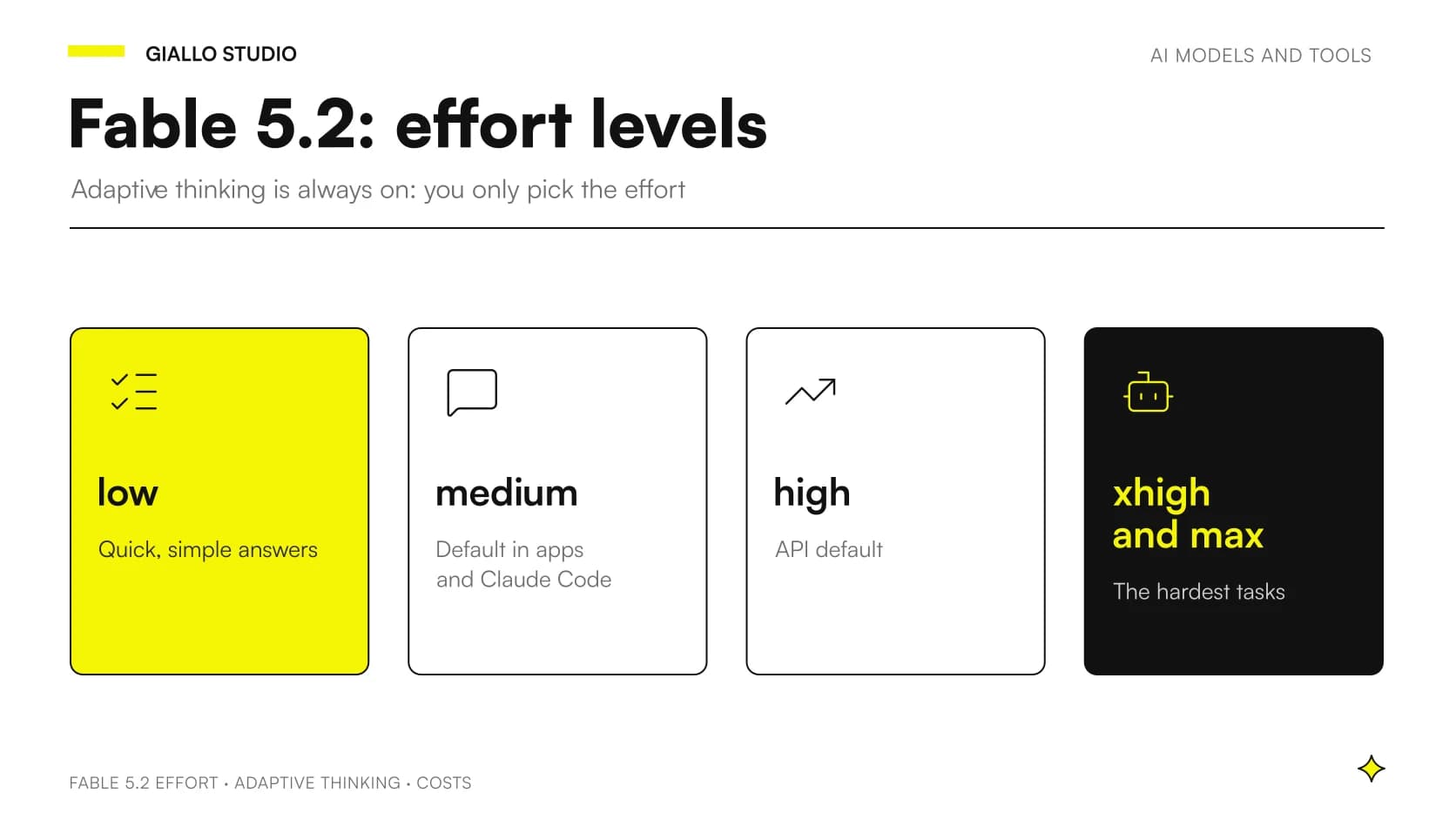
Fable 5.2 effort levels: the five reasoning levels from low to max, with the default level in the API and in the Claude appsFable 5.2 effort levels: what they mean and how to chooseFable 5.2 effort levels explained: five levels, high by default in the API and medium in the apps, which to pick per task and how effort affects cost.
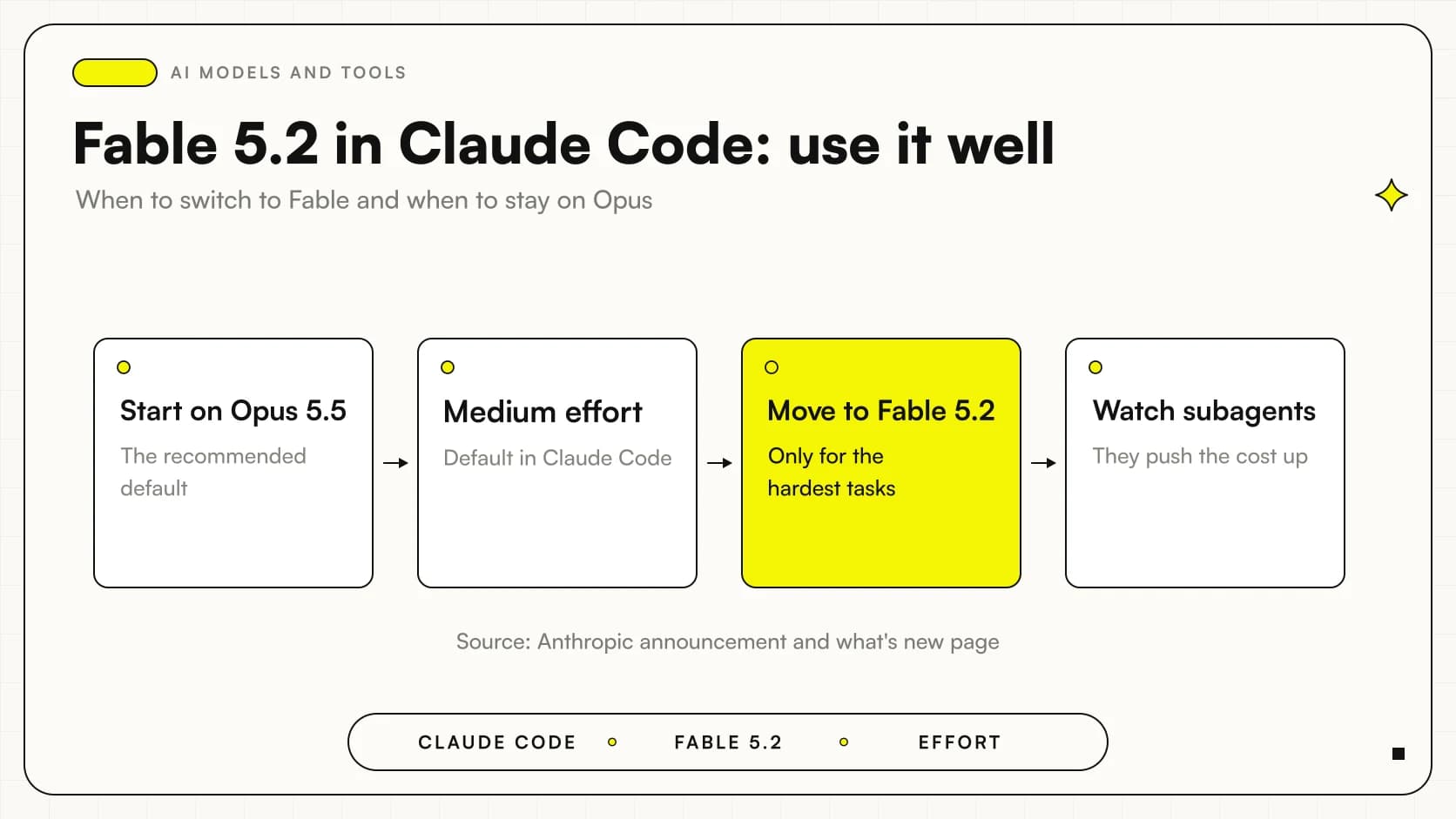
Claude Code Fable 5.2: how to use it well, with a decision chart for Fable 5.2 vs Opus 5.5, effort, fast mode and subagentsClaude Code Fable 5.2: how to use it well and when to stay on Opus 5.5Claude Code Fable 5.2: medium effort by default, fast mode, subagent costs and when to stay on Opus 5.5. A practical guide with official data from 9 November.
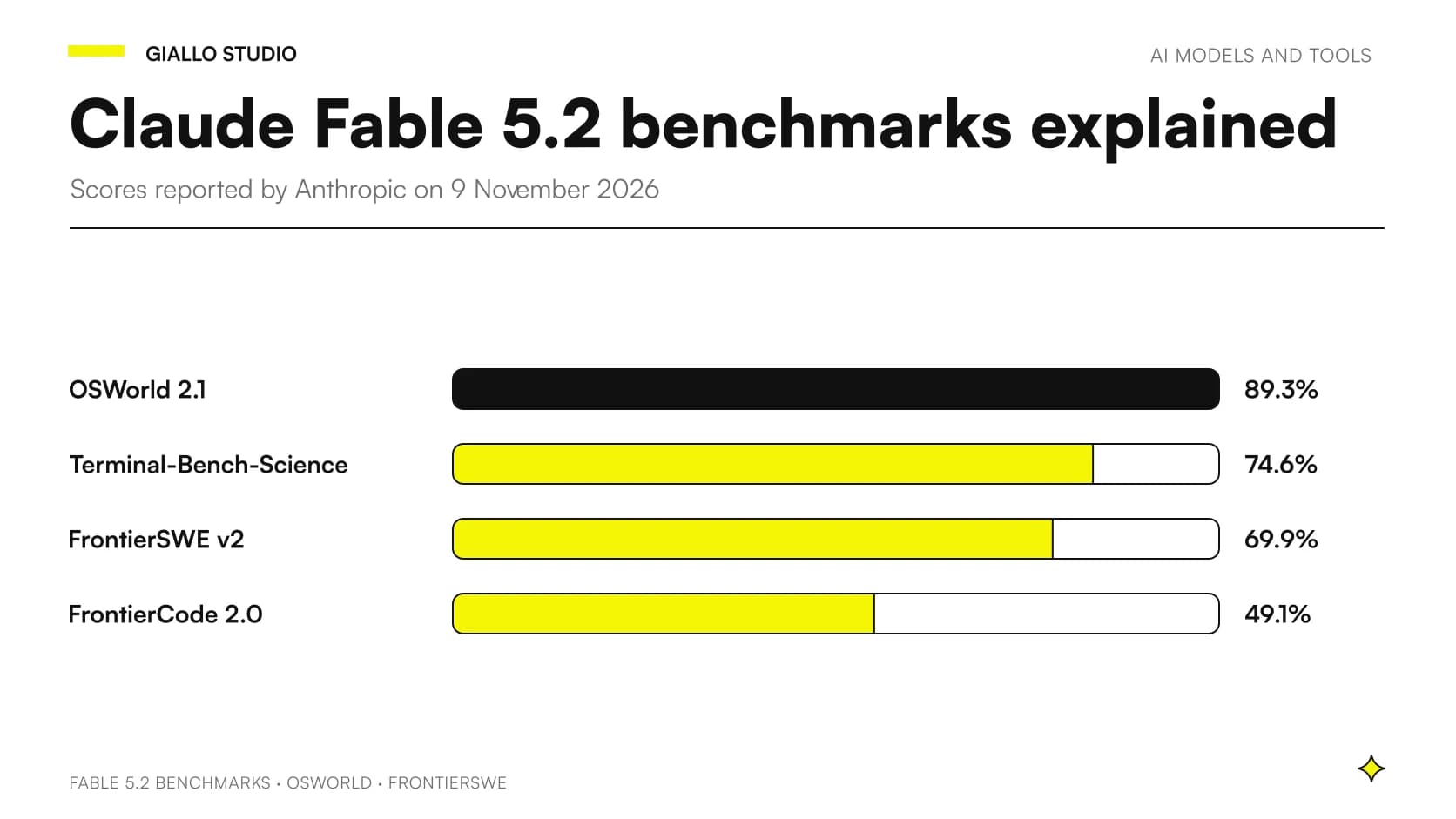
Claude Fable 5.2 benchmarks: chart comparing FrontierCode, FrontierSWE and OSWorld scores against Fable 5.1 and Opus 5.5Claude Fable 5.2 benchmarks: what they measure and how to verify themClaude Fable 5.2 benchmarks explained in plain English: FrontierCode, OSWorld, AutomationBench and more, with Anthropic's numbers and how to test them.
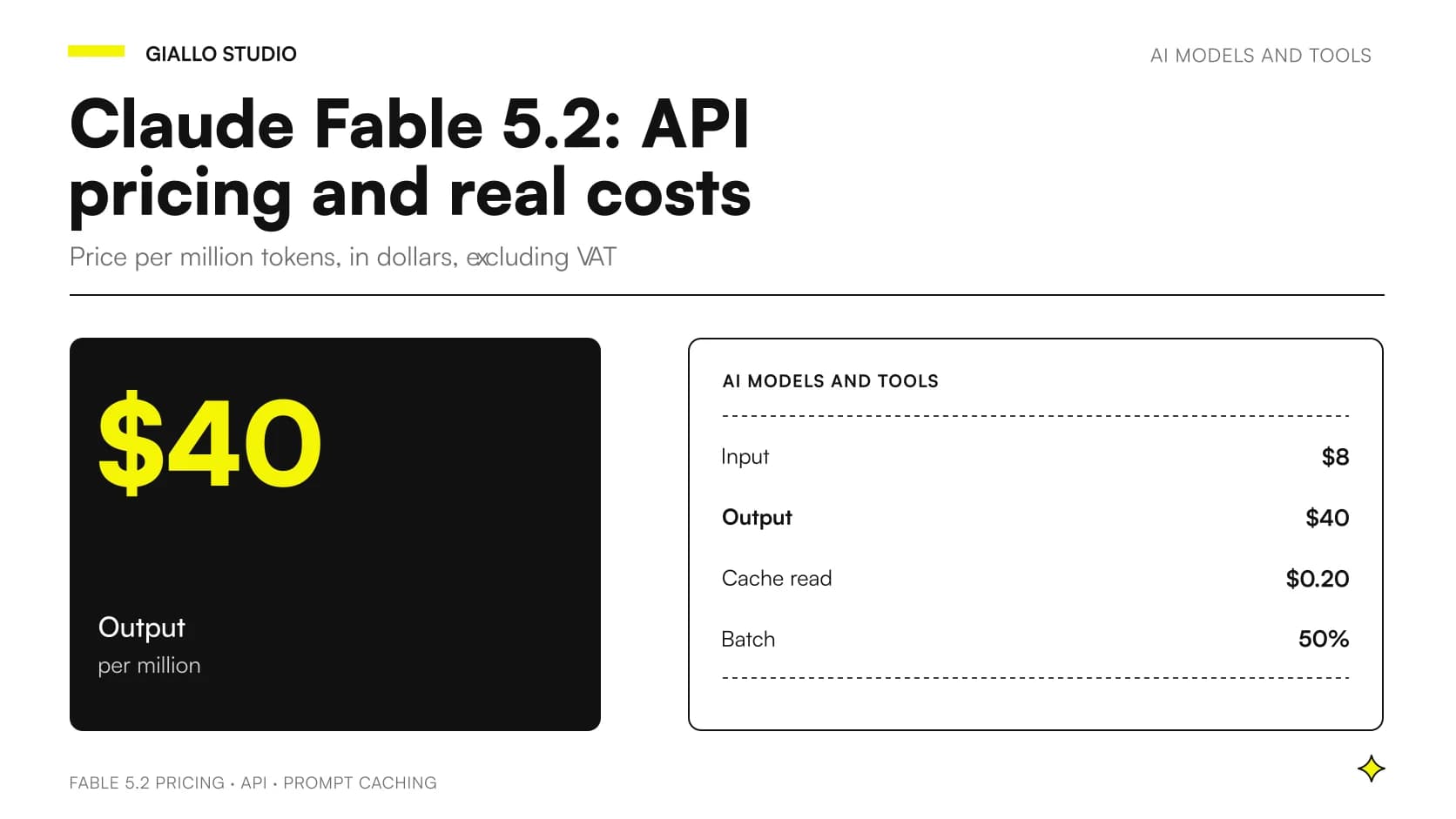
Claude Fable 5.2 pricing: API rates for input, output, cache, batch and fast mode compared with Opus 5.5 and Sonnet 5.5Claude Fable 5.2 Pricing: API Rates and Real CostsClaude Fable 5.2 pricing: $8 input and $40 output per million tokens. Cache, batch, fast mode and a step-by-step cost example for a real business.
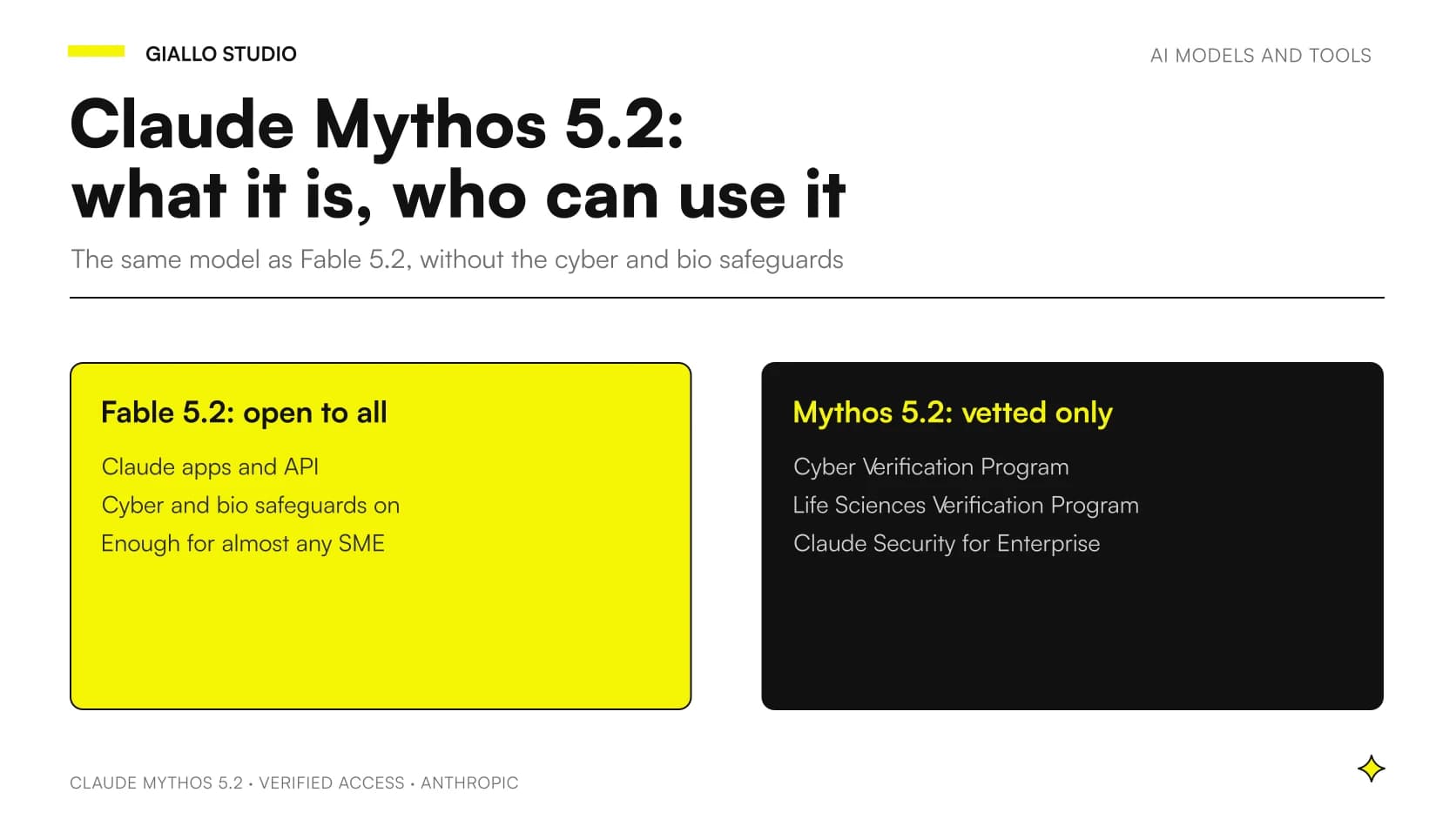
Claude Mythos 5.2 diagram: the same Anthropic model as Fable 5.2 but without the cyber and biology safeguards, with access only for verified organizationsClaude Mythos 5.2: what it is and who can use itClaude Mythos 5.2 is Anthropic's 9 November 2026 model without cyber and biology blocks, for verified organizations. Does an SME need it? Almost never.
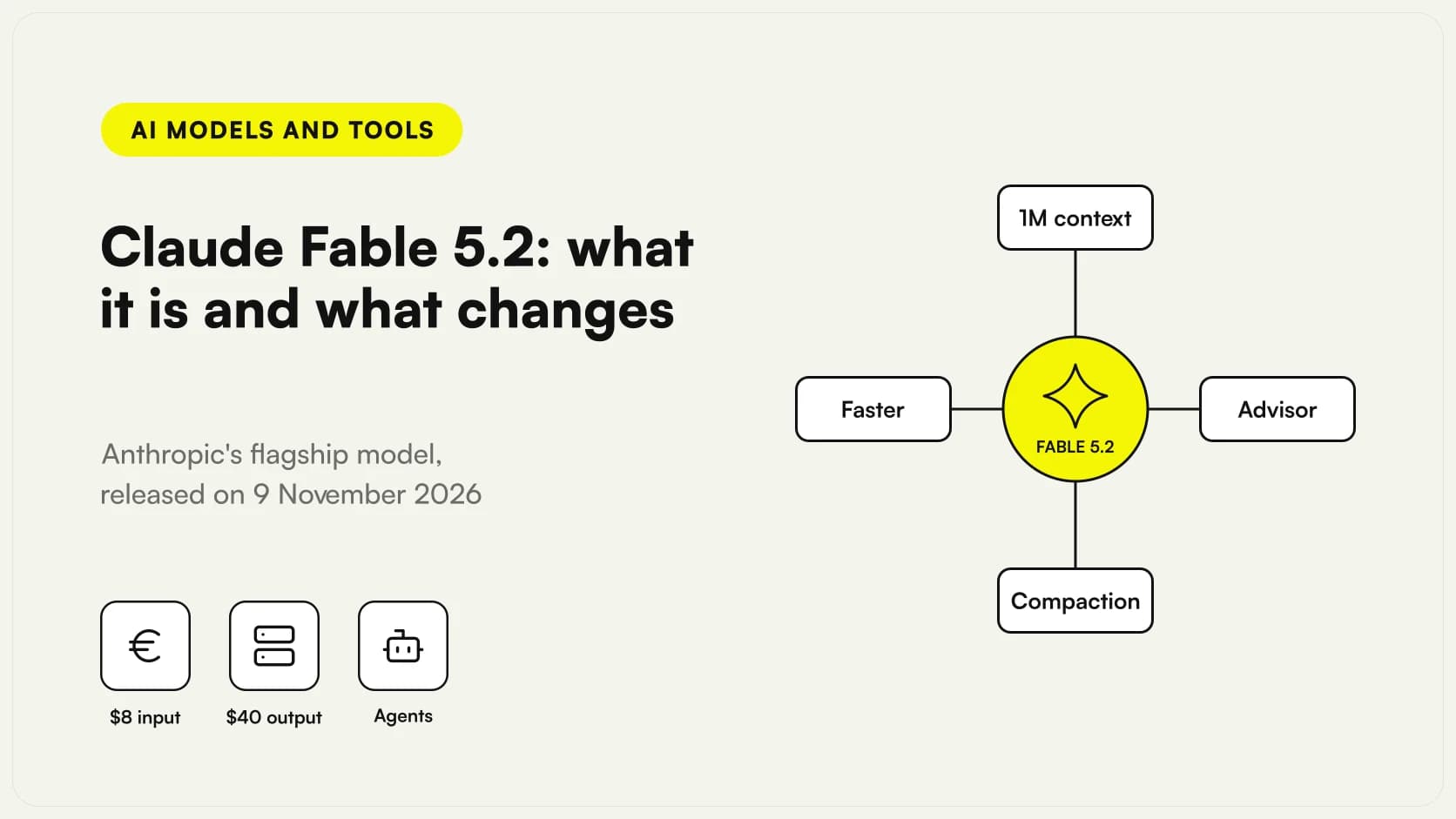
Claude Fable 5.2 model card from Anthropic with pricing, 1 million token context and a comparison with Opus 5.5 and Mythos 5.2Claude Fable 5.2: What It Is, What Changed and What It CostsClaude Fable 5.2 is Anthropic's model from 9 November 2026: $8/$40 pricing, 1M context, claimed benchmarks and when to choose it over Opus 5.5.
Grok alternatives: four different paths for chat, research with sources, images and AI agents, all starting from the same needGrok Alternatives: The Best Options for Chat, Images and AI AgentsGrok alternatives by need: everyday chat, research with sources, images and video, operational agents like Grok Bot. And when you need a custom agent.
Grok limitations: a weekly usage meter running out, next to the points to watch for business useGrok limitations: weekly usage, the free version and risks for business useGrok limitations: a single weekly pool since June 2026, what happens when it runs out, free version limits, video, files and the risks for a business.
Grok Imagine: a series of generated images in different formats, with the grok watermark and a video frame being processedGrok Imagine: How to Create Images and Video with Grok, Limits and RulesGrok Imagine: how to create images and video with Grok in the app and via API, cost per image and per second, watermark, limits and rules on real people.
Grok for business: a team workspace with connectors to email, documents and CRM, and a license admin consoleGrok for business: Business, Teams and Enterprise, what it offers and when it makes senseGrok for business: Teams from $30 per user a month, Enterprise on custom quote, connectors, admin controls and when you need a custom AI agent.
Grok privacy and GDPR: conversations with an AI assistant, data control settings and European privacy authoritiesGrok privacy and GDPR: training on your data and investigations in EuropeGrok privacy and GDPR: who the controller is, how to stop training on your chats, where the data goes and which EU investigations are open (November 2026).
Grok API: a request to Grok 4.7 with the OpenAI SDK to api.x.ai and a table of prices per million tokensGrok API: pricing, API key and first steps for developersGrok API in November 2026: pricing by model, the 200k-token threshold, OpenAI SDK, data retention, Zero Data Retention and the AI Act watermark.
Grok pricing and subscription: the Free, Plus, Premium, Super and Ultra plans of The X Subscription side by side with their monthly costGrok Pricing: How Much the Subscription Costs in 2026 (Free, Plus, Premium, Super, Ultra)Grok pricing as of November 2026: Free $0, Plus $8, Premium $30, Super $100, Ultra $200 a month, excluding VAT. What each plan includes, and its limits.
How to use Grok on X: a conversation in which a user tags @grok in reply to a post and gets an answerHow to use Grok on X: tagging @grok, what changes with @bot and why it doesn't always reply in ItalyHow to use Grok on X: asking @grok in a reply, what @bot does, why @bot doesn't respond from Italy and which rules apply to privacy and images.
Grok Bot: an AI agent working on a cloud computer across browser, files and terminal, with an approval request in the foregroundGrok Bot: what it is and what it really does (and why it's not the Grok chat)Grok Bot is SpaceXSI's agent with a cloud computer: not the Grok chat, nor @grok on X. How it works, devices, approvals, privacy and cost.
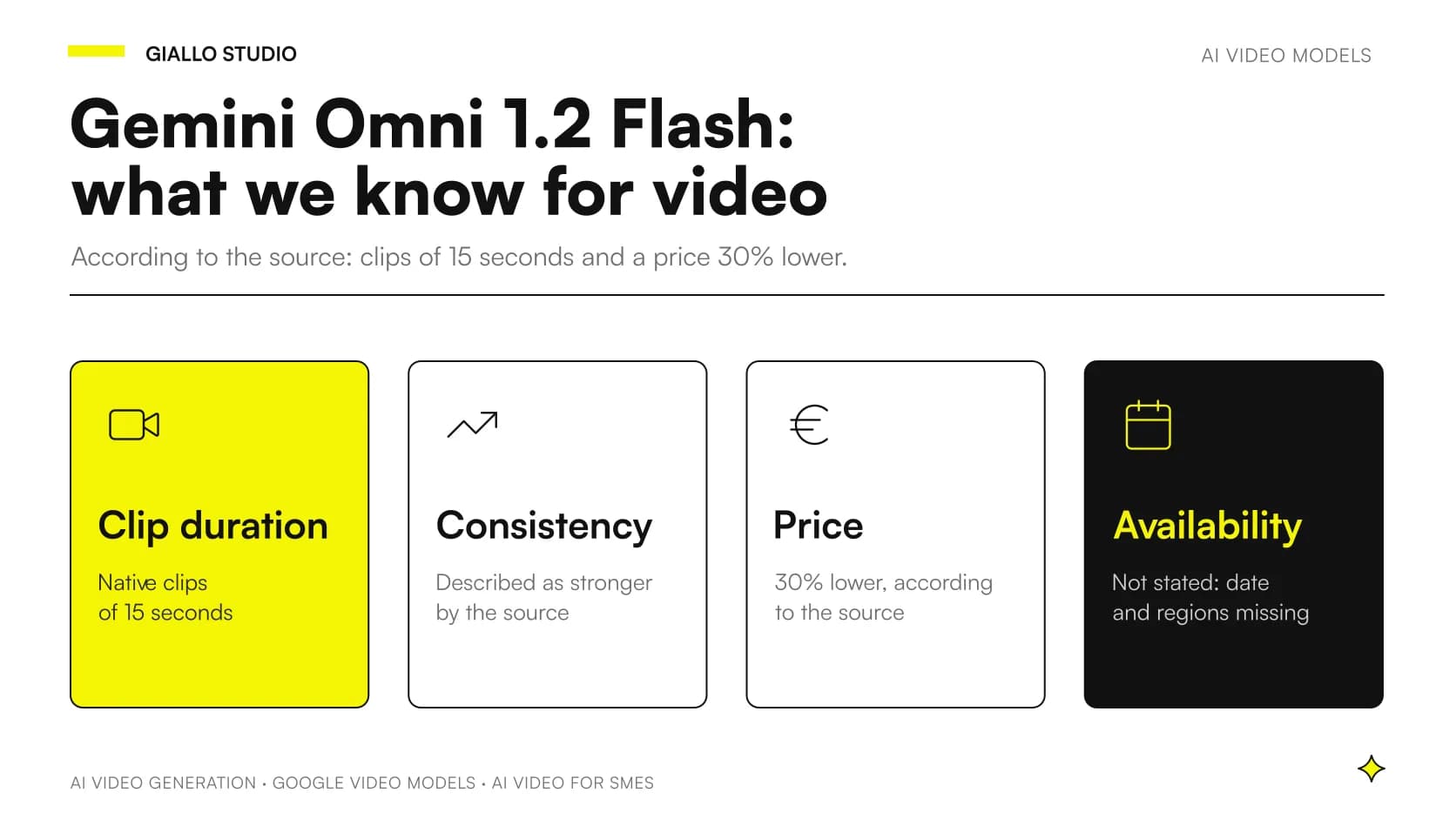
Video editing on a monitor in a small company's studioGemini Omni 1.2 Flash: what it is and what changes for SME videoGemini Omni 1.2 Flash generates and edits native video. What Google claims, what is missing, and how to assess it without getting carried away.
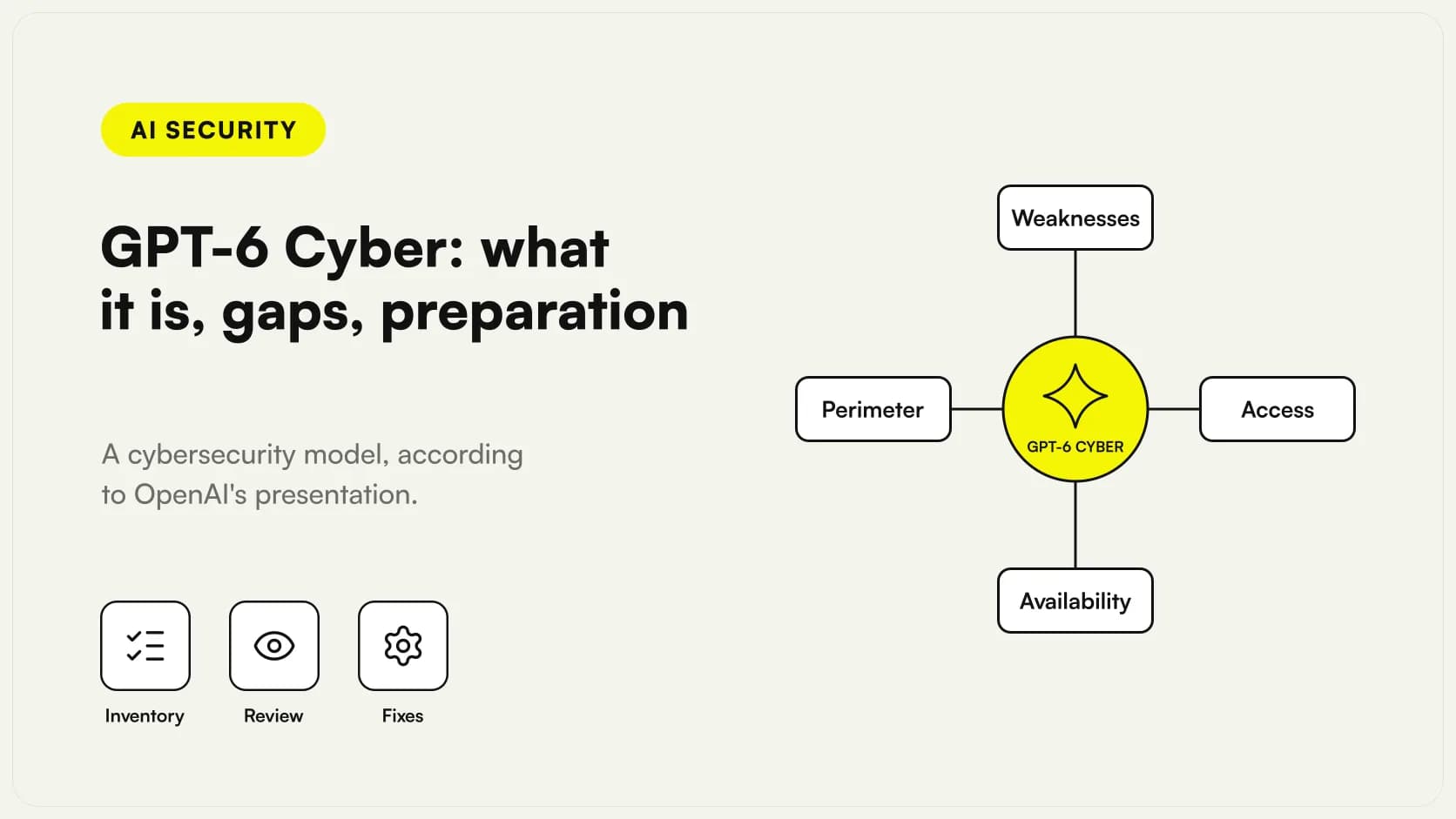
Small business desk with a laptop showing a cybersecurity monitoring screenGPT-6 Cyber: What OpenAI's Cybersecurity Model Is and What It Changes for SMEsGPT-6 Cyber is OpenAI's cybersecurity model: what the source states, what we don't know yet, and how an SME can prepare without illusions.
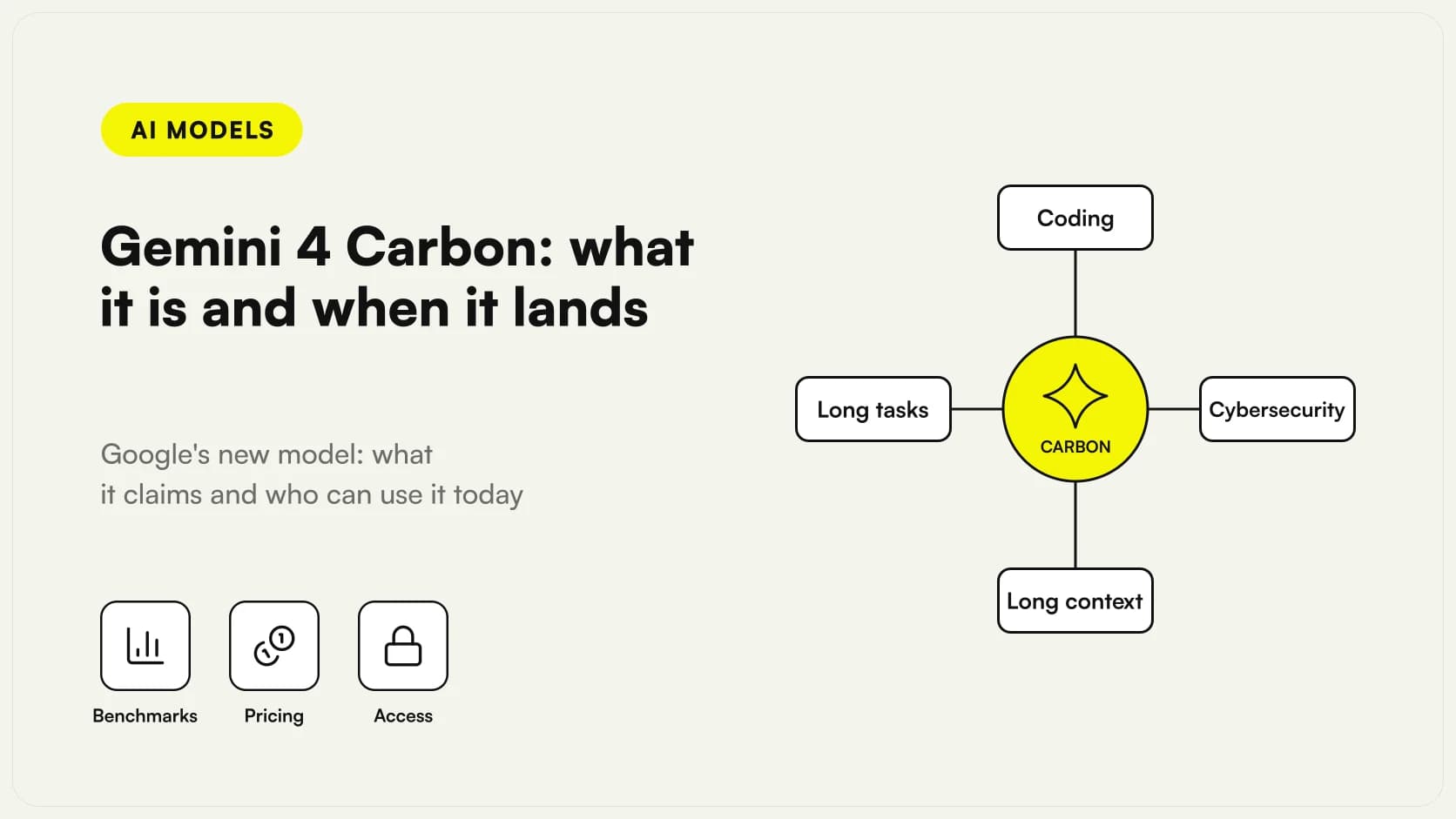
Gemini 4 Carbon at the center of a long work path with checks, tools and access through API and appGemini 4 Carbon: what it is, where it is used and what it costs todayGemini 4 Carbon explained: Google's strongest model, available via API since 10 November 2026. Where it runs, pricing, specs and how it differs from Argon.
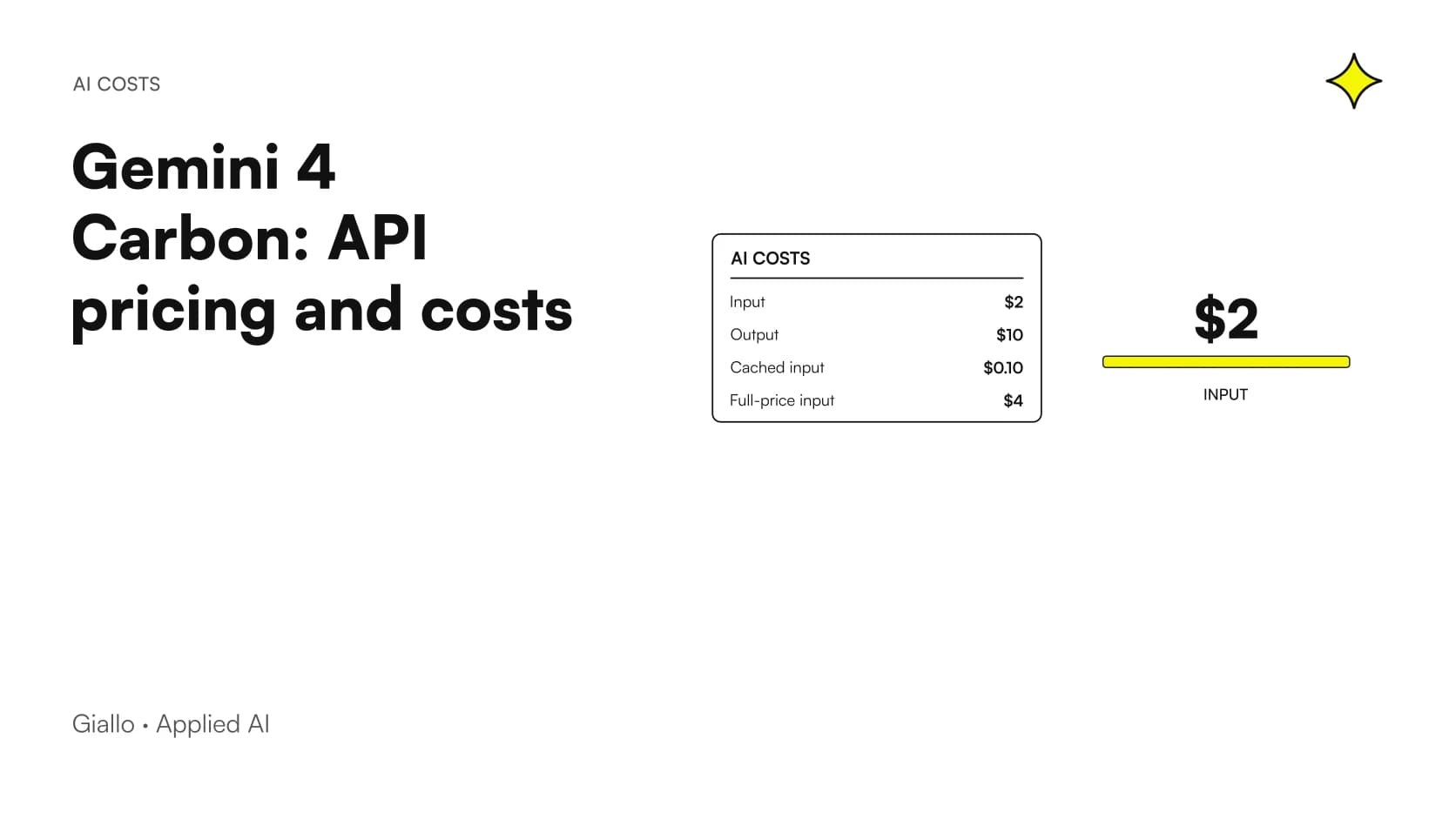
Gemini 4 Carbon pricing: API rates per million input, output and cached tokens until 30 November and from 1 December 2026, compared with other AI modelsGemini 4 Carbon pricing: API cost per million tokens and comparisonGemini 4 Carbon pricing: $2/$10 per million tokens until 30 Nov 2026, then $4/$20. Batch, Flex, cache and a comparison with Argon, GPT-6 Astra and Claude.
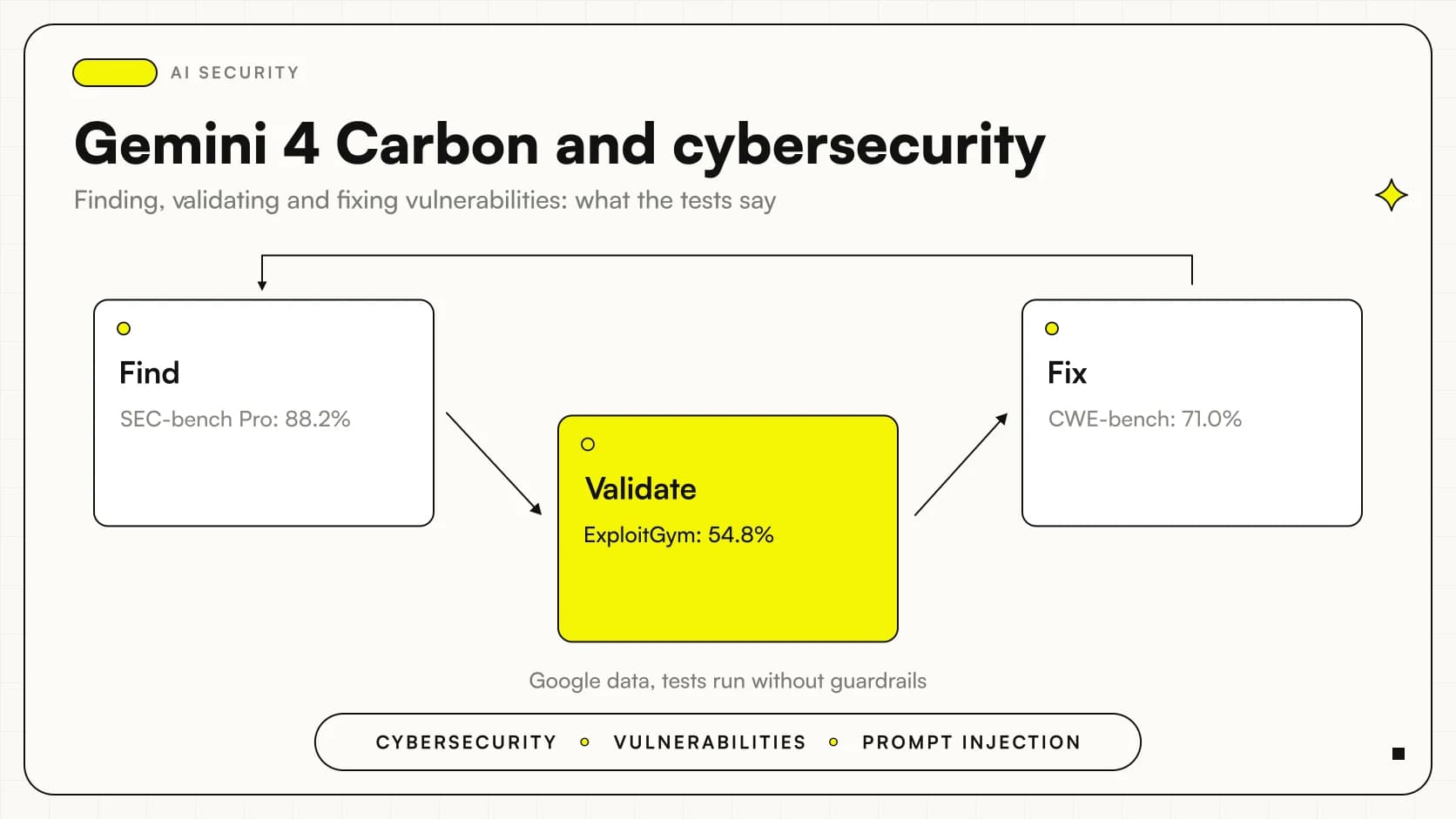
Gemini 4 Carbon cybersecurity: the defense cycle of detection, exploit validation and fixingGemini 4 Carbon cybersecurity: finding, validating and fixing vulnerabilitiesGemini 4 Carbon cybersecurity: benchmarks, Carbon for cyber via Fairwind, prompt injection and the protections declared on 10 November. What it means for SMEs.
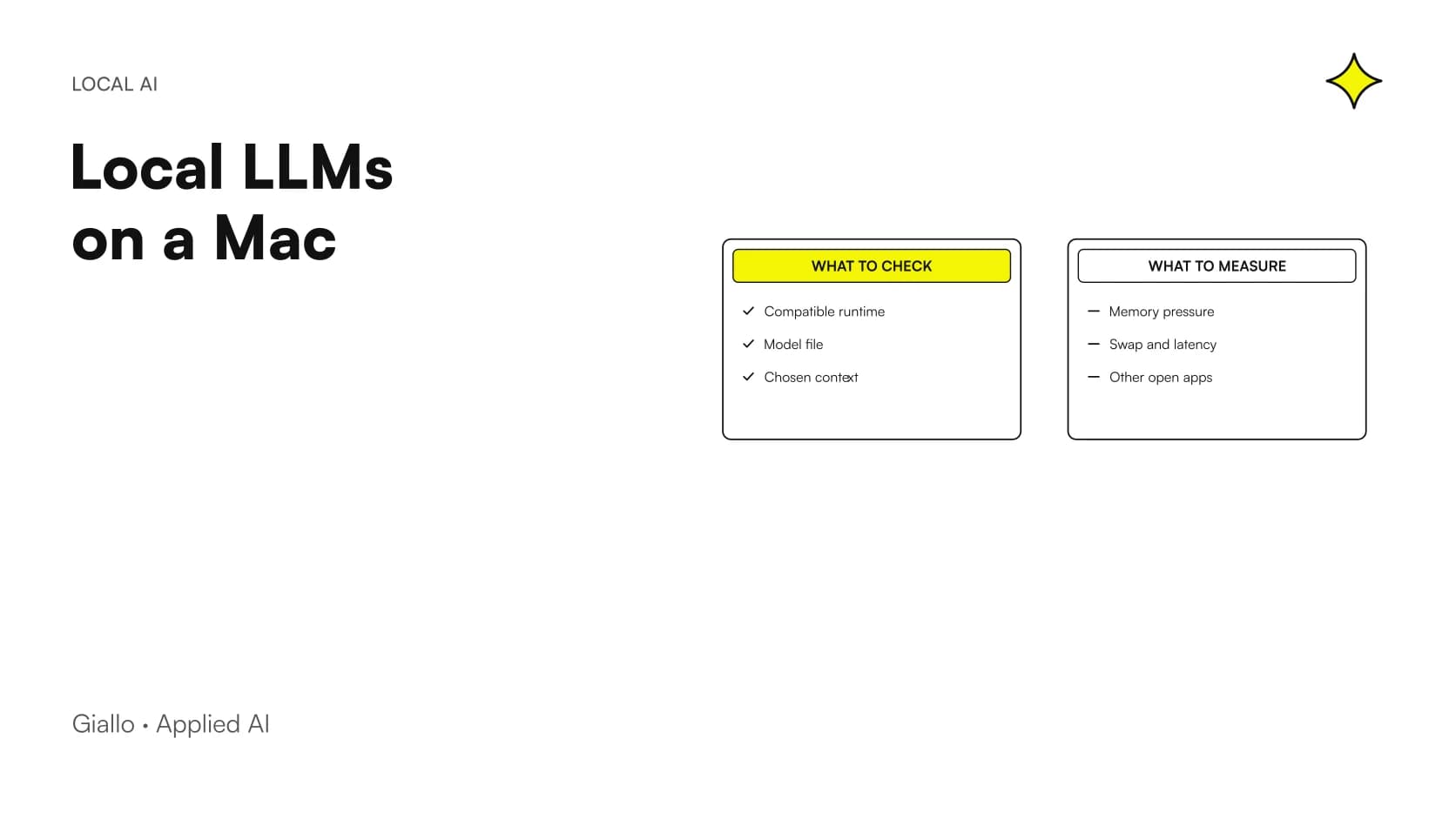
Local LLMs on a Mac with 16, 24 or 32 GB: runtime checks and measurements of memory pressure, swap and latency.Local LLMs on a Mac with 16, 24 or 32 GBLocal LLMs on a Mac with 16, 24 or 32 GB: unified memory, models, context and memory pressure. Assess actual work before buying.
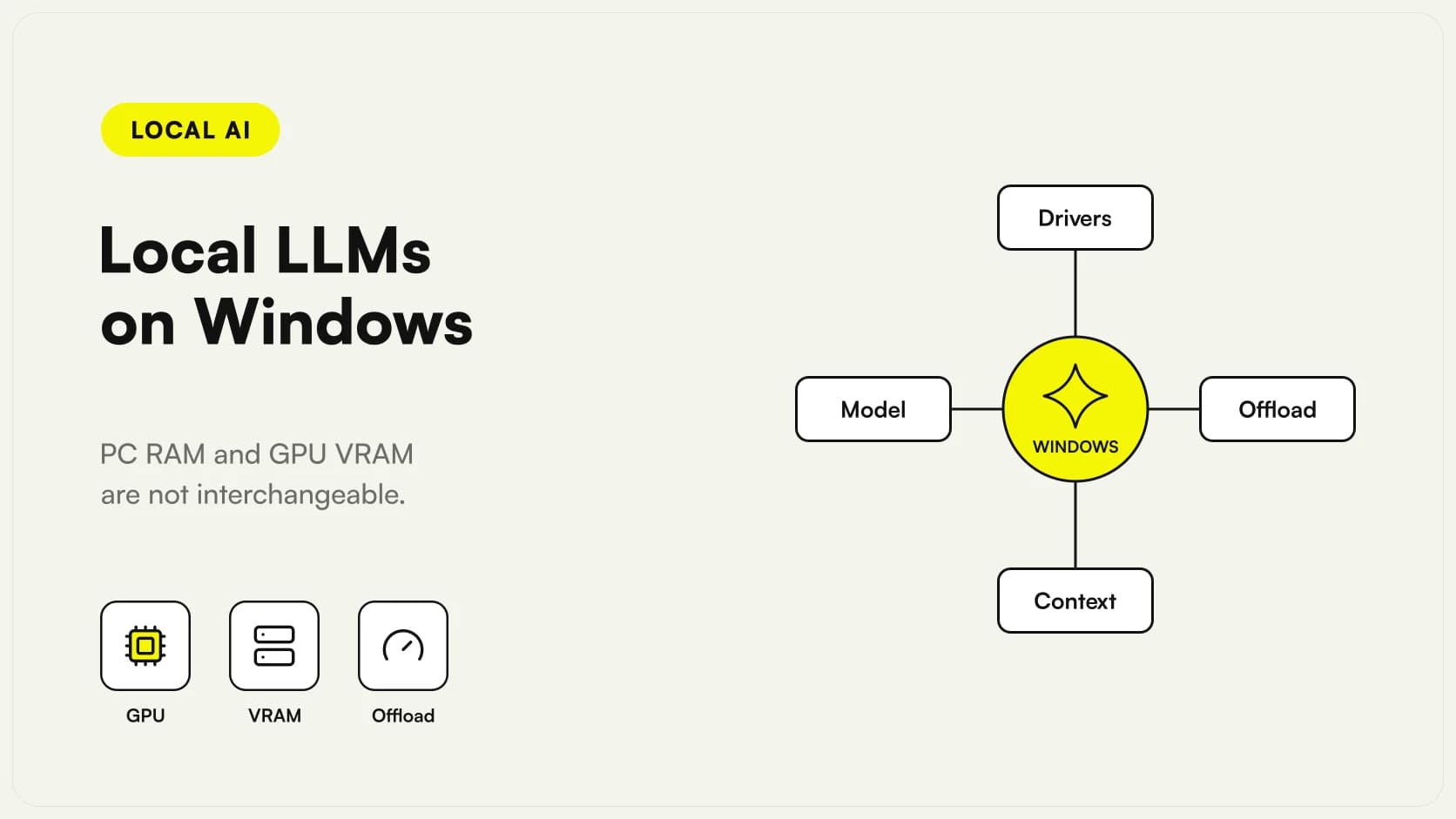
Local LLM on Windows: drivers, model, offloading and context surrounding the system, with separate RAM and VRAM.Local LLMs on Windows: GPU, VRAM and practical limitsChoose a local LLM for Windows: RAM and VRAM, drivers, offloading and practical checks before buying a GPU.
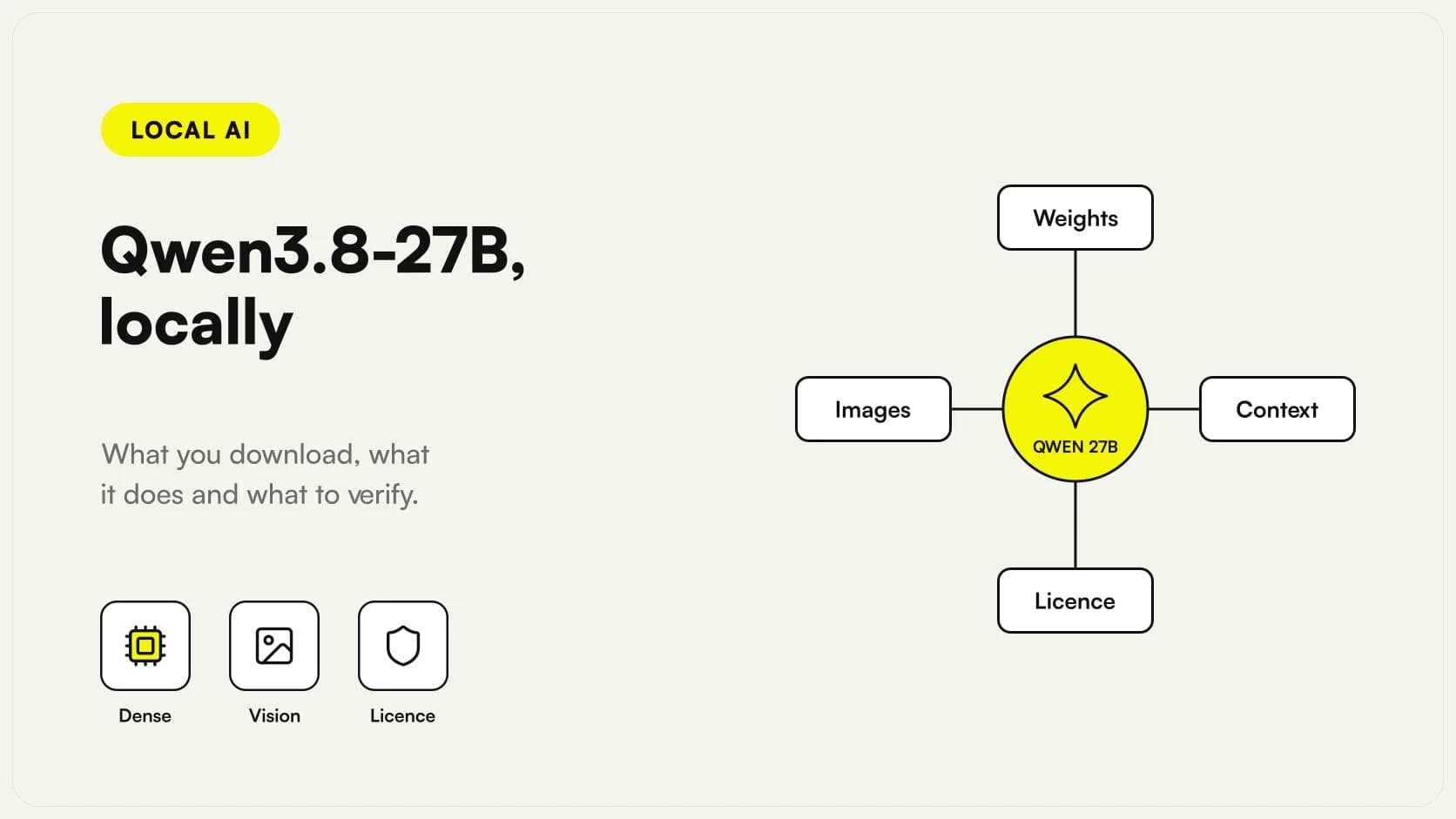
Diagram of local Qwen3.8-27B with weights, images, context and licensing connected to the model.Qwen3.8-27B locally: capabilities, limits and requirementsQwen3.8-27B locally: model, license, images, context and memory. What to check before using it with your business documents.
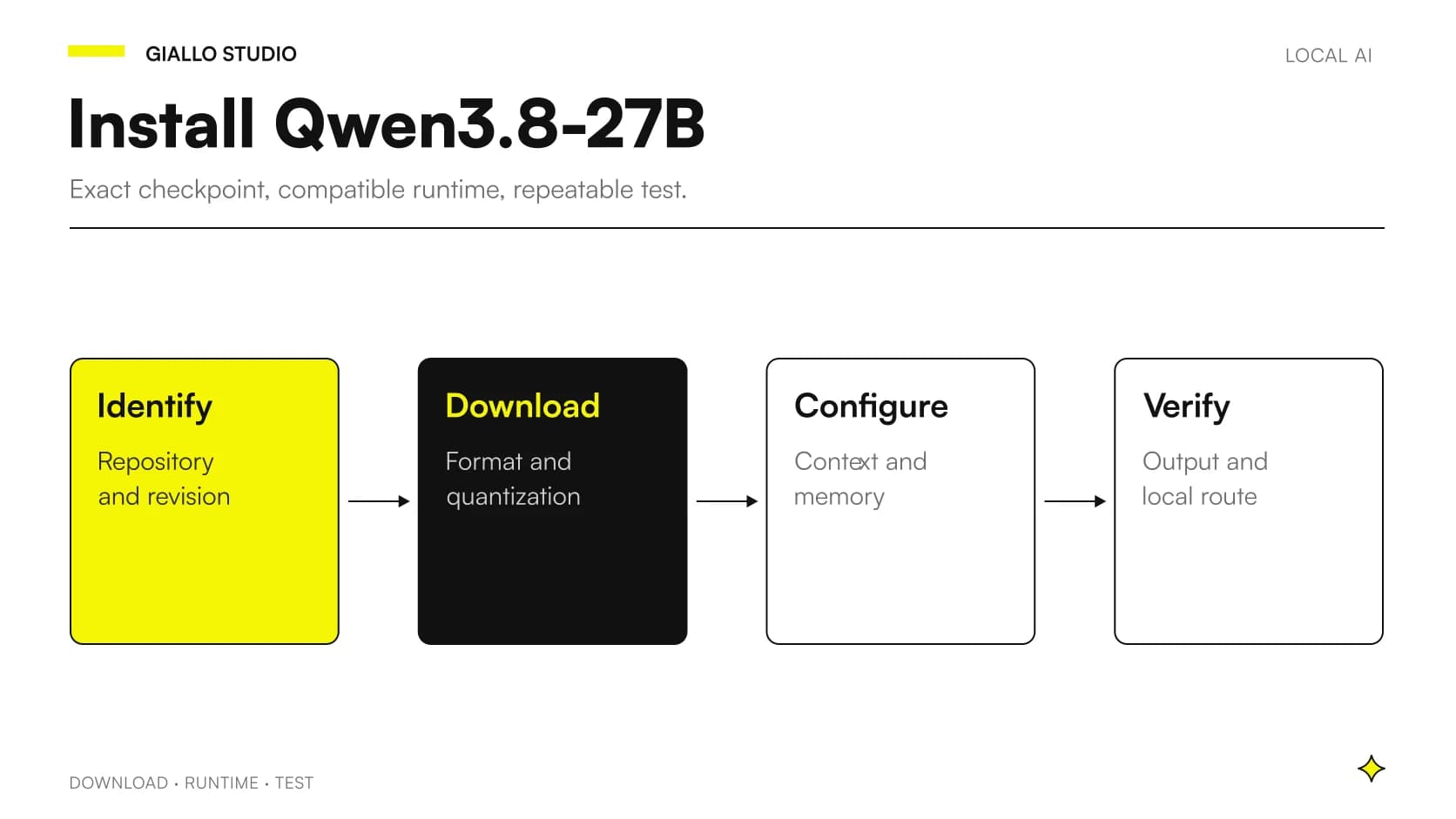
Workflow for installing Qwen3.8-27B locally: identify, download, configure and verify.Install Qwen3.8-27B locally: checks and workflowInstall Qwen3.8-27B locally: check weights, runtime, memory and APIs. A documented workflow, essential commands and error diagnosis.
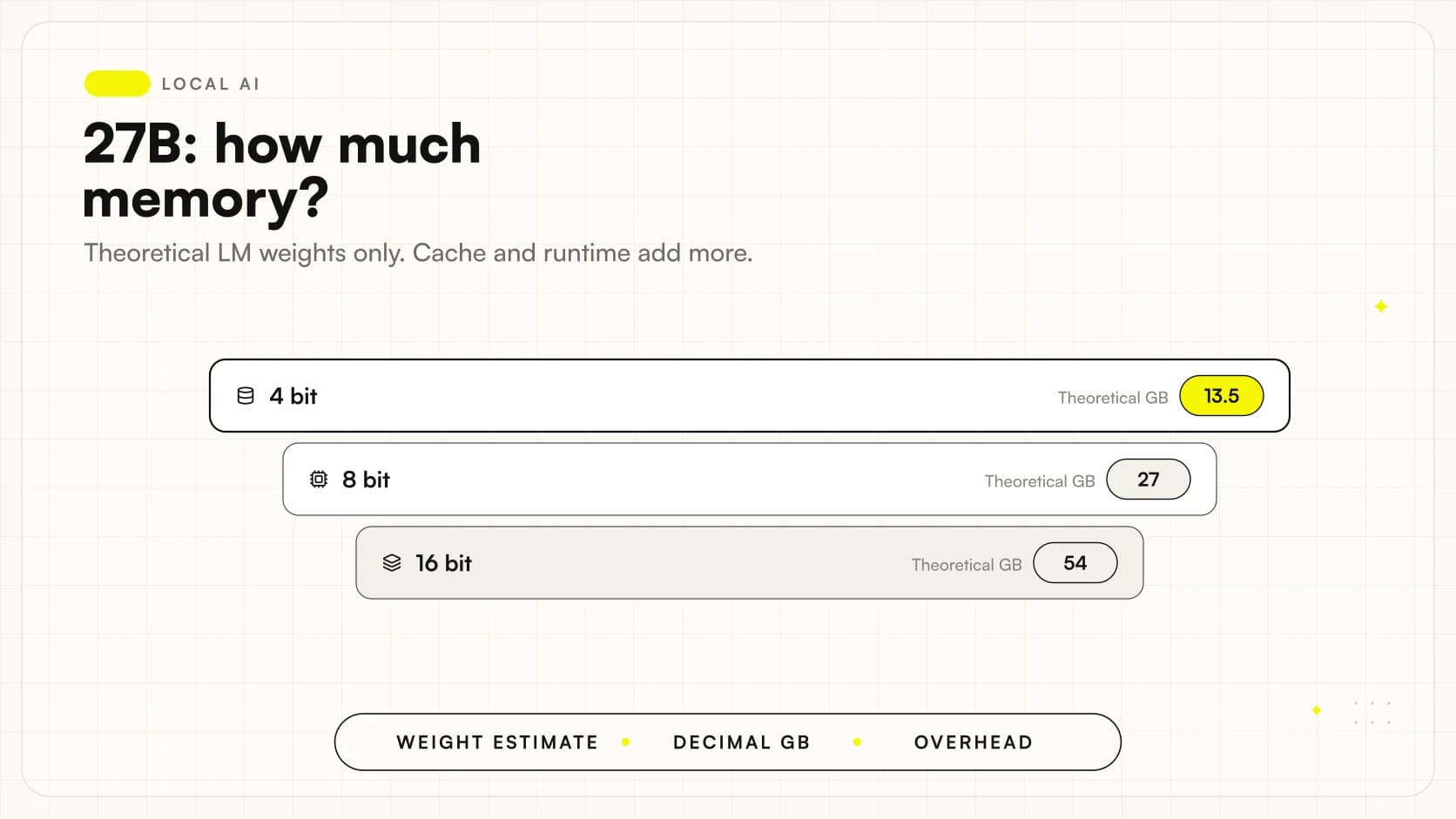
Qwen3.8-27B RAM and VRAM: theoretical language weights at 4, 8 and 16 bits, excluding caches and overhead.How much RAM and VRAM does Qwen3.8-27B really need?How much RAM and VRAM does Qwen3.8-27B need? Distinguish theoretical weights, quantized files, caches, context and actual memory before choosing hardware.
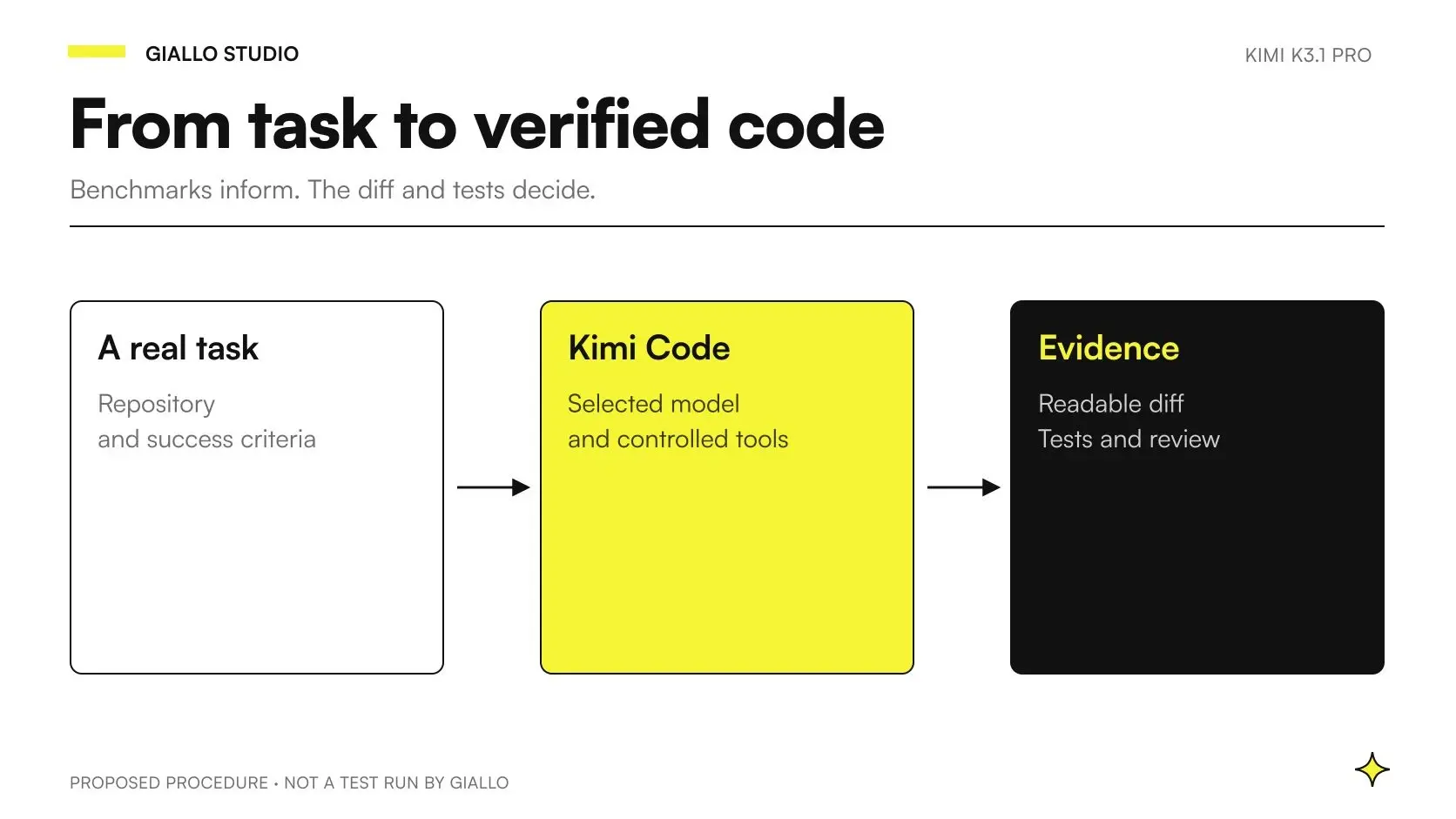
Kimi K3.1 Pro for coding, from model configuration and the repository to verification of the resultKimi K3.1 Pro for coding: configuration and practical testsKimi K3.1 Pro for coding: exact IDs, Code versus API, reasoning and benchmarks. How to test it on a repository while keeping demos separate from verification.
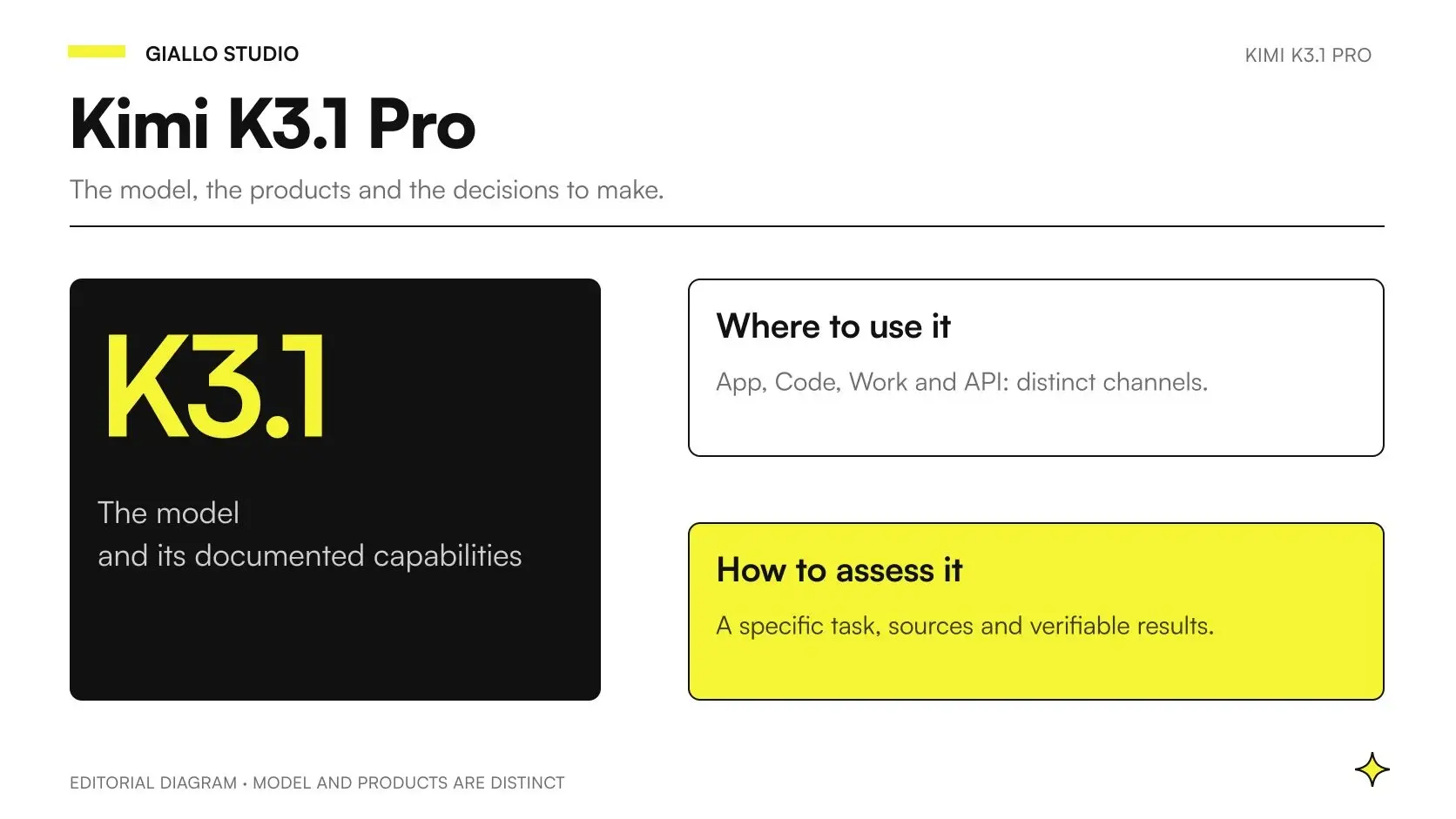
Kimi K3.1 Pro connects documents, code and tools in a verifiable business processKimi K3.1 Pro: what it is, what changes and when to use itKimi K3.1 Pro explained: availability, 1M-token context, APIs, coding and announced weights. What to check before using it in an SME.
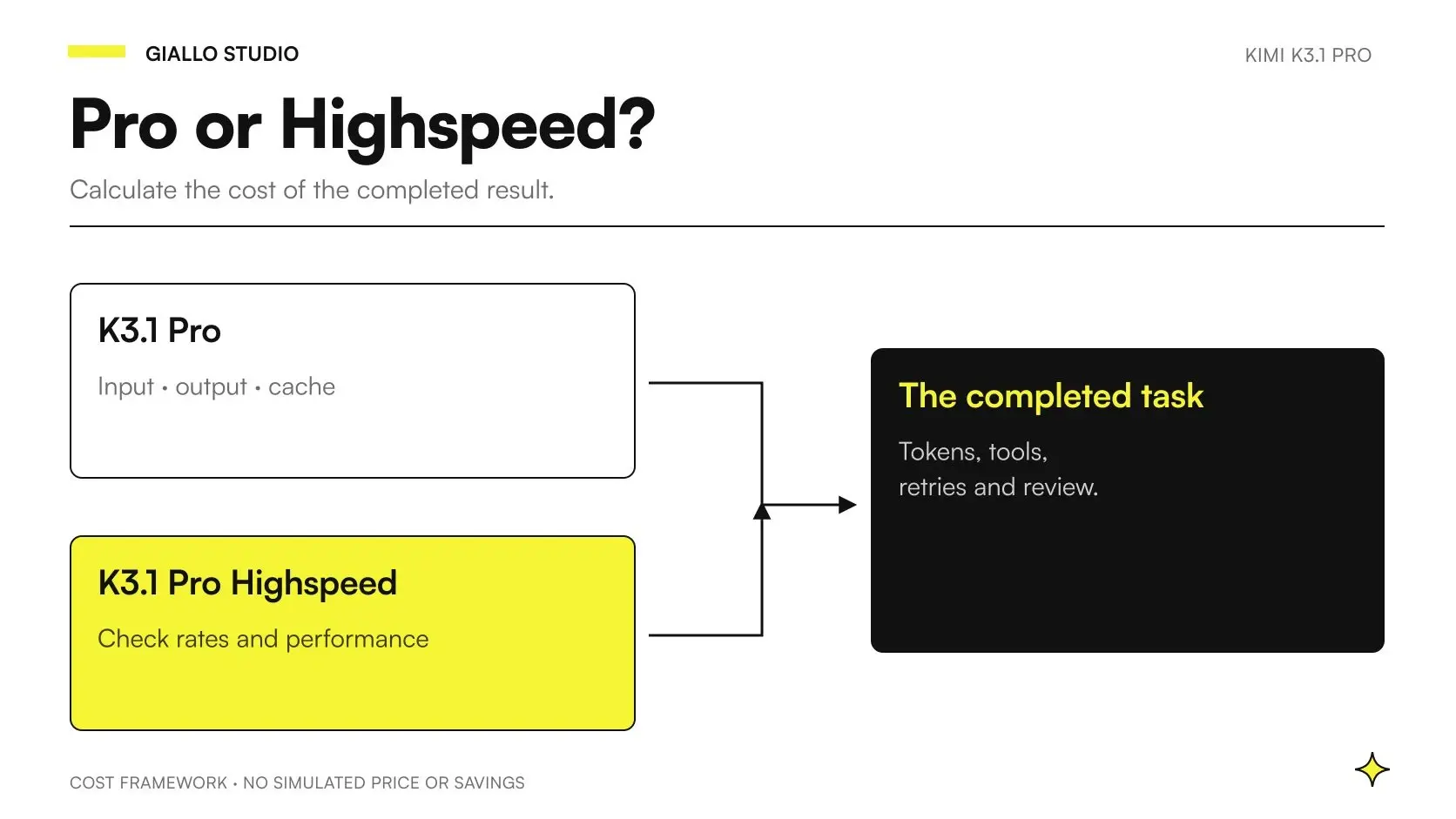
Kimi K3.1 Pro API pricing broken down into input, output, cache writes and cache readsKimi K3.1 Pro: API pricing, caching and budgets for SMEsKimi K3.1 Pro and Highspeed API pricing as of October 24, 2026. Input, output and caching explained through hypothetical calculations and business budgeting criteria.
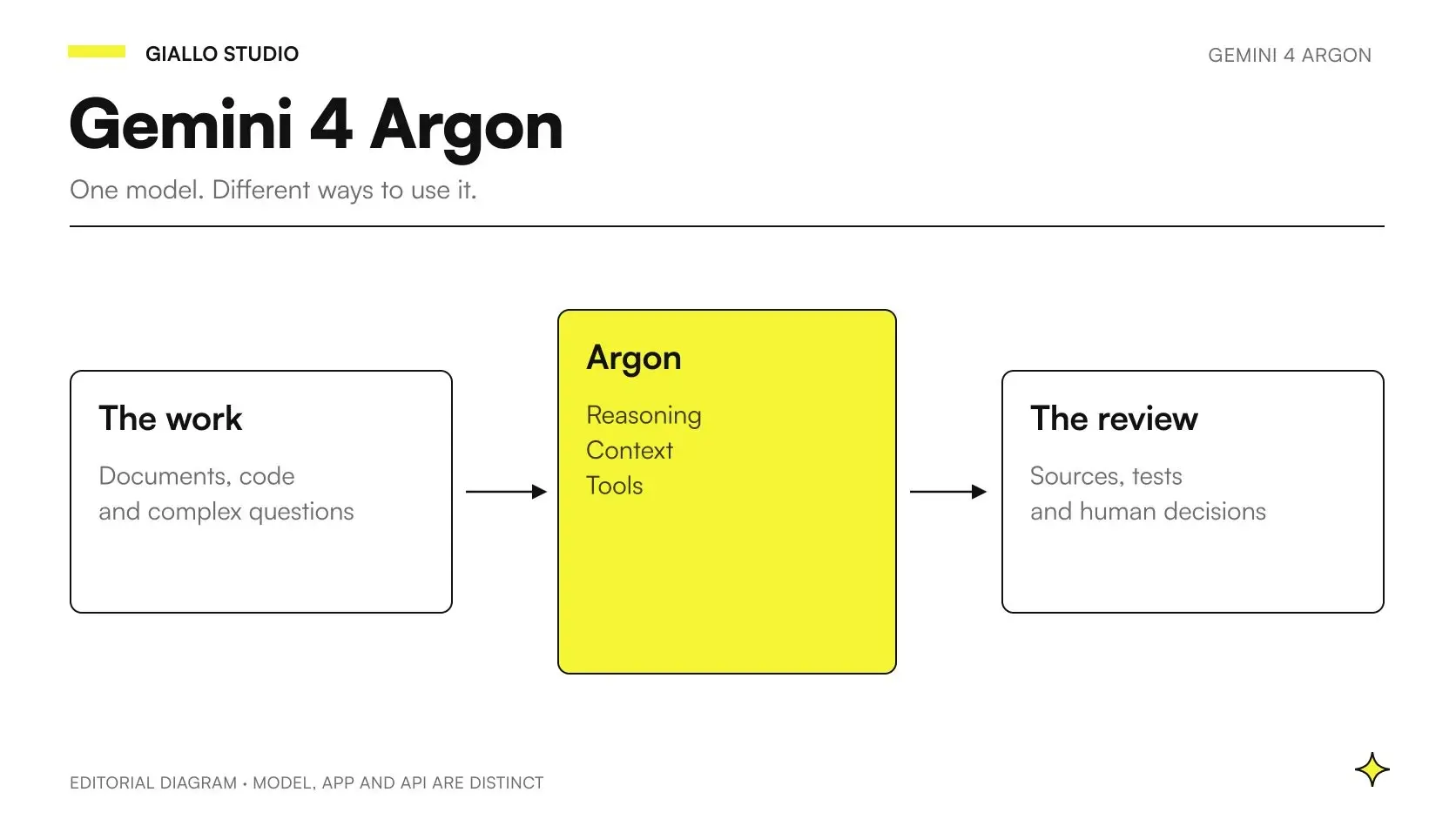
Gemini 4 Argon at the centre of a system connecting documents, tools and human review of resultsGemini 4 Argon: what it is, what it does and when to use it in businessGemini 4 Argon explained: model, app, API, multimodal capabilities, context, limits and availability. Practical criteria for an initial business trial.
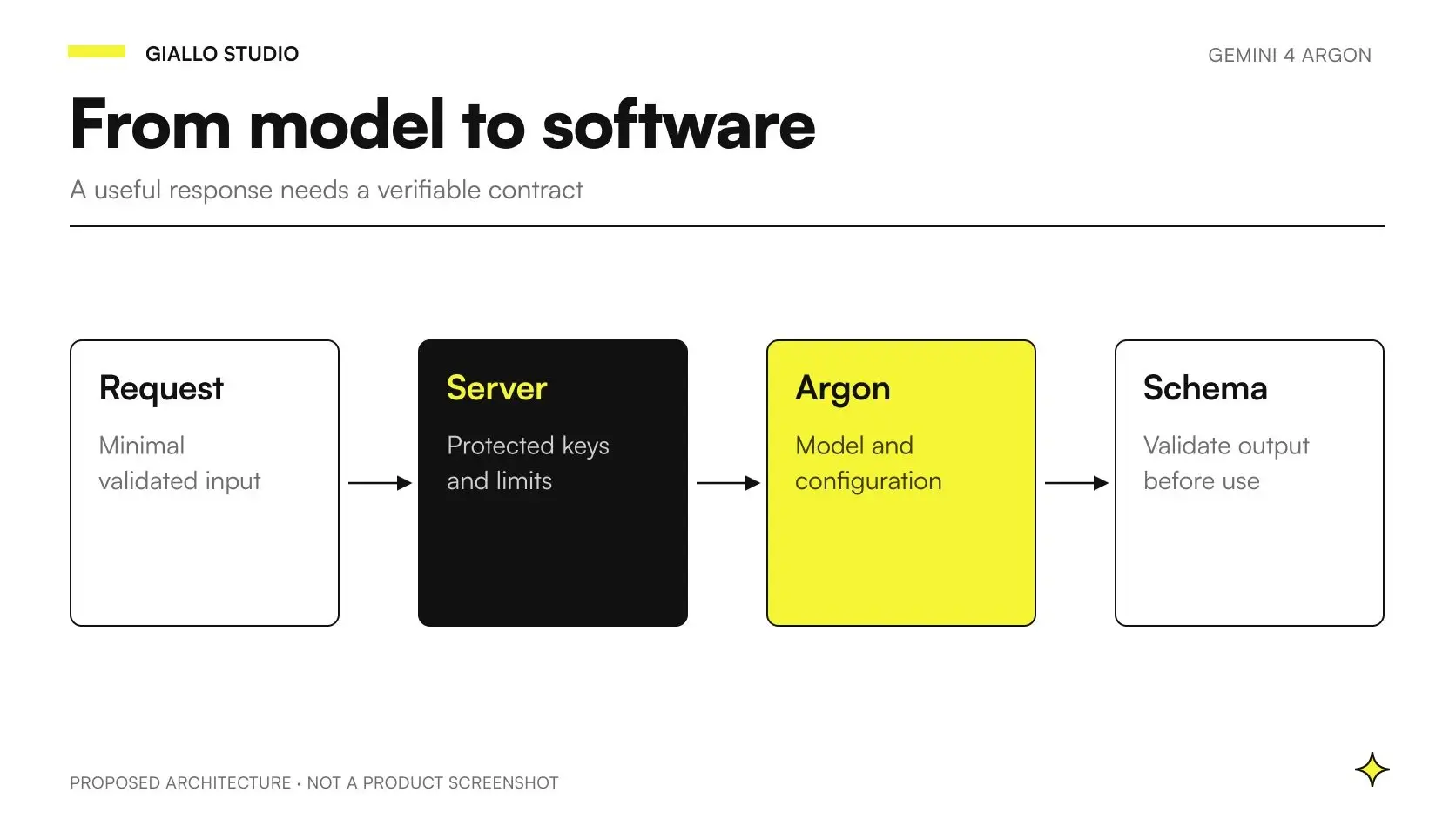
Gemini 4 Argon API integration between a business application, server controls and management softwareGemini 4 Argon API: integrating the model into business processesIntegrate Gemini 4 Argon API with business software: REST calls, structured outputs, timing, errors and controls for a verifiable project.
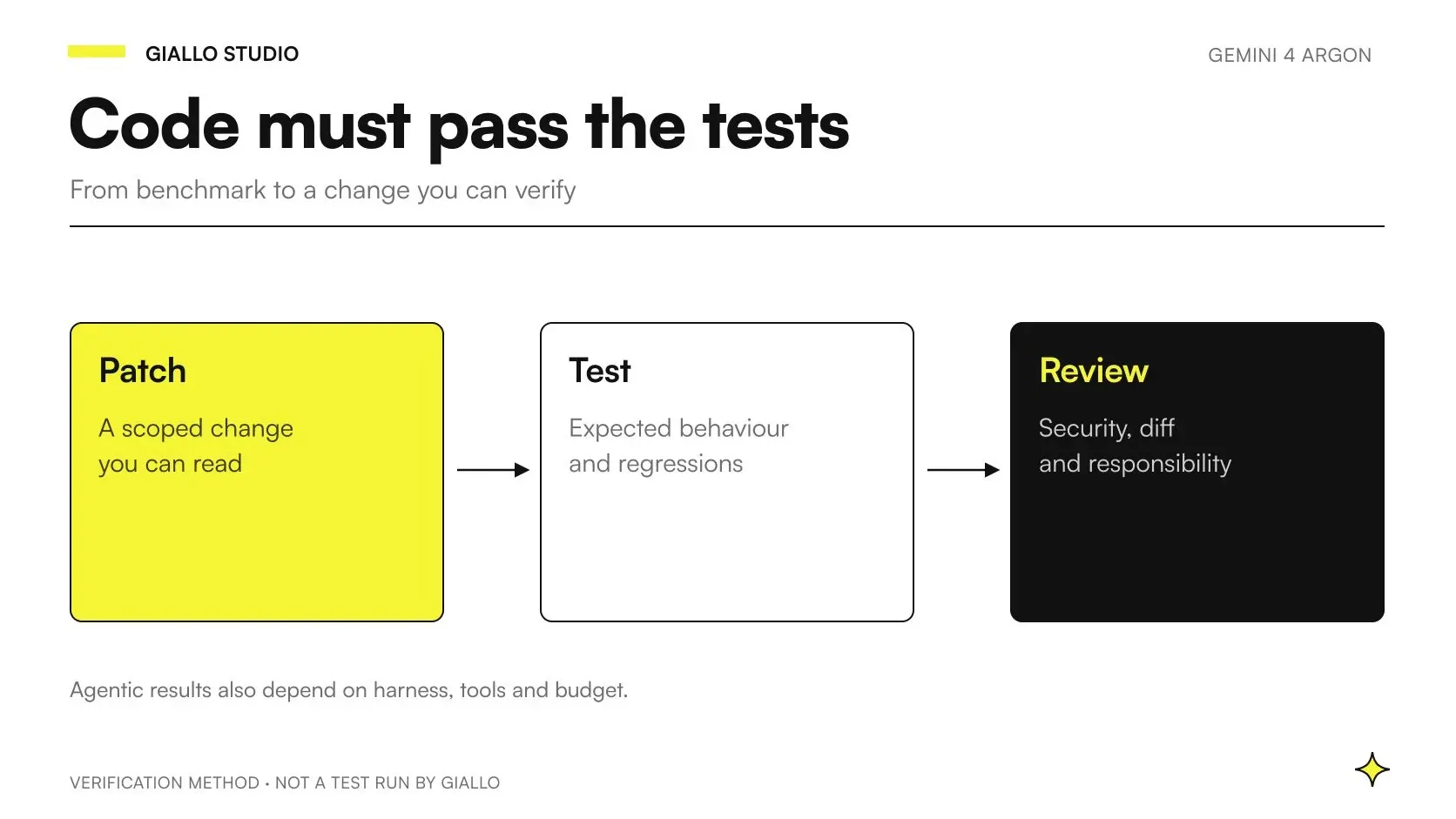
Gemini 4 Argon coding: assessing software patches with a repository, tests and human reviewGemini 4 Argon coding: how to assess it for software developmentGemini 4 Argon coding: benchmarks, tools and criteria for reliable patches. Plan a repository trial without promising secure code.
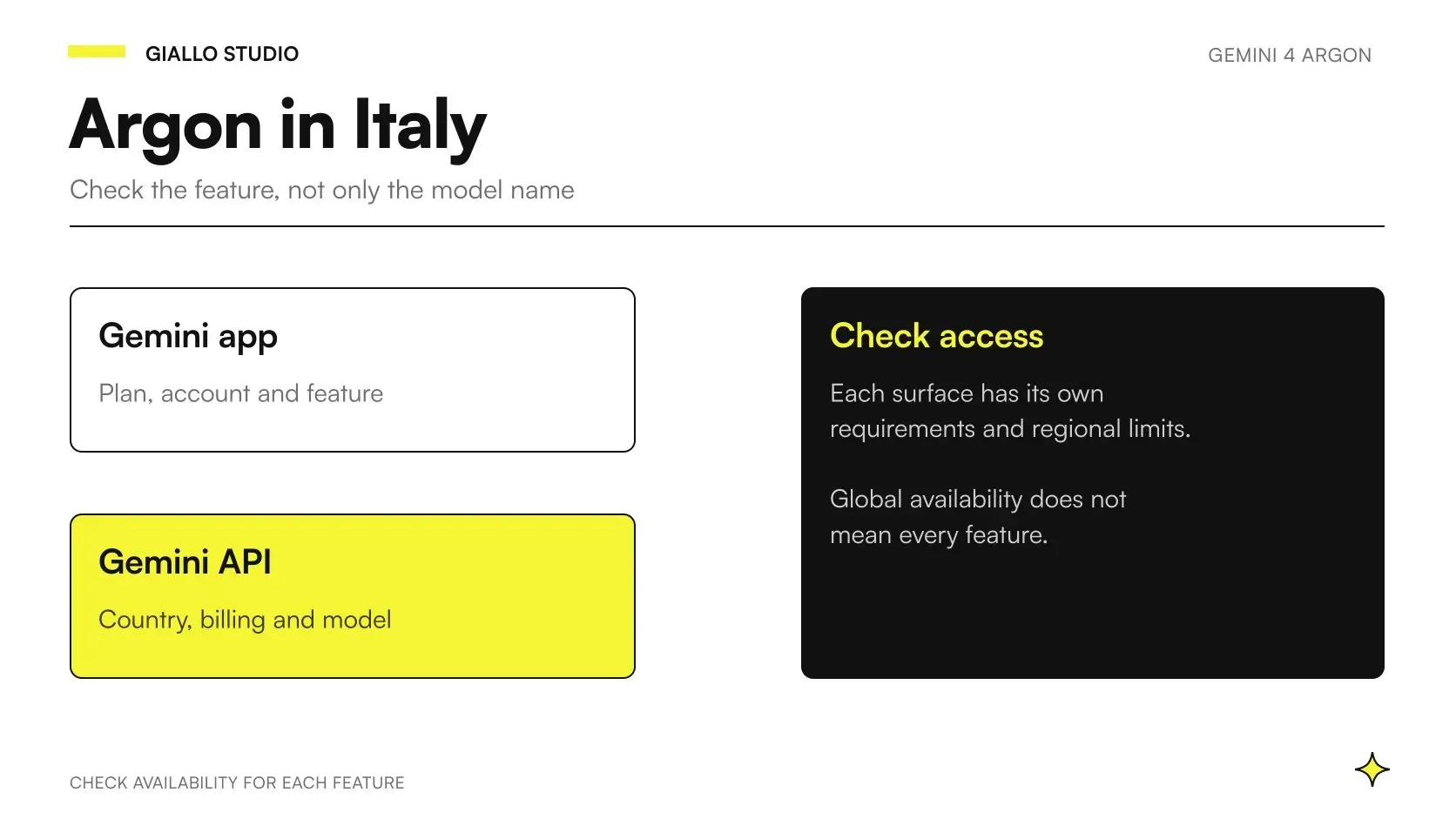
Accessing Gemini 4 Argon from Italy through the app, AI Studio and API, each with distinct requirementsGemini 4 Argon in Italy: access and getting startedGemini 4 Argon in Italy: app, AI Studio and API differences, requirements, features excluded from the EU and a practical path to an initial evaluation.
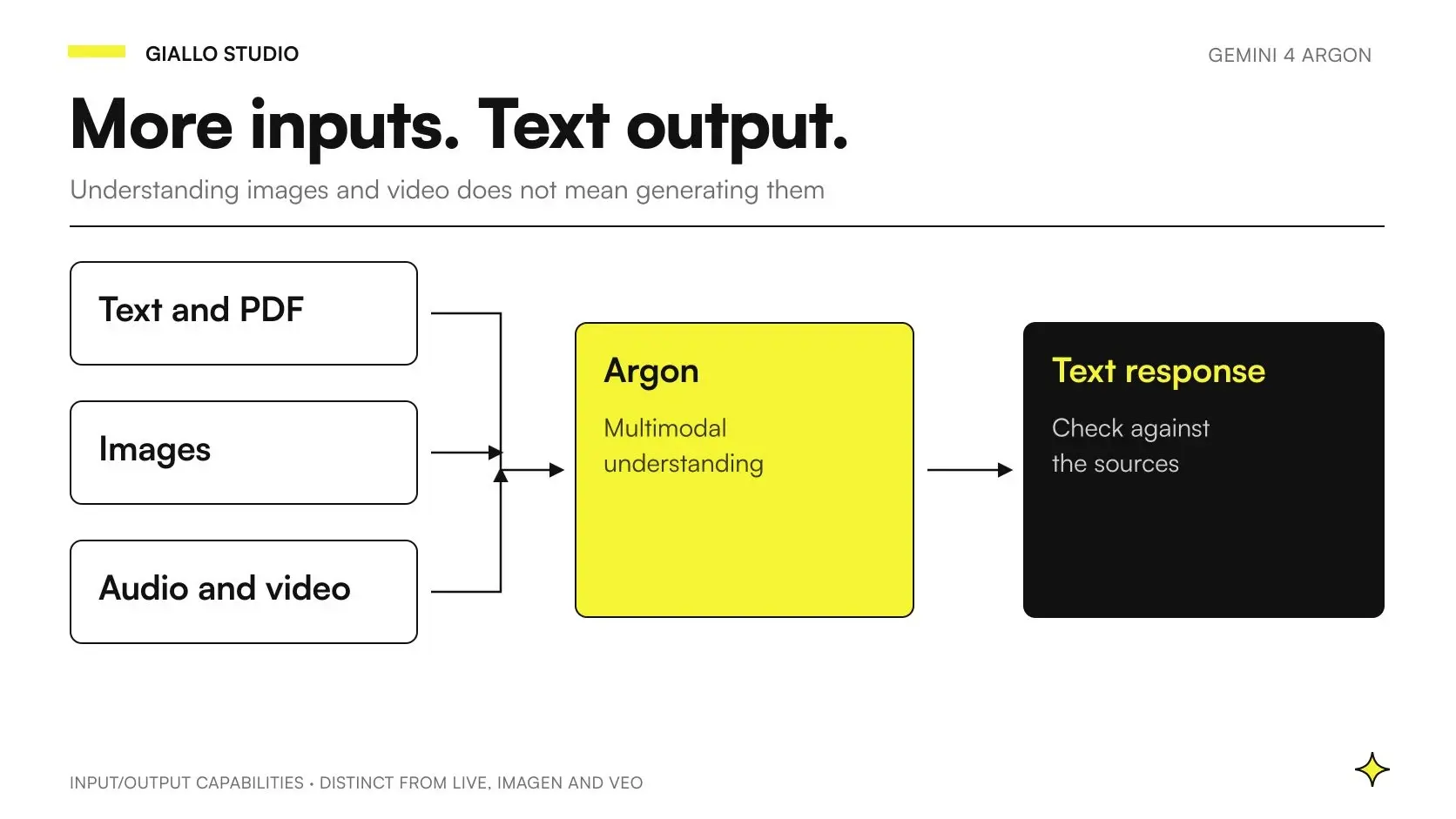
Multimodal Gemini 4 Argon analyzes photographs, video frames and PDFs to produce verifiable text resultsMultimodal Gemini 4 Argon: analyzing images, video and PDFsMultimodal Gemini 4 Argon: supported inputs, text output, video analysis and limits. Two SME examples for checking evidence and missing information.
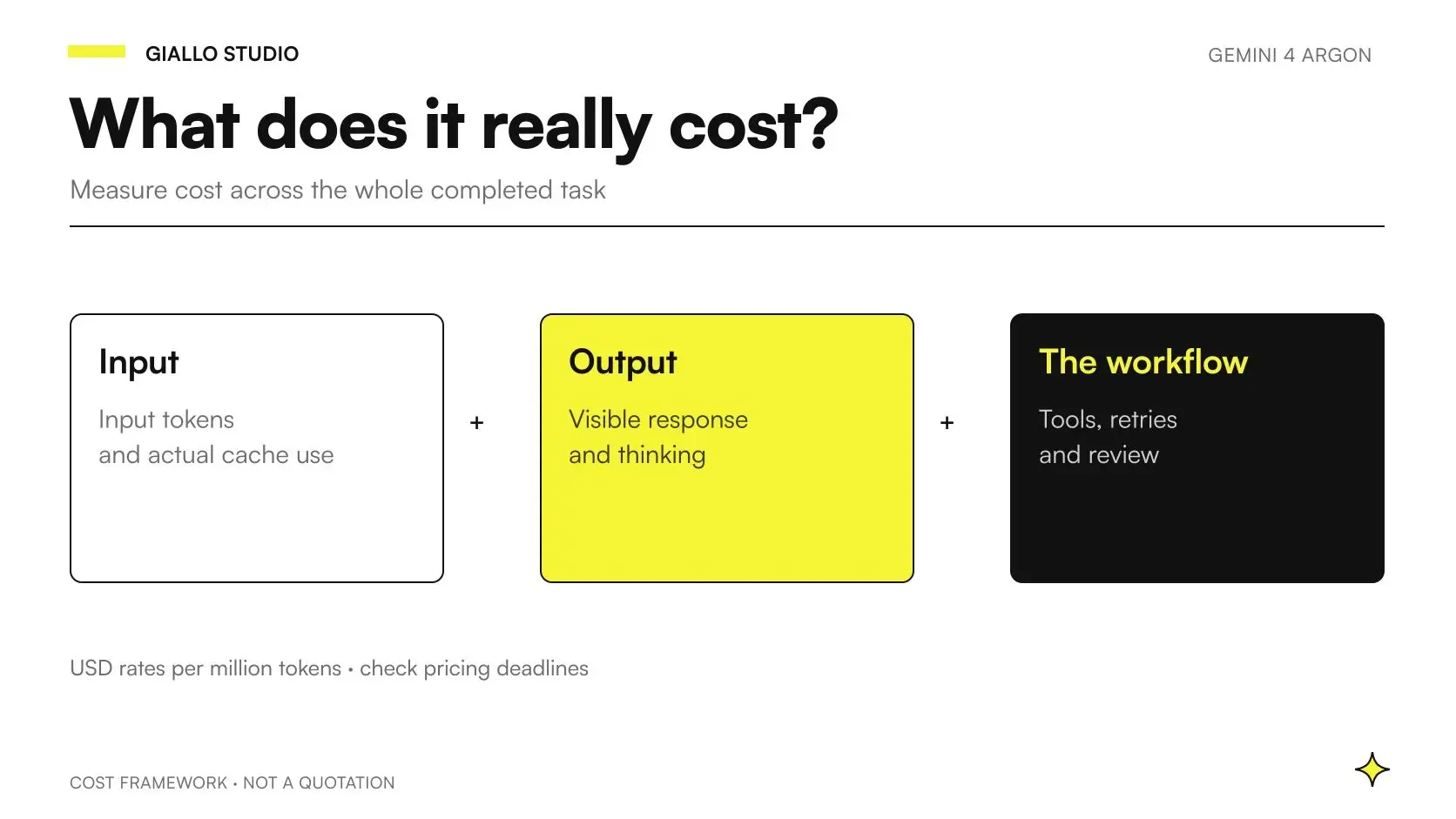
Calculating Gemini 4 Argon pricing across input tokens, output, caching and tool requestsGemini 4 Argon: API pricing and business cost calculationsGemini 4 Argon pricing, the promotion through 30 November 2026, thinking, caching and tools. Worked examples for estimating a business budget.
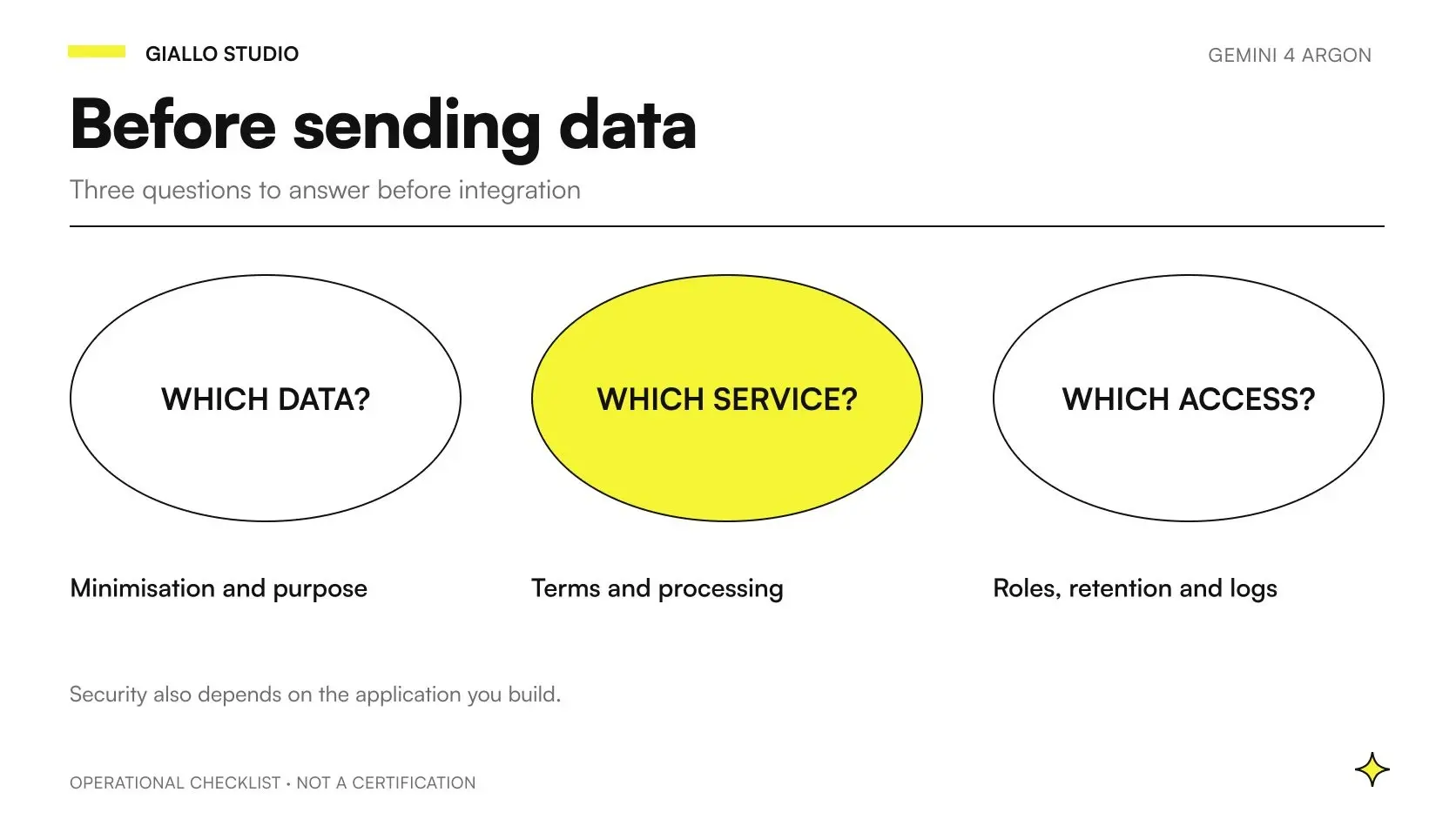
Gemini 4 Argon privacy: boundaries between accounts, business data, retention and authorisationsGemini 4 Argon privacy and security: a business guideGemini 4 Argon privacy: consumer, API, Workspace and Cloud differences. Check data use, training, retention and permissions before a trial.
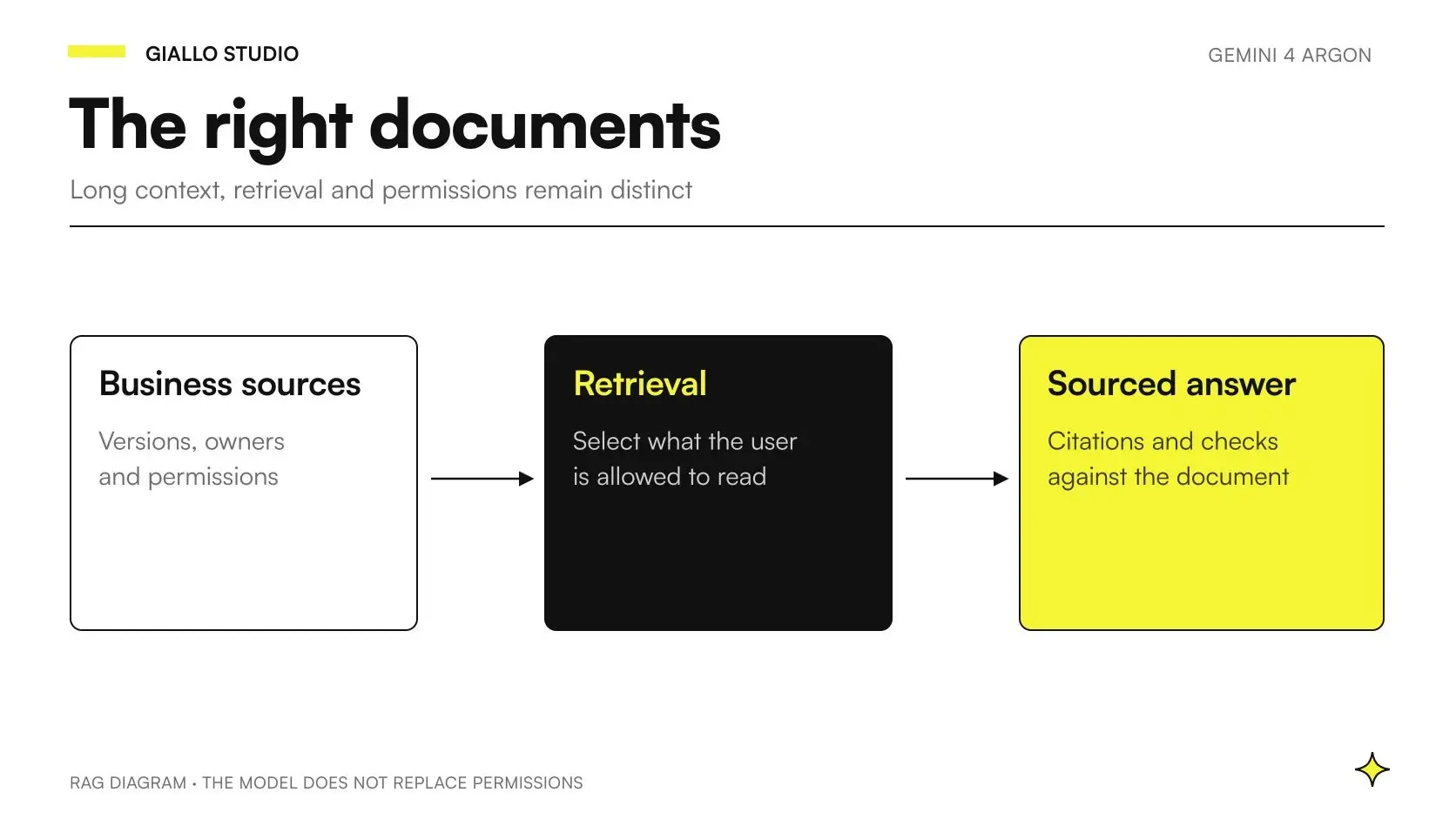
Gemini 4 Argon RAG retrieves authorized business documents with distinct versions, sources and permissionsGemini 4 Argon for RAG and business documents: sources and permissionsGemini 4 Argon RAG for business documents: when retrieval helps, how to enforce permissions and check citations, versions and missing answers.
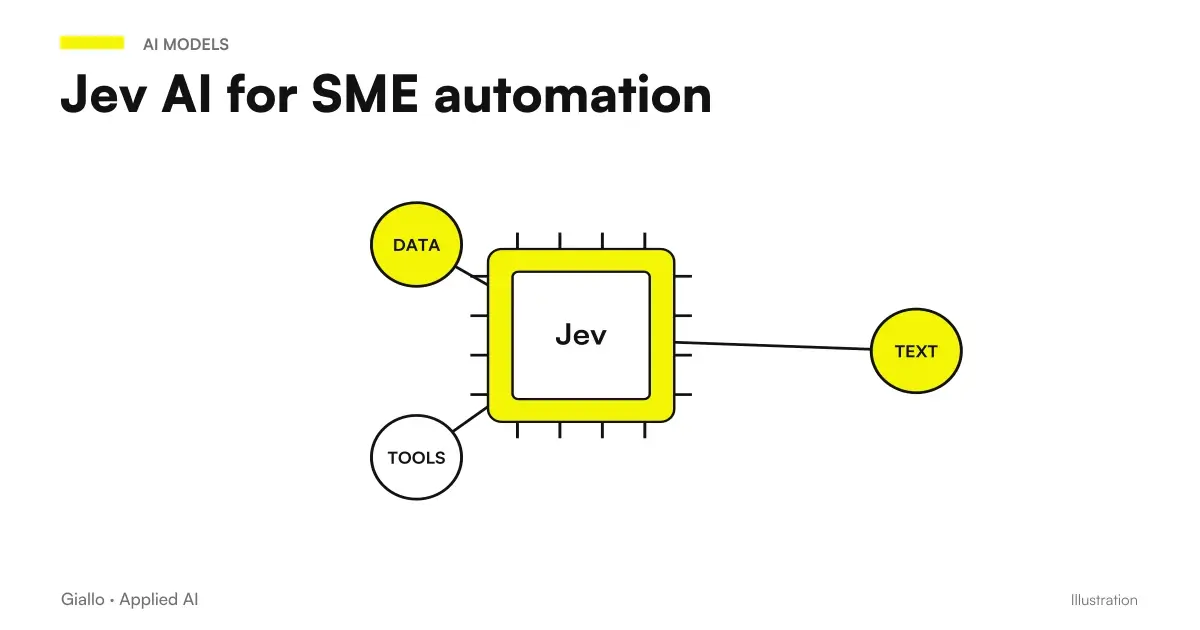
Jev AI at the heart of a business decision and path diagramJev AI explained: what changes for SME automationJev AI helps classify and route requests. Integrate it into SME processes, choose which tasks to delegate and keep the right controls.
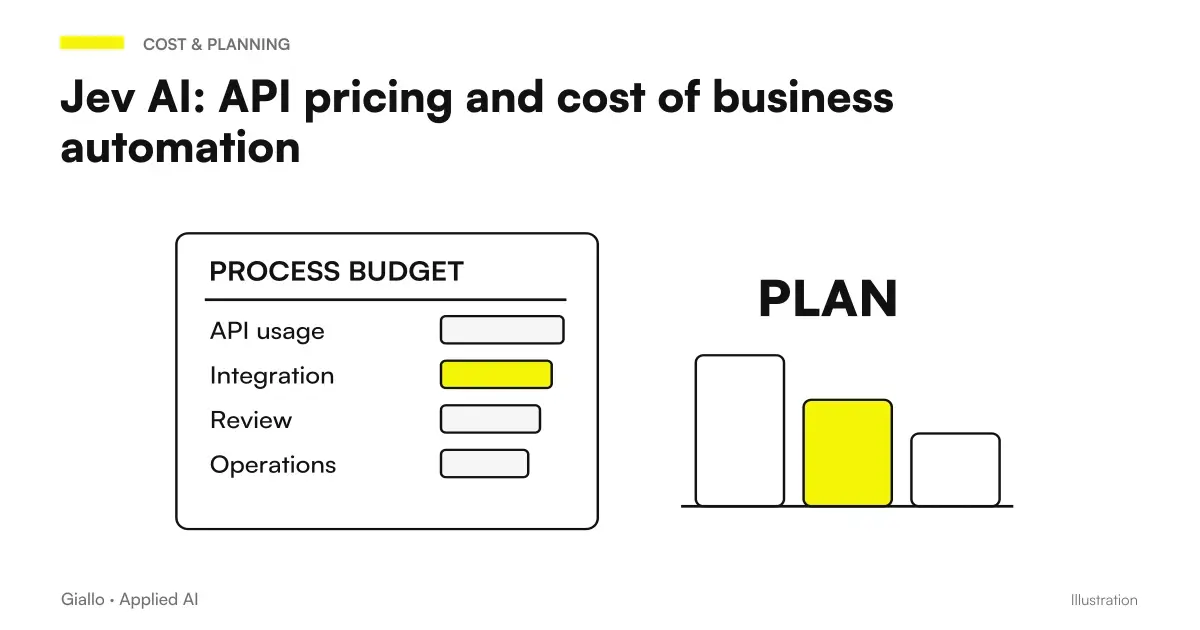
Jev API pricing and an illustrative calculation for one hundred thousand requests of two thousand tokensJev AI: API pricing and cost of business automationTransparent Jev AI API cost calculations: tokens, volumes, review and integration. Build a budget while distinguishing rates from savings.
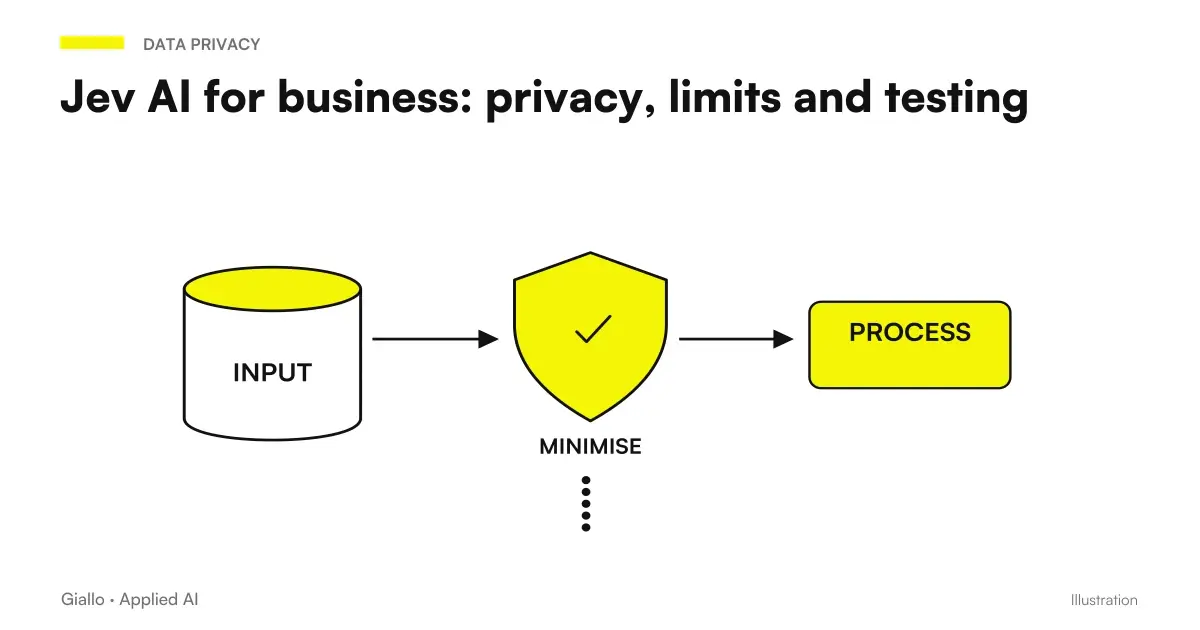
Databases and checklists on Italian data, agreements and tests precede API USA, no training and ZDR enterpriseJev AI for business: privacy, limits and testing on Italian dataBefore using Jev AI in your business: minimum data, US hosting, retention terms and a pilot using Italian messages with practical checks.
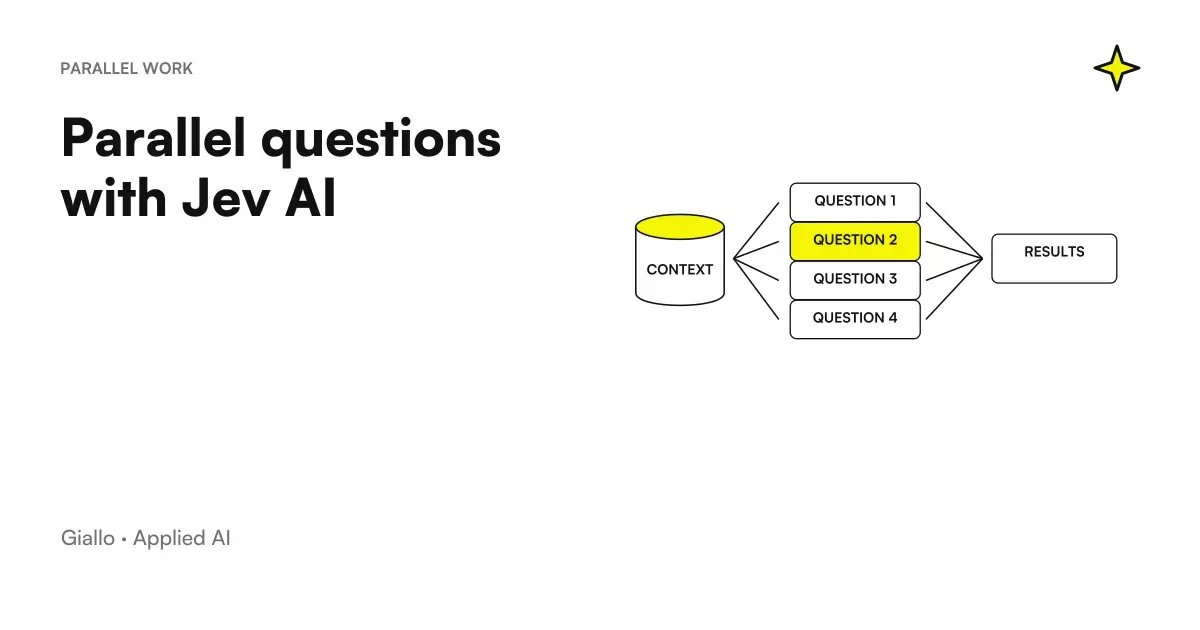
A shared context ramifies into four independent questions for Jev AIParallel questions in Jev AI: fewer requests and repetitionsWhen to group questions in Jev AI and when a second call is needed. Formulas, dependencies and measurements for optimising a business workflow.
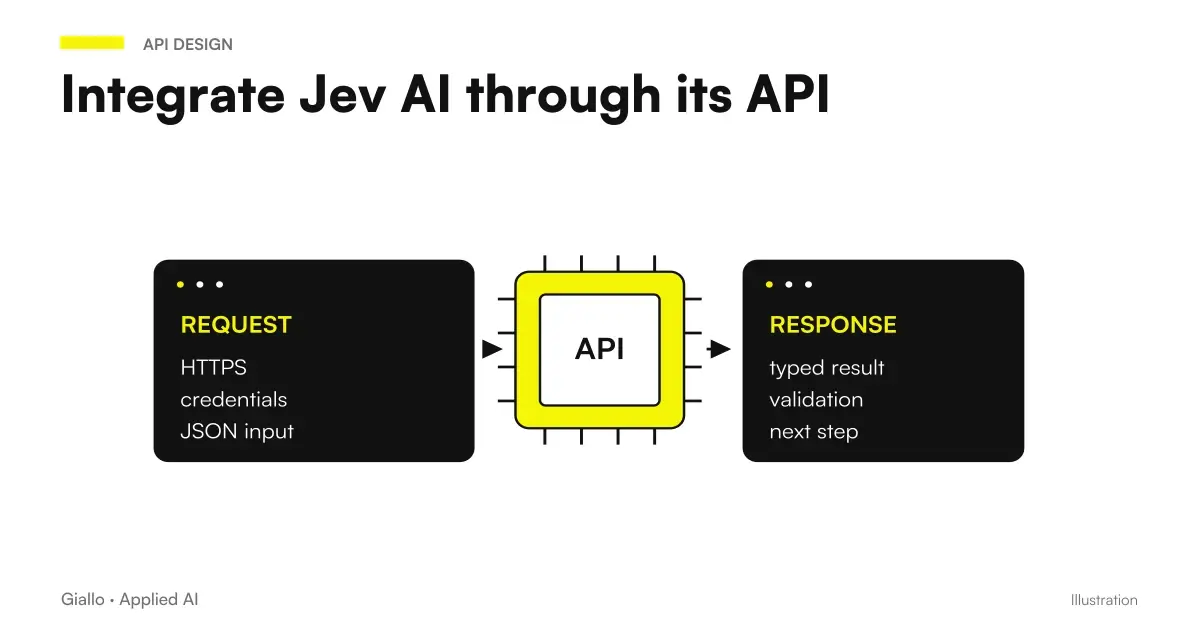
Flow from n8n to HTTP Request node and Jev AI APIIntegrate Jev AI through its API: a workflow for n8n and business softwareConnect Jev AI through n8n's HTTP Request node: verified payloads, credentials, errors and checks before updating business software.
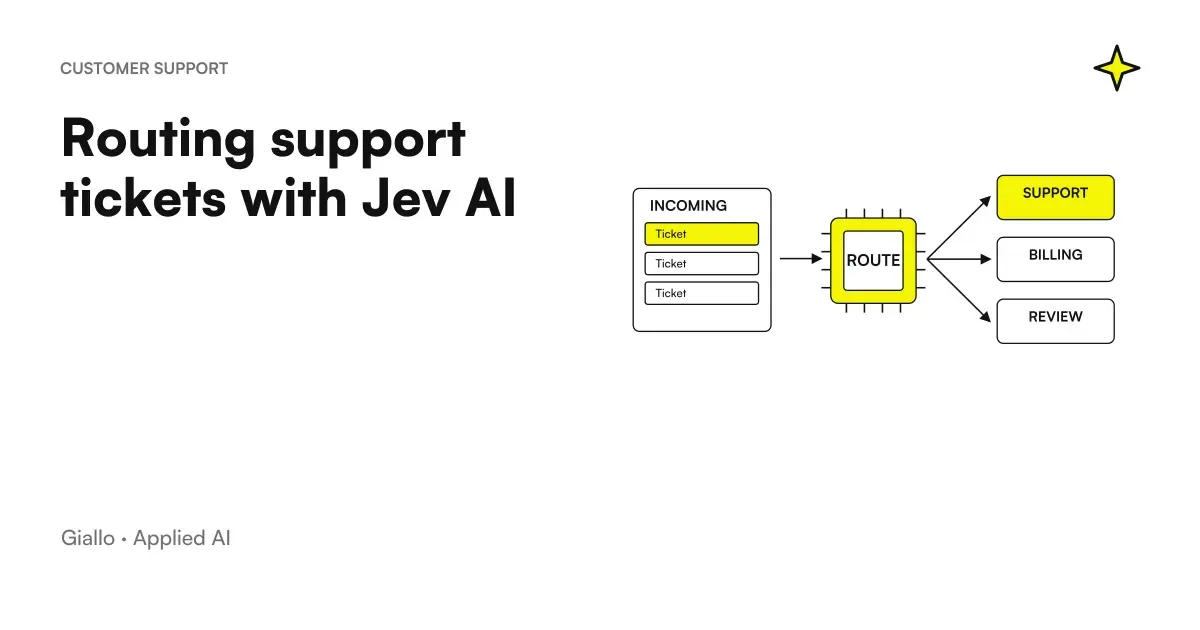
Ticket routed by Jev AI to shipments, invoices or operator reviewRoute support tickets with Jev AI: department, urgency and reviewDesign ticket triage with Jev AI: clear categories, urgency assessed separately, human handoffs and checks before assigning requests.
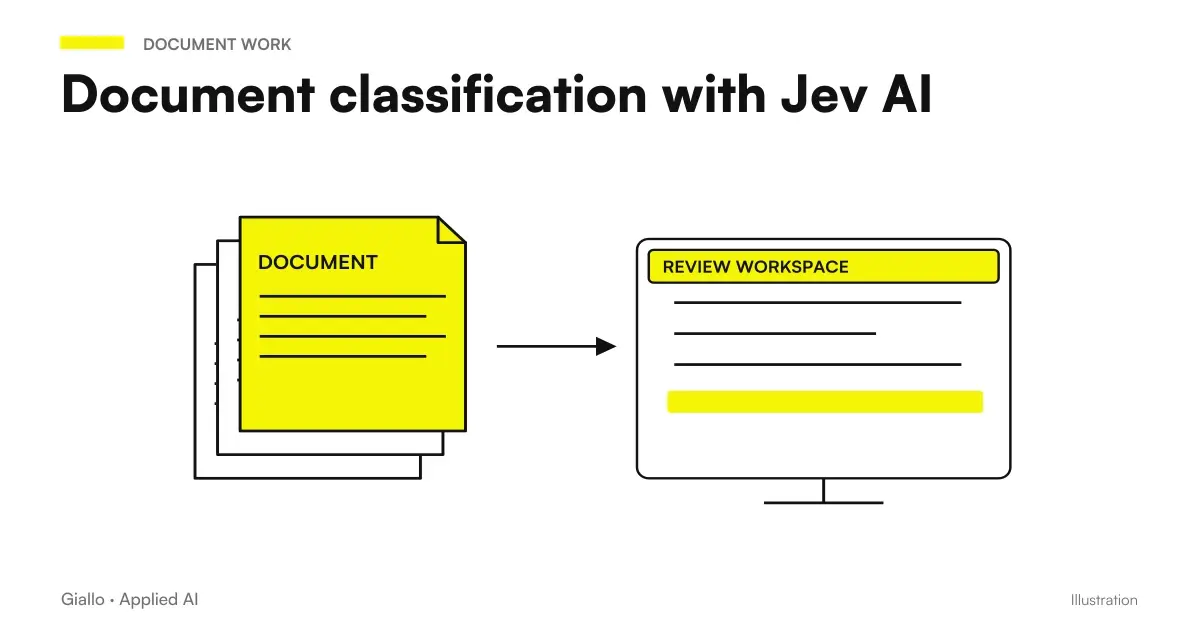
Document prepared with parser or OCR and text classified in commercial or administrationDocument classification with Jev AI: build reliable categoriesOrganise business documents with clear categories, hierarchies and reviews. A Jev AI method from text preparation to tests on your archive.
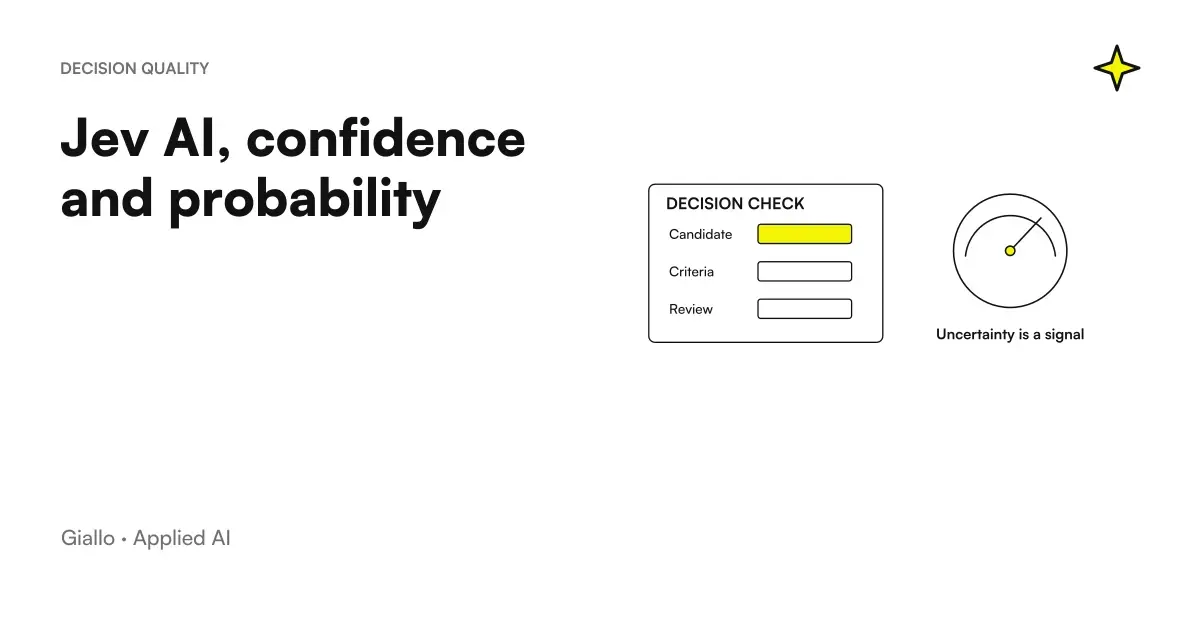
Three Choice bars with probability 0.8, 0.1 and 0.1, confidence 0.7 and an operator for reviewJev AI, confidence and probability: when to get a person to interveneInterpret Jev AI confidence and probabilities, choose process thresholds and build a human review process that corrects errors.
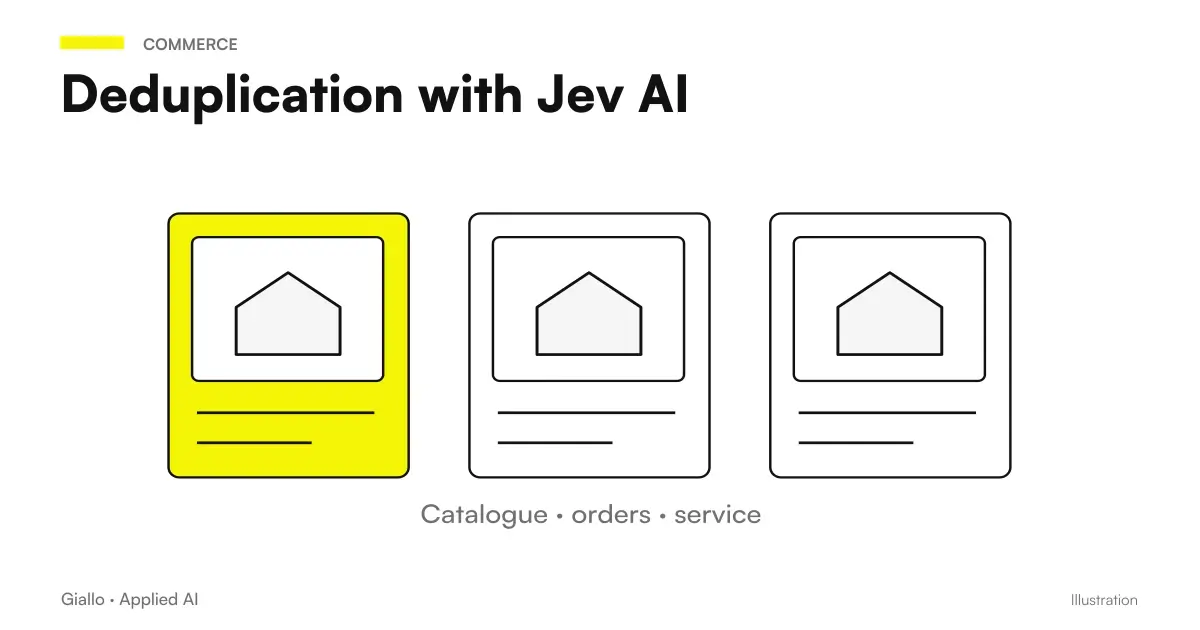
Two fictitious business records compared with Jev AI between themselves, different and uncertain, before the reviewDeduplication with Jev AI: connecting records without merging the wrong onesUse Jev AI to compare candidate pairs in a CRM or catalogue. Separate matching, different and uncertain pairs, with review before every merge.
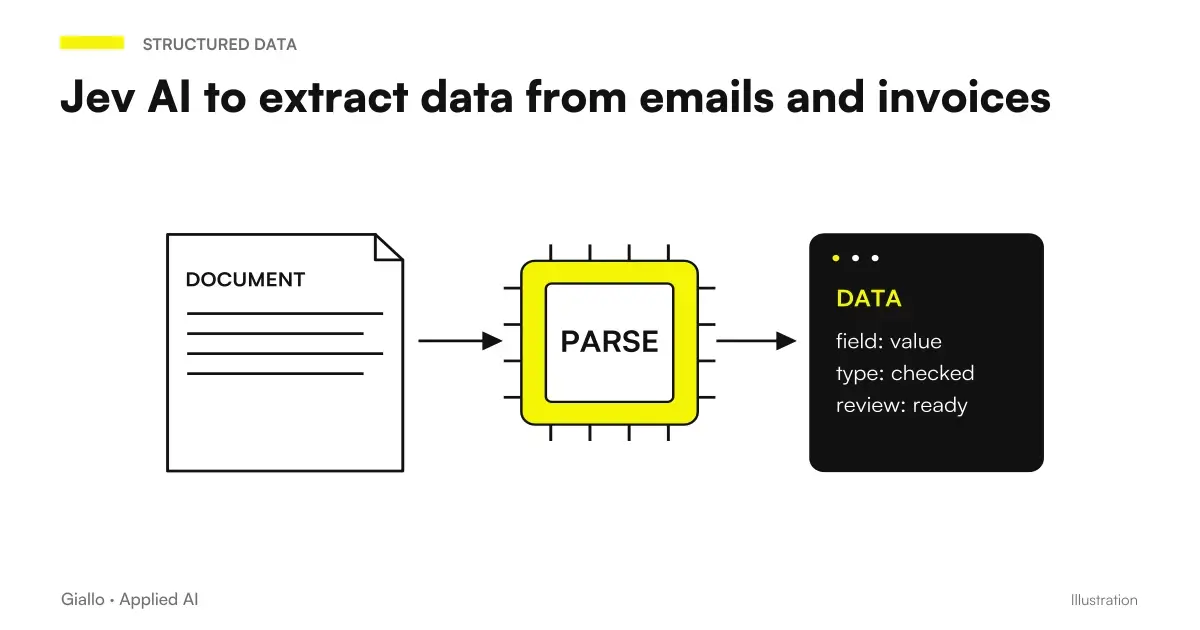
Hypothetical example: Jev chooses the total between candidate amounts and software verifies 100 plus 22 equals 122Jev AI to extract data from emails and invoices: first find, then chooseSeparate parsing, candidates, semantic selection and checks: extract data with Jev AI without inventing missing amounts, dates or strings.
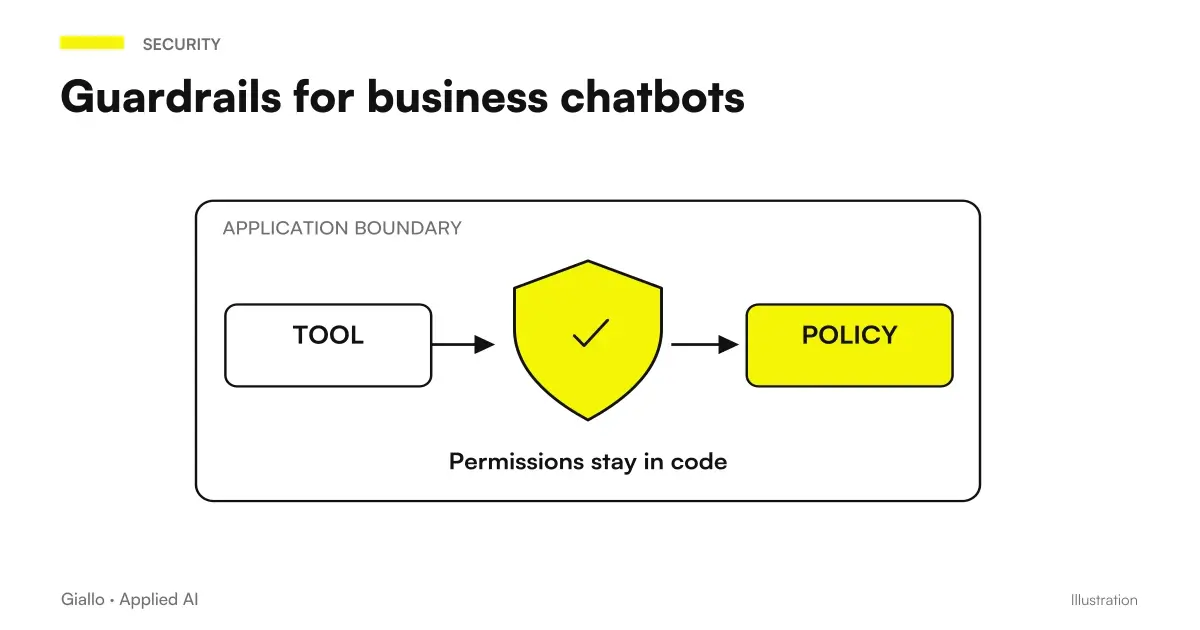
Message evaluated by Jev and then subjected to deterministic permissions of the code before the actionBusiness chatbot guardrails: where to use Jev AIHow to use Jev AI to classify risks and route messages, while maintaining permissions, technical controls, and approvals in the software.
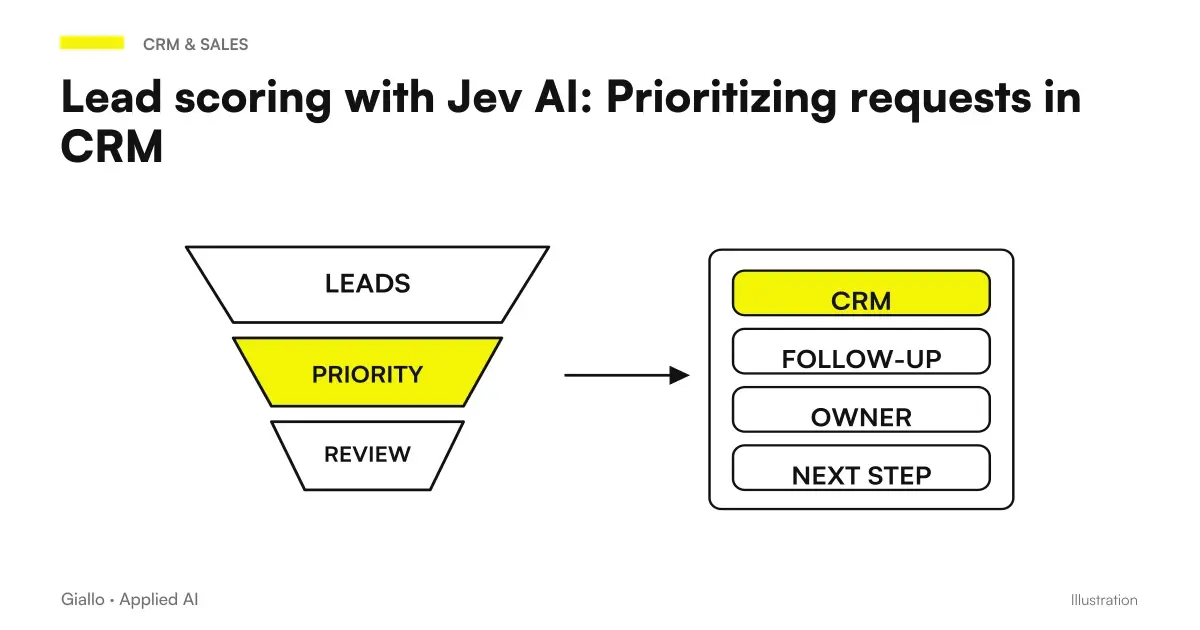
CRM requests ordered with Jev AI and illustrative columns for fit, urgency and informationLead scoring with Jev AI: Prioritizing requests in CRMPrioritise sales leads with Jev AI: separate scoring rubrics for fit, urgency and completeness, team-controlled weights and CRM checks.
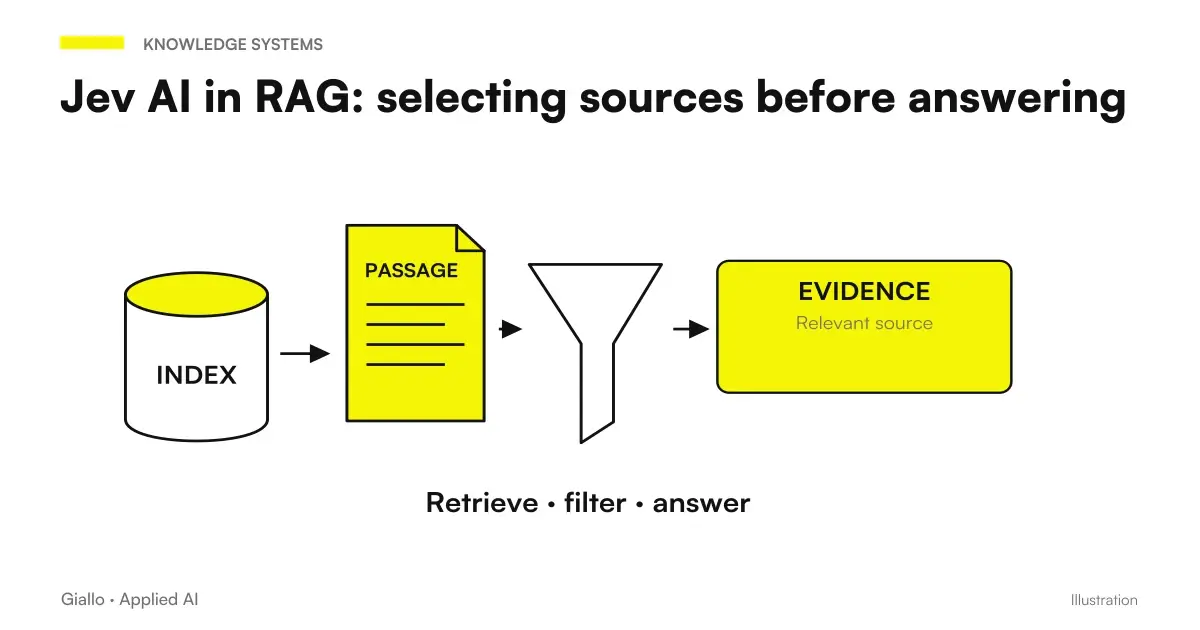
Documents cross a sieve to the evidence and an LLM writing the answerJev AI in RAG: choose sources before answeringWhere Jev AI fits in business RAG: relevance, evidence and conflicts, with separate permissions and a practical knowledge base test.
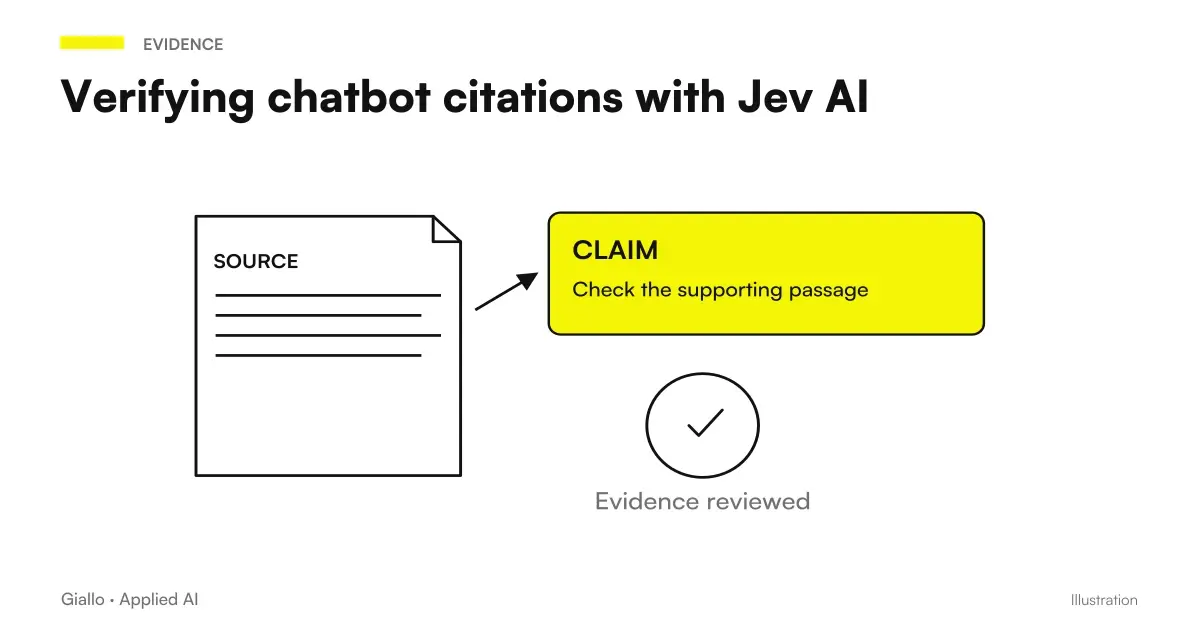
Document with a condition on thirty days compared with a sentence that omits exceptionsVerify chatbot citations with Jev AIAn existing source is not enough: verify AI citations and whether sources support the answer, handle conditions and stop doubtful claims.
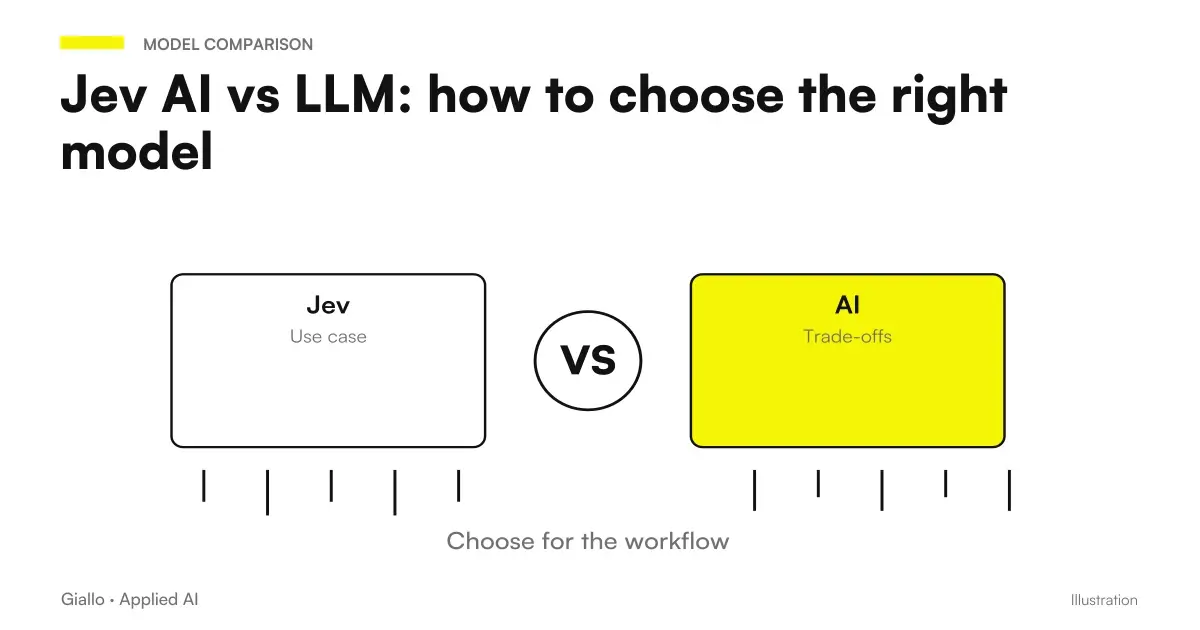
Visual comparison between a decision path and a text generation pathJev AI vs LLM: how to choose the right modelClosed-set decisions, text and reasoning need different roles. A matrix for choosing Jev AI, an LLM or a mixed workflow for SME processes.
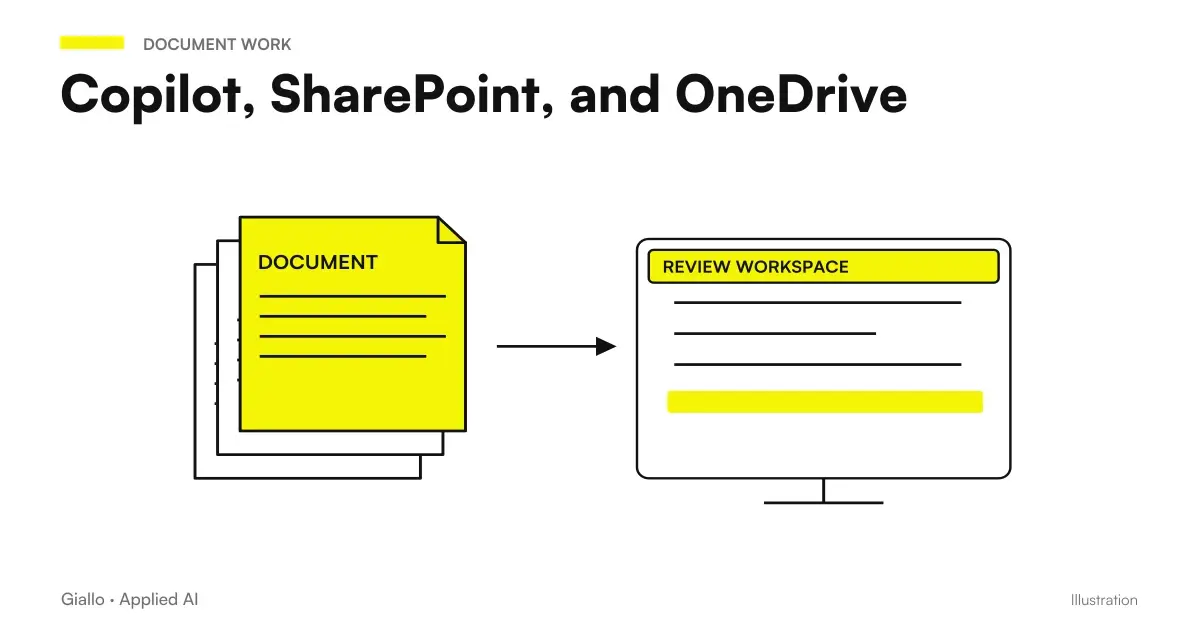
A digital archive links approved documents, versions, and accesses to Copilot responsesCopilot, SharePoint, and OneDrive: Finding Reliable DocumentsPrepare SharePoint and OneDrive for Copilot: approved documents, versions, permissions and search tests. A practical method for SME document archives.
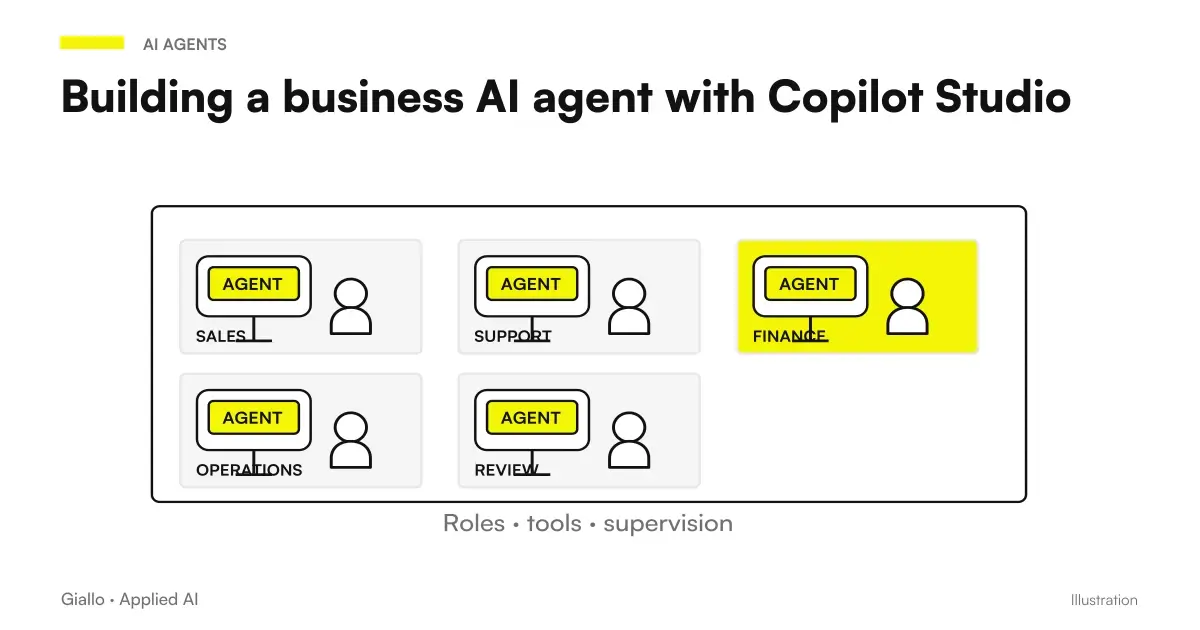
A Copilot Studio agent connects documents, tools, and operators in a business environmentCopilot Studio: creating an AI agent for the companyDesign an AI agent with Copilot Studio: sources, tools, channels, permissions and tests. Differences from Agent Builder and a path for an SME.
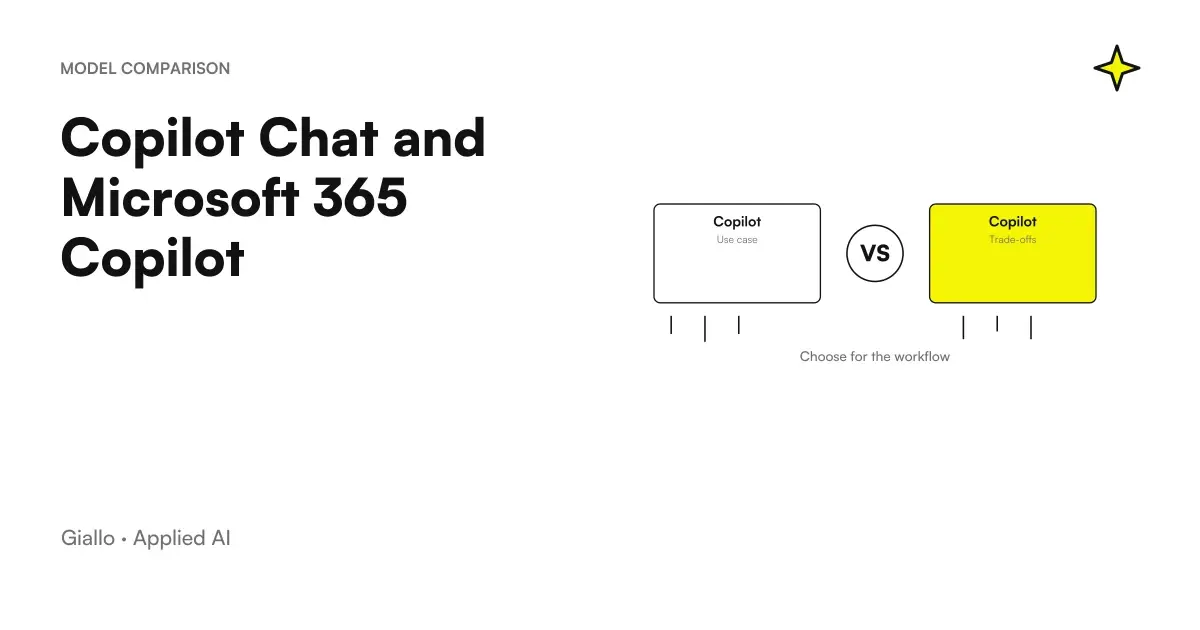
Three Microsoft Copilot login paths link account, document, and business contextCopilot Chat and Microsoft 365 Copilot: What ChangesCopilot Chat vs Microsoft 365 Copilot: accounts, Basic and Premium licences, business files and agents. Choose appropriate access for each SME role.
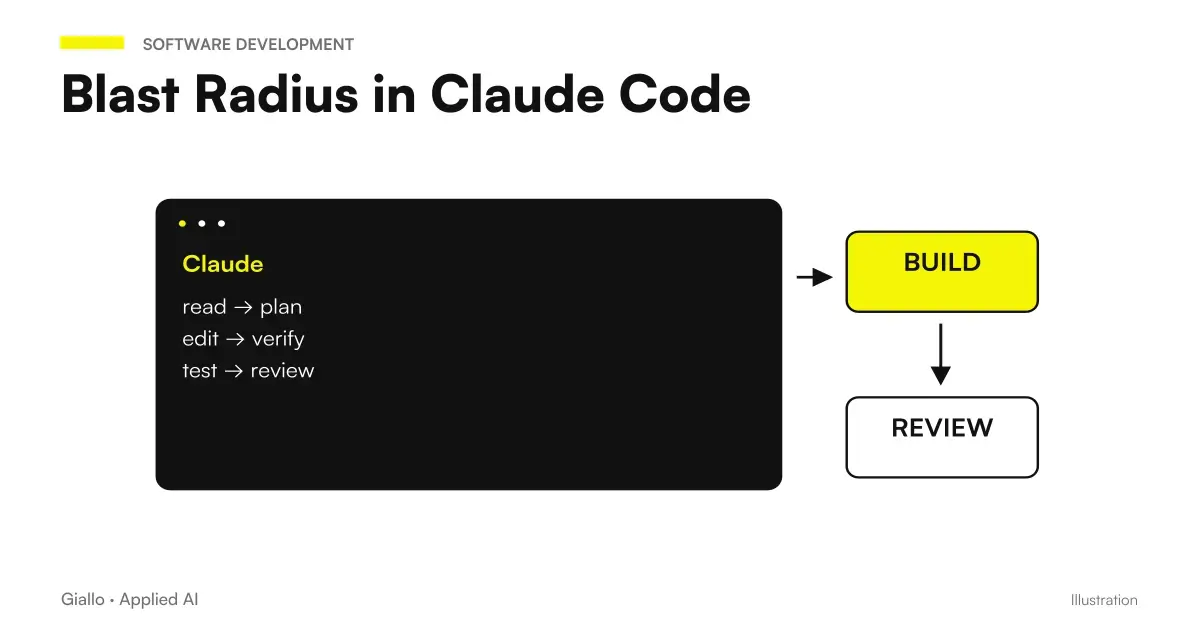
Claude Code Blast Radius Mod: Suspended command, expected impact and choice between proceed and cancelBlast Radius in Claude Code: Assessing Commands Before ActingClaude Code Blast Radius Mod: previews, user choices and the limits of recognised commands. Evaluate it while distinguishing a demo from a business policy.
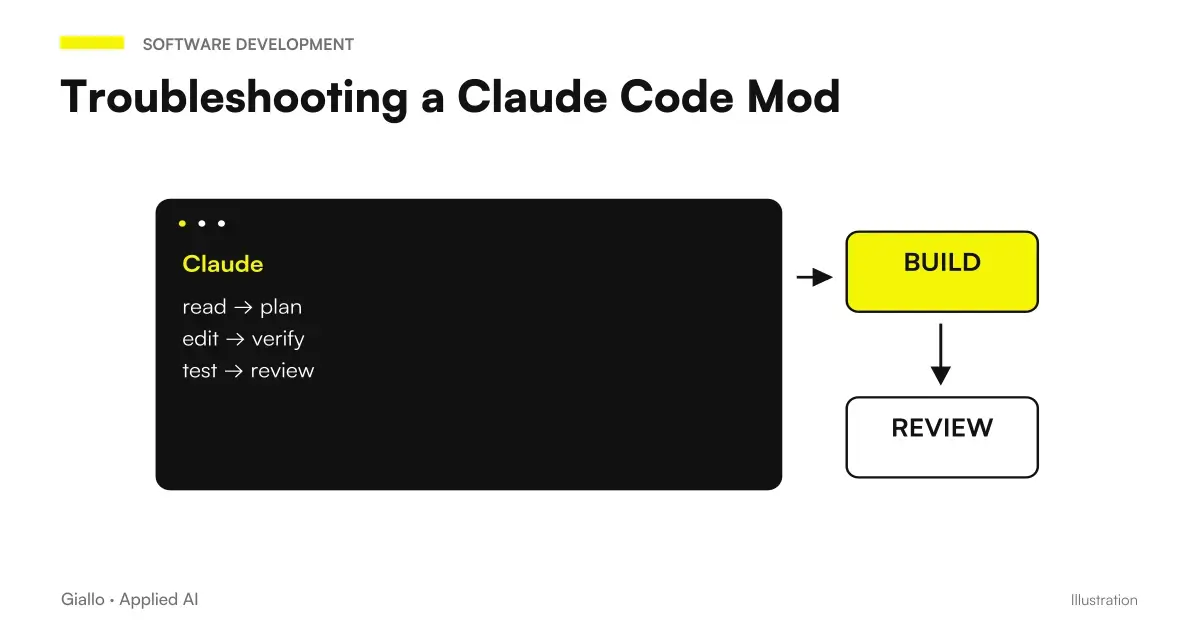
Claude Code Mod does not work hot reload: path from symptom to version, policy, upload, UI and statusClaude Code Mod not working: loading, hot reload and stateClaude Code Mod hot reload not working? Check the version, policy, loaded code, UI and state. A structured diagnosis with logs and reproducible tests.
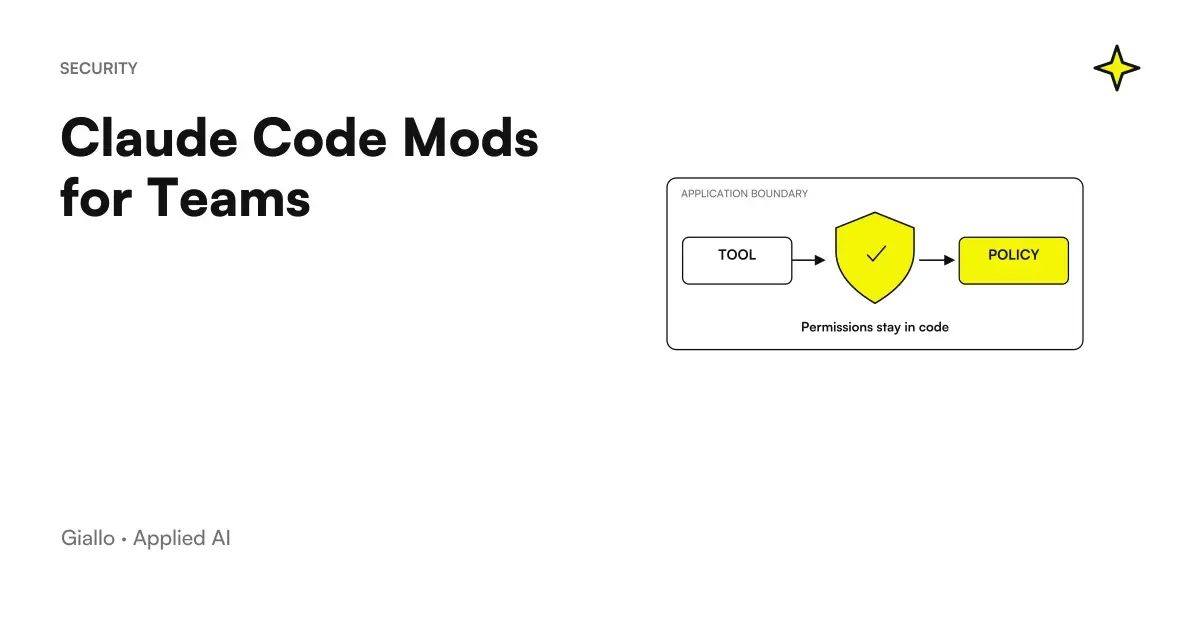
Claude Code Mods enterprise security team: managed provenance, review, distribution and policy boundaryClaude Code Mods for Teams: Distribution, Policy and SecurityClaude Code Mods security for business teams: private marketplaces, versions, reviews and managed policies, with code boundaries and an adoption plan.
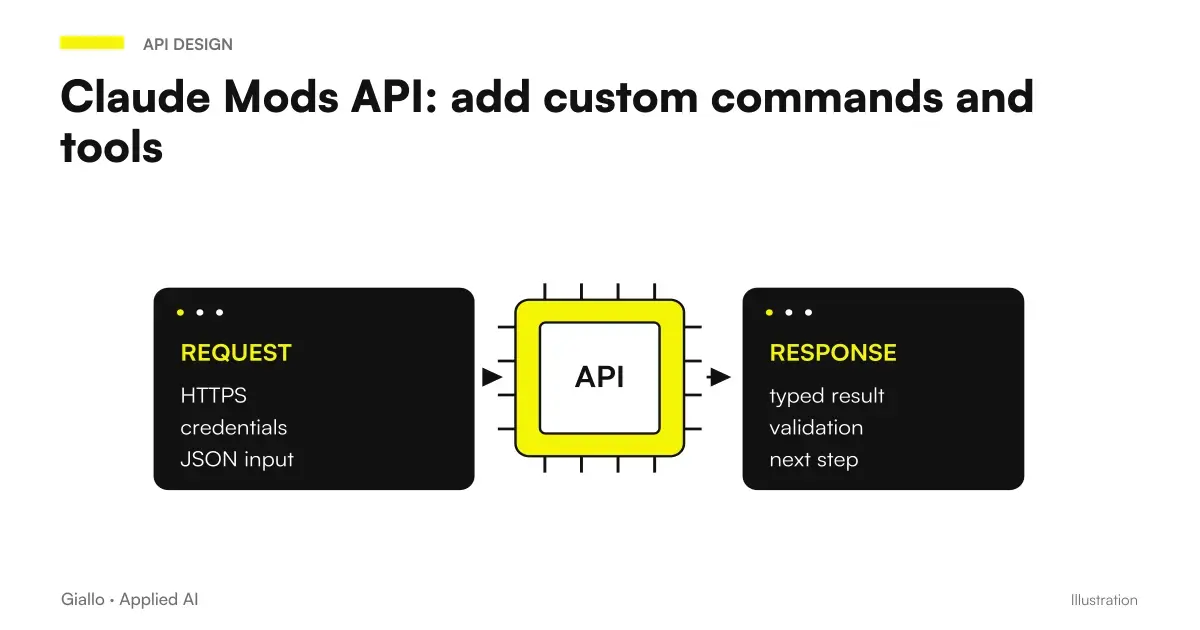
Claude Mods API custom tool command: two separate inputs to a read-only lookup ticketClaude Mods API: add custom commands and toolsClaude Mods API custom tool commands: choose the entry point, define inputs and errors, and verify canonical names. A read-only example with dummy tickets.
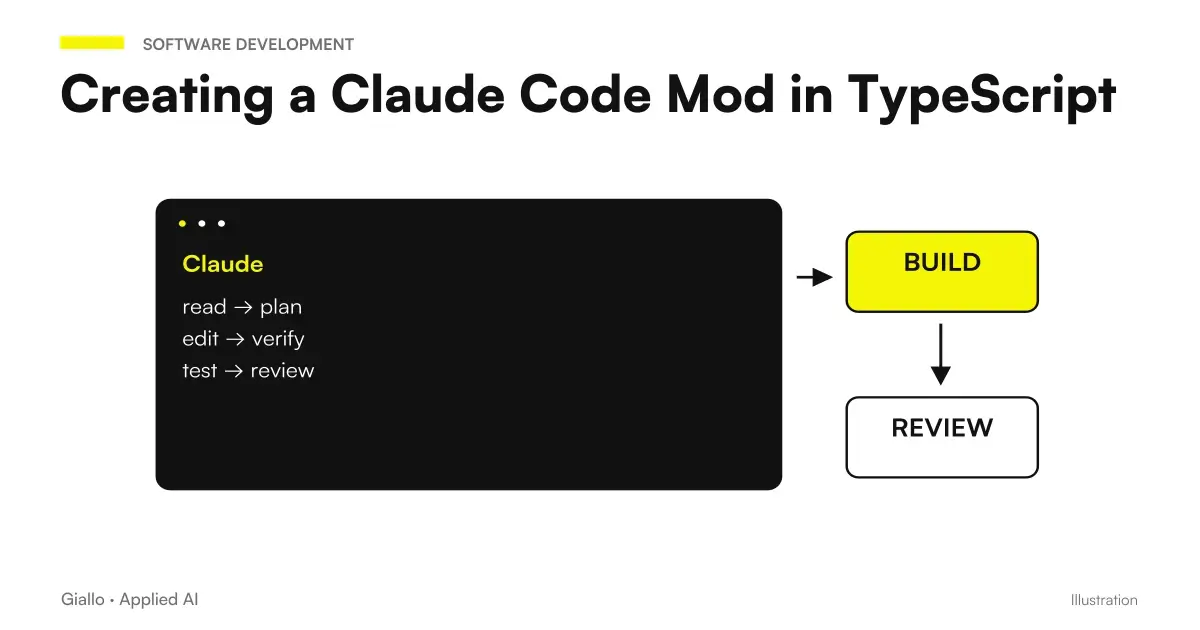
Create Claude Code Mod TypeScript: manifest, input module and verification loopCreating a Claude Code Mod in TypeScript: the first projectCreate a Claude Code Mod in TypeScript: three files, local types, loading and validation. A small first project with explicit boundaries and checks.
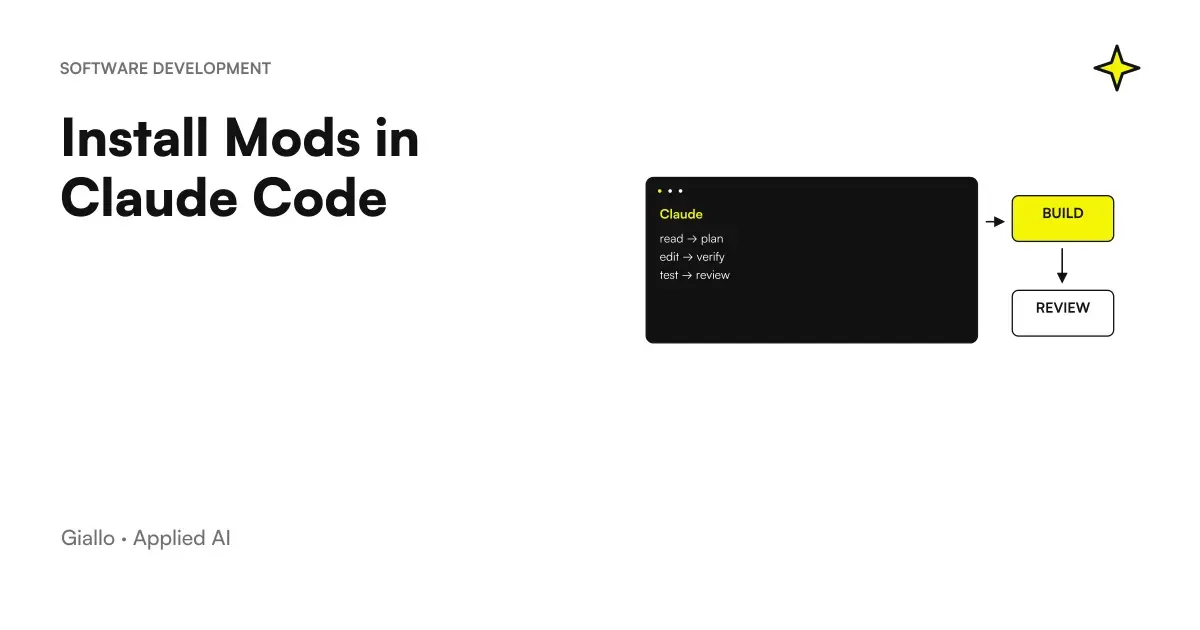
Install Mods Claude Code: route from marketplace to broom, upload and updateInstall Mods in Claude Code: scope, reloads and updatesInstall Claude Code Mods: choose a marketplace and scope, check loading and update the right copy. Steps and diagnostics without running commands blindly.
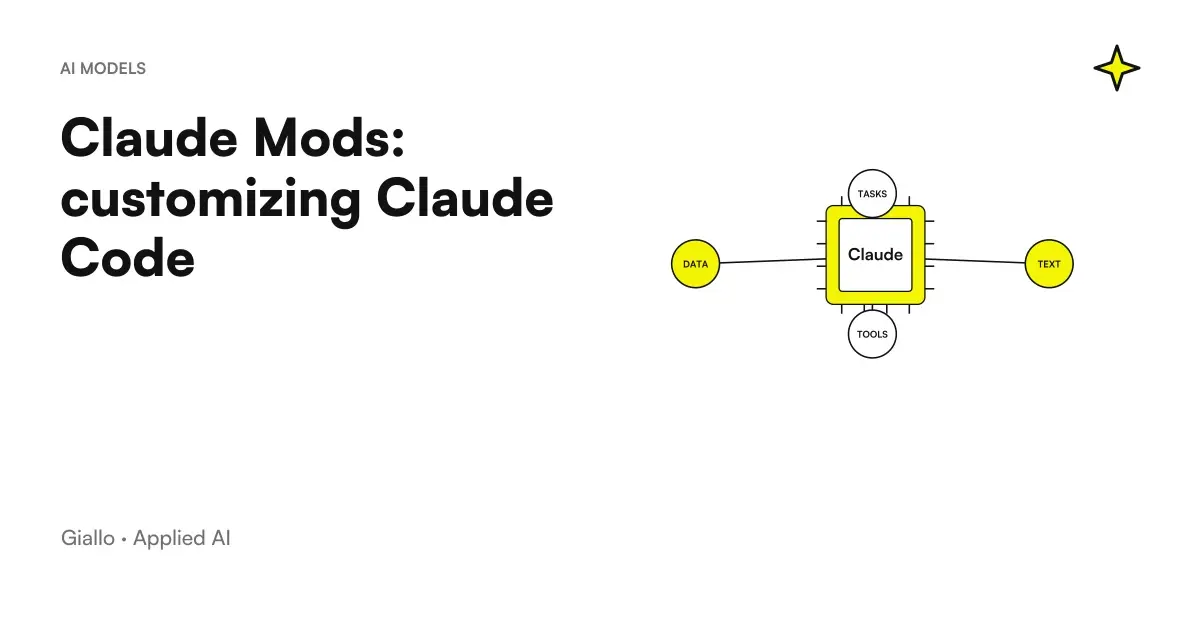
Mods Claude: what they are and how they connect to Claude Code's interface, events and toolsMods by Claude: what they are and when they are needed in Claude CodeClaude Mods: what they are, how they change Claude Code and when to use Hooks, Skills or MCP instead. Practical cases, official demos and team limitations.
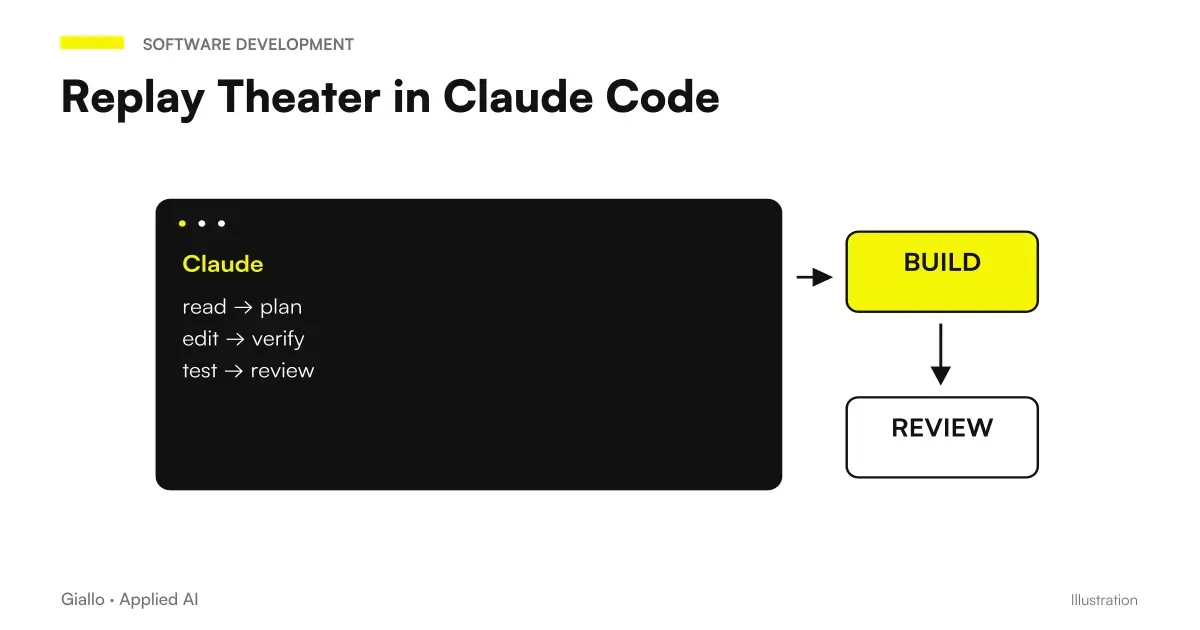
Claude Code Replay Theater changes: round edit sequence compared with diff and Git statusReplay Theater in Claude Code: review a turn's changesClaude Code Replay Theater: distinguish attempted edits, turn diffs and Git history. The official demo and code review based on real evidence.
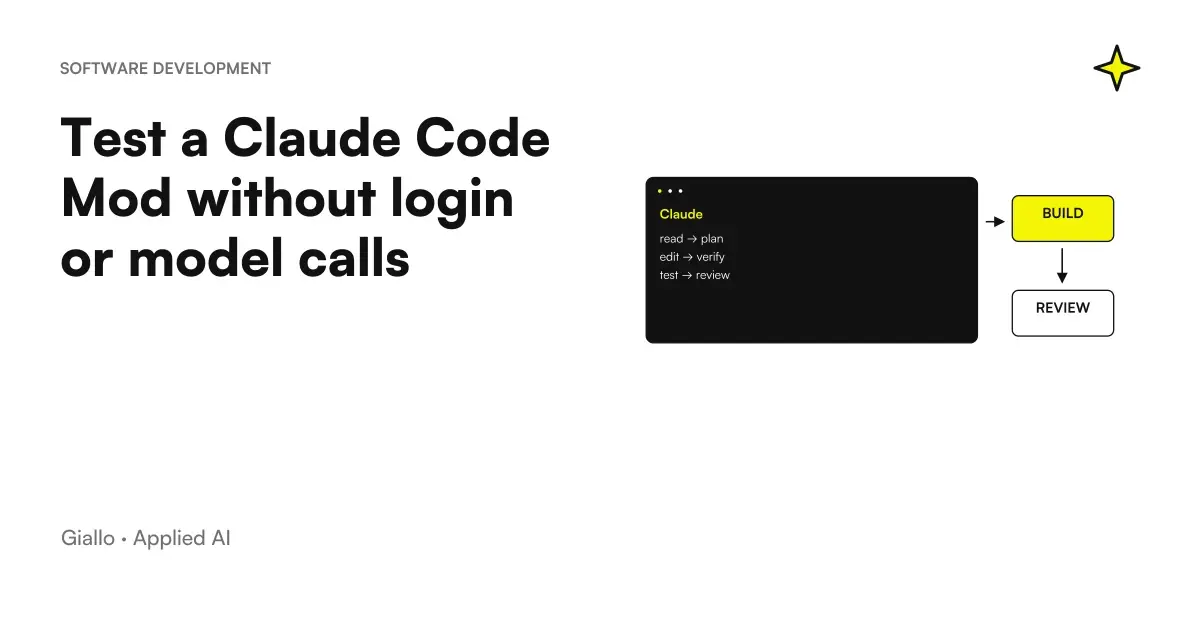
Test Claude Code Mod claude plugin test: synthetic events, service stubs and verification on two surfacesTest a Claude Code Mod without login or model callsTest a Claude Code Mod with claude plugin test: events, stubs, clocks and UI actions without login or network, covering success cases, errors and limits.
Claude Code Token Weather context window: absolute percentage and trend of the context per turnToken Weather in Claude Code: read the context windowRead Claude Code's context usage, history and compaction threshold with Token Weather. Understand what the demo measures and why figures differ.
Kimi AI between chats, documents and tools for business workKimi AI: what it is, what it does and when to use itExplore Kimi AI for Italian chat, documents, Excel, slides and research. Compare the app, K3, Code and APIs, with limits and selection criteria.
Kimi K3 between reasoning, context and tools of AI agentsKimi K3: model, reasoning and practical limitsKimi K3: context, thinking, tools and open weights. Distinguish model, app and K3 Cluster to understand how to use it in a verifiable business process.
Kimi AI Global Pricing and Plans to Evaluate SubscriptionIs Kimi AI free? Prices and plans to chooseKimi AI pricing: global USD rates, monthly and annual plans, shared quotas and extra costs. Distinguish membership, Kimi Code and API access.
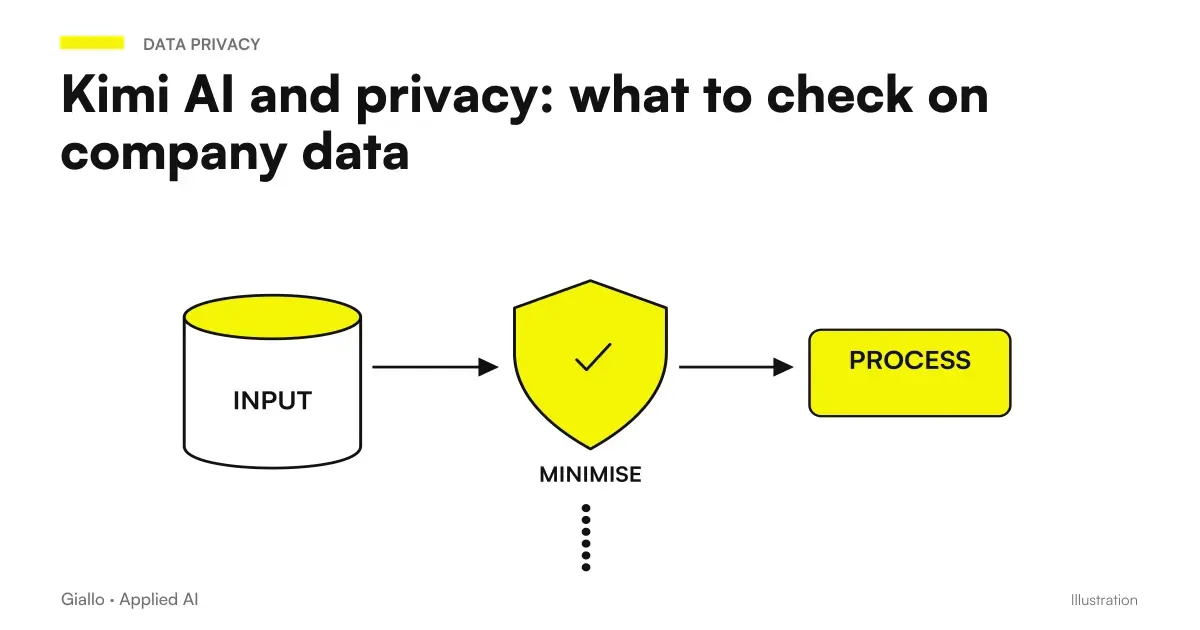
Kimi AI privacy with distinct paths to business data, apps, and APIsKimi AI and privacy: what to check on company dataKimi AI privacy: app and API policies, training, Singapore and Zero Data Retention. Checks before using business documents and data.
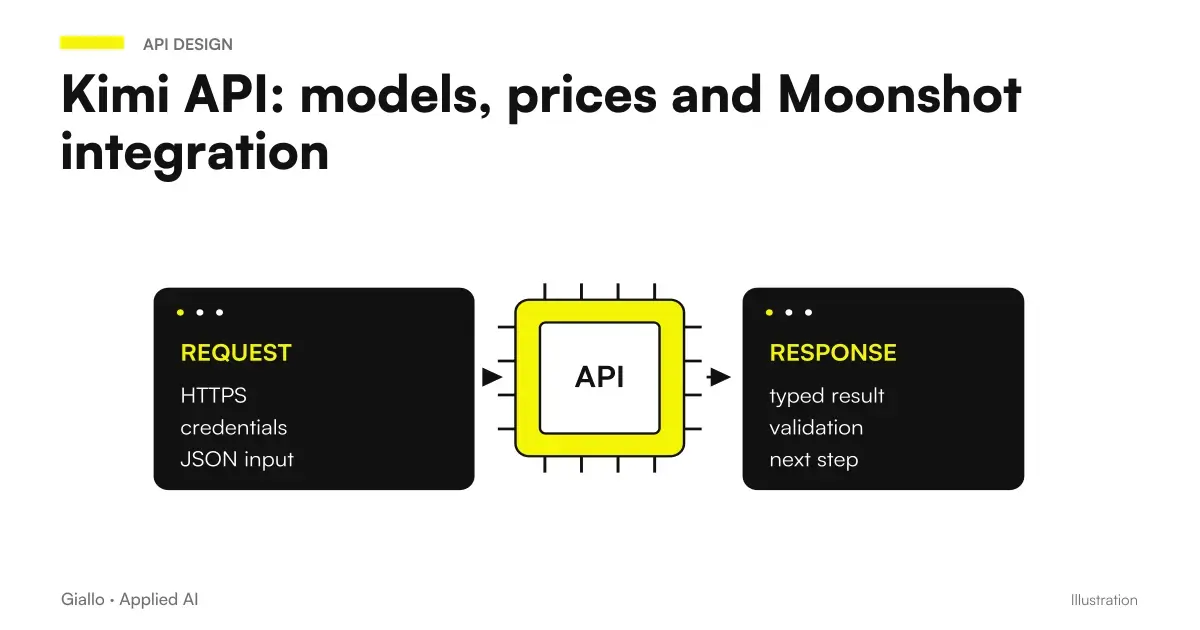
Kimi API and Moonshot connected to enterprise software with token and tool controlKimi API: models, prices and Moonshot integrationKimi API: Moonshot endpoints, current models, tokens, caching and tools. Estimate costs and design a business integration you can control.
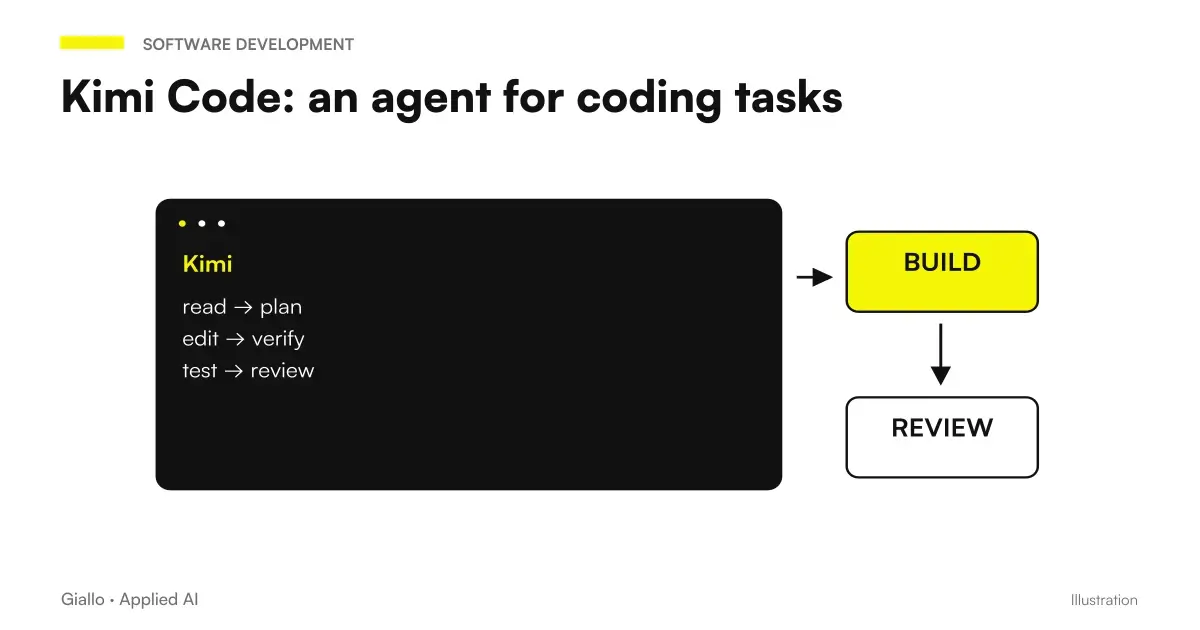
Kimi Code working on a repository with code checks and revisionKimi Code: an agent for coding and developmentKimi Code for coding: CLI, VS Code, models and differences from API access. Prepare the repository and verify changes before release.
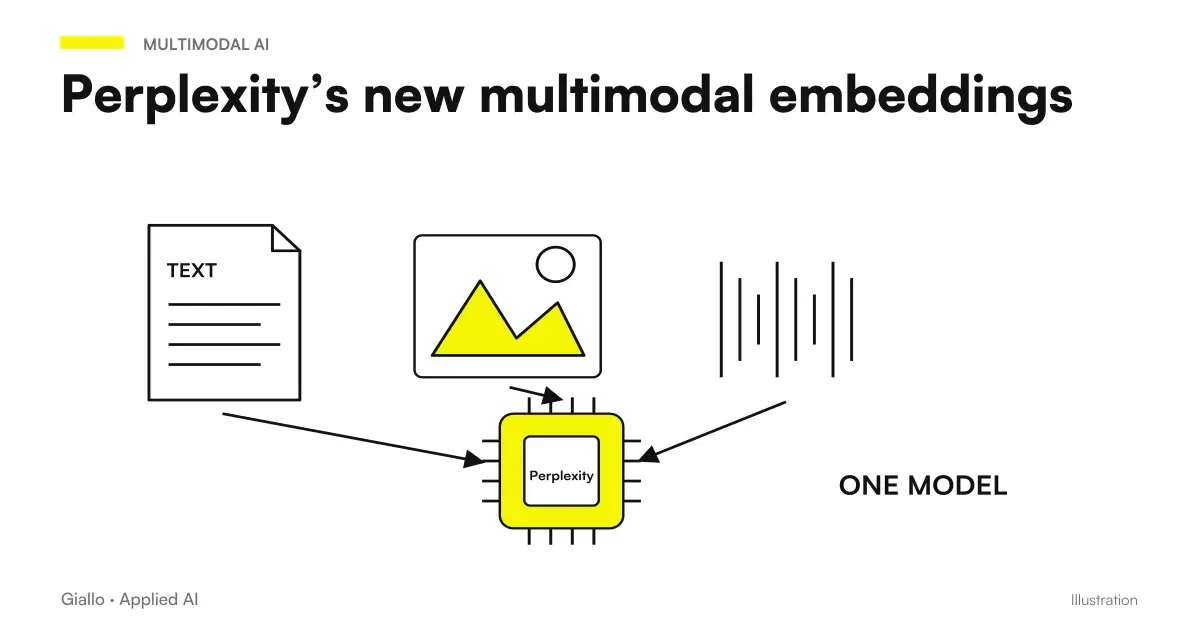
Perplexity: PDF embedding: Document → Embedding v2 → Index → Search.Perplexity opens multimodal embeddings: search inside PDF pagesPerplexity multimodal PDF embeddings: public weights, page and image search, API rollout and checks for a business archive with sources.
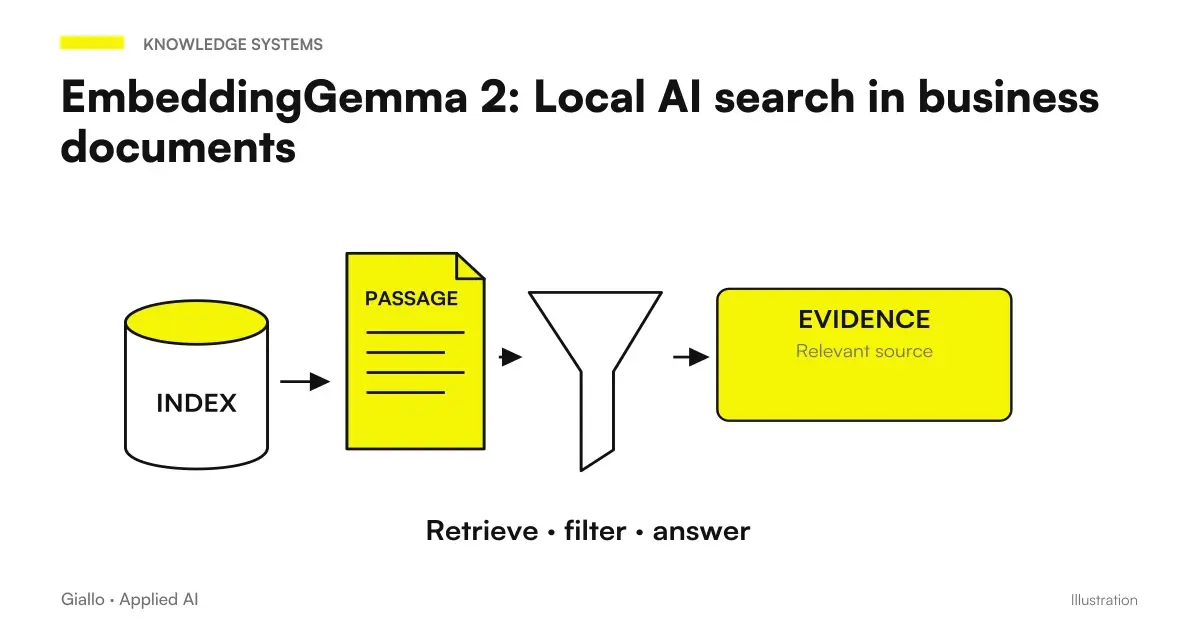
EmbeddingGemma 2: Content → Embedding → Index → Search.EmbeddingGemma 2: Local AI search in business documentsEmbeddingGemma 2 for searching business documents and images: how it works, testing on real hardware, permissions and local search limitations.
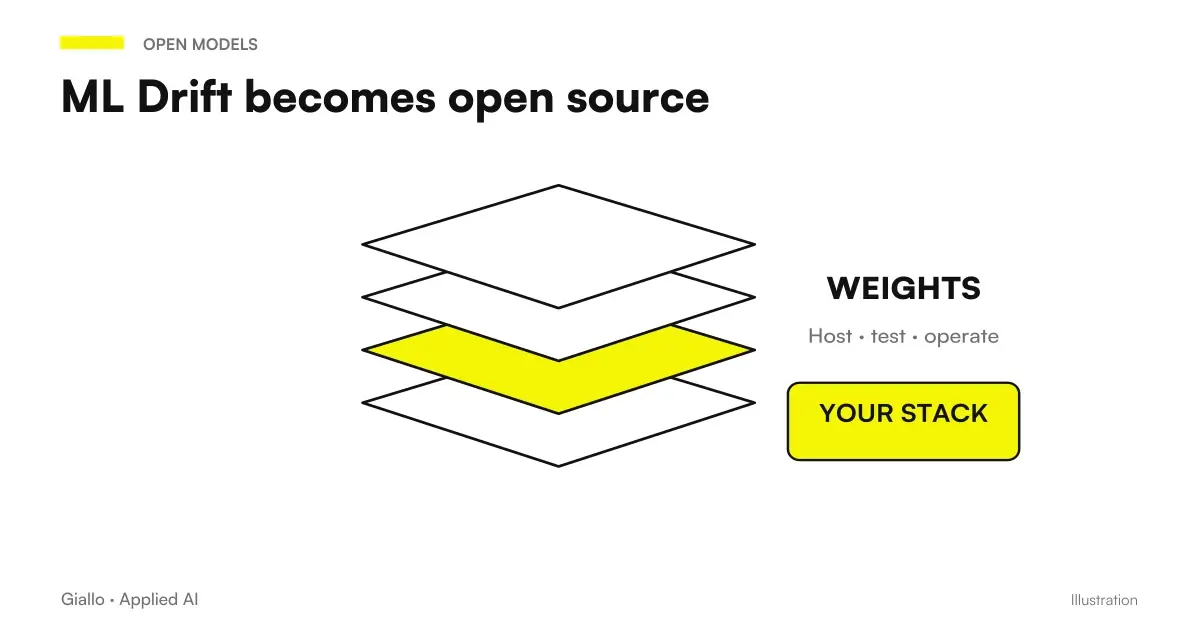
ML Drift open source: Model → Runtime ML Drift → Device.ML Drift becomes open source: Local AI on smartphones, browsers, and desktopsGoogle ML Drift becomes standalone open source: runtime versus model, GPU backends, limitations and tests for local AI applications.
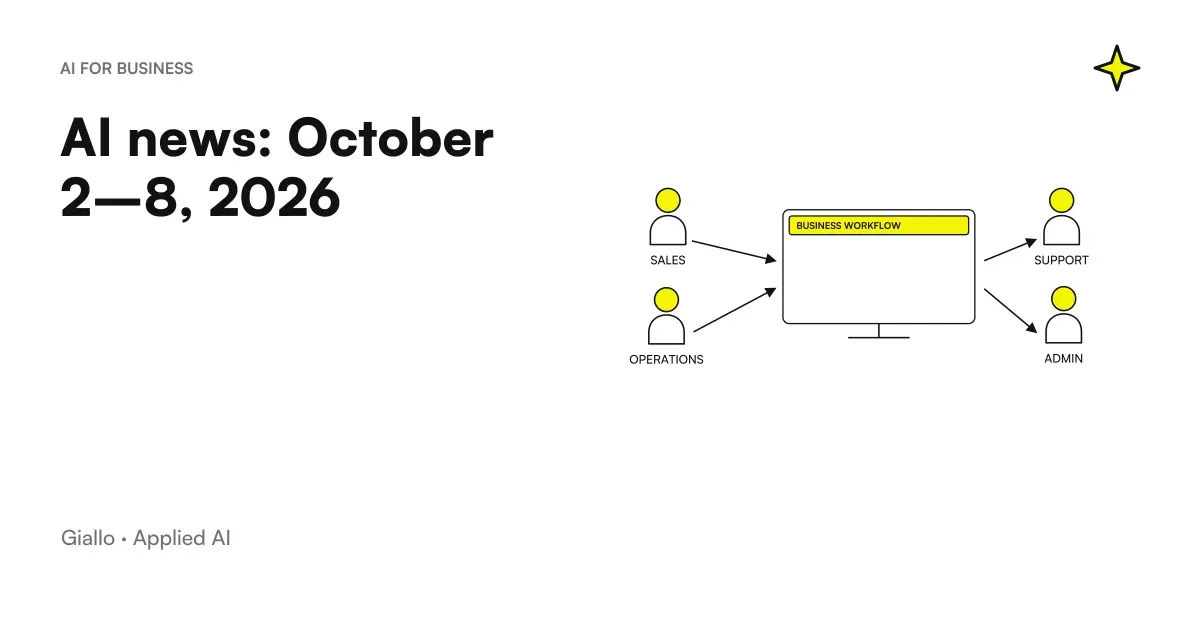
News IN October 2026: Mistral Large 4 history, Google Playground, Haiku 5.5 and ChatGPT Intelligent UIAI news, 2–8 October 2026: what changes for SMEsAI news from 2–8 October: Playground, Claude, OpenAI, Google, Make, n8n and other tools. Sources, access and practical SME approaches.
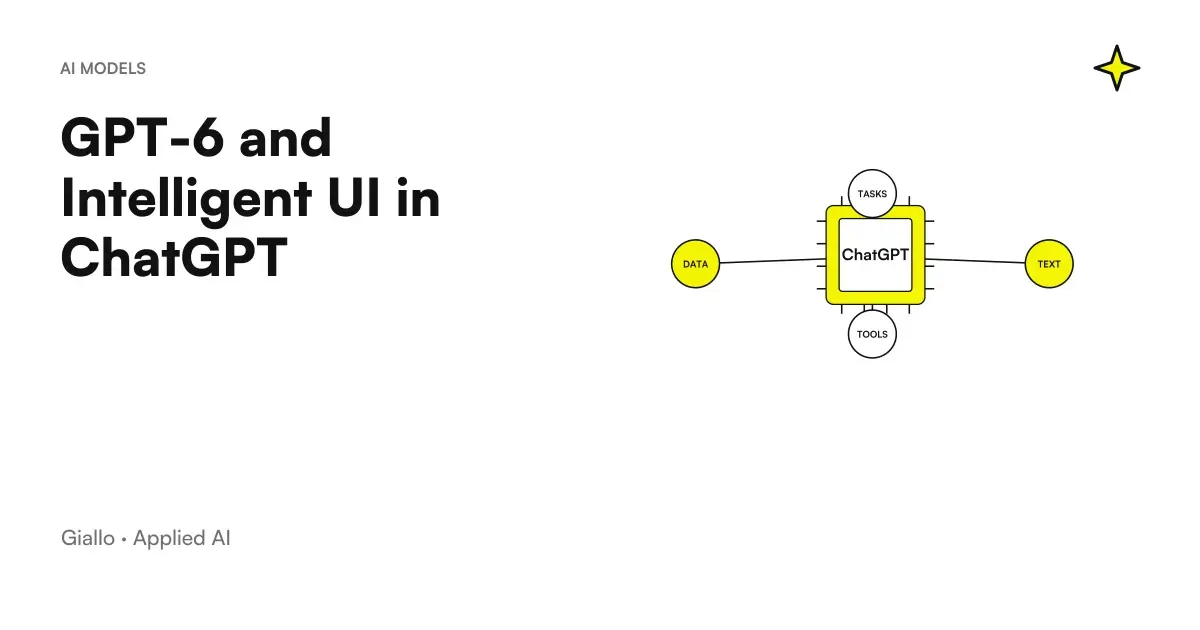
GPT-6 Intelligent UI: Visual comparison of data and interactive controls in ChatGPTGPT-6 and Intelligent UI in ChatGPT: what changes at work?GPT-6 brings Intelligent UI to ChatGPT: visual responses, comparisons and interactive tools. Rollouts, limits and useful tests for SMEs.
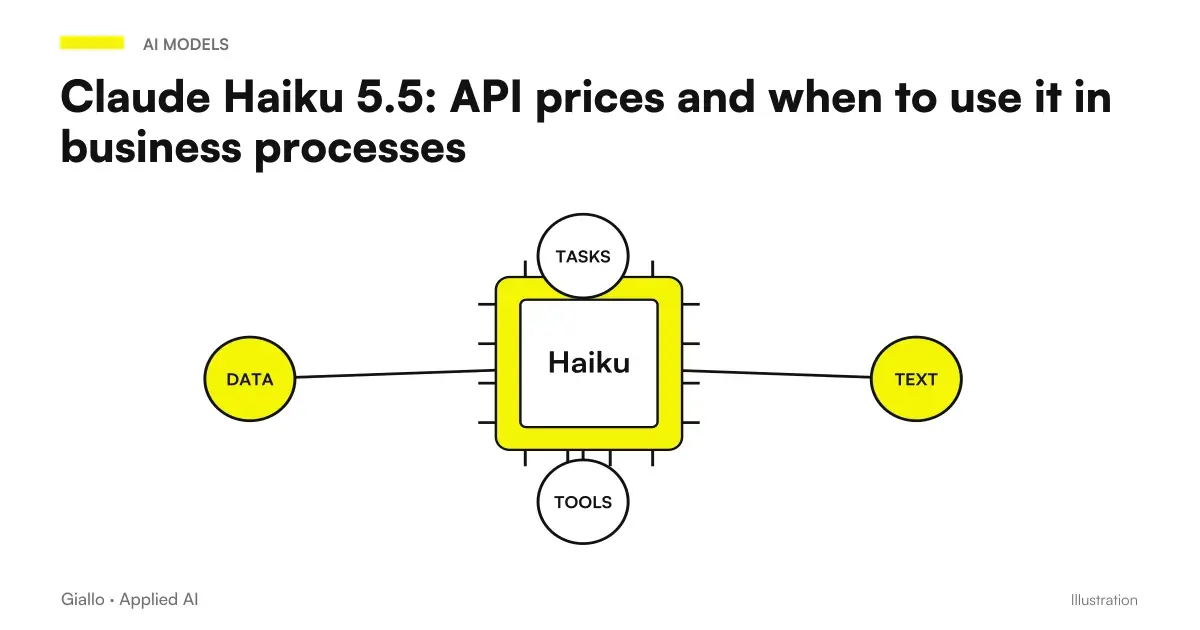
Claude Haiku 5.5: routing of business tasks between speed, cost and verificationClaude Haiku 5.5: API prices and when to use it in business processesClaude Haiku 5.5: API costs, token thresholds, and criteria for using it on tickets, documents, and CRM. Practical examples and migration limits.
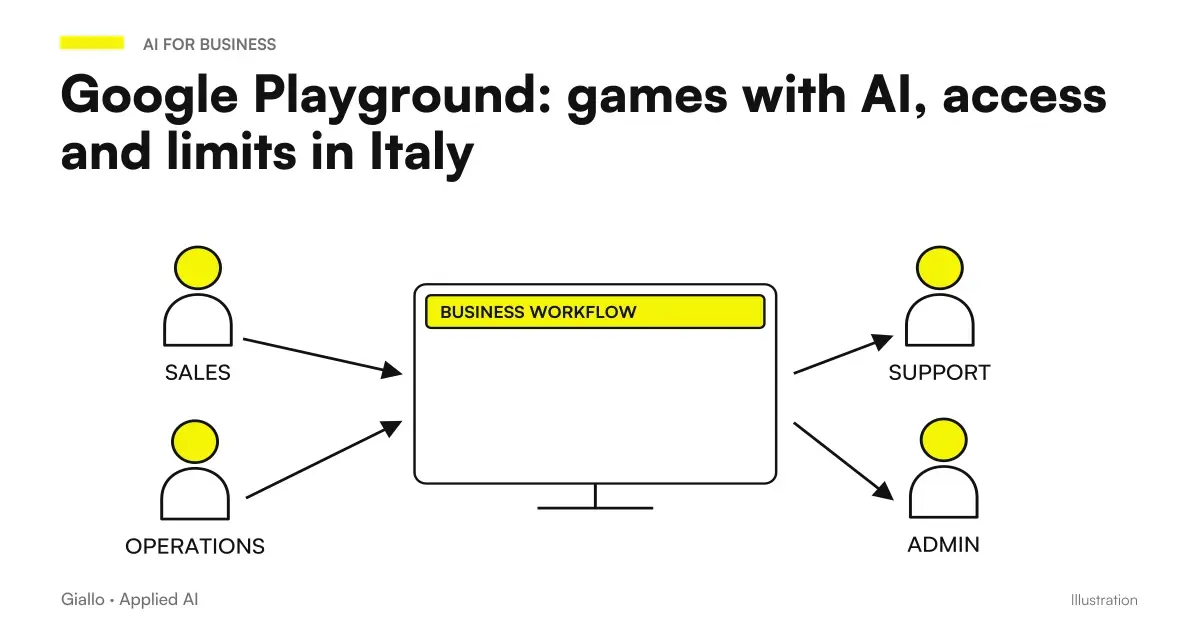
Google Playground: path from prompt to game, iteration and ZIP export, with initial US access 18+Google Playground: games with AI, access and limits in ItalyGoogle Playground creates games from prompts. Changes since its 7 October 2026 launch: US access, costs, export and practical scenarios for SMEs.
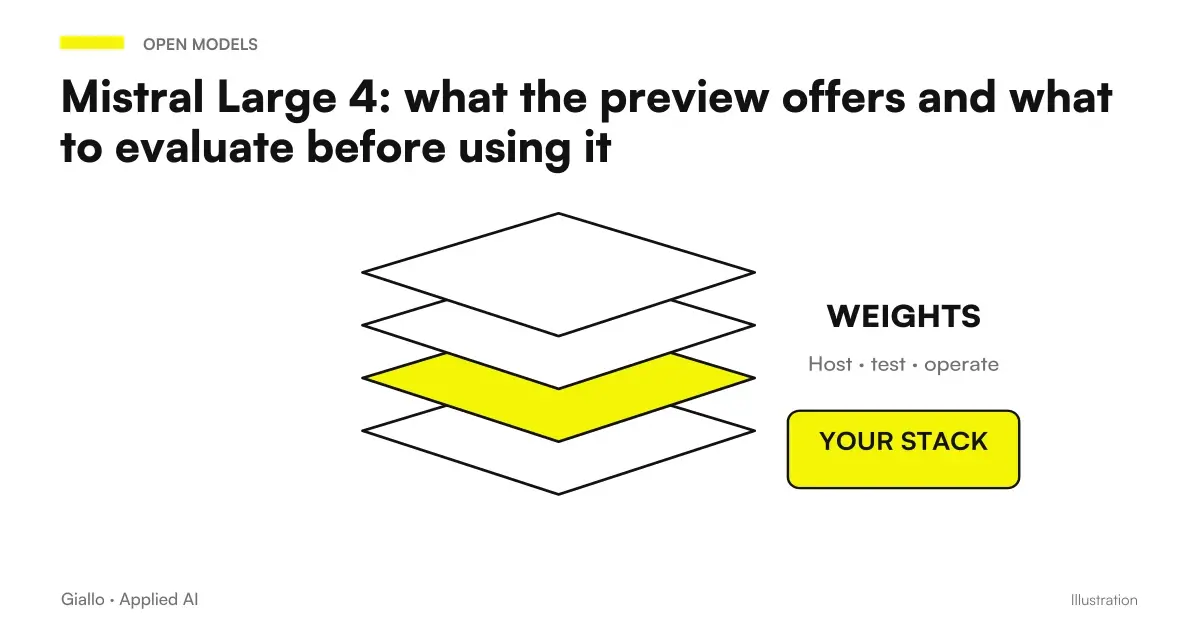
Mistral Large 4: comparison between API preview available and weight release announced by end of October 2026Mistral Large 4: what the preview offers and what to evaluate before using itMistral Large 4 is in public preview: API prices, expected model weights and checks on hosting, documents and data. A practical guide for SMEs.
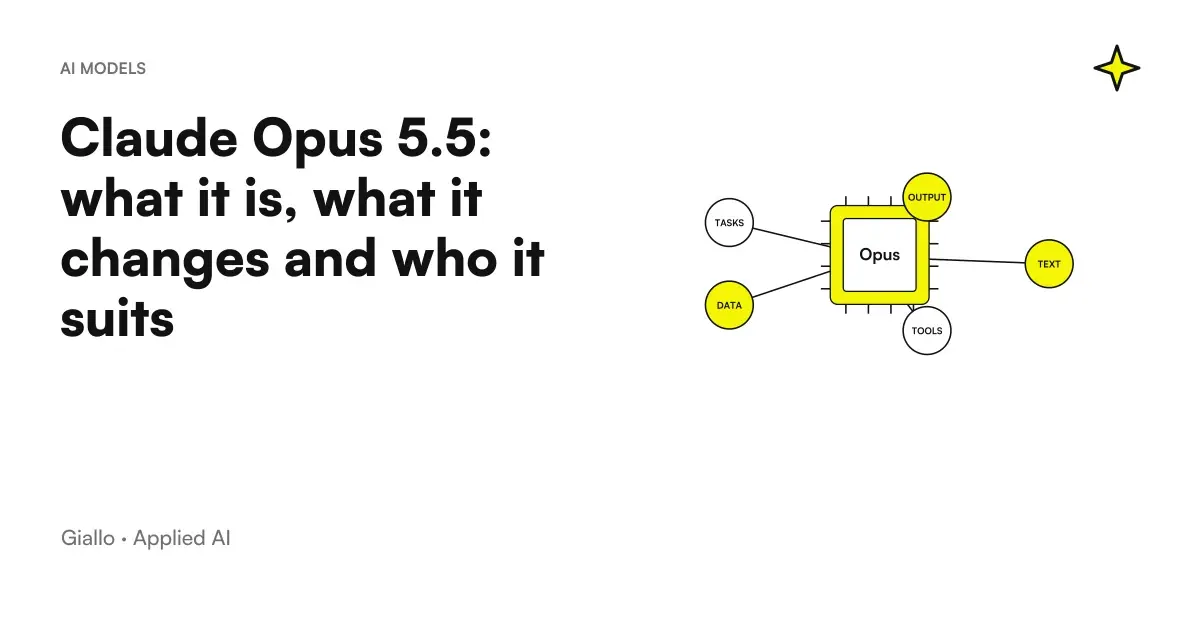
Claude Opus 5.5: what the new Anthropic model is and what changesClaude Opus 5.5: what it is, what it changes and who it suitsWhat Claude Opus 5.5 is: changes from Opus 5, features, access and use cases. Learn when it makes sense and when a lighter model is enough.
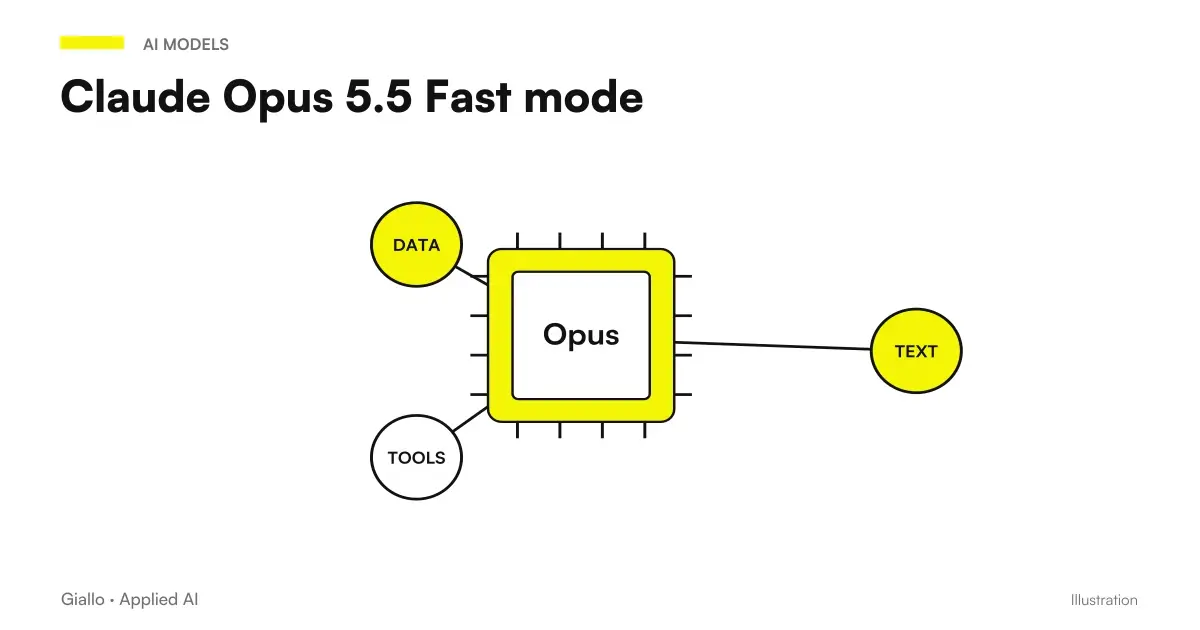
Fast mode by Claude Opus 5.5: what is it and when is it convenientClaude Opus 5.5 fast mode: features, cost and when it makes senseClaude Opus 5.5 fast mode: the same model, text up to 2.5 times faster, at $8 and $40 per million tokens. Learn when the extra cost makes sense.
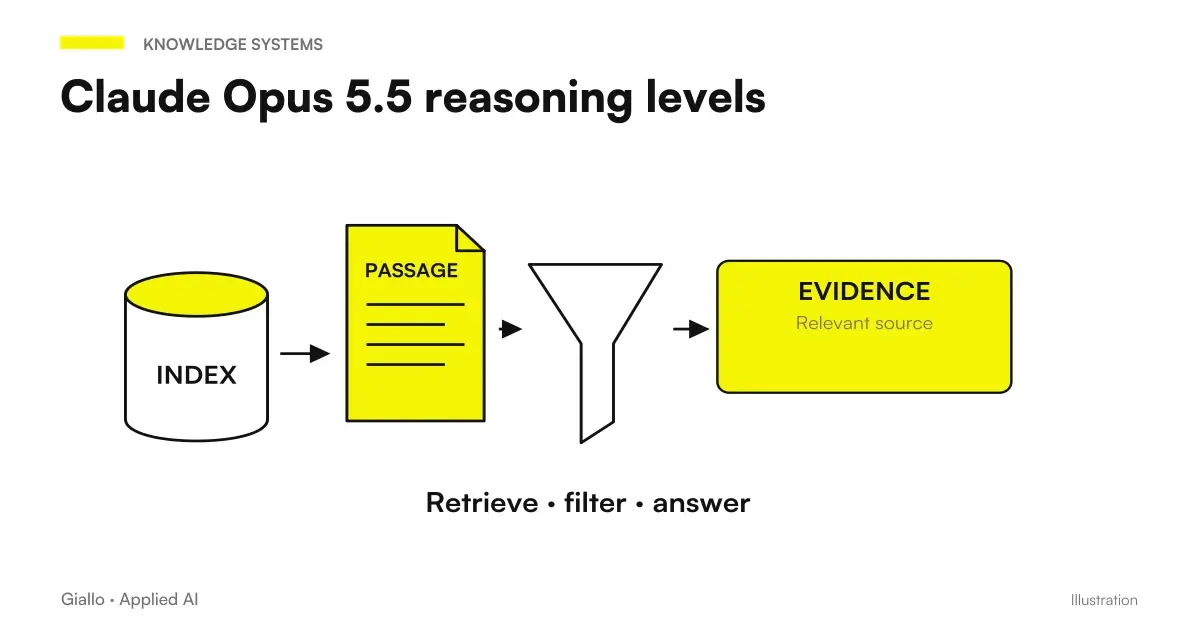
The Five Levels of Reasoning by Claude Opus 5.5The levels of reasoning of Claude Opus 5.5: what they are and when to raise themClaude Opus 5.5's five reasoning levels: what autonomous reasoning means, when to raise the level and the cost in time and tokens.
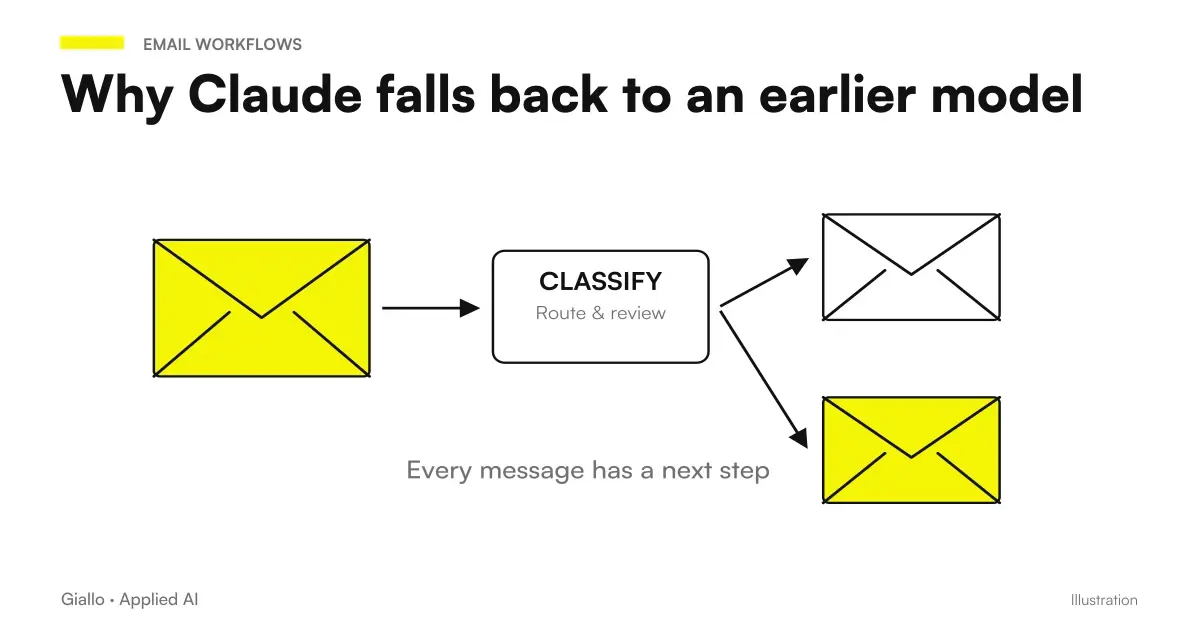
Claude has moved on to an earlier model: what the message meansClaude switched to an earlier model: why it happens and what to doFlagged messages in Claude Opus 5.5: why Claude switches to an earlier model, how to return to Opus in the app or Claude Code, and how to avoid it.
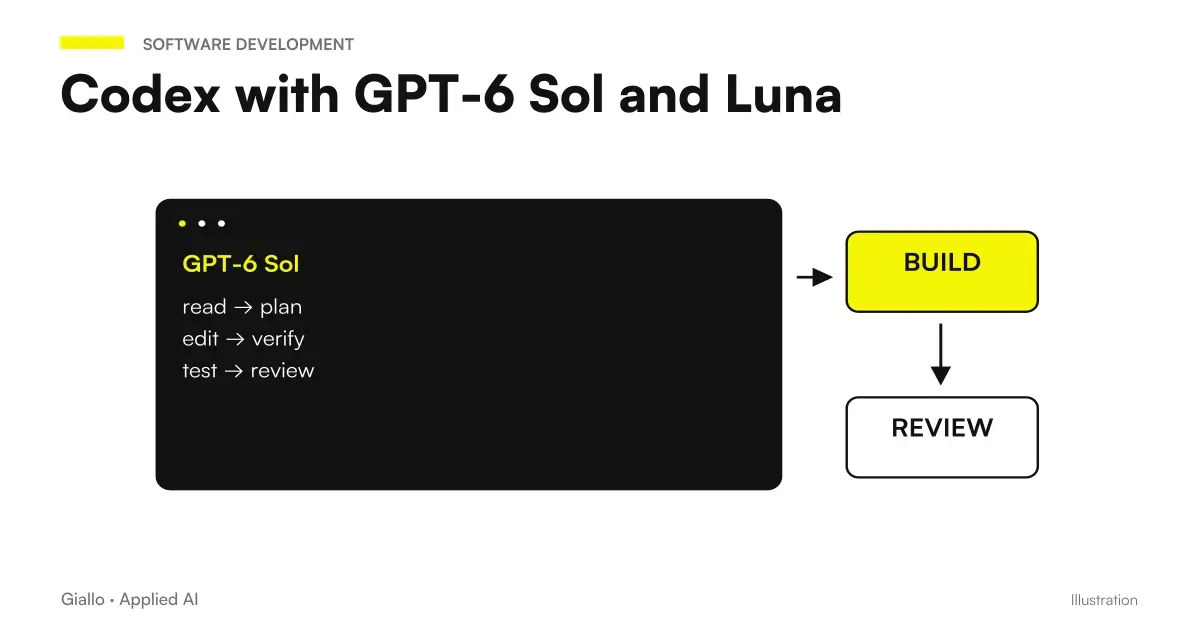
Codex with GPT-6 Sol: model selector and reasoning levelsCodex with GPT-6 Sol and Luna: models, reasoning, costs and reviewCodex with GPT-6 Sol and Luna: choose a model and reasoning level, understand catalogue changes, agent caching, cost per task and review.
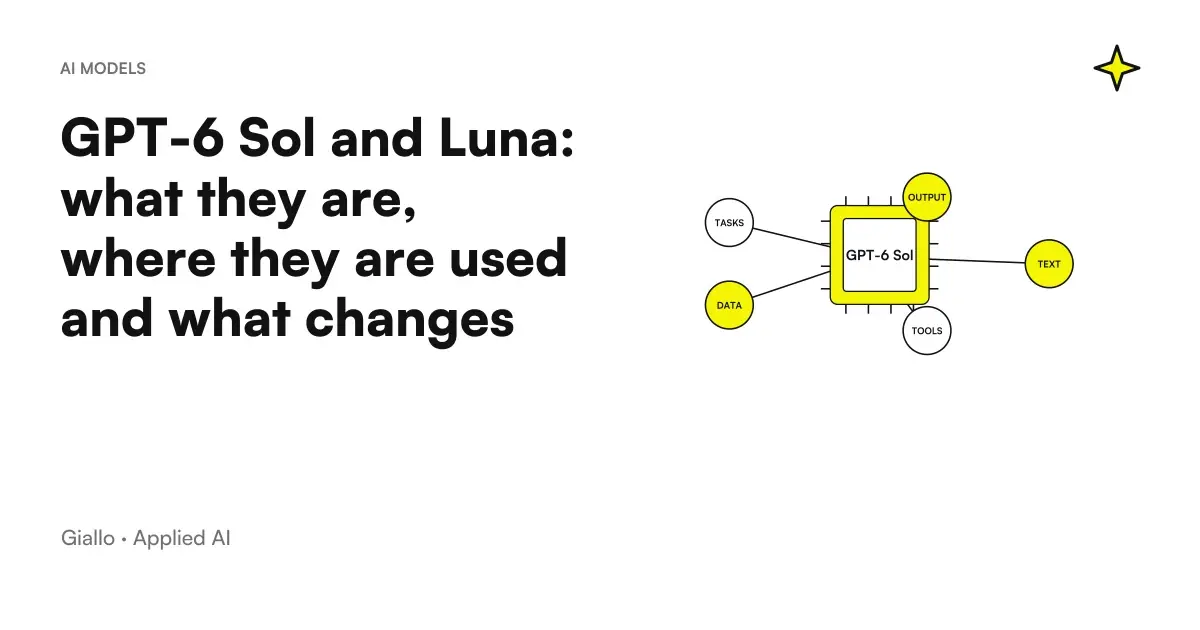
GPT-6 Sol and Luna, the two new OpenAI models alongside GPT-6 AstraGPT-6 Sol and Luna: what they are, where they are used and what changesGPT-6 Sol and Luna, OpenAI's models from 22 September 2026: uses, access, changes from GPT-5.6 and what the benchmarks show.
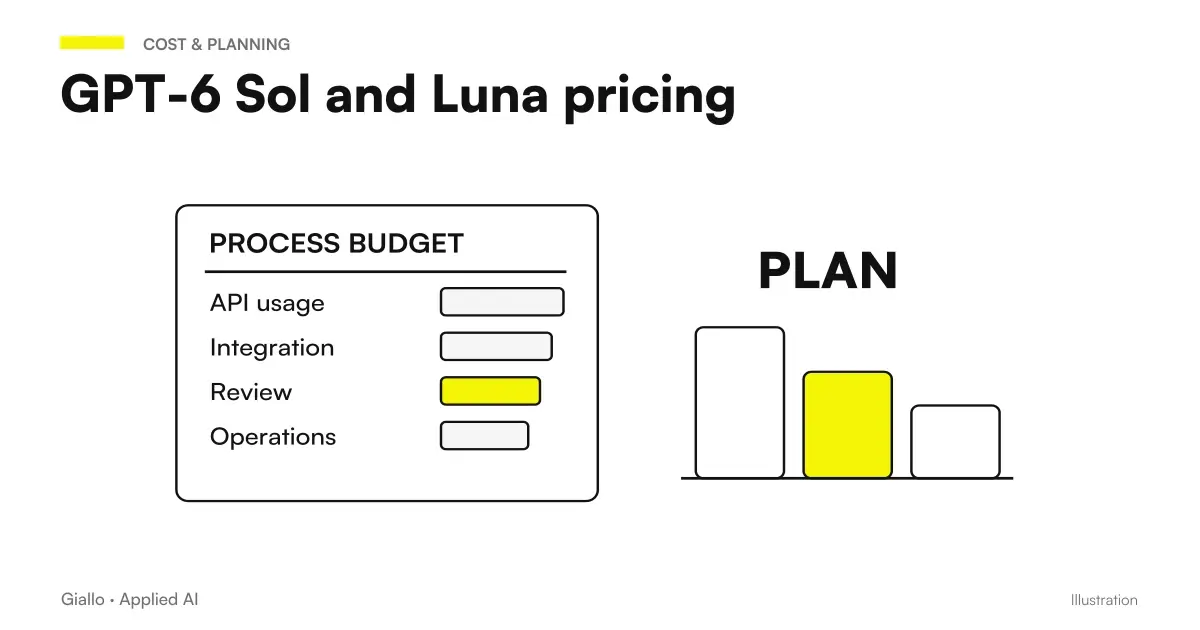
GPT-6 Sol and Luna prices per million tokens, with cache, Batch and long contextGPT-6 Sol and Luna pricing: API rates, sample calculations and ChatGPT plansGPT-6 Sol and Luna pricing: API rates for cache, long context, Batch and EU data residency, GPT-5.6 and Astra comparisons, three calculations and ChatGPT plans.
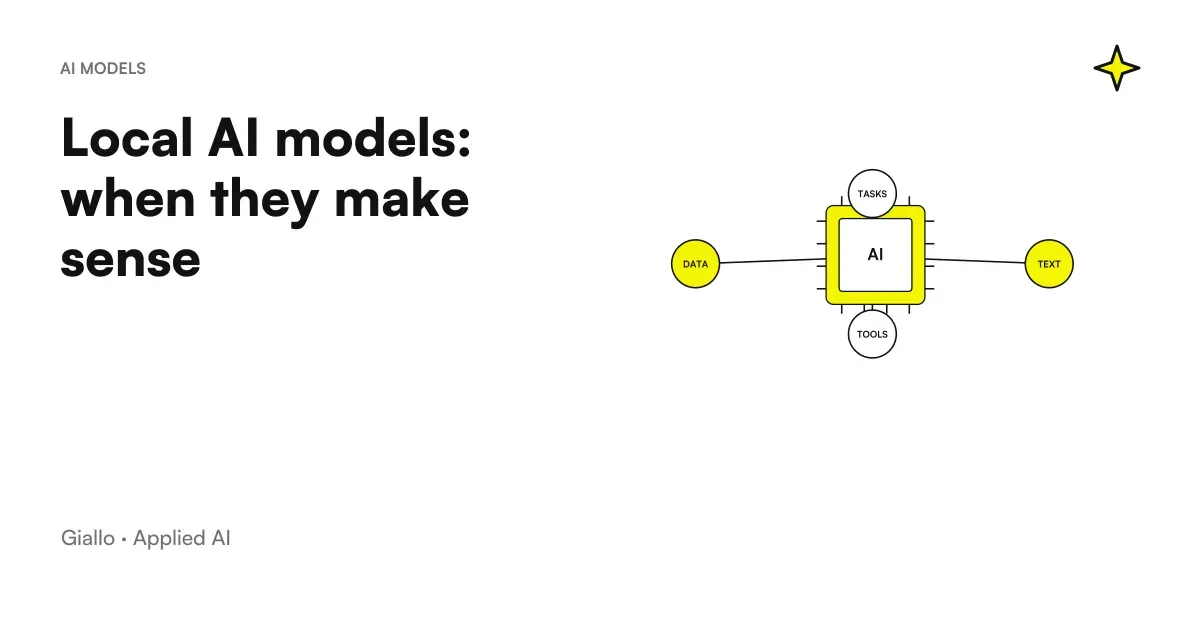
Schema of local AI models running on a corporate computer: data that stays on-premises without going out to the cloudLocal AI models: when they make senseLocal AI models with Ollama and LM Studio: when they make sense for SMEs, privacy and cost benefits, real limitations and local versus cloud deployment.
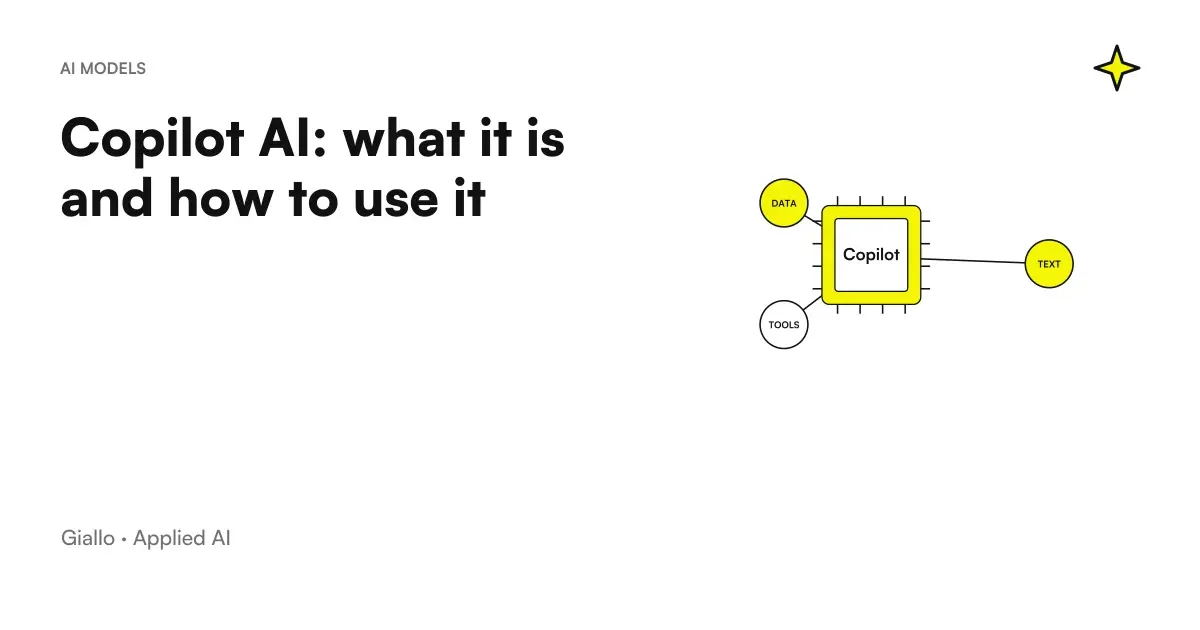
Copilot AI built into Microsoft 365 and Windows: AI assistant inside Word, Excel, Outlook and TeamsCopilot AI: what it is and how to use itWhat Copilot AI is and how to use it: Office and Windows features, product variants, privacy, licences and when it makes sense for a business.
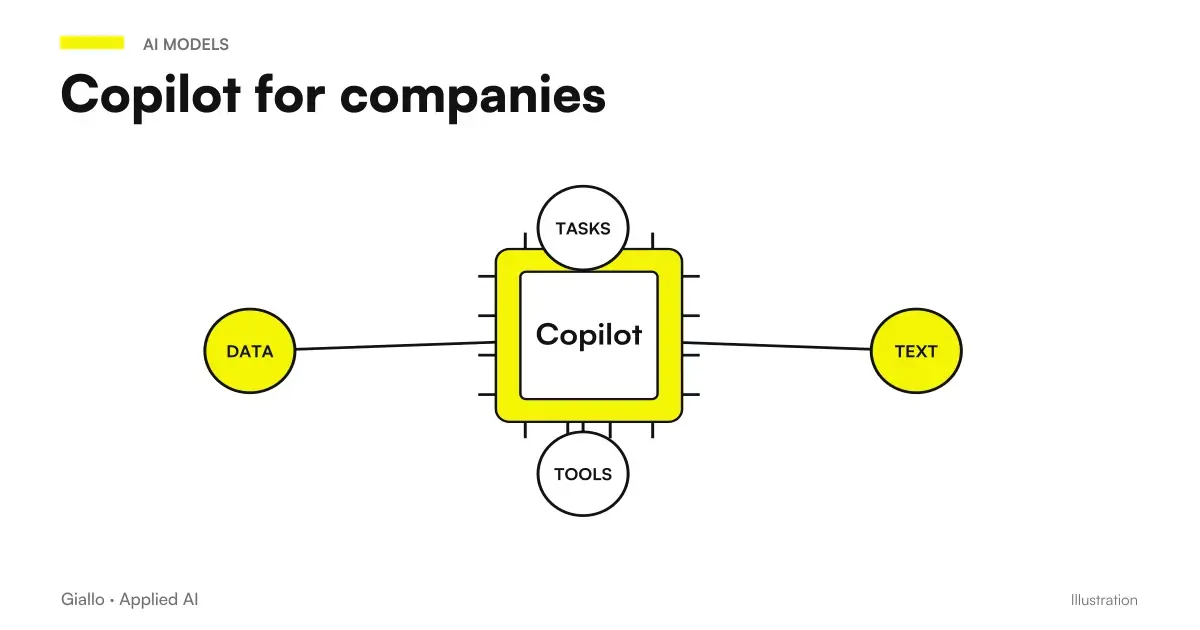
Copilot for business integrated into Microsoft 365: productivity and governance of corporate data permissionsCopilot for companiesCopilot for business: practical use, M365 permission governance, privacy, licences, ROI and adoption. A guide for SMEs and teams.
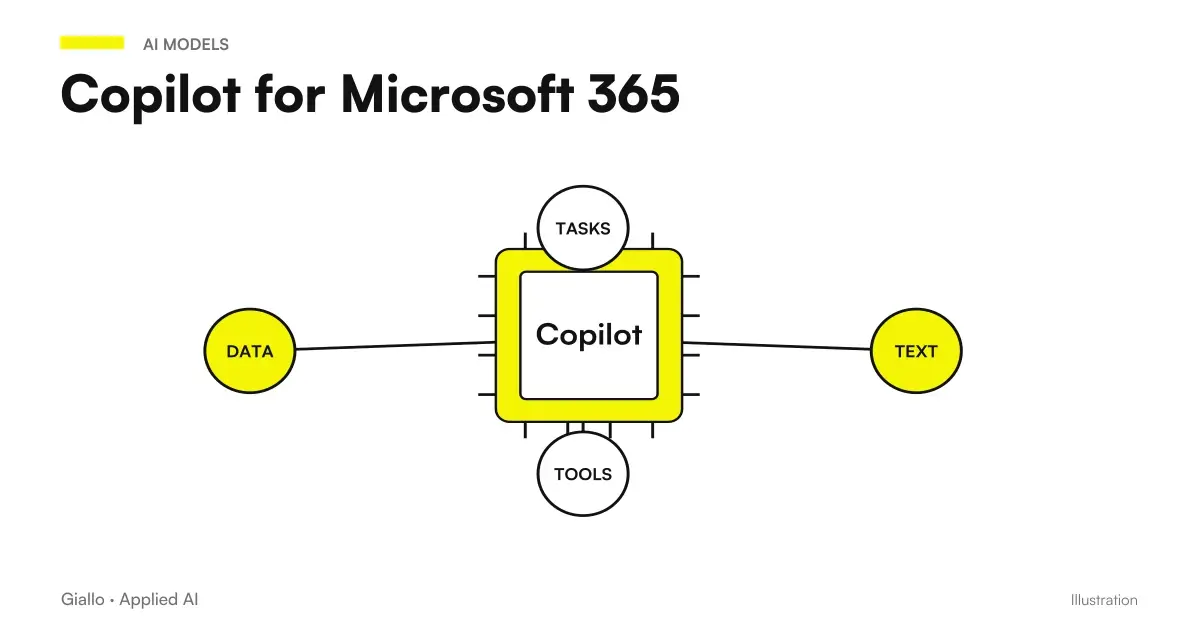
Copilot for Microsoft 365 working within Word, Excel, PowerPoint, Outlook and TeamsCopilot for Microsoft 365Copilot for Microsoft 365: Word, Excel, PowerPoint, Outlook and Teams features, practical examples, comparison with Gemini and effective business use.
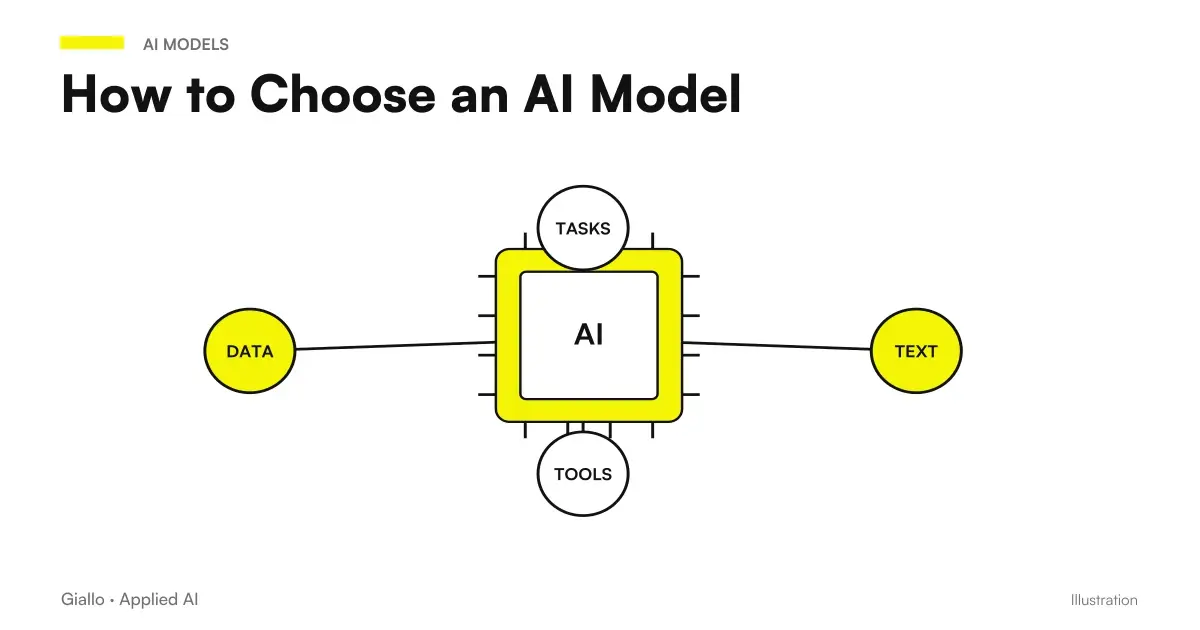
AI Model Selection Hub: Choice Criteria such as Quality, Language, Privacy, and Cost Converging on a DecisionHow to Choose an AI ModelChoose an AI model for your business using quality, Italian language, privacy and cost criteria, with an internal test and a decision matrix.
Best AI for comparison images: Midjourney, OpenAI, Gemini, Firefly, Ideogram and Stable Diffusion with licenses and rights of useBest AI Models for ImagesBest AI image tools for business: Midjourney, OpenAI, Gemini, Firefly, Ideogram and Stable Diffusion assessed for licences, visibility and Italian law.
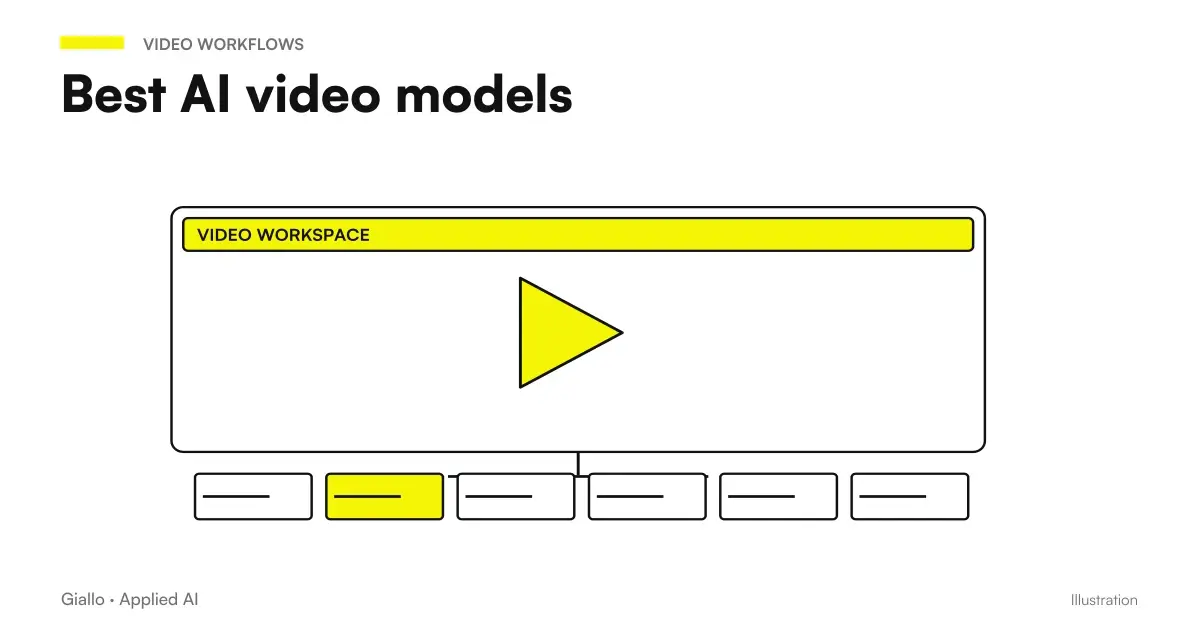
Best AI for video comparison: scene generators, talking avatars and labial video translation for SMEsBest AI Models for VideoBest AI video tools for SMEs: Runway, Veo, Kling, Pika, Synthesia and HeyGen for scenes, avatars and translation, with rights, consent and deepfake rules.
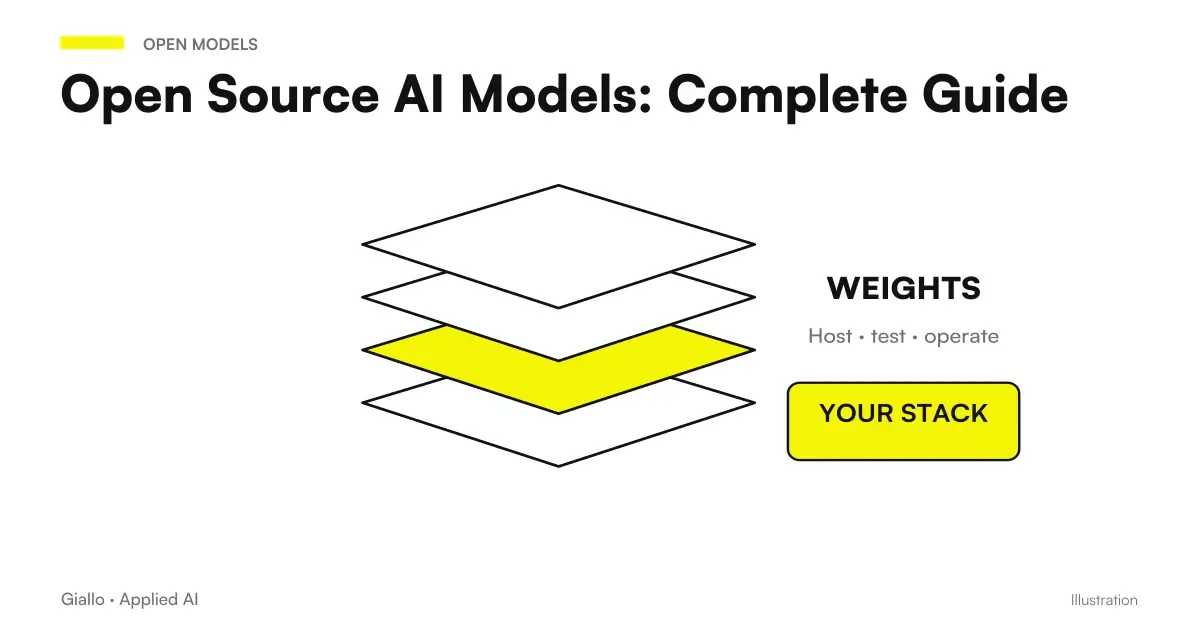
Open source AI model schema: downloadable model weights and self-hosting on own serversOpen Source AI Models: Complete GuideWhat open-source AI models are, how they differ from open weights, benefits, limitations, main model families and when they make sense for SMEs.
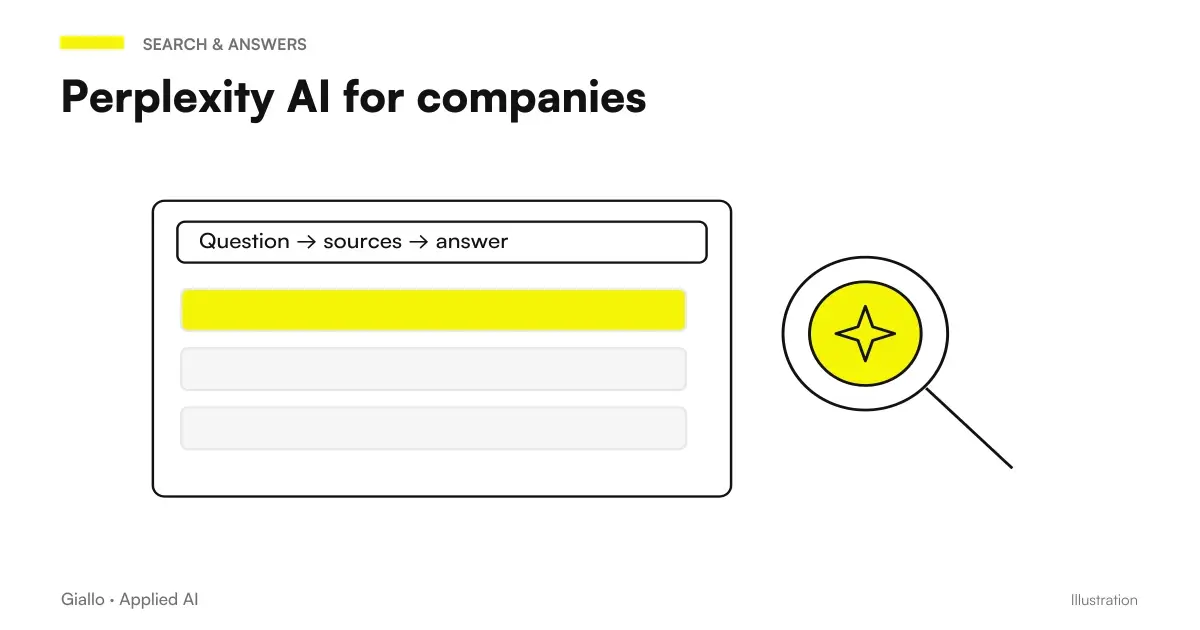
Perplexity AI for business: research screen with synthetic response and sources cited for business usePerplexity AI for companiesPerplexity AI for business: market research, monitoring and internal knowledge, privacy and data, and when you need a custom RAG system.
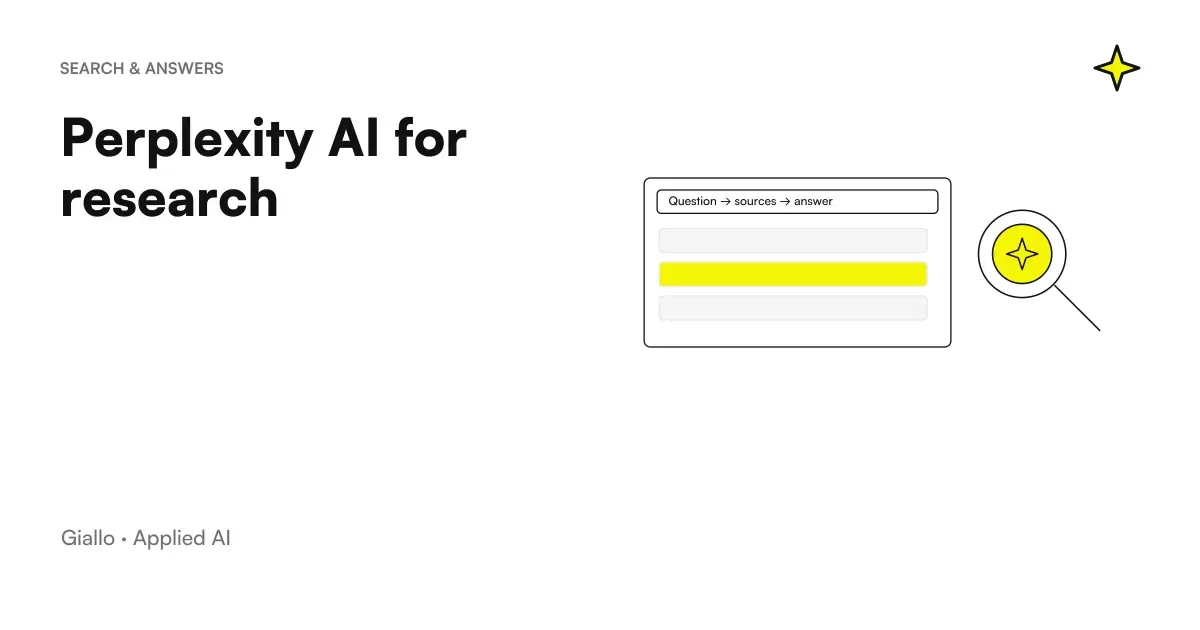
Perplexity AI for research: a question that generates an answer with cited and numbered sourcesPerplexity AI to do researchUse Perplexity AI for sourced research: market research, competitor analysis, due diligence and fact-checking. Practical examples and limitations.
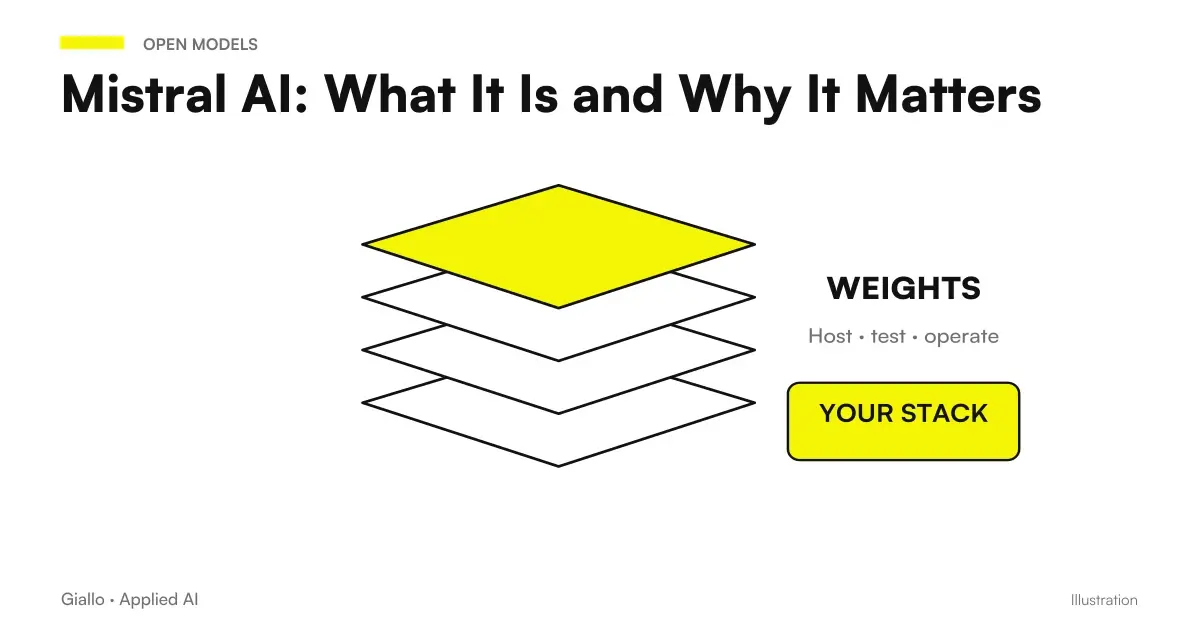
Mistral AI scheme: European model with open weights and APIs, Vibe assistant (formerly Le Chat) and data remaining in EuropeMistral AI: What It Is and Why It MattersWhat Mistral AI is: the European model company, open weights versus API access, Vibe (formerly Le Chat), data sovereignty and uses for SMEs.
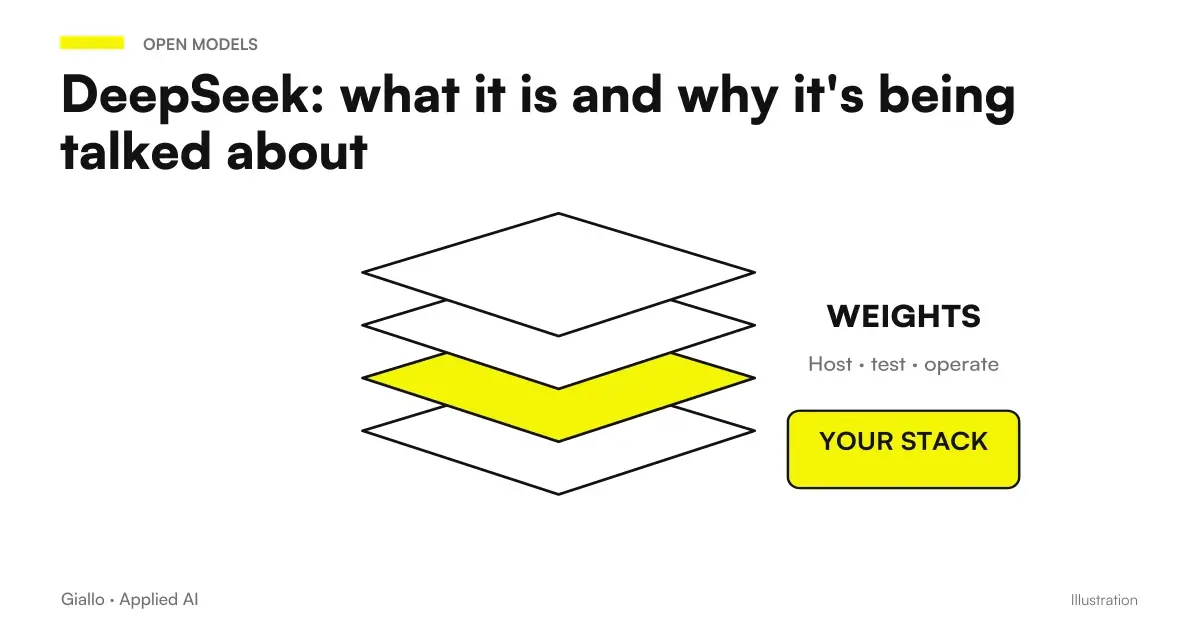
Diagram of how DeepSeek works, the Chinese AI model: input prompt, reasoning, responseDeepSeek: what it is and why it's being talked aboutWhat DeepSeek is: the Chinese AI model known for low costs and reasoning. How it works, privacy and data residency for EU businesses, and when to use it.
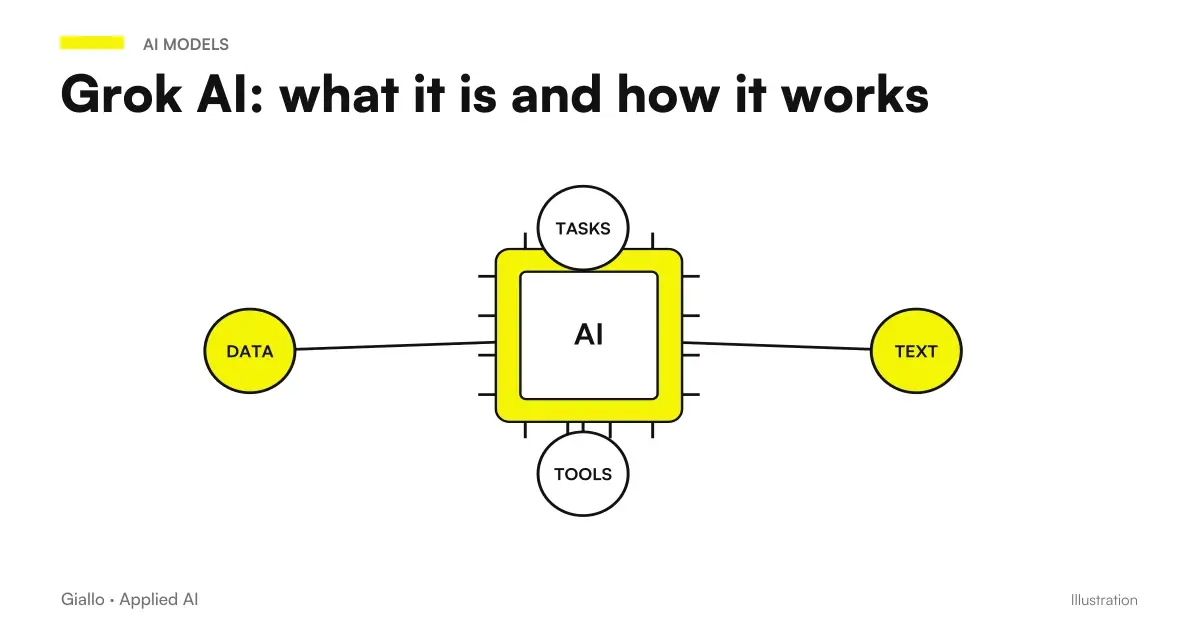
XAI's Grok AI screen integrated into the X platform, with a prompt and response based on real-time dataGrok AI: what it is and how it worksWhat Grok AI is and how it works: the X-integrated xAI model, real-time data access, use cases, limits, and when it makes sense for a business.
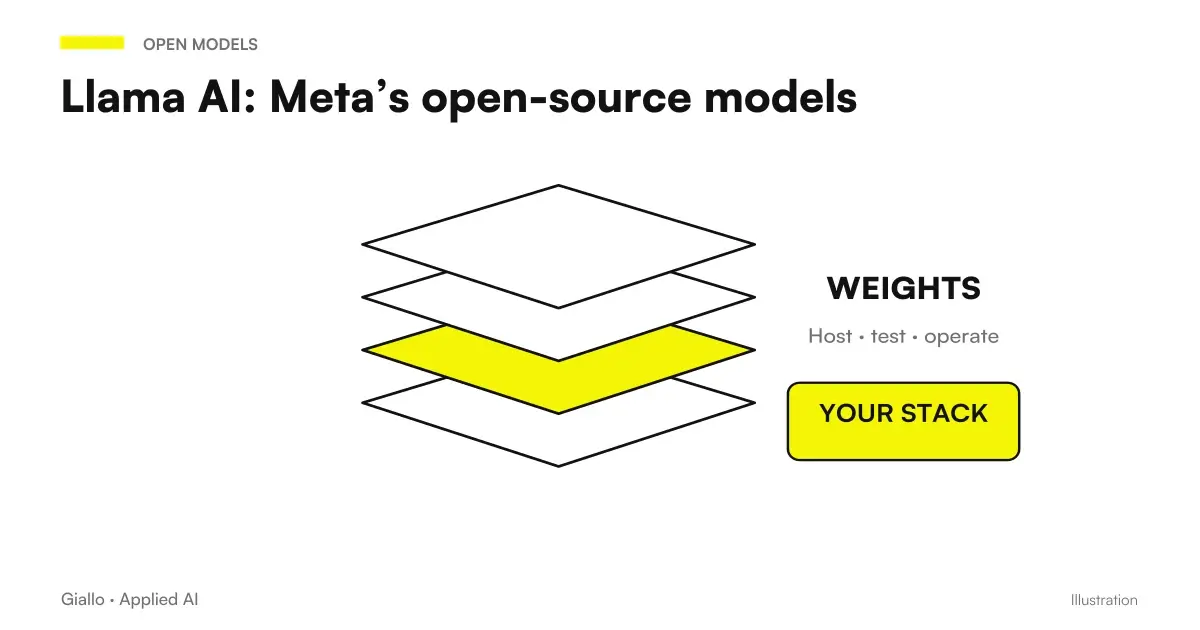
Meta's Llama AI: the open weight model that runs on-premises on the company's serversLlama AI: what is the open source model of MetaWhat Llama AI is: Meta's open-weight model family, how it works, self-hosting, privacy, costs, licensing and when it makes sense for a business.
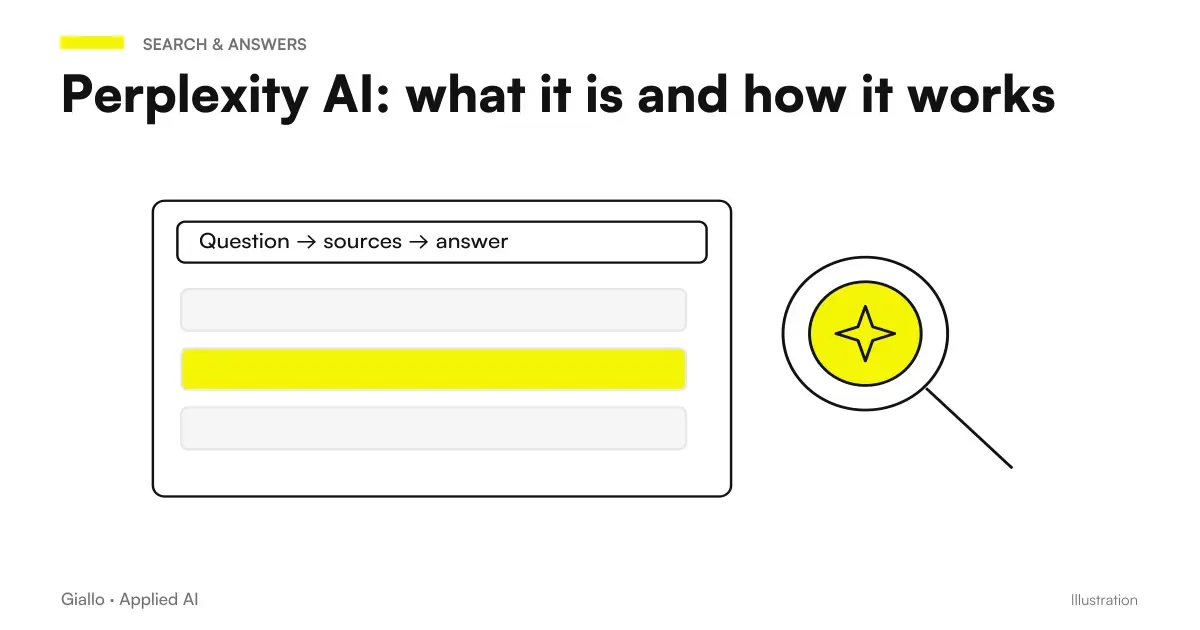
Diagram of how Perplexity AI works: question, web search, answer synthesized from cited sourcesPerplexity AI: what it is and how it worksWhat Perplexity AI is: web search and answers with cited sources. Compare it with ChatGPT and Google, explore Pro, limits and business use cases.

The other categories