
Jev AI for business: privacy, limits and testing on Italian data
Before using Jev AI in your business: minimum data, US hosting, retention terms and a pilot using Italian messages with practical checks.
Reading time: 11 min
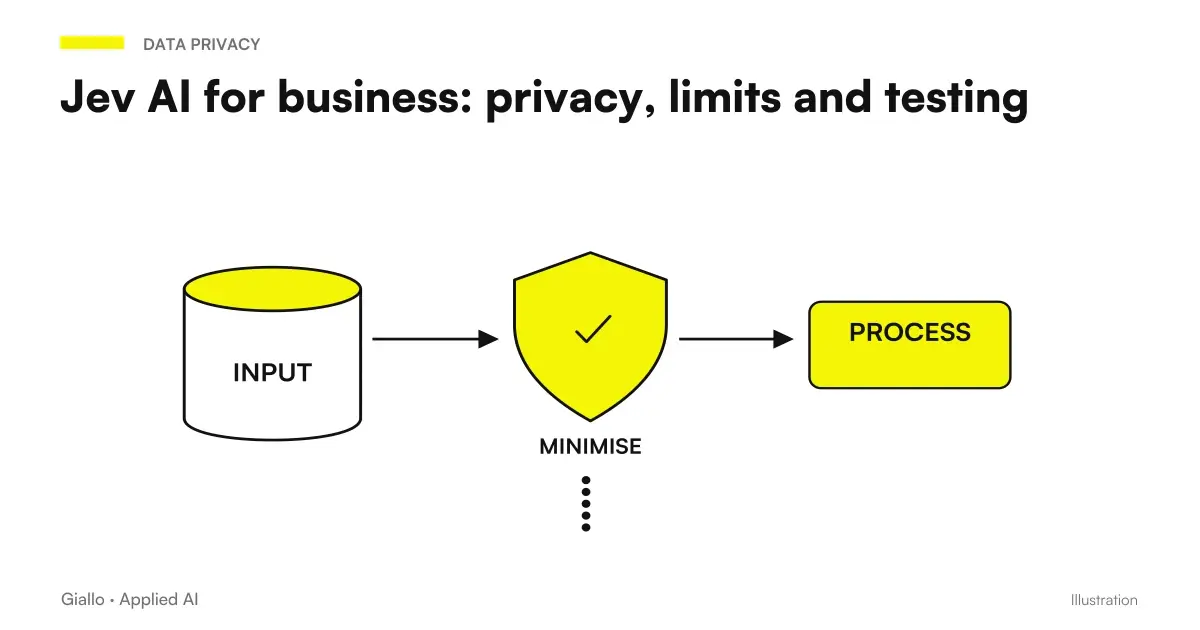
Before using Jev AI with business data, check what information you send, where it is processed and what storage conditions apply to your agreement. Pair this assessment with a pilot on Italian messages: a data policy does not prove that decisions will work in your process.
Before the operational link
- Select the data needed for a precise decision.
- Distinguish absence of training and zero data retention before defining flow conditions.
- Document agreements, recipients, and data path.
- Evaluate your industry's Italian messages with a separate sample.
- Activate actions and accesses only after verifying the pilot.
Two questions to be solved separately
A company can have a good contract with a supplier and automation that mistakes the department. It can also have a promising classification but not have defined who receives the messages and how long they are kept. They are different problems: evaluating one does not solve the other.
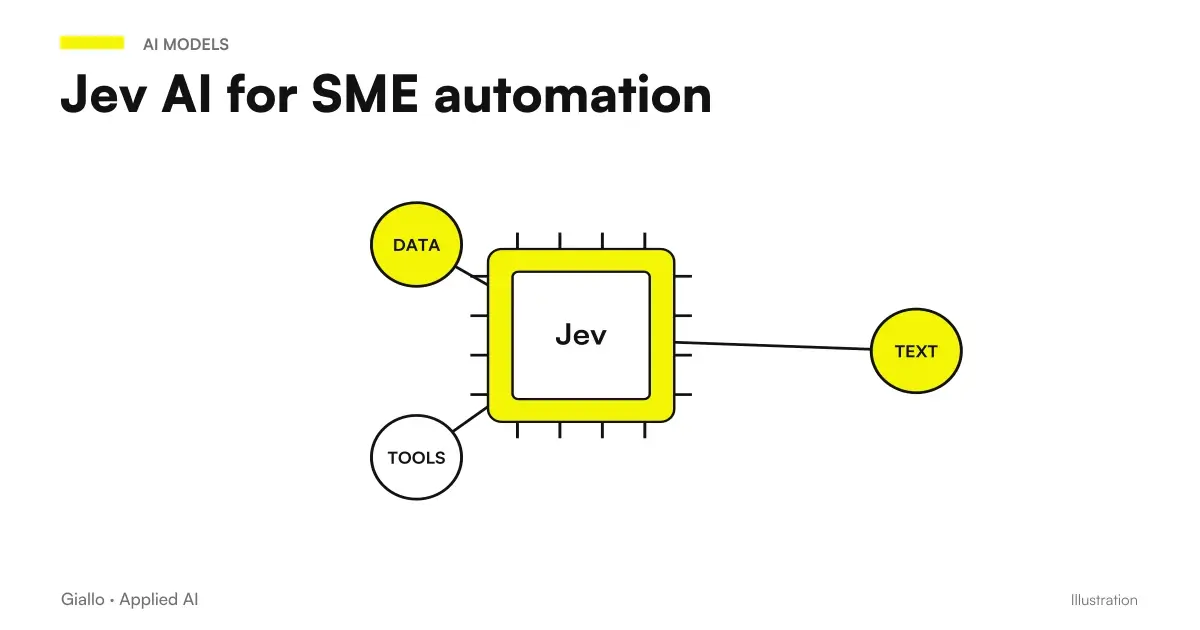
The Jev AI Guide explains where to place the component in the software. To decide whether to adopt it, we propose instead two parallel paths: one concerns data and conditions; the other concerns utility and quality on company work. The operational manager leads the second, supported by those who follow the contractual aspects and data protection for the first.
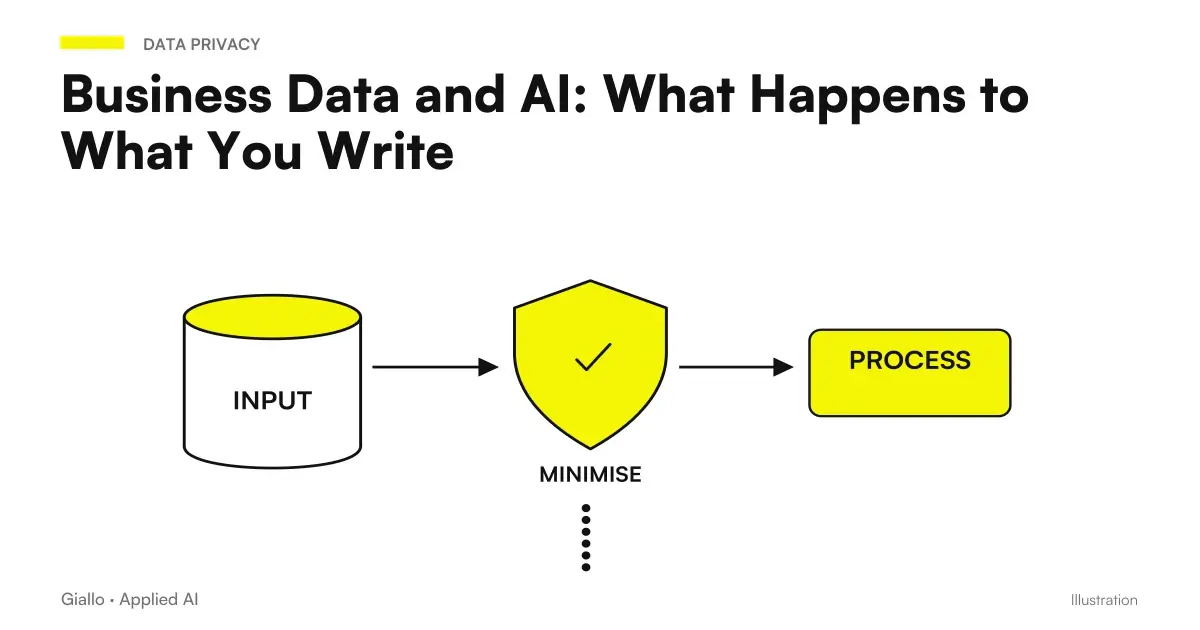
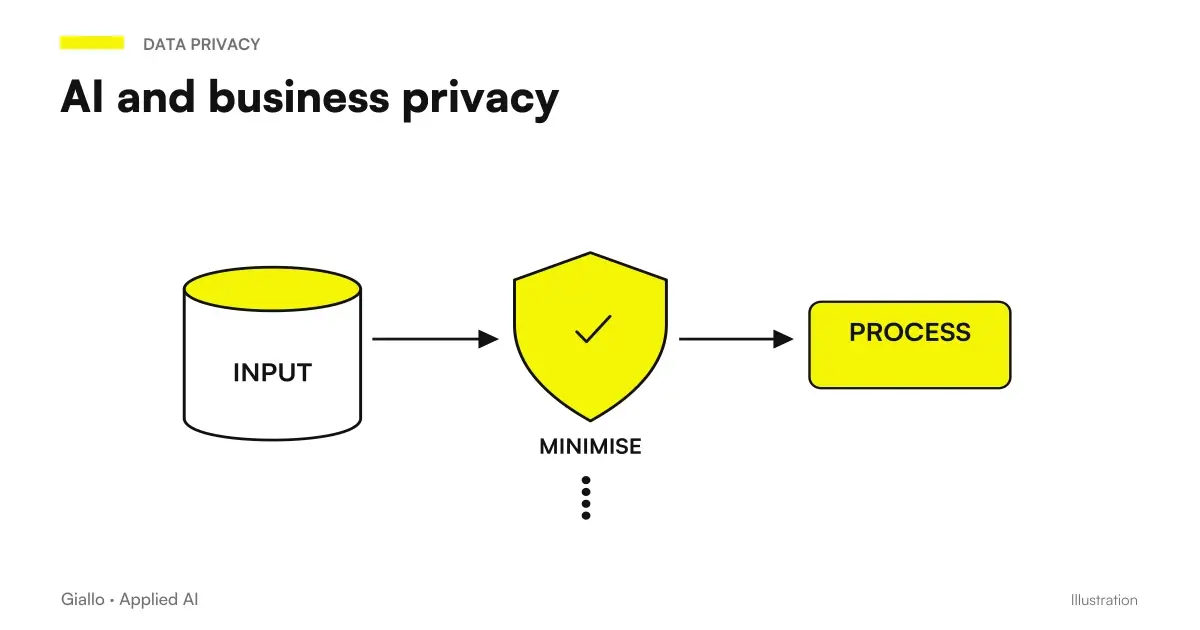
The evaluation of Business Data in AI Services should start with a concrete question: what decision do I want to get? In order to assign a department, a message cleaned of foreign elements can be enough. An identifier may be needed to resolve a practice, but not necessarily the full customer history.
Do not start with the availability of the entire CRM. Start from the minimum set of information that would allow a colleague to perform the task. Write down what is excluded and what is missing when the case is not decidable. This produces a verifiable perimeter before the technical choice.
What results from public conditions
In the verification of the sources of 10 October 2026, the Privacy Policy declares absence of training and fine-tuning on inputs, hosting in the United States and retention as needed. There is no universal fixed term to be turned into a promise of cancellation.
The legal documentation presents zero data retention as an enterprise possibility. The enterprise page refers to a negotiation with the supplier. The project must then verify applicable conditions and perimeter: it is incorrect to treat ZDR as the default of any account.
The DPA TypeSafe distinguishes the owner and responsible supplier, includes transfer clauses and references to subprocessor information. The presence of the document does not automatically certify the individual stream. Also, do not take on coverage of health data or other special categories without a specific assessment.
These elements answer different questions. The absence of training concerns the use of content to improve the model. Conservation is about how much and why they are maintained. Localization is about where the treatment goes. The contract covers obligations and roles. In the project, each business requirement must be associated with an evidence and condition that is actually applicable.
If the company requires a specific mode, write the requirement and ask for a verifiable response. We have not established an EU region, on-premise distribution, VPC conditions or service guarantees applicable to the case. Do not turn commercial assumptions into features already available. The same applies to attestations or reports that have not been read.
Data map precedes first test
A useful map follows the message: business source, preparation, call, result, human queue and control archive. The Jev API Integration Guide helps to distinguish these steps in the software that makes them. At each step he notes who accesses and what he keeps. The model provider is only one of the possible recipients: the application, logs and automation tools are part of the same project.
| Map Item | Question to be answered | Proposed Evidence |
|---|---|---|
| Purpose | What decision do we want to make? | Task Description |
| Input Data | What fields are really needed? | Cleared example and list of fields |
| Addressees | Who receives text and results? | Flow Diagram |
| Conditions | What agreement applies to this use? | Applicable documents and clarifications |
| Conservation | What remains in each system? | Rule for log, test and review |
| Human Control | Who sees the dubious cases? | Roles and accesses of the queue |
| Actions | What can change the flow? | Authorized operations |
The table is an organizational proposal. It does not attribute to the vendor features that should make your software. If a field is removed before the call, check that it does not remain in a preparation log anyway. If the reviewer sees the original text, its queue requires access and management consistent with that content.
The GDPR, Articles 5 and 28, provides for minimization and limitation of storage, as well as a contract for the processing carried out by the controller. These references do not amount to a judgment of conformity on the project: the concrete application requires the assessment of the case with those who have responsibility for it.
The Corporate Privacy in AI It also concerns what the team does after the test. Copies of emails in shared sheets, screens in internal chats, and exports without a purpose can multiply the data. In the pilot we propose a controlled folder, an identified working group and a closing rule of copies.
The Italian test must look like work
The official page Models indicates English as the primary language and invites you to evaluate the other languages. It is not enough to translate a question: the Italian test must include abbreviations, implicit references and formulations of your industry.
We propose a sample consisting of ordinary messages, exceptions and incomplete cases. The manager assigns the expected outcome with a colleague. Where they disagree, they clarify the rule before evaluating the model. An undefined business distinction also produces disagreement between competent people.
Then we separate the cases used to design from those of the final control. The first group helps to improve criteria and categories. The second indicates whether that configuration holds on to examples not used to correct it. This separation prevents a long series of adjustments on the same sheet from being called a "pilot result".
The Documentation on the limits of Jev 1.13 reports difficulties with counts, numerical accuracy, dates, irrelevant context and order of options. In tests, it changes the order of categories and retains deterministic controls for precise calculations and validations.
The sample should make visible the errors that matter: an ignored denial, a customer citing two practices, a short message with an urgency or a correct request out of the catalog. There is no need to simulate every possible situation. It is necessary to avoid a set composed only of clean examples, written on purpose to be easy.
Hypothetical case: email sorting of an installer
A hypothetical Italian SME installs and maintains plants. He wants to assign emails to support, administration or commercial. To get started, choose a set separate from the daily service, with texts cleaned from unnecessary elements and cases written to represent frequent problems.
The handler prepares a rule for mixed messages. A request that talks about invoice and failure should not only be assigned to the category with multiple words. The company decides which cases they have to pass to a person and which can have a main department with a secondary indication.
The pilot does not move emails and does not send answers. It produces proposals that two referents compare with the expected outcome. They record the wrong department, missing information, and the need for review. The confidence and human intervention They serve to build the next path, after observing those results.
On the data side, the group verifies that unnecessary addresses, signatures, and chronologies are excluded before the call. An internal identifier allows the case to be reconstructed in the corporate environment without automatically sending every detail to the service. Separation should not be confused with an anonymization statement: it depends on how the flow is realized.
To decide whether to continue, the company looks at errors in urgent cases and review time, in addition to correct assignments. They are hypothetical criteria of adoption, not Giallo results. If the system recognizes well ordinary cases but neglects mixed ones, it can start with a tighter perimeter approved by the manager.
Hypothetical Case: Commercial Requests of a Manufacturer
A second hypothetical Italian SME produces custom-made components. The salesperson wants to prioritize requests, but emails can contain drawings, quantities, referent names, and details of agreements. The first test concerns only the text necessary to understand relevance and completeness.
The team defines which elements can be treated in that driver and which require a different path. It does not send attachments or entire folders for convenience. Prepare controlled examples, keeping the relationship to the internal case separately. When further data is needed, it records the need instead of completing the text with assumptions.
The Lead scoring guide with Jev proposes to separate the criteria. In this pilot, a complete request but out of production capacity should not prevail over a short request compatible with the work of the company. The manager writes the fit elements and keeps the human reading of all contacts within an agreed deadline.
The test compares long and short requests, denials, technical abbreviations and messages with two needs. If a category changes too much when reordering options, the team delves into the policy before using it in CRM. The decision to connect the flow comes only after the final control and the definition of the accesses.
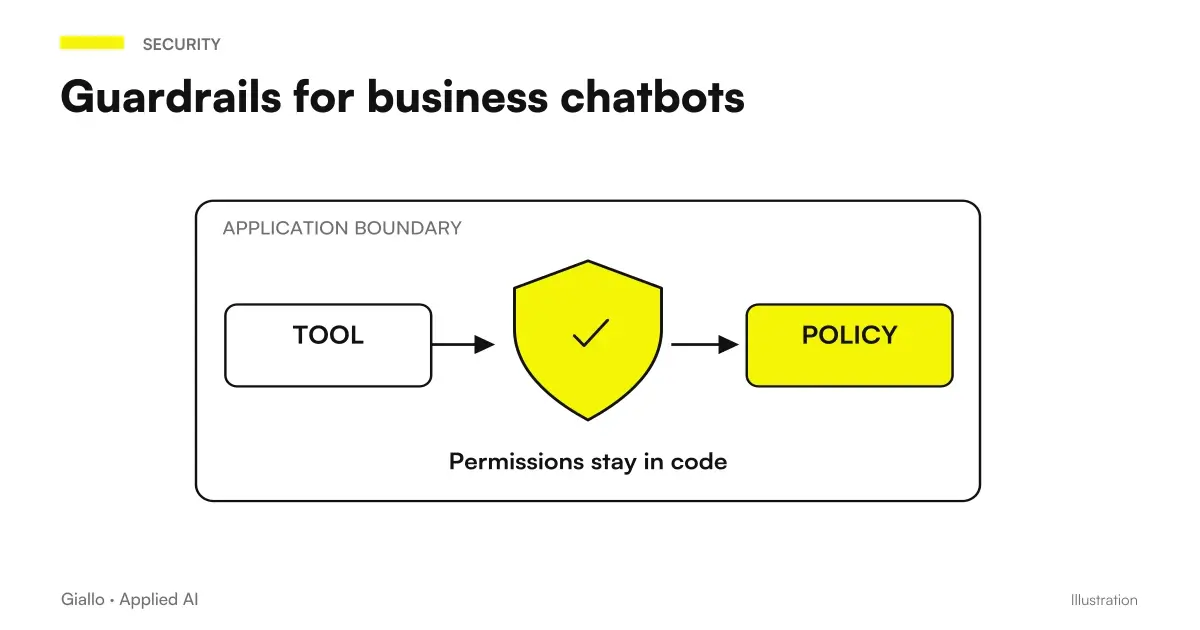
Here too, the model’s result organises the work without authorising sending or rejection. The guardrails and agent permits keep content separate from the possibility of taking an action. A high priority does not confer the right to export the record or change economic conditions.
A brief dossier to decide whether to adopt
The pilot's dossier should allow the holder to understand what has been proven and what remains to be verified. A few well-defined elements are enough: task, data used, criteria, final sample results, residual errors, human load and applicable contractual conditions. A summary without the denominator of the evaluated cases is unhelpful.
It also distinguishes three states: verified requirement, requirement to be agreed and technical hypothesis. For example, a condition read in the policy is not the same document as an enterprise option negotiated for your company. A drawn path does not prove that the software already respects accesses. Keeping this distinction makes the decision easier.
Open the questions to bring to the supplier and team
- What storage conditions apply to our agreement and what data do they include?
- How are recipients and methods of applicable processing documented?
- What conditions are needed for the zero data retention option required by the company?
- Who can access the logs and review queue in our software?
- What set of control does the behavior on our operating Italian demonstrate?
Who owns the final decision
The process owner assesses whether the task produces an observable benefit. Those who follow the data check the applicable perimeter and conditions. Those who make the software demonstrate access, planned storage and possible actions. These responsibilities may belong to a few people in the SME, but they must remain distinguishable in the dossier.
We propose a short meeting with three possible outcomes: start in the tested perimeter, new targeted test or suspension pending a requirement. Each outcome has a reason and a person in charge of the next activity. Simply saying that AI looks promising does not establish what can start Monday morning.
If an important contractual response is missing, the group can complete the test with synthetic materials while awaiting clarification, as long as that path is consistent with the requirement. There is no need to turn doubt into an implicit permission on the real data. A decision not to take, motivated by too uncertain a task or unsuitable conditions, is also a useful result of the pilot.
After the pilot, a limited start
If the evidence supports the adoption, we propose a limited start to the validated decision. First you check the proposals; then, if the person in charge approves, you enable a reversible action. Extension to other departments requires relevant criteria and testing, because a service classification does not demonstrate the quality of the business process.
The company determines who can stop the flow and how the ongoing decisions are handled. There is also a rule for errors discovered after execution: who corrects the record, who informs the office involved and what evidence allows to reconstruct the case. The check does not end when the API call responds.
Review the project when the available purposes, data, recipients, or actions change. A technical update can be small in code and important in processing: for example, add a customer's history to the state. Change must enter the map and the test, instead of being introduced as an invisible detail.
One AI Consulting can start from this dossier and the control sample. The useful decision is whether a defined task can be performed with proportionate data, verified conditions and a sustainable human circuit.
Giallo Studio guides: methodology and sources
How we apply it in the company
Related resources

Jev AI in business processes
APIs, Decisions, Data, and Controls: Choose the step that relates to your process.
- Jev AI: API pricing and cost of business automation
- Parallel questions in Jev AI: fewer requests and repetitions
- Jev AI explained: what changes for SME automation
- Integrate Jev AI through its API: a workflow for n8n and business software
- Jev AI vs LLM: how to choose the right model
- Route support tickets with Jev AI: department, urgency and review
- Verify chatbot citations with Jev AI
- Document classification with Jev AI: build reliable categories
- Jev AI in RAG: choose sources before answering
- Jev AI, confidence and probability: when to get a person to intervene
- Lead scoring with Jev AI: Prioritizing requests in CRM
- Deduplication with Jev AI: connecting records without merging the wrong ones
FAQ
Does Jev AI use business requests to train the model?
The policy states that inputs are not used for training or fine-tuning. This condition does not amount to immediate deletion nor does it solve all project needs on its own.
Is zero data retention included automatically?
No: the documentation presents it as an enterprise option to be agreed with the provider. Verify the conditions and scope in writing before designing the workflow around its availability.
Can I consider the service hosted in the European Union?
The privacy policy documents hosting in the United States. Do not assume an EU region or another deployment arrangement without a verified agreement.
Does the DPA make any use of Jev AI compliant?
No. The contract is one element of the assessment: you must define the purposes, necessary data, roles, recipients and handling of the specific case with the appropriate people.
Can I start by connecting the full CRM immediately?
For an initial pilot, it is preferable to build a bounded test set separate from the operational workflow. Include only the elements useful to the decision in the test and prepare a review before enabling changes.
How do I test Jev on my company's Italian-language messages?
Use representative cases with outcomes approved by the responsible people, including abbreviations, negations and missing information. Keep design examples separate from final evaluation examples, then observe errors and the review workload.