
Document classification with Jev AI: build reliable categories
Organise business documents with clear categories, hierarchies and reviews. A Jev AI method from text preparation to tests on your archive.
Reading time: 11 min
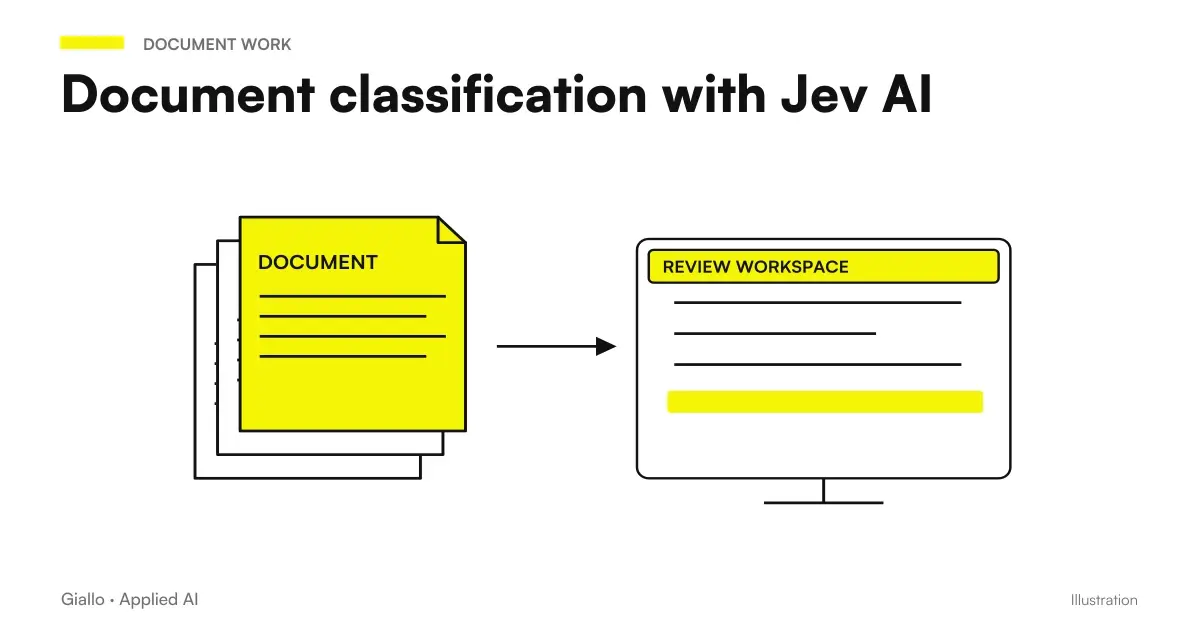
The classification of documents with Jev AI consists of choose a category useful to the business process, with a verification path when the text does not allow a reliable distinction. To build it you need first an understandable taxonomy and rules on what to do after the choice.
An archive that remains usable
- Categories must serve a search, a responsibility or a task.
- The prepared text and the original file must be linked, so any choice is controllable.
- A general category may be preferable to a forced subcategory.
- Mixed files require a rule about the level you want to classify.
- The first test should add metadata and allow simple fixes.
What it really means to classify a document
A quote contains prices, conditions and sometimes a signature. An order can pick up almost all of the quote text. A contract may include a list of products. The presence of a word or amount is not enough to establish the role of the file: the category depends on how the company uses it and the type of act it represents.
For this reason it is better to distinguish at least three objectives: find the document, send it to the right contact person and start a business. The same taxonomy does not necessarily have to serve everyone. An administrative folder can sort by vendor and period, while a business process distinguishes requests, offers, and confirmations. Choose which decision to face in the first project.
The Guide on how to analyze business documents with AI offers the framework of document activities. Here the perimeter is narrower: assign a label, recognize cases out of scheme and keep the source traceable. The context of Jev AI in automations helps to place this decision in the software.
Before proceeding, do a manual test with who uses the archive. If a document is considered order by the commercial and simple requested by the administration, ask which event changes the category. It can be a confirmation, an acceptance or an internal registration. That boundary must become an explicit rule, otherwise the comparison with the automatic result will have an unstable reference.
Prepare the text without losing the link to the file
Jev receives text; PDFs and images require separate preparation. In the proposed stream, the file then switches from a parser or OCR, according to the format. The result is retained along with the document identifier, so the operator can control the choice on the original material.
This preparation has a direct impact on work. A document with incomplete text can lose the header that distinguishes a draft from a confirmation. An order with missing pages may look like a technical attachment. Before classifying, the software should record any errors from the previous step and send the unreadable cases to a verification.
Also decide which unit to classify. One file may contain only one invoice; another may collect invoice, transport document, and an old email. If you want a category for each component, you need a preparation that makes those boundaries available. If you want to classify the entire file, define a container category and keep the components as separate metadata.
The project of Document Automation must keep these passages recognizable. In particular, do not attribute a wrong classification only to the model: check if the text was complete, if the file was composed and if the archive showed the correct version. Preparation errors require a different solution from those of taxonomy.
A short taxonomy reflecting work
The Primitive Choice allows you to choose between defined options. Criteria can describe what each category includes and a residual choice covers material that does not fit in the list. The archive domain must be translated into these distinctions before starting the test.
A first hypothetical scheme can be very simple. The table does not describe measured capabilities: it serves to discuss responsibilities and boundaries with users.
| Proposed category | What Makes It Useful | Boundary to be clarified | Next Activity |
|---|---|---|---|
| Quote | It contains a proposal yet to be accepted | Updated offer or outdated version | Link to negotiation |
| Order | Make a purchase request in the company perimeter | Information request with product list | Check with the commercial |
| Contract | Adjust an agreement to manage over time | Draft, Attachment or Unsigned Copy | Send to the competent contact person |
| Other or to be verified | Avoid Forced Choice | Mixed, incomplete or out of scheme file | Document Triage |
The contracted category can live with a draft or final state. Keeping category and state separate reduces the number of classes and makes information more useful. A draft contract remains a contract for those looking for the document type, while the operational process may require verification before using it.
Also customer, supplier, period and project are often distinct sizes. A tree that contains all the combinations becomes difficult to maintain. For the first pilot, choose a few classes with clear boundaries and add separate fields only when data and rules exist to enhance them.
Hierarchies: an initial choice doesn't have to close all roads
When the archive is more articulated, it can have families such as commercial and administration, with dedicated subcategories. The official cookbook on hierarchical classification Explore successive levels and multiple candidate paths. It serves to prevent a single overly rigid initial choice from ruling out a plausible branch. Ratings dependent on the previous level's options require next steps.
In the document project, this means that the initial branch must be controllable. A supply contract could affect both commercial and administration. If the company wants to classify it by type of act, the hierarchy by department may be unsuitable. The tree must follow the chosen criterion, not combine points of view without declaring it.
Evaluating multiple routes has a project cost: more categories to describe, more cases to check, and more results to compare. It is not necessary to introduce it in an archive with four understandable classes. It makes sense when a real taxonomy is deep and a wrong initial decision produces many wrong assignments downstream.
Before choosing strategy, build a collection of documents on the boundaries between families. Checks if the problem arises from the tree or available evidence. If the same document type appears systematically in two branches, it may be better to revise the taxonomy instead of adding technical steps to compensate for it.
Specificity must be gained with evidence
The Cookbook on classification using confidence shows a fallback to a higher category when the specific choice is weak. It is a reference to design less detailed results, not a demonstration on documents of Italian SMEs. The proposal must be verified on its own archive.
Imagine a general administration category with subsets of invoices, credit notes, and payment documents. If the extracted text does not allow for a clear distinction, maintaining administration may be useful for the first takeover. The referent then sees that a specific classification is missing and completes it, instead of finding the hidden file in the wrong folder.
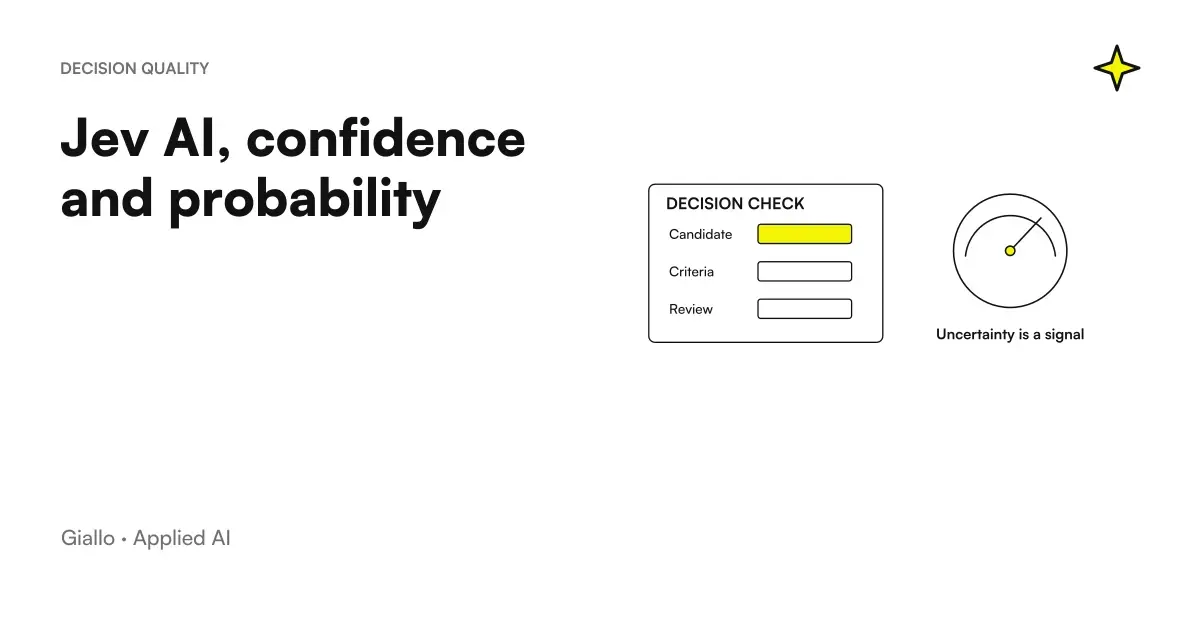
However, do not use the top category to systematically hide errors. It counts how many practices remain generic, how long they take and why. An increasing amount may indicate new formats, deteriorated text or undistinguishable categories. The Guide to confidence and human review deepens the meaning of the signals: the policy of action must also consider the effect of a wrong choice.
When to maintain a general category
A general category is useful if it directs the document to the correct referent and reports the verification still needed. If it doesn't change any tasks or become a forgotten folder, it adds little value.
For example, an incomplete administrative file can get to the competent team with status to verify. An ambiguous contract that triggers a deadline requires a check before the next task.
Hypothetical scenario: plant company in Veneto
A hypothetical Italian SME that realizes plants collects offers, orders and technical attachments in the order files. A file received via email contains the previous offer, updated conditions and a short customer confirmation. The file name is generic and the operator saves it to the quotes folder.
In the proposed project, the preparation retains the relevant conversation and reports the components of the dossier. The classification may suggest the business family, while an operator checks whether the confirmation meets the business rule to consider it order. The software adds metadata without starting production or purchases on the label alone.
When the referent confirms, the activity connects to the correct order. The original document remains traceable and the change in category is recorded. Order verification in management software is a distinct step: a seemingly consistent file may contain conditions not yet accepted by the company.
The pilot would include later versions of the same offer, short confirmation emails and mixed files. The useful result is to find the correct act and assign the verification to the right referent. This example is not a customer case: it serves to show the operating cost of confusing a proposal with an order.
Hypothetical scenario: distributor in Lombardy
A hypothetical Italian distributor receives documents from suppliers with different layouts. Some are invoices, others credit notes, still others summary prospectuses. Administrators need to figure out which files require registration and which ones only serve as support.
Taxonomy distinguishes the type of document, while provider and period remain separate fields. For files with incomplete text, the verification queue shows the preparation problem before the category suggestion. The choice does not change payment deadlines or generate accounting records: it prepares the work of the employee.
The team mainly checks the invoice boundaries, credit note and summary. These are cases where a word in the text can be misleading, because the prospectus quotes earlier invoices. The test must therefore include documents with cross-references, not just simple and well-named examples.
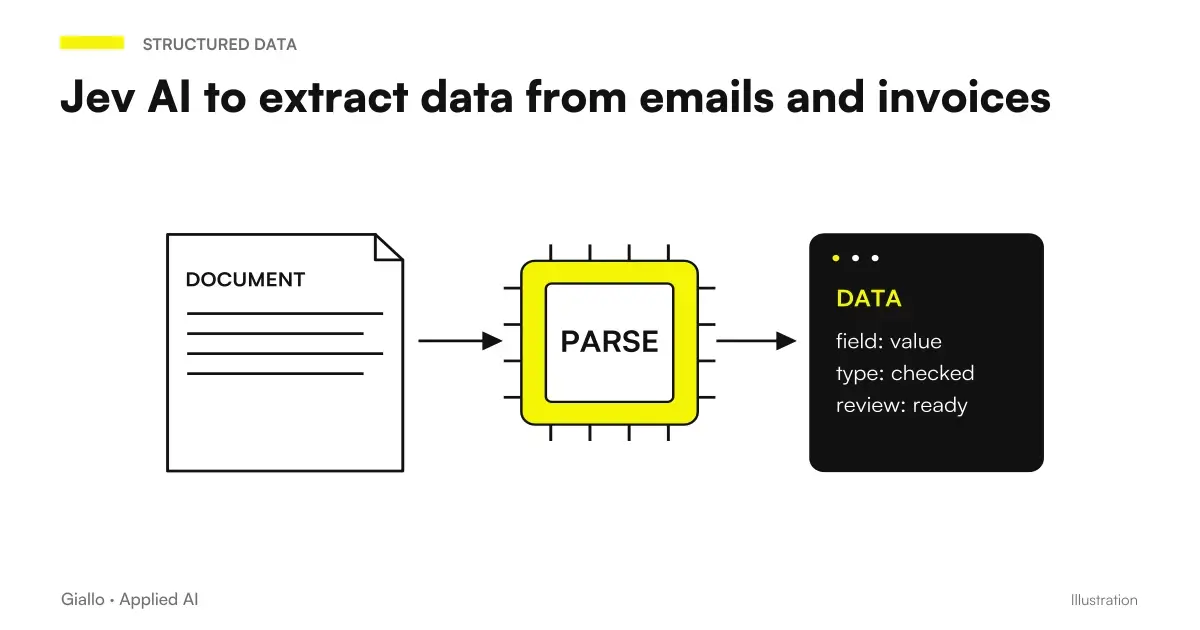
To recover amounts or dates, the stream must then use a specific path. The guide to extraction of typed data with Jev AI distinguishes the choice of the document from the choice of the field. A correct classification does not prove that the total or deadline has been recovered correctly.
Measure the archive, then link it to the other processes
The correction interface should show the proposed category, the text used and a link to the file, without forcing the staff member to reconstruct the process. Allow the document category and status to be changed separately: changing draft to final must not also change the type of document. For composite files, show which component guided the suggestion and whether the rest of the case file was excluded.
You also predict a version of the taxonomy. When the team divides a class into two, the documents already classified do not automatically change meaning. You can keep them with the previous version, prepare for re-evaluation or request a review on a selected group. The choice depends on the use of the archive. If a search mixes old and new categories, the software must show a consistent map or warn the operator of the different perimeter. It is informative maintenance, to be included in the project along with the first upload.
Prepare examples for each category and for the most expensive boundaries. Whoever uses the archive assigns the expected classes and resolves disagreements. Keep complete documents, mixed files, and incomplete texts separate: an overall measure may hide that the system is fine on bids but confuses order confirmations.
During the test, count corrections by category pair and generic queue work. It also checks if an employee can find the document they are looking for with the proposed metadata. Classifying is not the end: the result must make an observable search or takeover better.
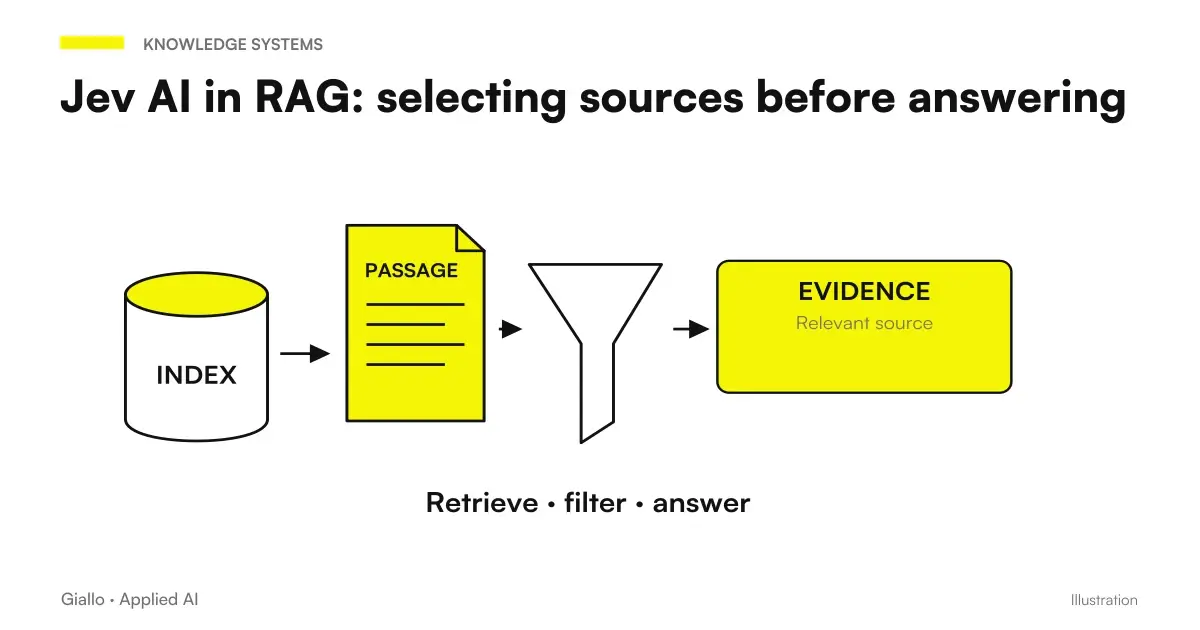
If the archive feeds a knowledge base, additional checks on relevance and versions are needed. The article on Document filtering in the RAG is about the steps to use for an answer, which is a different intent from the file category. The integration of Jev via API instead describes how to connect the result to existing systems.
A Giallo Project of automation of business processes can start from a circumscribed archive, a shared taxonomy, and a correction interface. Before extending it, verify the link to the sources and activities that each category enables. It is this relationship that makes the label a useful piece of work.
Giallo Studio guides: methodology and sources
How we apply it in the company
Related resources
 Jev AI to extract data from emails and invoices: first find, then choose
 Jev AI in RAG: choose sources before answering
 Jev AI, confidence and probability: when to get a person to intervene
 AI for business document analysis: a practical guide
 Document automation with AI: contracts, forms and PDFs automatically
Jev AI in business processes
APIs, Decisions, Data, and Controls: Choose the step that relates to your process.
- Route support tickets with Jev AI: department, urgency and review
- Jev AI, confidence and probability: when to get a person to intervene
- Integrate Jev AI through its API: a workflow for n8n and business software
- Deduplication with Jev AI: connecting records without merging the wrong ones
- Parallel questions in Jev AI: fewer requests and repetitions
- Jev AI to extract data from emails and invoices: first find, then choose
- Jev AI for business: privacy, limits and testing on Italian data
- Business chatbot guardrails: where to use Jev AI
- Jev AI: API pricing and cost of business automation
- Lead scoring with Jev AI: Prioritizing requests in CRM
- Jev AI explained: what changes for SME automation
- Jev AI in RAG: choose sources before answering
FAQ
How many categories does it take to start classifying documents?
Start with distinctions that change a responsibility, a search or a task. Order, quote, contract and other may be enough for an initial test. Add subcategories only when they have a user and boundaries that can be described.
How should you handle a document containing multiple types?
Decide whether to classify the dossier or its individual components. A folder containing a contract, technical attachment and invoice may need a common container and separate categories for the files. The choice depends on the subsequent work, not just the text.
Is a more generic category a mistake?
It may be the correct outcome when the evidence does not distinguish between subcategories. In the proposed workflow, a parent category remains available with a flag for verification. Always forcing a specific class makes ambiguous cases less visible.
Should the suggested category automatically move the file?
It is worth starting by adding metadata without changing the original archive. The software moves files only according to authorised rules. During the pilot, a member of staff must be able to correct the category and find the source.
How should you verify a document taxonomy?
Have people who use the archive classify the same examples and compare their disagreements. If the boundaries remain uncertain, resolve the business rule first. Then check errors between neighbouring categories and documents that ended up in the generic queue.
Is classifying a document the same as extracting all its data?
No. The category describes the document's role in the process, while fields have their own checks. Order numbers, amounts and deadlines require a separate process, with provenance and validation for each value.