
Perplexity AI to do research
Use Perplexity AI for sourced research: market research, competitor analysis, due diligence and fact-checking. Practical examples and limitations.
Reading time: 10 min
Perplexity AI is a search engine based on artificial intelligence: instead of returning you a list of links, it reads web pages in real time and writes you a synthetic response with cited sources next to each statement. To do research this changes the workflow: you spend less time jumping between ten browser tabs and more time reading and verifying what matters.
The practical advantage is precisely the Traceability. Every important sentence has a number that goes back to the page it comes from, so you can check if the source is serious and if the data is reported well. The disadvantage, to always keep in mind, is that Perplexity is not infallible: synthesizes, and in synthesis can simplify, misattribute a number or rely on a weak source. The difference between a solid search and a superficial one is you, opening and evaluating the sources.
In this guide we see, step by step, how to use Perplexity AI for research with sources, market research and competitor analysis, basic due diligence and fact-checking — with concrete examples for SMEs and Italian professionals, and with the limits not to be ignored.
In summary
- Perplexity AI search the web in real time and respond with a synthetic text in which each statement is linked to a quoted and numbered source.
- It serves for four recurring jobs: research with sources, market research and competitors, basic due diligence and fact-checking.
- Good practices that make a difference: read and verify the cited sources, starting with precise questions and using Focus and Spaces to narrow and organize.
- Perplexity is not infallible: can cite an unreliable source or attribute a wrong data to it. Sources always go open and evaluated, not just look.
- For a company the value is halving the time of the collection phase, leaving the person with the verification and decision.
Why Perplexity AI Is Useful for Searches
Most generative AI tools, such as ChatGPT, responds from the knowledge learned during training. It is powerful, but has two problems when you need to do research: the data can be old and, above all, You don't know where they came from. Perplexity overturns the setting: first search the web, then synthesize what it found, showing you the sources.
Technically it is a system close to the concept of RAG, i.e. "recover before, answer after": the model does not invent from memory, but builds the response on real documents just read. This greatly reduces — does not reset — the risk of AI Hallucinations, because every step is anchored to a page you can check.
For a professional or an SME the concrete result is simple: a well-made question returns a research draft to you in a few seconds with ready-made references, to be verified and refined instead of to be built from scratch.
What it's for: the four types of research
Not all searches are the same, and Perplexity should be used differently depending on the target. This table lines up the four most common cases, what to ask and what to be careful about.
| Type of search | How to set it in Perplexity | What to Watch Out For |
|---|---|---|
| Search with sources | Precise question + explicit request for recent and authoritative sources. Use the "Academic" Focus for studies and data | Open every cited source: sometimes the synthesis is right but the source is weak |
| Market Research / Competitors | Indicates sector, geographic area and period. Ask for numbers, trends and names of competitors with references | Dated market data or third-party estimates: check the year and who produced them |
| Basic due diligence | Company/person name + news request, public litigation, reviews, online presence | It does not replace formal visures and controls; it only serves to collect initial signals |
| Fact-checking | Paste the statement and ask "is it true? with primary sources" | Verify that the source is primary (entity, original study) and not a journalistic takeover |
The common thread: Perplexity speed up collection, but the evaluation remains yours. The more the resulting decision is important, the more time you have to spend reading the original sources.
How to do a search with Perplexity, step by step
A good search is not "write the question and copy the answer". It is a small repeatable method. Here it is as an operating stream.
- Start with a precise question. The more specific (sector, place, period, type of source) the more useful the answer is. "Coffee market in capsules in Italy 2024-2025: size, trend, main players" beats "Coffee market".
- Choose the right Focus. Narrow your search to the source type: general web for news, "Academic" for studies and data, community/social for real user opinions.
- Read the answer by looking at the numbers of the sources. Don't stop at the text: every statement has a reference. Open the ones on which the data you will really use rests.
- Check the cited sources. Check that the source is recent, authoritative and that it really says what the synthesis attributes to it. It is the passage that separates serious from superficial research.
- Refine with follow-up questions. Perplexity maintains context: ask to delve into a given, compare two competitors, or find the primary source of a resumed statistic.
- Collect everything in a Space. For long searches, create a dedicated Space: keep connected questions together, upload your files and set up recurring instructions (e.g. "always answer with recent Italian sources").
Using Focus and Spaces the Right Way
The Focus They serve to avoid drowning in noise: if you look for a scientific data, narrowing down to academic sources prevents the answer from fishing from approximate blogs. If you want to understand what customers really think about a product, communities are worth more than a press release.
The Spaces I'm your work file. For a market search that lasts days, a Space keeps all the questions together, allows you to upload your own documents (an industry PDF, an export of data) and give stable instructions to the system. It's the difference between a disposable search and a job you can take back and share.
Practical examples
Two realistic scenarios of Italian SMEs and professionals, to make the use concrete.
1. Consulting firm — market research for a client. A consultant must prepare a quick picture of the sustainable packaging market in Italy. In Perplexity sets a precise demand with sector, area and period, activates the Academic Focus for data and collects everything in a Space. In half an hour it has a draft with numbers, trends and main players, each with the source alongside. Then it opens up key data sources, discards a now-old 2021 estimate, and delivers a verified picture instead of an unchecked summary.
2. E-commerce — competitor analysis. The manager of an online pet shop wants to understand how three competitors rank: range, price range, marketing levers. He asks Perplexity for a comparison with sources, then refines with follow-up questions about individual competitors. The result gives him the starting map; the SEO and positioning choices then deepens them with dedicated techniques, such as those in the guide ChatGPT for SEO. Also here, before quoting prices or market shares in the plan, check out the original pages.
In both cases the principle is the same as seen for other AI tools: AI does the first draft of the research, the person checks and decides.
When to use Perplexity and when another tool
To compare another work environment, the guide Kimi AI Deep Research proposes criteria for evaluating sources, updates and reports. The point of comparison is the verifiability of the search, not just the length of the response.
When Perplexity Concurs
- You need an updated answer with verifiable sources.
- You are doing a market research, competitor or first fact-checking.
- You want to quickly find recent studies, data, and news on a topic.
- You need to collect public signals about a company or supplier.
When to prefer something else
- You have to write or reason long on a text: better a generalist model.
- Work on your own and confidential documents: evaluate a suitable tool for long documents.
- You need a formal audit (visures, financial statements, legal opinion): you need a professional.
- The data must be 100% guaranteed: no AI engine is.
For a wider comparison of the tools suitable for this purpose, see the Best AI Models for Research: the right choice depends on the use case, there is no absolute winner.
Mistakes to Avoid
- Trusting the link without opening it. The presence of a source does not guarantee that the data is correct or well reported. Always check the citations on the points they will really use, as also remembered in the guide on AI Hallucinations.
- Asking vague questions. "Speaks of Market X" produces a generic answer. Specifies sector, area, period and type of source: the quality of the demand determines the quality of the research.
- Confusing recovery and primary source. A data cited by an article that takes it back from another article is not a source: it goes back to the study or the body that produced it.
- Use it as a full due diligence. Perplexity collects public signals, it does not replace camera security, balance sheets and formal controls. For relevant decisions it is necessary to verify an expert.
- Entering confidential data in searches. Uploading documents with personal data of customers in online tools can violate the GDPR. Define first what you can share and what not.
How to apply it in the company
Perplexity becomes really useful when it stops being "something I feel every now and then" and becomes a fixed step in processes that require up-to-date information.
- Standardize recurring questions (competitor research, industry monitoring) into one Dedicated Space with stable instructions.
- Define a verification rule: no data enters a document for the customer without opening the primary source.
- Establish what is forbidden to load (personal data, confidential documents) to remain in compliance with the GDPR.
- Measure the time saved on the collection phase: that is where the value is concrete and measurable.
When a search becomes a repetitive and regular activity —monitoring competitors, gathering industry news every week, preparing fact sheets —the next step is not "hand-doing the search with Perplexity", but building a automation of business processes or a AI Agent that performs it and only gives you the results to verify. This is exactly the type of work for which there is a AI Consulting: understand what research is best to automate and with what controls. If you want to see concrete experiments in this direction, take a look at the The Lab.
Conclusion
Perplexity AI for Research is one of the most direct ways to turn a question into a research draft already accompanied by sources: research with references, market and competitor analysis, basic due diligence and fact-checking become much faster. But speed does not replace judgment: the instrument is not infallible, and its real value emerges only if read and evaluate cited sources, use Focus and Spaces to narrow and organize, and hold the decision in the hands of the person. From here you can continue with What is Perplexity AI and with the Best AI Models for Research to choose the right tool for your case.
AI becomes useful when it enters processes. Giallo Studio It helps SMEs and teams build concrete, measurable, and sustainable automations — including the recurring research that you do today by hand.
Giallo Studio guides: methodology and sources
How we apply it in the company
Related resources
 Perplexity AI: what it is and how it works
 Best AI Models for Research
 ChatGPT for SEO
 AI Hallucinations: What They Are and How to Avoid Them
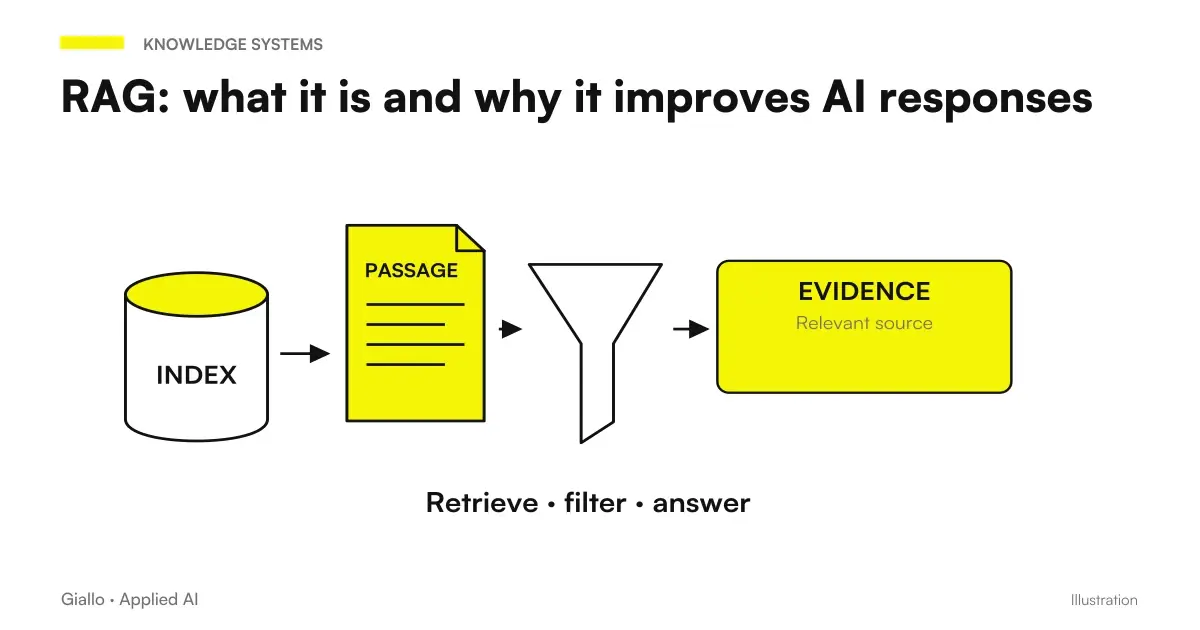 RAG: what it is and why it improves AI responses
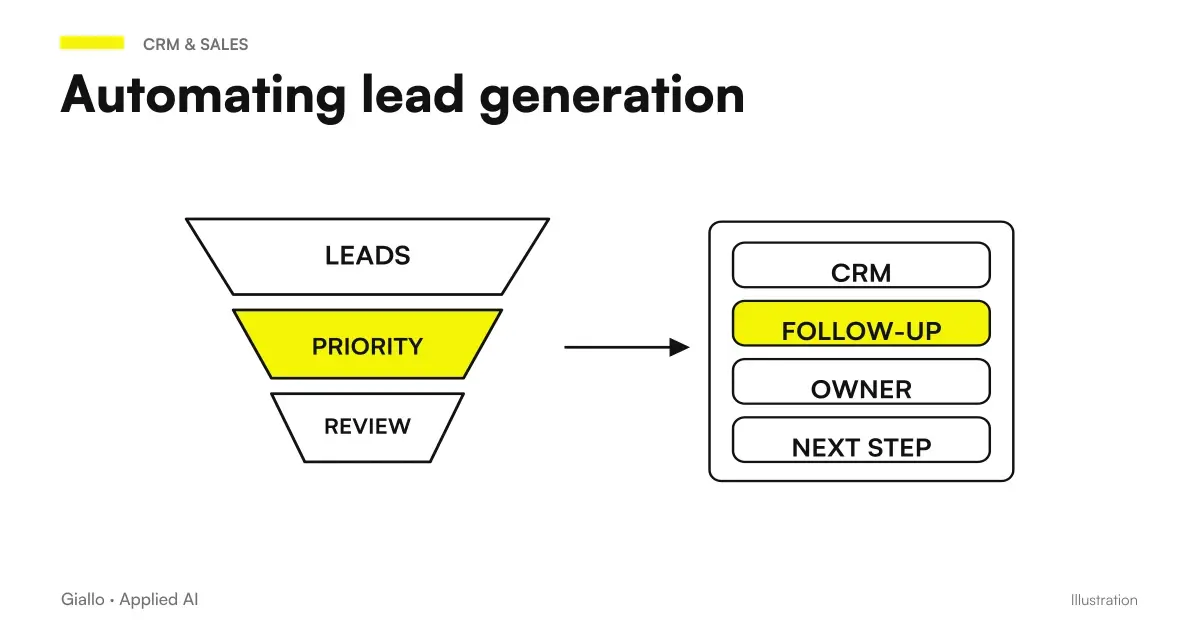 Lead generation automation: how AI populates your CRM
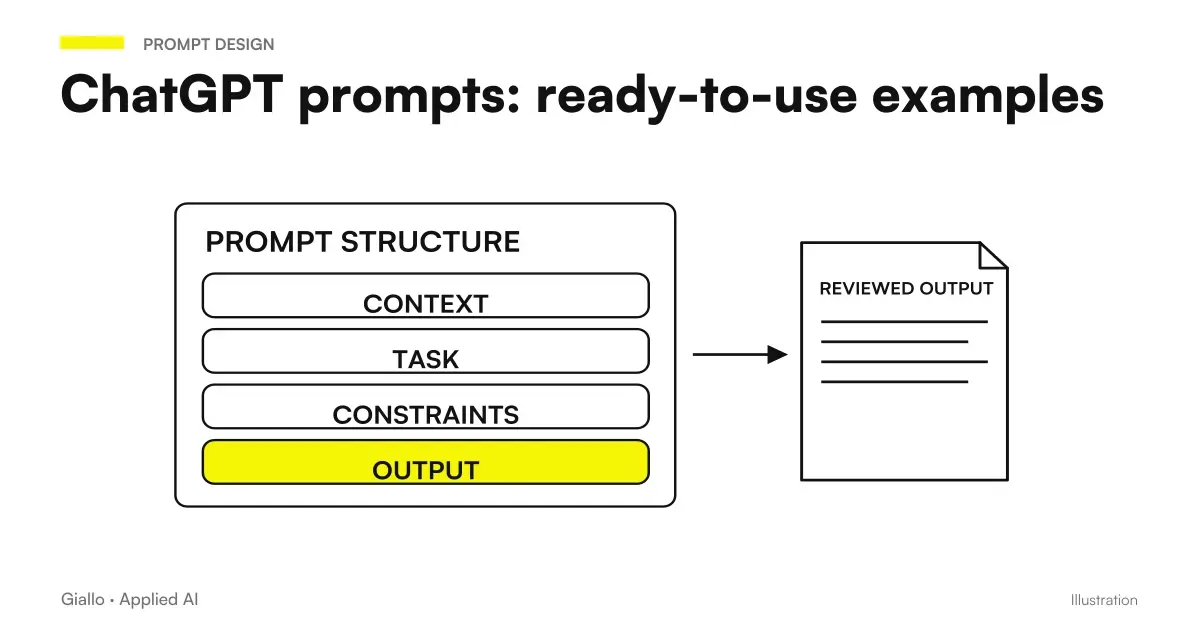 ChatGPT prompts: ready-to-use examples to copy and adapt
 AI project in the company: how to really get started
FAQ
Is Perplexity AI Reliable for Research?
It is reliable as a starting point, rather than a final source. Perplexity searches the web in real time and cites sources alongside each claim, so you can check each step. But it can still summarise incorrectly or cite a weak source: always read the cited pages before using a piece of information in a serious document.
What is the difference between Perplexity AI and ChatGPT for searches?
Perplexity was born as a search engine: every answer is anchored to updated and numbered web sources. ChatGPT generates text from its internal knowledge and searches online only if you activate the search mode. For a search with verifiable references Perplexity is more direct; for writing or reasoning for a long time on a text, a generalist model may be more comfortable.
How do I conduct market research with Perplexity AI?
Start with a precise question (sector, geographic area, period), ask for recent data and sources, then refine with follow-up questions about the numbers you need. Use Focus to narrow down to academic sources or forums, and collect it all into a dedicated Space. Always check the figures on the original sources before putting them in a report.
Can Perplexity AI invent information?
Yes. Even a system that cites sources can attribute information to a source that does not contain it, or cite an unreliable page. Hallucinations are greatly reduced compared with a model without web search, but are not eliminated: always open and read the source, rather than simply looking at its link.
What are the Focus and Spaces of Perplexity?
Focus lets you narrow a search to a source type (general web, academic, video, social or community). Spaces are work folders where you collect related research, upload your files and set recurring instructions. Together, they keep lengthy research organised and provide more targeted answers.
Can I use Perplexity AI for due diligence on a supplier?
You can use it for the information-gathering stage: finding news, public litigation, reviews, online presence and risk signals, with sources alongside them. It does not replace formal checks (registry extracts, financial statements and legal checks) or professional advice: it helps build the initial picture faster, which an expert then validates.