
Perplexity opens multimodal embeddings: search inside PDF pages
Perplexity multimodal PDF embeddings: public weights, page and image search, API rollout and checks for a business archive with sources.
Reading time: 11 min
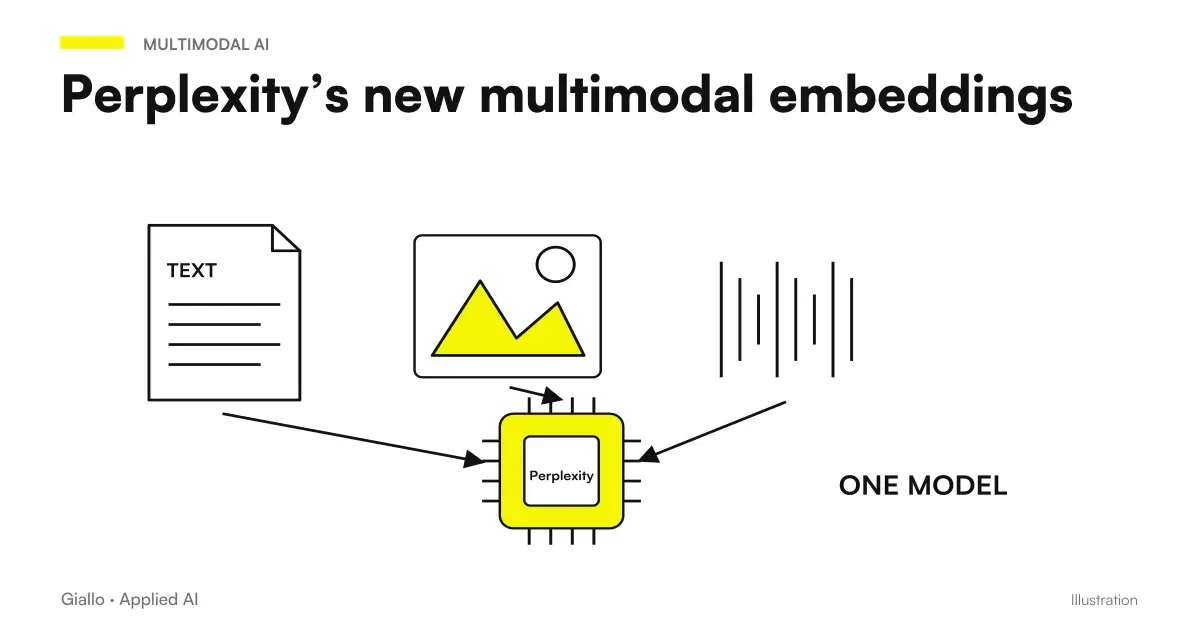
The new Perplexity multimodal embeddings also allow you to search for information in images and PDF pages, using multi-vector representations. For a company the concrete case is internal research in manuals, catalogs and documents in which figures and tables count as much as text. It is not a function that automatically makes every document assistant correct.
The October 7, 2026 Perplexity announced the models pplx-embed-v2-late 0.6B and 9B, with public weights. The models share a representation space that allows the smaller model to query an index built with the larger one. These are features stated by the provider, not a Giallo benchmark. Official announcement.
The availability of weights should be distinguished from the API service: the blog describes a progressive rollout. There is no evidence that a v2-late endpoint is already active and priced for each account. Before designing the integration you need to verify the path really available. Perplexity Technical Blog.
In summary
- Embeddings serve to retrieve relevant content, not to ensure the correctness of the final response.
- Multimodal search can be relevant when images, layouts, and tables contain decisive information.
- Multi-vector representation requires a calculation, space, and index maintenance assessment.
- Public weights and API rollouts are different availability.
- Permissions, document versions and source citations remain part of the business project.
What changes from the search in text alone?
A manual can explain a procedure with a drawing, identify a component in a figure or present compatibility in a table. If indexing retains only poorly extracted text, that structure can be lost. Multimodal research also tries to represent visual content and pages, according to the design of the model.
The late-interaction method uses multiple vectors to represent the content, rather than summarizing it entirely into a single vector. The goal described by Perplexity is to keep information useful for comparing queries and documents. It does not follow that every archive becomes more precise: the advantage must be measured on the corpus and on the company's questions. Official technical explanation.
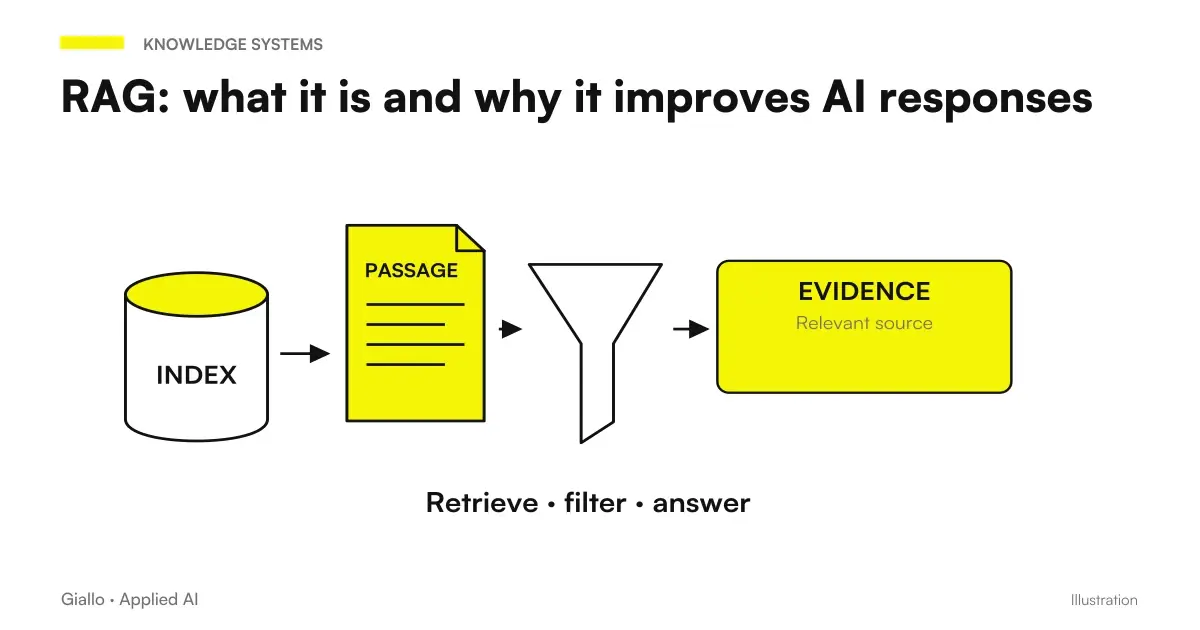
The Guide to the RAG explains how retrieval of sources enters an assistant's response. Embeddings intervene in the search for relevant materials. The generation comes after and can still misinterpret the document: the project must evaluate separately what is recovered and what is said to the user.
Why can a shared space between models be useful?
Perplexity describes compatibility between released models: the 0.6B can query an index built with the 9B. This opens up a design choice between index building and query management, to be evaluated in terms of resources and quality. It does not authorize arbitrary mixing of different embedding patterns. Announcement of models.
In a business archive, documents can be indexed when they are published or updated, while questions arrive during work. The two activities have different requirements. The declared compatibility offers an option, but the team must verify the behavior with their documents, especially if they contain Italian technical terms or unreadable images.
The comparison with EmbeddingGem for business documents must be done on the task: type of content, quality of recovery, required resources and maintenance. There is no better choice than that for every corpus. An archive almost only textual may have different needs from a catalogue full of technical tables.
What to prepare before indexing PDFs?
Before the model you need identifiable and up-to-date documents. Each file should have title, version, relevant date and owner. If an outdated manual and the current one are indistinguishable, the system can recover a plausible but wrong source. The model should not be tasked with inventing which version has value.
Pages must also remain linkable to the source. The user must be able to open the document and check the cited point. A result that describes a figure without indicating where it is is more difficult to verify. PDF rendering, page extraction, and management are parts of the infrastructure, not details deleted from embedding.
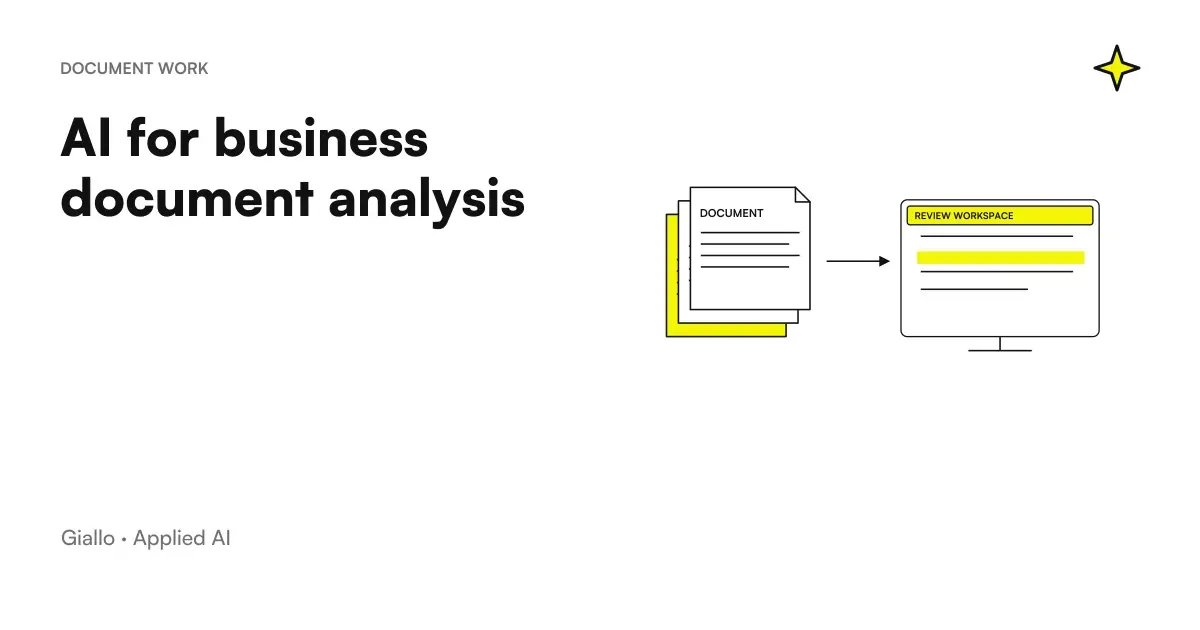
The Guide to the business document analysis with AI helps to define the expected result. In a research project, the initial goal can be to find the correct document, without immediately generating a complete answer. This perimeter makes it easier to recognize the errors of the recovery phase.
How to compare search options?
| Content | Approach to be evaluated | Decisive verification |
|---|---|---|
| Mainly textual procedures | Text search or embedding | Recovering the Correct Pass |
| Manuals with figures | Multimodal embedding | Link between question and page |
| Catalogues with tables | Page representation and metadata | Correct variant and version |
| Archive with different accesses | Authorization Filters | No document out of perimeter |
| Generated response | RAG with citations | Consistency between response and source |
Recovery and filter answer different questions: the guide to JEV in RAG filtering concerns the selection of candidates, to be assessed before the final answer.
The table proposes criteria, does not attribute guaranteed performance to models. A useful comparison includes a simple solution already available: search by code, filters or text. If that road solves the task, adding a more complex pipeline may not be necessary.
Metadata is especially important. The new work of Foundry IQ on SharePoint and Metadata concerns another platform, but highlights the role of the document context. A carrier does not replace category, version, property, and authorization when these elements determine which source is appropriate.
Hypothetical scenario: a distributor searches the technical tables
Let's imagine a distributor that keeps PDF catalogs with exploded and compatibility tables. Staff want to find the relevant page from a question about the component. The pilot uses a set of authorized documents, with recognizable versions and questions prepared by those who know the catalog.
The system returns candidate pages and references, without automatically formulating a commercial confirmation of compatibility. The technician checks the result and reports cases where the correct figure is confused with a similar one. Questions include codes, common names, and incomplete descriptions.
This is a hypothetical scenario, not a client case. The useful measure is how many requests find the correct source and what errors remain. No time savings or accuracy are declared. A visually relevant result may belong to a different version of the product: the verification must include this very possibility.
Hypothetical scenario: a maintenance company consults manuals
Consider a maintenance SME with machinery manuals and operating instructions. The assistant must help authorized personnel find information, keeping the document and page visible. It must not become an autonomous source of indications that exceed the procedures and skills provided by the company.
The pilot separates document collections by machine, version and permissions. A generic question may require clarification before searching. If the system retrieves several incompatible manuals, the result must make the uncertainty visible. The best answer may be to ask for the exact model rather than choosing the most similar document.
This case is also hypothetical. The team primarily evaluates sources, versions, and the ability to stop. Multimodal search can help when the answer depends on a diagram, but it does not replace technical staff verification. The company maintains an alternative procedure to access manuals when assisted research is not available.
Does public weights mean ready service?
No. The model card of the model 0.6B indicates license MIT and publication of weights. The licence of the model must be distinguished from the rights to documents and the conditions of the other components used in the project. It doesn't prove that infrastructure, index, and API are already ready for the company. Official Model Card.
Self hosting requires resources to process documents, produce representations, store the index, and serve queries. A multi-vector structure should be estimated on the real corpus: space and calculation are not derived only from the size of the model. Updates, backups, and service monitoring are also needed.
API availability is a distinct path, described in progressive rollout by the provider. No unverified v2-late price or endpoint is reported here. Rollout Status. Before choosing between service and self hosting, the team must have evidence of the really accessible conditions.
How to prepare an evaluation on your archive?
Open the card for a document search pilot
Choose Authorized Documents and Identifiable Versions. Prepare questions with the correct source expected, including figures, tables, Italian terms and unanswered requests. Separately evaluate page retrieval, permissions, and final response. Compare the result with a simpler search and record the reasons for the errors.
Questions should not be perfect rewrites of titles. Staff use abbreviations, incomplete descriptions, and industry-specific terms. Even the absence of an answer must be proven: a system must recognize when the corpus does not contain the necessary information. Recovering something at any cost makes the service less reliable.
An evaluation set should remain separate from the examples used to correct the pipeline. Otherwise, there is a risk of only improving the questions already seen. The team must also check accesses before generation: filtering after delivering the document to the model may arrive too late compared to the intended perimeter.
What errors are specific to multimodal search?
The first is indexing without distinguishing versions. The second is to measure only the final answer, without seeing which pages have been retrieved. The third is to choose based on a manufacturer benchmark and assume the same result on the Italian manuals. The fourth is to ignore the cost of indexing and updates.
Another mistake is reading “multimodal” as an ability to understand each image correctly. Degraded scans, lowercase text, or complex tables can create difficulties. These cases must appear in the evaluation if they are present in the archive, without being excluded because they worsen the result.
Finally, the organizational context matters. Integration Rovo fra Jira, Confluence and OpenAI concerns a different ecosystem, but shows why documents and activities should remain linked to permissions. An assistant should not see a source just because the technical index manages to retrieve it.
How to keep the index up to date?
Each new version must produce a decision about the previous document: remove it from the current search, keep it as an archive or limit it to a specific context. The choice depends on the business process. Without a rule, the index can accumulate contradictory sources and return the wrong one with apparent security.
The team should also check for deleted documents or revoked logins. The search must follow these changes, otherwise the indexed copy can survive the original permission. Maintenance includes content and permissions, not just server health.
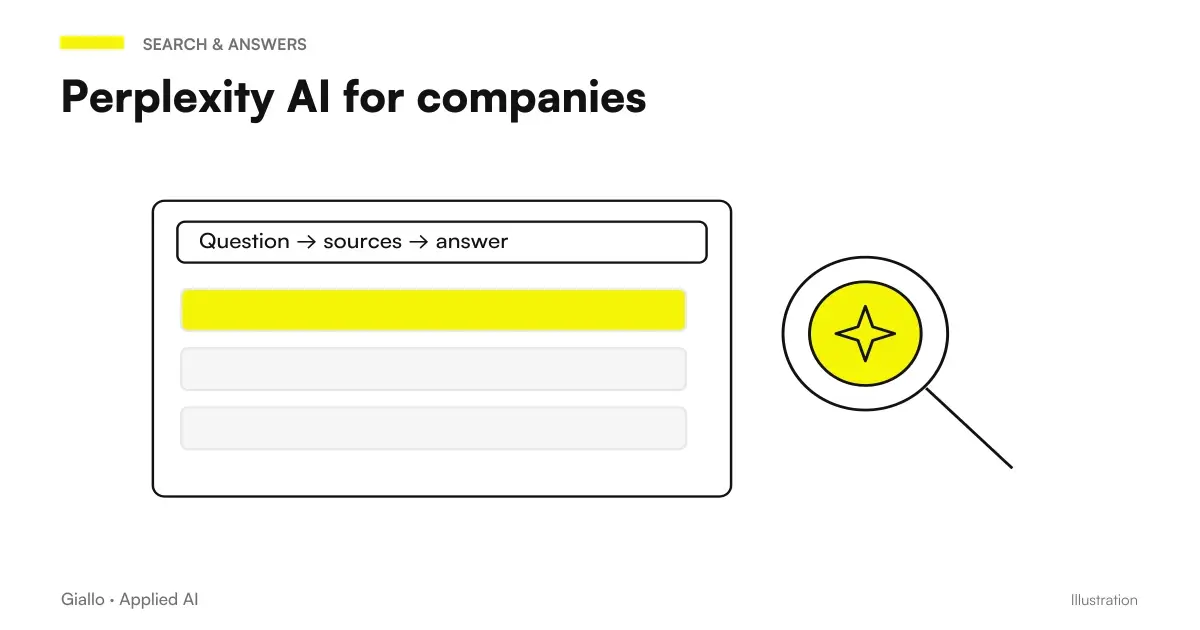
The Guide to Perplexity for companies It offers a broader picture of uses. However, these embeddings have a specific intent: to help build internal research. They should not be confused with a generic web search or with the automatic availability of all business documents in a ready-made application.
How to show a source without making it more certain than it is?
The search result should distinguish candidate page and confirmed information. A document may seem relevant because it contains the same terms, but it concerns a different model. Showing title, version, and context helps the user recognize this difference. The system should not hide such elements behind an overly synthetic response.
When the search returns multiple sources, the team must decide how to deal with the conflicts. A current procedure may prevail over an archived document, but this rule must be explicit. If the conflict is not resolvable with metadata, the assistant should report it instead of merging the information into a seemingly coherent explanation.
Quotations must remain useful even when changing the document. A link to a removed page or a replaced file makes it difficult to verify a previous response. The design must consider versioning and access to sources, consistent with the company's rules. You don't need to keep every copy forever, but you need an understandable decision about what's being kept.
Even staff need an easy way to report wrong results. A note may indicate question, retrieved source, and reason for the error, without reporting unnecessary confidential content. These feedbacks help determine whether the problem is about the representation, filters, version, or language of the query.
Improvement does not always coincide with a larger model. Clearer metadata, a disambiguation question, or better organized documents may suffice. The test should leave room for these alternatives. If a simple change solves the problem, it is preferable to evaluate it before adding a more expensive pipeline to maintain.
Which archive should we start with?
It starts from a circumscribed corpus in which figures or tables have an obvious role. Authorised sources, representative questions, and a manager who can judge the result are needed. Recovery occurs first; then it is decided whether to add a generated response and which controls to apply.
If the staff struggles to find the right page between manuals and catalogs, a project of Giallo custom software can start from that concrete research. The result to be asked is a correct source, accessible to the right person and verifiable, with readable costs and maintenance before extending the archive.
Giallo Studio guides: methodology and sources
How we apply it in the company
Related resources
 EmbeddingGemma 2: Local AI search in business documents
 Foundry IQ and SharePoint: why metadata changes knowledge base responses
 OpenAI and Atlassian expand Rovo: Jira and Confluence in working with AI
 RAG: what it is and why it improves AI responses
 AI for business document analysis: a practical guide
 Perplexity AI for companies
 Kimi AI: what it is, what it does and when to use it
 Kimi Code: an agent for coding and development
FAQ
What are the new Perplexity embeddings for?
To retrieve relevant content from images and PDF pages according to the multimodal model. They do not alone guarantee the correctness of a generated response.
What does multi-vector mean?
Content is represented by multiple vectors rather than a single overall representation. Computation and index storage requirements must be assessed on the actual corpus.
Can released models share the index?
Perplexity describes a shared space between release models. This compatibility does not authorize arbitrary mixing of different embedding models.
Do public weights mean the v2-late API is already ready?
No, the blog describes a progressive API rollout. Endpoints, price, and availability for the account must be verified before integration.
Does self-hosting eliminate costs and maintenance?
No, you need document processing, index, queries, updates, and service protection. The weight license is distinct from the rights to documents and other components.
How to check the value on your archive?
With representative questions, the expected correct sources and cases with no answer. Retrieval, permissions and the final answer must be evaluated separately.