
Mods by Claude: what they are and when they are needed in Claude Code
Claude Mods: what they are, how they change Claude Code and when to use Hooks, Skills or MCP instead. Practical cases, official demos and team limitations.
Reading time: 15 min
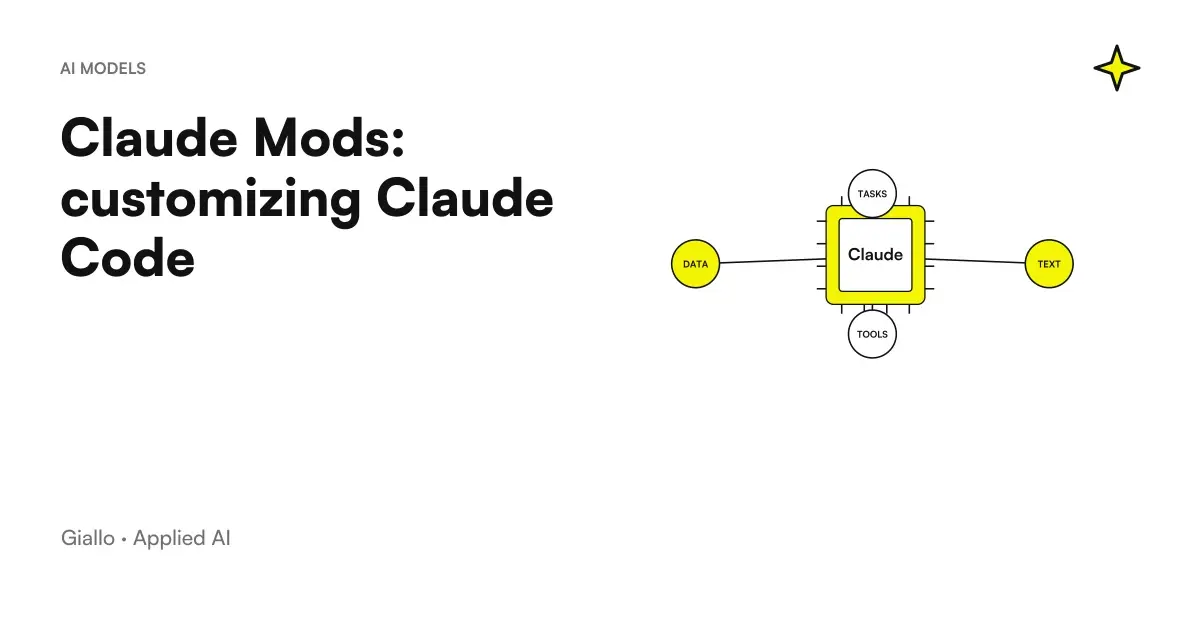
The Claude's mods are Claude Code plugins with JavaScript code or TypeScript executed inside the tool. They are used to customize events, commands, tools and interface: for example see the occupation of the context, ask for a decision in front of a delicate operation or make changes of a turn more readable. The public launch dates back to 1 October 2026, as they document the Claude announcement and the release 2.1,287.
The question ‘mods Claude what are they’ therefore has a precise answer: a possibility to extend the working environment, not a way to train Claude or automatically increase his intelligence. Customization can make information already available visible, coordinate a reaction, or offer a new entry to the workflow. The quality of the result depends however on the project, information and controls chosen.
This guide is updated to official sources consulted on 9 October 2026. The cited demos are Anthropic examples; the Italian scenarios are hypothetical. We do not attribute savings, customers or test results to them that we have not measured. If you are still distinguishing chat from a development environment, start with the guide to Claude for code and development.
In summary
- A mod extends Claude Code with code that reacts to events and can draw a UI.
- Plugin is the packaging; Mods, Skills, settings Hooks and MCP servers play different roles.
- Customization must be chosen after defining the problem, the surface and the necessary data.
- Official demos help to understand the possibilities, but do not certify a business workflow.
- Installed version, generated types, and team policies determine what can be loaded.
- The code of a mod requires trust and review: it is not protected by a universal sandbox.
What really changes when you add a mod to Claude Code?
Imagine an environment that allows you to write code, use tools, and talk to a model. A mod adds behavior to that environment. It can observe an event, move it forward, transform some data, or respond to a function it handles. The documentation describes this composition through handlers and continuations: the order of customizations can affect the final behavior. Event Guide Mods.
This brings a design advantage: a very limited need can become a recognizable function. Those who wish to know how much context is occupied must not ask the model for an estimate at each turn. Anyone who wants to consult a local state can have a dedicated command. Anyone who needs to understand an edit sequence may prefer a panel that represents it.
However, the benefit is not the same for everyone. A new panel takes up space; a control introduces a decision; an integration adds a dependency. The useful question is which step becomes clearer and more verifiable. If no one can indicate it, it is better to stop at the existing configuration. A personalization without owner soon becomes another component to maintain.
In the relationship between agent, assistant and chatbot, the mod intervenes mainly on the environment that allows the agent to act. It does not replace a model, business archive, or approval process. This distinction avoids buying custom development to solve an unclear instruction problem.
Mods, plugins, Hooks, Skills and MCP: which one to choose?
Plugin indicates distributable packaging. Inside there may be different components; a mod is a plugin that includes a code module for Claude Code events. The official overview compare these tools precisely because they are not interchangeable. The need must be translated into the smallest mechanism capable of satisfying it.
| Need | First option to evaluate | Why | Limit to verify |
|---|---|---|---|
| Explain a review procedure | Skill | Provides instructions and a callable method | It does not impose a technical block on itself |
| Reacting to an event with an external control | Settings Hook | Link event and configured handler | Semantics, errors, and timeouts depend on type |
| Draw an indicator over the prompt | Mod | Can use supported surface UI | Not every surface draws that component |
| Offer a multi-application function | MCP Server | Expose tools across an outer border | Requires reliable service, access and contract |
| Distribute components to a group | Plugins | Group and version customizations | Installation is not equivalent to code review |
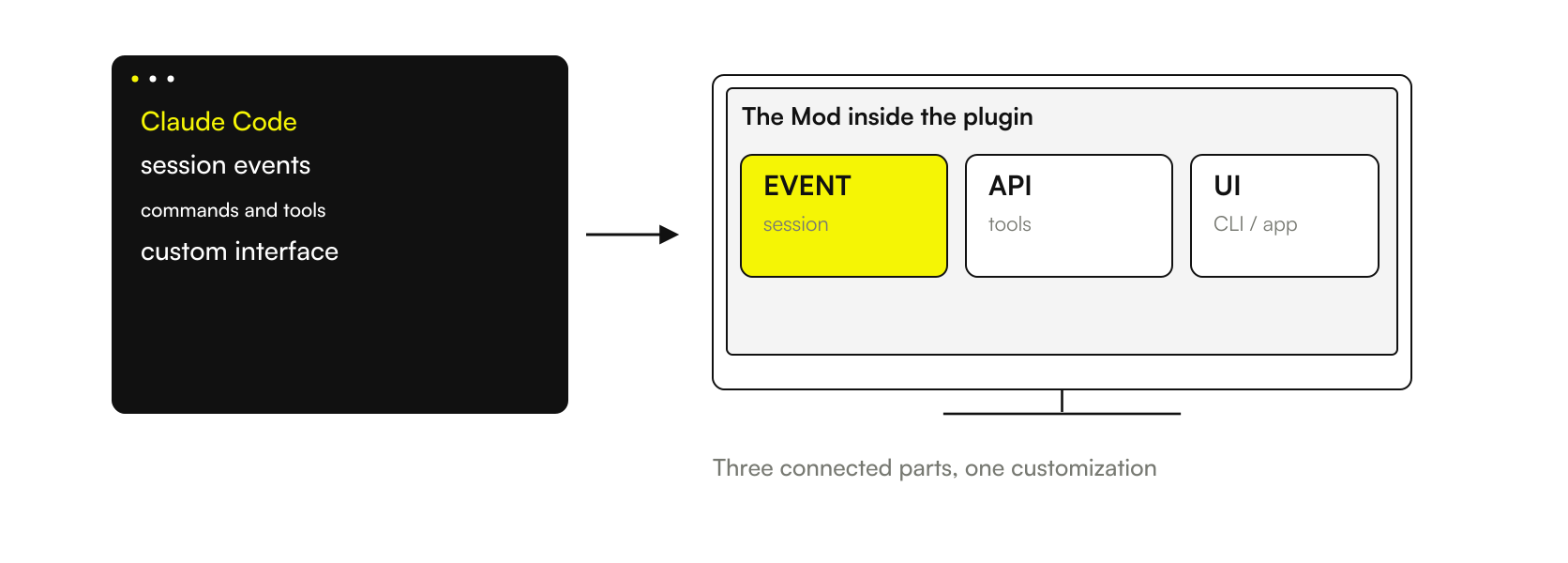
Consider four concrete problems. First, the team forgets the review checklist. A well-defined Skill can suffice, with observable criteria and a required output. Second: after a change you want to activate a control already present in the project. A Hook can link the transition to the correct event. The Guide to Hooks by Claude Code deepens this configuration.
Third: information needs to remain visible during work. Here a mod is a natural candidate, provided that UI is available. Fourth: the same lookup serves Claude Code, business management software and another assistant. A service with its own contract may be preferable; a mod could potentially offer it a local interface. The article on AI API helps to recognize the boundary between applications.
A reasonable decision can also be a combination. The instructions explain what to do; the check checks a condition; the UI shows the result. However, it is advisable to separate the responsibilities. If the same rule lives in three places, an update is likely to leave two old ones. The project document must indicate which control it decides and which component it only informs.
When is a mod useful for a small Italian team?
A mod is interesting when the problem occurs in the work with Claude Code and requires a specific capacity of the environment. The requirement should be able to be written in a sentence: 'show the status of the shift', 'offer this consultation', 'make this decision explicit'. A request as ‘improves all productivity’ is too broad to choose events, data, and tests.
For a small team the first filter is frequency. A function used by only one person in a rare situation may remain a manual procedure. A repeated, ambiguous or often forgotten passage deserves a delimited test instead. Frequent does not automatically mean convenient: maintenance and consequences of an error must also be considered.
The second filter is authority. Showing a report and authorizing an action are different responsibilities. An indicator can tolerate a temporary absence of data, showing ‘not available’. A component that decides on execution must define what happens if the service does not respond. The convenience of the mod is therefore evaluated together with the risk of its behavior, not just the beauty of the interface.
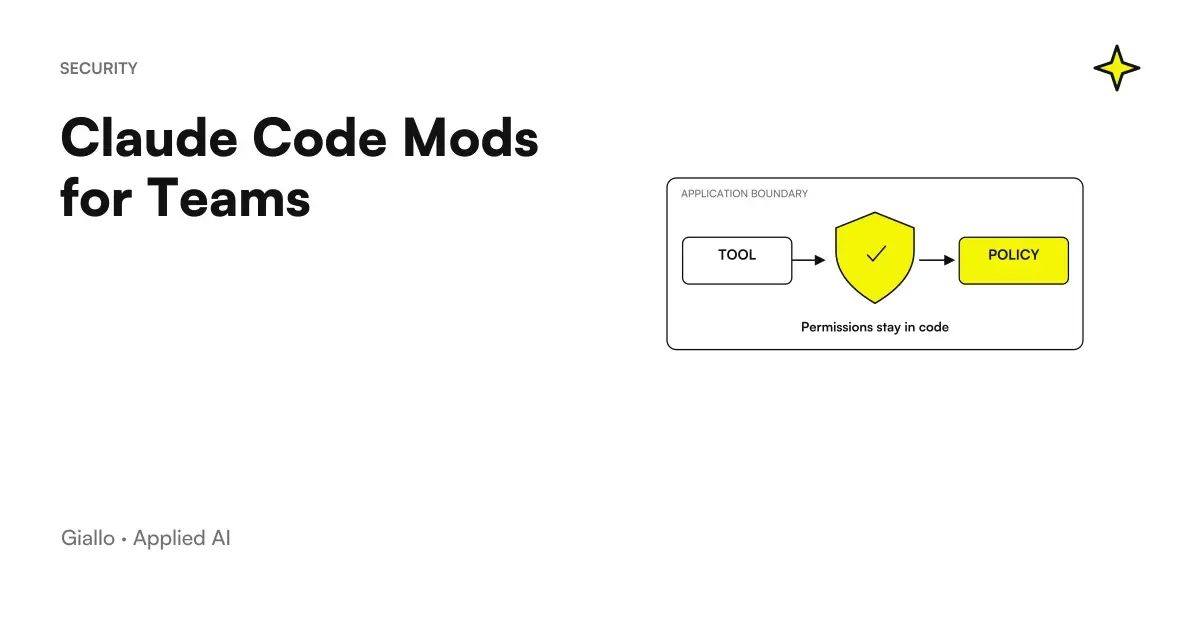
The third filter is the owner. Someone needs to know where the code resides, which version is distributed and who approves a change. If the team needs this structure, read Mods for teams and administrative policies. If you have yet to decide how to employ agents in processes, the guide to AI Agents for Companies offers a broader starting point.
What official demos help understand Mods?
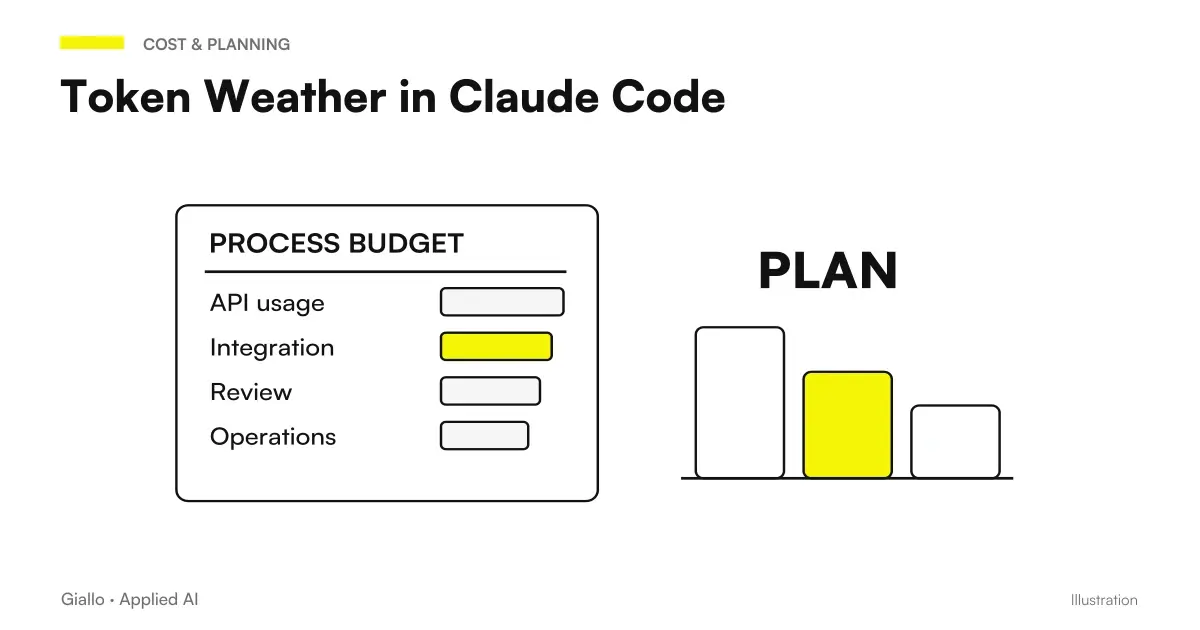
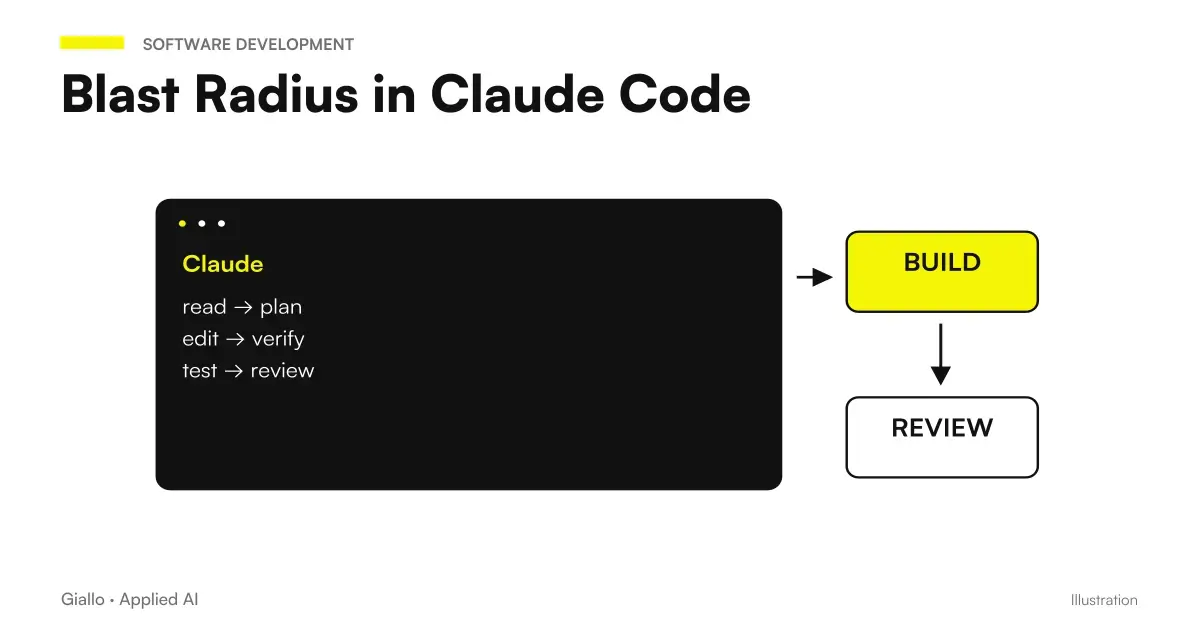
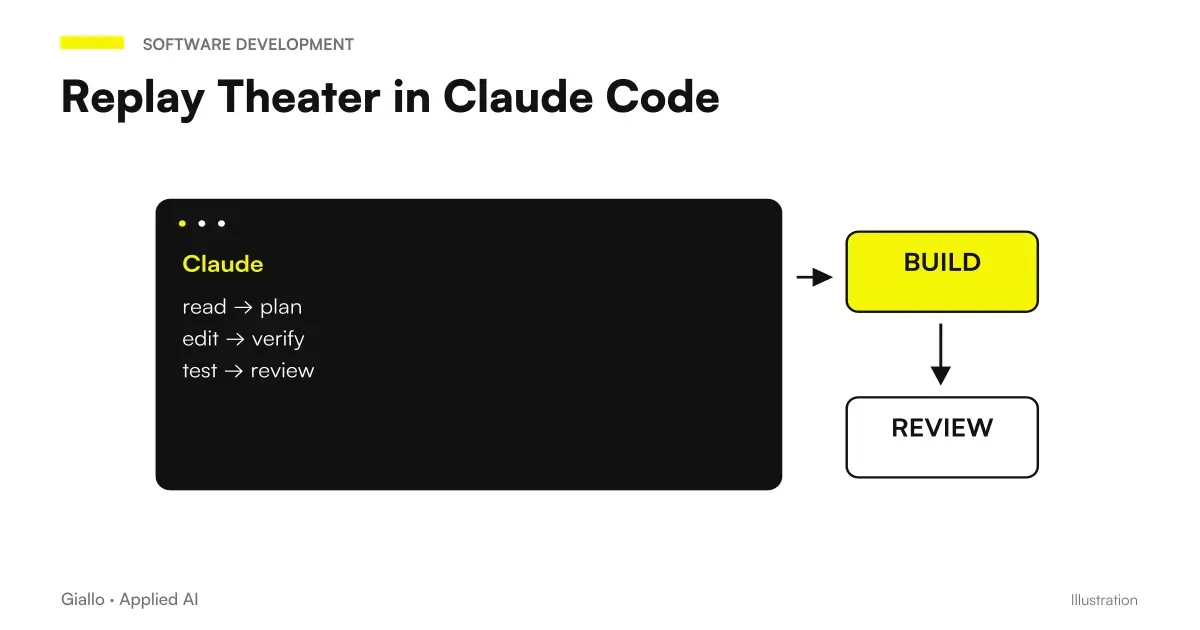
Token Weather represents the occupation of the context with a band and a small history of the shifts. It is an example of information made visible. Blast Radius presents a preview for certain commands and asks for a choice. It is an example of interaction before an action. Replay Theater reconstructs a sequence of turn edits. It is an example of reading the task. They are described in official Anthropic playground.
Everyone answers a different question. "How much context are we using?" does not coincide with "how much will we pay?". "What is the impact of this command?" does not coincide with "every dangerous command will be stopped". "What edits were attempted?" doesn't coincide with "what changes remained in the repository?". The demo serves to locate a capability, not to delete subsequent verifications.
To read the first example correctly, follow the guide to Token Weather and Context Window. To reason about the interaction before an operation, see Blast Radius. To link a visual sequence to the actual review, read Replay Theater. These routes avoid turning three suggestive screens into a non-criteria ranking.
A useful comparison can remain very simple: which decision makes the demo easier? What data is missing when the component is absent? What verification will continue to be necessary? If the answer remains vague, adoption does not yet have a goal. The test should produce a choice on the use, not just a cover to present the project to the rest of the team.
Where do Mods work and why does the surface matter?
The Mods belong to Claude Code, but Event execution and UI display are not the same capability. The documentation distinguishes terminal and Code desktop tab from other surfaces; some run handlers without showing that UI. The desktop in WSL also has a specific limit on plugins. Before adopting a component it is necessary to verify the officially supported surfaces.
For those who design, this means writing two separate requirements. The first concerns the function: what given law or what decision it produces. The second concerns the presentation: where it appears and how the user uses it. A text command may be sufficient in a stream that does not show a panel. An interaction that requires a button can instead make that surface an essential part of the requirement.
Group work also requires attention. If a developer uses the terminal and a colleague uses another surface, "it works for me" does not close the problem. The customization tab must report which paths are supported, which information is visible, and which alternative to adopt where the UI is missing. Better a small function with an explicit limit of a promise of uniformity never verified.
Which version to check before leaving?
For the operating path use Claude Code 2.1,287 or later, as the creation guide indicates. The administrative page talks about default activation since 2.1,286; the reference Mods consulted states 2.1,290, while some features require later releases. The Field isDeferred for tool registration comes from 2.1.293. Creation Guide, release 2.1.293.
It is not necessary to deduce a contradiction of operation from these dates: they describe different aspects. Instead, it is necessary to record the version actually used and compare it with the desired function. For those who write a mod, the types generated within the project by their installation are the most adherent reference. Copying a field that appeared yesterday in the documentation does not prove that a less up-to-date machine supports it.
The route of Installation and Update of Mods treats the uploaded copy and distribution. The path to create a first mod TypeScript treats structure and development cycle. Separating the two needs avoids modifying the cache of an installed plugin to experience a local function.
Two hypothetical scenarios: management software and digital agency
Hypothetical example: an SME in Bologna maintains an internal management software. The team uses Claude Code to edit reports and screens, but struggles to figure out which files were touched during a turn. The problem is not getting a new model: it is making the sequence of work readable before the review. A demo like Replay Theater can help orientate, while the Git diff remains the basis for verifying what has really changed.
The team defines a test: starting from an identified branch, asking for a circumscribed edit and comparing visual sequence, diff and result of the project controls. The rejected edits must be recognizable, because they tell activities but do not attest to a change. If the panel confuses attempts and results, the procedure should be corrected before extending its use. The expected result is a more understandable review, not a number of hours saved invented.
Hypothetical example: a digital agency in Milan works on multiple repositories. The manager wants to remind the colleague in which project and branch he is operating. A local indicator can be useful if it reads relevant information and does not send data elsewhere. The initial request is narrow: project name, branch and data indication unavailable. It does not include telemetry, code uploads, or automatic authorization to commands.
The test includes repository change, branch change and mod reloading. The manager checks that the value shown does not remain old in the steps he counts to know. If an already configurable element in the environment is enough, he prefers it. If you need a different UI, evaluate the mod and assign maintenance. In both scenarios the choice arises from an observable problem, not from the desire to install the whole catalog.
How to evaluate a customization without promising results?
A good adoption card contains the need, the data read, the expected behavior, the surface and a negative proof. For Token Weather the negative proof may be the lack of an up-to-date data. For a lookup command it can be a non-existent identifier. For a request for a decision it may be the refusal of the user. They are designed cases, to be performed before declaring the component reliable.
Measure only what you can observe. It counts how many times someone uses the component, what doubts it clarifies, and what errors it introduces. If you want to compare times, define comparable tasks and similar conditions first; do not take a single successful turn as a general test. A mod can be useful even without an immediately quantifiable economic return, but it must not hide its own maintenance cost.
A short card to decide if the mod deserves a try
Problem: What passage today creates uncertainty. Given: where it comes from and how old it can be. Action: what the component shows or decides. Border: which surface and which version are supported. Verification: a normal case, a mistake and a rejection. Responsible: who keeps the code and updates the distribution.
For a customization that offers functions to the model, the contract must be even more explicit. commands and tools with the Mods API separates the entrance for the user from the entrance for Claude. Mods tests without calls to the model explains how to verify behavior with synthetic data, without confusing the plugin test with Claude's quality assessment.
What mistakes make the adoption of Mods fragile?
The first is choosing the mechanism before need. A Skill, Hook, or function that already exists can solve the same step with less code. The second is to design only the positive case: the service responds, the UI appears, the user approves. The component must instead also explain the absence of the data, error and interruption.
The third is to exchange the origin for a guarantee. An official example documents a possibility; one's workflow has specific repositories, permissions, and consequences. The fourth is to preserve state without a requirement: a value that should survive a reload can disappear, while a value that should be temporary can be stored too long. To diagnose these cases it is necessary the mod guide that does not load or lose status.
The fifth is to attribute security to the presence of a guard only. Mods are not sandboxed; a plugin executes code with user privileges and can start tasks out of protected tool calls. Provenance review, restricted access, and team policy remain necessary. Security of plugins, Mods Administration. For the business framework also read AI and Data Security.
What data should the mod know?
Define the minimum useful data before choosing an integration. A project indicator does not need customer records; a counter must not retain the contents of files it has read. For each field, ask who uses it, what decision it enables and whether a less detailed representation is enough. This choice also reduces ambiguity in tests: a small contract is easier to verify than a huge object copied from the entire environment.
It also prepares the exit from the test. The team must be able to deactivate the component and return to the usual workflow, recognizing what information it will lose. A reversible experiment allows to evaluate its usefulness without making an important process depend immediately on the new UI. If the function becomes indispensable, that dependency must be documented and maintained.
What is the problem starting Monday morning?
Choose a step that the team can describe without citing a product. Write down what needs to change in the experience and what remains to be verified. Then compare the alternatives of the table, select a surface and assign a responsibility. The first test should use controlled data and work repositories, with a success criterion understandable even to those who did not write the component.
If you just need to know how to get started, follow installation and update. If you need an original function, start from first mod and add tests before distributing it. If the question is about the team process, it first addresses approvals, provenance, and maintenance. They are three different projects, even when they use the same plugin package.
To transform a recurring need of your team into a small and verifiable customization, the path of Tailored software from Giallo starts from the workflow and the data boundary. The guide to Claude Code and the one at corporate policy for AI help to place the mod in everyday work, with clear goals and responsibilities.
Giallo Studio guides: methodology and sources
How we apply it in the company
Related resources
 Install Mods in Claude Code: scope, reloads and updates
 Creating a Claude Code Mod in TypeScript: the first project
 Token Weather in Claude Code: read the context window
 Blast Radius in Claude Code: Assessing Commands Before Acting
 Replay Theater in Claude Code: review a turn's changes
 Claude Code Mods for Teams: Distribution, Policy and Security
 Claude Code Hooks: a practical guide in Italian
 Claude Opus 5.5 in Claude Code: long runs, stop rules and subagents
FAQ
What are Claude's Mods?
Claude Code Mods are plugins that perform JavaScript or TypeScript functions within Claude Code. They allow you to react to events, add commands and tools, and modify certain parts of the interface. They are not new language models.
Are Claude Code Mods and Hooks the same thing?
No. A mod contains code executed within Claude Code and can also intervene on the interface. The settings hooks connect events to configured handlers: the choice depends on the required reaction and its execution boundary.
Do you need Node.js to create a mod?
The official basic workflow loads JavaScript and TypeScript files directly, without requiring Node.js, a bundler or a build. Additional dependencies chosen by the author may introduce other requirements. The types generated by the installed version are the reference for the available APIs.
Do Mods also work in Claude's normal chat?
They are a Claude Code feature. Surfaces that display the Mods UI and those that only execute events have different capabilities. Before choosing a demo, check where you are using Claude Code and which components it can render.
Does a security mod make any plugin secure?
No. Mods are not sandboxed and their code can use user privileges. An organizational guard can protect specific policies, but it does not transform every direct call to filesystems or processes into a protected tool call.
Which version of Claude Code do you need to get started?
The operational guide specifies Claude Code 2.1.287 or later. The administrative page mentions activation by default from 2.1.286; these are not equivalent requirements for every feature. For example, isDeferred requires 2.1.293 or later and must be checked in the local types.