
Parallel questions in Jev AI: fewer requests and repetitions
When to group questions in Jev AI and when a second call is needed. Formulas, dependencies and measurements for optimising a business workflow.
Reading time: 11 min
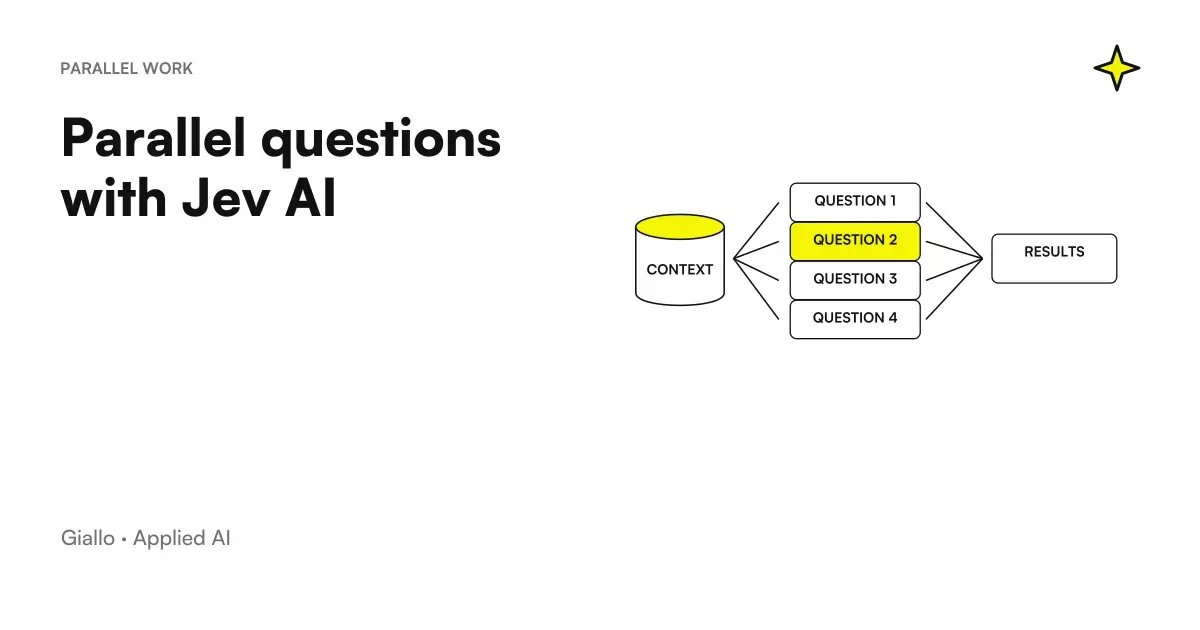
Parallel questions in Jev AI allow you to evaluate multiple independent questions about the same content in a call, reducing state repetition. If a question depends on the previous result, a next step is needed instead. It is the boundary described by the TypeSafe primitive documentation.
The problem is encountered when a message must feed more decisions: destination, presence of a reference, need for deepening. Making a request for each question can repeat the same material. Grouping them can simplify the flow, but only if the process keeps clear of what is independent and what outcome should guide the action.
Before grouping
- Applications must be able to be resolved with the same status already available.
- The reduction in repetitions is calculated, then occurs on actual consumption.
- An additional application must have an identifiable function or operating branch.
- Dependencies and error recovery may require multiple calls.
- The useful time is that of the entire path, including checks and scriptures.
The precise meaning of parallelism
Here the word batch indicates a group of questions in the same request, not an asynchronous queue of documents to be processed with a separate endpoint. parallel questions shows a multiple rating of a shared content. This guide does not attribute an unverified batch asynchronous service to the API.
In the project, one question is independent when it can be evaluated without knowing the answer of another. «Which department should read this message?» and «Does the customer indicate an order number?» can use the same content already present. «What is the contact person of the chosen department?» instead requires information that could become available only after the choice and recovery from a company list.
The distinction is organizational rather than technical. If a question depends on a table or criterion not yet available, putting it in the same group does not create that context. The guide to API and n8n integration helps to place the steps; what Jev AI is clarifies the role of evaluation with respect to software actions.
One message, six questions: which ones are really independent?
Let's imagine a hypothetical ticket related to a delivery. The support manager prepares six questions, but does not activate them all automatically. First check which ones are useful for taking charge and which ones require additional information. The table is a process analysis proposal, not an observed payload or output.
| Proposed question | Sufficient material in the initial state? | Project consequence |
|---|---|---|
| Which department do you take charge of? | Yes, if the criteria are already defined | Candidate in the initial group |
| Does the customer indicate an order reference? | Yes, from the message content | Candidate in the initial group |
| Does the text express a request for replacement? | Yes, with explicit criterion | Candidate in the initial group |
| Are there any information missing for taking charge? | Yes, if the list of necessary data is available | Candidate in the initial group |
| Is the department contact available today? | No, if you need to question an external system | Next Application Recovery |
| What action is allowed for that order? | No, if you need to consult order and policy | New step after recovery |
Not every question needs a model. If the reference is already a validated form field, code can check its presence. If the available contact person is defined by a scheduling rule, consult that data. Grouping well also means eliminating unnecessary evaluations, not just sending them together.
The documentation distinguishes Choice to choose between alternatives, Score for an ordered address book and Noul for the probability of an affirmative response. All questions in the request see the same state; one result does not automatically become the context of the next. Official Primitives. The design of the criteria still remains the responsibility of those who know the work.
The Repeated Token Account
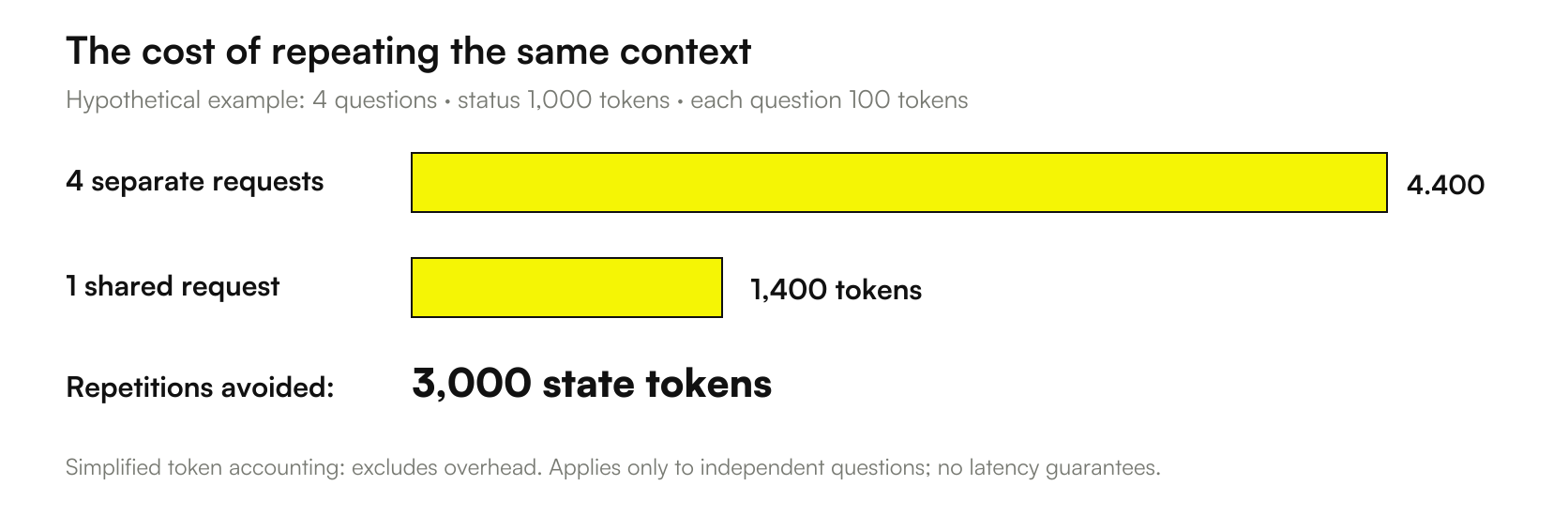
We use an avowedly simplified arithmetic model. We indicate with S the state tokens, with Q the average tokens of a demand and with N the number of questions. We neglect overheads and serialization differences. With separate calls, the theoretical total is N × (S + Q). With shared status and grouped questions, the total is S + N × Q.
The difference is (N − 1) × S. It is a mathematical derivation, not a service benchmark. It shows why repeated long content can weigh: the amount that can be saved depends mainly on the duplicated state. If the state is short or the demand is very broad, the ratio changes.
Suppose six questions, a 2,000-token state and 100 average tokens per question. Separate calls lead to 6 × 2.100 = 12,600 tokens. The group leads to 2,000 + 600 = 2,600 tokens. The theoretical difference is 10,000 tokens, with the simplifications declared. None of these values is a consumption detected in a real call.
| Hypothetical example | Separate calls | Grouped Questions | Theoretical difference |
|---|---|---|---|
| N = 6, S = 2,000, Q = 100 | 12,600 tokens | 2,600 tokens | 10,000 tokens |
| N = 4, S = 500, Q = 100 | 2,400 tokens | 900 tokens | 1,500 tokens |
| N = 2, S = 200, Q = 150 | 700 tokens | 500 tokens | 200 tokens |
The Official cookbook explains the principle of shared content through one's own example. Here we use original calculations and do not transfer to the business process the speed or savings multiplications published by the supplier.
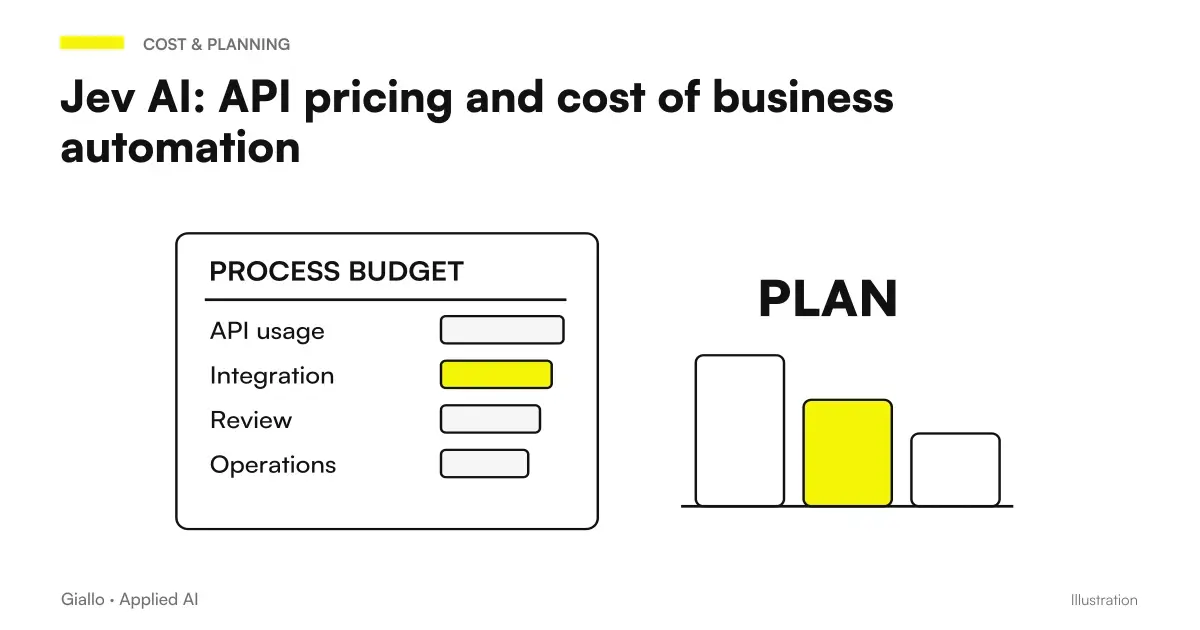
To turn tokens into an economic forecast, a verified and dated rate is used. The guide to Jev AI API Pricing and Costs shows calculation and exclusions. Theoretical savings on repetitions do not include human work, infrastructure, or cost of next steps.
Size and number of questions are not unlimited
As of October 10, 2026, TypeSafe documents 64k total tokens per request and 32k per state plus longer demand. These limits need to be reverified before setting the flow size. Models.
The technical manager should check the prepared request, not just the starting document. Criteria, examples, and contextual information can expand the material. A collection of questions built up over time is likely to grow without anyone reviewing the whole. Testing then includes a long case and a log of what is being sent.
The useful boundary remains the operational passage. If some questions are used for assistance and others for later business analysis, it may be easier to separate the two jobs. Sharing content does not justify a request that brings together responsibilities and different timelines. The result must be readable by the user and recoverable by the maintainer.
Speculative Questions: Paying for Something You May Not Use
The TypeSafe fan-out pattern also proposes speculative questions in the same group: the code uses only those relevant to the chosen branch. The possible advantage is to avoid a later request, but additional questions consume input material. Speculative fan-out.
In the project, the decision depends on the frequency of the branch and its cost. If an additional assessment is almost always needed, including it can be reasonable. If it rarely serves and requires long criteria, compare the cost of anticipating it with that of a second step. The test must also observe whether unused results complicate the control.
A simplified comparison can treat the cost of the additional question as certain and the cost of the avoided step as linked to the proportion of cases affected. The person responsible must not invent a frequency: they must measure it on the sample or keep it as an explicit assumption. The time spent on the second step also has operational value only if it changes how the case is taken on.
Two hypothetical scenarios, with a different compromise
Furnishings in Prato: four assessments on the request
A hypothetical SME in Prato sells furniture and receives requests on orders, replacements and assembly. The contact person wants a department proposal, a signal of missing information, the presence of a request for replacement and the need to read the person responsible. Criteria are available prior to evaluation, so the four ratings are candidates for the same group.
The test compares the group with the separate evaluations on the same messages. The manager checks that the result is associated with the correct request and that each field has a function. The Guide to ticket sorting helps to distinguish destination and deepening, avoiding that a single label contains all the meanings.
A critical case concerns the fitting of a replacement product. The flow may propose taking charge, but the authorization of the intervention depends on data of the order recovered afterwards. This second phase remains separate. The initial group serves to prepare the work, not to skip the control of the concrete case.
The referent compares consumption, time and corrections. If one of the four questions does not change any path and does not help the operator, it eliminates it. The best optimization can be one less question, rather than an ever-larger group that generates results to read and then ignore.
Logistics in Verona: wide state, real dependence
A second hypothetical SME, in Verona, handles transport documents and communications on delays. The first assessment concerns the type of practice. In order to decide the next step, it is then necessary to recover an applicable contract or a procedure related to the customer. The material of the second phase is not yet available when starting the first.
Inserting everything in the initial group would require anticipating many potentially irrelevant documents. The project compares this hypothesis with a shorter sequence: classification, targeted recovery and second assessment. The token account can favor one path, while the quality of reading and maintenance can favor the other. Compromise must be declared.
The pilot contains practices with ambiguous references, different contracts and long communications. The test records how much material is sent in the two paths and where the need for revision arises. If the external recovery dominates the time, grouping the initial questions may have little impact on the final takeover.
The manager then chooses on the complete procedure. A necessary second call is not an inefficiency to hide: it makes the correct premise available to the next judgment. The goal is to avoid unnecessary repetition while maintaining the boundaries of work, not to get the least number of requests at any cost.
Optimization and correctness are two separate verifications
Repetition savings do not change the cost of operational error. If a wrong destination wastes time on two offices, a more compact request does not solve the problem. The test should retain the same review procedure and also compare which cases pass automatically, which are stopped and which require later correction.
The referent notes the expected judgment before looking at the outcomes of the two paths. When two operators read the same message differently, the criterion is clarified or human reading is maintained. This preparation avoids attributing to parallelism a problem that belongs to the categories. The Guide to confidence and human review helps to set the boundary between suggestion and action.
The technical manager should also make the version of the criteria used in the comparison recognizable. If a question is abbreviated or changes the definition of a category, you are changing more than the grouping. The test must record that change and repeat the relevant cases, so as to distinguish the advantage of the shared request from the effect of the new instructions.
Measuring time beyond the single call
The comparison should start from the received event and end when the result is usable. Preparation, waiting for evaluation, monitoring and updating are recorded. Examples must have the same content and criteria; separate flow should not be penalized with different material or additional controls that the other path does not perform.
It is advisable to observe median and slow cases, not just an average. A group can be quick on ordinary messages and slow down on long ones; a path may require more new attempts. The Guide to the AI model latency comparison helps to distinguish service response and operational time.
Errors and revisions must also be recorded. If the group produces fewer calls but increases the work of interpreting the results, the advantage may disappear. For processes with many inputs, the article on High Volume AI Models offers the context to evaluate together load, quality and continuity.
A dependency check before changing the flow
- Write down each question with its operating result.
- List the necessary information before the evaluation.
- Mark those that can only be obtained after another response or external recovery.
- Group questions that share the already available status.
- Compare consumption, time and residual work on the same sample.
- Remove results that do not have a user or a consequence.
Maintenance must retain this map. A new question may introduce a dependency that did not exist before; a new policy may require more data. The technical manager updates the flow only after verifying the relevant examples. One AI Consulting can turn the theoretical repeat count into a test on the real process.
Giallo Studio guides: methodology and sources
How we apply it in the company
Related resources
Jev AI in business processes
APIs, Decisions, Data, and Controls: Choose the step that relates to your process.
- Jev AI for business: privacy, limits and testing on Italian data
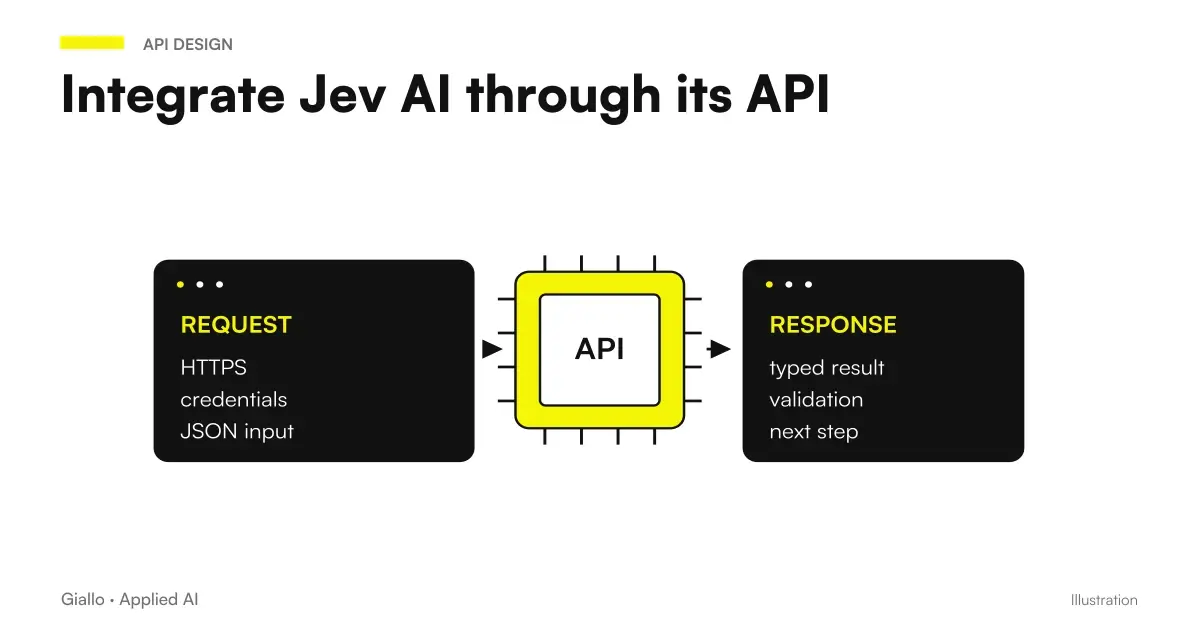
- Integrate Jev AI through its API: a workflow for n8n and business software
- Jev AI: API pricing and cost of business automation
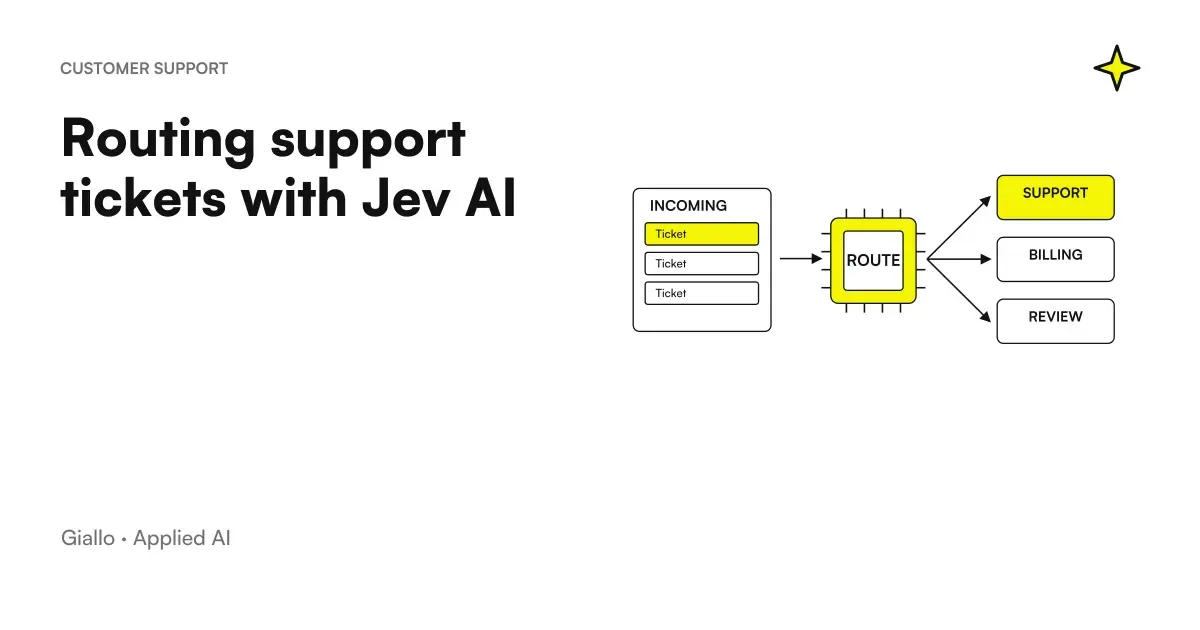
- Route support tickets with Jev AI: department, urgency and review
- Jev AI explained: what changes for SME automation
- Document classification with Jev AI: build reliable categories
- Jev AI vs LLM: how to choose the right model
- Jev AI, confidence and probability: when to get a person to intervene
- Verify chatbot citations with Jev AI
- Deduplication with Jev AI: connecting records without merging the wrong ones
- Jev AI in RAG: choose sources before answering
- Jev AI to extract data from emails and invoices: first find, then choose
FAQ
Are parallel questions an asynchronous batch request service?
This guide covers multiple questions about the same state in one call. It does not document an asynchronous batch endpoint for accumulating separate requests. These are two different meanings of the term batch.
Can one question use the answer of another in the same call?
The questions in the call are independent and see the same state. If an evaluation needs data or alternatives obtained from the first result, a subsequent step with a new request is necessary.
What are the theoretical token savings for the state?
In the article's illustrative model, N calls repeat the state N times, while grouped questions share it once. The difference is (N−1)×S, ignoring overhead and actual differences in serialisation. This is not an observed measurement.
Is it worth asking questions that might not be needed?
It can be useful if it avoids a subsequent step and the result remains manageable. Compare the cost of speculative questions with how frequently the relevant branch occurs. The code must know which results to use and which to ignore.
How do I check if grouping improves the process time?
Measure the time from input to a usable result, using the same examples and checks. Observe typical values and slow cases, errors and retries. A single fast run does not describe the operational queue.
Is it helpful to put all business questions in a call?
Only questions needed for the same step should be considered for grouping. A broader request can complicate checking and maintenance. The project must respect documented size limits and retain results with a clearly identified user.