Skip to content
Giallo

AI fundamentals

The basic concepts of artificial intelligence explained in a simple way: tokens, language models, RAGs, agents, hallucinations.

25 guides in this category
ASI AGI Difference: Comparison of Capacity Amplitude, Performance, and AutonomyAI, AGI and ASI: differences between intelligence and autonomyAI, AGI and ASI compared: general capabilities, performance and autonomy. What an agent demonstrates and which questions to ask a provider.
Artificial superintelligence: general capabilities and autonomy represented on distinct axesArtificial superintelligence: meaning and applicationsArtificial superintelligence: meaning, available evidence in 2026 and differences from AI. A practical guide to interpreting announcements and applications.
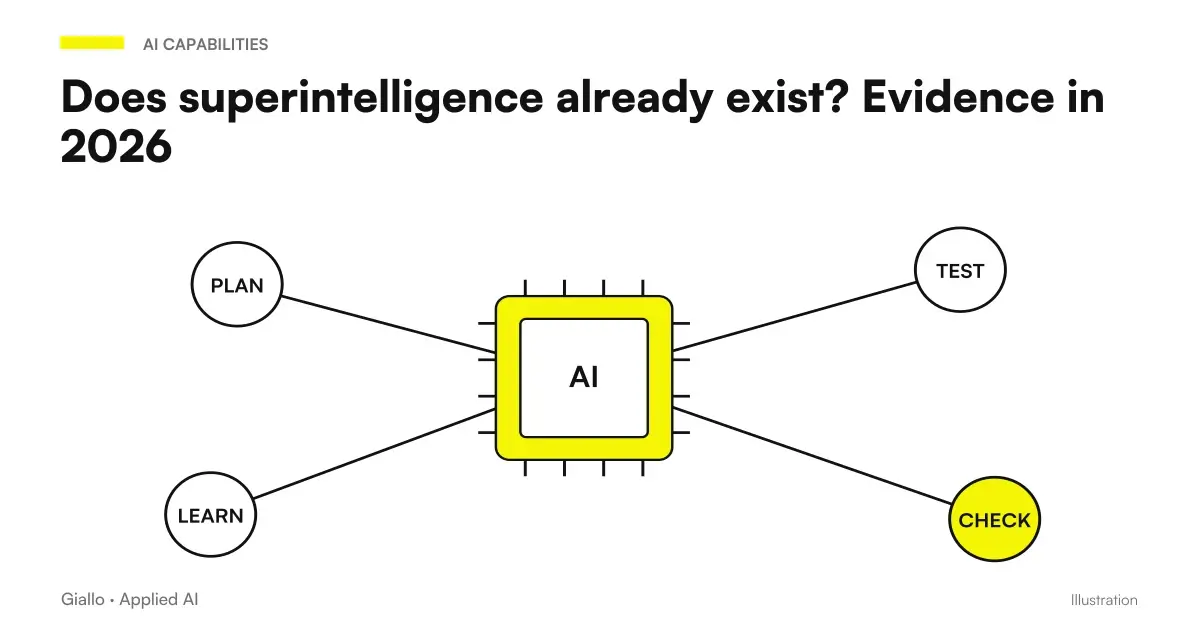
Superintelligence Already Exists: Verification of Public Evidence and Ad Limits 2026Does superintelligence already exist? Evidence in 2026Does superintelligence exist already? Public evidence from 2026, results reported by laboratories and what is missing to classify a system as ASI.
Examples of artificial intelligence in everyday life and at work: mail, navigator, telephone, office, factory, health and public administrationArtificial intelligence: concrete examples from everyday life to workPractical AI examples in spam filters, navigation, subtitles, office work, sales, factories, healthcare and public services, with capabilities and limits.
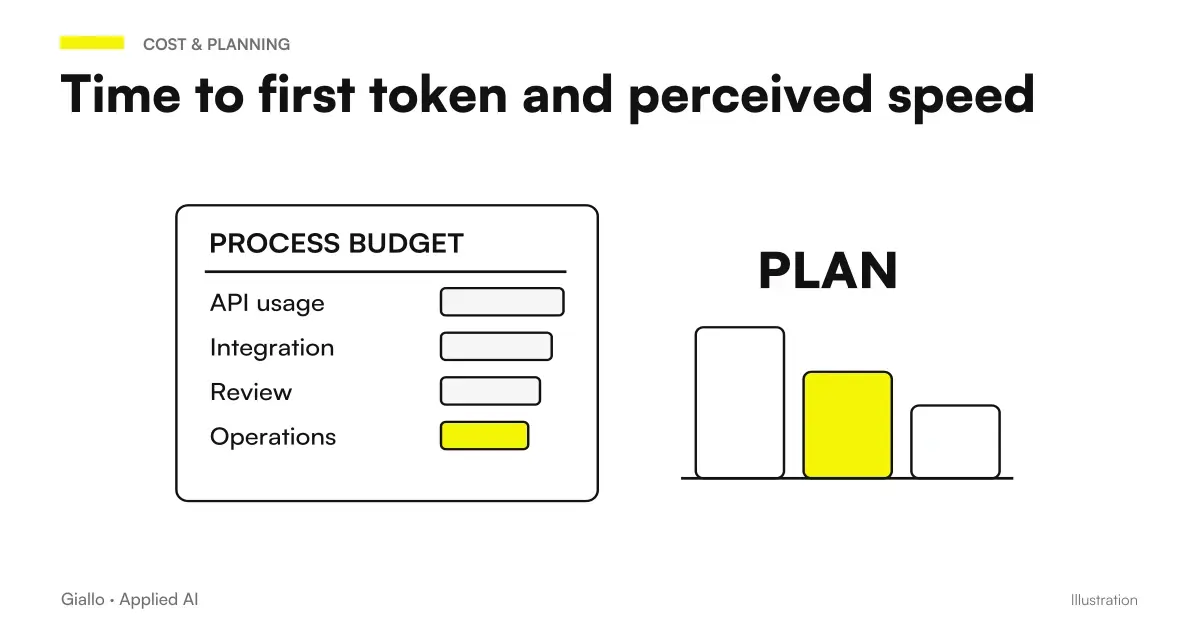
Time to first token: how to measure the latency of an AI modelTime to first token: what it is and why it decides the perception of speedWhat time to first token (TTFT) is, why it matters more than overall speed, what worsens it and how to reduce it in a business AI system.
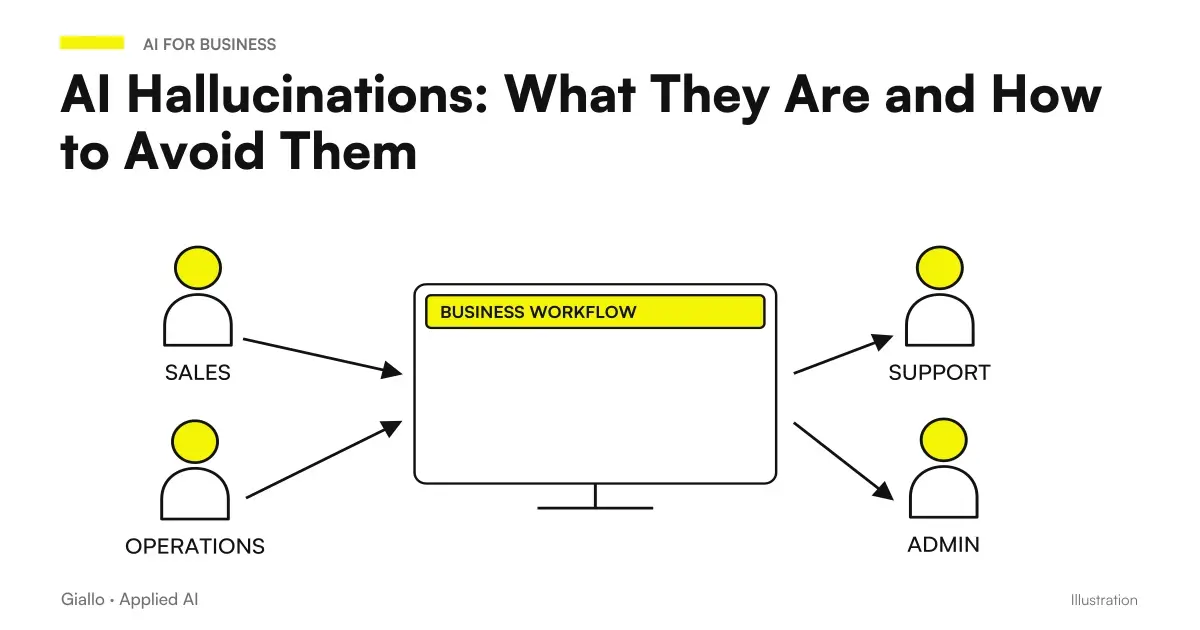
Diagram of AI hallucinations: a linguistic model that generates a plausible but wrong response and the control that verifies itAI Hallucinations: What They Are and How to Avoid ThemAI hallucinations in business: why they happen and how RAG, grounding and human checks reduce them, with real examples and a practical checklist.
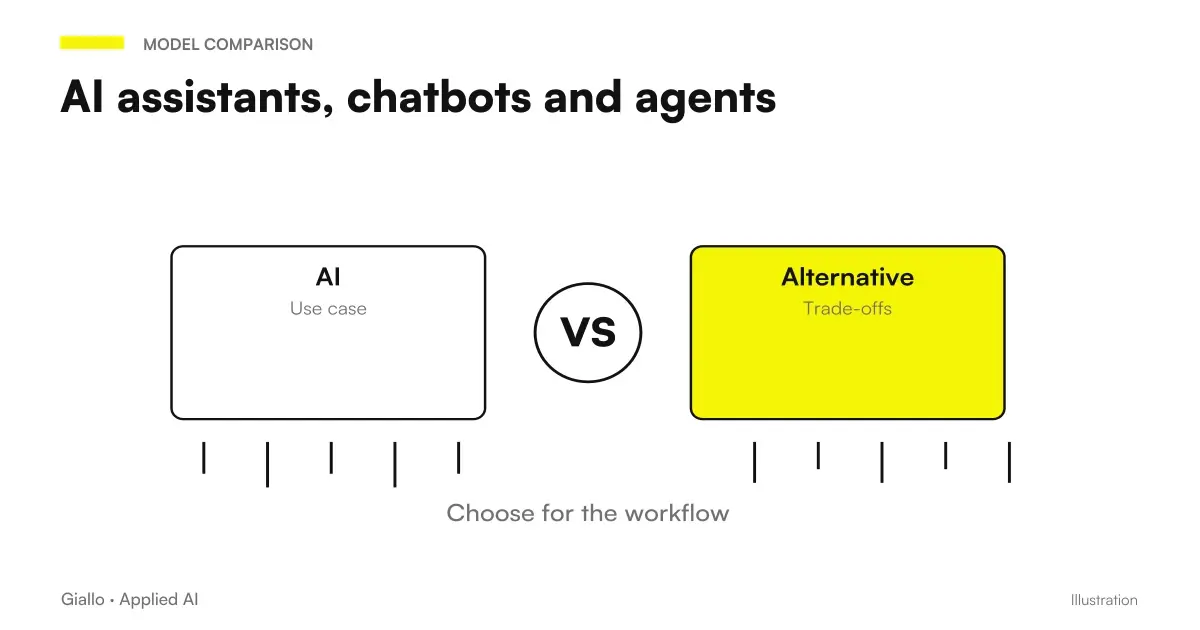
Diagram comparing the difference between assistant, chatbot and AI agent for autonomy and use of toolsAI assistant: difference between assistant, chatbot and agentAI assistants, chatbots and agents explained: autonomy, memory, tools, examples and when to choose each for your business.
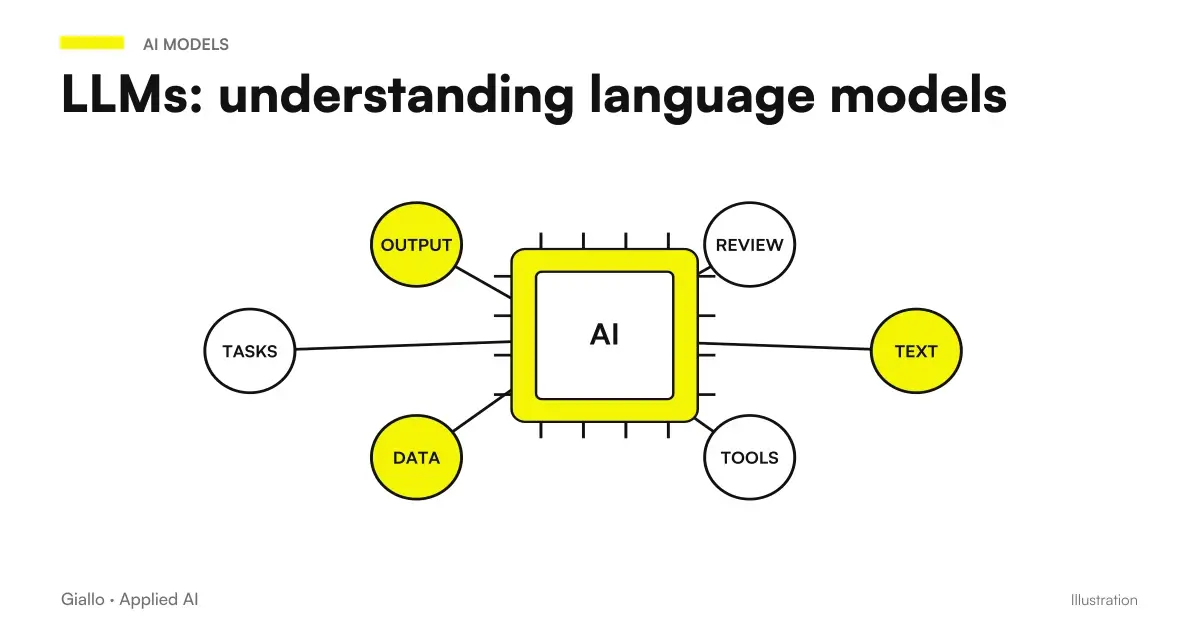
Scheme of how an LLM works: input text, language model, next word predictionLLM: What Language Models AreLarge language models (LLMs) explained simply: how they work, uses, limitations, real examples and how to apply them in business.
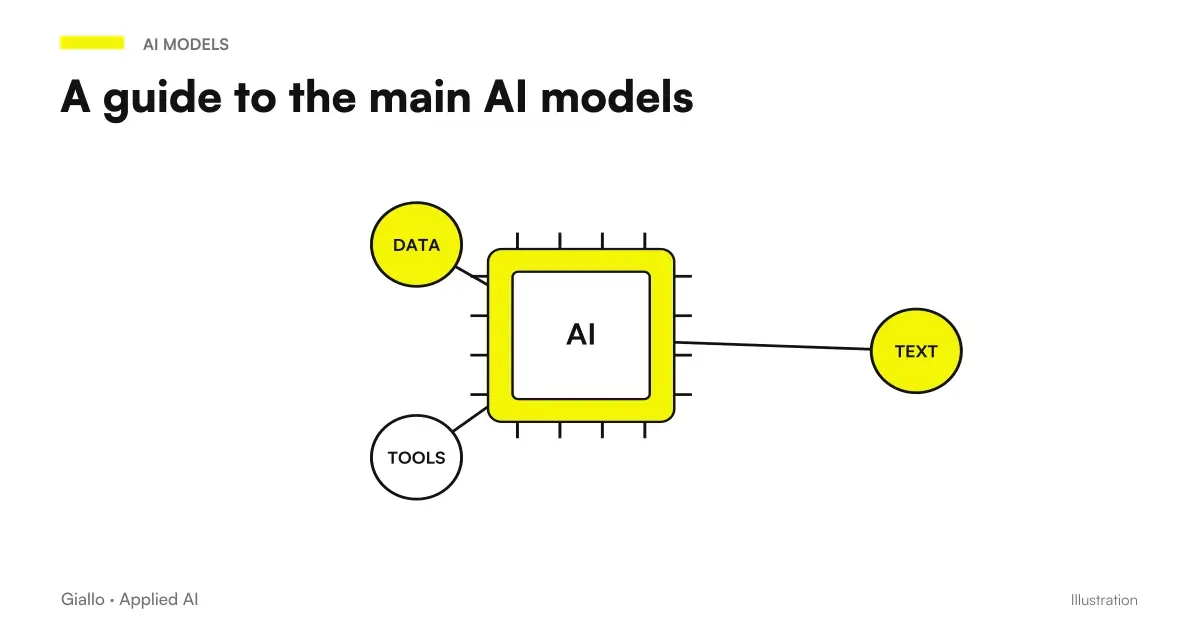
Selection hub among the main AI models: GPT, Claude, Gemini, Llama, Mistral, DeepSeekAI Models: Guide to Major ModelsGuide to the main AI models (GPT, Claude, Gemini, Llama, Mistral, DeepSeek): what they do, when to use them and how to choose for your company.
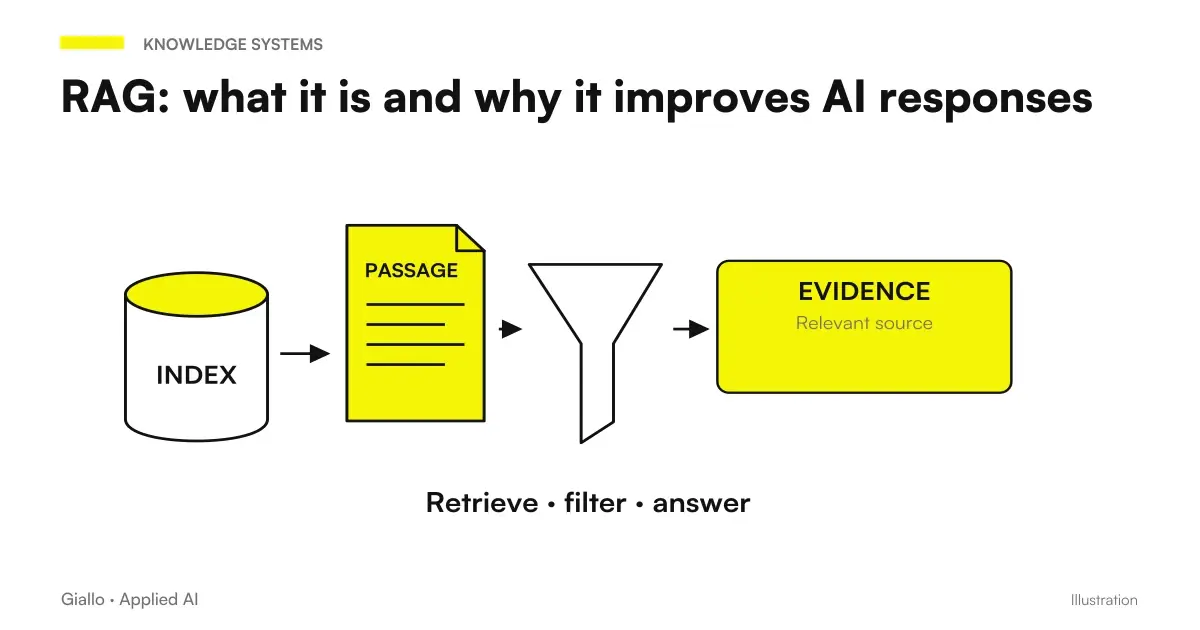
RAG flow diagram: documents, embedding, vector database, recovery and generation of AI response with quotesRAG: what it is and why it improves AI responsesWhat RAG (retrieval augmented generation) is and why it improves AI answer accuracy: how it works, real examples and business use.
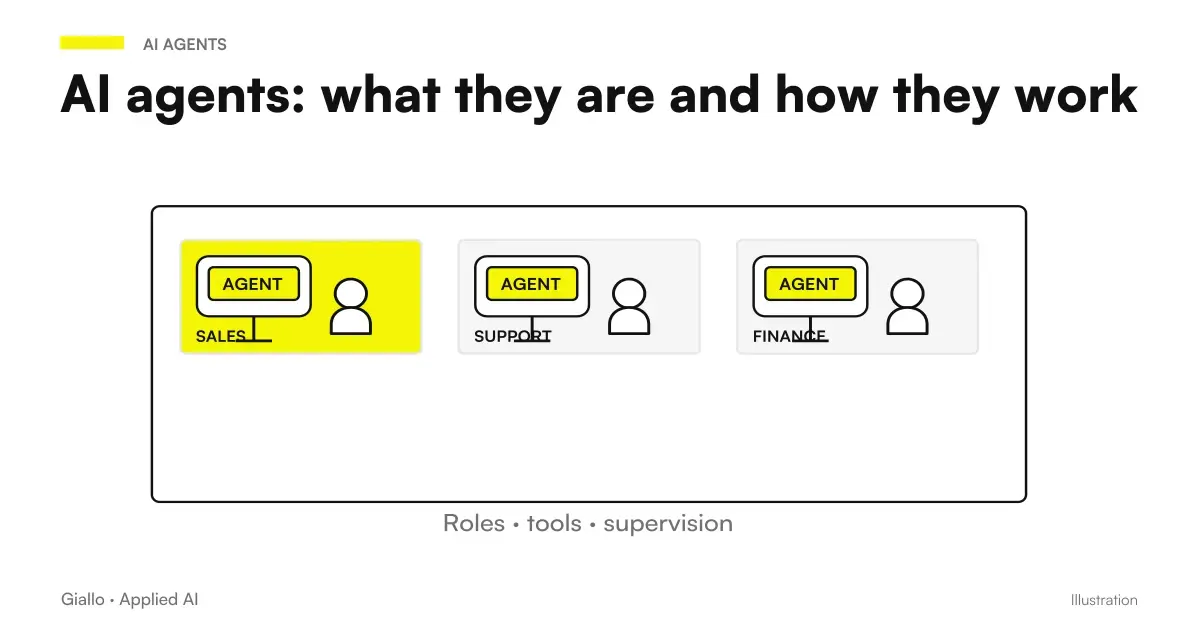
Diagram of how AI agents work: perceiving an input, reasoning, using tools, and acting toward a goalAI agents: what they are and how they workWhat AI agents are, how they reason, use tools and act. Learn how they differ from chatbots, where businesses use them and why human review matters.
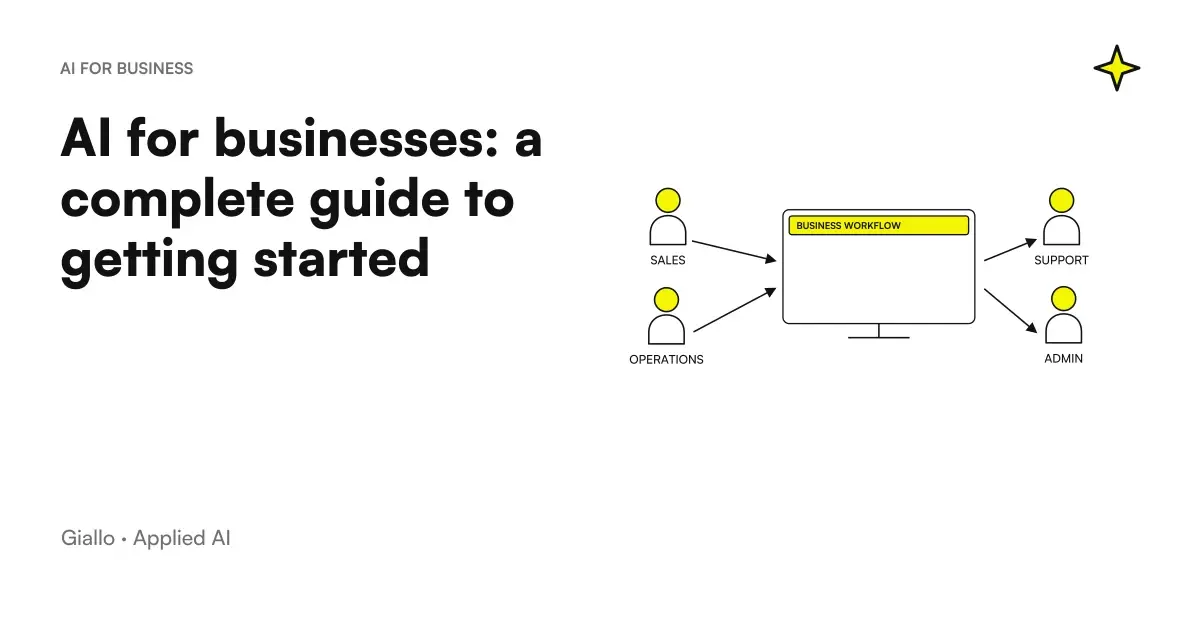
AI for companies: a map of the departments of an Italian company in which to introduce artificial intelligence, from administration to salesAI for businesses: a complete guide to getting startedAI for business: how an Italian company adopts it in practice. ISTAT 2025 data, the first process, tools, GDPR, the AI Act and Law 132/2025.
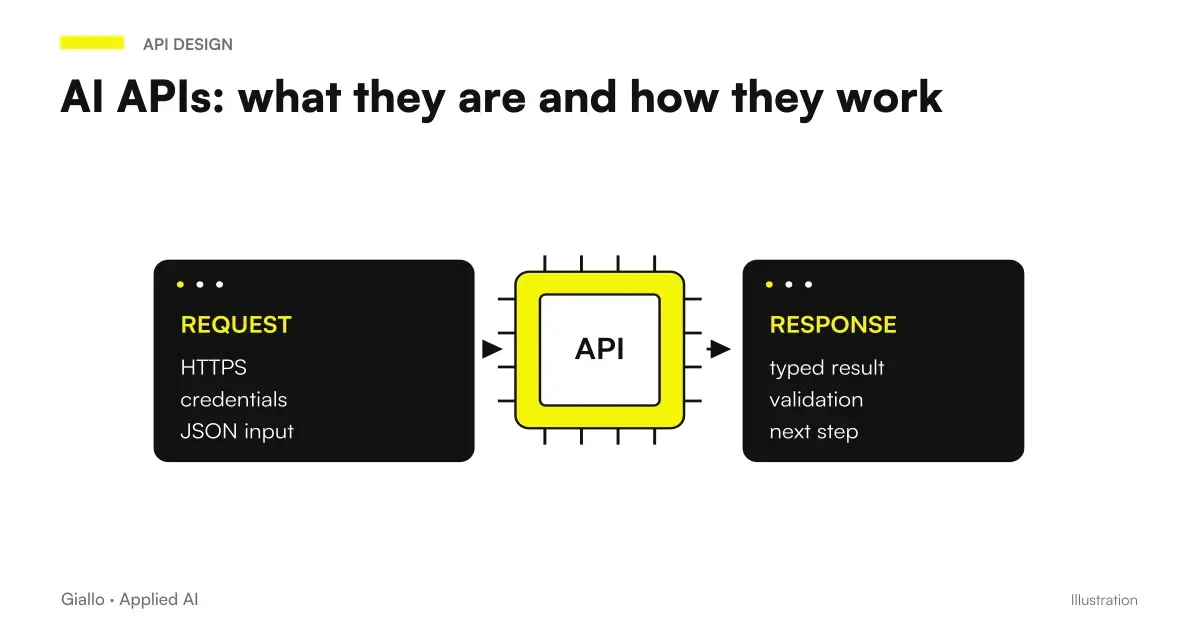
Diagram of how AI APIs work: enterprise software that calls an AI model and receives the responseAI APIs: what they are and how they workWhat are AI APIs and how they work: difference between chat and integration, token costs, key security and real use cases for SMEs.
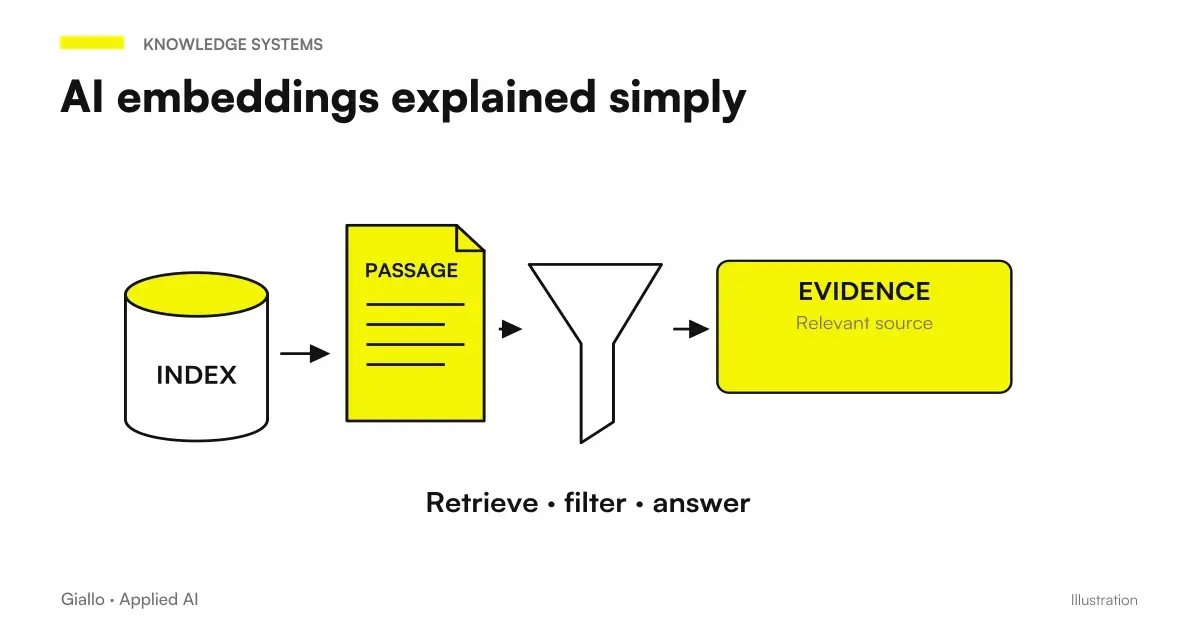
Diagram of how AI embedding works: text transformed into nearby numerical vectors by meaningAI embeddings explained simplyAI embeddings explained simply: numerical representations of meaning, how they work, real examples and business uses.
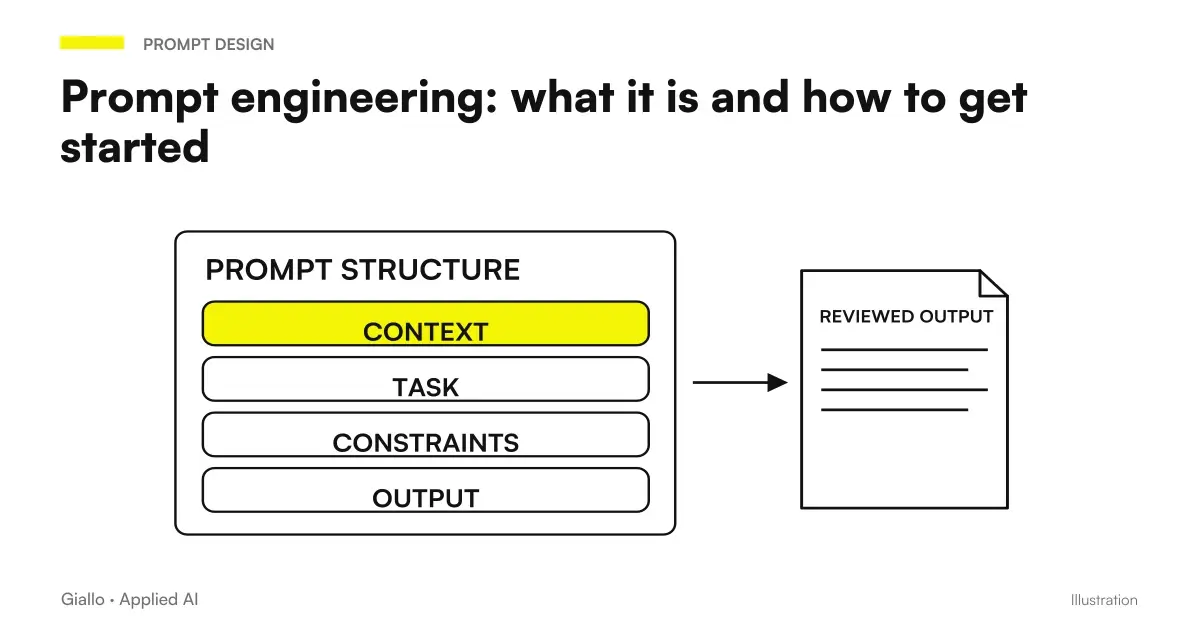
Prompt engineering schema: role, context, constraints, data, format, and control that drive AI responsePrompt engineering: what it is and how to get startedWhat prompt engineering is and how to start: a 6-part framework, before-and-after examples, common mistakes and reliable business use.
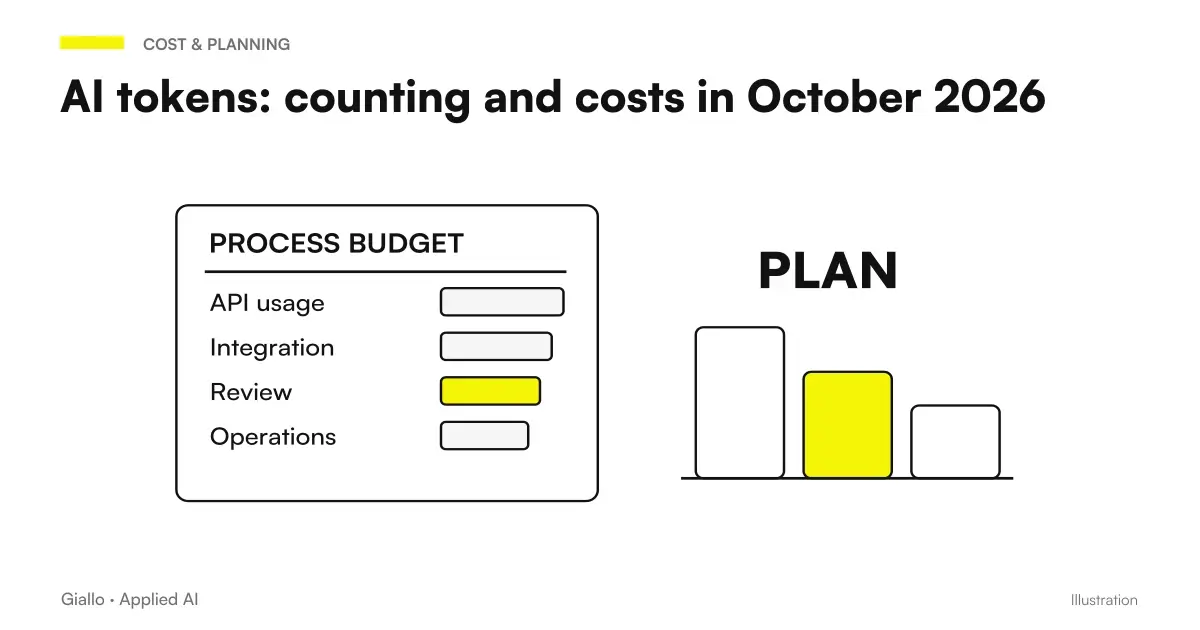
Token AI: an Italian phrase divided into the fragments of text that the model reads one at a timeAI tokens: how they are counted and priced in October 2026AI tokens explained with an Italian-language test: how many words 1,000 tokens represent, October 2026 per-million prices and how to estimate costs.
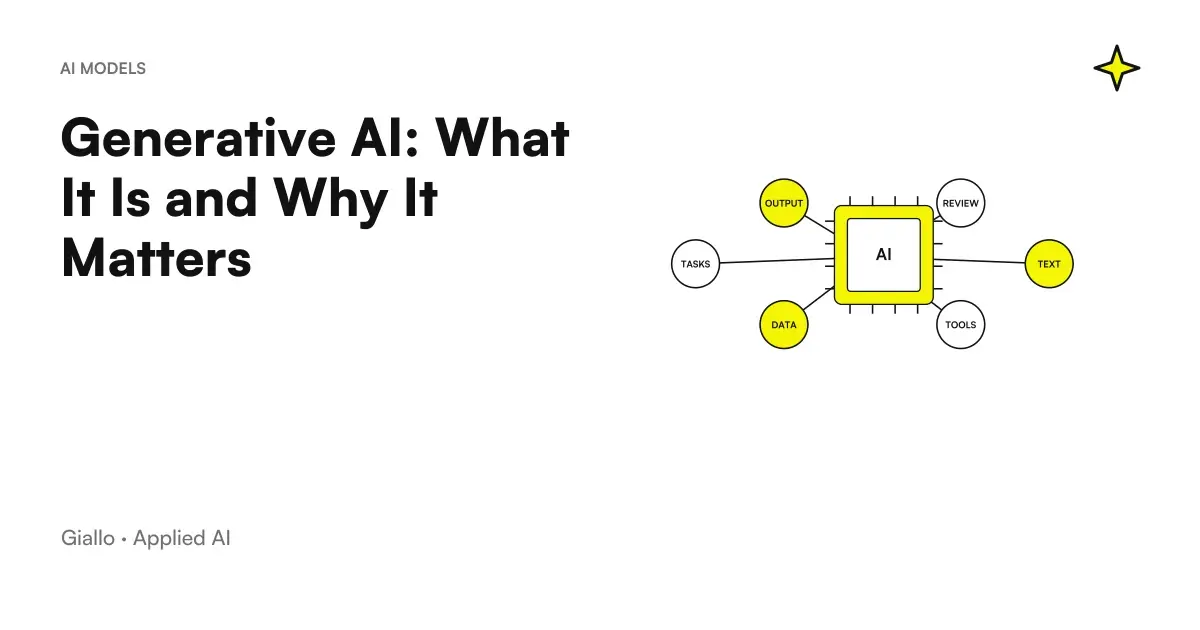
Generative AI schema: an input prompt, the generative model, and output contentGenerative AI: What It Is and Why It MattersWhat generative AI is and why it matters: how it creates text and images, real business examples, limitations and practical ways to use it in an SME.
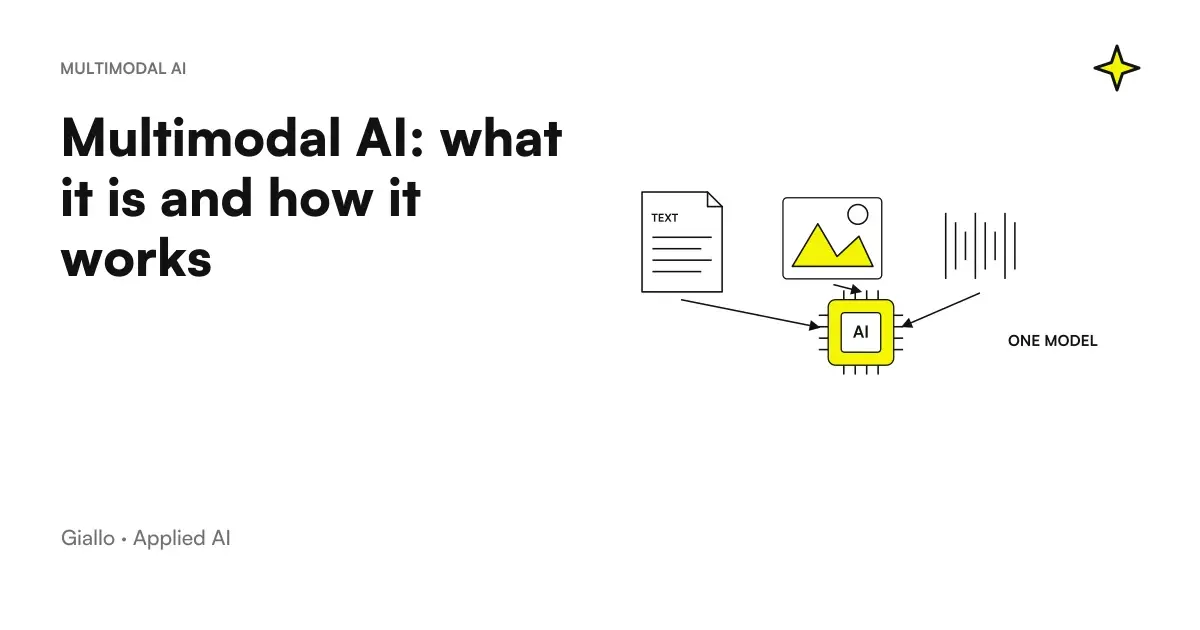
Diagram of how multimodal AI works: text, image and input audio, a single model, a responseMultimodal AI: what it is and how it worksMultimodal AI explained simply: text, images, audio and video in one model, with real SME examples, practical uses and limitations.
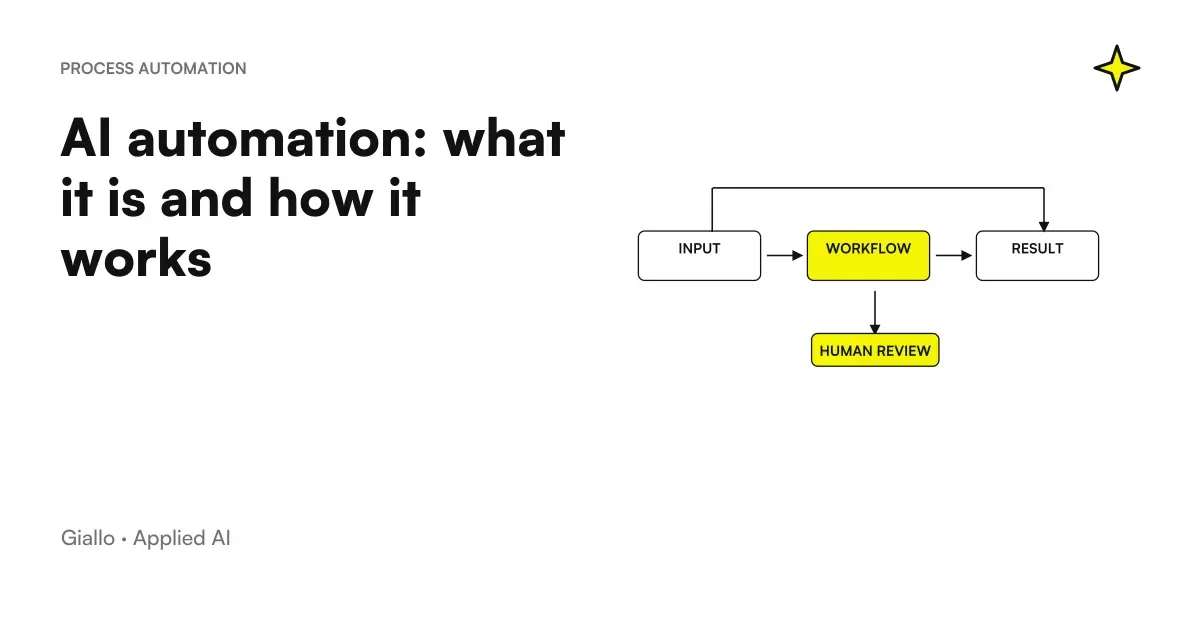
AI automation scheme: from a manual task to an automatic result passing through a model that decidesAI automation: what it is and how it worksWhat AI automation is and how it works: differences from conventional automation, real SME examples, step-by-step workflows, limitations and implementation.
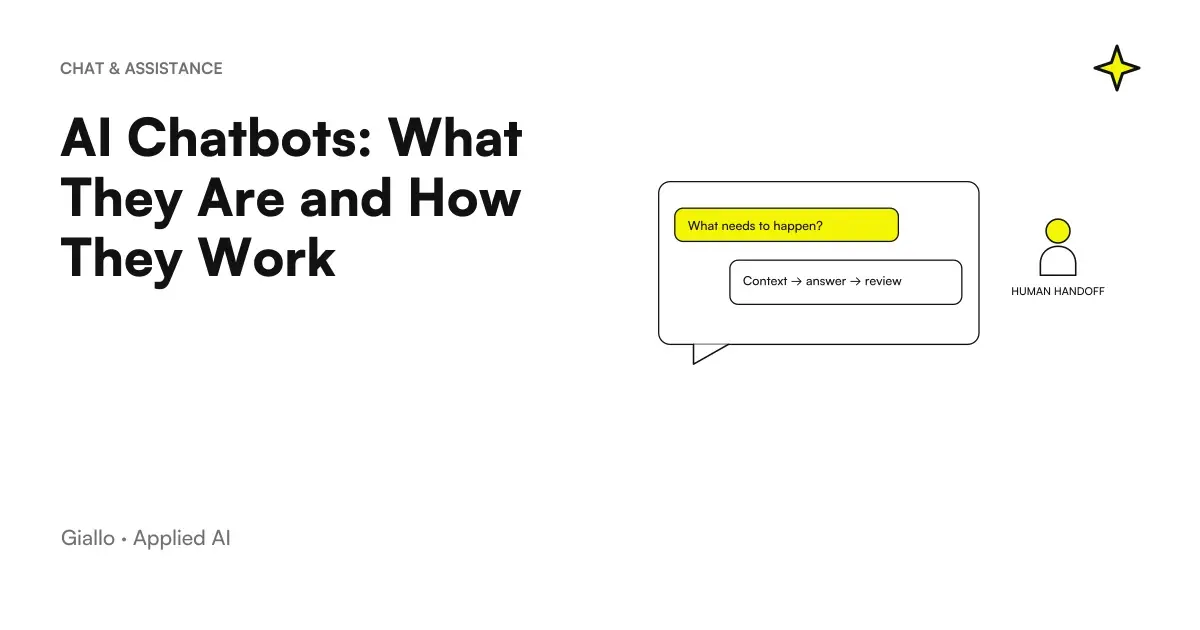
Diagram of how an AI chatbot works: user question, language understanding, generated responseAI Chatbots: What They Are and How They WorkWhat AI chatbots are and how they work: rule-based versus LLM-based chatbots, when they are enough and when you need an AI agent. SME examples.
Visual diagram of how deep learning works: input data, layers of a deep neural network, output responseDeep learning explained simplyDeep learning explained simply: how deep neural networks work, differences from machine learning, real examples and business uses.
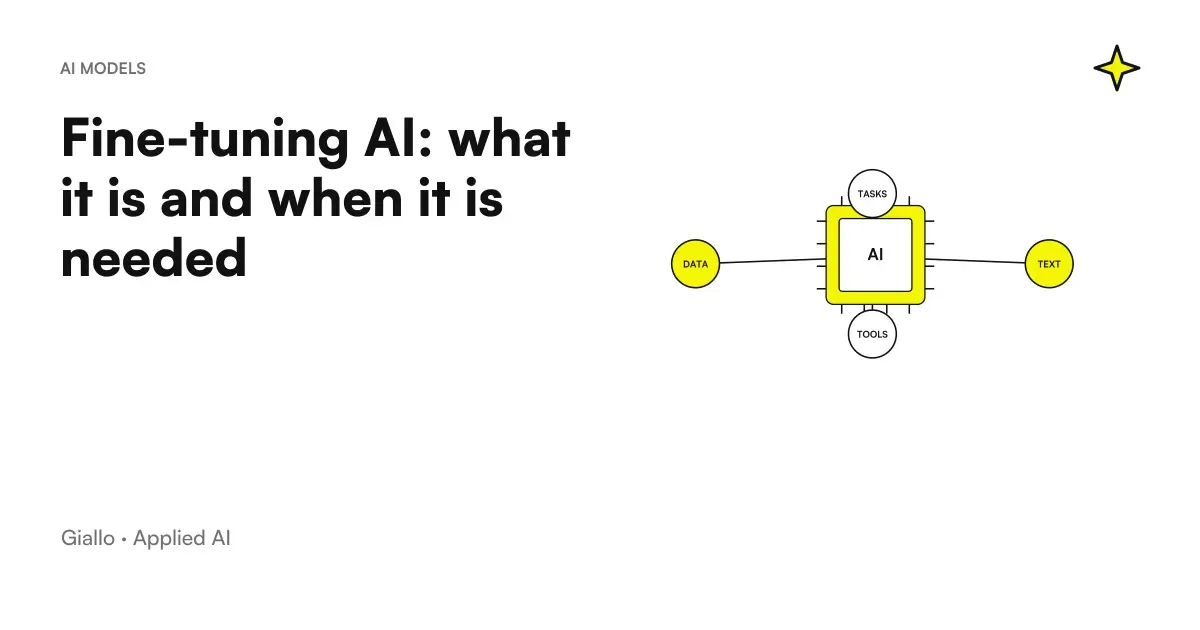
AI fine-tuning decision-making: when it is necessary to train a model and when RAG or a good prompt is enoughFine-tuning AI: what it is and when it is neededWhat AI fine-tuning is and when you need it: differences from RAG and prompting, costs, required skills and real SME examples.
Visual diagram of how artificial intelligence works: input data, model, responseArtificial intelligence: what it is and how it worksArtificial intelligence explained simply: how it works, types of AI, real examples, limitations and practical business use.
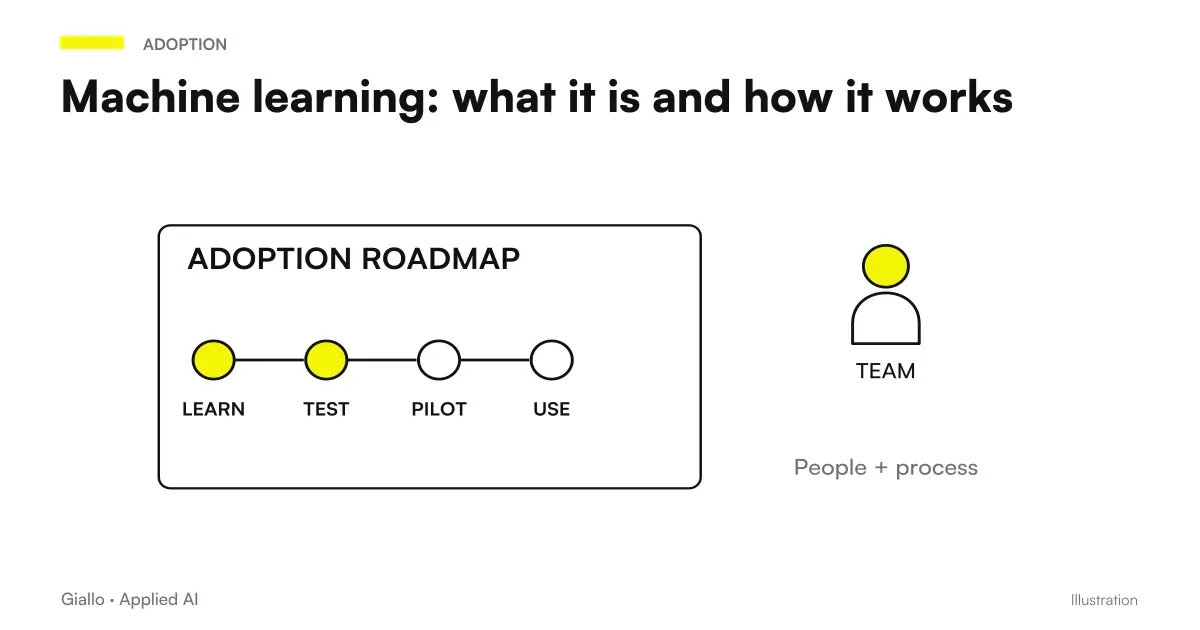
Visual diagram of how machine learning works: sample data, model training, predictionMachine learning: what it is and how it worksMachine learning explained simply: how it works, learning types, real business examples, differences from AI, limitations and practical uses.
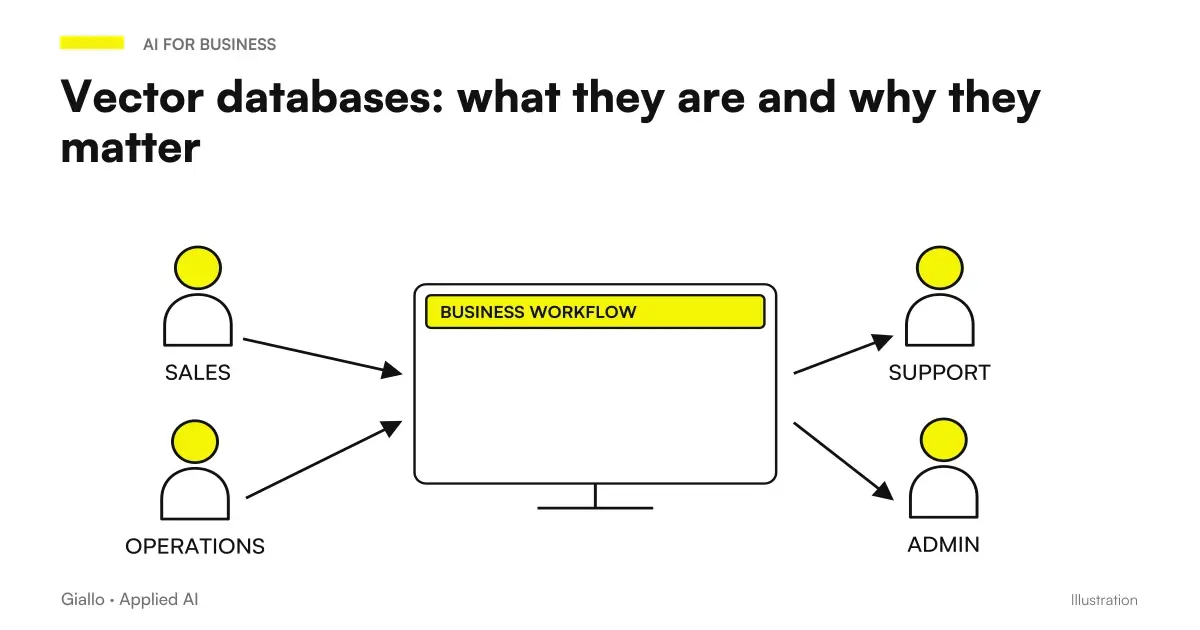
Pattern of a vector database: texts transformed into vectors and search by similarity in a multidimensional spaceVector databases: what they are and what they doVector databases explained simply: similarity search, semantic search, RAG and recommendations, with business examples.

The other categories