
AI Models: Guide to Major Models
Guide to the main AI models (GPT, Claude, Gemini, Llama, Mistral, DeepSeek): what they do, when to use them and how to choose for your company.
Reading time: 11 min
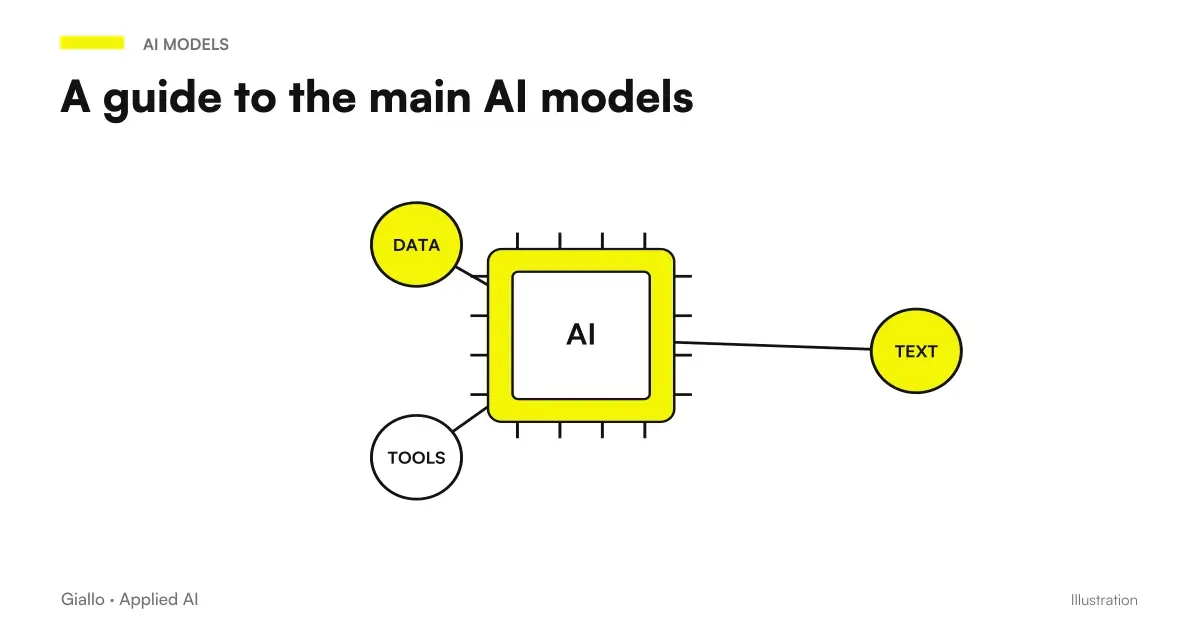
The AI Models are the "engine" behind the artificial intelligence tools you use every day: when you write to ChatGPT, generate an image or have a document summarized, behind it is a model trained to recognize patterns in data and produce the most likely response. In this guide we see what are the main AI models in circulation — GPT, Claude, Gemini, Llama, Mistral, DeepSeek and others — what distinguishes them and, above all, how to choose the right one for a company without getting lost in acronyms.
The honest premise is one: names and versions change all the time. What is now "the last model" in a few months will have a successor with another number. That's why you won't find benchmarks or rankings of the moment here — they'd already be old tomorrow. Instead, you will find the way to Reasoning by Category, which remains valid over time: understanding the families, types and criteria of choice is worth more than learning the name of the shift by heart.
If this is your first time approaching the theme, it can help you start from the ground up on What are LLMs, the great linguistic models behind most of these tools.
In summary
- A Model AI is the trained system that, given an input, produces the most likely output: text, image, code, audio.
- The main families are few: GPT (OpenAI), Claude (Anthropic), Gemini (Google), Llama (Meta), Mistral and DeepSeek; each has multiple versions that change often.
- The distinction that really matters to a company is between models owners (consumer payments, managed by the supplier) and open source (you host them, more control over the data).
- There is no "best" model at all: the choice depends on task, from budget and on the data constraints.
- Versions change quickly: always check the official page of the provider for names, limits and updated prices.
For October announcements, distinguish the model from the product: Claude Haiku 5.5 mainly concerns limited activities and execution costs; Mistral Large 4 is in API preview, with weights announced for end of month. The AI news review of 2–8 October 2026 connects these releases to new experiences in chat and game creation.
What is an AI Model
A Model AI is the result of training: an algorithm is exposed to huge amounts of examples (texts, images, code) and, during this process, adjusts millions or billions of internal parameters until it learns to link an input to a sensible output. Once trained, the model is a function: you give it a question, it gives you the most statistically plausible answer. For a task that requires a choice between alternatives, the guide to JEV AI distinguishes the role of the model from that of the tools that perform the work.
It is important not to confuse the model with the product that uses it. ChatGPT, for example, is the application; GPT It is the family of models that makes it work. Same speech for Gemini (the app and model family share the name) or for assistants based on Claude. When you choose a tool, you're actually choosing two things: the interface you use and the model that runs below.
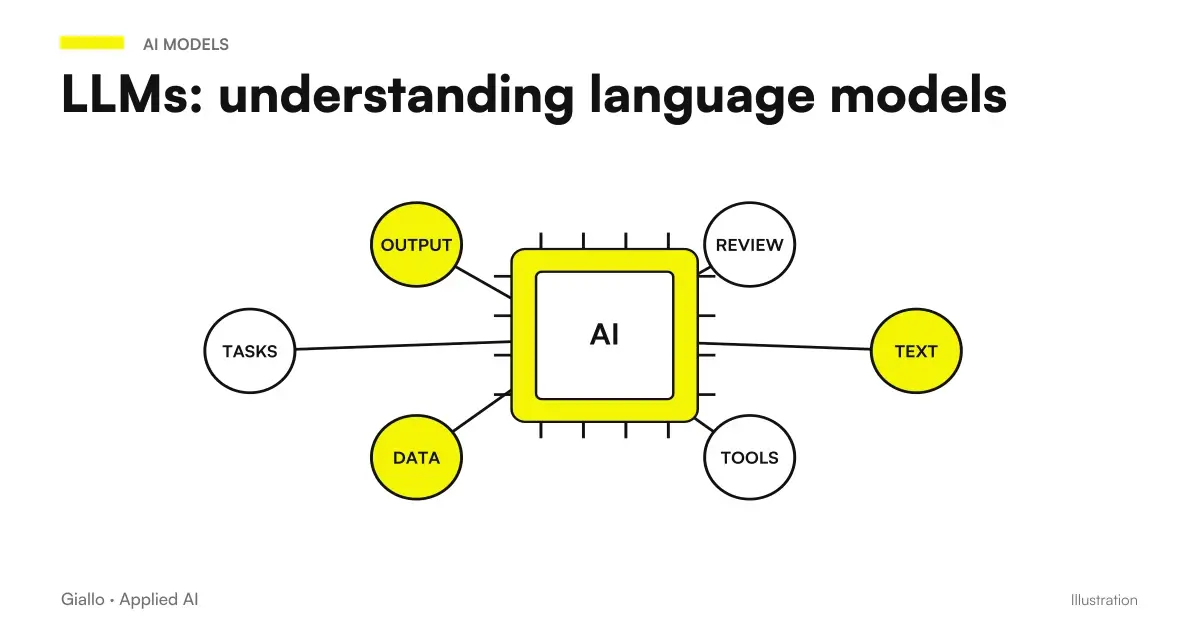
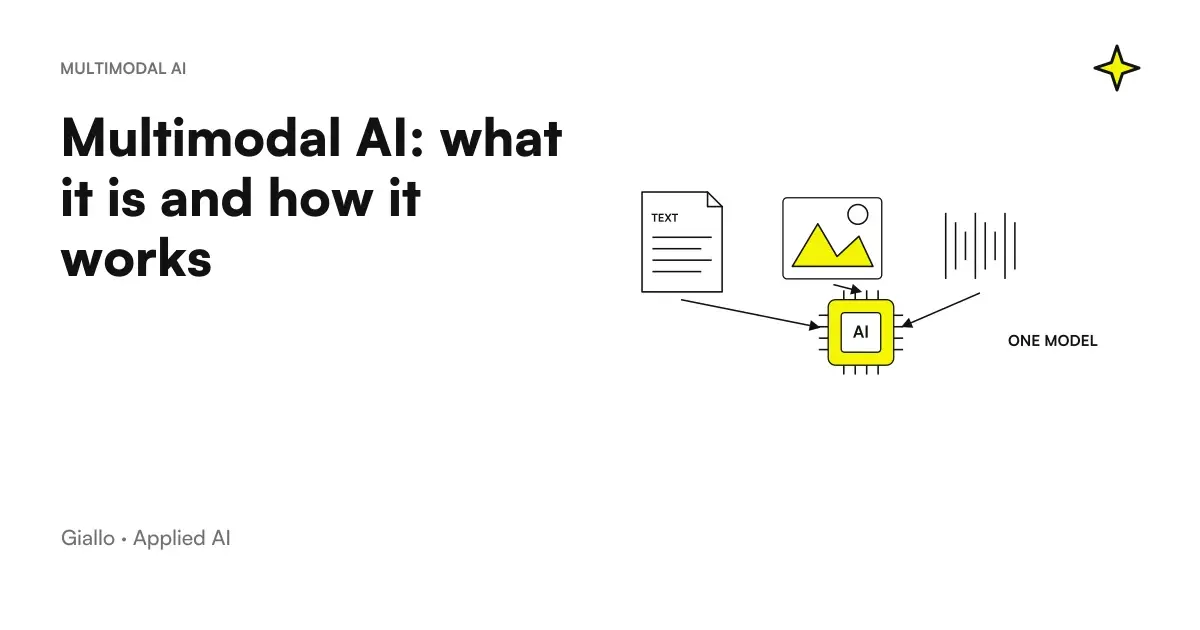
Most of the models you will hear about in the work are Language Models (LLM), designed for text. But there are also specialized models in images, audio, video or code, and models multimodals which handle multiple types of input together (for example text and images in the same conversation).
What are the main AI models
To orient yourself also in the Moonshot ecosystem, start from the Guide to Kimi AI. The deepening on Kimi K3 distinguishes the model from the product that makes it available.
Here are the families you meet most often. I give you for each one who develops it, the type of access and what it is particularly suitable for — no version numbers, which would change immediately. For the exact signature of the moment, always check the official page.
| Model (family) | Type / access | Strength | When to use it |
|---|---|---|---|
| GPT (OpenAI) | Owner, on consumption via API and app | Mature ecosystem, excellent on general text and widespread integrations | Assistance, content, automations where compatibility with so many tools is needed |
| Claude (Anthropic) | Owner, on consumption via API and app | Long and structured texts, reasoning on documents, attention to security | Analysis of documents, articulated drafts, flows where the quality of writing counts |
| Gemini (Google) | Owner, consumption + integrated into Google Workspace | Multimodality and integration with the Google ecosystem | Companies already on Workspace, cases with mixed images/documents |
| Llama (Meta) | Open source, you host it or a provider | Control over data, no cost per token, customizable | Sensitive data that must not come out, high volumes with predictable costs |
| Mistral (Mistral AI) | Open source + options to consumption, European base | Efficient and lightweight models, good quality/cost ratio | Cases where speed, low cost and a European supplier are needed |
| DeepSeek | Often open source, very economical consumption | Good Reasoning Skills at Low Cost | Complex tasks with limited budget, experimentation |
Alongside these are specialized models that you won't use as "assistant general" but for precise tasks: image generation (e.g. Stable Diffusion or GPT Image families), audio transcription (e.g. Whisper), embedding for semantic research. If you are interested in the latter brick, it is the basis of systems such as the RAG, which makes the AI answer on your documents.
Owners vs. open source: the distinction that matters
When choosing a model for a company, the first real fork is not "GPT or Claude", but owner or open source. Costs, data control and technical work depend on this decision.
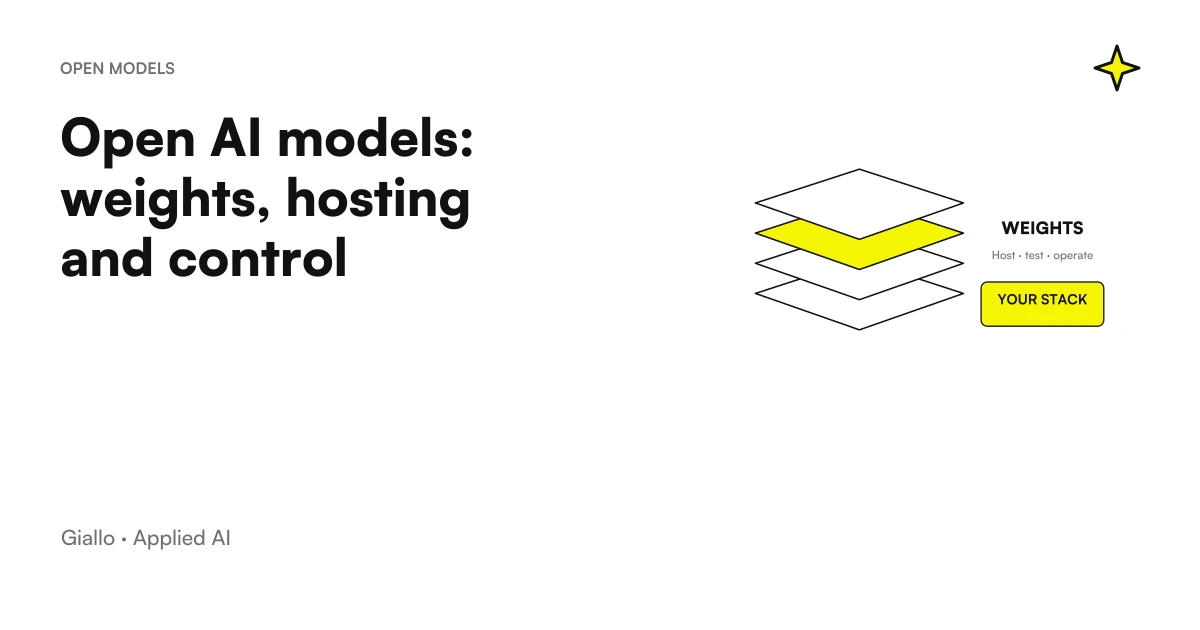
A Proprietary Model (GPT, Claude, Gemini) is used as a service: the provider keeps the model on its servers, you send requests via API or app and you pay based on how much you consume. Zero infrastructure to manage, always up-to-date, but data passes from the provider's servers and costs grow with volumes.
A open source model (Llama, Mistral, many DeepSeek models) you can download and run it on your own servers or a provider’s. You have more control — data can stay in-house, costs are predictable and you can customise it — but you take on the technical work of running and maintaining it.
Choose a proprietary model when
- You want to leave quickly without managing servers.
- Volumes are medium and predictable.
- You just need the data to pass from a reliable provider (with contract and DPA).
- You always want the latest version without thinking about it.
Evaluate open source when
- Data doesn't have to come out of your infrastructure.
- Volumes are very high and the cost to consumption explodes.
- You need to customize the model (e.g. with a fine-tuning).
- You have (or can have) technical skills to host and maintain it.
In practice, many SMEs start from a proprietary model to validate the use case and switch to open source only if the numbers (volumes, costs, data constraints) justify it. It is not an ideological choice: it is an economic choice.
For running on the device, model and runtime are two distinct choices. The open source release of ML Drift for local GPUs it concerns the execution engine: compatibility and performance require a test on the real hardware.
How to Choose the Right Model for Your Business
The question "what is the best AI model?" is almost always the wrong question. The right one is: What is the model that solves this process at the lowest acceptable cost? Here are the criteria that really matter, in order.
- Start with the task, not the model. Summarizing emails is different from analyzing 50-page contracts. Define first what needs to come in and what needs to come out.
- Establish data constraints. Does it treat personal or sensitive data? Then the choice between owner and open source (and the contract with the supplier) comes before any consideration on quality.
- Estimate volumes. A few hundred requests a month or tens of thousands? Consumable costs radically change the convenience between models.
- Test on your real case. Take 10-20 real examples of your company and compare two or three models on the same inputs. Count this more than any public benchmark.
- Keep the model replaceable. Design the system so you can change the model without doing everything again: the models age quickly, your process does not.
The last point is the most underrated and the most important. Whether you build an automation or a AI Agent Pasting it to a single model, each supplier change becomes a mini-project. If you isolate the model well from the rest, you can switch from GPT to Claude (or an open source model) by changing a few lines of configuration.
Practical examples
Three realistic situations of Italian SMEs, to see how the choice of the model changes according to the context.
1. Professional study — analysis of confidential documents. A law firm wants to have contracts summarized and compared, but customer data cannot end up on third-party servers without guarantees. Here the evaluation starts from the constraints: either a proprietary model with a contract and solid DPA (EU data, no content training), or an open source model hosted on a controlled infrastructure. The writing quality of the model comes after compliance.
2. E-commerce — product descriptions by volume. A store with 3,000 items must generate first drafts of descriptions from the data sheets. Cost and speed count here: a powerful model for flagship products, and a cheaper model (perhaps open source or a lightweight Mistral) for the bulk of the low-margin catalogue. Mixing two models on the same flow is normal, not a compromise.
3. Service SMEs — internal assistant on documents. The company wants an assistant who answers the team's questions by fishing in the internal manuals. The model here counts less than the system around: we need a good RAG and well-organized data. It starts with a proprietary model to validate quickly, and evaluates open source only if volumes grow.
In all three cases the model is a choice included a system, not the system. Whoever starts from the model mistakes order; who starts from the process comes to the right choice almost alone.
Mistakes to Avoid
- Chasing the last model out. Changing the model to each ad costs time and rarely shifts the results to your case. It updates when there is a measurable gain, not out of fashion.
- Trusting public benchmarks. Models are often optimized just for those tests. A ranking doesn't tell you how it behaves on yours documents: that you find out only by testing.
- Using only one model for everything. The most powerful model is also the most expensive. For simple and high-volume tasks, a smaller model costs less and is fine.
- Ignoring data constraints. Sending personal data of customers to a model without a proper contract can violate the GDPR. Compliance is not a technical detail: it is a prerequisite.
- Binding the system to a supplier. If changing model means rewriting half a project, you've designed poorly. Keep the model replaceable from the start.
How to apply it in the company
In practice, choosing and using an AI model in the company is a repeatable path, not a one-tantum decision.
- Define the process to be lightened and what the model must produce.
- Clarify data constraints first and foremost (sensitivity, GDPR, where data can be).
- Estimates monthly volumes to understand how much the cost per consumption weighs.
- Test two or three models on your actual examples, not benchmarks.
- Design the system so that the model is replaceable without redoing everything.
- Check version, limits and prices on the supplier's official page before going into production.
This is exactly the type of assessment in which a AI Consulting makes the difference: don't choose "the most powerful model", but the one that closes the use case at the right cost, respecting the constraints on the data. If you want an overview on how to start, the guide AI for businesses collects processes, costs and priorities; to understand where AI really enters flows, see the automation of business processes.
What if I don't know which model to start with?
For most SMEs the sensible starting point is a generalist proprietary model used through a ready-made tool, chosen according to the main task. You validate the use case with little expense, you measure the result and only then you decide if you need something more specific or an open source model. Starting simple and changing when the numbers ask for it is almost always the right way.
For the precise comparison between the models in circulation, Claude, GPT and Gemini in comparison, Top models in price comparison and Which Claude model to choose for your case.
Conclusion
The AI Models are the engine of artificial intelligence tools, and the main families — GPT, Claude, Gemini, Llama, Mistral, DeepSeek — cover almost everything a company needs. But the theme of the moment matters little: it changes too quickly. It matters much more to reason by categories (owner or open source, generalist or specialist) and choose according to the task, data constraints and volumes, testing your real cases and keeping the model replaceable. Always check the official page for updated versions and prices: it is the only way not to rely on information already expired. From here you can learn more with LLM and Multimodal AI, or go back to basics with What is Artificial Intelligence.
AI becomes useful when it enters processes. Giallo Studio helps SMEs and teams build concrete, measurable and sustainable automations — and choose the right model without chasing every new signature. You can also take a look at the experiments of the The Lab.
Giallo Studio guides: methodology and sources
How we apply it in the company
Related resources
 LLM: What Language Models Are
 Multimodal AI: what it is and how it works
 Artificial intelligence: what it is and how it works
 AI for businesses: a complete guide to getting started
 Fine-tuning AI: what it is and when it is needed
 Claude Opus 5.5: what it is, what it changes and who it suits
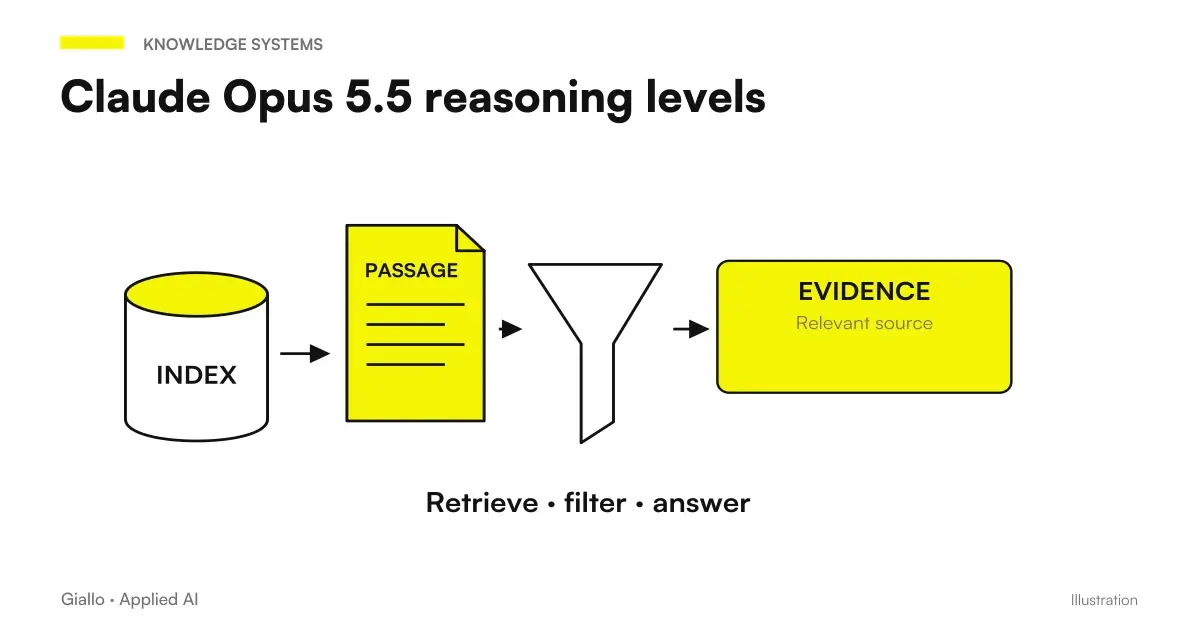 The levels of reasoning of Claude Opus 5.5: what they are and when to raise them
 AI project KPIs: what to measure
FAQ
How many major AI models exist today?
There is no fixed number, but the families you encounter most often are a handful: GPT from OpenAI, Claude from Anthropic, Gemini from Google, Llama from Meta, Mistral and DeepSeek. Each has multiple versions that change frequently, so the family and type of model matter more than the particular model name of the moment.
What is the best AI model for a company?
There is no absolute 'best' model: it depends on the task, budget and data constraints. For text and assistance, large general-purpose models (GPT, Claude and Gemini) are the strongest options; for total data control, consider open-source models such as Llama or Mistral. The right choice solves your process at the lowest acceptable cost.
What is the difference between a proprietary AI model and an open source model?
A proprietary model (GPT, Claude, Gemini) is used through the provider’s service: you pay for usage and do not manage the infrastructure. An open-source model (Llama, Mistral, many DeepSeek models) can be downloaded and run on your own servers or a provider’s, giving you more control over data but more technical work to manage.
Are AI model benchmarks reliable?
Only partly. Public benchmarks provide a rough idea, but models are often optimised specifically for those tests, and results change with every version. For a serious choice, a test on your real use case, with your documents and questions, matters more than the month's ranking.
How often do AI models change?
Very quickly: new versions and names appear within weeks or months. This makes fixating on one identifier pointless: choose the provider and model type instead, and always check the official page for current versions, limits and prices.
Is it necessary to choose only one AI model for the whole company?
No, and it's often a mistake. Many projects use multiple models: one powerful for complex tasks, one cheaper and faster for high volumes. The important thing is to isolate the model well from the rest of the system, so you can change it without redoing everything.