
AI for car workshops: quotes, appointments and customers
AI for car workshops: intake from registration documents, phone-approved quotes, vehicle inspections, Takata recalls and the RENTRI register.
Reading time: 10 min
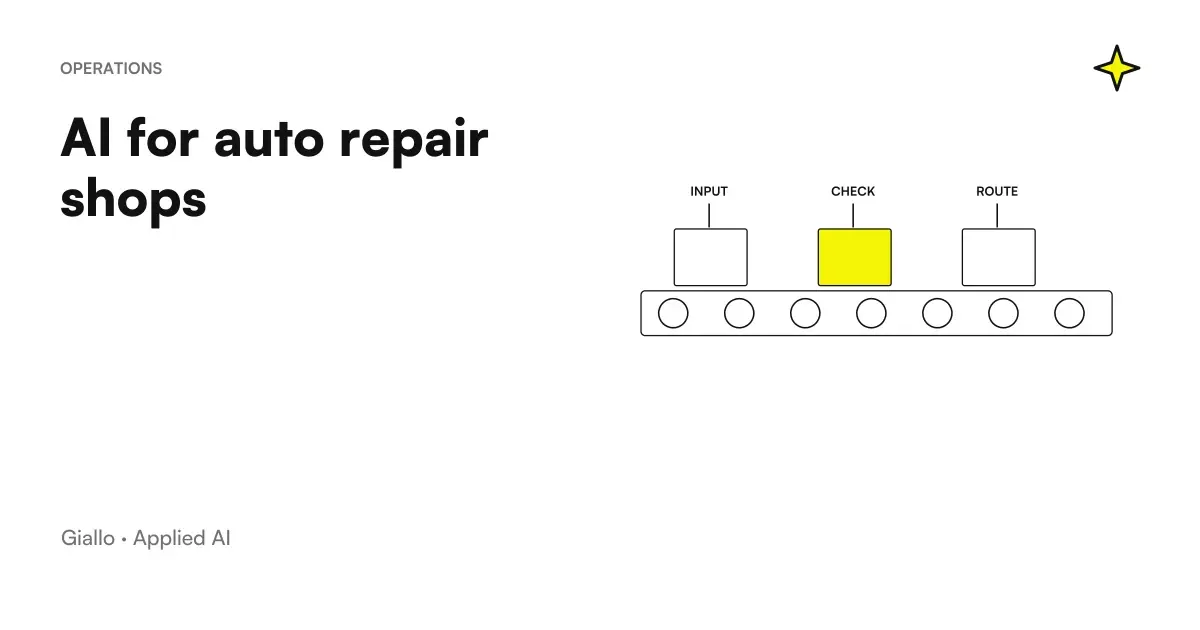
A workshop wastes more time at the reception desk and on the phone than under the bridge. That's where the AI for car workshops makes: reads the circulation card from a photo, remembers the checks on review and recalls, explains the quote to the customer in simple words and collects his written ok, fills the agenda with the deadlines you already know. Diagnosis, repair and responsibility of the work remain to the mechanic.
Over the past two years, bench work has become heavier. The Highway Code asks manufacturers to follow the recalls all the way, the Ministry has asked workshops to alert customers to recalls on Takata airbags at each entrance, and those who produce hazardous waste such as used oil keep the register in digital format since it is registered with RENTRI. A well-set assistant does not decide any of this: makes you find the right information the moment you need it.
In summary
- Upon acceptance the assistant reads from the photo of the registration plate, frame and date of first registration, and reminds you of the checks on revision and recalls.
- For passenger cars, the first revision must be done within four years of registration and then every two years: a computable deadline, then an automatic reminder.
- The Ministry's decree on the recalls of Takata airbags asks the workshops to inform the customer of the pending recalls at each access of the vehicle.
- For the European Commission, making a warranty dependent on servicing within the authorised network is a potentially problematic restriction; the manufacturer may, however, refuse it if the fault results from incorrect maintenance.
- With the RENTRI registration the register of hazardous waste is digital: the assistant proposes the annotations starting from the work orders, you confirm them.
What do you need to check the acceptance before opening the bonnet?
The customer leaves the keys and says "makes a noise when I brake." The acceptor writes two lines, photographs the circulation card and the rest reconstructs the mechanic. An AI assistant can make this step richer without stretching it: from the photo of the document reads license plate, chassis number (VIN) and date of first registration, and on the description of the customer asks the questions that the workshop would ask. Since when do you hear that? Cold or hot? Even in the corners?
With the registration date the revision is calculated: for passenger cars the first must be done within 4 years and then every 2 years, while taxis and rental vehicles with drivers do it every year (Road Code, Art. 80). The date of the last revision is checked on Motorist portal, whose service shows the revisions made after June 1, 2018. The assistant reminds you to look at it and records it in the vehicle card.
The easiest control to forget upon acceptance is that of calls. From 14 December 2024 the Highway Code obliges manufacturers to take corrective measures on vehicles with a serious risk and to inform the owners; if after 24 months from the start of the recall a vehicle has not been fixed, it ends up in a telematic list of the Ministry, and those who circulate there risk the same sanctions as those who miss the revision (Art. 80-bis).
Takata Airbag: what the decree of July 2, 2026 demands and what changes since October 1
The Decree No. 229 of 2 July 2026 from the Ministry of Infrastructure and Transport concerns vehicles subject to Takata airbag recall campaigns. During a roadworthiness inspection, before testing, the inspector checks for airbag recalls by entering the vehicle identification number on the Ministry portal or manufacturers’ portals. For a recall classified as “Stop Drive”, which prohibits driving the vehicle, the result is “Retest — suspended from circulation”; for serious-risk recalls without “Stop Drive”, vehicles that have not yet been repaired receive a “Retest” result from 1 October 2026.
For workshops there is an explicit passage: authorized workshops and self-repair companies inform customers of pending recalls to each access of the vehicle and invite them to provide. The replacement is carried out by the manufacturer, free of charge for the customer.
In practice, the assistant does not question the builders' portals alone. It puts the check on the acceptance list, records the outcome and, if there is an open call, prepares the message for the customer with the indication of turning to the manufacturer's network.
How do you write a quote that the customer approves from the phone?
The delicate moment comes halfway through the job. The mechanic dismantles parts during servicing and finds worn brake discs; the customer is called when someone has their hands free, and often does not answer. With an assistant, the mechanic dictates the note ("front discs below minimum thickness, pads at the limit") and takes two photos. AI prepares a message with an explanation in plain language, the photos, parts from your price list and labour at your rates, then sends it to the customer requesting a written reply.
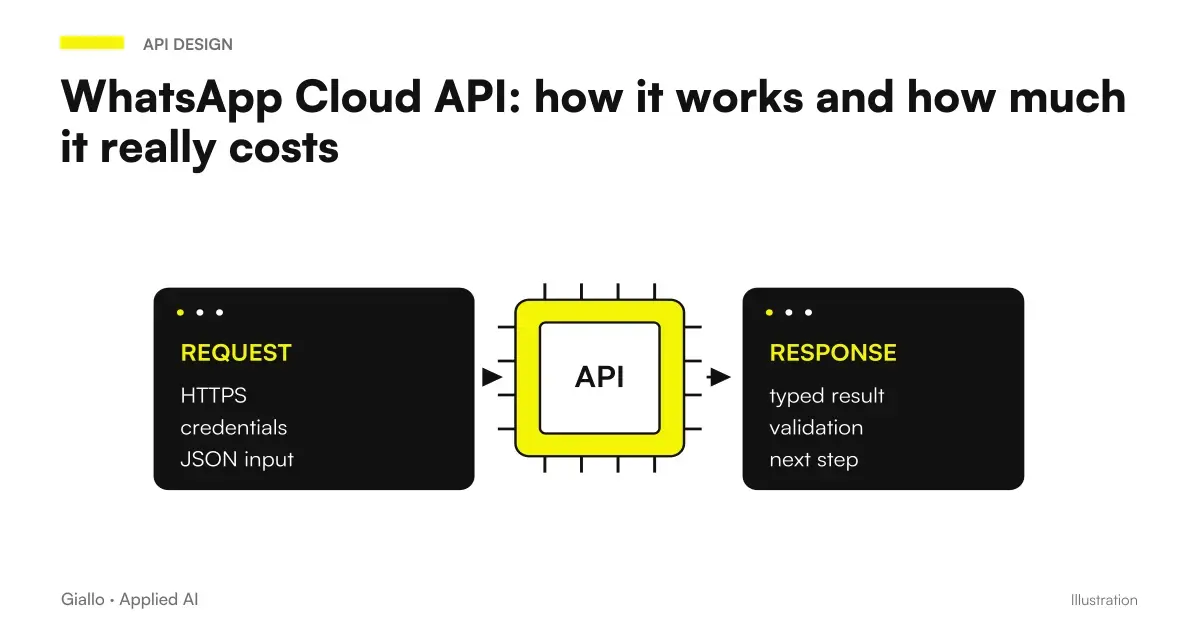
The rule not to be negotiated: extra work only starts after the customer's ok, and the ok remains saved in the work order. Next questions ("Is it urgent? Can I wait until next month?") The assistant answers only with what the mechanic has written; if he does not know, he turns the question. How to build a draft estimate from the technical notes we explain in AI to create quotes, while for the channel it is better to understand how the WhatsApp Cloud API and what it costs.
Cutting off the official network: does the customer lose the warranty?
It is the question that an independent workshop hears most often, and an assistant must know how to treat it with caution. In the guidelines on agreements for the sale and repair of motor vehicles, the European Commission considers the manufacturer's guarantee to be suspect, subject to the fact that works not covered by the guarantee are done only in the authorised network; the same applies to the obligation to install branded spare parts in out-of-warranty replacements (Guidelines 2010/C 138/05, point 69). The same point specifies that the manufacturer can legitimately refuse the warranty if the problem results from incorrect repair or maintenance or from spare parts of poor quality.
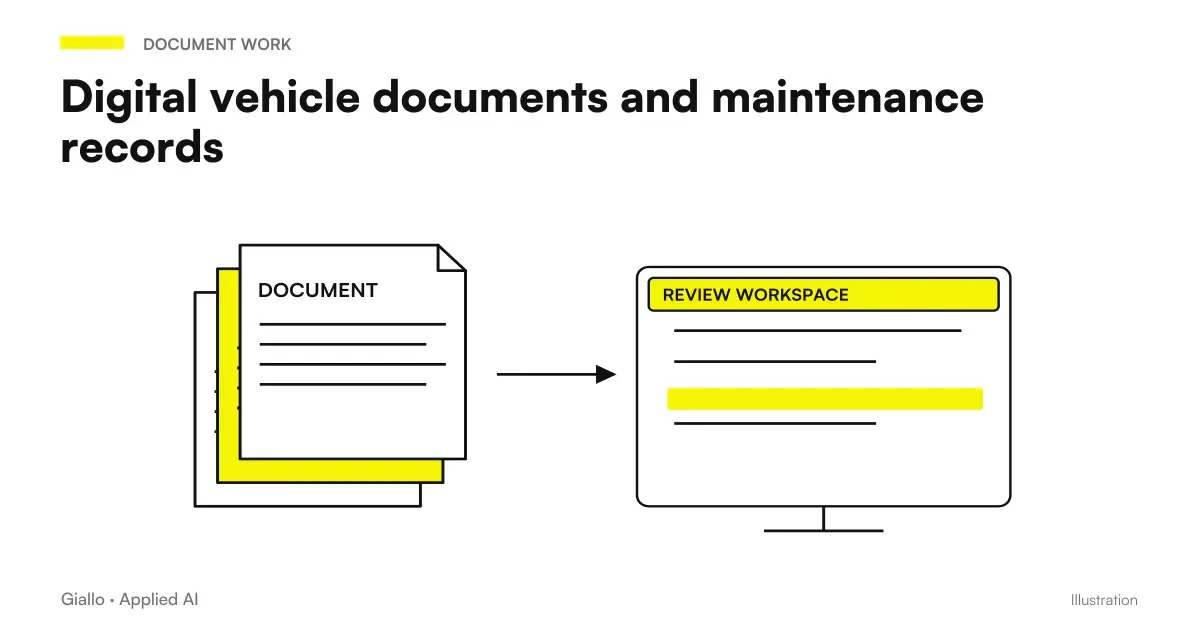
For the garage, this becomes documentation work, and that is where AI helps. The assistant prepares the service record based on the manufacturer’s maintenance schedule for that model, lists replacement parts with their codes and brands, attaches photos of the replaced parts and gives the customer a summary to keep. When a customer asks "will I lose my warranty?", it uses wording you have approved and refers uncertain cases to the owner. For an example of keeping vehicle documents and service records digitally, see Digital Vehicle Documents.
Reviewing, cutting and recalling in the same vehicle tab
Your customers' deadlines are already written somewhere, only they are in different places. The table shows where each data comes from and what the assistant does with it.
| Given in tab | Where it comes from | What the assistant does with it |
|---|---|---|
| Date of first registration | Circulation card photo upon acceptance | Calculate the first revision and subsequent (Art. 80) |
| Last Revision | Motorist portal, for revisions after 1 June 2018 | Update the deadline and prepare the reminder |
| Open calls | Builders' portals or section of the Ministry portal, with the chassis number | Write down the outcome and prepare the notice to the customer |
| Maintenance plan | Manufacturer documentation for that model | Proposes cutting by kilometers or on time, according to the threshold that comes before |
| Kilometers travelled | Last entrances to the workshop | Estimate when the customer arrives at the threshold of the cutting |
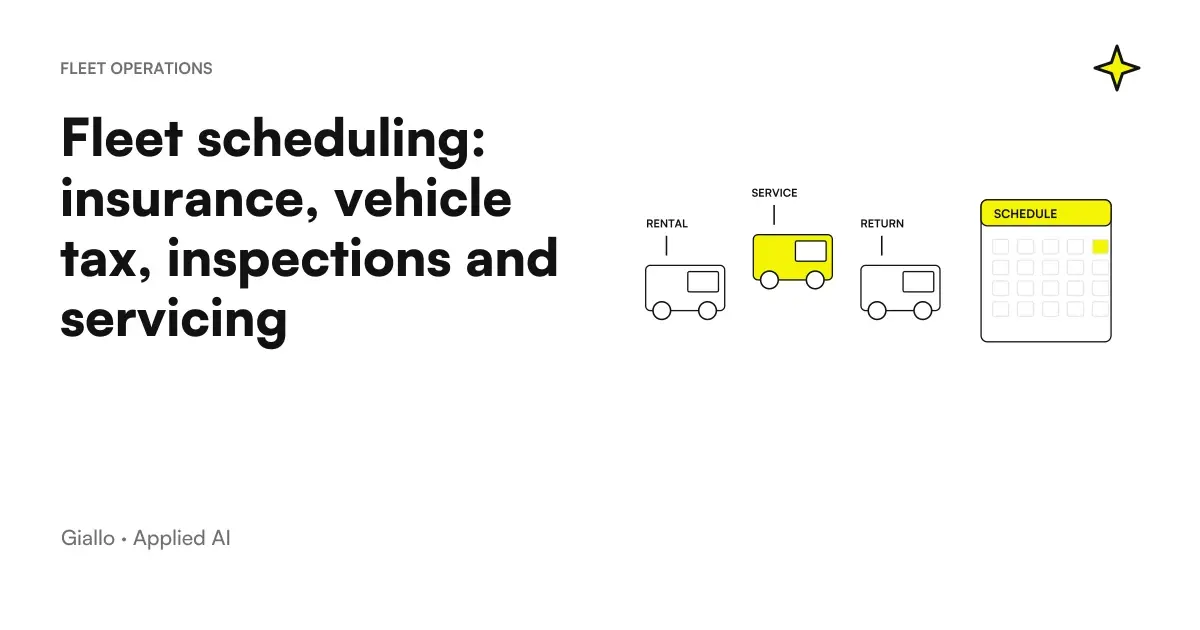
With the completed card the reminder becomes routine. A few weeks before the review the customer receives a message with two free hours, and if the car also has an open call it finds it written in the same message. If among customers you have companies with multiple means, the same pattern seen from their side is that of Fleet Schedule.
Used oils and RENTRI: the workshop register is now digital
Under the Self-Repair Act, oil and filter changes do not fall under the self-repair activity (mechatronics, bodywork, rubberist), but must be carried out in compliance with waste regulations (law 122/1992, art. 1). And the lubricating oil used is a hazardous waste, as the CONOU consortium, which collects it from companies through its dealers.
Producers of hazardous waste up to 10 employees had to register with RENTRI by February 13, 2026. From the registration the loading and unloading register is held in digital format, with its own management software or with the free services of RENTRI, and from 13 February 2026 also the hazardous waste form is digital (RENTRI).
Here the assistant does the most tedious job. From the day's work orders he proposes the annotations, for example an oil change with type of waste and estimated amount, and puts them in the queue for confirmation: the checks you or your environmental consultant, then they end up in the register. When the deposit is filled remember to book the pick-up. Works as any data entry deleted with AI: the machine copies, the person controls.
A week in September in a workshop with two bridges
Take, as an example, a workshop with an acceptor and three mechanics, which mainly follows private cars in the area.
Monday: October revisions
The assistant scrolls through the tabs and finds the cars with the revision due in October. To each customer he sends two free hours; for three cars with a Takata recall still open he adds a line that explains that from 1 October, in revision, the outcome would be «Repeat», and that the replacement makes it for free the manufacturer's network. Those who don't respond by Wednesday end up on the acceptor's phone call list.
Wednesday: a routine service turns into brake work
An eight-year-old small car comes in for a service. The mechanic finds brake pads at their limit, dictates a note and takes photos. The customer receives the message at work, replies "go ahead", and work on the lift continues. By the end of the day, the record contains the service, parts with their codes, photos and approval.
Friday: The Register
The holder opens the queue of the proposed notes for the waste register, corrects one with the wrong amount and confirms the others. Ten minutes of work, instead of the night spent copying.
Where a workshop is wrong that puts AI on the acceptance desk
- Promise delivery before you have the replacement. The assistant can tell when the car will be ready only if the spare is in stock or confirmed by the supplier. Otherwise he says that the workshop calls back.
- Making remote diagnoses. The customer sends the error code read with an app on the phone and asks "what is it?". The assistant records the code and sets the test, the diagnosis is made by the mechanic with the car on the bridge.
- Responding "yes, stay in warranty" absolutely. The prudent response explains what the Commission says and what the workshop documents, without promising the outcome of a dispute.
- Skip the ok written on the extra works. A "yes" on the phone is nowhere to be found. The message with the customer's response, on the other hand, lies in the work order.
- Use review reminders to advertise. Remembering a deadline to a customer is service; proposing winter tires on offer is marketing, with different rules. The picture is in the guide on GDPR and artificial intelligence in the company, to be verified with your consultant.
Where to start if the agenda is still a notebook
Start from cars passed in the workshop in the last year. All you need for each are plates, frame, date of first registration and, if you find it, the date of the last revision: it is the minimum for the first reminders, which give visible results without touching anything of the work in the workshop. Then add to the acceptance the photo of the circulation card and the check of the calls, and only after the quote with approval from the phone.
The page AI for SMEs collects the most suitable projects for small businesses. If the management software you use does not make the agenda, messages and vehicle cards talk, we can build the piece that is missing with a custom software for your workshop, starting with the data you already have.
Giallo Studio guides: methodology and sources
How we apply it in the company
Related resources
 Digital vehicle documents: registration, servicing and vehicle records
 Fleet deadlines: insurance, road tax, inspections and servicing
 WhatsApp Cloud API: how it works and how much it really costs
 Creating quotes with AI: how to speed up the process
 AI to eliminate manual data entry and copying in business
 AI for car rental: renter fines, contracts and return damage
 AI for wedding planners: suppliers, deadlines and guest data
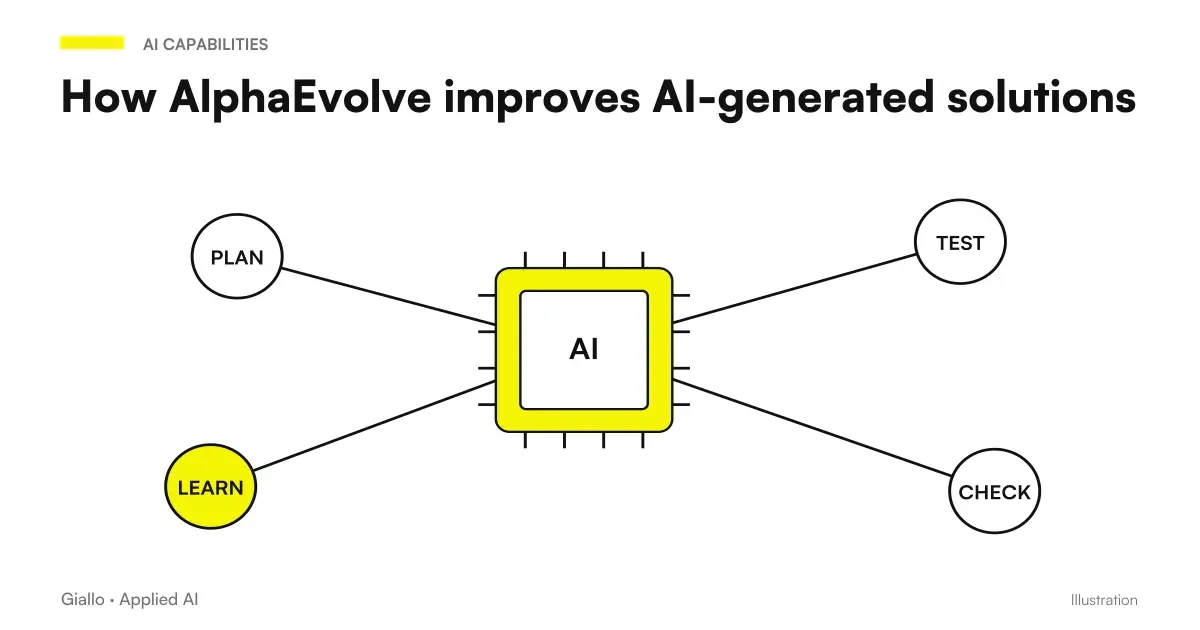 AI that improves itself? How does AlphaEvolve work
AI by sector
The same reasoning, applied to the other areas we follow.
- AI for notaries and notarial firms: case files, documents and clients
- AI for customer onboarding: automate the first moment that matters
- AI for shops: customer messages, stock by size, returns and loyalty cards
- AI for opticians: prescriptions, collections, contact lenses and recalls
- AI for stock and inventory management
- AI for gyms and sports centres: class bookings, medical certificates and memberships
- AI for Logistics and Shipping
- AI for hairdressers and beauty salons: bookings and fewer schedule gaps
- AI for business knowledge bases: find the information you need
- AI for SMEs: a practical guide to really getting started
- AI for estate agencies: leads, viewings, listings and documents
- AI for phone bookings
FAQ
If I service a car that is still under warranty, does the customer lose the warranty?
In its motor-vehicle repair guidelines, the European Commission considers a warranty problematic when it depends on work not covered by the warranty being performed only within the authorised network. The manufacturer can, however, refuse the warranty if the fault results from incorrect maintenance or poor-quality parts. It is therefore advisable to follow the manufacturer’s schedule, use parts of equivalent quality and document every service.
How do I know if a car entering the workshop has an open recall?
Check the vehicle identification number on manufacturers’ recall portals or the section of the Ministry’s portal that links to those lists. For Takata airbags, the Ministry’s decree of 2 July 2026 requires workshops to inform customers of outstanding recalls every time the vehicle comes in. An assistant can add this check to the intake checklist and prepare the notice.
Can AI calculate when my clients’ vehicle inspections are due?
Yes, starting from the first registration date on the vehicle registration certificate: for passenger cars, the first inspection must take place within four years, then every two years, under Article 80 of the Italian Highway Code. If the car has already undergone inspections, the latest one counts and can be checked on the Portale dell’automobilista. The reminder starts from there.
Can I get the customer to approve extra jobs on WhatsApp?
Yes, and it is the quickest way to avoid holding up the vehicle lift. The mechanic dictates the note and takes the photos, the assistant prepares the message with explanation, spare parts and cost taken from your price list, the customer responds in writing. The approval remains saved in the work order and the extra work starts only after.
Can the register of waste oils be compiled automatically?
The assistant can propose entries from work orders, for example each oil change, with the waste type and estimated quantity. After registration with RENTRI, hazardous-waste producers keep their incoming and outgoing waste register in digital format. You or your environmental adviser confirm the entries.
Do I need a new business management system to use AI in the workshop?
Not necessarily. If your business management system exports customers, vehicles and work orders, the assistant can start with that data. If the agenda is still on paper, it starts with a vehicle card with license plate, chassis, registration and most recent vehicle inspection, and the resulting reminders.