
AI for car rental: renter fines, contracts and return damage
AI for car rental: match fines to renters within Highway Code deadlines, prepare multilingual contracts, manage deposits and record damage on return.
Reading time: 9 min
A car rental loses money at specific times: the report that arrives months later and must be turned to the right customer, the contract quickly signed at the counter by a tourist who does not read Italian, the scratch discovered upon return without a photo of the delivery. L'AI for car rentals He works on these moments. Verbal and document law, matches dates and contracts, responds in the client's language with your conditions and keeps the evidence in order. Charges, disputes and refunds are decided by you.
The industry has precise rules, and an assistant needs to know them before responding to anyone. The Highway Code states who is liable for fines when the car is rented and when the driver's data should be communicated. The Consumer Code says when the customer cannot withdraw from a booking and which penalties are likely to be vexatious. An assistant who ignores these rules does damage with a lot of courtesy.
In summary
- For a rental car without driver is liable for penalties, jointly with the one who committed the violation, the lessee instead of the owner.
- In violations with loss of points, if the driver is not identified, the receiver of the report shall communicate the data of the driver within sixty days of notification.
- The withdrawal of the Consumer Code does not apply to the rental of cars booked for specific dates: the cancellation conditions of your contract count.
- Penalties of a manifestly excessive amount are presumed to be vexatious: the assistant applies the written clauses, does not invent them and does not exacerbate them.
- Since August 2, 2026, a writer to an AI assistant must be able to understand that he does not speak to a person, if it is not already evident.
The report comes months after the rental: who was driving and who answered
For violations committed with a driverless rental vehicle, the Highway Code places the lessee, instead of the owner, among the jointly and severally obligated with the infringer (Art. 196). In short-term rental, however, the report comes to you, because in the archives the vehicle is registered to the company. For violations involving loss of points, if the driver has not been identified, the owner or the jointly and severally obligated person must provide the police body with the driver's personal and driver's license data within 60 days of notification; for a company the legal representative or his delegate does so (Art. 126-bis, paragraph 2).
When the administration identifies an obliged person only at a later date, it has 90 days from when it is able to identify him to notify him of the report; for those who reside abroad the notification period is 360 days from the assessment (Art. 201, paragraph 1). For a rental that works with tourists it means minutes that arrive long after the return, and an archive that must immediately answer a single question: who had this car that day, at that time?
- Reading. The report arrives via PEC or by mail: the assistant extracts plates, date, time, place, violated rule and date of notification, and reports the illegible fields.
- Matching. Compare the date and time with the contracts of that plate and propose the lessee, highlighting the doubtful cases: return on the same day, two neighboring contracts, times at the limit.
- Expiration. From the notification date it calculates the deadline for communicating the driver's data and puts it on the agenda.
- Communications. He prepares the communication of the data for the police body and the message to the customer in his own language, with the copy of the report.
- Human verification. An operator checks match and text before sending, and everything remains in the contract tab.
The technical part, from the PDF to the driver, we told in two articles: how read the fines in PDF automatically and how Matching the fine to the driver without mistake on the limit cases. Here is a rule: the pairing proposed by the AI remains a suggestion until a person has confirmed it, because a report shot at the wrong customer is a serious problem, even of privacy.
Reservations and contract: what the assistant needs to know before answering
Bookers always ask the same questions. Can I cancel? What happens if I bring the car back late? Who pays the fines? The assistant can respond at any time and in any language, as long as the answers come from your contract and stay within certain precise rules.
| Customer question | What the Standard Says | How the assistant responds |
|---|---|---|
| "Can I cancel and get my refund?" | The withdrawal does not apply to car rental services if the contract provides for a specific date or period of execution (Consumer Code, Article 59(n)) | It quotes to the letter your cancellation conditions, without promising refunds not provided |
| "How much do I pay if I bring the car back late?" | Charges of a manifestly excessive amount are presumed to be vexatious (Art. 33, paragraph 2, letter f) | Report the written penalty in the contract, without rounding up or adding |
| "Who pays the fines?" | The lessee responds in solid instead of the owner (Road Code, Art. 196) | He explains that his data is communicated to the authority, which will notify him of the minutes |
| "Am I talking to someone?" | AI systems that communicate with people must be designed to say so, unless it is obvious; the obligation applies from August 2, 2026 (AI Act, Art. 50) | He declares it in the opening, in every language, and switches to an operator when needed |
Language is the point where an assistant helps the most and risks the most. A tourist who reads the conditions in French or Arabic trusts what he reads; if the translation promises more than the original contract, the problem is yours. It is advisable to keep the conditions translated and approved as fixed texts and leave the AI the conversation around. How to choose the right language for each message we explain in Multi-language automatic messages.
Caution and damages: on re-entry wins who has the photos of the delivery
Harder discussions arise upon re-entry. Was the bumper scratch already there? Has the fill been made? Do the miles come back? The AI doesn't do the survey here. It does something more useful: it makes the check-out complete and the tests comparable.
- Photos of the four sides, circles, windshield and interior on delivery, with date and time.
- Kilometers and fuel or charge level written in the contract, not on a separate sheet.
- Damage already present marked on a scheme of the car and countersigned by the customer.
- Amount of the security, blocking mode and release times written in the contract, in the language of the customer.
- On re-entry, the same photos from the same angles, so the assistant can report the differences to be verified.
- Every charge connected to the photo and the clause that justifies it.
The assistant compares the delivery and re-entry photos and highlights the areas to look at. If a sign is new, and how much it costs to repair it, a person decides. The charges follow the clauses signed by the customer, and those clauses must be written with a lawyer, precisely because the Consumer Code looks suspiciously at disproportionate amounts. What is really worth a signature collected on the desk tablet you find it in contracts and digital signature in app.
Rial Rent: supercars, yachts and a single management software
For Rial Rent, a supercar and yacht rental concierge delivering in Milan, Como, Portofino, Costa Smeralda, the French Riviera, Monaco and Ibiza, we built Fleet OS: custom management software that keeps cars and yachts in the same interface. It generates PDF quotes and contracts populated with customer and vehicle details, with electronic signing within the workflow. It also manages tyre stock: which sets are fitted, which are in storage and when they need changing.
AI works on two functions. The first reads booklet, policy and stamp and fills out the vehicle card, which the operator checks and confirms. The second concerns fines: the system reads the report, crosses date and time with the rental history, identifies the customer who had the vehicle and prepares a text to be sent via email or WhatsApp, which the operator reviews before sending. The site speaks six languages, from Italian to Arabic, because most of the customers come from abroad. The full story, with the technical choices, is in the CRM case study for car rental.
Two examples: the bench in the station in August and the Monday vans
About twenty cars near a station. The example is a rental that in summer works almost only with tourists. At night the assistant replies on WhatsApp in English, German and French, confirms reservations with precise dates and, to those who ask to cancel, cites the translated and approved cancellation clause. In November comes a report for a car rented in August by a customer residing in Germany: the assistant finds the contract in a few seconds, remembers that for those who reside abroad the notification times are longer and prepares the communication of data.
A van rental for artisans and movers. Here the typical minutes are the accesses in the restricted traffic areas detected by the cameras, cases in which immediate dispute is not necessary (Art. 201, paragraph 1-bis). On Monday morning the assistant matches the weekend traffic-fine notices to the rental contracts, while the check-out checklist at the counter also requires photos of the cargo compartment. If you also work with a garage, the same organisation of vehicle records helps manage servicing and roadworthiness inspections, as described in our article on AI for car workshops.
The phrases that the assistant of a rental must never write
"Don't worry, the fine doesn't pay you." The lessee answers in solid. The assistant explains the procedure and the timing, does not absolve anyone.
"The bail comes back to you tomorrow." Unlocking depends on the payment circuit and what you wrote in the contract. You quote the written times, not the ones you hoped for.
"The scratch was already there, don't worry." No admission on damage via chat. The assistant records the customer's report, with photos, and passes it to the person who manages the re-entry.
"You can add a second driver on arrival." Only if your conditions provide for it. It is agreed that each driver should result in the contract, otherwise the matching of fines also becomes a problem.
The data needs extra caution: licenses, identity documents and rental history are personal data, often of foreign customers. Choose tools that clearly tell where they are stored and who uses them, as we explain in AI and corporate privacy.
Where does a rental with twenty cars start from?
Start with the fines, because they have dates, deadlines and a clear cost when something goes wrong. Collect the last year's minutes, check how many have been matched with fatigue, and how much time has passed between notification and data communication. Then you make the photos of the check-out mandatory, and only after that brings the assistant on bookings in multiple languages.
The page AI for tourism and hospitality collects the other projects for those who work with customers on the road. If you want a management software that reads minutes and documents and prepares contracts and communications like Fleet OS, but built on the way your rental works, we start from there with a project of custom software.
Giallo Studio guides: methodology and sources
How we apply it in the company
Related resources
 Automatically match traffic fines to drivers
 Read PDF traffic fines automatically: text, OCR and limitations
 Contracts and digital signature in the app: how it really works
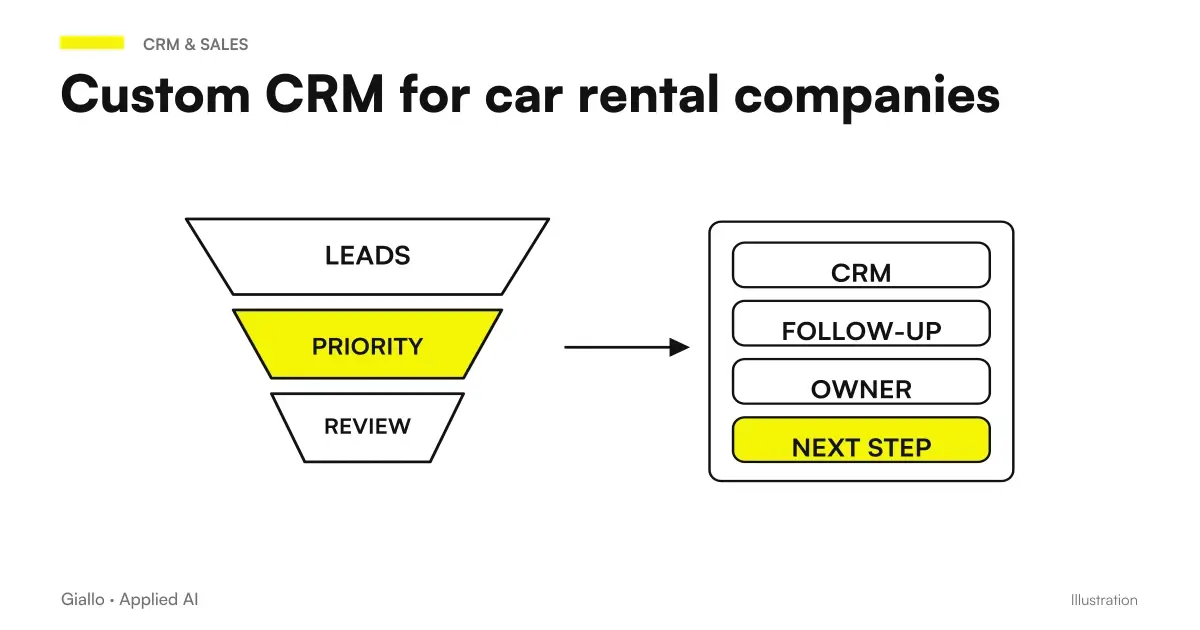 Custom CRM for car rental: the full case study
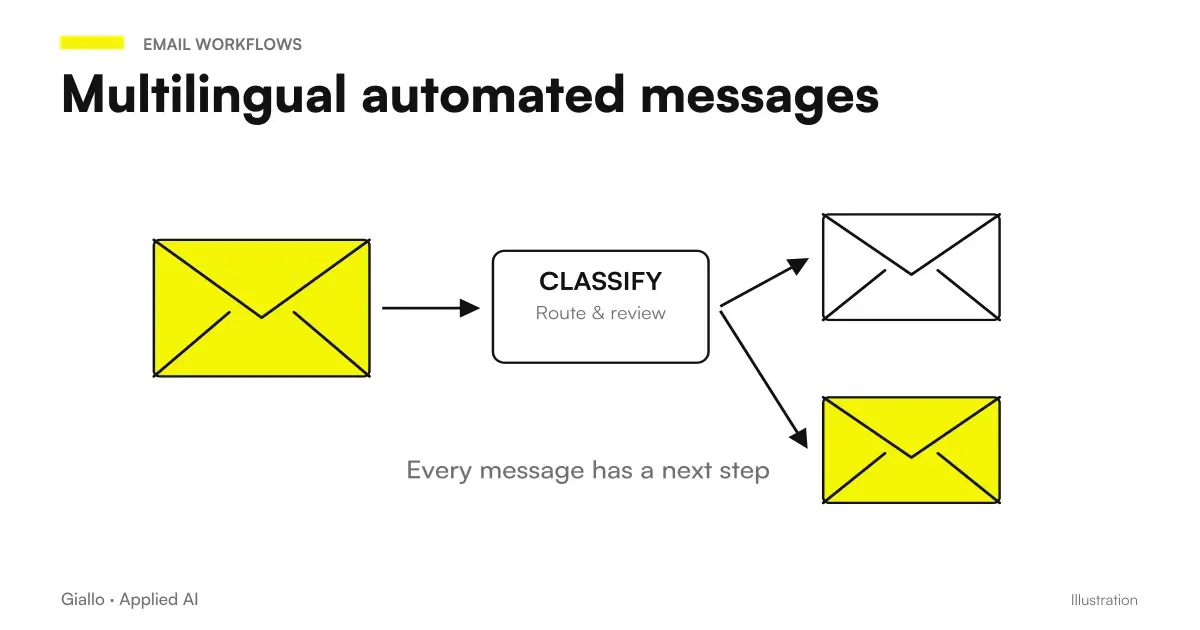 Multilingual Automatic Messages: How to Choose the Right Language
 AI for car workshops: quotes, appointments and customers
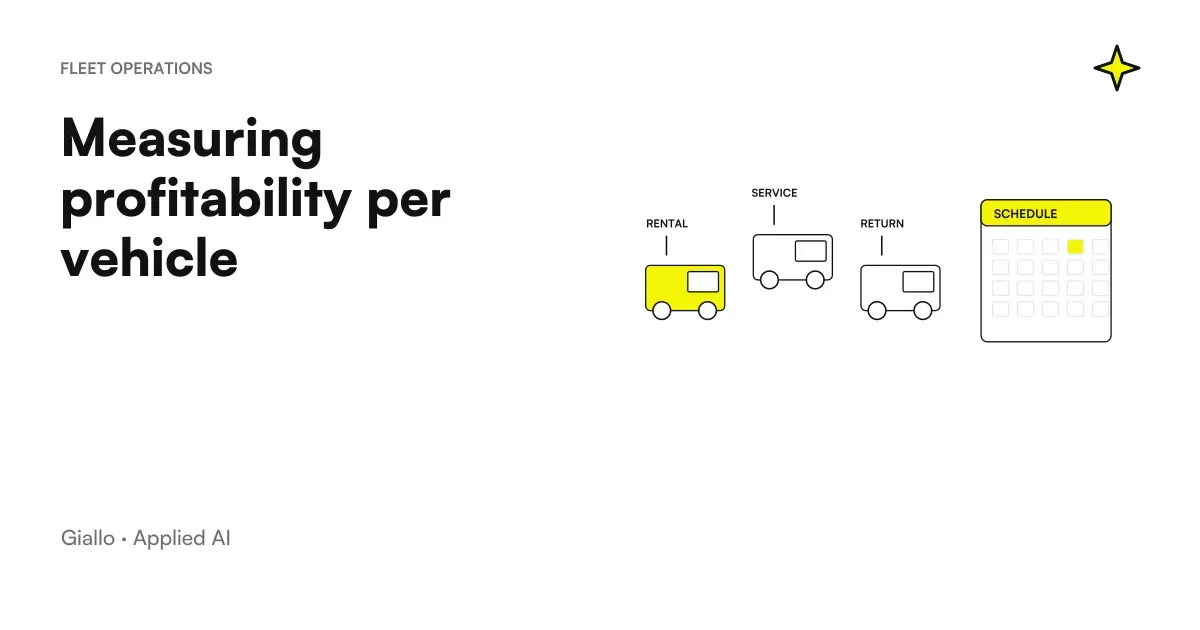 Profitability per vehicle: see which vehicles earn money
AI by sector
The same reasoning, applied to the other areas we follow.
- AI for insurance agencies: renewals, quotes and complaints
- AI for driving schools: enrolment, lessons and exam reminders
- AI for craftspeople: custom quotes, job orders and electronic invoicing
- AI for businesses: a complete guide to getting started
- AI for automatic appointment scheduling
- AI for call centres: what changes?
- AI for travel agencies: quotes, packages and assistance to travellers
- AI for catering and banqueting: event quotes and customers
- AI for marketing agencies: content, reports and AI labels
- AI for consultants: proposals, client data and project delivery
- AI for procurement and supplier management
- AI for Accounting: What It Can Really Do
FAQ
If a client receives a fine in a rental car, who is liable?
For vehicles rented without a driver, Article 196 of the Italian Highway Code makes the renter, rather than the owner, jointly and severally liable with the person who committed the offence. The rental company receives the offence notice and supplies the client’s details, after which the authority notifies the client. An AI assistant can prepare the match and communications, but an operator checks them before they are sent.
By when must I provide the driver’s details?
For offences involving penalty points, if the driver has not been identified, the owner or the jointly and severally liable party provides the driver’s personal and driving licence details within sixty days of the offence notice being served, as required by Article 126-bis of the Italian Highway Code. For a company, its legal representative or a delegate provides them. It is worth having the system put the deadline in the calendar as soon as the notice is recorded.
Can the customer who booked online withdraw?
The Consumer Code excludes the right of withdrawal for car rental services when the contract provides for a specific date or period of execution. The cancellation conditions that you have written are therefore valid. The assistant must quote them to the letter, without promising refunds that you did not provide.
Can I charge a penalty for late return?
Yes, if it is written in the contract, but the manifestly excessive penalties are presumed to be unfair according to Article 33 of the Consumer Code. Have the clauses written with a lawyer. The AI then applies and explains what is written, without rounding or adding.
Must a chatbot that answers customers disclose that it is AI?
Since August 2, 2026, Article 50 of the AI Act requires that AI systems that directly communicate with people be designed so that the user knows they are talking to an AI, unless it is obvious. In practice, a clear opening sentence, in each language, and the ability to switch to an operator is enough.
Can AI determine whether damage is new?
It can compare handover photos with return photos and flag different areas for checking. A person decides whether a mark is new and what it costs, based on the handover report signed by the client and the contract clauses.