
AI for shops: customer messages, stock by size, returns and loyalty cards
AI for retail: answers using actual stock, reordering by size, exchanges and warranties, loyalty cards, and POS integration with the cash register.
Reading time: 12 min
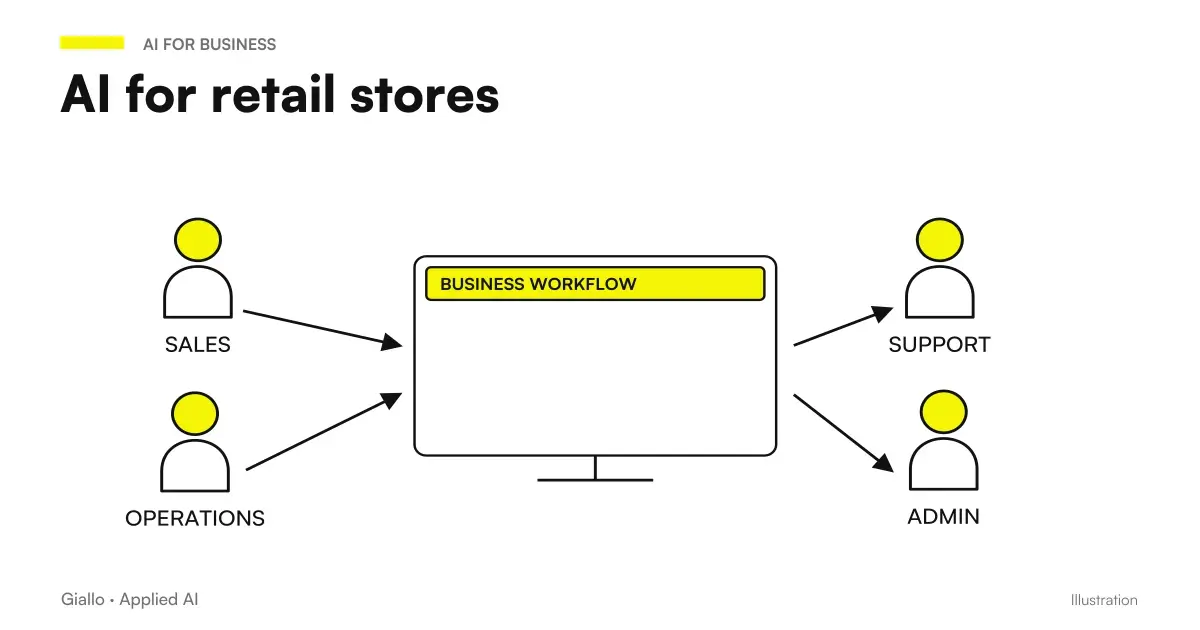
The AI for shops is most useful outside the actual sale: messages arriving while you are at the till ("do you have size 38?"), replenishment by size and colour, exchange and warranty requests that get mixed up at the counter, and loyalty-card history sitting unused in the business software. These tasks already have data (stock levels, sales and commercial documents) and rules you can write down. An AI assistant connected to the business software can prepare or complete them according to your instructions.
The tax part of the cash, on the other hand, does not need artificial intelligence. The electronic recorder stores sales and transmits to the Revenue Agency the data of the daily fees, and from 2026 the instrument by which you accept electronic payments must be connected to the recorder (D.Lgs. 127/2015, art. 2, text in force). There useful automation is more modest: remembering deadlines and reporting the evenings when the accounts do not return.
Here we talk about physical stores with one or two clerks: clothing, footwear, housewares, hardware, perfumery. For those who sell especially online there is the guide to AI for e-commerce.
In summary
- In one store the AI makes more out of four jobs: messages with true stock, reorder by variant, exchange and guarantee practices, loyalty card.
- An assistant who answers on WhatsApp without reading the inventory of the management software promises items that you don't have: as long as the link is missing, limit it to store hours, address and rules.
- For a purchase made at the counter the exchange is your policy, while the legal guarantee of conformity is an obligation: the seller is liable for defects occurring within two years of delivery.
- Loyalty card history is used for profiling and offers only with a separate and free consent, and the card must remain available to those who do not give it.
- From 2026 POS and telematics recorder match online: an automation can remind you of the window for each new POS and compare every night recorder, POS and cash.
"Do you have the 38?": the answers on WhatsApp must read the warehouse
Many messages to a footwear or clothing store have the same shape: a screenshot from the Instagram profile and a variant, "this one in blue, number 38?". The answer lies in management software, where each article is a grid of sizes and colors. An AI assistant on WhatsApp or in Instagram messages only serves if it reads that grid.
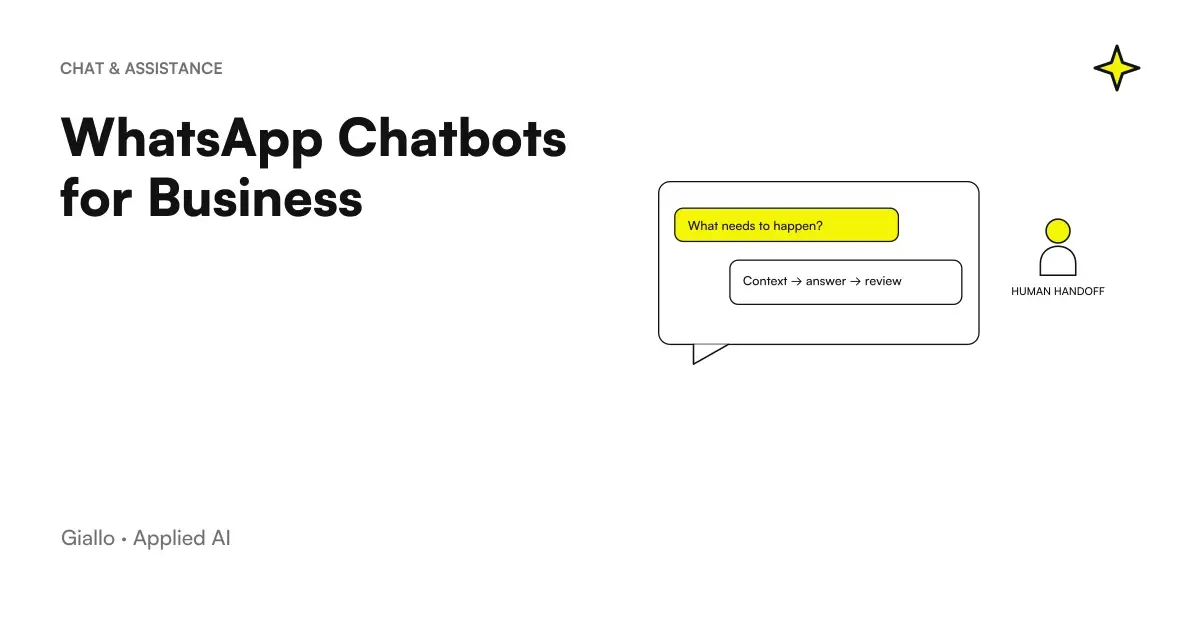
With the link, the assistant searches for the article from the name, code or post from which the message arrives, checks the stock of the variant and responds with what is really there, including the near number or other color. If the customer wants to pass, he proposes to keep the pair aside until a time decided by you; those who ask for a sold out number leave the contact for notice on the next arrival. Channel and technical limits are explained in WhatsApp chatbots for businesses. Without connection, better a smaller assistant: hours, address, exchange policy, brands treated.
Before turning it on write down what it passes to a salesperson (defects, complaints, discount requests, orders of more pieces). And from August 2, 2026, the writer must know that he is speaking with an artificial intelligence system, as the guide to the AI Act for an SME.
Change, defect or return: three requests that are confused at the counter
Three different requests arrive at the counter that the customer calls all "returned". The first is the change: wrong size, color that does not convince at home, double gift. The right of withdrawal applies to distance contracts and those negotiated outside business premises (Consumer Code, Art. 52), so for a purchase made in store the change is your rule. It is advisable to write it, with time, condition of the item and document to carry.
The second is the defect, and here the rule does not choose it. The seller responds to the consumer of any lack of conformity that existed at the delivery and that manifests itself within two years (Art. 133). If the defect manifests itself within one year of delivery it is assumed that it already existed, unless proof to the contrary (Art. 135). The customer chooses between repair and replacement, unless the chosen remedy is impossible or involves disproportionate costs; if neither arrives, he can ask for a reduction in the price or, for minor defects, the termination of the contract (Art. 135-bisThese are the rules for contracts concluded after 1 January 2022.
The third is the return of courtesy out of every rule ("I put it once, it does not convince me"): the holder decides, on a case by case basis.
| What the customer says | What case is it? | Reference rule | What the Assistant Prepares |
|---|---|---|---|
| "Can I change it?" | Change of a purchase made at the counter | The written policy of the store: the withdrawal of the Art. 52 it concerns distance and off-premises sales | The text of the policy and the search for sale |
| "She broke down after three months" | Defect in the first year | The defect is assumed to be present at delivery (Art. 135) | Fault card with date of sale and photo |
| "She broke down after a year and a half" | Defect in the second year | The seller still replies (Art. 133), but the presumption no longer applies | Fault sheet and questions about the use to be made to the customer |
| "I bought it used by you" | Well used | The parties may reduce the duration of liability, not under one year (Article 133(4)). | The period indicated in the sales document |
| "I paid for it with the link you sent me" | Possible distance contract | Withdrawal of fourteen days (Art. 52) | Instructions for withdrawal and return |
Here the AI works behind the counter. An internal assistant, whom the clerks question from the cash tablet, finds the sale by date, amount or item, says in which case of the table you are and prepares for the supplier the card with defect, photos and references of the sale. Repair, replace or refund is decided by who is at the counter.
Think of a household goods and small-appliance shop. A customer brings back a blender that no longer switches on and says she bought it last winter, paying by card. The sales assistant writes “blender, January, card” on the tablet; the assistant finds the sale in the management software, shows the sales document’s date, flags that the defect appeared within the first year and prepares a replacement request to the distributor. The sales assistant decides whether to give a new item from stock immediately.
Sort by size and color, not by model
In clothing and footwear the order of the season is usually done in advance, on the samples presented by agents and showrooms, and during the season you reassort what turns. For both decisions the total sold per model says little. It serves the sale by variant: which numbers ended in the first weeks, which colors remained whole at the end of the season, which sizes customers asked when they were not there.
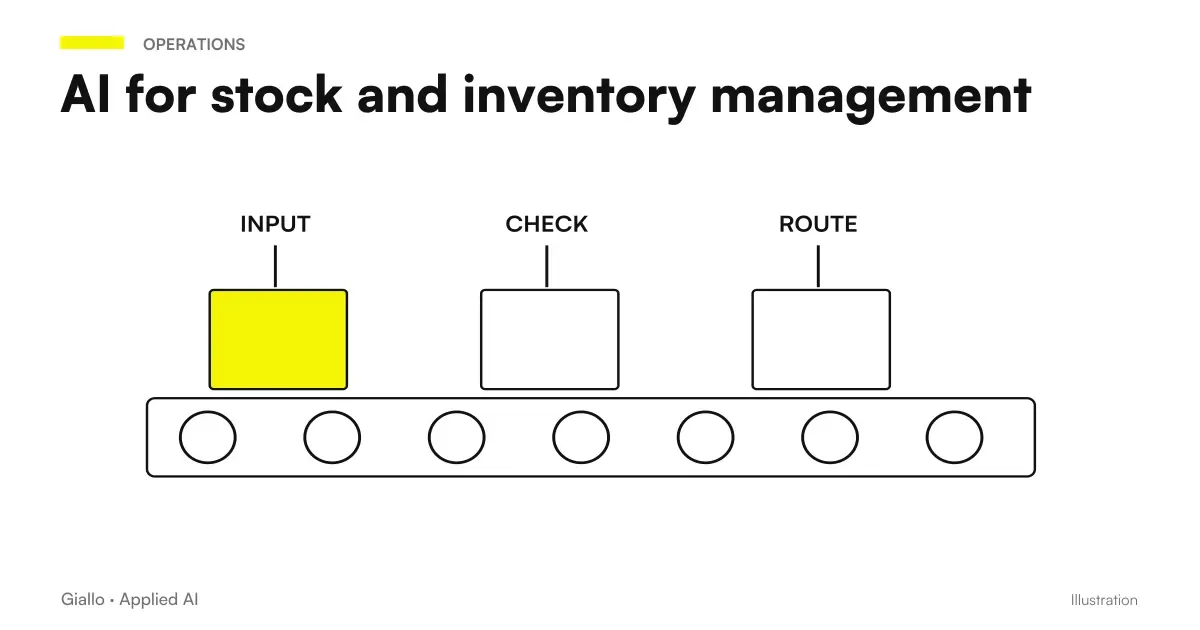
The latter given the recorder does not see it: a missed sale does not produce a receipt. The messages instead see it: if the assistant records each "do you have the 42?" left unanswered, at the end of the season you have the list of lost requests, variant by variant. Placed next to the sold, it becomes an order proposal for the next season that you can take to the showroom and discuss with the agent. The decision remains yours; the forecasting methods are in AI for stock and inventory management.
The other useful job is the paper between supplier and store: order confirmations in PDF, transport documents, invoices. An automation reads them and compares them with what you ordered, as in AI for purchases and suppliers.
An example: a footwear store receives confirmation of the new season from the supplier. Automation compares it to the order signed in the showroom and signals that the 41 of the leather model has disappeared and that the 37 have doubled. When the goods arrive, he reads the transport document, loads the stocks and writes to the customers on the waiting list for that number, one at a time, with the time until which the pair stays aside.
Loyalty card: what you can do with the purchase history
The loyalty card collects just the data needed for a targeted recall: who buys what, how much, in which department. The reference to use them is the general provision of the Privacy Guarantor on fidelity card of 24 February 2005, written for large retail but also useful to a single store. It distinguishes three purposes: loyalty in the strict sense, i.e. points and discounts; profiling on consumption habits; direct marketing. For the latter two, a specific and distinct consent is needed, membership of the card cannot depend on that consent and the customer must have information and time to decide. The Guarantor cites the prompt subscription requested "while the customer is in line at the cash register".
The same provision puts a cap on the preservation of the detail of purchases of identifiable customers: twelve months for profiling and twenty-four for marketing, except for a real transformation into anonymous form. He adds that personal data should not be used if the purpose is achieved with anonymous data, and that sensitive data is not normally allowed for any of these purposes. It is a text written before the GDPR: times and legal bases should be reviewed with your privacy consultant, and the general picture is in GDPR and artificial intelligence in the company.
Within these boundaries AI works in two ways. For those who have given consent he writes the right call: the cream that buys back every autumn, the new collection of the brand that follows. For everyone else he works on aggregated data, without names: which departments grow, which items are bought together. In an herbalist or a health care professional the historian can say a lot about a person's health, and there profiling is to be excluded.
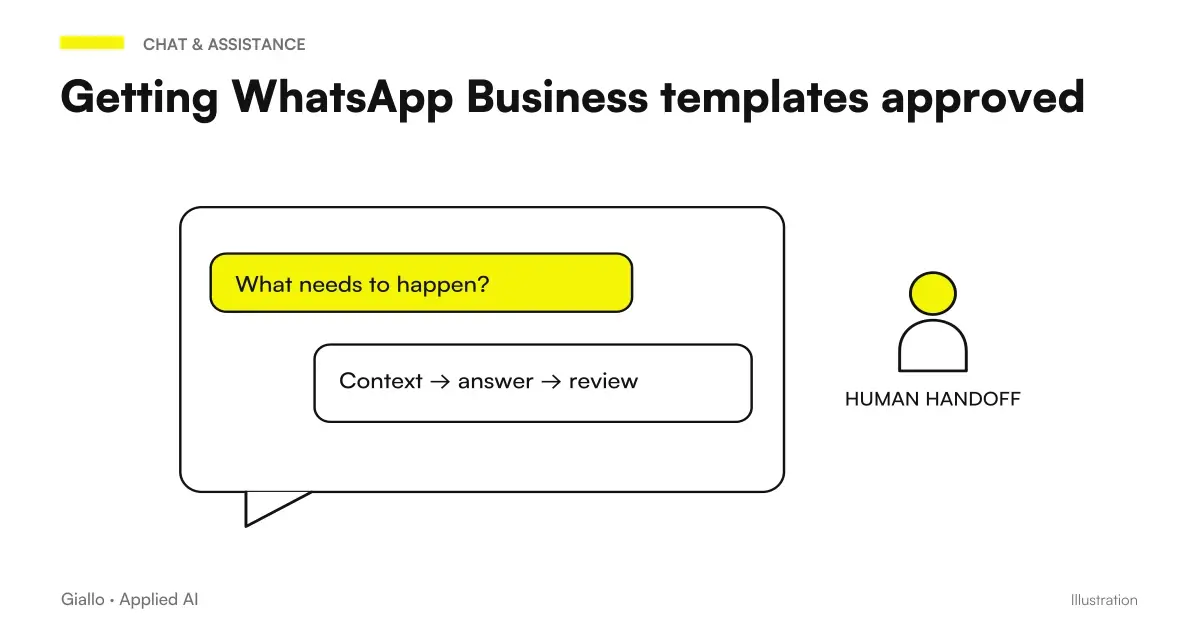
The birthday message with the discount is marketing. On WhatsApp it goes through a marketing category model, with the approval rules explained in WhatsApp Business templates, and leaves only to those who gave consent.
Telematics and POS recorder: what changes for those who automate the checkout
Paragraph 3 of Article 2 of Legislative Decree 127/2015, in the version applicable from 1 January 2026 as a result of the budget law 2025, requires that the instrument by which you accept electronic payments is always connected to the recorder, which records in a timely manner and transmits in aggregate form the fees and data of daily electronic payments. The connection is not a cable. According to the Statement of the Revenue Agency of 5 March 2026, is a combination that the operator, also through an intermediary, makes in the portal 'Invoices and fees' with the service 'Manage links', associating the registration number of the recorder with the payment instruments that result in his name.
For each new POS there is a precise window: the pairing is done from the sixth day of the second month following the one in which the tool is available, and within the last working day of that month. The example of the same communiqué: a POS that starts operating in March connects between 6 and 31 May. It is a rare deadline, so easy to forget: just a reminder related to the terminal's activation date.
The other sensible automation is the evening closure: a small stream compares the recorder total, POS receipts and cash counted, and only writes to you when there is a difference. For sums there is no need for a linguistic model; AI enters when there is to read a receipt, a poorly beaten return or the note of the clerk.
One note: in the version in force from 1 January 2027 those paragraphs of Article 2 are repealed by the VAT Consolidated Law (Legislative Decree 19 January 2026, No. 10), then ask your accountant where the rule from that date stands.
Where a store that starts with AI misses
- Let the assistant invent the exchange policy. Without your text, a linguistic model writes a plausible one, perhaps with a term you have never granted: it is the problem of AI Hallucinations.
- Use the exchange policy to deny the guarantee. "The goods on sale are not changed" can be your rule on the exchange. A lack of conformity, however, follows Article 133, which speaks of "any defect".
- Collect the consents of the loyalty card at the end of the checkout. It is the negative example chosen by the Guarantor: better a form to be completed calmly, with separate consents.
- Connect the assistant to an out-of-date warehouse. If the variants in management software are wrong, the AI repeats the error with more confidence: first the stocks, then the chat.
- Publish responses to reviews without reading them. AI prepares the draft and the holder approves it: in the demo for Reply to Google reviews, on negative reviews the system does not publish anything on its own and calls a person.
Where to start, shop by shop
Clothing and footwear
Start with answers about variants and a waiting list by size. You need an up-to-date size grid in the business management software and a rule for how long an item reserved in chat is set aside.
Household appliances, small appliances, hardware
Start from after-sales: an internal assistant for clerks, with the exchange policy, the articles of the Consumer Code on warranty and the search for sales in management software.
Perfumery, herbalism, articles for the person
Leave the loyalty card, but only after you have settled separate information and consents. Keep out of profiling purchases that can reveal health information and use aggregated statistics only for those.
Whatever the first flow, measure it before you touch it, for example by counting messages left unanswered at the end of the day. The picture for all retail is on the page AI for Retail. If you want to understand which of these flows connect first to the management software that you already use, tell us how your store works: Giallo Studio Build the assistant on the stocks, documents, and rules that you wrote.
Giallo Studio guides: methodology and sources
How we apply it in the company
Related resources
 AI for stock and inventory management
 WhatsApp Chatbots for Business: How It Works and When It's Best
 WhatsApp Business templates: get approval from Meta
 GDPR and artificial intelligence in the company
 AI for procurement and supplier management
 AI for e-commerce: compliant returns, product descriptions, discounted prices and reviews
AI by sector
The same reasoning, applied to the other areas we follow.
- AI for stock and inventory management
- AI for notaries and notarial firms: case files, documents and clients
- AI for Logistics and Shipping
- AI for car workshops: quotes, appointments and customers
- AI for business knowledge bases: find the information you need
- AI for customer onboarding: automate the first moment that matters
- AI for estate agencies: leads, viewings, listings and documents
- AI for opticians: prescriptions, collections, contact lenses and recalls
- AI for plumbers: quotes, on-site jobs and customers
- AI for gyms and sports centres: class bookings, medical certificates and memberships
- AI for hotels: booking, guest requests and automated reviews
- AI for hairdressers and beauty salons: bookings and fewer schedule gaps
FAQ
A customer brings back a product that broke after more than a year: must I handle it or refer them to the manufacturer?
The seller, meaning the shop, is liable to the consumer for conformity defects that existed at delivery and become apparent within two years (Article 133 of the Italian Consumer Code). During the first year, the defect is presumed to have existed at delivery; afterwards, that presumption no longer applies and checking becomes more delicate. The manufacturer’s service centre may be a practical option, but responsibility towards the client remains with the shop.
Is the change in size or color in the store a legal obligation?
No. The right of withdrawal provided for in Article 52 of the Consumer Code concerns distance contracts and those negotiated outside commercial premises. For a purchase made at the counter the change is a shop policy: write it with times, conditions and document to be carried, and have the AI assistant answer only with that text. The exchange policy does not touch the legal guarantee on defects.
If I sell through WhatsApp using a payment link and ship the product, does the right of withdrawal apply?
It may apply. The Consumer Code defines a distance contract as that concluded without the physical and simultaneous presence of seller and customer, with only means of communication at a distance, within the framework of an organized system of distance sales. For these contracts the withdrawal lasts fourteen days: if you sell in chats habitually, have your conditions checked by a consultant.
Can I use the purchases registered on the loyalty card to send personalized offers?
Only to customers who have given specific, freely given, and separate consent for profiling and marketing: the Italian data protection authority stated this in its general decision on loyalty cards of 24 February 2005, also requiring that customers not be rushed into signing up while queueing at the checkout. The card must remain available to people who do not give those consents.
What should I do when I activate a new POS in the store?
From 2026, the POS must be linked to the electronic cash register through the "Gestione collegamenti" service in the Italian Revenue Agency’s Fatture e corrispettivi portal, including through your intermediary. For a new device, linking is done from the sixth day of the second month after activation, by the last working day of that month: a POS activated in March is linked between 6 and 31 May.
Can an AI assistant tell customers if an item is available?
Yes, if it reads inventory from the business management system for each variant, meaning model, colour, and size. Without that connection, it risks promising sold-out items, so it is better to restrict it to opening hours, the address, and the exchange policy. In all cases, it must disclose that it is AI and pass complaints, defects, and discount requests to a shop assistant.