
AI for marketing agencies: content, reports and AI labels
AI for marketing agencies: drafts in the client's voice, reports from platform data, email and SMS consent, AI labels on Google and Meta, and the AI Act.
Reading time: 10 min
The AI for Marketing Agencies It makes sense where work repeats itself for every customer: first drafts in the right tone of voice, monthly reports, onboarding, ad variants. The gain is the hours that go back to strategy and customer relationship. The risk lies elsewhere: in 2026 an agency that produces content with AI works within precise rules, and you answer for them, not the software.
From 2 August 2026 the Article 50 of the AI Act asks to declare images, audio and video generated or manipulated that seem authentic. Google Ads and Meta have introduced labels for ads made with AI, Merchant Center asks to mark titles, descriptions and generated images. The consent for commercial emails and SMS remains that of the Privacy Code, which no automation can presume.
In summary
- In the agency the AI agrees on drafts, reports and onboarding, the jobs that are repeated for each customer; strategy, approval and relationship with the customer remain with the team.
- Since August 2, 2026 those who broadcast a deep fake, i.e. images, audio or video generated or manipulated that seem authentic, must declare it according to the Article 50 of the AI Act.
- Google Ads, Merchant Center and Meta have their own rules and labels for generated content: campaign by campaign must be applied.
- Commercial emails and SMS require consent, with an exception for email to those who have already bought: the data on consent comes from the customer's CRM, not from the model.
- A text created with AI is protected as a work only if it is the result of the intellectual work of the author: the contribution of the team must be documented.
The rules an agency meets when producing with AI
Before the tools it is best to have the map clear. Each line in this table corresponds to a moment in an agency's day-to-day work and to a written rule, law or platform.
| Situation in the agency | Rule | Source | Who Decides |
|---|---|---|---|
| Generated photos, audio or video that look authentic | Declare that the content is generated or manipulated | AI Act, Article 50(4) | Account and customer, prior to publication |
| Chatbot on customer's website | The writer must know that he dialogues with an AI, unless it is obvious | AI Act, Article 50(1) | Who designs the chatbot |
| Google ads with generated assets | ‘AI label’ setting, label visible in EU-facing campaigns | Google Ads Help | Who uploads the campaign |
| Product cards in Merchant Center | Structured attributes for generated text, IPTC metadata for images | Merchant Center Help | Who manages the feed |
| Newsletter and SMS | Consent; for email, except for those who have already bought | Privacy Code, Art. 130 | The customer, data holder |
| Customer data in AI tools | Written authorization of the holder for other managers | GDPR, Art. 28 | The client, with his/her privacy advisor |
| Texts and graphics delivered | Protection only if it is the result of the intellectual work of the author | Law 633/1941, art. 1 | Contract between agency and client |
Drafts in Customer Tone: What AI Must Read Before Writing
The first draft is the most widespread use and also the one that disappoints the most, because without the customer material the AI writes like everyone. The real work is done at onboarding, when you collect what defines that client's voice and put it into a document that the assistant reads to every request.
- Collect the customer's material. Approved texts from the past few months, presentations, site pages, reviews, questions his customers ask most often.
- Write the operating brand book. Tone, forbidden words, statements that the client can prove and those that he cannot make, competitors not to be named.
- Mark the industry constraints. Health, finance and food have their own rules about advertising: they must be written in the brief, not remembered by heart.
- Decide what always passes by a person. Claims with numbers, prices, comparisons with competitors, content with recognizable people.
- Put everything in the contract. What AI tools you use, what data, who you re-read, and whose materials you produce.
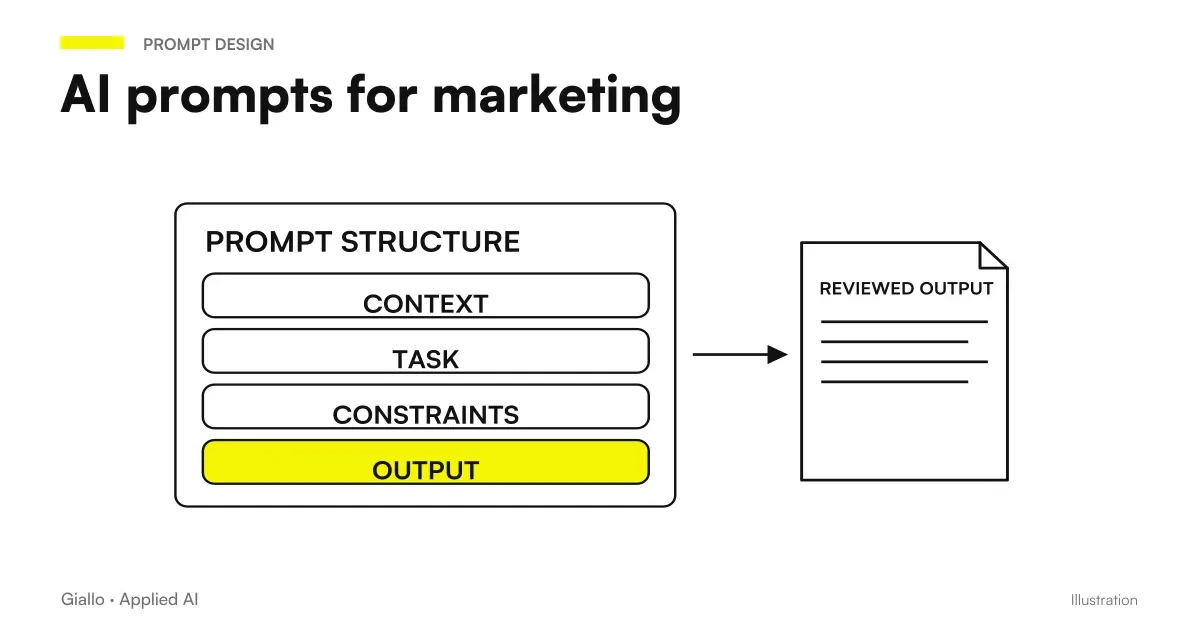
With this material the assistant writes drafts that resemble the client, and the copywriter works on the angle and details instead of the blank sheet. Examples of prompts for copy and campaigns are in the guide to AI prompt for marketing; the entire entry of a new customer is described in the guide on onboarding customers with AI.
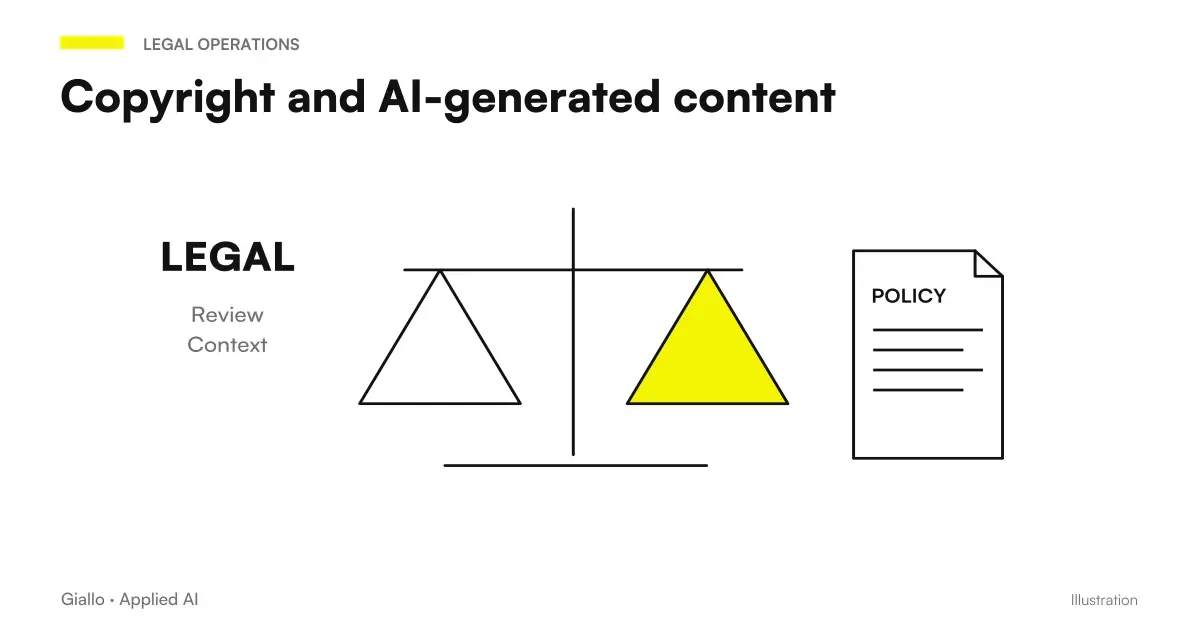
The last step also has a legal reason. Since autumn 2025 copyright law protects works created with the aid of artificial intelligence only if they are the result of the intellectual work of the author (Law 633/1941, Art. 1). Keeping track of briefs, revisions, and creative team choices helps prove it; the rest of the theme is in the guide on copyright and AI-generated content.
The monthly report: the numbers from platforms, the comment from the account
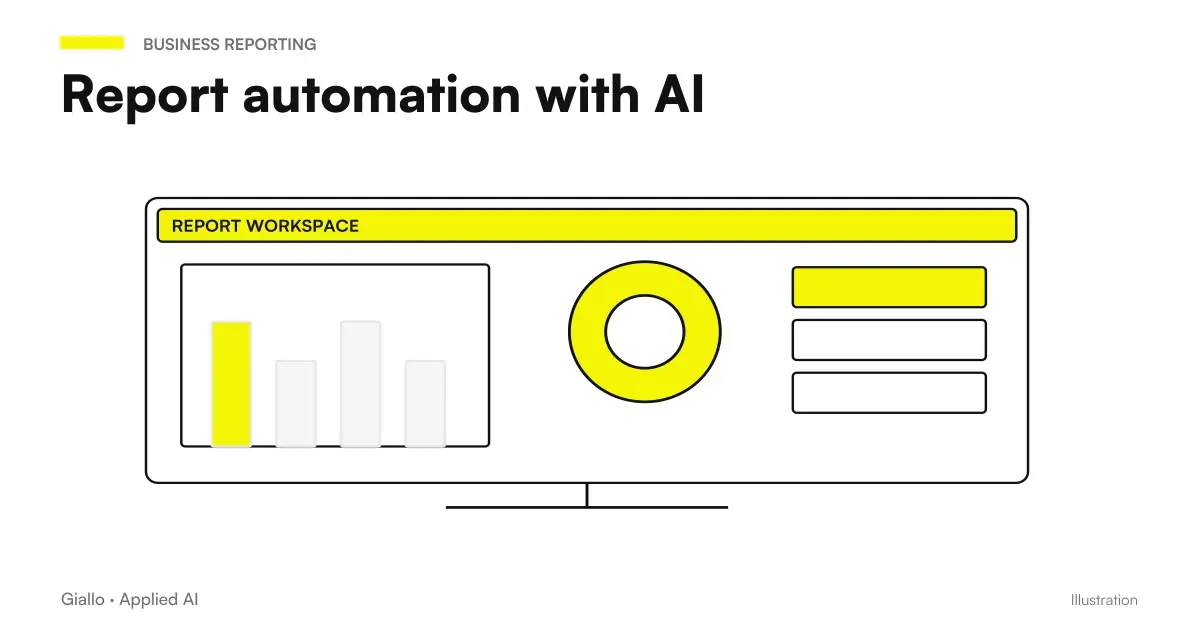
The report is the job that lends itself most to automation, because every month it has the same structure: expose the data from Google Ads, Meta, Analytics and the customer's CRM, put them in the table, write what happened. The mechanical part makes it an automatic flow. The written part can draft a model, as long as it receives the data already calculated and does not have to count itself.
The limit is why. The model sees that the cost per contact has risen and tends to explain it, even when the cause is out of the data: a promotion of a competitor, the site of the customer stopped for two days, a change in the way of counting conversions. The comment signs the account, which adds context and next steps. The flow of data, step by step, is in the guide on report automation.
Since late August 2026 many agencies have one more source to add to the report: ads on ChatGPT, which can be bought self-serve in Italy too. They go into the report under the same rules, but with no history and no industry benchmarks, as explained in our comparison ChatGPT Ads vs Google Ads.
Newsletter, SMS and customer data: consent and chain of managers
Many agencies manage newsletters, email sequences and SMS campaigns for customers. The Art. 130 of the Privacy Code requires consent for commercial communications sent by email, SMS, MMS or automated call systems. The exception concerns the direct sale of products or services similar to those who left the email during a purchase, if they were informed and did not object, and each message must remind them that they can oppose in a simple and free way. For telephone calls with operator and paper mail instead counts the public register of oppositions.
For automation the consequence is simple: the sequence starts only if there is the right consent in the CRM, or if the contact really falls under the exception. The model must not infer consent from an ambiguous conversation or form.
Then there is the role of the agency. When processing customer data on its behalf it is normally responsible for the processing, and works on the basis of a contract, or other legal act, with the holder as provided for by the Art. 28 GDPR. If you use an external AI service for that job, that provider enters the chain as an additional manager, and needs the written permission of the holder, specific or general. A summary is in the guide on AI and GDPR; your contract verifies it with the privacy consultant.
Deep fakes and labels: AI Acts and rules of Google and Meta
Article 50 of the AI Act distinguishes roles. Suppliers of systems that generate synthetic content must mark them in a machine-readable format; for systems already on the market before 2 August 2026 the Omnibus regulation on AI allows time until December 2, 2026. Those who use those systems, such as an agency, must instead make known when spreading a deep fake: an image or audio or video content generated or manipulated that resembles real people, places or events and would seem authentic.
For texts the obligation relates to those published to inform the public about matters of public interest, and falls if there has been a human review and someone has editorial responsibility for it. For works that are clearly creative or satirical, it is enough to point it out so as not to hinder its fruition. The platforms, meanwhile, have their own rules, to be rechecked often because they change.
Google Ads: the "AI label" setting
Google explains that the AI rules of the European Union, India and New York require in certain cases to declare assets generated or modified with AI, and offers a setting to label them. In campaigns aimed at the European Union, ads with labeled assets also show a visible label; in some cases the label applies Google and cannot be removed. The same support page specifies that the approach does not ensure compliance with the rules.
Merchant Center: titles, descriptions and product images
For titles and descriptions written with generative AI Merchant Center asks for structured attributes structured_title and structured_description, with the digital source type "trained_algorithmic_media". The generated images must contain the IPTC DigitalSourceType metadata, which should not be removed (Merchant Center Guide).
Meta: the label «AI info»
Meta shows the "AI info" label in the "About this ad" section of ads created or significantly modified with its own generative tools, and has announced the automatic detection of ads made with third-party tools through industry standard signals (Meta's announcement).
In practice, an extra column is needed in the editorial plan: for each asset, whether it is generated, modified with AI or original. Without that information, when you load the campaign no one knows what to label anymore.
New public access to SynthID Detector. The control concerns compatible watermarks, so it must be integrated with file provenance, authorizations and editorial verification: the absence of a signal does not certify that the content is authentic.
Two agency situations: a catalogue of two thousand products and a testimonial that does not exist
The catalogue to rewrite. An e-commerce customer asks to rewrite the tabs of two thousand products for Google Shopping. The assistant starts from the technical data of the management software and the brand book, writes titles and descriptions, and the stream loads them into the feed with the structured attributes that Merchant Center asks for for the generated texts. The team sample-checks the cards with measurements, materials and claims, because that's where a model most willingly invents. The generated set images remain with their metadata.
Video with satisfied customer. A chain of beauty centers asks for a video in which a customer tells the results of a treatment. An instrument of generation would produce it in an hour, with a face that does not exist. A video like this can fall between the deep fakes of the AI Act, and still tells an experience that no one has experienced. The agency proposes to shoot with real customers who have given consent and uses AI for editing, subtitles and versions for different formats.
Where AI Loses Credibility to an Agency
- Texts that sound like everyone's, because the brand book wasn't there and the model filled the void with average phrases.
- Numbers invented in copy: growth percentages, customers served, guaranteed results.
- Customer data glued into free tools, out of any agreement with the holder.
- Report with plausible and wrong explanations, sent without the account having read them.
- Realistic synthetic people in ads and social, without statement.
The case study of a site for a Google Ads agency starts from the second point: the advertising market is crowded with identical promises, and for that site the choice was not to exhibit bogus percentages or inflated success cases, because credibility comes from the precision with which the work is described. It also applies to texts that an agency writes with AI for its customers.
In design teams, the general availability of Figma Design Agent and Integrated Weave Tools It also changes the consumption of credits. Before planning production, it separates the Design pool from Weave standalone and verifies the cost of actual operations.
Where to start if the agency has five people and twenty customers
The first step is internal: a policy that tells which AI tools are used, with which data and who rereads what, as explained in the guide to corporate policy on the use of AI. Then the operational brand book for the main customers, then the automatic report, which has the same pattern for everyone. The labels and column on the origin of the assets enter the editorial plan immediately, because they cost little and over time become difficult to rebuild.
An agency sells judgment: the AI leaves it more time to exercise it, as long as the rules write down who responds to them. If you want to set briefs, reports, and lead streams on the tools you already use, write to us from the page AI for B2B services.
Giallo Studio guides: methodology and sources
How we apply it in the company
Related resources
 AI marketing prompts: copy, campaigns and content
 Report automation with AI: updated data without manual work
 Copyright and AI-generated content
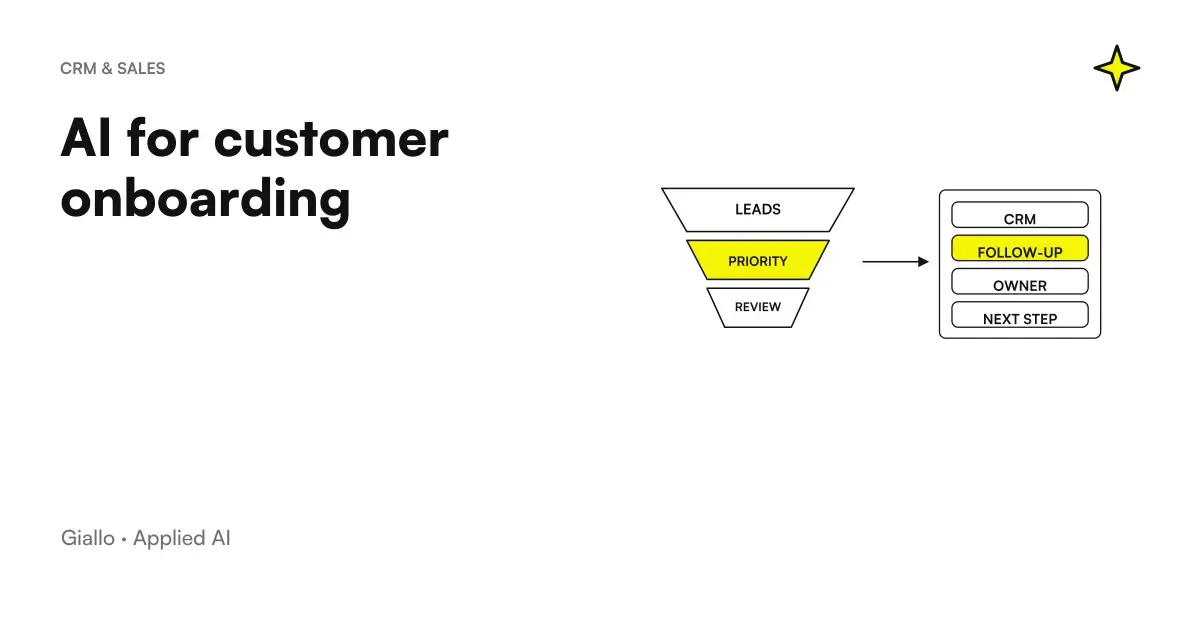 AI for customer onboarding: automate the first moment that matters
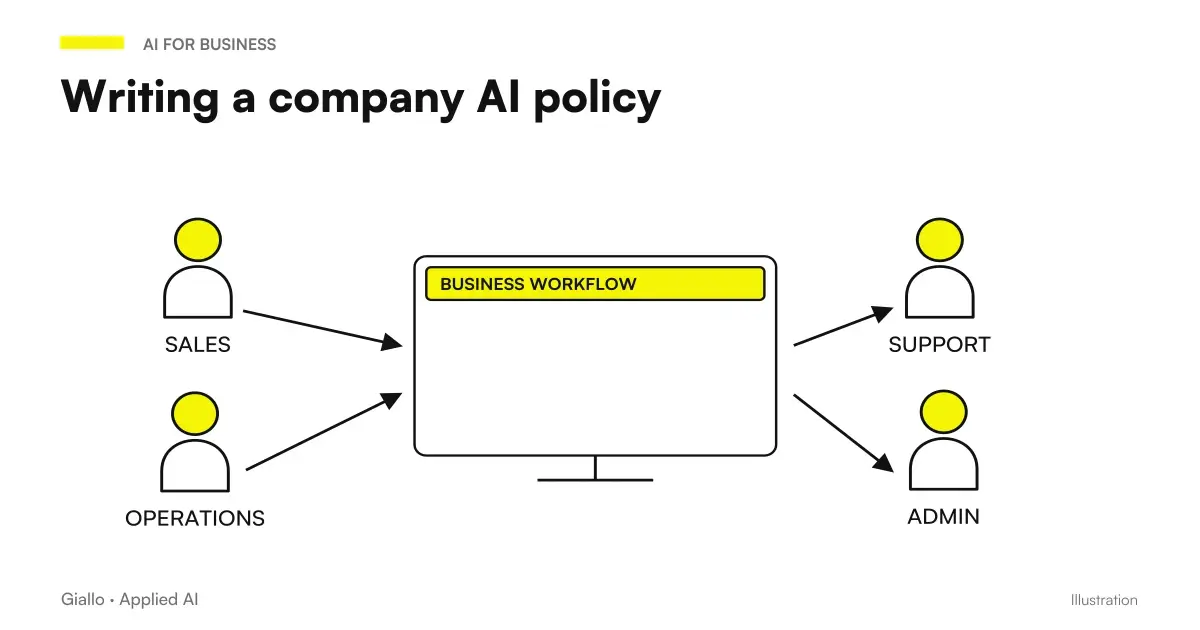 Corporate policy on the use of AI: how to write it
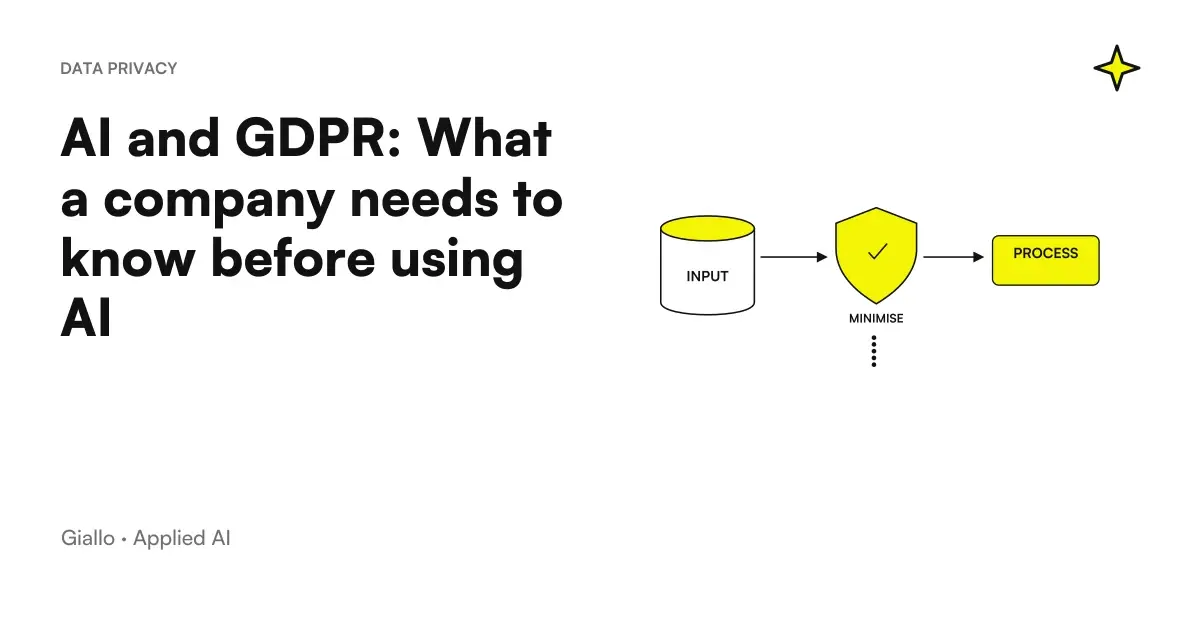 AI and GDPR: What a company needs to know before using AI
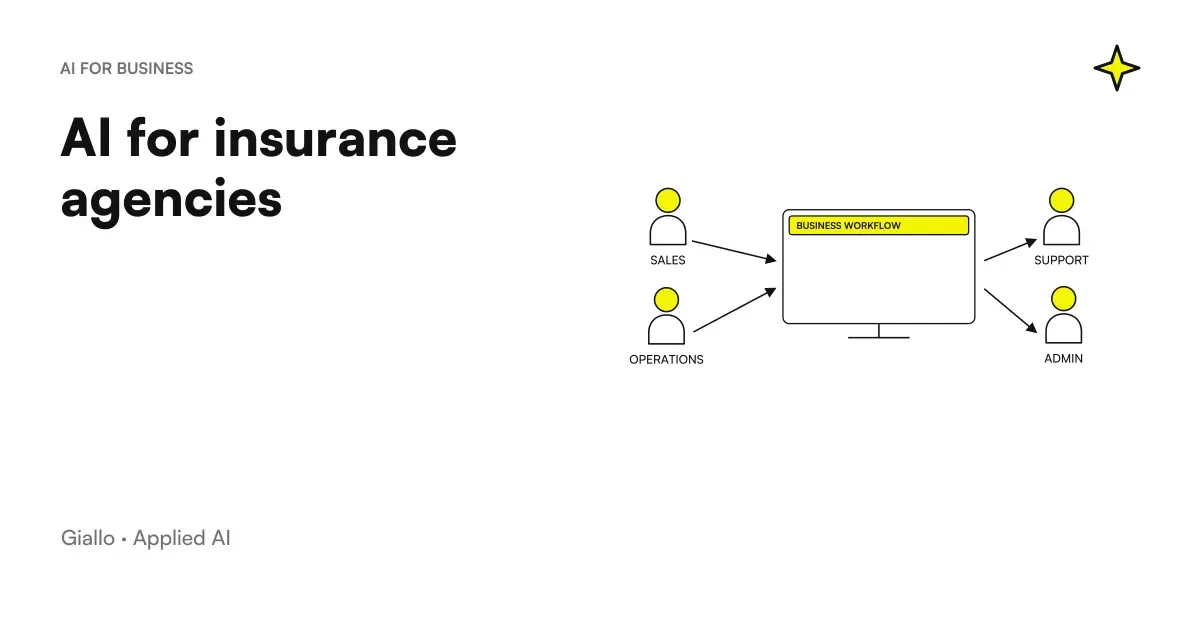 AI for insurance agencies: renewals, quotes and complaints
AI by sector
The same reasoning, applied to the other areas we follow.
- AI for procurement and supplier management
- AI for travel agencies: quotes, packages and assistance to travellers
- AI for wedding planners: suppliers, deadlines and guest data
- AI for automatic appointment scheduling
- AI for veterinary clinics: recalls, prescriptions and pet owners
- AI for craftspeople: custom quotes, job orders and electronic invoicing
- AI for staff shift scheduling
- AI for insurance agencies: renewals, quotes and complaints
- AI for removals: inventory, quotes, permits and damage
- AI for car rental: renter fines, contracts and return damage
- AI for technical firms: surveyors, architects and engineers
- AI for driving schools: enrolment, lessons and exam reminders
FAQ
Do I have to tell readers that content for a client was created with AI?
It depends on the content. Article 50 of the AI Act requires disclosure of generated or manipulated images, audio, and video that appear authentic, and of texts published to inform the public about matters of public interest, unless they undergo human review with editorial responsibility. Promotional copy reviewed by the team usually does not fall into the second category; a video featuring a synthetic person who appears real may fall into the first.
Should AI-generated images be tagged in Google and Meta campaigns?
Google Ads offers a setting to label assets created or modified with AI and, in campaigns aimed at the European Union, shows a visible label on the ad. Meta applies the "AI info" label to ads made with its generative tools and those detected with industry standard signals. Google itself specifies that the setting does not guarantee compliance with the rules.
Does an automatic newsletter for a customer always require consent?
For commercial emails and SMS messages, the Italian Privacy Code requires consent, with an exception for email only: direct sales of similar products or services to someone who provided their email address during a purchase, provided they have been informed and have not objected. The automation must read consent from the client’s CRM, rather than infer it.
Can I use AI tools on my client's customer data?
Only within the agreements with the client. When the agency processes that data on the client’s behalf, it is normally a data processor, and involving another provider requires written authorisation from the data controller under Article 28 of the GDPR. Check the contract and tools with your privacy adviser.
Are texts and graphics created with AI protected by copyright?
Copyright law, amended in 2025, protects works created with AI assistance if they are the result of the author’s intellectual work. It is worth documenting the team’s briefs, revisions, and creative choices, and specifying in the client contract how AI tools are used and who owns the materials.
Can AI write the monthly customer report on its own?
It can draft the commentary if it receives data already extracted and calculated from the platforms. The account manager writes the reasons for changes, the client’s context, and the next steps, because the model tends to explain even things that are not present in the data.