
AI for insurance agencies: renewals, quotes and complaints
AI for insurance agencies: prepare motor liability renewals, quote requests and complaints automatically, while advice remains with the intermediary.
Reading time: 9 min
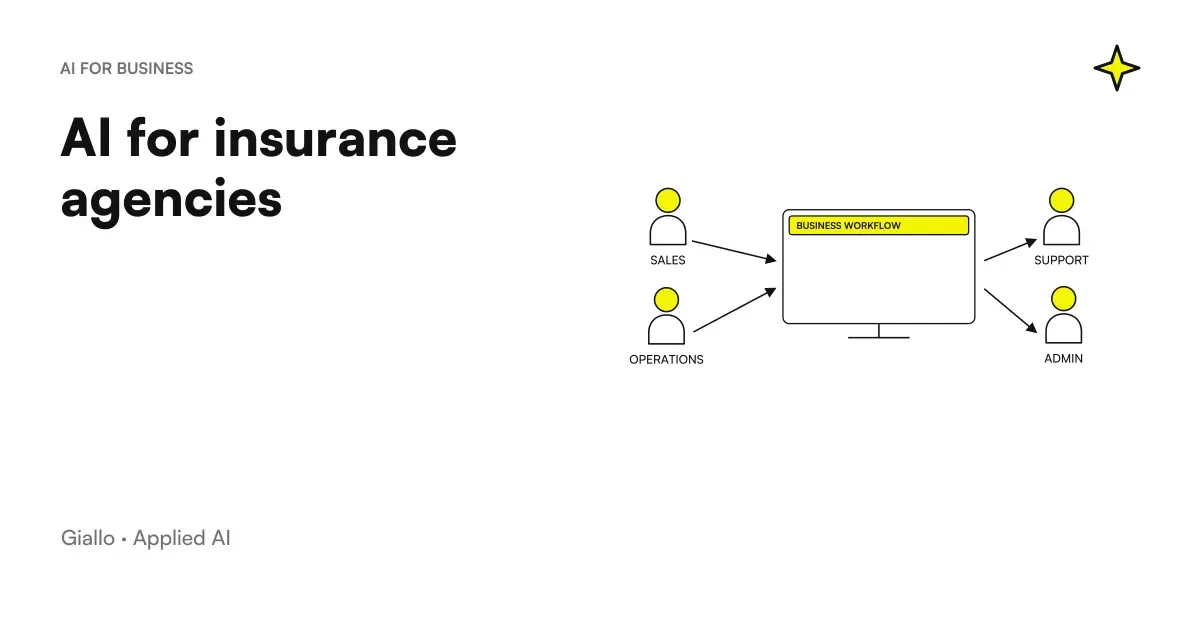
In an agency the AI for Insurance Agencies serves to govern the daily flow: understand whether a message is a request for quote, a variation, a claim or a complaint, prepare the questionnaire on the requests and needs of the customer, keep track of the portfolio deadlines. It's no use choosing the policy over the middleman.
Reason is written in Private Insurance Code. Article 119-ter asks the distributor, prior to the conclusion of the contract, to acquire the information from the contractor to identify requests and needs and to propose only contracts consistent with them; when there is advice, asks for a personalized recommendation with the reasons for the choice. A chatbot that "advises" a guarantee enters this perimeter, and the responsibility remains with the agency.
Here you will find where automation helps an agent or broker, with the rules on complaints and renewals that the system must comply with.
In summary
- In the agency the AI makes more in sorting: distinguish quotes, variations, claims, cancellations and complaints and pass them to the right person with the data already extracted.
- He can prepare the questionnaire on requests and needs and summarize the company's documentation, but the proposal consistent with those needs and the possible recommendation remains of the intermediary.
- The RC auto lasts one year and does not renew tacitly: the agency's memos flank the notice of expiry that the law places on the company.
- A complaint is not just any email: for agents, the leading company manages it, the brokers manage it themselves, and the dissatisfied customer can turn to the Insurance Referee.
- Health questionnaires and health data should not be collected by a chatbot: they are special categories of personal data.
Inform yes, recommend no: where the Insurance Code stops the assistant
The distinction that matters is between information and advice. Paragraph 1 of article 119-ter asks to acquire the information useful to identify requests and needs and to give objective information about the product in an understandable form; paragraph 3 describes the advice as a personalized recommendation that explains why a contract is the most suitable. The first job can be prepared with the help of a system. The second is the work of the intermediary, who responds to it in the first person.
What an AI assistant can do in the agency
- Recognize the type of request and open the right practice
- Ask the questions of the questionnaire on the requests and needs chosen by the agency
- Summarize in simple words the company documentation, indicating the page from which it takes all information
- Collect booklet, license or property data for quote
- Remember deadlines and missing documents
What remains of the intermediary
- Assess whether the proposed contract is consistent with the customer's needs
- Give personalized recommendation, when there is advice
- Tell a customer if a claim will be paid
- Responding to a Complaint
- Treating health questionnaires and medical documents
The practical problem is that a linguistic model tends to respond anyway. If a client writes "does kasko or crystal suit me?", the assistant must collect the information and pass the conversation to a person, without choosing. This rule should be written in the instructions and tested on real questions before opening the channel to customers; if the channel is WhatsApp, how does an assistant work on that channel and when convenient is explained in the guide to WhatsApp chatbots for businesses.
Estimates, variations, claims, complaints: sorting agency mail
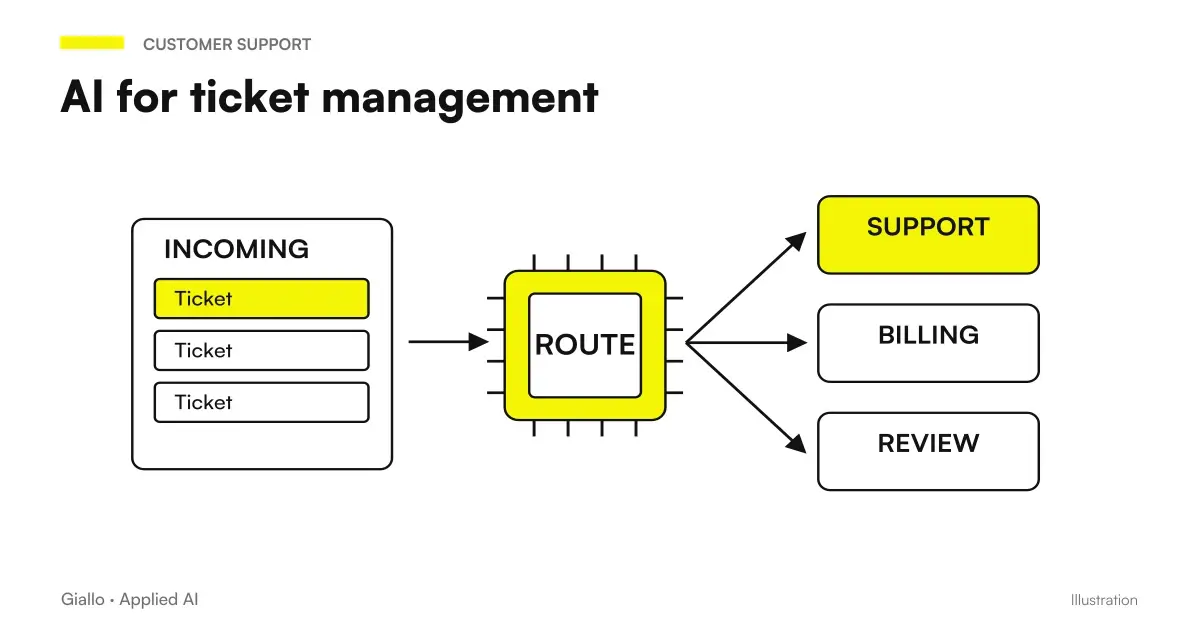
The day of an agency comes from different channels: email, PEC, WhatsApp, phone, company portals. The first useful automation is a classifier that reads every message, understands what it is and extracts the data that is needed. It is the same principle as the ticket management with AI, applied to a policy portfolio.
| Message Type | Example | What the System Prepares | Who takes care of it |
|---|---|---|---|
| Request for quote | "I bought a used car, how much does it cost to insure it?" | Vehicle and contractor data sheet, needs questionnaire | The contributor preparing the proposal |
| Change in policy | Change of vehicle, residence, driver | List of documents to be asked and draft of the request to the company | The agency, with the procedures of the mandate |
| Left-hand complaint | Photo, friendly finding, counterpart data | Sorted record with date and place of the event | Who Follows the Lefts, to the Company |
| Cancellation or Withdrawal | Customer letter or PEC | Verification of the policy concerned and the dates | The agent, who decides whether to recall the client |
| Complaint | Complaints about late repayment or behaviour | Immediate registration and forwarding according to the procedure | The leading company for agents, the broker for himself |
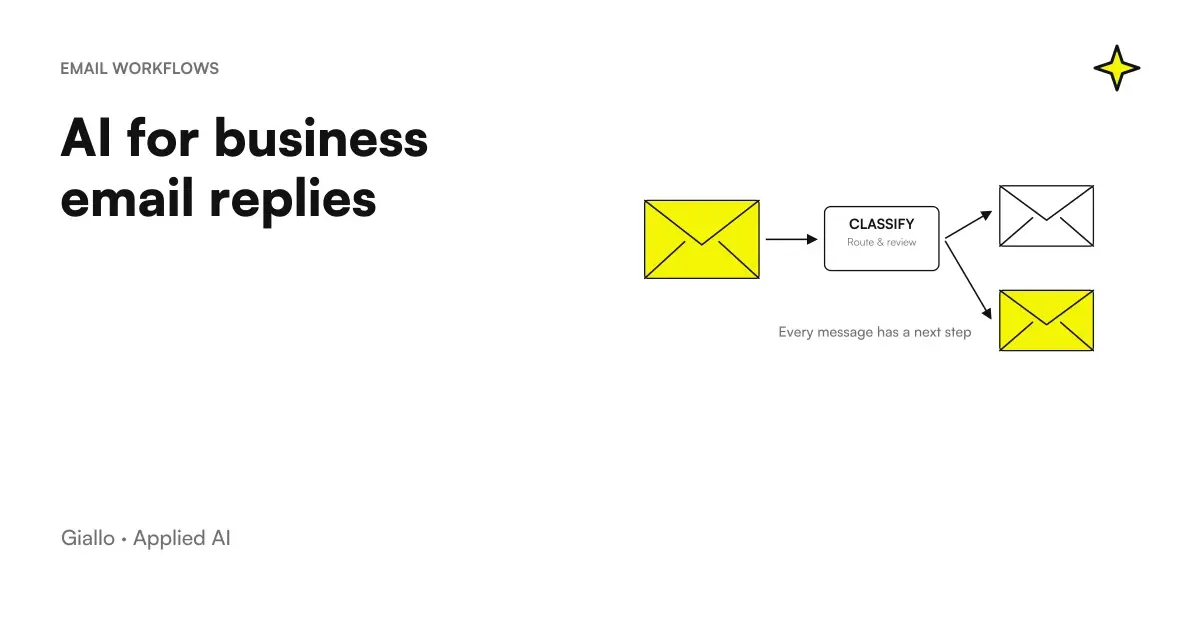
The right column weighs more than the others. The system may also prepare the answer to a frequent question, but a cancellation or complaint must arrive at the right desk immediately. For the answer part there is the guide on how AI responds to business emails, and the demo of a AI Agent for Business Emails shows how to set the sorting.
RC car renewals: no tacit renewal, and the expiration notice is up to the company
For the RC car the Article 170-bis of the Code It sets precise rules. The contract lasts a year, or a year more than a fraction if the policyholder so requests, is terminated at the expiry and cannot be tacitly renewed; the termination at the expiry also applies to ancillary risks guaranteed in the same contract or in one stipulated at the same time. The company must notify the policyholder of the expiration with at least 30 days notice and keep the warranty up to the effect of the new policy, no later than the fifteenth day after the expiration.
For the agency each deadline is therefore a contact not to be missed. A system connected to the management system can prepare every week the list of expiring policies, report customers who have not responded to the first message and write a draft with the data to verify: vehicle, drivers, any changes. The message starts after a person has checked it, and does not promise conditions that the company has not yet confirmed.
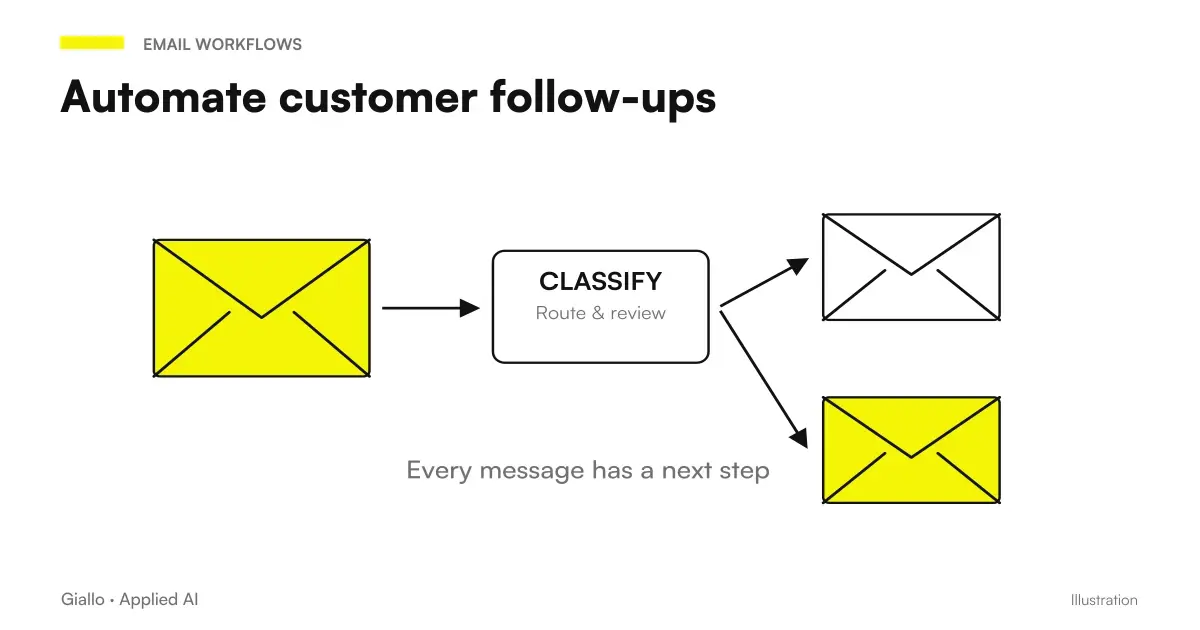
The same applies to unanswered quotes. The reminder sequence described in the guide to customer follow-up automation It works in the agency if the rules on when to stop, and on who to call back, the owner decides.
Complaints: recognize them immediately and send them where the procedure wants them
On complaints the rules change with the section of the register of intermediaries. As the IVASS explains in FAQ on dealing with complaints from intermediaries, for agents (Section A) and direct producers (Section C) complaints are handled by the leading companies, even when they concern employees and collaborators. Brokers (section B) have their own procedure and record complaints about the models under ISVAP regulation 24/2008.
On the customer's side, the first step is to write to the company's complaints office, which must respond within 45 days; without answer, or with an unsatisfactory answer, you can go to IVASS. From 15 January 2026 you can also resort to the Insurance Referee: the appeal, against a company or an intermediary, only occurs online after a complaint has been unanswered within 45 days or with an unsatisfactory response.
Life and health policies: the data that a chatbot must not collect
In life, injury and illness policies often enter health information. The Article 9 of the GDPR prohibits the processing of health data except in specific cases, such as explicit consent: an assistant who asks for pathologies or therapies in chat creates a treatment that the agency must know how to justify and protect. The prudent way is to leave health questionnaires and medical documents to the channels provided by the company.
Then there is the level of the company. The Annex III to the AI Act It ranks high-risk systems used to assess risks and determine prices for individuals in life and health insurance; with the Regulation (EU) 2026/1744 the obligations for these systems shall apply from 2 December 2027. For an agency the practical consequence is simple: pricing and risk taking remain in the company's tools, and a home-built score on those customers is a bad idea. A picture of the categories is in the guide to risk levels of the AI Act; for the privacy part there is the article on GDPR and artificial intelligence in the company.
Two examples: an agency with two mandates and a broker for SMEs
Monday morning of a multi-mandatory agency
Think of a provincial agency with two warrants and three collaborators. On Mondays the box collects weekend requests: in this example about forty messages between car RC quotes, photos of a pad, a cancellation via PEC and an email about a refund that does not arrive. The system sorts them by type, opens the practices and recognizes in the refund email a possible complaint: it reports it to the holder, who forwards it to the company's complaints office according to the mandate procedure.
For each quote the questionnaire on the needs starts with the customer, and the collaborator finds the card already filled out when he calls back. No response came out of the agency without a person reading it.
The renewal of a multi-risk for a small company
A broker follows a manufacturing SME who renews the multi-risk policy. Three offers from different companies arrive, each with its own lexicon for franchises, caps and exclusions. The system puts them in a table with references to the conditions of each and reports the differences with respect to the current policy.
The recommendation is written by the broker. If he presents his advice as based on an impartial analysis, paragraph 4 of article 119-ter asks him to base it on a sufficient number of contracts available on the market: the comparison prepared by the system documents a part of that work, the choice remains his.
The Most Expensive Mistakes for an AI-Used Intermediary
- Letting the chatbot answer "yes, you're covered" after reading the general conditions: whether a claim will be paid depends on the facts and the valuation of the liquidator.
- Have the system choose between two guarantees when the client asks for advice.
- Treating a complaint as a normal request for assistance, or leave it in the queue for days.
- Collecting in chat health data for life or disease policies.
- Loading the portfolio list into tools that don't offer written agreement on how they treat the data, perhaps to do a renewal analysis first.
From which process to start in the agency
The safest starting point is internal: mail sorting and renewals schedule. Neither of them talk to customers without passing by a person, and both are easily measured: messages taken care of in the day, expiring policies contacted before the date, complaints recorded the same day. The assistant who talks to customers comes later, with a written perimeter: gathers information, does not advise.
Many of these flows are common to other intermediaries and firms working for companies: you find them collected in the overview dedicated to B2B Services.
If you want an agent who sorts the agency box, recognizes complaints and claims, and prepares ballots for collaborators without ever answering for you on the covers, Let's start with how your messages arrive today.
Giallo Studio guides: methodology and sources
How we apply it in the company
Related resources
 AI for ticket management: shorter waits, more resolutions
 AI to Respond to Business Emails: How It Works
 Automate customer follow-ups: fewer missed contacts, more closed deals
 WhatsApp Chatbots for Business: How It Works and When It's Best
 AI Act: the four levels of risk explained
 GDPR and artificial intelligence in the company
AI by sector
The same reasoning, applied to the other areas we follow.
- AI for craftspeople: custom quotes, job orders and electronic invoicing
- AI for car rental: renter fines, contracts and return damage
- AI for automatic appointment scheduling
- AI for driving schools: enrolment, lessons and exam reminders
- AI for travel agencies: quotes, packages and assistance to travellers
- AI for businesses: a complete guide to getting started
- AI for marketing agencies: content, reports and AI labels
- AI for call centres: what changes?
- AI for procurement and supplier management
- AI for catering and banqueting: event quotes and customers
- AI for wedding planners: suppliers, deadlines and guest data
- AI for consultants: proposals, client data and project delivery
FAQ
Can an agency chatbot advise the customer which policy to choose?
No, if advice means a personalized recommendation: the Private Insurance Code defines it as advice and links it to the customer's requests and needs, collected and evaluated by the intermediary. The chatbot can ask the questions of the questionnaire and explain in simple words the insurer’s documentation, then passes the conversation to a person.
Can I automatically send reminders that motor liability insurance is expiring?
Yes, as an agency service, provided the message is checked and does not promise terms the insurer has not confirmed. Remember that motor liability insurance does not renew automatically and that the expiry notice is the insurer’s obligation: the agency’s reminder supplements it rather than replacing it.
How should AI behave when a customer writes a complaint?
It must recognise the complaint, record it, and immediately pass it to a person without responding to its substance. For agents, complaints are handled by the appointing insurer, while brokers have their own procedure; if the client does not receive a timely answer or is dissatisfied, they can contact IVASS or the Arbitro Assicurativo.
Can the chatbot collect the health questionnaire for a life or illness policy?
It is better to avoid this. Health data is a special category under the GDPR and can be processed only in specific circumstances, such as with explicit consent. Leave questionnaires and medical documents to the channels specified by the insurer, with their safeguards.
Can AI tell the customer if a claim is covered?
It can point to where the policy terms discuss that type of event. Whether the claim will be paid depends on the facts, the contract terms, and the assessment by whoever settles it: an automated answer creates expectations that the agency then has to manage.
Does the AI Act also cover insurance agencies?
It mainly concerns systems that assess risk and set prices for individuals in life and health insurance, classified as high risk with obligations applicable from 2 December 2027 after the omnibus regulation of 2026. For an agency the practical rule is to leave pricing and underwriting in the insurer’s tools.