
AI for removals: inventory, quotes, permits and damage
AI for removals: photo and video inventories, quotes with clear coverage, lift and parking restriction permits, and damage reported within eight days.
Reading time: 11 min
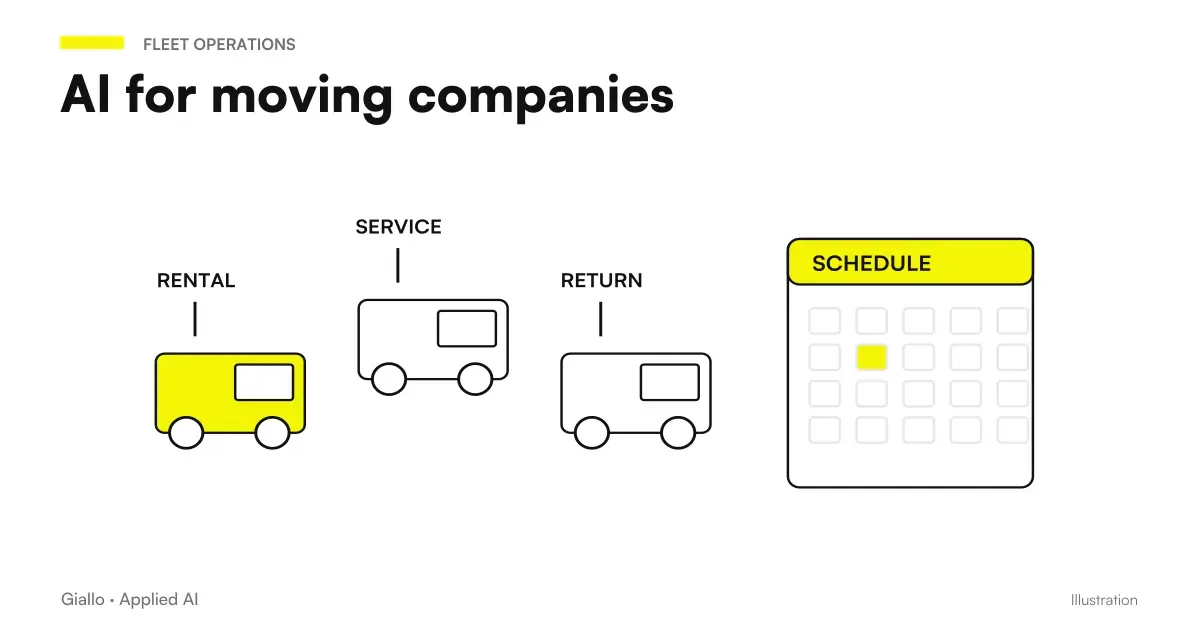
The AI for moving He works before and after the truck. First, when from a vague message ("how much does it cost to move a three-room apartment?") you have to get to an inventory, a quote and the dates of the permits. After that, when the customer reports a scratch on the table and needs photos, dates and an orderly answer. In between is the work of the teams, which no software replaces.
The price remains a decision of the holder, usually after a live or video call inspection. The assistant prepares the material: he asks the customer the right questions, obtains from the photos a first list of furniture and boxes, compiles the draft of the estimate with the company's list, builds the calendar of municipal permits and follows the complaints within the deadlines.
It also counts who signs that estimate. Companies that transport goods by road on behalf of third parties sign up to the the Provincial Register of Truckers at the DMV, with requirements changing according to the mass of used vehicles. These are data that the assistant reports in the documents and answers to those who ask for guarantees, without adding anything of his own.
In summary
- In a moving company the AI prepares the office work: questions to the customer, inventory from photos and videos, draft estimate, schedule of permits, handling of complaints.
- A starting inventory comes out of photos and videos; cellars, attics, contents of cabinets and narrow accesses still require a survey.
- The quote is completed using the company’s price list and inventory: insurance coverage and withdrawal clauses are written by whoever has verified them, not by the model.
- Permits for car stairs and no parking follow the rules of the single Municipality: in Milan the signs must be laid at least 72 hours before the ban.
- For damage not visible on delivery, the rules of the Civil Code on the Transport of Things provide for the complaint within eight days of receipt: the assistant collects photos and reports on time.
Questions to Ask Before Giving a Price
The typical request comes as follows: «I move at the end of the month, from Monza to Milan, how much does it cost?». To give a serious number you need about ten pieces of information that the customer doesn't think they need to give, and each extra message exchange is an opportunity to choose a competitor. An assistant on the site or on WhatsApp asks her one at a time, with a customer language and not a form, and passes you the full request.
Questions change with the type of work, and it is best to write them before configuring any chatbot. This is a starting script.
Housing: apartment or house
Departure and arrival floor, lift and its internal measurements, distance between the door and the point where the vehicle can stop, cellar, attic or box to be emptied, furniture to be dismantled and reassembled, heavy or delicate objects (piano, safe, paintings, chandeliers), possible dates and margin of flexibility.
Office or Shop
Number of workstations, paper archives and cabinets to be emptied, computer equipment to be disconnected and packed, times when you can work without stopping the activity, rules of the condominium or the shopping center on freight elevators and time slots, name of the customer's contact person for the day of the move.
Single object or small transport
Measures and indicative weight, photos of the object and the route (scales, curves, doors), floor and accesses, need of a tailor-made packaging, any value to be declared.
With these answers the assistant also does one thing that he forgets on the phone: he immediately says if the job falls within what you do and if the date is already full, without wasting anyone's time. As you go from a written message of jet to ordered data it tells the case of automatic quotations from free text.
Photos and videos of the rooms: how far the inventory made by AI goes
The Models multimodals They read photos and videos: they recognize a three-seater sofa, a bookcase, a four-door closet, a stack of boxes. From the video that the customer turns room to room the assistant gets a first load list, with the furniture to be disassembled and an estimate of the volume built on the standard measures that the enterprise uses in its estimates.
It is an estimate, and should be treated as such. The model does not see inside the cabinets, does not know if there are twenty boxes or sixty in the cellar, does not measure the curve of the staircase. The list then comes to the holder with the uncertain entries marked, and the price closes after the inspection or a video call in which the customer opens the cabinets and shows the accesses.
From photos and videos comes out well
- List of main furniture room by room
- Furniture to disassemble and reassemble
- Items that require special packaging
- A first volume estimate, to be confirmed
Needs inspection
- Contents of cabinets, cellars, attics and boxes
- Width of stairs, curves and doors
- Real distance between gate and staging point
- State of old or already ruined furniture
The last entry counts more than it looks. Photos taken before loading, with date and time, are also the documentation you'll need if after delivery comes a dispute.
The Written Quote: Voices, Covers, and Sentences That AI Doesn't Have to Invent
The draft quote is the point where AI saves the most time and risks doing the most harm. It saves time by filling in repetitive items from the inventory and price list; it causes harm when it fills gaps with plausible statements about insurance, liability and withdrawal. The general method is in the guide to how to create quotes with AI; for a move it is better to decide in advance where each line comes from.
| Quote entry | Where does the assistant get it from | Who confirms it |
|---|---|---|
| Volume and load list | Photo and video inventory, corrected after inspection | The holder or foreman |
| Packaging, disassembly, assembly | The company’s price list and furniture listed in the inventory | The holder |
| Means and team | Volume, plans, accesses, distance | Who organizes the teams |
| Autoscale, Permits and Employment Fee | Addresses, dates and rules of the Municipality | The office, after the verification on the website of the Municipality |
| Temporary Storage | Customer request and price list | The holder |
| Insurance coverage and declared values | Standard text approved, never generated | The holder with his insurer |
| Conditions, withdrawal, payment | Standard text approved, never generated | The holder with his consultant |
The last two lines have a precise reason. If the rules of the transport of things apply to the contract, the Civil Code makes the carrier liable for loss and damage from the moment it receives the things to the one in which it returns them (Art. 1693) and limits compensation to 1 euro per kilogram gross weight in domestic transport, except for wilful intent or gross negligence (Art. 1696). With that roof, a 15-pound TV is worth 15 euros. Those who want to offer more do so with written coverage along with their insurer, not with a sentence that the model seemed reasonable. What rules apply to your contract, which also includes packaging and assembly, check it with your consultant.
The same applies to withdrawal. The Consumer Code excludes it, in distance contracts and those signed outside business premises, for the transport of goods when the contract provides for a specific date or period of execution (Article 59(n)). If the exception covers a quote accepted on WhatsApp or signed at the customer's home during the inspection is a legal assessment: the assistant uses the approved text and passes the questions on the withdrawal to the holder. For signature acceptance from the phone there is the guide on contracts and digital signature in app.
Autoscale and no parking: the calendar of permits, with the example of Milan
Each municipality has its own rules for temporary occupation of public space, and an assistant must not take them for granted. The page of the City of Milan shows how detailed they are: occupations up to 14 days for removals require a concession and payment of the Single Canon, and the application goes to the local police permit office competent by territory.
If there is a need for no-stop signs, the Municipality recommends sending the request at least 4 days before the start of the occupation. The signs must be approved; they are produced and laid by the permit holder at least 72 hours before the ban, and the laying must be communicated to the zone command, because the ban becomes operational after the verification of an agent (City of Milan). Inside Area C the vehicle must comply with the access requirements; inside a ZTL, with the application must be submitted the vehicle registration card.
Lined up, these rules become a calendar for every job. From the address and date the assistant obtains the deadlines (question, laying of the signs, communication to the command), prepares the draft of the request with the data of the medium and reminds it to whom it must sign it. If the address is really in a ZTL it is verified by a person on the maps of the Municipality: it is the type of detail on which a linguistic model willingly errs. For practices that are repeated, what is said about the Document Automation, and the same calendar can keep the deadlines of the vans, as one Fleet Schedule.
After delivery: reserves, photos and the eight days for hidden damage
The most delicate moment comes to unloaded truck. For the transport of things the Art. 1698 of the Civil Code establishes that the receipt without reservation, with payment, extinguishes the actions towards the carrier, except for wilful misconduct or gross negligence. Actions for partial loss or failure not recognizable on return, if the damage is reported as soon as known and no later than eight days from receipt, remain possible.
This is where a flow arises that the assistant handles well. On delivery the foreman photographs the reassembled furniture and has the cargo list signed, with space for reserves. The next day the customer receives a message inviting him to check the open boxes and explains how to report damage. If the report arrives, the assistant collects photos and description, joins them to those made before loading and prepares for the holder a card with dates and material. The answer to the customer, and any admission of responsibility, is decided by the holder.
Two example removals: a three-room apartment in Area C and a complaint on the fifth day
The three-room apartment on the third floor without elevator. A family writes in early June about moving at the end of the month from a three-room flat on the third floor without a lift, inside Area C in Milan. The assistant asks about access, receives a video of the rooms and prepares an inventory with three uncertain items: the cellar, a fitted wardrobe and an upright piano. It suggests a video survey, after which the owner finalises the price including the furniture lift. Working back from the moving date, the assistant schedules the street-occupation application well ahead of the recommended 4 days, placement of signs within the preceding 72 hours, and checks on the vehicle’s Area C requirements, according to the rules of the Municipality of Milan.
The broken chair discovered on the fifth day. A customer writes five days after delivery: opening a box he found the leg of a broken chair, with the outer packaging intact. The assistant confirms that the report is recorded, asks for photos of the chair and packaging and puts them next to those made to the cargo. The holder receives the card on the same day, within the eight days that the Art. 1698 predicts for unrecognisable damage on delivery, and decides with his insurer how to respond.
Where automation makes a moving business lose money
Price closed on the estimate of photos. The estimated volume of a video is wrong especially on cellars and cabinets. A fixed price without inspection is paid by the company on the day of loading, with an extra team hour or a second trip.
Permit rules taken from one municipality and applied to everyone. Request times, signs and ZTLs change from city to city. The assistant works with the rules of the Municipality of that move, written and updated by a person in the office.
Answers on Impromptu Damage and Liability in Chat. A wrong sentence about what the insurance covers, in the eyes of the customer, applies as a promise. On these issues the assistant uses approved texts or passes the word to the holder.
Teams booked twice on the most requested dates. If the agenda of the teams is not the only source of truth, the chatbot confirms availability that they do not exist. Before opening chat reservations, the agenda must be one.
Videos and customer addresses scattered everywhere. The videos of the interior of a house, the addresses and the codes of the door are personal data: they are in the management software of the enterprise, not in personal chats or in free tools. What happens to pasted data in AI services explains the guide on business data and privacy.
The first stream to be automated with two teams and a van
For a small business the most prudent order starts from what does not touch money and responsibility.
- Write the question script by move type and put it in the chatbot of the site and WhatsApp.
- Add the load list from photos and videos, always followed by on-site or video calls.
- Link the price list and inventory to the draft quote, with texts on coverage and terms already approved.
- Build the permit calendar for municipalities where you work most often.
- Close with the flow after delivery: photo, message of the next day, collection of reports.
The demo of the Automatic Quotes shows the transition from the brief to the draft; for lead, work organization and customer relationship there is the page AI for B2B services.
A move is often won or lost in the office: a question not asked, a permit requested late, a complaint left unanswered. If you want to put these steps in order, starting with the tools you already use, write to us from the page on automation of business processes.
Giallo Studio guides: methodology and sources
How we apply it in the company
Related resources
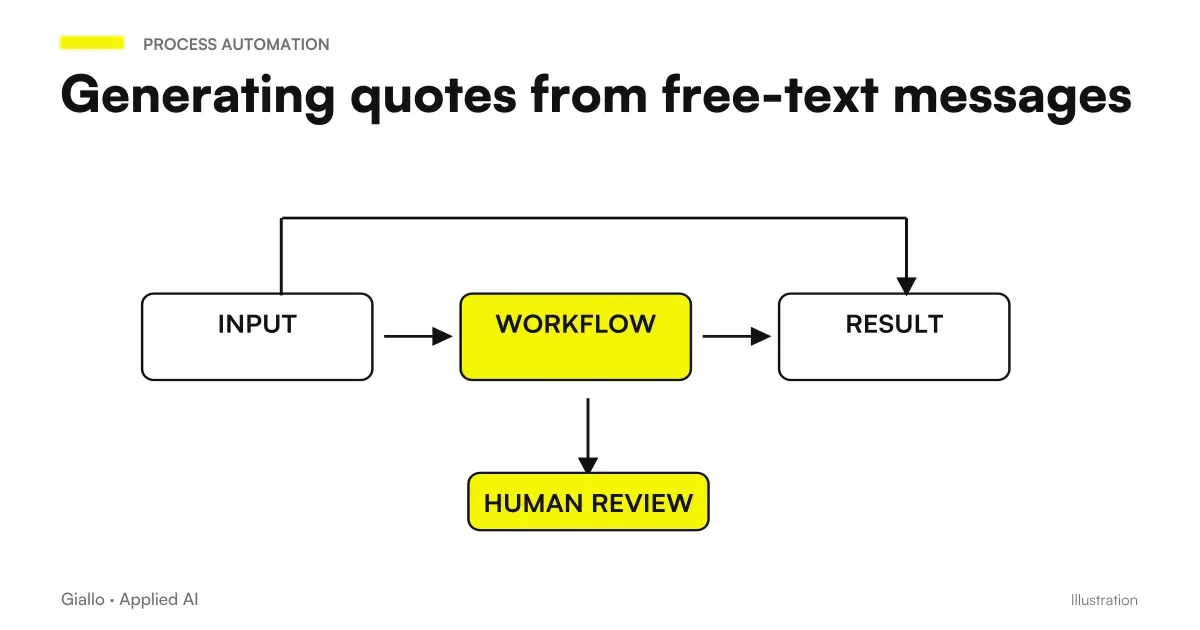 Automatic quotes from a free text message
 Multimodal AI: what it is and how it works
 Creating quotes with AI: how to speed up the process
 Contracts and digital signature in the app: how it really works
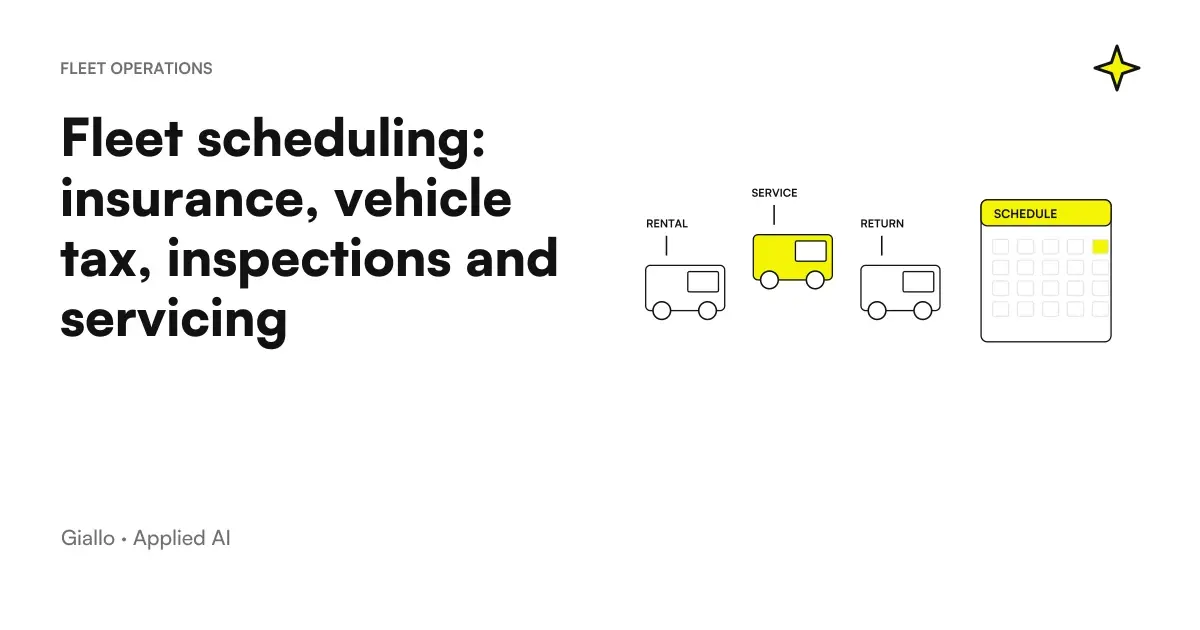 Fleet deadlines: insurance, road tax, inspections and servicing
 Document automation with AI: contracts, forms and PDFs automatically
AI by sector
The same reasoning, applied to the other areas we follow.
- AI for technical firms: surveyors, architects and engineers
- AI for staff shift scheduling
- AI for medical practices: reception, appointments and reminders
- AI for veterinary clinics: recalls, prescriptions and pet owners
- AI for wellness centres and spas: admissions, gift vouchers and packages
- AI for wedding planners: suppliers, deadlines and guest data
- AI for renovation firms: changes, SAL progress reports and site documents
- AI for procurement and supplier management
- AI for restaurants: reservations, allergens and responses to reviews
- AI for marketing agencies: content, reports and AI labels
- AI for human resources: concrete uses
- AI for travel agencies: quotes, packages and assistance to travellers
FAQ
Can I prepare a moving quote solely from the photos a client sends?
You can prepare a draft. AI derives an initial load list and volume estimate from photos and videos, but cannot see inside cupboards and cellars or measure stairs and doors. The price is finalised after a site assessment, even by video call; otherwise you pay for the difference on loading day.
Can the assistant apply for permission to occupy public land instead of me?
It can prepare the draft of the application and the timetable of the deadlines, but the application is submitted by the company according to the rules of the Municipality. In Milan, for example, the request for a move goes to the permit office of the Local Police and the parking ban signs must be laid in advance on the beginning of the prohibition. Each Municipality has its own time, to be verified on its site.
What should the quote state about liability for damage?
What you have agreed with your insurer and consultant, not a generated sentence. If the rules of carriage of goods apply to the contract, the Civil Code limits compensation to one euro per kilogram gross weight, except for wilful misconduct or gross negligence: for this reason it is advisable to clearly indicate coverage and declared values.
By when can a customer report damage after the move?
For carriage of goods, Article 1698 of the Italian Civil Code preserves the right to bring claims for damage not identifiable at delivery, provided it is reported as soon as it becomes known and no later than eight days after receipt. Visible damage must be noted as a reservation at delivery. Check with your adviser how this applies to your contract.
Can the customer who accepts the quote on WhatsApp withdraw?
It depends on the contract. The Consumer Code excludes withdrawal for the transport of goods when the contract provides for a specific execution date, but if the exception covers your move, which also includes packaging and assembly, your consultant evaluates it. The assistant uses the approved text and does not improvise answers.
Do moving companies need to be registered as road hauliers?
Businesses transporting goods by road for third parties register in the provincial road hauliers’ register at the competent Motorizzazione civile office, with requirements varying by vehicle mass. Clarify this with the Motorizzazione or your trade association: the assistant only needs the business’s registration details to include them in documents.