
AI for veterinary clinics: recalls, prescriptions and pet owners
AI for veterinary clinics: animal-specific recalls, electronic prescription requests and owner updates. Clinical decisions remain with the veterinarian.
Reading time: 9 min
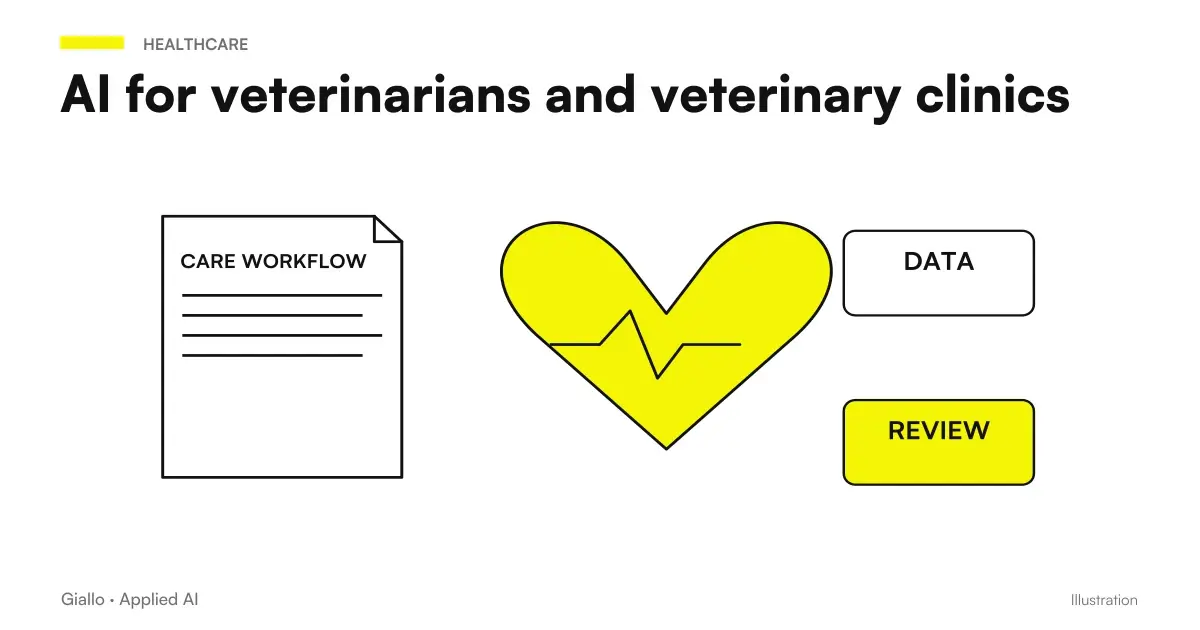
The AI for Veterinarians works with a different contact from every other healthcare practice: the patient does not write, call or read reminders. The owner does, and often has several animals, each with its own recalls, treatments and prescriptions. An AI assistant connected to the clinic’s business software can organise this complexity: vaccination and antiparasitic recalls for each animal, requests to renew prescriptions, updates during hospitalisation and bookings.
Difficult diagnoses, prescriptions, and conversations remain with the veterinarian. The European Regulation on Veterinary Medicinal Products spells this out explicitly: a veterinary prescription ‘is issued only following a clinical examination or any other appropriate assessment of the health status of the animal or group of animals by a veterinarian’ (EU Reg. 2019/6, Art. 105). No automatic assistant can skip that step.
In summary
- In veterinary medicine the assistant talks to the owner: a customer card can contain multiple animals, each with its own calendar of calls.
- The veterinary prescription in Italy is electronics: the assistant collects the request to repeat it, only the veterinarian issues it after his evaluation.
- Antimicrobial prescriptions are worth five days after release: notice to the owner cannot stay in the queue.
- Animal clinical data is not health data for GDPR; owner data remains personal data.
- Urgency, hospitalization and end of life remain conversations between people, and at the death of an animal all the reminders go Stop Now.
- The EU Medical Device Regulation is about human use: software that reads veterinary images does not pass through that certification.
One owner, three animals: the card that the assistant must read
In the management software of a veterinary clinic the customer card is a small tree: the owner at the top, under his animals, and for each animal species, age, microchip, vaccinations, ongoing therapies, interventions. An assistant who sends reminders must read this tree, not a phone number book. Otherwise the owner receives three messages on three different days, one per animal, and stops reading them.
Think of a family with a dog and two cats. The dog has the vaccination booster at the end of the month, one of the cats a check for the therapy that follows, the other nothing. The assistant sends only one message with two proposals: the two visits in the same afternoon, one after the other, or on separate days. What visits can be arranged the veterinarian has established first; the assistant applies the rule and updates the agenda when the owner chooses.
Each type of reminder has someone who decides its calendar and a time when it has to stop:
| Reminder | Who decides the calendar | When it stops |
|---|---|---|
| Vaccination recall | The veterinarian, animal for animal | When vaccination is recorded or the animal is no longer followed by the clinic |
| Pesticide treatment | The veterinarian, based on the animal and lifestyle | When the owner confirms or the plan changes |
| Control after an intervention | The surgeon, on discharge | After the check |
| Repeat prescription approaching expiry | The veterinarian who issued it | When the veterinarian decides whether a new assessment is needed |
| Any reminder of a deceased animal | None | Right away, as soon as death is recorded |
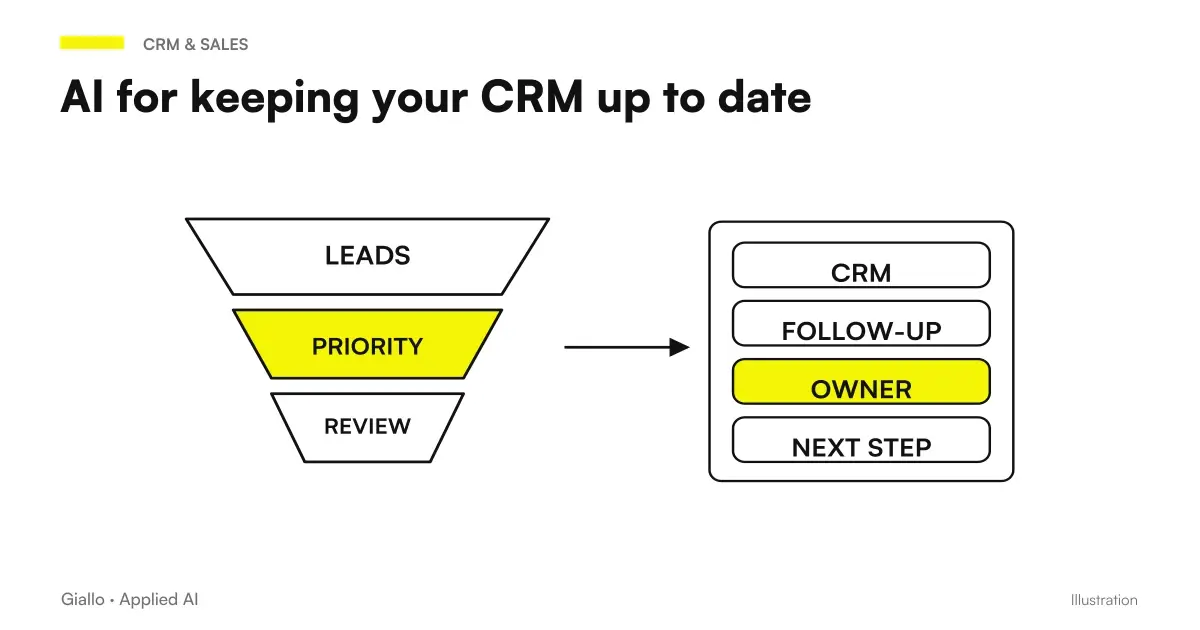
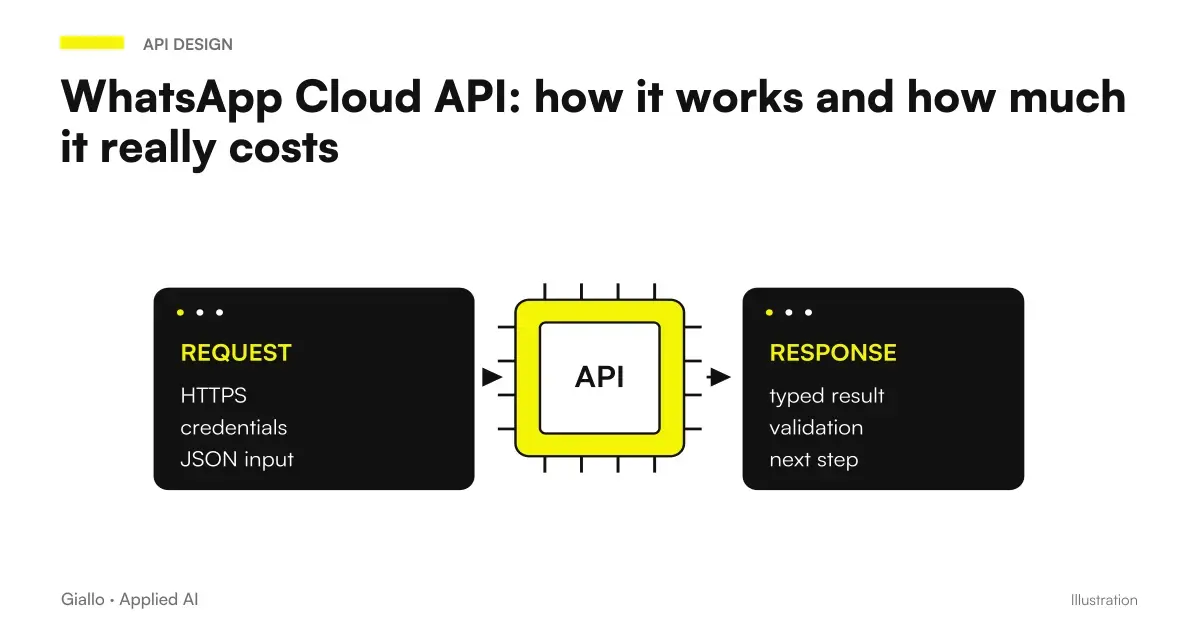
The link between message and tab is the same as a CRM Automation: the assistant reads the data, does not keep it in a separate sheet. On the channels, the most solid road to a clinic that sends many reminders is the official WhatsApp API, described in WhatsApp Cloud API.
Visits, vaccines, surgeries and exotics: book in a veterinary clinic
A veterinary clinic books very different things between them. A vaccination call takes up a few minutes of surgery, a first visit of a puppy much more, a sterilization one morning of the operating room plus the stay. The assistant can only propose times for the types of appointments that the clinic has described, with duration, veterinarian and room; everything else passes it at the reception.
Two questions must always be asked, before proposing a timetable: which animal and what species. Many clinics have a veterinarian who follows exotic animals, and the rabbit, parrot or turtle go into his agenda, not that of the first free colleague. Some keep time slots dedicated to cats, so as not to keep them waiting next to the dogs: if yours does, the rule must be written in the performance card.
For surgeons the assistant takes care of the organizational part: the time of acceptance in the morning, the preparation instructions written by the veterinarian sent word for word, the reminder of the day before. The discharge time is communicated by the staff after the intervention, not the assistant in advance.
"Can you renew my prescription?": what the assistant can do with an electronic prescription
It is the most frequent demand of animal owners with chronic therapies, and the one in which an automation must stop first. In Italy the veterinary prescription ‘is drawn up in electronic format, through the traceability information system’ (Legislative Decree 218/2023, art. 28). The same article sets the validity: six months for a repeat prescription, which can be used up to ten times during that period, and thirty days for a non-repeat prescription. Antimicrobial medicines remain subject to the five-day validity from issue required by the European regulation.
The route for the owner is described on Electronic Veterinary Prescription Website of the Ministry of Health: the veterinarian issues the prescription, the owner gives the pharmacist its number and PIN, and the pharmacist retrieves it from the information system and dispenses the medicine. The PIN changes for every prescription precisely to protect access.
What the assistant does
- Collects the request: which animal, which drug, for which therapy already in progress
- Link the request to the card and show the date of the last visit to the veterinarian
- Tell your veterinarian when a repeatable prescription is about to expire or has run out of uses
- Tell the owner number and PIN on the agreed channel, as soon as the prescription is issued
What Only the Veterinarian Does
- Decides if the evaluation you already have is enough or if you need a visit
- Issue the prescription in the system and choose whether to make it repeatable
- Change dosage, medication, or duration of therapy
- Answer questions about drug effects and interactions
For antimicrobials the order of priorities changes: with five days of validity, the message to the owner starts as soon as the prescription is ready, not in the evening reminder loop.
Owner data, animal data: what the GDPR says
A veterinary clinic manages clinical data in quantity, but they are not health data in the sense of the privacy regulation. The GDPR defines ‘health data’ as data ‘concerning the physical or mental health of a natural person’ (Article 4): the clinical history of a dog does not fall within the particular categories of Article 9.
That doesn't make the clinic free of everything. Name, telephone, address, payments and in general the information concerning the owner is personal data, with the rules as always: information, contract with the provider of the assistant, security measures. And if an owner chats about their health, for example an allergy or a pregnancy to ask if they can administer a drug, that is a health fact of their own: the assistant does not reuse it and passes it to the vet. The technical measures to be demanded by the supplier are in AI and Data Security.
The owner is also the physical person with whom the assistant dialogues, and since August 2, 2026 the AI Act asks that he be informed that he is interacting with an artificial intelligence system (Rule 50). The first message of the conversation is the right place to say it.
Urgency, hospitalization and end of life: the conversations that remain human
The message "He ate chocolate, what do I do?" He arrives in the evening, at a closed clinic. The assistant does not evaluate the quantity and does not suggest remedies: he/she recognizes the request, gives the number for the urgent needs of the clinic or the reference veterinary emergency department and notifies who is available. The words that trigger this passage are written by the veterinarian, and the list should be reread whenever a new case emerges.
Where the clinic has a veterinarian on call, the assistant can save him the first few minutes of the phone call. Along with the notice he sends him a summary in a few lines: species, name and age of the animal, what the owner wrote with his words, at what time, and the number to call back. It does not add hypothesis and does not rearrange the facts by gravity; the judgment on the case is that of the veterinarian who reads.
During a stay the owner wants news, often several times a day. The assistant can send updates written by staff at agreed times, for example after waking up from anesthesia or after the first meal. Prognosis questions become a call to the vet, not an automatic answer.
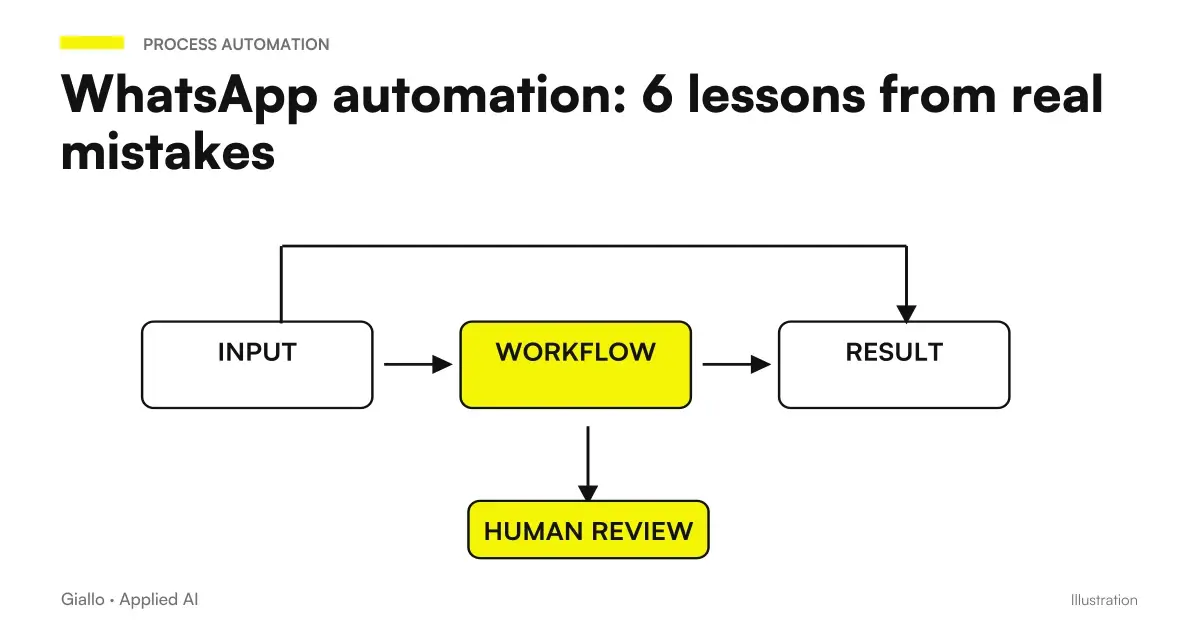
End-of-life care is not automated. After euthanasia or death, the assistant’s only task is to stop: no vaccination recalls, no antiparasitic treatment reminders, no loyalty messages. This is one of the most painful mistakes an automation can make, and a simple rule in the management software prevents it. Other typical automatic-message errors observed in real projects are collected in WhatsApp automation errors.
- The death record instantly stops all of that animal's reminders.
- The list of words of urgency is written by the veterinarian and contains the number to be called out of hours.
- Inpatient updates only start from texts written or approved by staff.
- Every prescription request goes into the veterinarian’s queue, with the animal and the date of its last examination.
- The first message says that an AI system responds and how to talk to a person.
- A person at the clinic re-reads the week's conversations as a sample.
Software that reads images: for animals the regulation on medical devices does not apply
There are AI tools that analyze x-rays, cytological examinations or dermatological images of dogs and cats. Before adopting them it is better to know one thing: the European Medical Device Regulation sets out the rules for ‘medical devices for human use’ (Article 1). The marking that in human medicine certifies a diagnostic software is therefore not the reference for veterinary ones.
It is up to you to ask the questions the notified body would ask in human medicine: what data the software has been validated for, what species and tests, with what known errors, where the uploaded images end up. How these models read the images is explained in Multimodal AI; in any case the interpretation and clinical decision remain of the veterinarian, exactly like the prescription.
The framework for the private health sector is on the page AI for Private Health, and for the human side of the problem it is worth reading how they deal with it Medical Studies. If you want an assistant that keeps recalls and prescription requests in order for each animal, connected to your clinic’s management software, Giallo Studio builds the missing piece and tests it on only one type of reminder before extending it.
Giallo Studio guides: methodology and sources
How we apply it in the company
Related resources

AI by sector
The same reasoning, applied to the other areas we follow.
- AI for staff shift scheduling
- AI for wedding planners: suppliers, deadlines and guest data
- AI for removals: inventory, quotes, permits and damage
- AI for procurement and supplier management
- AI for technical firms: surveyors, architects and engineers
- AI for marketing agencies: content, reports and AI labels
- AI for medical practices: reception, appointments and reminders
- AI for travel agencies: quotes, packages and assistance to travellers
- AI for wellness centres and spas: admissions, gift vouchers and packages
- AI for automatic appointment scheduling
- AI for renovation firms: changes, SAL progress reports and site documents
- AI for craftspeople: custom quotes, job orders and electronic invoicing
FAQ
Can the AI assistant renew a veterinary prescription?
No. In Italy, veterinary prescriptions are issued electronically by the veterinarian, and the European regulation on veterinary medicinal products requires a clinical examination or another appropriate assessment of the animal’s health before issue. The assistant collects the owner’s request, links it to the animal’s record and puts it in the veterinarian’s queue; the veterinarian decides whether an examination is needed.
How long does a veterinary prescription last?
Legislative Decree 218/2023 sets six months for a repeat prescription, usable up to ten times, and thirty days for a non-repeat prescription. For antimicrobial medicines, validity is five days from issue, as required by EU Regulation 2019/6. That is why the notification to the owner that an antibiotic prescription is ready must be sent immediately.
Are the clinical data of an animal health data for the GDPR?
No. The GDPR defines health data as those relating to the health of a natural person. However, personal data remain all information about the owner, from contacts to payments, and if the owner tells something about his health that data is his health data, to be treated as such.
How do you avoid sending a reminder for an animal that has died?
By linking the recording of the death in the business management system to an immediate stop on all reminders for that animal, and having the assistant check the record’s status before every send. A person at the clinic writes any messages of sympathy to the owner, not the assistant.
What does the assistant do if an owner writes that his pet is sick?
It does not evaluate the symptoms and does not suggest remedies. It recognizes the request, immediately indicates the number for emergencies of the clinic or the reference veterinary emergency department and notifies the staff. The veterinarian decides which words trigger this step.
Does a software that reads animal x-rays have to be certified as a medical device?
The European Medical Device Regulation applies to devices for human use, so that certification is not the reference for veterinary software. Before using one ask the manufacturer which data it was validated on and for which species; the interpretation of the image and the clinical decision remain with the veterinarian.
Does the owner need to know he's writing to an AI?
Yes. The AI Act requires that individuals be informed when interacting with an artificial intelligence system, with an obligation in place since August 2, 2026. The owner is a natural person: just say so in the first message and in the clinic’s privacy notice.