
AI follow-ups: keep track of every contact
How an AI system decides when to send a follow-up message, what makes it relevant and when marketing consent is required. With B2B examples.
Reading time: 9 min
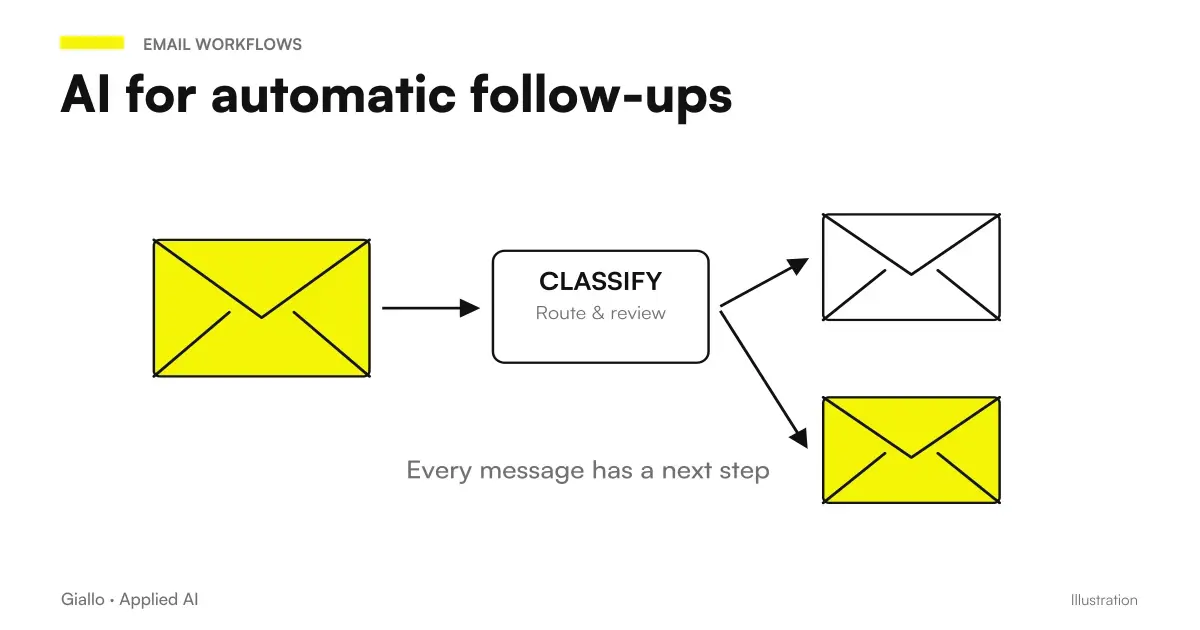
A negotiation is almost never lost due to explicit rejection. It gets lost because the quote remains unanswered, no one writes the second message, and after a few weeks the contact stops being a priority for anyone in the company. The AI for automatic follow-ups reads the status of a negotiation in the CRM and generates, at the right time, the message that would otherwise require a salesperson to remember to write it.
It is not a fixed-time sending. It is a system that observes a precise signal, such as an unanswered quote or an email opened several times without a reply, and prepares a message that refers to that specific negotiation, not an equal form for everyone.
In summary
- The follow-up starts from a signal in negotiation, not from a fixed calendar.
- Quality depends on how much real data the message quotes, not whether it is automatic.
- The stop rules are decided in advance and always apply, with no improvised exceptions.
- Responding to a customer request is not marketing: the legal basis is different and simpler.
- On long negotiations the follow-up becomes nurturing, not a repeated reminder.
The cycle that activates whenever a quote remains unanswered
An AI follow-up system always follows the same sequence of steps, whatever the final channel.
- Signal. The system observes CRM: an offer sent unanswered after a certain number of days, an email opened several times without a reply, a negotiation stopped for too long.
- Context reading. It reads contact name, company, service discussed, content of the latest offer and date of the last exchange: the ingredients that make the message specific instead of generic.
- Draft generation. He writes a message citing those details, in the tone that the company has only set once.
- Sending and Recording. The message starts from the address of the responsible salesperson, and the activity is recorded immediately in the contact card.
- Monitoring. The system looks at whether there is an opening, click or answer, and decides the next step: close, continue with another message, or report to the salesperson that a direct contact is needed.
Seven different silences, and no one deserves the same answer
Not every absence of response is the same. An offer just sent and a contact who opened the same email four times without writing anything tell two different situations, and a good system treats them differently.
| What Happened | What Message Makes Sense | What Makes It Specific |
|---|---|---|
| Offer sent, total silence | Ask if there is any need to clarify | Precise reference to the sent document |
| Email opened several times, no reply | It offers to respond to timely doubts | He cites the most likely topic of hesitation |
| Meeting done, no follow-up | Summarizes and proposes the next step | Points Really Discussed at That Meeting |
| Long-standing negotiation | Asks if customer priorities have changed | Real state of negotiation, not a generic reminder |
| Contact that never answered | Closing message, without insistence | Leave the door open without forcing |
| Closing date of the neighbouring bid | Remember the times, not just the date | Specific conditions related to that deadline |
| Customer already active, long silence | Proposes an update on the status of the report | Real history of the business relationship |
Why a message looks handwritten even if it isn't
The problem with automatic follow-up is never the automation itself: it is how unspecific the content is. A message with "Dear customer" instead of the name, or a vague reference to "our offer" instead of the service discussed, is recognized in the first line.
Four variables make the real difference: the correct names of the person and business, a precise reference to what was offered or discussed, a tone consistent with the business’s usual writing, and content that changes from one message to the next rather than repeating the same question. The second message in a sequence must not be a copy of the first with a different date: it can add something useful, such as clarification of a point that often raises questions in that kind of negotiation.
It is also worth distinguishing the channel. An email follow-up lends itself to containing a longer reference, such as the timely recall to a quote entry. A shorter message, thought to be read in seconds on a smartphone, works best when you just need to know if the contact is still interested before investing time in a new document. Choosing the channel based on the content, and not always using the same out of habit, reduces the risk of an important message getting lost between less relevant notifications.
The boundary that decides whether you need marketing consent
Here lies a common mistake: treating each follow-up as if it were a promotional communication, when often it is not at all.
A message responding to an offer requested by the customer himself is part of the execution of pre-contractual measures taken at the request of the interested party, one of the legal bases provided by the Article 6 of the GDPR that does not depend on consent to marketing. The customer asked for a quote: replying to him, even more than once, is part of the negotiation that he himself initiated.
The situation changes when the content stops covering that negotiation and becomes a proposal about something else, a new product, a service that the contact did not request. At that point you are in the field of promotional communication, where for already acquired customers the rule of so-called soft spam applies: the paragraph 4 of article 130 of the Privacy Code allows to write for products similar to those already sold without a new consent, but only if the customer has been informed of the possibility to oppose since the data collection and any communication remembers it. Keeping the two types of message separate, instead of sticking a business proposal into a negotiation follow-up, avoids having to apply to the whole stricter regime. For a broader picture on data processing in AI processes, read GDPR and artificial intelligence in the company.
A branding firm that sent quotes and then stopped there
Think of a branding and visual identity studio with a few members, which receives requests for quotes for projects ranging from a simple logo restyling to an entire communication system. The estimate always started on time. The problem came later: as soon as the partner who wrote it returned to work on the next customer, the follow-up disappeared from the priority list.
With an automatic sequence connected to the CRM, each quote sent generates a first message after a few days of silence, which quotes the specific project and asks if there are any doubts to be clarified. If no answer is received, a second message proposes a work case similar to the one requested. If the contact responds at any time, the sequence stops and the member receives a notification to resume in person. In an example like this, the advantage is not sending more messages: it is that no quote stays in half just because the one who wrote it has already passed to the customer afterwards.
A wholesaler of building materials with one season long negotiations
At the opposite extreme are the long cycles. A wholesaler who supplies construction sites and construction companies often deals with multiple figures of the same customer company, which must confront internally before ordering: the time between the first contact and the order is measured in months, not days.
In such a case, the automatic follow-up changes its nature: it becomes the periodic sending of useful content, such as updates on delivery times or on new references relevant to that type of construction site, instead of a repeated reminder to buy. When the system detects a concrete signal, such as multiple consecutive openings of the same communications, it signals to the commercial that it is time to resume direct contact. The rest of the time, the negotiation stays alive without anyone having to remember it every week.
When continuing to write to a contact becomes a mistake
A message too generic to be specific to that negotiation. If the same text could go to anyone, the system is not using the data it has available: it needs to be corrected before activating it on other contacts.
No stop rule defined in advance. A system that continues to write without an explicit limit damages the relationship more than it builds it, and it is an error that is immediately noticed from the outside.
Ignoring a negative answer. If a contact clearly says he is not interested, the sequence must stop at that time, not at the next scheduled send.
Mixing the negotiation with a different business proposal. Adding an offer on a new product within a negotiation follow-up moves everything into the strictest regime of marketing, with verifications that would otherwise not be needed.
Separate the commercial follow-up from the payment reminder
A follow-up to a potential customer and a reminder for an expired invoice have different data, tone and stop conditions. prompts for payment with AI he delves into the second case: reconciliation of receipts, checks on disputes and choice of the correct referent before a draft reaches the customer.
Where to start if today's second message depends on someone's memory
The starting point is to understand when, in your company, a contact is considered "active": after the first exchange, after sending an offer, after a first call. On that answer depends when the sequence is to be activated.
Then you need to know who is responsible for every negotiation, why the message has to come from that person and not from a generic address, and what tone the company normally uses to write to customers. Defined these bases, the technical part usually takes a few hours with those who know the tools you already use, not weeks of development. To understand how to link this part to the rest of the business process, read AI for CRM and Sales; if the follow-up concerns an offer, AI to create quotes covers the immediately preceding phase. For communication via email in general, even outside the business context, see AI to Respond to Business Emails.
Follow-up remains one of the activities with the highest ratio between how much it makes and how much it costs to do it well, precisely because it does not require commercial insight, it only requires the constancy that an automatic system can guarantee better than a person with too many other priorities in the same day. When it works, the next step is almost always the same: the contact signs, and from there another process starts that deserves the same attention, described in AI for customer onboarding. For other examples of similar automations applied by Italian companies, read examples of AI automation in the company.
If you want to understand how to fit it into your current process, the automation services of Giallo Studio They always start by looking at what happens today, before proposing what to change.
Giallo Studio guides: methodology and sources
How we apply it in the company
Related resources
 AI for CRM and sales: automate the sales process
 AI to Respond to Business Emails: How It Works
 Creating quotes with AI: how to speed up the process
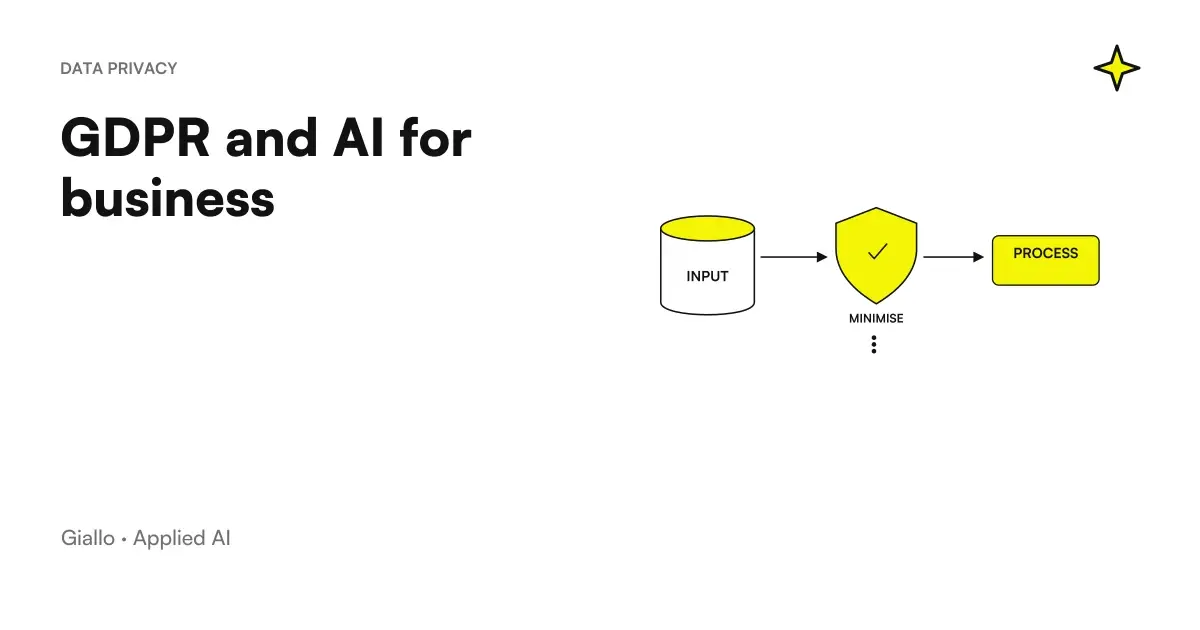 GDPR and artificial intelligence in the company
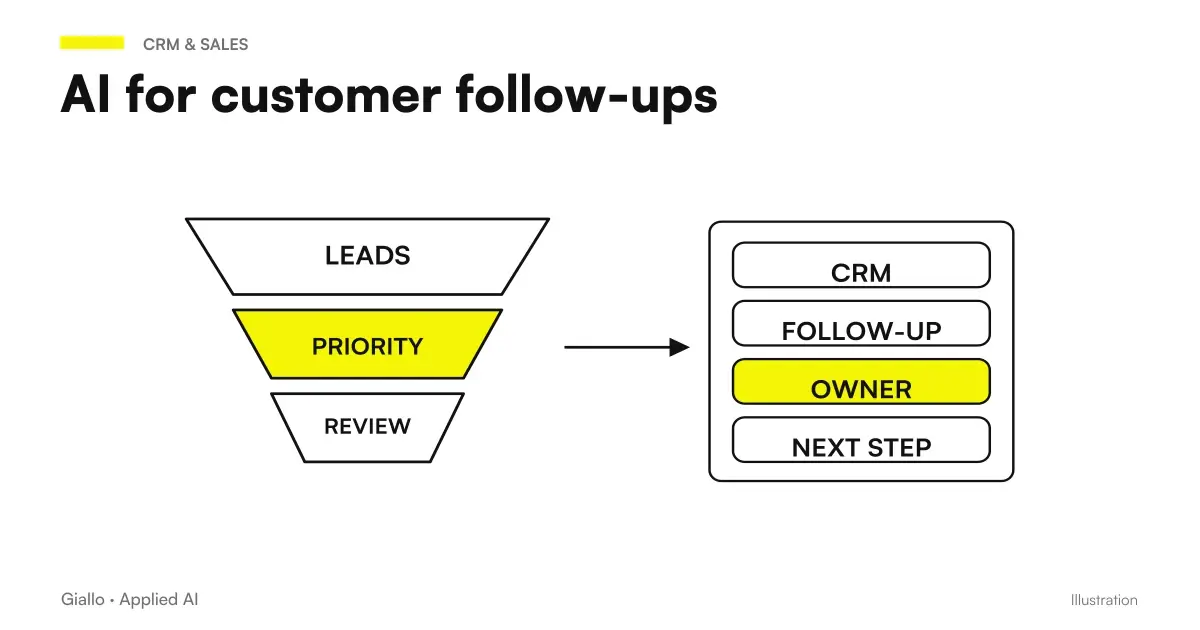 AI for customer callbacks
 AI for car workshops: quotes, appointments and customers
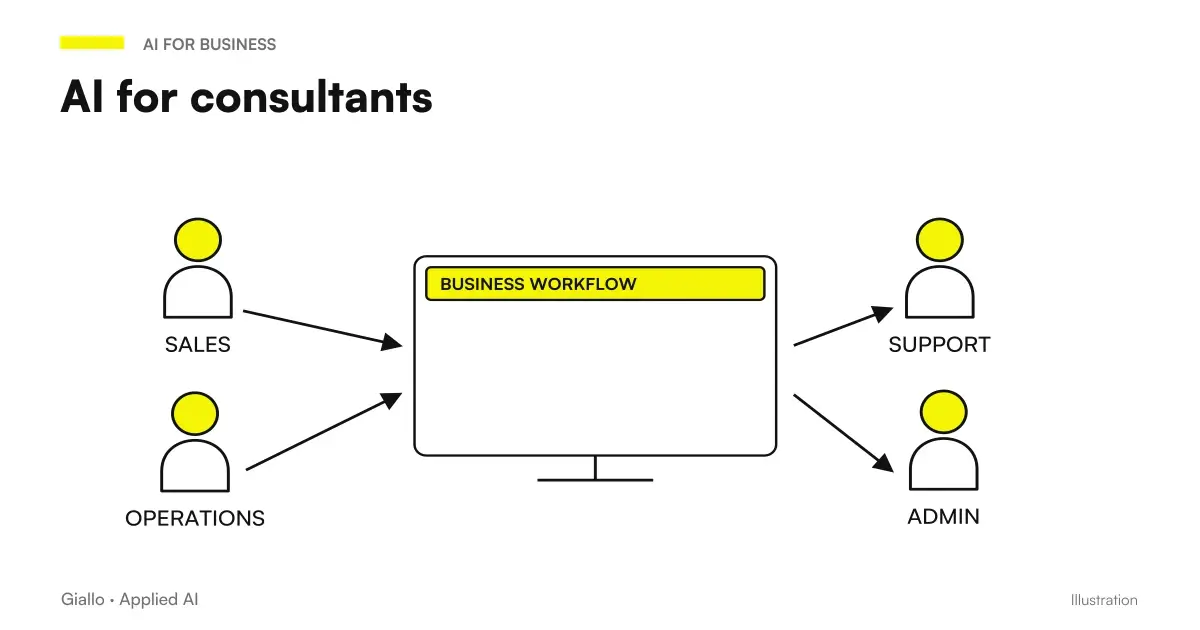 AI for consultants: proposals, client data and project delivery
 AI for notaries and notarial firms: case files, documents and clients
AI by sector
The same reasoning, applied to the other areas we follow.
- AI for physiotherapists: bookings, reminders and patients
- AI for internal business training
- AI and e-invoicing: what can be automated
- AI for photographers: requests, selection of shots, galleries and image rights
- AI for pharmacies: customers, service bookings and loyalty
- AI for Business Functions: Where to Start
- AI for electricians: wallboxes, solar power and installation deadlines
- AI for ticket management: shorter waits, more resolutions
- AI for e-commerce: compliant returns, product descriptions, discounted prices and reviews
- AI for gardeners and grounds maintenance: quotes and customers
- AI for dentists and dental practices: recalls, quotes and scheduling
- AI for hotels: booking, guest requests and automated reviews
FAQ
Can you always tell when a follow-up was written by AI?
It is recognized when it is generic: same text for anyone, no reference to the specific negotiation. It is not recognized when it uses the name, refers to the quote or service discussed and comes at a time consistent with the conversation. The difference is not automation, it is how much real information the message contains.
How long should you wait between follow-ups?
There is no valid interval for everyone: it depends on the sales cycle and how much the relationship is already started. The practical criterion is to leave enough space for silence not to seem rushed, and not so much as to cool a negotiation still alive. The typical sales cycle of the company is the first reference to watch.
Can AI decide for itself when to stop writing to a contact?
It follows a rule rather than inventing one: after a number of unanswered attempts set by the company, or if the contact explicitly asks not to be contacted again, the system ends the sequence. The person managing the sales process decides the threshold and exceptions, not the model.
Do you need marketing consent to send a follow-up on an already requested quote?
As a rule, no: responding to a request that the customer has made himself is part of the execution of pre-contractual measures, one of the legal bases provided for by the GDPR independent of consent. Consent to marketing serves for other types of communications, such as proposals on products that the contact did not request.
Does an automatic follow-up system work even on very long sales cycles?
Yes, but its form changes: for a negotiation lasting an entire season, follow-up becomes low-frequency nurturing with useful content rather than simple reminders. The system flags when the contact shows a concrete sign of interest, and the salesperson then takes over personally.
Do I have to write every single message in the sequence?
No: the rules are written once (which data to use, the tone, and when to stop), and the system generates messages case by case. It is still worth reading the first drafts generated for real negotiations before activating the sequence across the entire portfolio, to adjust the tone if needed.