
AI for e-commerce: compliant returns, product descriptions, discounted prices and reviews
AI for e-commerce: an assistant tracking the 14-day return window, GPSR product data, previous prices for discounts, authentic reviews and accessibility.
Reading time: 11 min
The AI for e-commerce makes more about the text that accompanies each order: the answer to those who ask how you make a wrong size, the card of a product just arrived from the supplier, the copy of the promotion, the answer to a review. They are repetitive and data-related jobs that the platform already has (orders, tracking, catalog, historical prices), and an AI assistant who reads them can prepare them for you.
In an online store, however, almost every text has a rule written behind it. The withdrawal has precise terms, the crossed-out price must be the lowest of the last thirty days, the product sheet must report the manufacturer's data, a fabricated review is a deceptive practice. A free linguistic model writes plausible sentences; the real job is to connect it to the right data and keep it within these rules, which you find here norm by norm.
The guide is for those who sell to consumers in Italy with a shop on Shopify, WooCommerce, PrestaShop or similar. If you also have a physical store, the rules of the counter are in AI for shops.
In summary
- In the after-sales the AI serves first of all to distinguish withdrawal, defect and failure to deliver, and to calculate the deadlines from the date of delivery of the courier.
- The withdrawal lasts fourteen days from the possession of the goods and the refund must be made within fourteen days from the communication of the customer: the assistant reads these terms from the rules, does not improvise them.
- The Exceptions to Withdrawal are a closed list (customized, perishable, sealed for hygienic and open reasons) and the discount is not part of it.
- A product card written with AI must still show manufacturer, product identification and warnings, as the GPSR regulation asks.
- In the discounts the previous price is the lowest of the thirty days before: the system calculates it from the historian, the AI writes the text around the number.
- False reviews written with AI are always deceptive; ask real buyers for reviews, reply and summarize the real ones you can.
Withdrawal and returns: the deadlines that the assistant must count from the delivery
After an order comes three types of messages asking for different answers. "I didn't get it" is a shipping problem, to be solved with the courier. "I'm not convinced, I'm giving it back" is the withdrawal. "It arrived broken" or "it stopped working" is a lack of conformity, covered by the legal guarantee as in a physical store. The first task of an AI assistant on the after-sales is to figure out which of the three cases he is in, by reading the message and the status of the order together.
For withdrawal the terms are written in the Consumer Code. The customer has fourteen days, which for the sale of goods run from the day he comes into physical possession of the goods and, if the order arrives in several packages, from the last (Art. 52). If the site has not informed him of the right of withdrawal, the period extends by twelve months (Article 53). After communication, the customer has another fourteen days to send back and bears only the direct cost of the return, as long as you have informed him that it is his responsibility (Art. 57).
The refund must be made without undue delay and in any case within fourteen days from the day on which you are informed of the withdrawal, by the same means of payment and including delivery costs, except for the supplement of a more expensive shipment chosen by the customer. You can hold it until you receive the goods or proof that it has been sent back (Art. 56). There are three dates (delivery, communication, re-entry) and they are in three different systems: tracking, service box, warehouse. This is where an automation is needed most.
- Recognize the request. The assistant reads the message, finds the order from the number or email and decides if it is withdrawal, defect or shipment.
- Count the days. It takes the delivery date from the courier's tracking and verifies that the withdrawal is within the terms and that the item does not fall within the exceptions of the catalogue.
- Send instructions. Return address, packaging, who pays the shipment according to the conditions published on the site.
- He queues the refund. When the warehouse records the arrival, or the customer loads the shipping receipt, the refund enters the list with its expiration.
- Pass the rest to one person. Used or incomplete returned goods, disputes, out-of-rule requests: they arrive at the operator with the history ready.
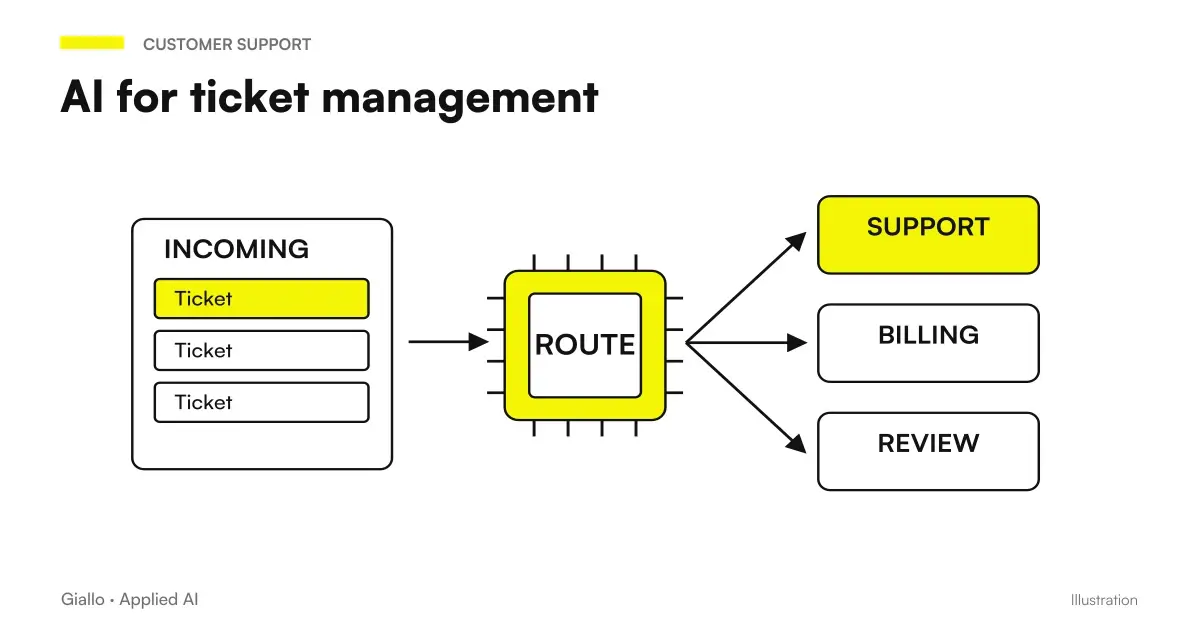
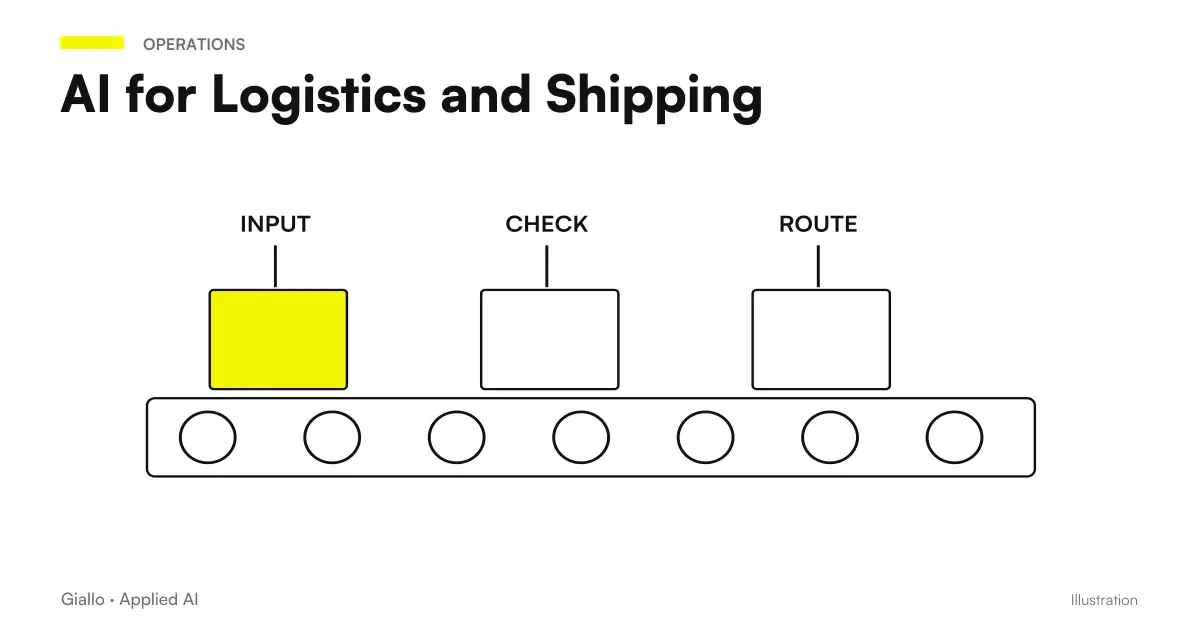
The flow is a particular case of ticket management with AI, and the part concerning couriers and stocks is in AI for Logistics and Shipping.
Custom, sealed, perishable: which items are out of the recess
The Consumer Code lists cases where withdrawal is excluded (Art. 59). For those who sell goods, there are three main items: custom-made or clearly customized goods; goods that are likely to deteriorate or expire quickly; sealed goods that do not lend themselves to being returned for hygiene or health protection reasons and were opened after delivery. "Sale item", "last piece" and "order with coupons" do not appear.
For the assistant this means a practical thing: the exception is an attribute of the product in the catalog, not a deduction of the model. If the item is marked as custom, the assistant knows it; if it is not, it applies the ordinary withdrawal.
| Article in the catalogue | Withdrawal | Reference | What the Assistant Responds to |
|---|---|---|---|
| Sweatshirt with name embroidered on request | Excluded | Art. 59, letter c | That the withdrawal does not apply, and that a defect in the embroidery remains covered by the warranty |
| The same sweatshirt without embroidery | Fourteen Days | Art. 52 | The ordinary return instructions |
| Sealed cream or toothbrush, open after delivery | Excluded | Article 59, letter and | That the recess is valid as long as the seal is intact |
| Fresh flowers, baked goods | Excluded | Art. 59, letter d | How to report a product arrived deteriorated |
| Software or video game sealed, open | Excluded | Article 59(i) | The withdrawal until the package is sealed |
| 30% off item | Fourteen Days | No exceptions for discounts | The ordinary return instructions |
Think of an online shop of custom clothing. An order contains two sweatshirts embroidered with the name and a hat without embroidery; the customer writes that he wants to make everything. The assistant reads the lines of the order, responds that the withdrawal applies to the hat and not to the hoodies, and asks for a photo if the customer talks about a wrong embroidery, because there the theme becomes the conformity of the product. Without the attribute in the catalog he should have guessed.
AI-produced cards: the data that the GPSR regulation asks for online
Descriptions for a catalog of hundreds of items are the work that many shops try AI for first. The commercial text is the easy part. From 13 December 2024, Regulation (EU) 2023/988 on general product safety, and its Article 19 calls for each online offer to clearly and visibly indicate at least this information.
- Name, trade name or registered trade mark of manufacturer, with the postal and electronic address to contact him
- If the manufacturer is not established in the Union, the name and addresses of the responsible person in the EU
- The information that identifies the product: an image, type and any other identifier
- The Safety warnings and information provided for the product, packaging or accompanying documents, in a language easily understood by consumers in the country in which you sell
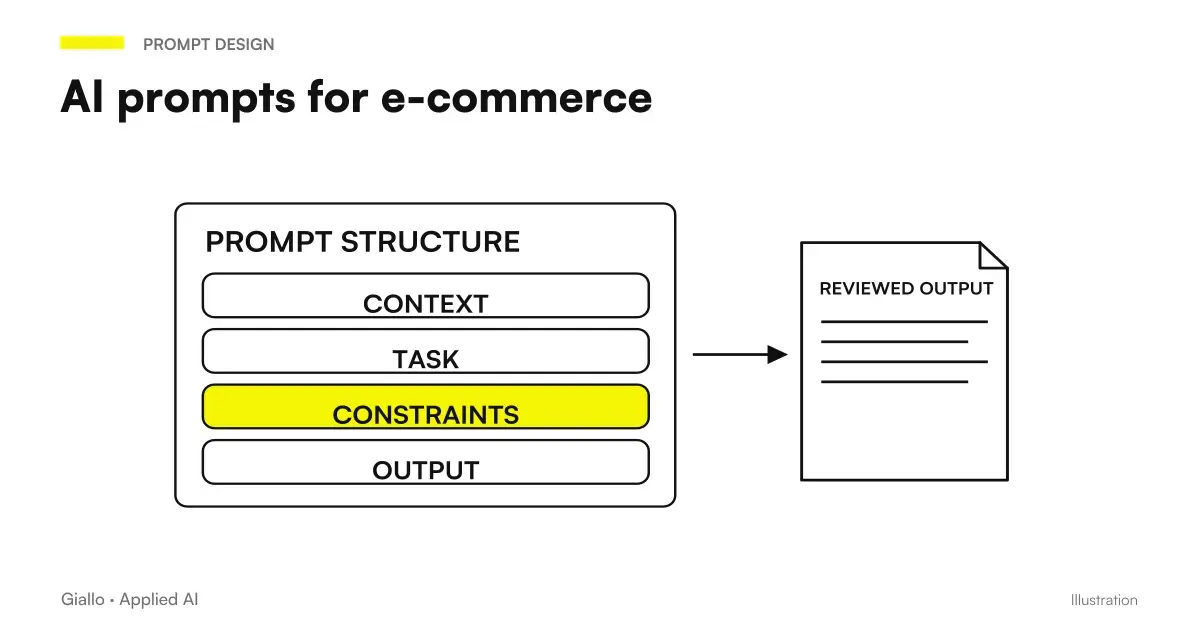
This data is not written, it is copied from the right source. A useful stream reads technical data sheets, manuals and supplier labels, fills in the fields and reports the empty ones. The description is written by the AI, but measures, materials and compatibility come from the supplier's data and a person re-reads them: a model that "completes" a card with a likely material creates a problem with the customer and, in the worst cases, with security. Examples of instructions for descriptions are in AI prompt for e-commerce.
An example: an e-commerce of furnishing accessories sells about twenty brands, some products outside the Union. Every week, price lists and PDF cards arrive. The automation prepares the draft of each card, compiles the manufacturer and EU manager, reports the manufacturer's warnings (for example on the wall attachment of a shelf) and puts in a separate queue the items with missing fields. Those stay offline until someone completes them.
The same product pages, once complete, also serve advertising. Since late August 2026 an Italian online store can upload them as a product feed to ads on ChatGPT, where the image, price and brand appear below the answers.
Barred price and promotions: the previous price calculates the system
The copy of a promotion is another job that AI gladly does, and here is a precise trap. Each price reduction announcement must indicate the previous price, i.e. the lowest price applied to the general consumer in the thirty days before the reduction (art. 17-bis). For a product that has been on sale for less than thirty days, the period to which the previous price refers should be indicated. If the discount grows during the same campaign, without interruption, the reference remains the price before the first reduction. Perishable agricultural and food products are excluded from the thirty-day rule.
An example with invented numbers: an air fryer costs 89 euros at the beginning of November, from 10 to 20 November rises to 99 euros and on 28 November goes in promotion to 79 euros. The previous price to show is 89 euros, the lowest of the thirty days before the discount (art. 17-bis, paragraph 2). A linguistic model that writes "was 99, now 79" does not know this historian. The number must come from the system that records prices, and the AI writes the banner, card and email around that number; for email campaigns the same pattern as the email automation with AI.
Reviews: where AI helps and where it becomes deceptive practice
The Consumer Code considers in any case misleading to send, or instruct others to send, false reviews of consumers, and to declare that the reviews come from those who bought or used the product without reasonable and proportionate measures to verify it (Art. 23, letters bb-ter and bb-quater). If the site gives access to reviews, it is also relevant to tell if and how they come from customers who have purchased or used the product (Art. 22, paragraph 5-bis).
Within these limits, AI helps in three areas. It sends review requests only to people who have received their order, linked to the order number, so verification is documented. It prepares draft replies that a person rereads before publication. It gathers recurring themes in negative reviews, such as sizes that run small or packaging that arrives crushed, and passes them to the people who can correct the problems. An automatic review summary displayed on the page must be checked: if it attributes opinions to customers that they did not write, it risks becoming false information about the reviews.
Accessibility: Does your shop fall under the European Accessibility Act?
From 28 June 2025, e-commerce services fall within the accessibility requirements of the D.Lgs. 82/2022which transposes the European Accessibility Act. The decree defines them as services provided remotely, via websites and apps, at the individual request of a consumer to conclude a contract. Micro-enterprises providing services are exempted (Art. 3, paragraph 3), and for the decree is microenterprise who employs less than 10 people and realizes an annual turnover or an annual budget total not exceeding 2 million euros (Article 2).
If you're above the threshold, AI helps on a part of the job: alternative text drafts for thousands of product photos, descriptions that hold even without images, clear labels in checkout fields. Contrasts, keyboard navigation, error messages and payment are development and testing work on the entire purchase path, to be set with who cares for your e-commerce.
Four Mistakes That Cost a Online Store
- An assistant who writes «the return is free» when your conditions put the shipment at the customer's expense. His answers must come out of the published conditions, word for word.
- The barred price written by the copy instead of calculated by the historian: it is an easy mistake to make with AI and easy to dispute.
- "Example" reviews generated to fill new tabs. A tab without reviews is better than a tab with fake reviews.
- Product records filled in by the model with data never supplied by the manufacturer. If a field is missing, it must remain empty and block publication.
An assistant who responds to customers must also state that he is an AI, and the rule has been in place since August 2, 2026: the other obligations are in AI Act for an SME, and choices on the channel in business website chatbot.
To choose the first intervention, the Shopify report on AI purchases in Italy for Christmas 2026 offers local data on consumers' intentions. The stated interest in research and advice does not amount to observed sales or willingness to delegate the purchase.
Preparing a return practice before the outcome
The after-sales route must link request, order and item, without compressing receipt, verification and economic decision. The Return Management and RMA with AI deepens this microprocessor, with distinct B2B and B2C policies. A complete practice prepares the operator's work; it does not communicate on its own the acceptance of the return or the authorization to refund.
Which stream to start with your e-commerce
If the assistance spends the days on returns and "where is my order", start from the flow of withdrawal: it is the one with the clearest rules and the easiest deadlines to measure. If the catalog changes every week, start with the product cards and GPSR fields. If you work a lot on promotions, before any text generated you need a reliable historical price, produced by product.
For an overview of the sector there is AI for e-commerce, and a customer support demo with AI is in AI customer care for SMEs. If you want to link an assistant to the returns, catalog or historical prices of your platform, Talk to Giallo Studio: you start from a single stream and from the data that your shop already records.
Giallo Studio guides: methodology and sources
How we apply it in the company
Related resources
 AI e-commerce prompts: product descriptions, email and support
 AI for ticket management: shorter waits, more resolutions
 AI for Logistics and Shipping
 Email automation with AI: how it really works
 AI for shops: customer messages, stock by size, returns and loyalty cards
 Business website chatbots: how they work and when they make sense
AI by sector
The same reasoning, applied to the other areas we follow.
- AI for dentists and dental practices: recalls, quotes and scheduling
- AI for electricians: wallboxes, solar power and installation deadlines
- AI for Business Customer Care: How It Really Works
- AI for pharmacies: customers, service bookings and loyalty
- AI for CRM and sales: automate the sales process
- AI and e-invoicing: what can be automated
- Creating quotes with AI: how to speed up the process
- AI for physiotherapists: bookings, reminders and patients
- AI for Accounting: What It Can Really Do
- AI follow-ups: keep track of every contact
- AI for consultants: proposals, client data and project delivery
- AI for internal business training
FAQ
Can the shop chatbot handle return requests on its own?
It can open the case, calculate the withdrawal deadline from the delivery date, check whether the item falls within the exceptions, and send return instructions. Disputes, goods returned used or incomplete, and refunds outside the rules go to a person. It must also tell the customer that they are communicating with an artificial intelligence system.
By when must I refund a customer who has exercised their right of withdrawal?
Without undue delay and in any case within fourteen days from the day you are informed of his decision, by the same means of payment used for the purchase (Article 56 of the Consumer Code). The refund includes delivery costs, except for the surcharge for a more expensive shipment chosen by the customer. You can withhold it until you receive the goods or proof that the customer has sent it back.
Can I exclude items on sale or purchased with a coupon from the return?
No. The exceptions to the right of withdrawal are those listed in Article 59 of the Consumer Code, for example personalized goods, perishable goods and those sealed for hygiene reasons opened after delivery. The discount is not among these, so an article in promotion follows the ordinary rules of withdrawal.
How is the crossed-out price in a promotion calculated?
The previous price is the lowest you have applied to consumers generally in the thirty days before the reduction (Article 17-bis of the Consumer Code). For a product that has been on sale for less than thirty days indicate the period to which it refers; if the discount increases during the same campaign, the reference remains the price before the first reduction. It is advisable that the system calculates it from the historical prices, rather than the person writing the copy.
Can I use AI to write or summarize product reviews?
Writing fake reviews, or having them written, is a commercial practice considered misleading in all circumstances (Article 23 of the Italian Consumer Code). You can instead use AI to ask people who have received their order for a review, draft replies, and summarise themes from genuine reviews, checking that the summary is faithful. If you display reviews, you must also state whether and how you verify that they come from real customers.
What does the GPSR require on an online shop’s product page?
From 13 December 2024 the online offer must clearly indicate the manufacturer with a postal and electronic address, the person responsible in the Union if the manufacturer is outside the EU, the information to identify the product, including an image, and the safety warnings in a language understandable to consumers (Article 19 of the EU Regulation 2023/988). The AI can extract these data from the supplier's data sheets, but it must not invent them.
Does my e-commerce have to comply with the European Accessibility Act?
From 28 June 2025 e-commerce services fall under Legislative Decree 82/2022, which transposes it in Italy. Micro-enterprises providing services are exempted, i.e. companies with less than ten people and an annual turnover or a balance sheet total of not more than two million euros. Above that threshold the AI helps with the photos’ alternative text, but the entire purchase journey must be checked.