
AI for dentists and dental practices: recalls, quotes and scheduling
AI for dentists: hygiene recalls at clinician-defined intervals, treatment plan quotes and laboratory work. What to automate and what to keep human.
Reading time: 12 min
The AI for Dentists delivers the most value in the steps between the dental chair and reception: hygiene recall messages sent at the interval decided for that patient, the treatment-plan quote the patient takes home without calling back, the crown returning from the dental laboratory that needs an appointment, and messages arriving while the assistant is at the dental unit. These recurring tasks are already recorded in the practice software. An AI assistant connected to the calendar can prepare or complete them according to the practice’s rules.
Stay out of the clinical part. A generic chatbot must not read an orthopanoramica, evaluate a swelling or collect consent to an implant. The Italian law on artificial intelligence puts it in writing: in the health sector AI systems "constitute a support", the decision does not pass to them and the patient has the right to know when they are used (law 132/2025, art. 7).
In summary
- In a dental practice, AI serves on four administrative streams: hygiene recalls, treatment-plan quotes, laboratory work and patient messages.
- The call interval is a clinical choice made patient by patient: automation reads it from the card, does not apply six months at all.
- In terms of care, AI prepares summaries and reminders, while explanation and informed consent They remain an interview between dentist and patient.
- X-rays, orthopanoramics and cone beam are Health Data: no generic chatbots, and the software that analyzes them are medical devices.
- Post, photos and promotions of the studio follow the rules of the Health Advertising, which exclude offers and discounts capable of causing improper treatment.
- Those who write to the assistant must know that an AI responds and must be able to get to a person immediately to pain, swelling or trauma.
Who answers the phone while the assistant is at the chair
In many studies the same person passes the instruments to the meeting and answers the phone, and not by disorganization.Dental Study Assistant (ASO), transposed with the DPCM 9 February 2018, includes assistance to the dentist ‘during clinical performance’ and, in the same profile, activities related to ‘accepting customers and managing the secretariat and relations with suppliers’. The course for the qualification lasts at least 700 hours, 400 of which are internships: it is staff trained to be at the meeting, and each phone call takes it away mid-sitting.
An AI assistant on WhatsApp, on the site chat or on the phone can take requests that do not need her: confirm or move an already set session, give schedules and directions to arrive, say with which health funds the study is agreed, respond to "when do I have the next hygiene?". For the entry the pattern is that of a AI switchboard, for messages that of a chatbot WhatsApp.
Booking from scratch is another matter. In a dentist's office the capacity is counted in gatherings and operators: hygiene goes on the hygienist's chair on days when there is, a first visit may require an orthopanorami, an implant surgery occupies a long band and a dedicated assistant. The prudent choice is to leave the AI assistant only the types of appointment you described, with durability and armchair, and keep the rest in the reception.
Then there is the list of what immediately passes to a person: pain, swelling, a broken tooth after a fall, bleeding after an extraction, questions about a drug. The assistant asks no clinical questions and advises nothing, recognizes the request and turns it around, with a number to call if the study is closed. The Recommendations of the FNOMCeO ICT Group on emails with patients, which the document proposes as a starting point also for WhatsApp, they go in the same direction: ask not to use these channels for emergencies, set days, times and a maximum response time, send an automatic confirmation of receipt.
Hygiene calls: Intermission is decided by the dentist, not the software
The six-month recall equals for all is a habit more than a clinical rule. The guidelines of the NICE, the British institute that draws them up for the English health service, ask to set the interval for each patient according to the risk, from a minimum of 3 months to a maximum of 12 under eighteen years and 24 for adults, and to record it in the documentation of the study. For an automation it means one precise thing: the interval is read from the patient's card, where the visitor wrote it.
Even those who perform the session work on the recommendation of the clinician. The Regulation on the profile of dental hygienist (D.M. 137/1999) provides that it operates ‘on the advice of dentists and surgeons licensed to practice dentistry’. Automation complies with this order: it takes the deadline, searches for the hygienist's free spaces, sends the message and records the response. The general logic of automatic calls is explained in the guide to recall customers with AI.
Think of a study with a hygienist present two days a week. Every Monday, automation pulls out patients with the recall expiring, proposes to each two times in the days of the hygienist and updates the agenda when the patient chooses. Those who do not respond within the time limit you set end up in a short list that the assistant calls back to voice, and the front desk stops scrolling through lists of names.
Be careful what you put in the message. The Privacy Guarantor clarified that the healthcare professional kept secret "must no longer request the consent of the patient for the treatments necessary for the healthcare provision", while they ask for explicit consent, among others, the treatments made by healthcare professionals for commercial purposes (clarifications of 7 March 2019). A reminder that adds "this month whitening costs less" changes nature: it becomes a commercial message, on WhatsApp it ends up in a marketing category model (this is explained by the guide to WhatsApp Business templates) and contains a discount, i.e. the kind of content on which the Health Advertising Act puts a limit. Keep the two messages separate.
The estimate of the plan of care that the patient brings home
A dental care plan has phases, sessions, and costs that the patient wants to reread calmly, often with someone in the family. Many quotes remain on the table at home: the patient does not say no, he simply does not call back. It is the flow where a well-written reminder helps and where a commercial tone does the most damage.
The rules are already there. The Medical Deontology Code, which applies to doctors and dentists, asks Article 54 to communicate "preventively to the assisted person the fee". Law 219/2017 wants the documented informed consent "in written form or through video recordings" and inserted in the medical record, and establishes that "the time of communication between doctor and patient constitutes time of care". The AI can prepare that interview, not take its place.
What AI Can Prepare
- A summary in plain words of the phases of the plan, which the dentist approves before sending
- Practical answers on the quote delivered: scheduled sessions, payment methods already agreed, what to bring
- A reminder after the period you choose, with two roads: fix the first session or talk to the dentist again
- The status of each quote in the management software: delivered, accepted, pending, refused
What Remains at the Dentist
- The therapeutic alternatives, with the risks and benefits of each
- The Informed Consent Interview and Signature
- Questions like "Does the implant really serve?" or "Can I wait?"
- Discounts and terms outside the price list, which the assistant never proposes
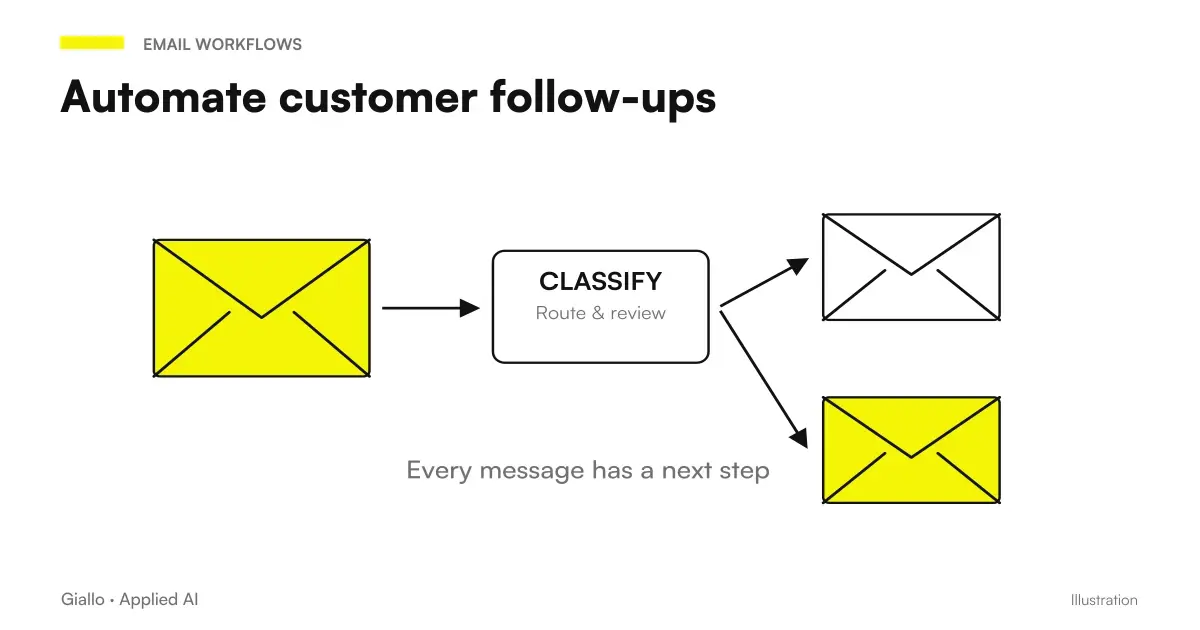
The technique of reminder is that of automatic follow-up, with a more sober register: no invented deadline, no time offer, always an easy way to talk to a person.
Crowns, prostheses and bites: when work returns from the laboratory
Crowns, bridges, prostheses and bites made by the dental laboratory are tailor-made medical devices. The European Medical Device Regulation provides that they do not bear the CE marking but a declaration from the manufacturer, with the name of the person who prescribed them and the indication of the patient for whom they are intended, which is ‘made available’ to that patient (Article 21 and Annex XIII). In the studio all this becomes a round of dates: fingerprint or scan, sending, re-entry, proof, delivery.
The ride breaks down at predictable points. The work comes back and no one calls the patient, or the test was already set and the lab is late. An automation reads the lab emails, links the order number to the patient card and updates the status; when the assistant marks the job as arrived, the patient receives two times for the test on the right chair, and on delivery the study receives the reminder for the statement to be made available to the patient.
A concrete example: a patient waits for a bite. The lab confirms the shipment with an email that reports the order number, the automation moves the status to "incoming" and prepares the message for delivery. If the lab reports a delay, the patient knows it before leaving the house, not in the waiting room.
X-rays, OPTs and medical history: where generic AI does not enter
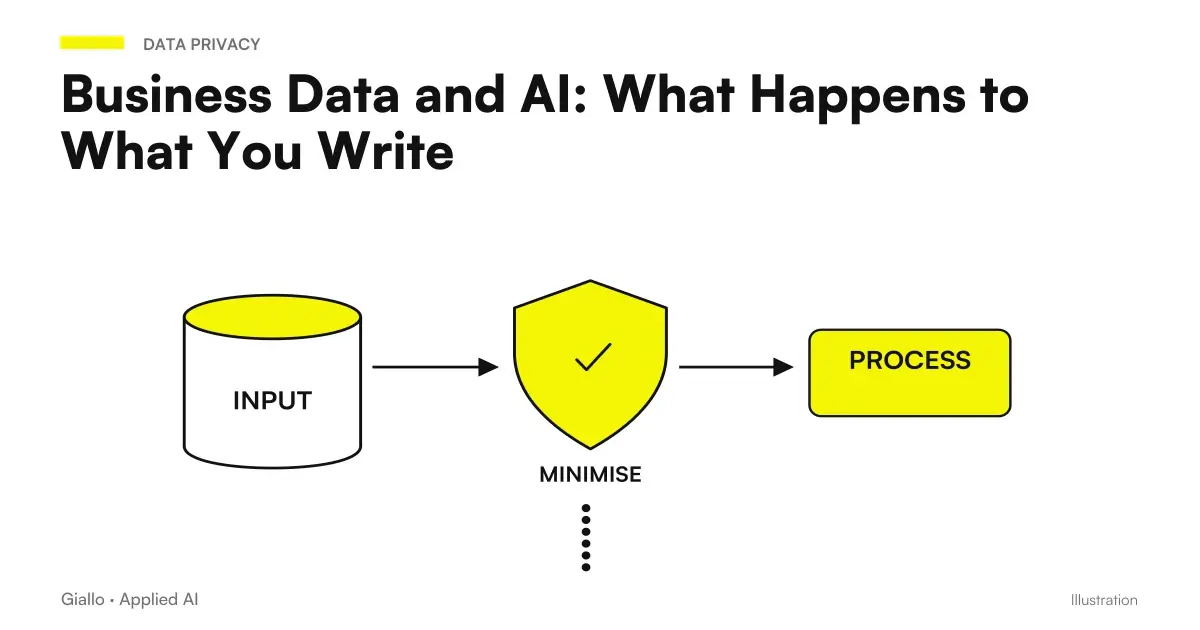
Endoral, orthopanoramic and cone beam are health-related data, one of the particular categories of Article 9 of the GDPR. Uploading them to a public chatbot to get an opinion means handing them over to a provider without a contract for data processing and without knowing where they end up: that's the problem described in Business Data and AI.
Software that analyzes images to report tooth decay or bone loss exists, but they are another category of product. For the Medical Device Regulation, software providing information for diagnostic or therapeutic decisions is at least Class IIa (Annex VIII, Rule 11), and AI systems of this type subject to the verification of a notified body are at high risk for AI Act, with obligations that the Digital Omnibus on AI moved to August 2, 2028. Law 132/2025 cited at the beginning adds that the decision remains "always remitted to the medical profession".
The same criterion applies to questionnaires. If you automate your medical history before the first visit, the questions are written to you by the dentist, one by one, and each one must serve the cure. The Guarantor has sanctioned with 20,000 euros a dentist who asked every patient, already in acceptance, if he had infectious diseases such as HIV, for violation of the principles of Article 5 of the GDPR, including minimization (Ordinance of 10 June 2021).
Post, before and after photos, reviews: what AI can write for the studio
A language model left free writes like an advertiser: "the smile of your dreams in one day". For a dental practice is the wrong register, and there is a precise norm. The law 145/2018, art. 1, paragraph 525, in the text in force, applies to private health facilities and to members of the registers, including dental companies, and excludes from their communications "any element of an attractive and suggestive character, including communications containing offers, discounts and promotions, which may result in the improper use of health treatments". The code of ethics adds to Article 56 that advertising must be ‘true, correct and functional to the object of the information’, and entrusts its control to the competent Order by territory.
Use AI to draft an article on how to prepare a hygiene session or what to expect after an extraction, then reread each sentence. The photos before and after of a recognizable patient are health data: the Guarantor has sanctioned with 20,000 euros a doctor of aesthetic medicine who had published them on Instagram without consent (measure of 12 December 2024). The case was not about a dentist, but photos of a smile before and after a treatment pose the same problem.
For reviews on Google the rule to be written in the instructions is only one: the answer never confirms that the author is a patient and does not cite treatments. With that constraint, the demo for Respond to Google reviews with AI It also works for a dental practice.
Which flow to start from in your dental practice
The four streams don't weigh the same in every study. The table helps you choose the first one by looking at the data you need and who sets the rules.
| Flow | What needs to be in management software | Who decides the rules | What to Measure |
|---|---|---|---|
| Hygienic calls | Interval per patient, hygienist days | The dentist sets the intervals | Expired calls without appointment |
| Treatment-plan quotes | Quote status, delivery date | Dentist approves summary and text | Quotations pending response |
| Laboratory work | Order number, expected return | Assistant confirms arrival | Tests moved for delays |
| Patient Messages | Bookable appointments, times, conventions | The holder decides what passes to a person | Calls interrupting the chair |
- Look at what your management software already does. Many dental practice management systems cover recalls and reminders: AlfaDocs indicates automatic calls and communications via email, SMS and WhatsApp, XDENT reminders and recalls sent on WhatsApp by the management software, and a voice AI assistant to fill in the clinical record and treatment plan. Check your software’s official page: custom AI helps where the software stops, namely freely written messages, laboratory emails and treatment plan summaries.
- Choose a stream only, the one that weighs the most on the reception today, and notes how it goes now before touching anything.
- Fix the data side. Contract for the processing of data with the provider (Article 28 of the GDPR), place of data retention, updated information: the points to be checked are in contract with an AI provider.
- Write with your dentist what passes to a person and what phrases the assistant never uses: diagnosis, clinical reassurances, discounts.
- Have the assistant tell him he's an AI. The AI Act calls for systems that communicate with people to inform them that they have been interacting with an AI since August 2, 2026; the other obligations are in AI Act for an SME.
- Measure for a few months and add the second stream only if the first one worked.
The framework for all private health is on the page AI for Private Health. If you want to understand which of these flows is convenient in your studio and how to link it to the management software that you already use, Giallo Studio starts from the map of a single process and tests it in small before extending it.
Giallo Studio guides: methodology and sources
How we apply it in the company
Related resources
AI by sector
The same reasoning, applied to the other areas we follow.
- AI for Business Customer Care: How It Really Works
- AI for e-commerce: compliant returns, product descriptions, discounted prices and reviews
- AI for CRM and sales: automate the sales process
- AI for electricians: wallboxes, solar power and installation deadlines
- Creating quotes with AI: how to speed up the process
- AI for pharmacies: customers, service bookings and loyalty
- AI for Accounting: What It Can Really Do
- AI and e-invoicing: what can be automated
- AI for consultants: proposals, client data and project delivery
- AI for physiotherapists: bookings, reminders and patients
- AI for catering and banqueting: event quotes and customers
- AI follow-ups: keep track of every contact
FAQ
Can I upload an X-ray or panoramic dental X-ray to a chatbot for an opinion?
No. Patient X-ray images are health-related data (Article 9 of the GDPR) and a generic chatbot is not a medical device. The software intended to provide information for diagnostic decisions is at least in Class IIa of EU Regulation 2017/745: if you want support on images, choose a product with CE marking as a medical device and a contract for data processing. The clinical decision remains yours anyway.
Do dental hygiene recall messages sent on WhatsApp require the patient’s consent?
In 2019, the Italian data protection authority clarified that a healthcare professional bound by confidentiality no longer needs to request consent for data processing necessary to provide healthcare. Processing by healthcare professionals for commercial purposes, among other cases, does require consent. A recall message and a message containing an offer are therefore different things: keep them separate and have your privacy adviser check the privacy notice and channel.
Can the AI assistant explain to the patient the estimate of the treatment plan?
It can prepare a summary in simple words that the dentist approves before sending, and answer practical questions about sessions and payments already agreed. Therapeutic alternatives, risks and consent remain with the dentist. Law 219/2017 states that the time of communication between doctor and patient is time of care and that consent must be documented and included in the medical record.
Does the patient need to know that an AI is responding to him?
Yes. The AI Act calls for systems that communicate with people to be designed to inform them that they are interacting with an AI, and the rule has been applied since August 2, 2026. In healthcare, Italian law 132/2025 adds the patient's right to be informed about the use of artificial intelligence technologies.
What should the AI assistant do if a patient writes that they have pain or swelling?
It does not ask clinical questions or give advice: it recognises the request and immediately passes it to a person at the practice, providing a number to call if the practice is closed. The list of cases to hand over (pain, swelling, trauma, bleeding after an extraction, and medication) must be written with the dentist, and the channel’s opening message must state that it is unsuitable for emergencies.
Can AI write the practice’s posts about implants and whitening?
It can prepare an informational draft that you then review. Law 145/2018, Article 1, paragraph 525, excludes enticing and suggestive elements from healthcare communications, including offers, discounts, and promotions that could encourage inappropriate treatment, and the professional code of ethics requires truthful and accurate advertising. Before-and-after photos of an identifiable patient are health data and cannot be published without consent.
My dental practice software already handles recalls and reminders: what is AI for?
If the business management system already handles them, use those features: it is the simplest approach. AI is useful when text needs to be understood or rules written by the practice need to be applied, for example reading patients’ free-form messages, interpreting emails from the dental laboratory, or preparing a treatment-plan summary for the dentist’s approval.