
AI for customer callbacks
Customer callbacks: service or marketing, customers on Italy's Registro delle opposizioni, and automation that avoids unwanted contact.
Reading time: 9 min
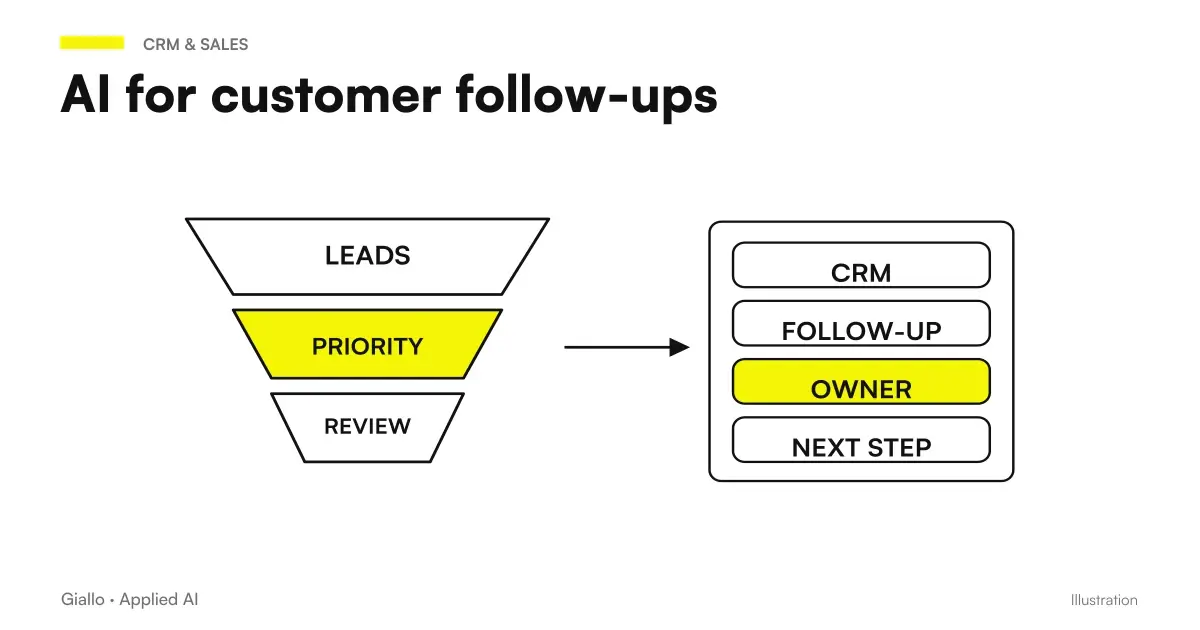
The recall is the contact that a company makes to a customer who already has, for a reason that really concerns him: a deadline, a maintenance due, a renewal that is approaching. It's not marketing, even if it uses the same channels, and the difference between the two is not a nuance of tone: it changes which rules apply and whether the customer can block the contact by subscribing to a public register.
It is also one of the jobs that SMEs postpone most often, because no urgency dictates it and because it requires keeping track of deadlines that, as a rule, already exist somewhere but not in a usable form. The typical result is a customer lost not out of dissatisfaction, but out of the mere fact that no one has called him back.
In summary
- The recall concerns a already existing report and a concrete reason related to that relationship.
- A customer in the Public register of oppositions can however be contacted for an active contract or just concluded.
- Mixing a service reminder with a business proposal moves everything into the strictest regime.
- The written message, before the call, reduces the number of really necessary phone calls.
- Measuring the result in aggregate hides which reasons work and which only burn reputation.
When the recall is used, and when it is marketing under another name
The boundary line depends on a single question: does the contact arise from something that concerns that specific customer within an already ongoing relationship, or does it propose something that he has not asked for?
A contractual deadline, a planned maintenance, a periodic check agreed: they are communications related to the execution of a contract, and the legal basis for processing them is that provided by the Article 6 of the GDPR for contractual performance, independent of consent to marketing. An offer on a new product, a seasonal discount, an invitation to return without a reason related to the current contract are instead promotional communications, even when they reach a customer you have known for years.
The point where many companies are wrong is to mix the two things into one message: an expiration reminder that also includes a discount stops being, in essence, a service message. Keeping them separate, even at the cost of an extra send, avoids having to apply to everything the stricter checks provided for the promotion.
Public Opposition Register doesn't block all calls to your customers
Here lies the most common misunderstanding on the telephone recall. The Public register of oppositions, established by Presidential Decree 27 January 2022, No. 26 and published in Official Journal, allows anyone to register their number, fixed or mobile, to no longer receive telemarketing proposals. Article 130 of the Privacy Code, at paragraph 3-bis, prohibits promotional calls to those who have signed up.
What the registry doesn't do is terminate the relationship with its active customers. As the Privacy Guarantor on the page dedicated to telemarketing, after registration, calls linked to active or recently concluded contracts remain lawful. For a company that does recall, this results in a practical rule: you can continue to contact a customer with an ongoing contract for service reasons, even if that number is registered; you can't use the same number to offer them a product that doesn't already have.
The Limit Case: A Customer Who Bought Once, A Long Time Ago
If the contractual relationship has long ended, the margin for contacting him as an "existing customer" narrows. The promotional communication to an already acquired customer remains possible without new consent only under the conditions of paragraph 4 of article 130 (products similar to those already sold, clear information, possibility to oppose remembered to each sending): out of these conditions, or if the customer has registered to the register in the meantime, it is advisable to treat it as a new contact and verify the position with your privacy consultant.
Put in the table, the criterion becomes easier to apply on a case-by-case basis:
| Reason for contact | Nature | Does it apply even if the number is in the Opposition Register? |
|---|---|---|
| Expiration of an active contract | Service | Yes |
| Maintenance under the current contract | Service | Yes |
| Contract concluded less than a month ago | Service | Yes, in the period just after closing |
| Renewal Proposed After Long Silence | Promotion to Acquired Customer | Only if he did not oppose and under the conditions of paragraph 4 |
| Offer on a product you've never bought | Promotion | Only if he did not oppose |
| Contact "courtesy" for no specific reason | Weak Promotion | Not recommended anyway, too weak reason |
Why it's better to start the sequence from the message, not the call
Many companies set the recall as a call-only campaign, and find that the time it takes is much higher than it really takes.
- Message with the specific reason of that customer and an immediate way to respond.
- Respondents are handled immediately: appointment set, practice started.
- Anyone who does not respond within a few days receives a second message, different from the first.
- Only those who remain silent after two messages pass to the call.
- Those who do not even answer the call return to the queue, at a greater distance.
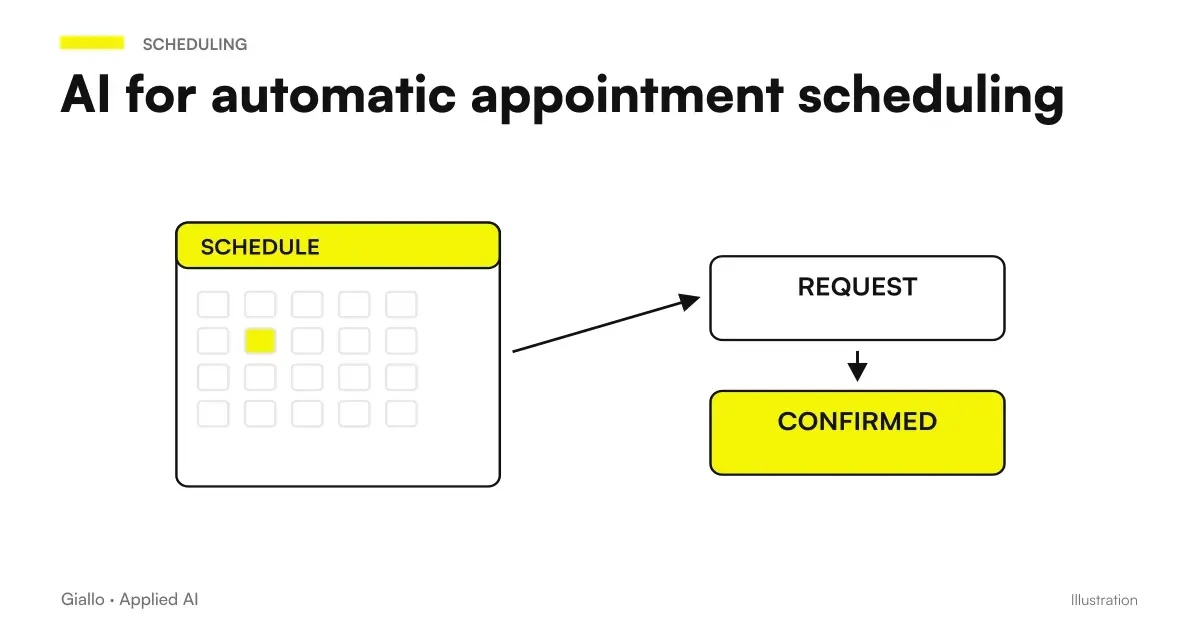
This order reduces the number of phone calls to those really needed, and concentrates people's time where a written message is not enough. The natural connection, for those who answer, is the taking of the actual appointment: it speaks of it AI for automatic appointment scheduling.
What must exist before automating a single call
- A registry with up-to-date contacts and the legal basis of each tracked communication
- The deadlines recorded in a system, not in a person's memory
- A written rule on how many contacts at most and at what distance
- An Immediate Way to oppose, really respected and not just on paper
- Tracking who was contacted, when, and with what outcome
The second point is almost always the missing one, and it is also the assumption of everything else: without deadlines to system there is nothing to automate, and often the first benefit comes already only from recording them, before even writing a message.
A workshop that turns review deadlines into self-made appointments
Think of a vehicle workshop with an established customer base, where every vehicle has an inspection date and servicing interval known in advance. Before any automation, these dates lived in the management software, but nobody looked at them until the customer called on their own initiative, often late.
With deadlines connected to a messaging system, each customer receives a message when his date approaches, with the ability to answer to book directly: the appointment making mechanism is the same as described in AI for phone bookings, applied here to an outgoing contact instead of an incoming contact. The unresponsive person gets a second reminder, then a call. In such an example, the reason for the contact is the strongest that exists for a recall: it concerns an obligation of the customer himself, not an interest of the workshop.
A detail that makes a difference in practice: the message works best when it already proposes an indicative time or day, instead of asking generically "when it suits you". Fewer choices to rate mean more immediate responses, and less back and forth before closing the reservation.
A boiler maintenance company that stops waiting for the customer's phone call
A different case concerns those who do maintenance of systems subject to periodic checks, such as boilers or air conditioning systems. The maintenance contract involves regular intervention, but before someone plans it, often the right time passes and the intervention slips by months.
Automating here means that the system signals when a plant approaches the date provided for in the contract and proposes to the customer a time slot, instead of waiting for him to remember it. The technician receives the calendar already organized by geographical area. The advantage is not only commercial: an intervention done on time, rather than a late chase, also reduces the risk of a failure that would have cost more to solve.
Aggregate response rate hides more than you tell
Watching a single number, the overall response rate of the recall campaign, is the most common measurement error: it mixes motifs with very different effectiveness and does not say which one really works.
It makes more sense to separate the response rate by type of reason, the conversion rate in appointment set, and especially the number of oppositions received for each type of communication. The latter is the most neglected warning sign: if a certain type of callback generates several requests to no longer be contacted, that reason is perceived as invasive, and continuing to use it consumes useful contacts for better communications.
Where a good reason turns into a complaint
Call back for no specific reason for that client. A generic "we wanted to hear it" burns reputation without producing almost anything in return.
Mix service and promotion in the same send. It moves the entire communication into the strictest regime, even if the intention was just to remember a deadline.
Start with the call instead of the message. It increases the time needed and perceived discomfort, without a proportional benefit.
Ignore those who have opposed it, confusing it with those who simply do not respond. They are two different categories: one must always be respected, the other can be tried again with judgment.
Where to start if your customers' deadlines live in someone's head
The first step is not about technology: see if the deadlines that affect your customers are already registered in a system. If they aren't, that job is worth it alone, regardless of any automation that comes next.
Then choose only one type of deadline, the most frequent in your business, and set the sequence message, message, call. In most cases you will find that a substantial proportion of customers already respond to the first message, and that the really needed calls are less than you would have made from there. For the complete regulatory framework on the processing of data in these flows, read GDPR and artificial intelligence in the company; for the vocal part, voice AI for companies and AI for call center They delve into what changes when the call itself becomes automatic.
The recall works when there is a real reason to communicate to a specific customer, and it stops working the moment it becomes a generic contact sent to everyone in the same way. If you want to figure out how to set up your customers' deadlines before you even automate the contact, the consulting services of Giallo Studio They start there.
Giallo Studio guides: methodology and sources
How we apply it in the company
Related resources
 AI for automatic appointment scheduling
 Voice AI for companies: what it is and when it is needed
 AI for call centres: what changes?
 GDPR and artificial intelligence in the company
 AI for phone bookings
 Collect client documents with AI: checklists and case status
 Jev AI for business: privacy, limits and testing on Italian data
AI by sector
The same reasoning, applied to the other areas we follow.
- AI for cleaning companies: specifications, shifts, DUVRI and safety data sheets
- AI for recruiting and staff selection
- AI for phone bookings
- AI for business reporting: fewer hours, the same data
- AI for SMEs: a practical guide to really getting started
- AI for human resources: concrete uses
- AI for hairdressers and beauty salons: bookings and fewer schedule gaps
- AI for restaurants: reservations, allergens and responses to reviews
- AI for gyms and sports centres: class bookings, medical certificates and memberships
- AI for renovation firms: changes, SAL progress reports and site documents
- AI for opticians: prescriptions, collections, contact lenses and recalls
- AI for wellness centres and spas: admissions, gift vouchers and packages
FAQ
When should customer reminders be used instead of a marketing campaign?
Customer reminders are used when a relationship with the customer already exists and there is a concrete reason affecting them: a deadline, maintenance due, or an upcoming renewal. Marketing, even to existing customers, instead concerns a product or offer the customer has not requested. The difference is legal in nature, rather than a matter of tone.
Can a customer on the public opt-out register still be called back?
Yes, for communications related to an active contract with him, or recently concluded. Registration in the register blocks promotional calls to those who do not have an ongoing relationship, does not prevent being contacted by their bank, their supplier or their mechanic on a matter that directly affects them.
Is it better to call or write to remind someone of a deadline?
In most cases it is better to start with a written message, with the specific reason and the ability to respond immediately to make an appointment. The call makes sense for those who do not respond to the message, or when the topic requires an explanation that a text does not render well.
How do you avoid a reminder sounding like an excuse to sell something else?
By keeping the service message separate from any business proposal. The moment an expiration reminder also includes a discount or a new product, that message essentially becomes a promotional communication, with the verifications this entails.
What happens with customers who never respond, either to messages or calls?
They should be removed from ordinary campaigns after a number of attempts established in advance, not contacted indefinitely. Before considering them lost, it is worth checking that the contact is still correct: a part of the silence depends on numbers or addresses changed, not on disinterest.
Do you need specific consent to send an expiration reminder to an active customer?
As a rule, no, if the reminder is about the execution of the contract in progress: it is a service communication, not a promotional one. Consent becomes necessary when the content stops covering that contract and proposes something else. When in doubt about a specific case, check with your privacy advisor.