
AI for catering and banqueting: event quotes and customers
AI for catering and banqueting: turn unclear enquiries into draft quotes, plan venue visits, and manage buffet allergens and transport temperatures.
Reading time: 11 min
The AI for catering works well in the part of an event the client does not see: a request arriving in pieces across email, WhatsApp and phone calls, a site visit to prepare, a draft quote with menus, staff and rentals, and allergen sheets from which to prepare buffet labels. An assistant connected to the price list and recipes organises these data and prepares the documents. Price, feasibility and food safety remain decisions for the events team and the chef.
Compared to a restaurant it changes the distance. The kitchen is miles from the service point, food travels in a van and often ends up under a pavilion, and each event has a number of guests, a location and a list of different intolerances. A data lost between passages costs more than in the hall, and that's where it's best to put the AI.
In summary
- The assistant serves in the stages that produce documents: event card, inspection list, draft estimate, allergen tags, transport log.
- In distance contracts with a private person, catering services with a precise date are excluded from the right of withdrawal: the cancellation conditions you write in the estimate.
- Under a pavilion, the requirements of EC Regulation 852/2004 apply for temporary structures, which become the inspection list.
- The cold chain should not be interrupted and the means must allow you to control the temperature: the assistant collects the readings, the limits set them your plan.
- At the buffet the allergen should be indicated for each tray before the service, and the tag comes from the recipe, not from the description of the menu.
- For waiters called by intermittent contract the communication must be done before the start of the performance.
The six stages of an event where the assistant saves work
A banqueting event goes through the same stages, be it a villa wedding or a company gala dinner. In each one someone copies data from one place to another, and it is that job that the assistant can do instead of the office.
- Request. It reads emails, messages and voice notes and fills out the event card: date, place, guests, type of service, times, shopping range, food requirements.
- Inspection. Prepare the checklist for that location and collect answers, measurements, and photos.
- Quote. It composes the draft with menus, staff, rentals and transport based on your price list; you set the margin and terms.
- Confirm. It keeps the agreed deadlines: down payment, trial menu, final number of guests, hall team.
- Production and transportation. Generate allergen cards, tags, van load plan and temperature log.
- Closing. Compare actual guests and quote, prepare the data for the invoice and reminder for the next year's edition.
The request comes apart: what the assistant needs to extract
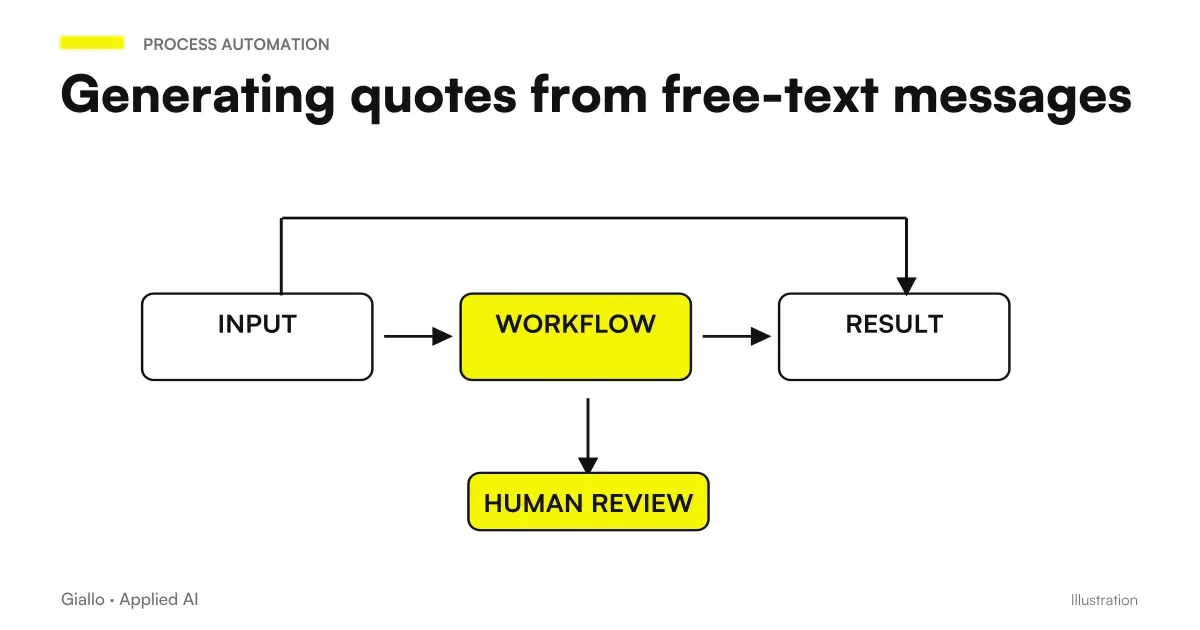
Few customers write everything immediately. A company's secretariat sends two lines for the year-end dinner, the bride's mother leaves a voice note on WhatsApp, a wedding planner forwards an email chain with three possible dates. The assistant reads these texts, fills out the event card and prepares a single message with the questions that are missing, instead of twenty exchanges. The mechanism is that of quotes from a message in free text.
The questions that weigh on the price are always the same: type of service (served at the table, buffet, standing cocktails), presence of a kitchen in the location, arrival time of guests and end of service, drinks included or not, set up at the expense of whom. A well-educated assistant asks for all of them, and reports to the office requests that come out of your rules, such as a raw fish menu for an outdoor event in August.
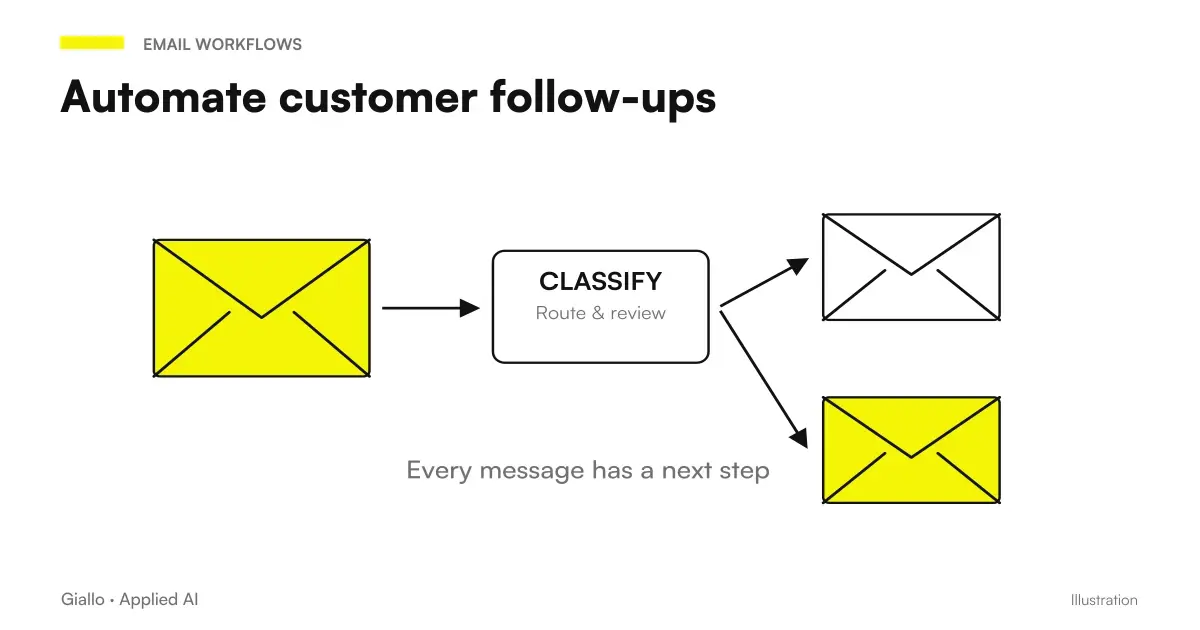
An example. On Monday morning, a company email arrives: "lunch for the convention, about one hundred and fifty people, buffet, in our warehouse". The assistant opens the card, sees that hours, kitchen support and intolerances are missing, and answers with a single email of four questions. Meanwhile, check the date: the calendar is not enough, they need a free team and the refrigerated van, and if Saturday is already busy it says so immediately. When the customer answers, the card is complete and the draft quote starts. If the customer is silent, the automatic follow-up with the times you chose.
Inspection in a location without kitchen
The villa, the shed, the farmhouse: many locations do not have a professional kitchen, and catering mounts under a pavilion its area of laying. For these structures the EC Regulation 852/2004 has a chapter on purpose, the III of Annex II, dedicated to mobile and temporary structures ‘as pavilions’. Its requirements form the basis of the survey list.
What Annex II, Chapter III, requires for temporary structures
Facilities must be located, designed and kept clean so as to avoid contamination risks as far as reasonably possible. Where necessary, there must be: equipment for staff hygiene, including facilities for washing and drying hands; food-contact surfaces in good condition that are easy to clean and disinfect; measures for cleaning work tools; hygienic conditions for any washing of food; hot and/or cold drinking water; equipment for storing and disposing of waste and inedible substances; facilities for maintaining and monitoring food temperature; and placement of products that prevents contamination.
The list of the assistant starts from here and adds the practical items of the location: access to the vans and loading times, outlets and available electrical power, distance between the installation area and the hall, shelter in case of rain, space for voids and for the pick-up of rentals.
During the visit the manager takes photos, takes measurements and dictates the notes on the phone. The assistant transcribes them, as you do for a registered meeting, matches them to the list entries and prepares a relationship with what is missing: no hot water in the service room, only one outlet for two ovens, a driveway where the van does not pass. Those who follow self-control decide how to remedy it, and the cost of the remedy enters the estimate instead of finding out on the day of the event.
The quote: menu, staff, rentals and cancellation conditions
A catering quote adds up entries that come from different places, and each one has someone to confirm it. Automatic quotes with AI shows the base flow: reads the request, proposes the entries by fishing from the similar quotes already made, estimates a price range and prepares the sending, leaving margin and conditions to you. In catering, these are the voices.
| Quote entry | Where does the assistant get it from | Who confirms it |
|---|---|---|
| Menu per person | Price list and recipe cards | Chef and events office |
| Room and kitchen staff | The guest reports per waiter you set for each type of service | Staff Manager |
| Rental of dishes, glasses, tablecloths and furnishings | Warehouse and rental suppliers’ price lists | Event Office |
| Transport, assembly and disassembly | Distance, number of trips, times of access to the location | Logistics |
| Hours beyond the agreed time | Timetables declared by the customer | Website operator |
| Deposit, balance and term for the final number of guests | Your standard conditions | Owner, with the consultant |
The last line deserves attention when the customer is a private. If the contract closes at a distance, for example by accepting the quote by email, or outside your premises, the Consumer Code excludes the right of withdrawal for « catering services» when the contract provides for a specific execution date (Article 59(n)). It means that cancellations, penalties and date changes only govern the conditions you write. The assistant inserts them identically into each quote and does not reformulate them to sweeten a customer. For the writing of the draft is worth what is explained in the guide on how to create quotes with AI.
Extra waiters: the communication to be done before the event
Many caterers cover the peaks with staff called for the single event. If you use the intermittent employment contract, before the start of the service, or a benefit cycle up to 30 days, you must notify the competent territorial office of its duration; if it is missing, the penalty ranges from 400 to 2,400 euros for each worker (Legislative Decree 81/2015, art. 15). The assistant can compose the team starting from the collected availability, prepare the list with names and times and remember the sending to those who take care of it; the planning of the shifts is deepened in AI for staff shifts.
Allergens at the buffet and table: from recipes to tags
A catering company, for the EU Regulation 1169/2011, is a ‘collectivity’: the definition of Article 2 expressly mentions ‘restaurants’. Therefore, the obligation to indicate allergens also applies for non-prepacked dishes, and the Italian standard requires that the indication be traceable to each food and provided before the service, on menu, sign or equivalent system (D.Lgs. 231/2017, art. 19, paragraph 8).
At an event, this translates into practical items. A buffet needs a label beside every tray, because the printed menu on the entrance table does not say which tray contains what. At a seated dinner, the menu at each place lists the allergens in every course, or directs guests to the waiting staff, who must have the written documentation with them. The assistant generates labels and menus from the recipe sheets, in Italian and English when there are foreign guests. A poetic menu description ("seasonal cream") is not enough as a source: if the recipe sheets are out of date, the labels will be wrong with just as much confidence.
For guests with a declared allergy you need the type of menu and place at the table, not the clinical history. The kitchen prepares separate dishes with a label that reports table and place, and the chief hall receives a sheet with the list. If the event is organized by a wedding planner, the data comes from him: in AI for wedding planners find how they pass without more information than necessary.
Van and pavilion: off-site temperatures and recordings
There is a journey between the kitchen and the dining area, and Regulation 852/2004 addresses it in two parts of Annex II. Chapter IV requires vehicle load compartments and containers, where necessary, to be capable of maintaining food at an appropriate temperature and allowing that temperature to be monitored. Chapter IX states that the cold chain must not be interrupted, and permits exceptions to temperature control for limited periods during preparation, transport, display and service, provided there is no risk to health. Your self-monitoring plan specifies how limited that period is and which temperatures apply.
Think of a wedding in a villa without a kitchen, an hour’s drive from the catering facility. The buffet starter leaves chilled, the risotto is finished on site and the main courses travel in insulated containers. Whoever loads the van records the temperatures at loading, whoever unloads it records them on arrival, and the assistant puts everything into a single log with the time and name. When the cold buffet is set up, a timer starts; at the limit specified in the plan, the dining-room manager receives an alert to remove the trays. If a reading falls outside the limits, the assistant asks which corrective action was taken and records it; the decision remains with the people on site.
When automation makes a caterer lose money
- The quote starts from the covered price and forgets the logistics: the distant villa, the second trip of the van, the hours of disassembly after midnight.
- The date is confirmed by looking at the calendar and not teams and vehicles, and on the same Saturday two events end with only one refrigerated van.
- The buffet cards come from the description of the menu instead of the recipe.
- The contract does not set a deadline for the final number of guests, and changes arrive the day before.
- The assistant promises a vegan or lactose-free menu without asking the chef if you can do it with that supportive kitchen.
- Rents do not turn back counted, and missing plates and glasses are discovered at the next event; an inventory with outputs per event is described in AI for stock and inventory management.
What stage of the event to entrust first to the assistant
Choose the stage that currently costs you the most time or money. If it is an enquiry arriving in fragments, start with the event record. If it is quotes taking a whole morning each, start with the price list: menus, staffing ratios, rentals and transport written in one place, because the assistant can only combine existing line items. If it is allergens, start with the recipe sheets, and only then the labels.
First of all you need your standard conditions, reviewed by the consultant, and the list of requests that always pass to a person: events over a certain size, locations never seen, menus out of your repertoire, customers asking for discounts. The rest is added one phase at a time, after seeing how the first one goes.
The framework for catering, events and hospitality is on the page AI for tourism and hospitality. If you want a tool that brings together the event record, quote and labels based on the price list you already have, Giallo Studio He builds it to measure and tests it on a real event before extending it to others.
Giallo Studio guides: methodology and sources
How we apply it in the company
Related resources
AI by sector
The same reasoning, applied to the other areas we follow.
- AI for call centres: what changes?
- AI for consultants: proposals, client data and project delivery
- AI for businesses: a complete guide to getting started
- AI for Accounting: What It Can Really Do
- AI for driving schools: enrolment, lessons and exam reminders
- Creating quotes with AI: how to speed up the process
- AI for car rental: renter fines, contracts and return damage
- AI for CRM and sales: automate the sales process
- AI for insurance agencies: renewals, quotes and complaints
- AI for Business Customer Care: How It Really Works
- AI for craftspeople: custom quotes, job orders and electronic invoicing
- AI for dentists and dental practices: recalls, quotes and scheduling
FAQ
Can a private customer who accepts the online quote withdraw in the following days?
For contracts concluded at a distance or outside the premises, the Consumer Code excludes the right of withdrawal for catering services when the contract provides for a specific execution date (Article 59, letter n). The cancellation conditions, the down payment and the deadline for the final number of guests should then be written in the estimate. Have your consultant review the text and have the assistant insert it consistently.
Can AI calculate how many waiters you need for an event?
It can apply the guest-to-staff ratios you have set for each service type, whether table service, buffet, or cocktails, and suggest a team. The final choice stays with the person who knows the venue and client. If you engage staff under an intermittent employment contract, the assistant can also prepare the list for the mandatory notification before work begins.
How do you indicate allergens on a buffet?
The indication must be traceable to each dish and available before it is served, for example with a tag next to each tray or with a menu that refers to the staff and written documentation. The assistant can generate the tags from the recipe cards, while the chef checks them before they leave for the event.
What should the inspection check if the location does not have a kitchen?
For temporary structures such as pavilions, EC Regulation 852/2004 requires, where necessary, equipment for washing and drying hands, drinking water, equipment for maintaining and monitoring food temperatures, easy-to-clean surfaces, and a hygienic way to dispose of waste. Practical considerations must be added: van access, available electricity, and space for plating food.
Can AI keep the temperature log during transport?
It can collect readings taken at loading, on arrival, and before service, and alert you when a value falls outside the limits of your food safety self-monitoring plan. EC Regulation 852/2004 requires transport vehicles, where necessary, to keep food at an appropriate temperature and allow it to be monitored. The limits and corrective actions remain those specified in the plan.
Do I need a banqueting management system or just an AI assistant?
If you already have business software with a calendar, menus and price lists, the assistant works on top of it: it reads requests, prepares drafts and labels, and updates event records. If you do not, start with an organised archive of recipes, prices and staffing ratios, because that is where the assistant gets its data.