
AI meeting transcription: a practical guide
How automatic meeting transcription works, what makes it useful, real limitations and rules to follow in business.
Reading time: 9 min
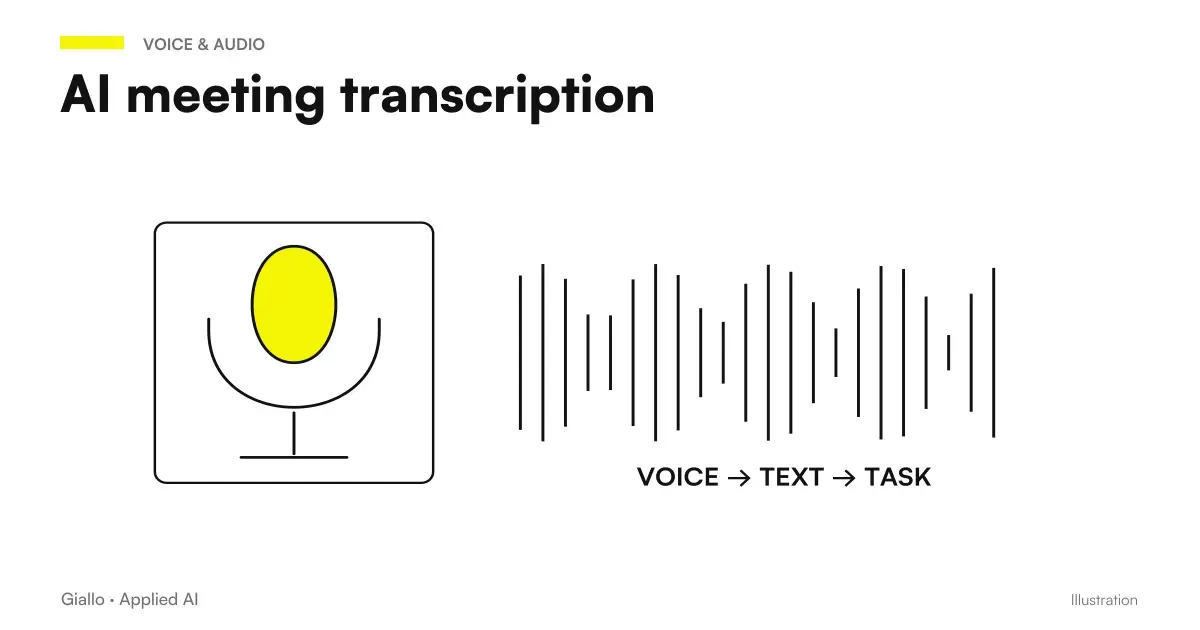
Automatic meeting transcription is one of the most immediate and easiest uses of AI to activate. The value is not in the transcript: A one-hour full text is a document that no one ever reads again.
The value lies in three short lists that today someone writes by hand or, more often, does not write anyone: the decisions made, the actions assigned with a manager and a date, the points left open.
In summary
- Serves the summary, not the full transcript.
- Three useful outputs: decisions, responsible actions, open points.
- Quality depends on audio More than the model.
- Participants go Informed, always.
- Meetings contain delicate material: checking where it ends.
- Keeping audio is almost always useless and complicated.
What it must produce
| Output | Utility | Why |
|---|---|---|
| Decisions taken | High | Avoid discussing the same things again |
| Actions with manager and date | High | It's the only part that generates work |
| Points left open | Medium | Feed next day's agenda |
| Discursive Summary | Medium | Useful to those who were absent |
| Full Transcript | Low | No one reads it again |
The second line is the one that changes meetings. Most of the actions agreed to by voice evaporate because no one has written them with a name next to them. A system that extracts "who does what when" produces more value than any elegant summary.
What determines quality
- One microphone per person beats any better model
- Those who participate remotely with poor audio degrade all transcription
- Overlays are the main problem in animated meetings
- Own names and technical terms must be provided in advance if possible
- Large rooms with ambient microphone give mediocre results
The first point is the advice with the best cost-benefit ratio: before evaluating instruments, evaluate as recorded. A meeting taken from a laptop in the middle of the table will always produce modest results.
The privacy issue, which is serious here
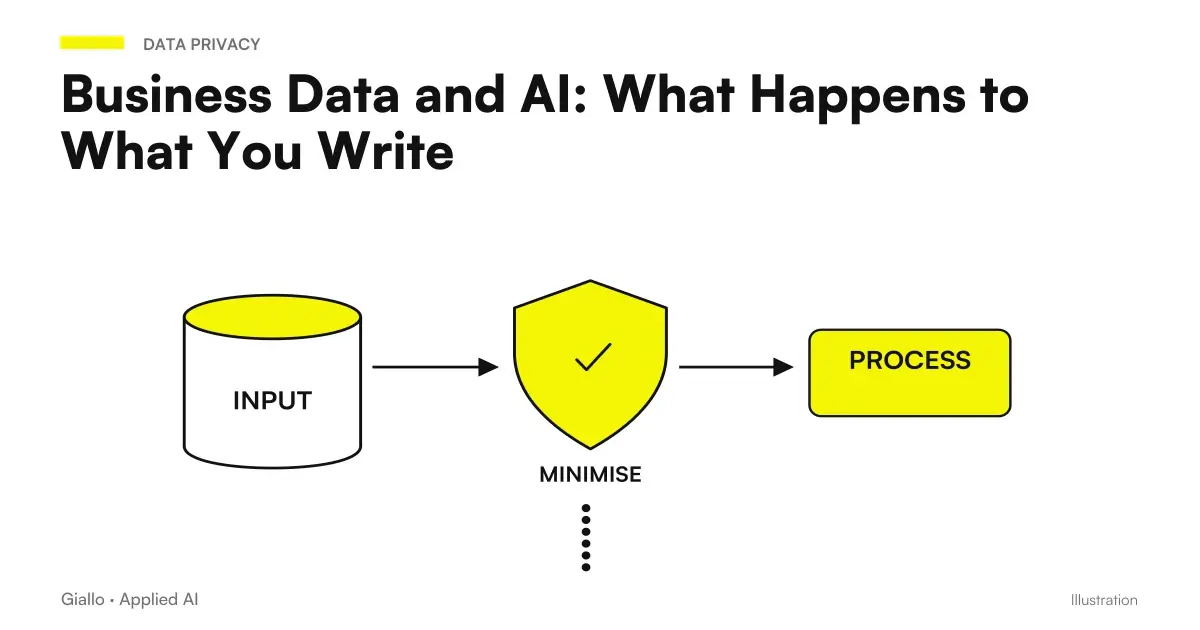
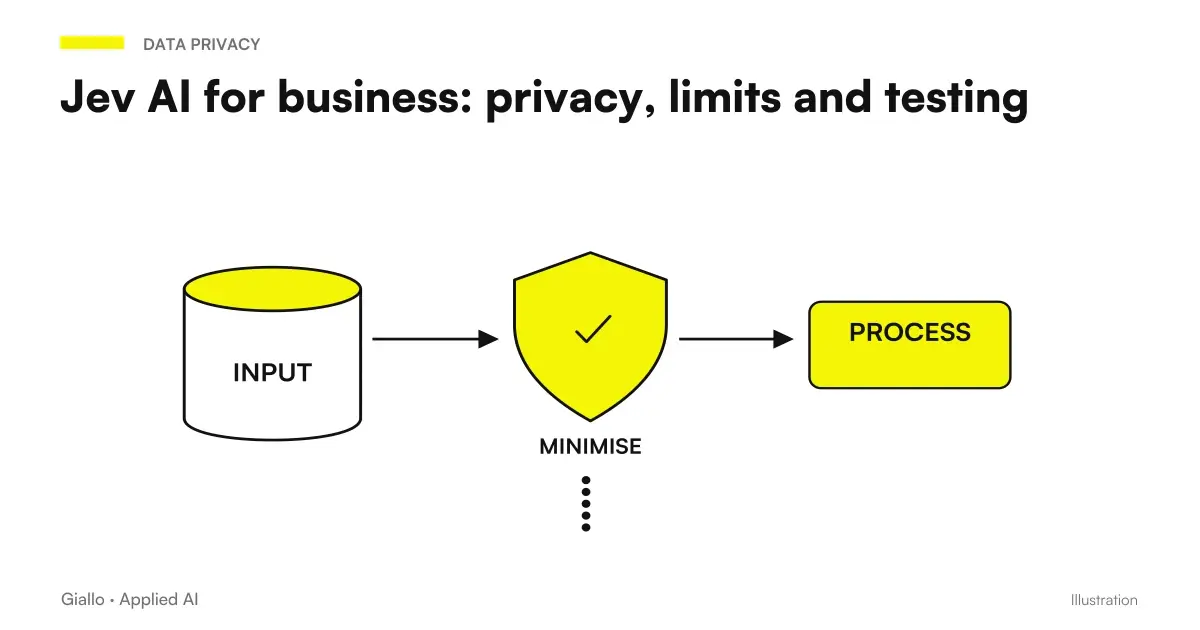
Business meetings are among the most delicate content in existence: we talk about customers, margins, strategies, and often people. Sending all this to an external service requires the verifications described in Business Data and AI.
- Inform participants at the beginning, by voice, not just with an icon.
- Checks where the data resides and whether it is used to train models.
- Decide what to store: synthesis is almost always enough.
- Determine how long and who accesses it.
- If employees participate, consider also the regulations on controls.
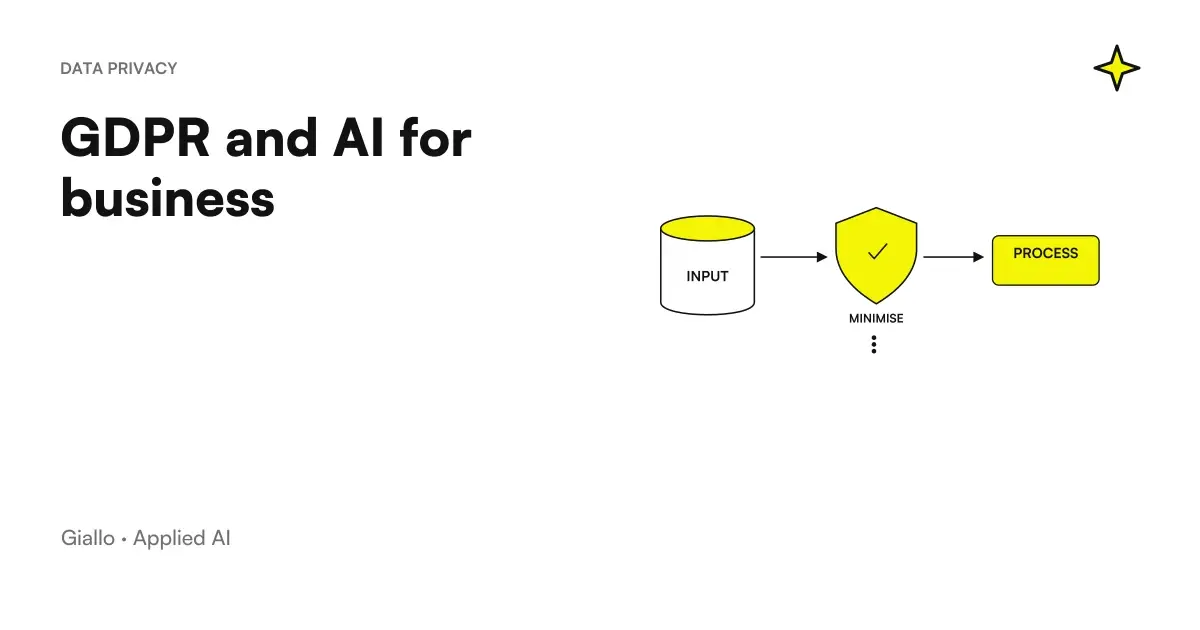
Point 5 is what companies neglect: a meeting where you evaluate someone's performance, transcribed and preserved, is a material that touches on the working relationship. The picture is in GDPR and AI in the company.
Practical examples
Weekly business meeting. The useful output is the actions on the customers: who calls who, by when. Before they were lost in the memory of each. The automatic synthesis turns the meeting into an operational list.
Meeting with a client. Here the theme is twofold: you need the consent of the counterpart, and the content is covered by confidentiality. It is worth asking yourself if you really need to record or if you need enough notes.
Technical meeting with many specific terms. Transcription fatigues on product names and internal acronyms. Providing a glossary in advance greatly improves the result and is a device that few adopt.
How it is set to be used
An activated and never consulted transcription tool is the norm, not the exception. The difference between a project that changes meetings and one that produces ignored documents lies in three organizational choices.
Who receives the summary and when. If it gets to everyone via email, it ends up in the readings folder. If it gets to people with assigned actions, with their highlighted actions, it is read.
Where the stock ends. A list in a document does not produce work. The same actions inserted where the team already looks — the task manager, the work chat — are carried out.
Who controls the synthesis before it circulates. We need someone to verify in two minutes that the decisions are correctly reported. A wrong synthesis that circulates as a verbal creates more problems than no synthesis.
- Define who rereads the summary before sending.
- Send each one his own actions, not the whole document.
- Take actions where the team already works.
- Start again from the next meeting by asking for an account of the open points.
Point 4 is the one that closes the circle: if no one picks up the open points, the system produces archive instead of continuity.
Value for those who were absent
There is a secondary use that companies discover after and that often becomes the main: allow those who weren't there to line up in two minutes.
In SMEs people skip meetings for legitimate reasons sono they are from a customer, they are on vacation, they have an urgency. The recovery takes place by asking a colleague, who tells his own partial version. A structured synthesis eliminates that step and makes the recovery uniform.
It is also why it is worth looking after the quality of the synthesis more than completeness: those who were absent need the decisions and actions, not the full account of the discussion.
When Not Needed
It is worth saying, because the tool is easy to activate and this leads to activating it everywhere.
It is not useful in short and operational meetings, where the participants come out with clear ideas and actions are two. The cost of managing the synthesis exceeds the benefit.
It is not useful in two-way conversations, where the speaker can take notes effortlessly and where the recording changes the tone of the exchange.
It does not serve in meetings where people are discussed, for the reasons seen above.
Instead, it serves in recurring meetings with multiple participants, where actions are lost, where someone is often absent and where decisions already made are re-discussed because no one remembers what they were. These are the meetings where a structured synthesis changes something, and that's where it's best to focus instead of activating the recording anywhere out of habit.
Mistakes to Avoid
- Keeping the full transcript. Nobody reads it and complicates privacy.
- Not informing participants. Transparency and climate issues.
- Evaluating instruments before microphones. Audio matters more.
- Don't pull the stock. It is the part that generates value.
- Leaving default settings on conservation and training.
- Recording meetings on people without assessing the implications.
How to apply it in the company
Start with a recurring, internal meeting, not a customer meeting. Check how you record and, if necessary, fix the microphones before anything else.
Configure output on three lists — decisions, actions, open points — and turn off audio retention if you don't need it. Then look, after a month, if the extracted actions are actually carried out: it is the only way to know if the tool is changing something or is just producing documents.
The overall picture is in voice AI for companies.
The border with people assessment
There is a use of transcription that must be approached with caution and that some tools propose as functionality: analyze how the participants speak, who intervenes more, the tone of the conversations.
When this data is about employees and could be used to evaluate them, you enter an area that touches on remote control regulations as well as privacy. It is not a question of sensitivity: it is a question of precise rules that do not depend on the intentions of those who activate the function.
The practical distinction is between use synthesis to work better and using data on conversations to evaluate people. The first is the use for which these tools make sense; the second must be addressed with those who follow the staff, if you really want to face it.
In most SMEs the most sensible answer is to disable these functions altogether: they produce data that no one will really use and create a climate of mistrust that reduces the usefulness of the main tool. The data verifications are in GDPR and AI in the company.
Conclusion
Automatic transcription is useful when producing a few operational lines, not when producing a long text. Decisions, actions with a name next to them, open points: three lists that really consult each other.
Quality depends on audio more than software, and the privacy theme here is more serious than anywhere else because meetings contain the most sensitive material a company produces.
AI becomes useful when it enters processes. Giallo Studio helps SMEs and teams to build concrete, measurable and sustainable automations.
One last operational recommendation: decide on retention before activating the tool, not after the first month of registered meetings. Changing settings after that still leaves an archive that someone will have to manage, and in business meetings that archive is the most sensitive material that the company produces. The complete picture of the data coming out of the company is in Business Data and AI.
Giallo Studio guides: methodology and sources
How we apply it in the company
Related resources
FAQ
How reliable is transcription in Italian?
With clean audio and one person speaking at a time, it is very good. It worsens significantly with overlapping voices, room microphones in large spaces, strong dialects and unstable connections. Audio quality matters more than the model used.
Is the value the transcript or the summary?
The summary, almost always. A full transcript of an hour is a document nobody rereads. What is needed is the decisions made, assigned actions with an owner and unresolved points: three short lists people actually consult.
Should I notify the participants?
Yes. Recording or transcribing a meeting without informing participants is a transparency issue and, if employees are involved, also concerns monitoring regulations. Provide the information at the start, rather than hiding it in a calendar setting.
Where do the recordings end up?
It depends on the service and must be checked beforehand. Business meetings often contain strategic information, client data and assessments of people: they are among the most sensitive content a business can send to an external service.
Do I need to keep the audio?
Almost never. In most cases, a summary is sufficient, and not retaining audio greatly simplifies both privacy and storage. Decide explicitly what to keep and for how long, rather than leaving the service's default setting.