
ChatGPT vs Copilot: which to use in business?
ChatGPT vs Copilot comparison for businesses: Flexible assistant or AI built into Microsoft 365. Privacy, permissions, costs and when to choose which one.
Reading time: 11 min
ChatGPT vs Copilot is a comparison of products and work configurations, not a race between two models. For a company, it counts the task, the authorized sources, the place where people operate and the full cost. Don't assume that ChatGPT only sees what you paste or that every Copilot account already has access to all Microsoft 365 data. The context must be verified in the actual plan.
On the Microsoft side, chat included, standard access in applications and Premium have different rights: the License Guide It distinguishes these experiences. Opening the same app with different accounts does not assign the same functions or commitments on the data. For ChatGPT, authorized features and integrations in the chosen workspace should be checked.
This guide proposes a comparison method for Italian SMEs and teams: same activities, representative examples, review and data rules. The scenarios are hypothetical. They do not attest to a universal advantage of quality, a savings obtained or a configuration already made by Giallo.
In summary
- Compare products, plans and configurations, avoiding conclusions based only on the name of the model.
- Context in Copilot varies between provided content, apps, and authorized organizational recovery.
- The Corporate chat included does not coincide with a free personal account nor with all Premium rights.
- Non-training, access control, and geographic residence are separate verifications.
- Use the same cases, evaluate corrections and review time, then compare the total cost.
- The use of both may be reasonable for distinct needs; it must be justified by the process and data rules.
ChatGPT and Copilot: what they are, in short
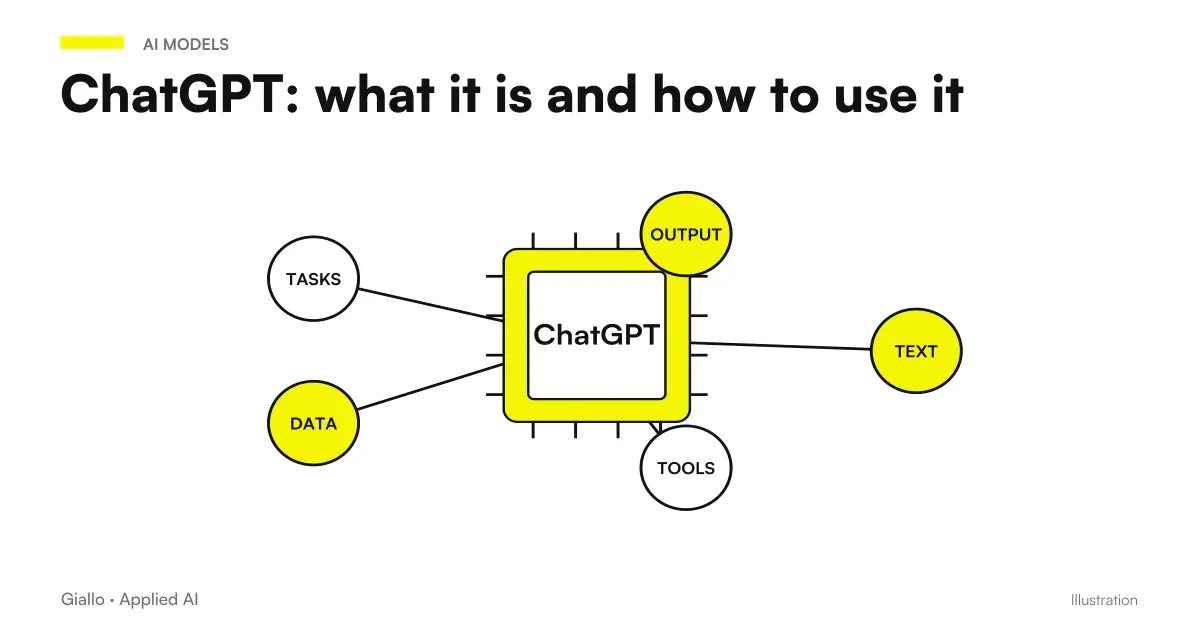
ChatGPT is the OpenAI product with which a user can interact in natural language and work on materials through the functionalities of the chosen plan. In business comparison, it specifies the workspace, authorized integrations, and actually available sources. "Generalist" describes a range of uses, does not mean that the only way to provide context is copy-paste. For the overview read What is ChatGPT.
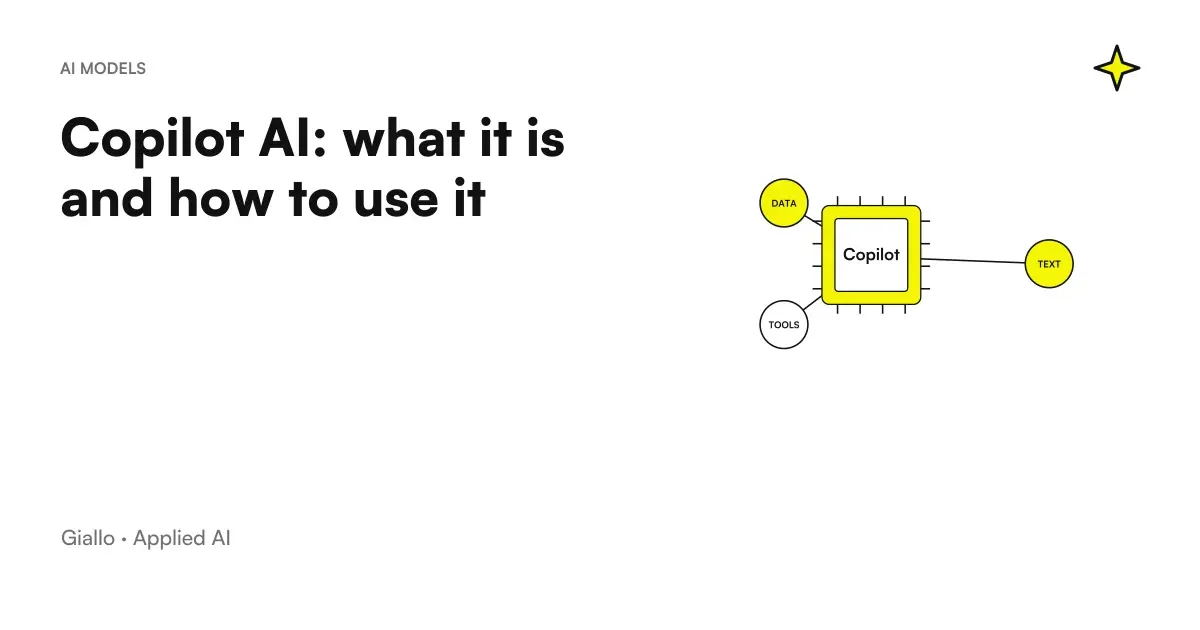
Copilot It includes multiple Microsoft experiences. A request in the chat, a change to the open file, and a search in the organizational context are different operations. Copilot Chat (Basic), Microsoft 365 Copilot (Basic) and Premium have separate rights; the chat guide with and without add-ons makes it clear that access to work is not identical for everyone. What is Copilot AI to distinguish families.
The model’s name does not settle the choice. In some Excel experiences, Microsoft documents GPT and Claude options, depending on the licence and administrative consent for Anthropic: Excel FAQ. Do not therefore infer a product from each other or a guarantee on the quality of all functions from an LLM family.
Proper evidence records which source enters the request and which operation is allowed. If an assistant is to synthesize a contract, evaluate completeness and references; if he is to modify a sheet, evaluate calculations, intervals and reversibility; if he is to search between documents, evaluate authorizations and version of the source. Interface preferences come after these requirements.
What Really Matters for a Company
A useful comparison uses the same task, the same sources and the same criteria: the Prompt examples for Copilot in the office make it clearer what to ask and how to verify the output.
When evaluating AI for work, the characteristics they weigh are not "how bright it is in the abstract", but four concrete factors.
- Integration with the stack. Does AI have to act where you already work (file, email, management software) or do you have to do copy-paste by hand? Integration is what turns a toy into a tool.
- Privacy and data processing. Are the data you enter used to train the model? Where are they stored? Accounts and contracts can change commitments; a chat included in a business plan should not be treated as a personal chat because it does not have a surcharge.
- Permissions and Governance. Does AI respect who-can-see-what in the company? An assistant who fishes from confidential documents without control is a risk, not an advantage.
- Real cost. Not only the price per user, but also the requirements (necessary licenses, minimum thresholds) and how many people will really use it.
On these four axes the configuration of the products may differ. The comparison must record what your plan really allows.
ChatGPT vs Copilot: the comparison table
The table uses criteria to verify, not a performance ranking. Compile it for the plan you will assign to users, including integrations approved by the organization.
| Criterion | ChatGPT in the chosen workspace | Copilot in the chosen license |
|---|---|---|
| Task | Check which functions cover the activity | Verify chat, app or agent needed |
| Background | Materials and sources authorized in the workspace | Supplied material or work recovery according to rights |
| Application | Check the available tools and any external steps | Controls standard/priority access and supported client |
| Accesses | Check allowed roles, sources, and operations | User Verification, Permits, and Agent Identity |
| Data processing | Read Plan and Function Conditions | EDP laws, subprocessors and route conditions |
| Useful quality | Same examples, same revision | Same examples, same revision |
| Full cost | Plan, consumption, configuration and training | Base, add-on, eventual consumption, configuration and training |
Microsoft describes the prerequisites and differences of rights in Copilot requirements. On OpenAI business treatment the reference is the official company data page. A difference in the price list does not prove that a system produces more value: you need to include the work that is left to people.
For example, a short summary may seem better because it omits exceptions. In the comparison, first choose what needs to be there: amounts, commitments, dates, source and non-determinable points. A longer but more verifiable output may be more useful than a slide that requires you to start reading again. This is a business column, not a universal benchmark.
When to choose ChatGPT and when to Copilot
Choose Copilot when
- The company lives inside Microsoft 365 and spends most of the day there.
- Governance matters a lot: permissions, data residency, IT control.
- You want to reduce copy-paste: AI must act on real files and emails.
- Users do not want to "learn another tool", but have AI where they already work.
Choose ChatGPT when
- Flexibility is needed on various tasks: texts, research, reasoning, code.
- The work is not related to Office, or uses tools other than Microsoft.
- You want to experiment and iterate quickly before choosing a fixed system.
- You need a generalist assistant for multiple departments, not just for Office productivity.
The two columns indicate candidates to try, not guaranteed results. A company can authorize both for distinct needs, or choose only one tool if it covers the process. For each role, it records what functions and sources are needed; it also assesses whether the user already has access to the included corporate chat before adding a license.
Practical examples
Three scenarios hypotheticals of Italian SMEs, not case studies or customer results. The configurations described require functions and permissions actually available.
1. Consulting firm all about Microsoft 365 Co Copilot. The team spends the day between Outlook, Word and Teams. With Copilot, those who enter late to a call read the automatic summary; drafts of letters start from the business model inside Word; back mail is disposed of with suggested answers that they draw from the right documents, respecting the permissions. The pilot's goal is to check if they decrease passes and corrections, while maintaining control over sources and commitments.
2. Marketing agency with mixed stack — ChatGPT. Here we work on Google Workspace, Notion, design tools and a thousand different cases: first drafts of articles, creative angles, rewrites, analysis of a brief. The team considers a licensed ChatGPT workspace as a candidate and verifies on real briefs whether the available tools cover the work. The result should be compared with the alternatives, not deduced from the mixed stack. For comparison on the copy side can also help the Best AI for Writing.
3. Service company that uses both. Administration works in Excel and Outlook: Test Copilot on reports and mail, also recording review time. The commercial and marketing department uses ChatGPT for follow-up, content and research. A single shared rule: which data can be inserted into each tool and which cannot. The configuration must be motivated by the team's activities, as the guide explains Best AI for Companies.
In all cases the point is not "which AI is smarter", but which best fits into the processes and data you already have.
Privacy, Permits, and Governance: The Real Discriminator
For the Microsoft side, read the detail on Copilot and business data: protection of the plan, authorisations and conditions of the model should not be reduced to the only free/paid distinction.
Protections occur on the actual route, not dividing the instruments into "risky free" and "safe paid". Copilot Chat can be included in eligible business licenses and have Enterprise Data Protection with work identity: Microsoft EDP. A paid personal account, on the other hand, should not be automatically assimilated to an enterprise service.
OpenAI declares non-training by default of the organizational data of ChatGPT Business/Enterprise and the other business services listed in the Business Documentation. Microsoft documents that prompts, responses, and Graph data of covered enterprise paths do not train LLM foundations: Privacy Copilot. These are conditions of the services indicated, not authorizations to enter any data.
Permissions and identity. In Microsoft 365 recovery, Copilot uses the authorized perimeter. Too large a share remains to be corrected; the identities employed by the actions also occur in the agents and connectors. On the ChatGPT side, it controls workspace roles and authorized function accesses. A copy-paste policy is useful but does not exhaust the governance of a source-related system.
Geography and subprocessors. Non-training and residency are different aspects. The Microsoft page on Anthropic indicates that its models are currently excluded from the EU Data Boundary and applicable in-country commitments. Assess the company's requirement before enabling a multi-model option; do not extend a general tenant warranty to each experience.
For personal data, the responsible person must evaluate purposes, legal basis, accesses, agreements and storage. The chosen license does not replace this work. Product comparison becomes useful when it clarifies who sees a source, what operation it can perform and who intervenes on an error.
How to decide in 4 steps
If you have to choose for your company, follow this path instead of relying on word of mouth.
- Look where the team works. If the day is within Microsoft 365, Copilot takes the lead. If the stack is mixed, compare the authorized integrations and the necessary steps, without assuming a winner.
- Define data requirements. Which accounts, deals, and routes are allowed? Don't exclude included enterprise chat just because it doesn't have an extra charge.
- Choose a pilot process. A concrete case (administrative mail, drafts of content) on which to measure saved hours and avoided errors.
- Measure and then extend. If the pilot gives numbers, widen; evaluate if both tools are needed for different roles.
What if I use non-Microsoft tools (Google Workspace, Notion...)?
In that case it measures which sources and actions are to be linked. Do not assume that Copilot is free of extensions or that ChatGPT already has all the necessary ones. Compare authorized paths and integration cost; even a function in the existing stack can cover the need.
Mistakes to Avoid
- Confusing the two products. "So much is the same AI" is false on a practical level: they change where they live, how they process the data and what permissions they comply with. The underlying technology is not the criterion of choice.
- Confusing a personal account with included enterprise chat. The criterion is the authorized route and the applicable contract, not the price alone. See also AI Hallucinations: the output must always be verified.
- Buying Copilot without checking requirements. Copilot requires eligible Microsoft 365 licenses: without the right base, the account is different from what you imagine. Check the prerequisites first.
- Choosing "the most powerful" on the card. For the company it counts the interlocking with the stack and the data, not an abstract benchmark. It starts with the process, not the ranking.
- Skipping the data policy. Even with business plans, without clear internal rules someone will glue the wrong thing. Governance is also organizational, not just technical.
How to apply it in the company
The choice between ChatGPT and Copilot is rarely the real problem: the problem is insert AI into the right processes without creating data risks. Even a ready assistant can be useful: its value becomes verifiable when the team defines task, sources and control.
In practice, it is best to start with a time-consuming process —administrative mail, first drafts of content, internal research in documents.to choose the tool that best fits and define data rules. From there you can tell if a ready assistant is enough or if you need something more structured, such as a process automation connected to your systems or a AI Agent which performs multiple steps. To orient yourself between the options you may need guidance how to choose an AI model.
If the evidence shows that the need is a sequence between multiple systems, you can evaluate the automation of business processes. In The Lab find interactive examples to view the path.
To separate product comparison from LLM comparison, read Claude and GPT: comparison criteria and Claude, GPT and Gemini. A model name does not assign rights to the business context.
Conclusion
ChatGPT vs Copilot you decide on a configuration and a process, not on a universal winner. Specifies the necessary sources, actions, and controls; tests the same cases with identical review criteria. On the Microsoft side, the assigned license distinguishes chat included, access in the apps and Premium: keeping them separate avoids buying a different right than what you need.
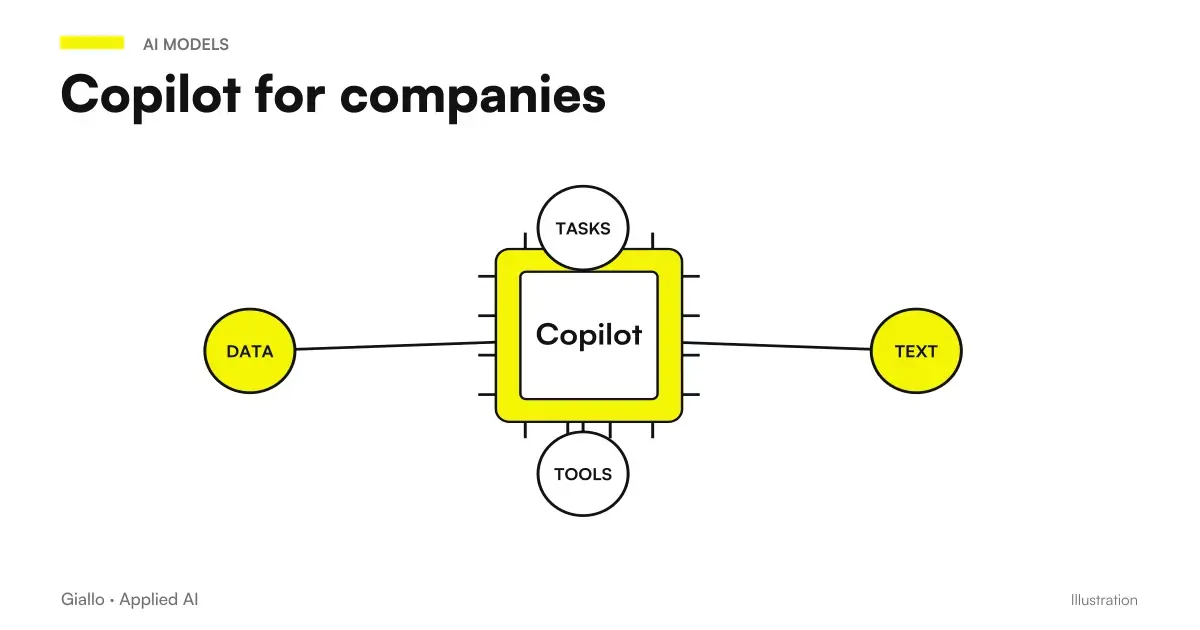
A useful pilot outcome is a list of covered activities, required corrections, costs and limits yet to be resolved. From here you can choose a product or distribute distinct needs among authorized tools. Copilot for companies and ChatGPT for companies They deepen their respective paths.
To compare tools and data on the team's concrete work, Giallo Studio offers AI consulting with a pilot and agreed decision criteria.
Giallo Studio guides: methodology and sources
How we apply it in the company
Related resources
 ChatGPT: what it is and how to use it
 Copilot AI: what it is and how to use it
 Copilot for companies
 Best AI for business: which to choose in October 2026?
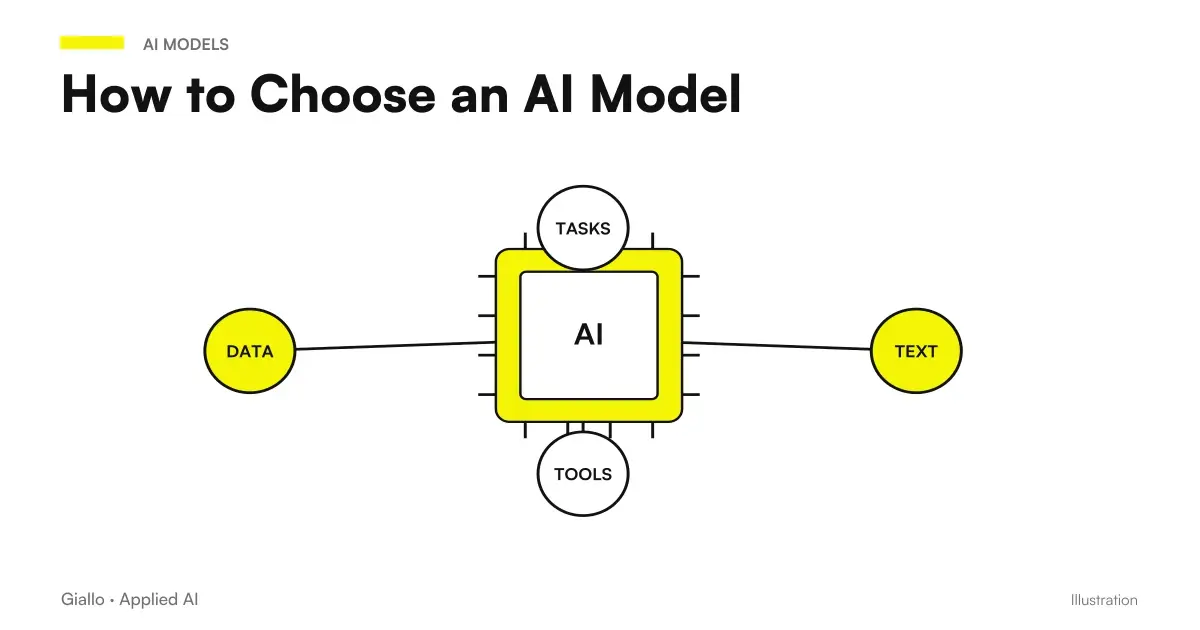 How to Choose an AI Model
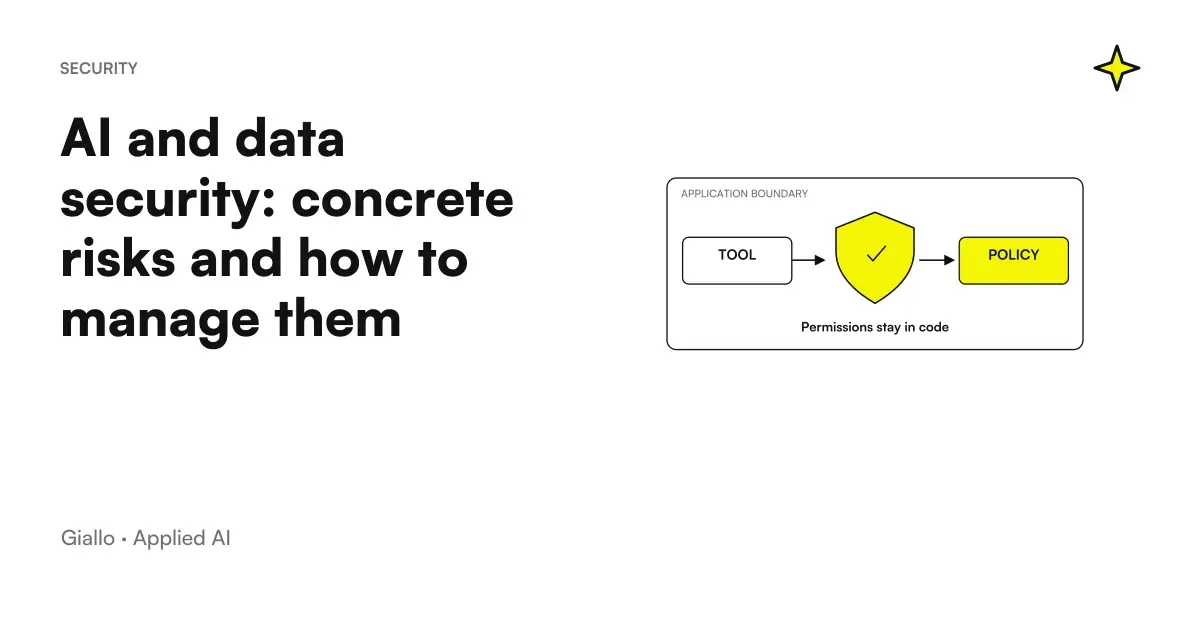 AI and data security: concrete risks and how to manage them
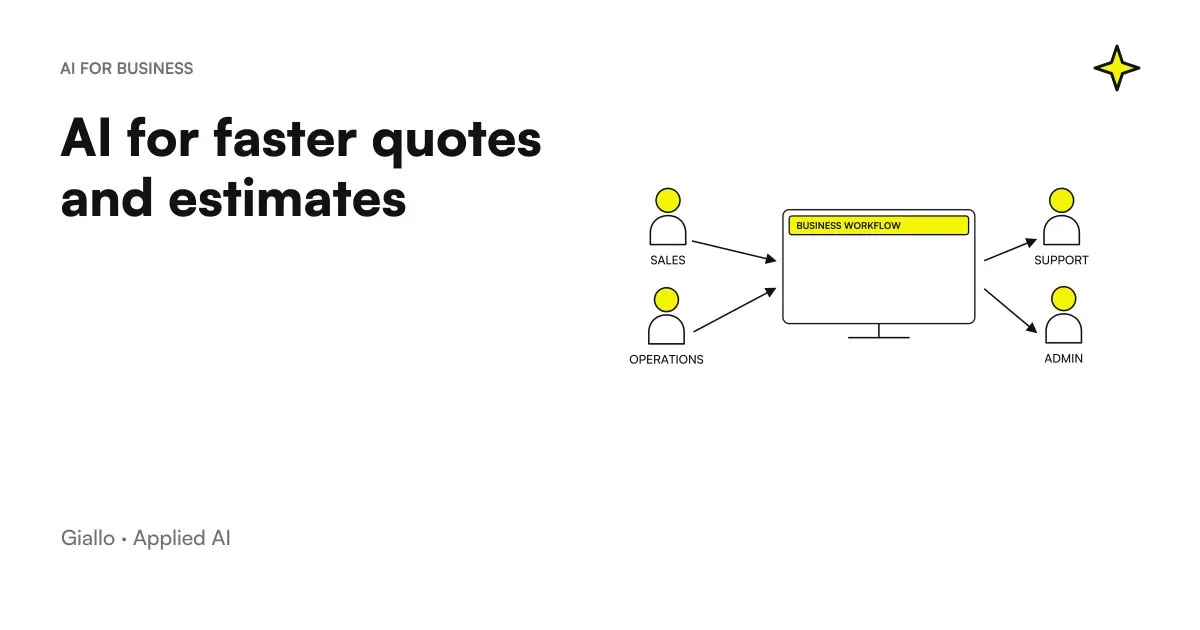 Creating quotes with AI: how to speed up the process
 AI follow-ups: keep track of every contact
Other direct comparisons
The same criteria applied to other model pairs.
- ChatGPT vs Claude: which one to choose
- ChatGPT vs DeepSeek: Which to Choose
- ChatGPT Plus vs Claude Pro: which subscription to choose
- ChatGPT vs Gemini: practical differences
- Free ChatGPT vs ChatGPT Plus
- ChatGPT vs Grok
- ChatGPT Ads vs Google Ads (and Meta Ads): differences and when to use each
- ChatGPT vs Perplexity: Research or Generation
- DIY AI or agency: how to decide
- Claude vs DeepSeek: Which to Choose
- Subscription or custom AI: which makes sense?
- Claude vs Gemini: Which to Use
FAQ
What is the difference between ChatGPT and Copilot?
They are products with different plans and integrations. A useful comparison specifies features, sources, permissions and data processing in the assigned configuration. It is incorrect to describe ChatGPT as only copying and pasting, or every Copilot account as already connected to the entire tenant.
ChatGPT or Copilot: which is better for a company?
It depends on the process and the authorised features. Test the same tasks, measuring errors, review time, transfers between systems, and total cost. Fit with your existing stack is a useful criterion, rather than proof of superiority.
Do Copilot and ChatGPT use the same model?
They are not equivalent. Microsoft also documents GPT and Claude options in some experiences, depending on the licence and administrator consent. The model alone does not determine the product's integrations, access or data terms.
Is your business data safe with Copilot or ChatGPT?
Enterprise services document specific commitments, to be verified by function and account. Exclusion from training, access and geographic data residency are distinct aspects. Even the included corporate chat can have enterprise protections; the price is not enough to classify the route.
How much do ChatGPT and Copilot cost for companies?
The comparison must use the pricing pages and the actual rights of the chosen plan. In Microsoft the included chat is different from the add-on and pay-as-you-go agents. For both consider training, configuration and revision in addition to the price of the plan.
Can I use ChatGPT and Copilot together?
Yes, if the organization authorizes the routes and each one covers a distinct need. There is no need to add two tools on principle. Define what content and functions are allowed, then check the value per role.