
AI returns and RMA management: prepare the case for an operator
AI returns management: link orders and products, collect reasons and attachments, and prepare the case. B2B RMA, B2C returns and refunds are distinct steps.
Reading time: 12 min
The management returns with AI can collect information and prepare a practice related to order and article, ready for operator verification. It must distinguish reception, re-entry authorization, control of the goods and economic decision. Opening a practice does not mean approving a refund, and RMA B2B and rendered B2C require paths consistent with the applicable relationship and policy.
Here we face the after-sales microprocessor, not the whole e-commerce with AI or any assistance ticket. Official sources verified the 9 October 2026, with hypothetical Italian scenarios. The guide AI for businesses helps decide whether this queue merits the first pilot.
In summary
- The request must be linked to an order and the correct lines.
- Declared reason and verified fact must remain distinct.
- B2C policies and B2B agreements should not be made equivalent by the model.
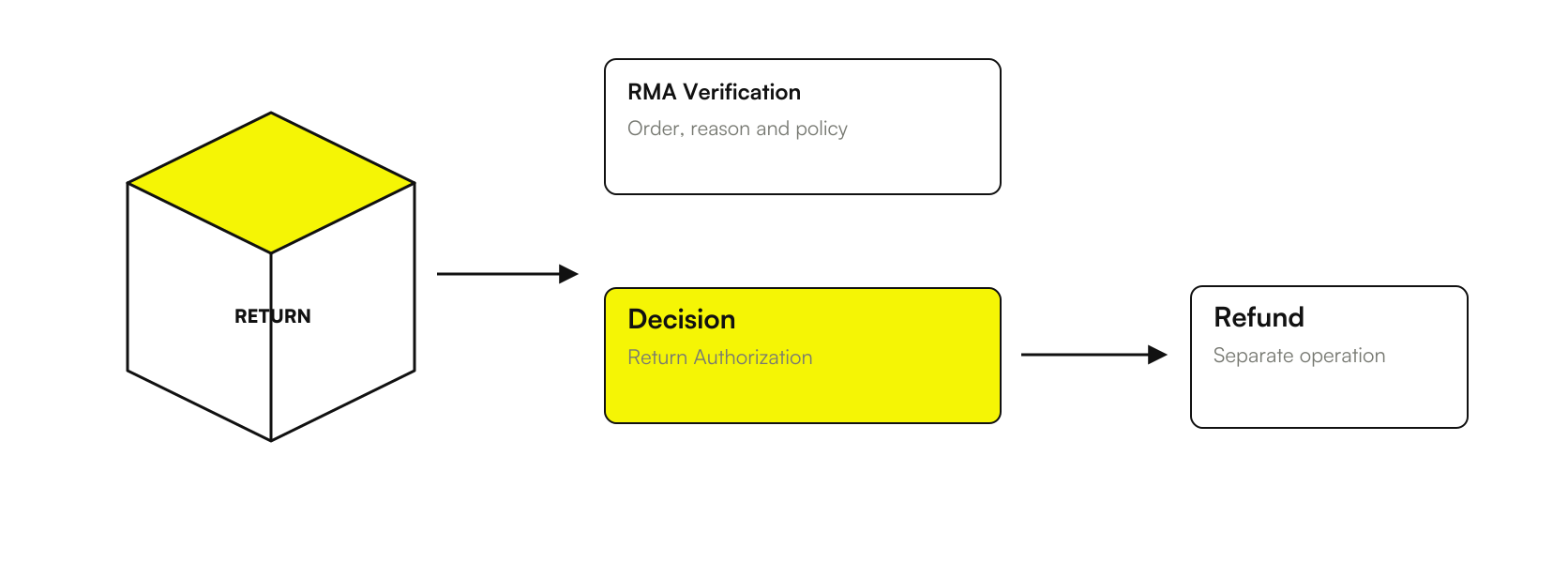
- Confirmation of receipt, authorization and refund are separate steps.
- An incomplete or doubtful case must have a useful path to the operator.
Which step to automate first?
Start from the preparation: identify the request, collect the order reference, understand which article concerns and report the missing data. It is a concrete function that can help the operator without making economic decisions immediately. The customer must know what has been acquired and what remains to be verified.
Do not use a single function for return, cancellation, technical assistance and complaint. The person can use similar words for different needs. The system must propose the correct path, but leave the possibility of revision. A damaged product and a badly chosen size can arrive in the same channel without having the same treatment.
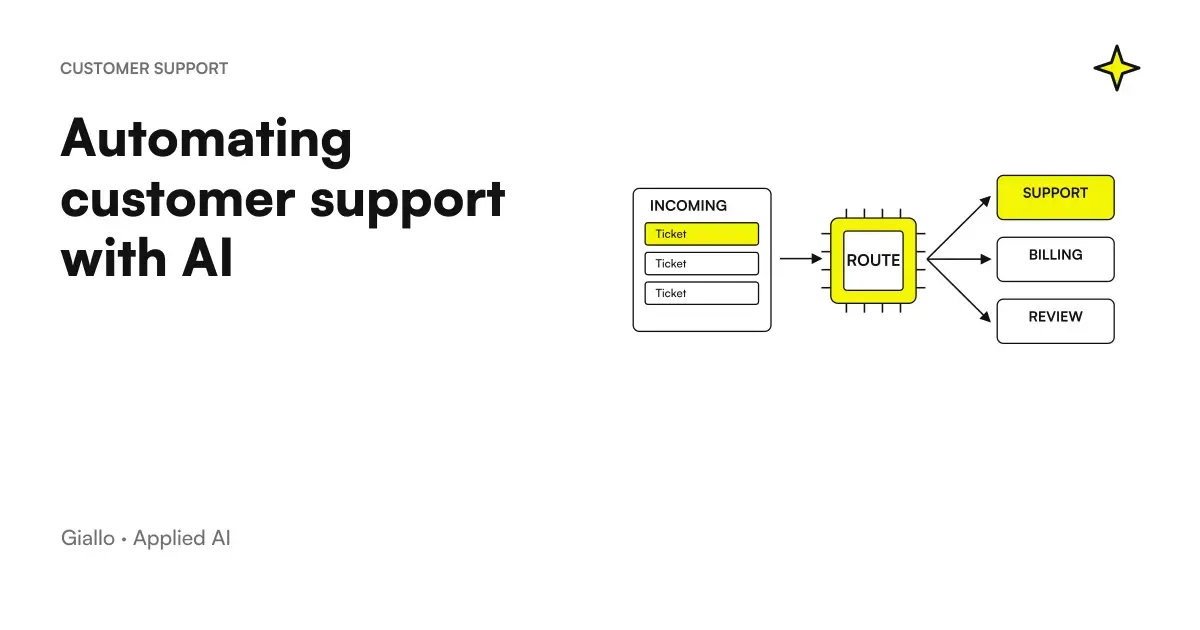
The Guide to AI for ticket management covers the general queue; here it serves a practice with article and status of its own. The difference is important to avoid a closed ticket while the goods have not yet returned or a refund is still being assessed. The report must follow the actual process.
B2B, B2C and RMA: which policy to use?
The project must identify the type of report and the version of the relevant policy. It must not automatically apply to a B2B supply the route prepared for the consumer. The conditions must be defined and verified by the service managers, taking into account the case. The model can read an approved source, but not invent rights, terms, or exceptions.
RMA often indicates a process of re-entry authorization and management. It is not proof that any request should have the same economic outcome. The practice must therefore clarify which step is authorised and which decision remains open. An RMA ID can help you follow the good, without being presented as a refund confirmation.
The Shopify returns documentation distinguishes request, review and management actions. It is an official example of a platform, not a universal rule for all businesses. The custom stream must follow data, permissions, and policy of the context in which it is adopted.
What information do you gather in practice?
| Field | Why It Serves | Checking before decision |
|---|---|---|
| Required ID | Keeps the Path Together | Does not duplicate an open practice |
| Order and Identity | Link to correct report | Verified record access |
| Article and variant | Select the asset concerned | Does not confuse similar products |
| Amount required | Manages partial indentation | It does not exceed what the process allows |
| Declared reason | Orient the verification | Distinguished statement and fact confirmed |
| Relevant Annexes | Prepare for Technical Check | Readable and Really Necessary Source |
| Policy and version | Explains the path applied | Reference suitable for that report |
| State and Responsible | Show next step | Decision and indentation are not compressed |
Not all fields need to be collected anyway. A photo may be relevant to visible damage and unnecessary for a simple size change. The project must motivate the request and limit the material. The system should not turn every contact into a huge file that the operator then has to read.
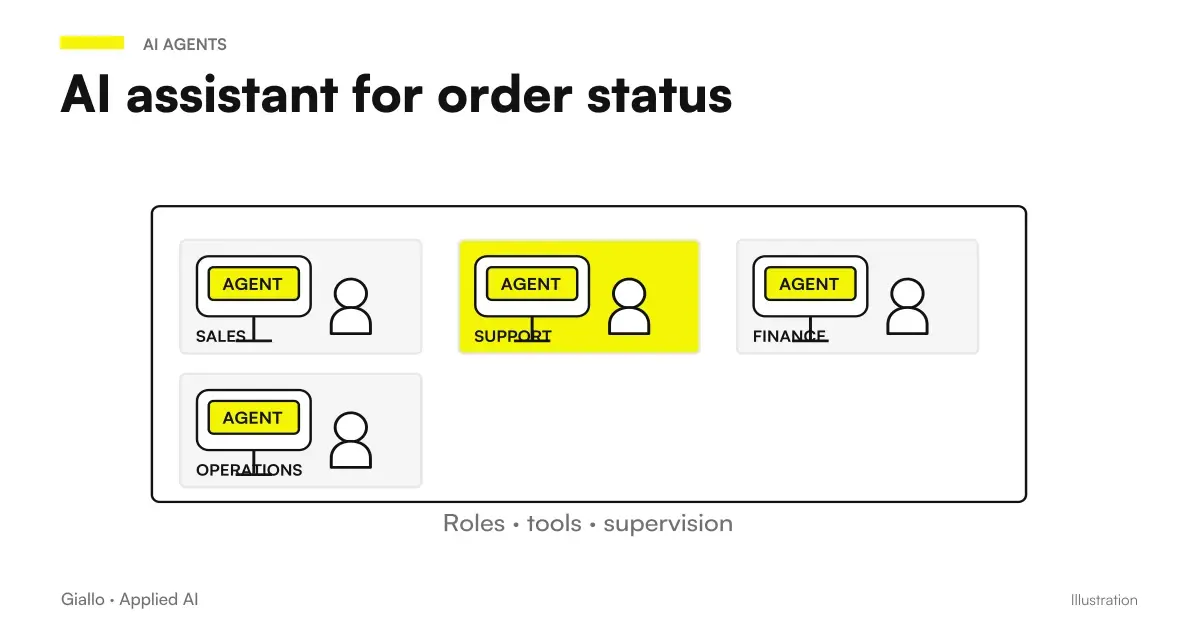
The identity of the practice must not depend solely on the user's text. The guide to assistant for order status It treats identification and reading authorized. The same boundary remains necessary when the person asks for an action on the property or the data of his order.
How to distinguish a complete request from a favorable decision?
Complete means that the operator has the necessary data to evaluate the case. It doesn't mean acceptable. A practice can be well compiled and still require a check or a reasoned rejection. The system must avoid an "all correct" writing that the customer can read as a final result.
Use states that make the route recognizable: received, to be integrated, verified, authorized to the expected passage, goods received and decision completed. Names must be adapted to the service. The person who manages logistics may need a different state from the person who decides the refund; not compress the two responsibilities.
A confirmation of receipt should indicate only what is true: acquired request and reference of the practice. The return instructions must instead arrive from the authorized route. Don't let the model generate labels or invented instructions to make the conversation seemingly over.
What to do with duplicates and partial requests?
The customer can send the same problem from chat and email. It links communications to practice when reference is reliable, avoiding two independent decisions. If you are not sure that they are the same request, propose comparison to an operator. A similar name and a close description do not demonstrate identity.
For a partial order select rows and quantities. The request may relate to only one article of a wide supply. Do not submit the entire order as to be returned. If there are previous practices on the same line, the manager must be able to see them in the authorized perimeter to understand the overall status.
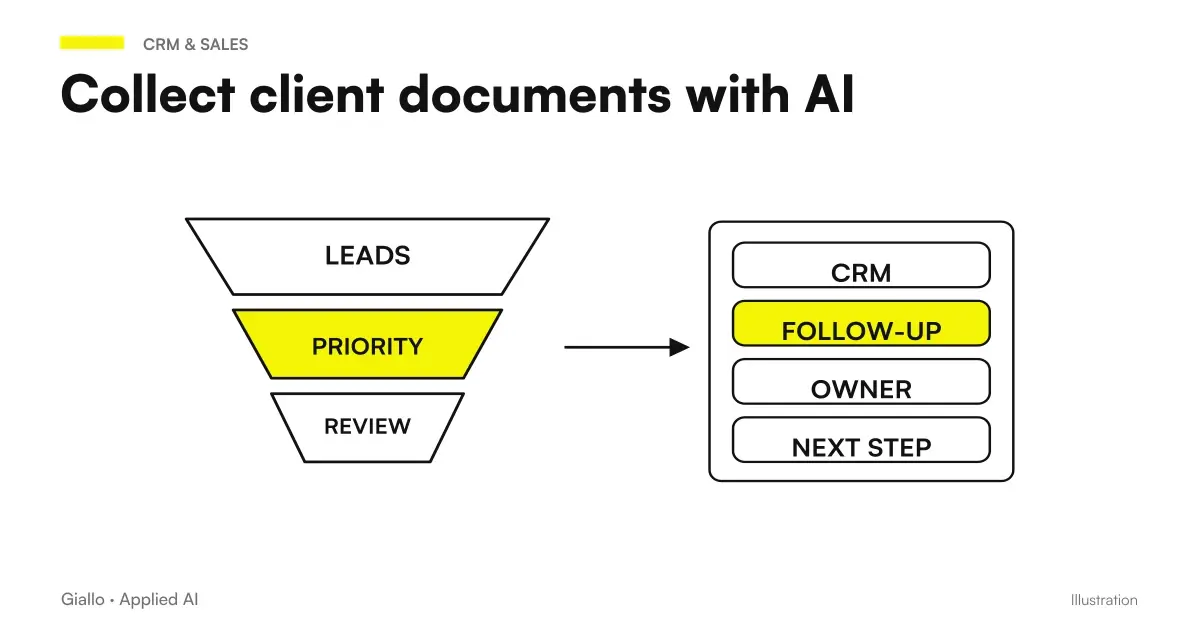
The Customer Document Collection offers a method for handling expected, received, and corrected attachments. Here attachments must remain linked to the good and the reason. A uploaded photo does not automatically close the technical verification.
When to stop and switch to a person?
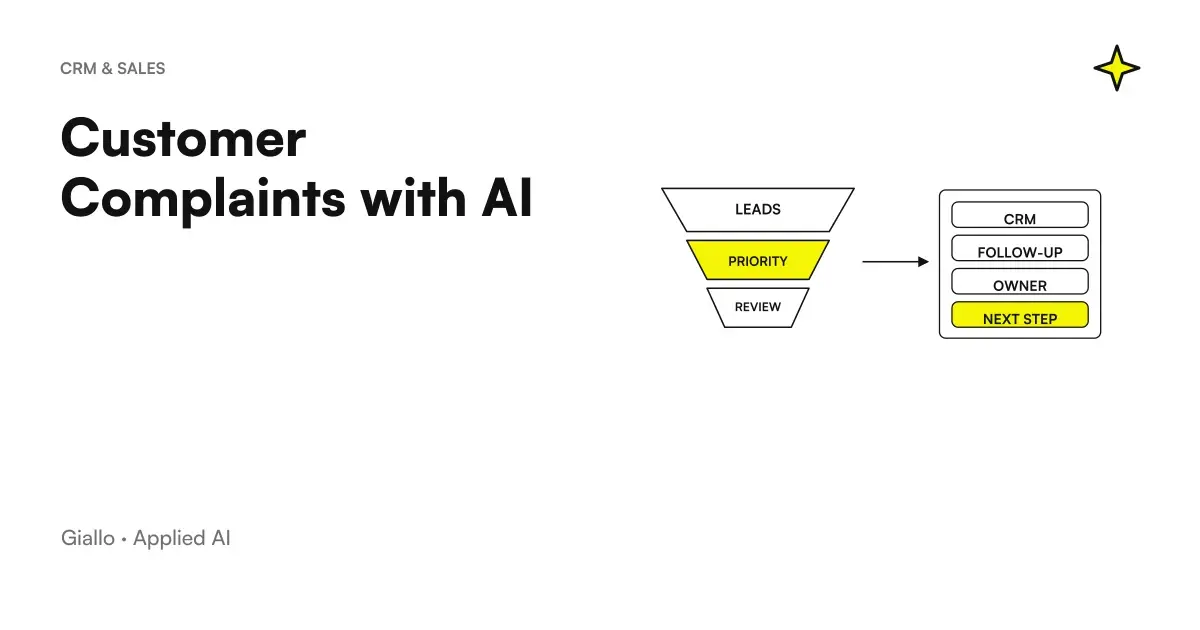
Define cases that require a manager: uncertain policy, contradictory information, unidentifiable order or request that exits the standard path. If the person reports a delicate problem, the function must prepare a useful delivery, not insist with generic responses. The Guide to AI Customer Complaints It faces the escalation of the contest.
n8n documents a human fallback when AI cannot help. However, the project must link it to a queue and a person in charge who is available, with relevant status and information. A notification sent without a handler does not complete the transition. Human fallback.
The policy does not clarify the case: what answer to prepare?
It only confirms the receipt of the request and indicates the reference. Keep order, item, stated reason and point that requires verification. Assign the practice to those who can decide on the policy. Do not add an exclusion or a refund promise deducted from the model without an applicable source.
Why does the refund have to remain a separate passage?
Reimbursement changes an economic fact and may have conditions other than simply receiving the practice. The contract must clarify who decides, what amount is verified and what system performs the action. The first pilot can stop at the preparation and leave that passage in the interface already used by the manager.
The Shopify documentation separates request management and linked streams, with permissions specific to who operates. Don't give your assistant platform permissions just because he can read the order. A consultation and economic action have distinct entrances. The Guide to customer care automation helps to place them in the wider path.
If the refund is assessed at a later stage, record the outcome separately. Do not present a "closed" practice when the customer is still waiting for a step that the system has not completed. The text of the reply must follow the real state, not anticipate it to make the conversation more satisfying.
Two hypothetical scenarios of return and technical re-entry
Hypothetical example: an Arezzo online store collects requests on different items. A customer selects an order line and describes a wrong size. The practice contains article, variant, quantity and relevant policy. The function confirms receipt and prepares the case, without communicating an already approved refund.
The customer also sends an email. The operator sees the relationship with the already open practice and does not create a second path. The test checks line selection and status correctness, not the number of written messages. The process remains linked to the sources of the order and the rules of the store.
Hypothetical example: a Cesena B2B provider receives a component to verify. The buyer requests an RMA with serial and description of the problem. The team distinguishes re-entry authorization, technical evaluation and commercial decision. A photo does not allow to confirm the declared defect on its own, so the person responsible retains that distinction.
The system prepares data and attachments, reports an inconsistent amount and leaves the practice in verification. It does not apply the B2C path text to the professional report. The pilot shows if the operator receives sufficient material and if the instructions come from the correct policy, without presenting the example as a executed customer project.
From physical re-entry to updated practice
Goods may arrive before the case is complete or with a reference that is hard to read. Define how the warehouse links the package to the case and flags quantities or items that differ from those expected. Physical receipt must not automatically close the request: what was received and what still needs checking must be recorded.
The person controlling the asset must be able to read the request and add the relevant outcome, without rewriting the reason stated by the customer. Keep both information. The product received may match the report, show a different problem or require further verification. The system prepares the passage, while the manager interprets the outcome in the approved path.
If the neck contains multiple items, the practice must handle rows and quantities without applying a single decision to everything. In the pilot he proves a partial indentation, a missing reference and a discordant amount. It measures whether the operator can reconstruct the link and communicate the next step. This control makes the flow useful even beyond the initial chat with the customer.
How to build the pilot test sample?
Choose a category and a versioned policy. Prepare complete, incomplete, duplicate, partial, unauthorized and out of perimeter requests. The manager describes the correct path of each case. In the initial phase the system prepares proposals; the decision continues to follow the current process.
Check association with the order, missing data and quality of delivery to the operator. It measures the corrections and errors let through. A system that collects a lot of material can reduce initial questions but increase the verification time: it counts both steps, not just the speed of the first contact.
Define the units of the measure: requests, practices or articles. An order with three lines is not automatically three returns; two messages from the same customer are not two practices. A consistent denominator makes the comparison useful and allows you to decide whether to enlarge the project.
What models and costs to evaluate?
For the first version, you can use rules for the order fields and AI for the free-text reason and preparation of the case. The model must not calculate financial policies that are already defined. The choice between candidates must be measured on the sample: clear classification, data that has not been invented, and the ability to stop when a source is missing.
The budget includes channel, identification, order access, attachment management, operator screen, statuses, and integration. Add policy maintenance and case review cost. The logistical cost of re-entry remains an item of the process, different from calls to the model. No single digit describes all of these conditions.
What errors confuse the customer and operator?
The first is to use the same policy for B2B and B2C. The second is to call “approved” a complete practice only. The third is to apply a full-order decision when it concerns a line. The fourth is to open copies from the same contact. The fifth is confusing RMA and reimbursement, promising an unverified outcome.
Correct words and transitions before adding automations. The customer must know which step has taken place; the operator must know which decision remains open. A fluid conversation that hides these differences can make the process more difficult, even if the initial triage appears fast.
What practice do you start from in your after-sales?
Choose a recurring request type and bring an anonymized practice with its steps. Rebuild what data the customer sends, what the operator double-checks and where the reference is lost. The pilot can better prepare that file without immediately affecting the refund or the entire shop.
To connect request, order and operator, the service of AI agents starts from the perimeter of the practice. The comparison with Order Status and Complaints helps to separate consultation, re-entry and dispute, keeping clear which decision belongs to the person.
Giallo Studio guides: methodology and sources
How we apply it in the company
Related resources
 AI for e-commerce: compliant returns, product descriptions, discounted prices and reviews
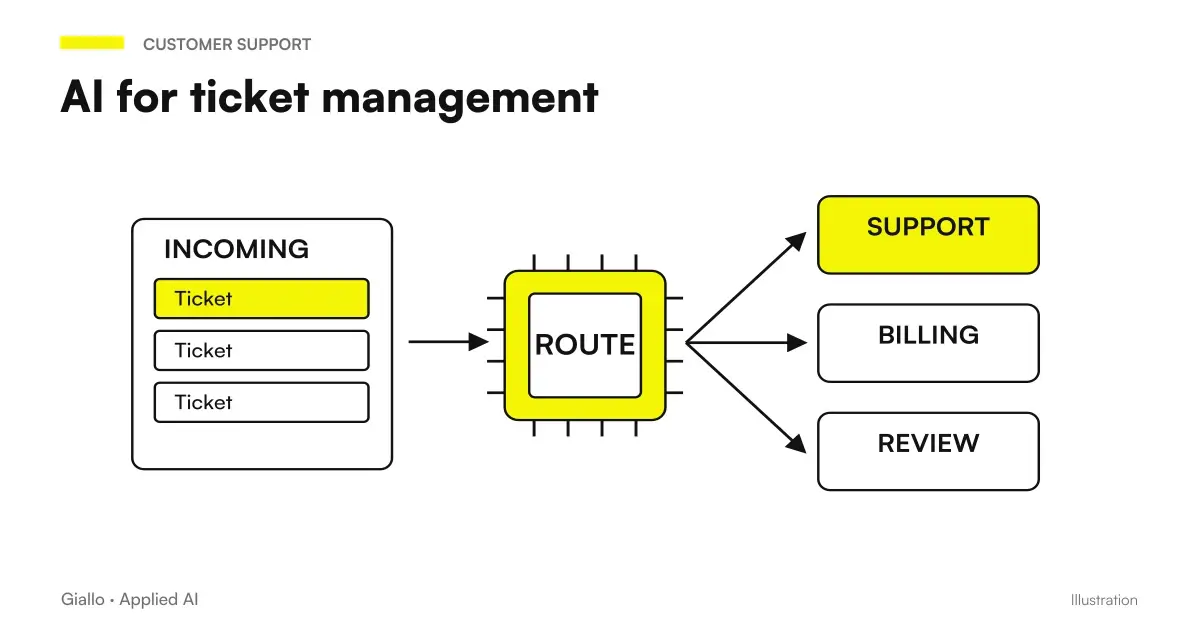 AI for ticket management: shorter waits, more resolutions
 Customer Care Automation: When AI Responds for You
 AI assistant for order status: responses from verified data
 Customer Complaints with AI: Priorities, Facts, and Responsibilities
 Collect client documents with AI: checklists and case status
 AI for businesses: a complete guide to getting started
 ChatGPT Ads for small business: is it worth it? Best-fit sectors and a 30-day test
FAQ
What can AI do in returns management?
It can collect data, link a request to its order and prepare a case for the operator. The policy and outcome must be verified through the intended process. Opening a case does not automatically authorize a refund.
Are B2B RMA and B2C returns equivalent?
No. Identify the type of relationship and applicable policy before proposing a process. Technical authorization to return an item must not be confused with any entitlement or financial decision. Keep the rules separate and approved by those responsible for them.
What data is needed for a return case?
The order, item and quantity, stated reason, any relevant attachments and the policy reference. Appropriate identification or verification is also needed to access the order. Do not collect extra photos or data without a need.
Can the customer immediately receive a confirmation?
An acknowledgment can confirm that the request has been received. It must be distinct from approval of the return and the refund. The wording must not promise an outcome that still needs verification.
What happens if data is missing or the policy is unclear?
Keep the case marked as needing additional information or under review and indicate the next step. The model must not invent a condition to close the request. The person responsible must be able to read the source and relevant data.
How should you measure the RMA pilot?
Measure complete cases, correct links to orders, corrections, handoffs to operators and time between states. Test rejection, duplicate and partial requests. The number of refunds does not measure triage quality.