
AI for cleaning companies: specifications, shifts, DUVRI and safety data sheets
AI for cleaning companies: quotes from specifications, early-morning cover, customer reports, DUVRI and staff answers based on safety data sheets.
Reading time: 9 min
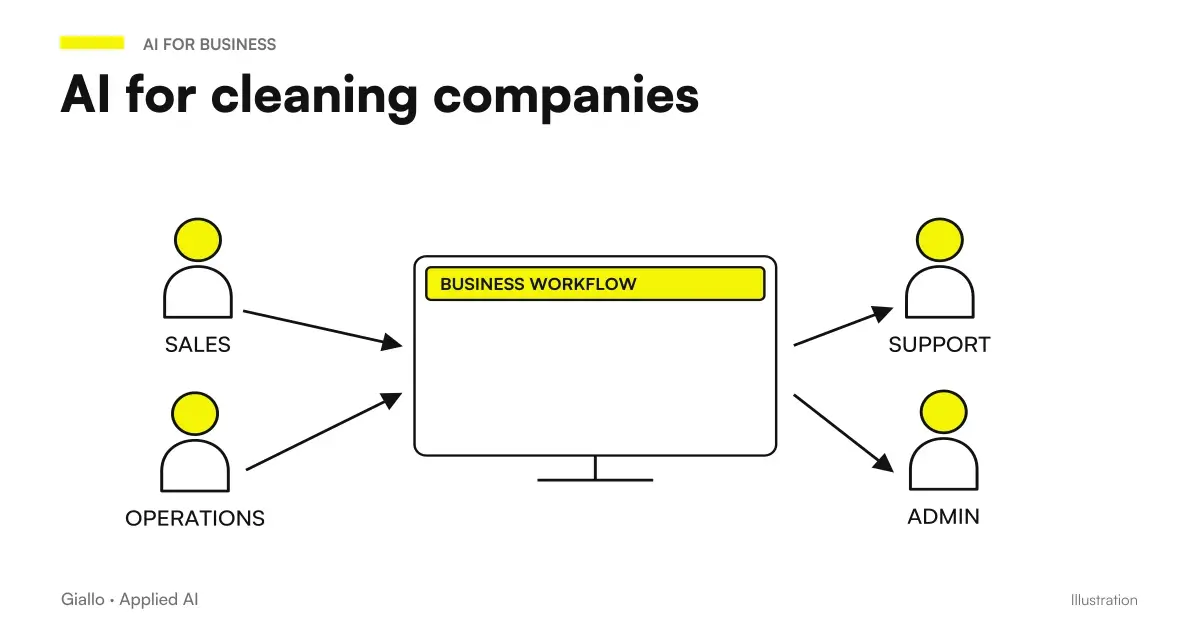
The AI for cleaning businesses He works well on a precise problem: lots of small construction sites, uncomfortable schedules, people changing and customers writing only when something is wrong. Chapters to read, shifts to cover before dawn, reports with the photo of a bathroom, questions from operators about detergents, documents to be delivered to the client before the first intervention. It is office work that an assistant connected to WhatsApp, mail and archive can prepare, with decisions remaining to owner and coordinators.
It is also a sector where almost all value comes from people’s working hours. To enter the classification bands used in tenders, the implementing decree for the law on cleaning businesses requires, among other things, personnel costs of at least 60 percent of total costs for those carrying out only cleaning and disinfection (D.M. 274/1997, Art. 3). No wonder that the flows to be automated first concern people and construction sites, even before customers.
In summary
- In a cleaning business, AI makes more on four fronts: specifications, replacements, customer reports, and operator questions about products.
- The DUVRI it is processed by the client and must be attached to the contract, where the costs of security must be indicated under penalty of nullity and do not fall.
- Last minute replacements can be proposed automatically with the rules you write: construction site, keys, training, contract hours.
- On detergents the assistant responds only by citing the Safety Data Sheet of the supplier, with the right section, and passes the rest to the manager.
- Cleaning, disinfection and sanitation are distinct activities by law: the assistant proposes only those for which your business is enrolled.
A forty-page chapter and the offer to be delivered on Friday
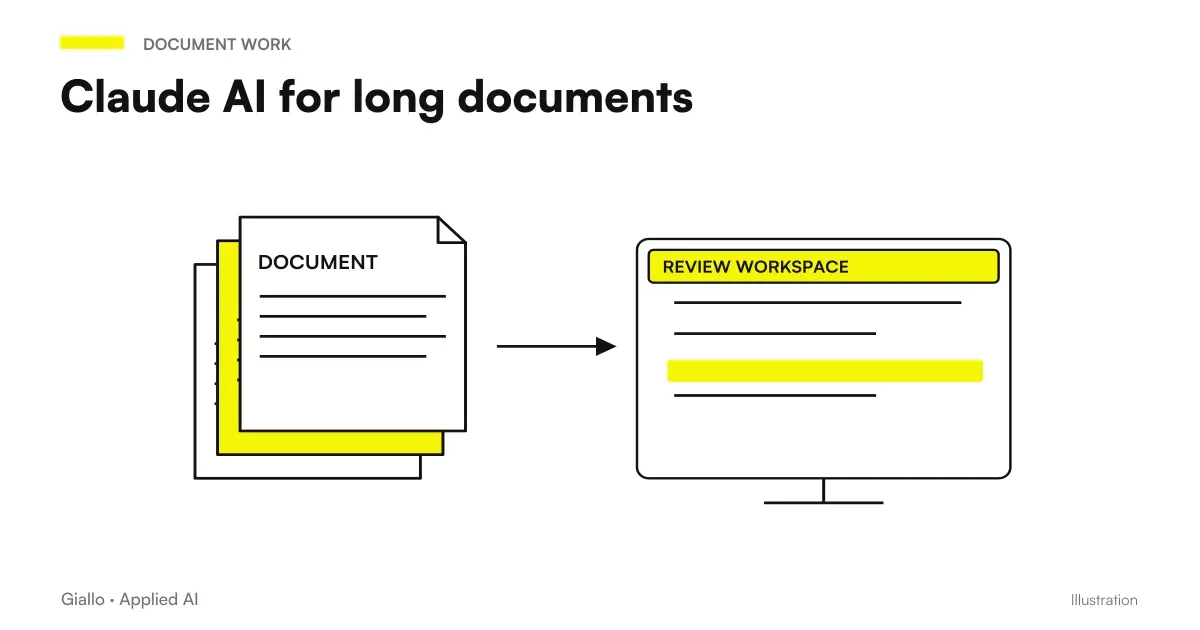
Condominiums, offices, shops and professional studios send very different specifications, but the information needed to make the price are always those: areas and surfaces, frequencies, allowed time slots, services on request, materials charged to whom, penalties and checks. A model capable of reading long documents can extract them in a table and report ambiguous clauses to be clarified at the site.
Think of a specifications for the headquarters of a company with three floors of offices, an archive and two bathrooms per floor. The assistant gets for each area what needs to be done and how often, adds up the weekly hours with your yield parameters, which no model has to invent, and prepares the draft of the offer with the entries in the same order as the specifications. You check the table on the original document, correct the returns and decide the price.
In the draft also end the questions for the client: who supplies the consumables, where products and equipment are kept, what time you can enter, who holds the keys. These are details that, if they remain implicit, become discussions in the first month of service.
The first day papers in a new contract
In a contract carried out on the customer's premises, the single risk assessment document from interference is processed by the employer: it must be attached to the contract and updated when the service changes (D.Lgs. 81/2008, art. 26). It is not necessary, among other cases, for services that do not exceed five men-day within a year, unless there are particular risks such as confined environments, biological agents or high fire risk.
The same article contains two rules that touch on the offer and the staff. The contract must state the costs related to the safety of the job, under penalty of nullity, and those costs do not fall. The contractor must then have a recognition card with photograph, generality and name of the employer, and the company communicates to the client who performs the function of manager.
Before the first round the assistant opens the procurement file and tells you what is missing:
- DUVRI of the client attached to the contract, or the written reason why it is not needed
- Security costs indicated in the contract
- Chamber certificate and self-certification the technical and professional suitability requirements, to be delivered to the client
- Recognition card with photos for each operator assigned to the construction site, including replacements
- Name of the supervisor communicated to the client
- Keys, badges and codes recorded in a protected archive, which the assistant uses without showing them to those who do not
Five and a half, an operator with a fever: how to cover the shift
Last-minute replacement is the time when a cleaning firm's office runs the most. The information to decide exists, but it is scattered: who knows that yard, who has the keys, who already has too many hours this week, who lives nearby. An assistant who has them in one place proposes the solution while the coordinator is still looking for the phone.
- Absence Comes with a message or a voice note to the number of the enterprise, and the assistant records the site left uncovered.
- Search Who Can Replace According to your rules: whoever knows the construction site, has keys or badges, stays inside the scheduled hours, arrives on time.
- Proposes two names to the coordinator, who chooses with a touch.
- Send to Substitute the site instructions and the customer a message only if the time changes.
- Update the attendance sheet of the day, so at the end of the month the hours come back with paychecks.
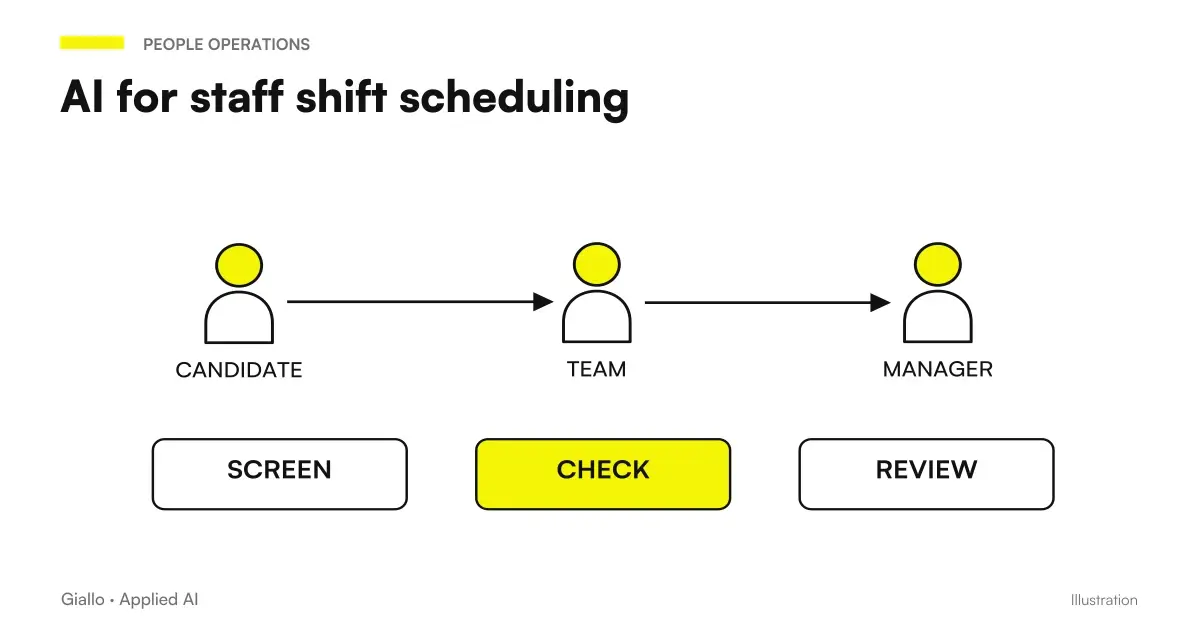
The rules on the time of the collective agreement you apply, the maximum hours, rests and tasks you translate them into constraints, because the assistant does not know them alone. Weekly planning and holidays are the topic of the guide on AI for staff shifts.
If the understudy understands another language better, the assistant can explain the construction site instructions to her. Safety training is another thing: the Legislative Decree 81/2008 asks that it be easily understood and, for immigrant workers, that first the understanding of the language used in the training course occurs (Art. 37). A machine translation does not replace that step.
«The second floor bathroom was not done»: reports and controls
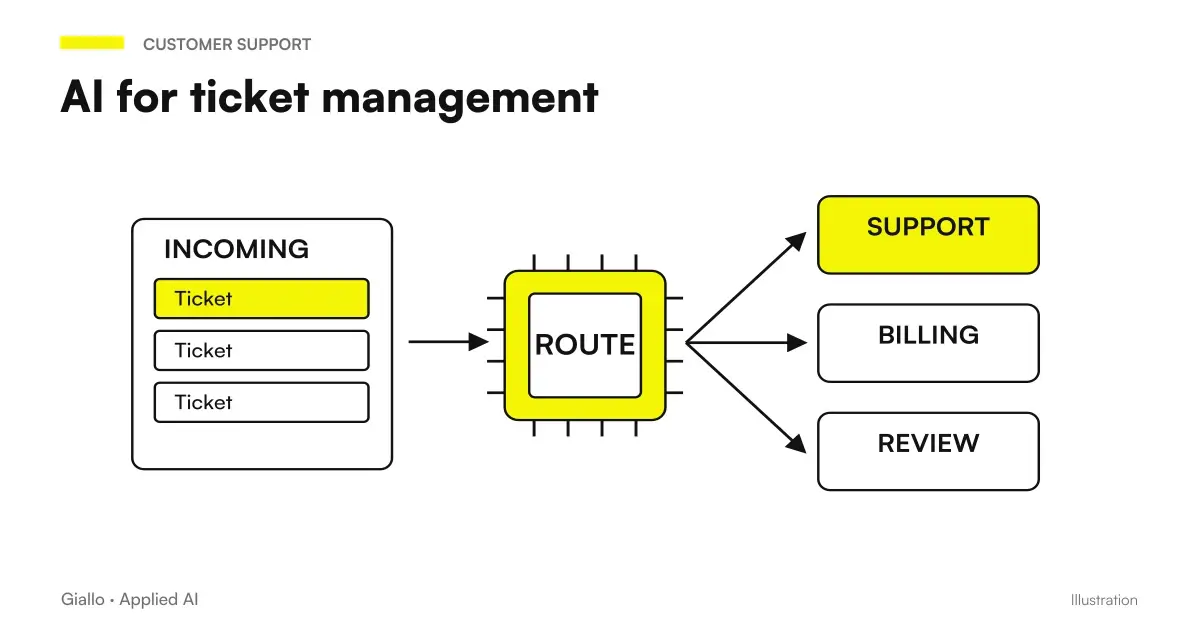
Customer reports come in every form: an email to the coordinator, a message to the owner, a photo in the WhatsApp group of the apartment building. The assistant collects them in a single register, as a system of ticket management, and to each colleague yard, area, shift of the day and operator present.
An example: a customer's purchasing office writes that the second floor bathroom has remained dirty. The assistant records the report with the photo, sees that there was a replacement that day, asks the substitute what happened and prepares for the coordinator a response with a proposed remedy, for example an extraordinary passage in the day. The remedy is decided by the coordinator, and the answer starts after its ok.
At the end of the month the same register becomes the relationship for the customer: reports by area, closing times, remedies adopted. If the specifications provide for quality or criminal checks, it is the document that leads to the meeting.
Cleaners and safety cards: the assistant responds with the right section
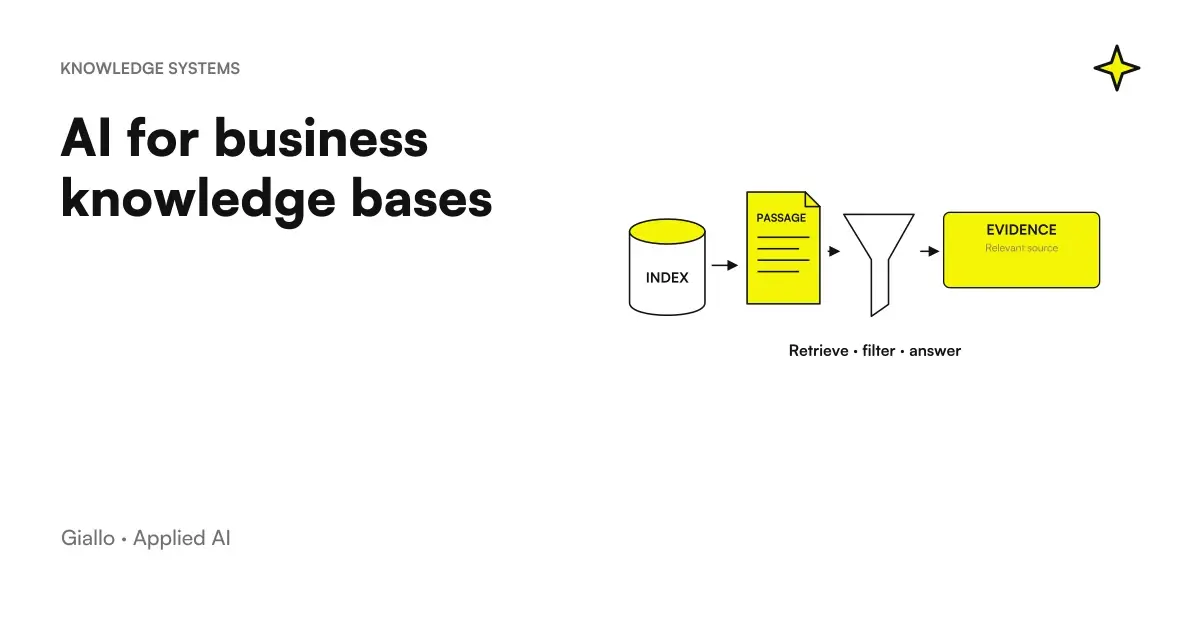
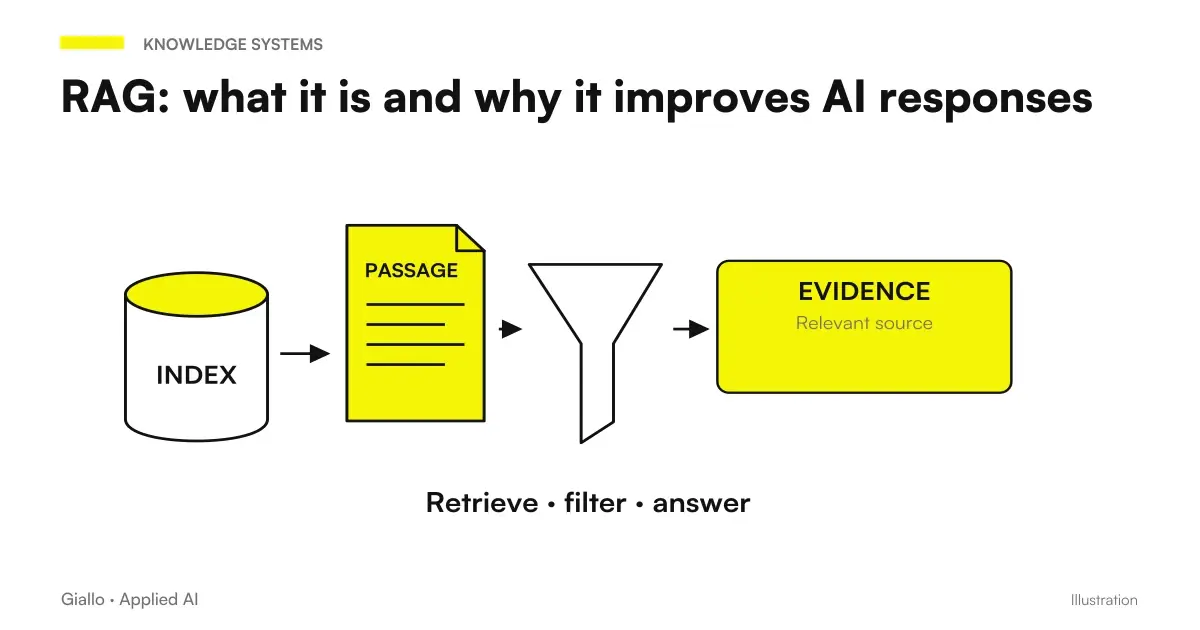
Operators ask questions about products while working, often alone in an empty office. An assistant can respond to one condition: that he does so only from the product safety data sheets that he really uses, citing the section, and not from his general memory. It is the principle of RAG, a base of documents that the AI consults before answering; the demo of the knowledge base on business documents Shows how it works.
The factsheets have sixteen fixed sections, from product identification to other information, and the European Chemicals Agency guide published on the Italian REACH portal describes them one by one (Guide to Safety Data Sheets). The same guide recalls that the supplier updating a card must send it to the person who received the product in the previous twelve months: the assistant replaces the old version in the archive and notifies the person responsible.
| Operator's question | Tab section | What the assistant does |
|---|---|---|
| "Can I mix it with the anticalcare?" | 10, Stability and responsiveness | Report what the card says; if it is unclear, the answer is do not mix and the question passes to the person in charge |
| "What gloves should I wear?" | 8, Exposure control/individual protection | It cites the devices indicated and remembers those provided by the enterprise |
| "Where do I leave it in the customer's closet?" | 7, Manipulation and storage | Report the indicated storage conditions |
| "It splashed in my eye" | 4, First aid measures | He immediately says to call 112 if the situation is serious, then shows the measurements of the card and notifies the person responsible |
| "The can spilled" | 6, Measures in case of accidental release | Report the instructions and notify the person responsible |
| "How do I throw the empty bottle?" | 13, Disposal Considerations | Report card directions and customer rules on waste |
Cleaning, disinfection, sanitization: words that the assistant does not use randomly
There are five distinct activities under the Cleanup Business Act: cleaning, disinfection, pest control, deratization and sanitation (law 82/1994, art. 1). The implementing decree defines each activity: cleaning removes "dust, unwanted material or dirt"; disinfection aims to destroy or deactivate pathogenic microorganisms; sanitisation makes environments healthy through cleaning, disinfection or pest control, or by controlling the microclimate (D.M. 274/1997, art. 1).
Access rules are also different. Since 2007 cleaning and disinfection have started with a declaration to the Chamber of Commerce and cannot be subordinated to professional, cultural or experience requirements, while for pest control, deratization and sanitation remains the previous discipline (D.L. 7/2007, art. 10). That discipline requires a technical management officer, who cannot be an external consultant, with specific qualifications or at least three years of qualified experience (D.M. 274/1997, Art. 2).
For the assistant the consequence is practical. In site texts, offers, and customer responses, only use the activities for which your business is enrolled, and to ‘do you also sanitize offices?’ it answers yes only if you are; otherwise it passes the request to you.
Promises, products, people: where the assistant must be restrained
On promises. A poorly educated assistant says yes to everything: an extra pass tomorrow, a discount for discomfort, a different schedule. In a contract every step has a cost and a person doing it, so the co-ordinator makes the promises.
On products. Outside the safety data sheets the assistant does not give chemical advice and does not suggest products other than those that the company has chosen for that construction site.
About people. Absences, illnesses and operator assessments are sensitive personal data: they belong in the HR management software with restricted access, not in a chat anyone can read. The criteria to follow are those in the guide to GDPR and AI in the company.
Where to start with many small yards
If the replacements wake you up at dawn, start from there: list of construction sites with schedules, keys and trained operators, then the rules for choosing who replaces. If you lose races because the bids arrive late, start with reading the specifications. The procurement file and safety data sheets come right after, and use the same data.
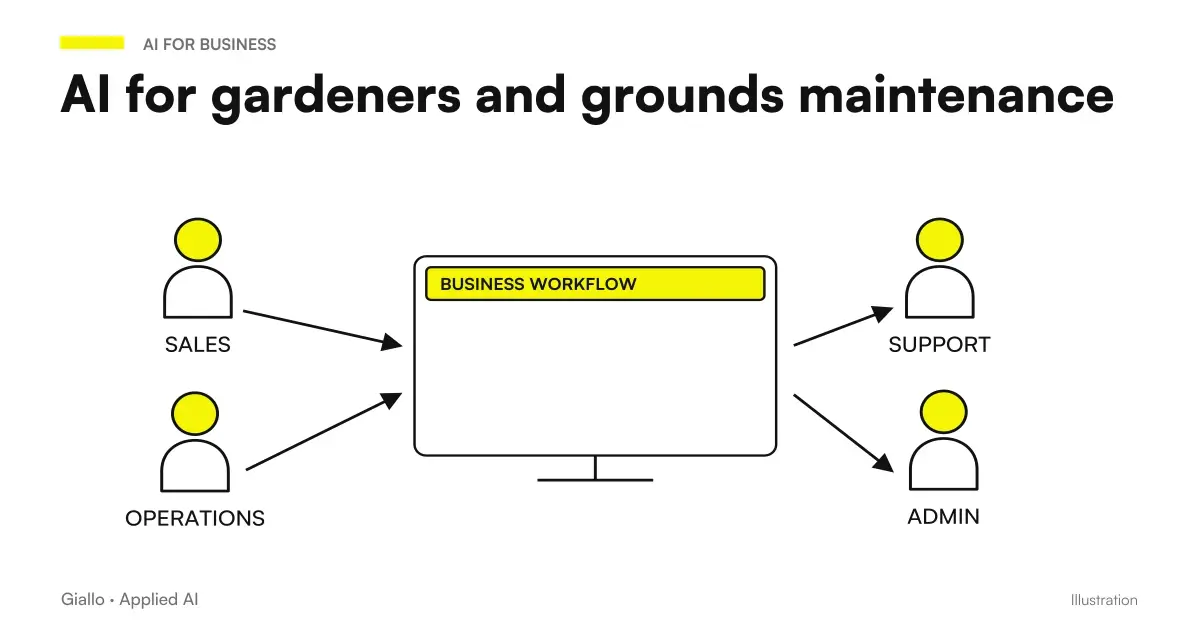
If you want to understand which of these flows suits your business and how to connect it to the tools you already use, the starting point is a Consultancy built on your real construction sites. Other examples of companies selling services to other companies are on the page AI for B2B services, and for condominiums with a garden to care for there is the guide on the AI for gardeners.
Giallo Studio guides: methodology and sources
How we apply it in the company
Related resources
AI by sector
The same reasoning, applied to the other areas we follow.
- AI for phone bookings
- AI for customer callbacks
- AI for SMEs: a practical guide to really getting started
- AI for recruiting and staff selection
- AI for hairdressers and beauty salons: bookings and fewer schedule gaps
- AI for business reporting: fewer hours, the same data
- AI for gyms and sports centres: class bookings, medical certificates and memberships
- AI for human resources: concrete uses
- AI for opticians: prescriptions, collections, contact lenses and recalls
- AI for restaurants: reservations, allergens and responses to reviews
- AI for customer onboarding: automate the first moment that matters
- AI for renovation firms: changes, SAL progress reports and site documents
FAQ
Can AI tell an operator if two detergents can be mixed?
Only by citing the product’s safety data sheet, particularly section 10 on stability and reactivity and section 7 on handling and storage. If the sheet does not provide a clear answer, the assistant’s answer is not to mix them and to pass the question to the manager. An assistant that improvises chemical advice puts workers at risk.
Who prepares the DUVRI in a cleaning contract?
The commissioning employer prepares it, attaches it to the contract, and updates it when the service changes (Legislative Decree 81/2008, Article 26). Among other cases, it is not required for services totalling no more than five person-days in a year without particular risks. Safety costs must still be stated in the contract, otherwise it is void, and cannot be discounted.
Can a cleaning company also propose sanitation?
Only if it is registered for that activity too. Law 82/1994 distinguishes cleaning, disinfection, pest control, rodent control, and sanitisation, and since 2007 only cleaning and disinfection can be started with a simple declaration to the Chamber of Commerce; sanitisation, pest control, and rodent control require a designated supervisor with the technical qualifications specified by D.M. 274/1997. The assistant must offer only the activities listed in your company register extract.
Can AI organize my operators' shifts on its own?
It can propose staffing coverage and replacements following the rules you give it: sites, keys, training, contracted hours, and rest periods. You translate the collective agreement and working-time rules into constraints, while the final choice remains with the coordinator, especially for last-minute replacements.
How can AI help respond to a lengthy specification document?
Have it extract areas, frequencies, time windows, on-demand services, penalties, and checks into a table, then check that table against the original document. You provide hourly productivity rates and pricing: the assistant adds up the hours and prepares the draft quote in the same order as the specification, with questions to ask during the site inspection.
Do operators have to have a badge on their customers' premises?
Yes, under contract or subcontract the staff must have a recognition card with photograph, personal details and indication of the employer (Legislative Decree 81/2008, art. 26, paragraph 8), and the company must indicate to the client who is in charge. The assistant can verify that every operator assigned to a work site, including substitutes, has the card.