
Best AI for Customer Care: Customer Service Tools
AI customer care tools for SMEs: chatbots, help desks and virtual assistants. Compare features and pricing to choose a solution for your business.
Reading time: 8 min
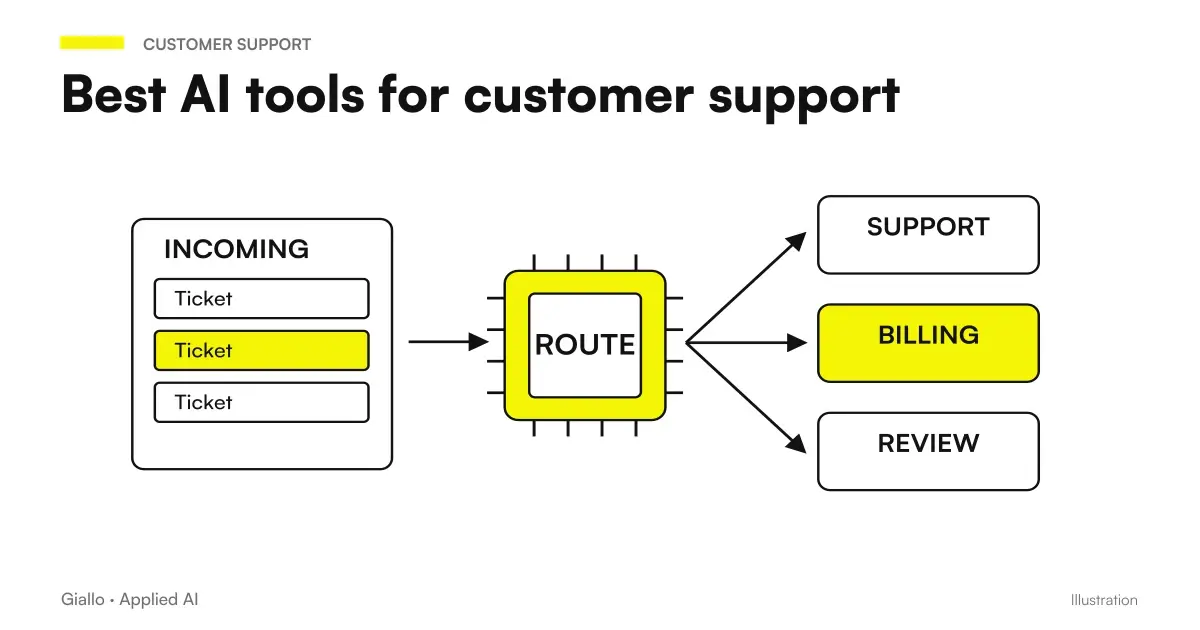
The customer care is one of the departments where AI produces measurable results in a short time. Not because it replaces people, but because it eliminates repetitive work: answering the same questions ten times a day, sorting tickets, looking for information in documents. The best AI tools for customer care They do exactly that — they free the human team for the interactions that really matter.
For an Italian SME with a small support team, the question is not "if" to use AI in customer care, but "which tool integrates with the channels already used and requires the least amount of setup effort". The response changes depending on the volume of requests, the main channel (email, chat, WhatsApp) and the complexity of the products or services offered. If you still don't get the big picture on the AI Automation, it is worth reading that guide first to frame the context.
In this guide you will find an overview of the most used tools, a practical comparison and concrete criteria to choose without mistake. Keep in mind that these tools are vertical applications — not generic AI models — and that the difference between the two is crucial: if you want to understand what the AI Chatbots In a technical sense, there is a dedicated guide.
- AI chatbots reduce human ticket volume by 30-60% managing FAQ, order status and standard requests independently.
- The hybrid model works best: AI for repetitive requests, human team for complex or emotional situations.
- Integration with existing channels (email, WhatsApp, Shopify, CRM) is the first criterion to evaluate before the price.
- We need a structured knowledge base: FAQ, product documentation, ticket history — without these, the chatbot does not work well.
- The response time is the most visible KPI: moving from hours to seconds for standard requests immediately improves service perception.
- Attention to quality in Italian: not all tools handle the language with the same quality — always test before going live.
What are the best AI tools for customer care?
The market for AI tools for customer support is divided into three main categories: standalone chatbot (add to site or channels), help desk with integrated AI (manage the entire ticket flow) and Omnichannel Platforms (unify all contact channels with advanced AI functions).
Tidio
Tidio is one of the most widely used tools by European SMEs. It offers an AI chatbot (Lyro) that answers customer questions in natural language, based on site content and uploaded FAQs. It installs with a widget on any site, integrates with Shopify, WooCommerce and major CRMs. The base floor is accessible, with Lyro available from a specific floor. Great for e-commerce with an average volume of requests. Check prices and limits on the official website.
Strengths: quick setup, good e-commerce integration, simple interface, discreet Italian support. Limits: Advanced AI functions require higher planes, stream customization is limited compared to enterprise solutions.
Intercom
Intercom is an integrated AI (Fin) customer engagement platform. Fin responds to requests using enterprise documentation and knowledge base content, with a precision that sets it apart from generic chatbots. It supports email, chat, WhatsApp and other channels. It is designed for structured support teams and companies with an already developed knowledge base.
Strengths: Very high AI response quality, omnichannel management, detailed analytics, fluid transition to human agent. Limits: significant cost, medium-high setup curve, more suitable for teams >5 people in the support.
Zendesk AI
Zendesk is one of the most popular help desks in the world. Its AI functions include automatic tips to agents, ticket classification, automatic responses for simple cases, and a conversational bot. It is the natural choice for those who already use Zendesk as a support CRM.
Strengths: very rich ecosystem, advanced workflows, comprehensive reporting, native integrations with hundreds of tools. Limits: complex configuration, costs that scale quickly with volume, overkill for SMEs with few tickets per month.
Freshdesk (Freddy AI)
Freshdesk with Freddy AI is the most accessible alternative to Zendesk for SMEs. Freddy suggests answers to agents, automatically categorizes tickets, and can independently respond to the simplest requests. Freshdesk's free plan allows you to test before committing.
Strengths: competitive price, good quality AI for PMI segment, free plan available, Italian interface. Limits: more advanced AI functions require higher planes, Freddy AI is less powerful than Fin (Intercom) on complex requests.
Crisp
Crisp is a European alternative, with fewer AI functions than the others but a simplicity of use that makes it suitable for small teams. It has a generous free plan and integrates with the main channels. AI functions are more basic (automatic keyword responses, not true semantic understanding).
Strengths: Useful free plan, clean interface, native GDPR compliance (European servers). Limits: AI less sophisticated, not suitable for high volumes or complex demands.
ChatBot (by LiveChat)
ChatBot is a tool that specializes in building automated conversation flows, with native integration with LiveChat. It allows to build visual bots without code, with automations based on intentions detected by AI. Good choice for those who want complete control over the flows without depending on a "black box" AI model.
Strengths: powerful visual editor, native LiveChat integration, good documentation. Limits: less flexible on free language responses, requires initial work to build the flows.
Practical examples for Italian SMEs
Before choosing the tool, it is useful to understand what distinguishes a simple bot from a AI Agent more sophisticated — the difference affects what they can do on their own and how much configuration work they require.
Clothing e-commerce with 200 orders/week
An Italian e-commerce with a team of 2 people at the support received the same questions every day: "Where is my order?", "How do I return?", "What sizes do you have?". 70% of tickets were resolvable with information already on the site.
Implementing Tidio with Lyro, the chatbot independently manages the FAQs and connects to the shipping APIs to respond on the status of orders. Result: The volume of manually managed tickets decreased by 55% in the first six weeks. The human team now focuses on complex returns, complaints and VIP customers.
B2B consulting firm with enterprise clients
A consulting firm with 15 enterprise clients received requests via email from different interlocutors (purchase, legal, administrative). Each request required a custom answer, but many were variants of the same contractual or administrative questions.
Using Freshdesk with Freddy AI, the study built a knowledge base with answers to the most frequently asked questions. Freddy suggests the correct answer to the human agent, who customizes and sends it. The average response time went from 4 hours to 45 minutes. Not a chatbot that answers on its own, but an assistant that speeds up the team's work.
AI tools comparison for customer care
| Tool | Strengths | Limitations | Indicative price |
|---|---|---|---|
| Tidio (Lyro) | Quick setup, e-commerce, multilingual | AI less advanced on complex tickets | Paid plan for Lyro; check official website |
| Intercom (Fin) | High AI quality, omnichannel, analytics | High cost, medium-high setup | Enterprise; check official website |
| Zendesk AI | Rich ecosystem, advanced workflows | Complex, expensive to scale | Check plans on official website |
| Freshdesk (Freddy AI) | Accessible, free plan, IT interface | AI less powerful on open questions | Free plan available; check official website |
| Crisp | GDPR Native, Simplicity, Free Basic | Basic AI, not for high volumes | Free plan + paid plans |
| ChatBot (LiveChat) | Visual editor, flow control | Less flexible on free language | Official website verification |
- You have more than 20-30 repetitive requests per day (FAQ, order status, product information)
- Your team wastes time on questions that may have a standard answer
- You want to offer immediate answers around the clock, including outside business hours
- You have a knowledge base or already structured documentation to start from
- You don't have a structured knowledge base yet (FAQ, product documents)
- Your service almost always requires human judgment and negotiation
- The volume of requests is low (less than 5-10 per day) — ROI does not justify the cost
- Your customers are old or unfamiliar with digital interfaces
Mistakes to Avoid
1. Launch the chatbot without a proper knowledge base. A chatbot that can't answer correctly is worse than no chatbot: it frustrates customers and generates a bad impression. Before activating AI, build at least 50-100 quality question-answer pairs.
2. Do not predict escalation to the human agent. Each chatbot must have a clear mechanism to pass the conversation to a real person when it fails to solve the problem. Without this, customers feel trapped in an automatic loop.
3. Forget about testing in Italian. Many tools handle Italian in an acceptable but not perfect way. Test with real questions from your customers before going live — and monitor the first few weeks.
4. Choose the most expensive tool thinking it is the best. For an SME with 30 tickets per day, Freshdesk or Tidio cover 80% of use cases at a fraction of the cost of Intercom or Zendesk. Start with the real problem, not the demo features. An overview of the Best AI Tools in general can help you contextualize the choice.
5. Expect immediate results without optimization. The first 30-60 days are used to analyze failed conversations, improve responses and refine flows. AI for customer care is not "set and forget".
How to choose it for your company
Choosing the right AI tool for customer care depends on four variables:
Volume of requests. Less than 20 tickets per day: Tidio or Crisp. Between 20 and 100: Freshdesk with Freddy AI. Over 100 or structured team: Intercom or Zendesk.
Main channel. Site chat: all mentioned tools. Email as primary channel: Freshdesk or Zendesk better manage threads. WhatsApp: Tidio and Intercom have native integrations.
Complexity of requests. If your customers' questions always require specific context (order number, contract details, personal situation), you need a system that can retrieve this information — a static FAQ chatbot is not enough. In these cases it is advisable to evaluate solutions based on RAG (Retrieval-Augmented Generation), which allow the chatbot to search your internal sources before responding.
Budget and resources. Consider not only the monthly cost but also the setup and maintenance time. A more expensive tool with quick setup can cost less in total than an inexpensive one that requires weeks of setup.
If you want to understand how AI can integrate with your company's care processes in a concrete way, also explore The Lab by Giallo Studio — a starting point for experimenting before committing to a solution.
If you already have a CRM tool and want to understand how to connect it to AI, the guide on Best AI for CRM offers an excellent complementary perspective. Similarly, if your team uses email a lot as a support channel, the guide on Best AI for Email shows specific tools to automate that flow as well. To understand how AI applies to the whole company (not just customer care), the guide AI for businesses is the most complete reference.
Conclusion
The best AI tools for customer care They are not the ones with the most functions, but the ones that adapt to the volume of requests, channels and team skills. For most Italian SMEs, the ideal path is to start with an accessible tool such as Tidio or Freshdesk, build a solid knowledge base, measure results in the first few weeks and scale only if the volume justifies it.
AI in customer care works when it reduces repetitive work without degrading the quality of service perceived by customers. If you want to move from experimentation to an AI system integrated into your business processes, Giallo Studio helps SMEs and teams to build concrete, measurable and sustainable automations.
Giallo Studio guides: methodology and sources
How we apply it in the company
Related resources
 Best AI for email: tools to write and manage mail
 AI Chatbots: What They Are and How They Work
 AI agents: what they are and how they work
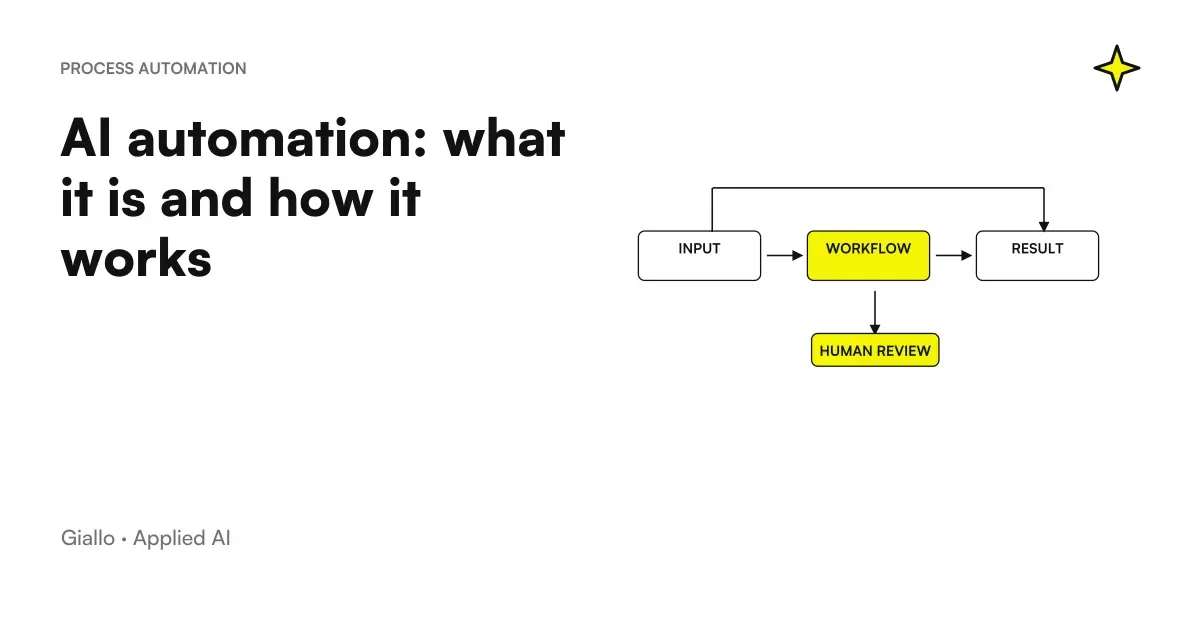 AI automation: what it is and how it works
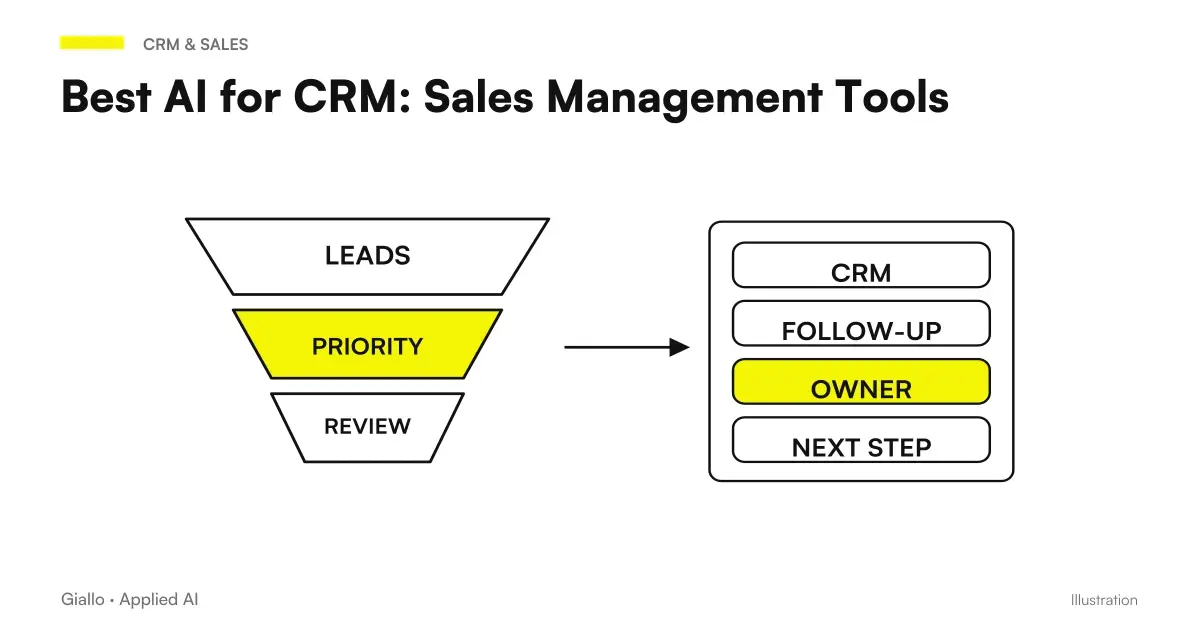 Best AI for CRM: Sales Management Tools
 WhatsApp Chatbots for Business: How It Works and When It's Best
 Business website chatbots: how they work and when they make sense
 Best AI model for customer care
Comparisons by activity
Which tool suits the other tasks.
- Best AI for CRM: Sales Management Tools
- Best AI for email: tools to write and manage mail
- Best AI to Create Websites
- Best AI for Excel (October 2026): Copilot, ChatGPT, Claude or Gemini?
- Best AI for Data Analytics: Tools and Platforms
- Best AI for Marketing: Tools and Platforms
- Best AI for Translations: Tools and Comparison
- Best AI for presentations: tools to create slides
- Best AI for Students: Tools for Better Studying
- Best AIs to summarize PDFs and documents
- Best AI for social media: tools for content and management
- Best AI for SEO: Tools to Optimize Content
FAQ
What is the best AI tool for customer care of an Italian SME?
Depends on the volume of requests and the channel used. Tidio and Freshdesk AI are great starting points for SMEs with limited budgets: they integrate with websites, emails and WhatsApp without requiring advanced technical skills.
Can an AI chatbot completely replace human support?
No, and it shouldn't. The best AI tools for customer care handle repetitive requests (order status, FAQ, password reset) and pass complex or emotional situations to the human team. The hybrid model is the one that works best.
How much does it cost to implement AI in customer care?
The basic plans of tools like Tidio or Freshdesk start at a few tens of euros per month. Enterprise solutions like Zendesk AI or Intercom have significantly higher costs. Always check the updated plans on the official sites.
Does AI for customer care also work in Italian?
Yes, most of the main tools support Italian. Some (like Tidio) have built-in multilingual models. It is important to test the quality of responses in your customers' language before going into production.
What data do you need to train an AI chatbot for customer support?
In most cases there is no need for training from scratch: we start with existing FAQs, product documentation and ticket history. Tools like Intercom or Zendesk AI import this content and build the knowledge base automatically.
How do you measure AI ROI in customer care?
The main metrics are: automatic resolution rate (how many requests resolved without human intervention), average response time, cost per ticket and CSAT (customer satisfaction). A good AI system reduces the cost per ticket by 30-60% in the first six months.