
Claude models compared: a guide to choosing
Compare Haiku, Sonnet and Opus 5.5 with Fable 5.1: prices, context, reasoning and tests. Choose Claude for the task and plan a verifiable migration.
Reading time: 16 min
The Claude models in comparison for a current project are Haiku 5.5, Sonnet 5.5, Opus 5.5 and Fable 5.1, according to the verified catalog on 9 October 2026. The useful choice identifies the model that meets the criteria of the task with an acceptable cost and time. Name, price, and context window describe the candidate; a trial on the process determines if it is suitable. Anthropic Catalogue.
For an SME the comparison must start from the operation: extract fields, classify a request, prepare a document or coordinate tools. Manufacturer's descriptions help narrow down the field, but are not an independent ranking on the quality of your work. This guide proposes test criteria and a migration path; it does not report Giallo benchmarks, paid calls or services measured by Italy.
In summary
- The model must be chosen on the task and the errors that matter.
- All current candidates declare context from 1M and standard output up to 128K tokens.
- The Haiku fare changes over 100K prompt tokens.
- Opus and Fable have adaptive reasoning always active.
- A migration must also verify tools, format and consumption.
- A multi-model workflow requires proof of routing and call count.
What are the specifications of the four current models?
The table puts together identifiers of the Claude API and standard rates. Each model returns to its official form. A name in the app and an API identifier have different functions: the first indicates a choice in the interface, the second a software configuration.
| Model | ID API | USD input/output for 1M token | Standard Background / Output | Destination described by Anthropic |
|---|---|---|---|---|
| Haiku 5.5 | claude-haiku-5-5 |
0.10 / 0.50 up to 100K; 0.50 / 2.50 over 100K | 1M / 128K | Classification, routing and extraction |
| Sonnet 5.5 | claude-sonnet-5-5 |
2 / 10 | 1M / 128K | Balance between speed and capacity |
| Opus 5.5 | claude-opus-5-5 |
4 / 20 | 1M / 128K | Long agent coding and knowledge work |
| Fable 5.1 | claude-fable-5-1 |
10 / 50 | 1M / 128K | Challenging reasoning and long agentical work |
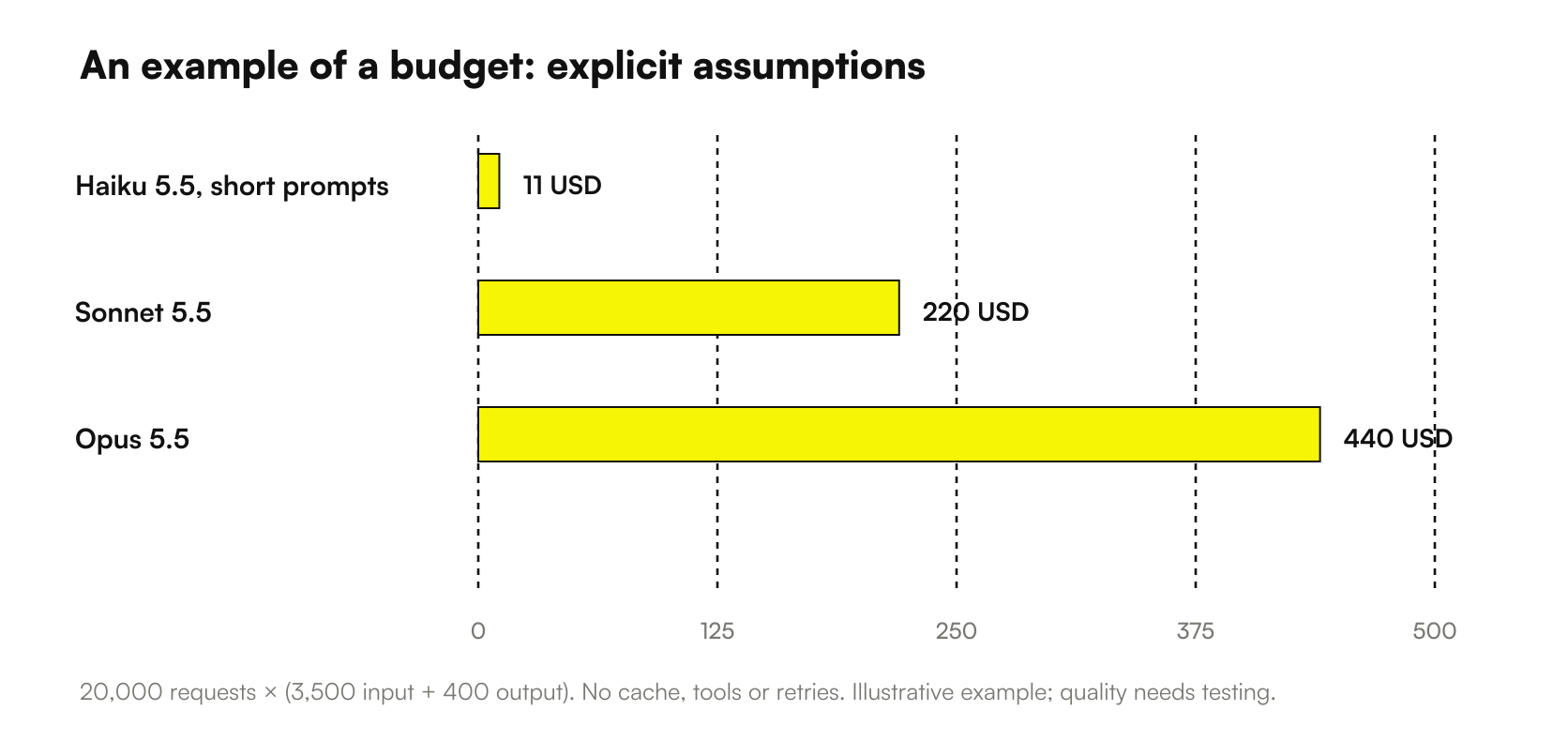
The values concern the API price list, not the Claude subscriptions or an implementation quote. The guide to prices of Claude models deepens the calculation and distinguishes direct, retentive and router requests. Similar maximum limits do not make the four models equivalent: they only describe some input and output constraints.
What task does the confrontation have to start from?
Describe the operation in a sentence with input, result and criterion. "Extracting item code and quantity from an order line, signaling fields absent" is more useful than "automating the commercial". The first formulation allows you to prepare tests and to know if the result can move to the next software.
Then it separates different activities. A system can classify a message, look for a procedure, and prepare a draft: they are not necessarily the same problem. Classification requires consistent labels; research requires relevant sources; draft requires correct content and a usable format. A single liking score can hide which pass fails.
Also define where autonomy ends. Producing an upgrade proposal is not the same as updating a management software. The capacity of the model must be assessed together with the process permissions. A plausible result is not a reason to eliminate the verification of an action with consequences on the data.
When does Haiku 5.5 deserve a try?
Anthropic places Haiku 5.5 for classification, routing and high volume extraction. It is a starting point to be evaluated when the result has a restricted contract, such as a category among those allowed or a set of fields. This destination does not guarantee that every irregular document is interpreted correctly. Haiku 5.5 card.
Evidence should include ordinary cases, ambiguous texts, and missing information. It is not enough to verify that the model returns something: it must use the expected error category or incomplete state. If a field is absent, inventing it may be more harmful than asking for a review.
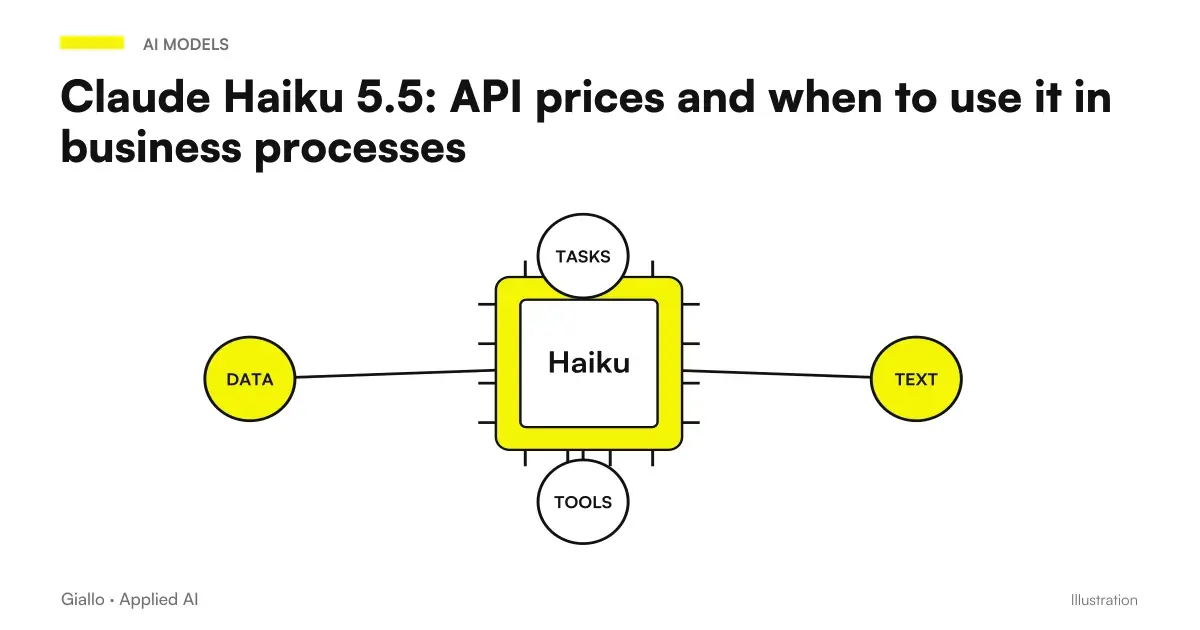
The rate depends on the full prompt and changes over 100K tokens. It also measures tokenization, instead of transferring an estimate made for an earlier version. The deepening Claude Haiku 5.5 describes the candidate; your dataset determines which operations it can complete according to the required criterion.
What evidence distinguishes Sonnet 5.5 from a price list choice?
Sonnet 5.5 is presented by the manufacturer as a balance between speed and capacity. For a project it can be a candidate to compare on synthesis, management of articulated instructions and preparation of documents. They are adoption hypotheses: they do not declare automatic superiority over Haiku or equivalence with Opus. Sonnet 5.5 model card.
It checks whether it maintains the necessary references, distinguishes discordant sources, and respects the delivery format. A sliding summary may omit a decisive exception. A formally correct document may include a fact not present in the sources. The sample must make these errors observable.
For a repetitive workflow, the cache configuration also counts. The guide Sonnet 5.5 and prompt caching concerns a specific cost entry. Comparison of models should use the intended path, without attributing to a candidate a discount that the process does not actually manage to use.
When to compare Opus 5.5 and Fable 5.1?
Opus 5.5 is described for long agentic coding and knowledge work. Fable 5.1 is intended for challenging reasoning and long agentic activities. The Fable tab suggests evaluating it when tests on Opus at greater effort do not reach the criterion. It is a recommendation of the vendor, to be confirmed on the task. Opus 5.5, Fable 5.1.
A relevant comparison can involve a sequence with tools: reading a problem, finding information, proposing a change and verifying the outcome. The result should be measured over the entire chain. An excellent first answer is not enough if the process uses the wrong tool or does not handle an error condition.
Claude Opus 5.5 He deepens one of the candidates. The Fable tab also distinguishes Mythos 5.1, accessible only to verified organizations: do not use the two names as synonyms of availability in your account. The existence of the model in docs does not prove that the reader can already use it in any environment.
How to compare reasoning without incompatible settings?
Adaptive reasoning is always active on Opus 5.5 and Fable 5.1. Do not advise turning it off indiscriminately to reduce cost. Supported parameters and their effect must be verified for the model, platform and API path used. Opus Specifications, Fable Specifications.
Preserve the configuration along with the results of the test. If you compare one model to one setting with another configured differently, you are comparing two systems, not just two names. It can be a correct choice, as long as it is declared and not presented as a universal ranking.
The Guide to Opus 5.5 Reasoning Levels helps to read this variable. A greater effort should not be taken as always necessary or always cheaper than a change of model. Measure the outcome, consumption and time of the configuration you really want to adopt.
A million tokens is enough to choose the model?
No. A 1M token window indicates a maximum declared capacity, while a task requires relevant information and a verifiable response. Adding an entire archive can include outdated versions, contradictory documents, and unnecessary material. A longer input does not prove that the result is more correct.
Design must establish which sources to use and how to handle the absence of an answer. If a procedure has changed, the model must work on the authorized version, not deduce it from the frequency with which a text appears. Keep identification and date of documents when relevant to the process.
Context and Comparison Window It develops this distinction. RAG: what is it describes the recovery of relevant material. Neither technique replaces a test with contradictions and missing information: a technical capacity must be linked to the criterion of acceptance of work.
How to prepare a sample that produces a decision?
The sample must represent the categories of the process and contain expected results defined by those who know the work. Include ordinary cases, exceptions, incomplete inputs, and out of scope requests. Quantity depends on variability and risk: a fixed number of examples do not certify any application.
For each case it retains the reference answer or the criterion of correctness. A classification may have an expected label; a summary may require the presence of facts and the absence of additions; an agent may have to complete a sequence without out-of-allow actions. Do not use a single metric for tasks with different responsibilities.
If the documents are confidential, prepare the authorized environment and the minimum necessary data. A synthetic test serves to verify the technical path, but does not alone demonstrate the quality on real cases. The report must distinguish these two evidences. Data and access choices are part of the application comparison.
What metrics make the result readable?
It measures what the adoption decides: correctness of the fields, unintercepted errors, requests for review, usable format, consumption and time. The average result must be accompanied by the categories in which the model fails. An infrequent class can have important consequences and require a dedicated policy.
| Appearance | Useful Test | Decision-making question |
|---|---|---|
| Content | Result against expected criterion | Is it usable for the task? |
| Uncertainty | Cases without sufficient data | Does it signal the limit instead of inventing? |
| Format | Validation of structure | Can the next software read it? |
| Tools | Sequence and observed effects | Does it comply with permits and planned operation? |
| Consumption | Actual calls and tokens | Is the route within the budget? |
| Time | Expectation observed in the workflow | Can the user or the process wait? |
Avoid using a single convincing answer as your final test. How to read AI benchmarks helps to interpret external numbers; vendor benchmarks clarifies why a commercial placement does not replace the process test.
How to measure latency in business work?
The useful time depends on the workflow. In an interface it can count how much passes before a first usable content and how much before the complete response. In a document processing, completion, queues, and retry count. The relative description of the manufacturer does not provide the measured time in your application.
Record test conditions: prompt length, configuration, tools, and execution modes. A model may appear slow because it waits for an external service. Separating model and process times helps to understand which component requires a change.
Even an asynchronous job has deadlines and limited capacity. Don't call latency irrelevant just because no one watches a chat. An import must end in an acceptable time for the process; a report must be ready when needed. The candidate's choice must comply with these requirements, without assuming a universal order of models.
How to read the cost without confusing it with quality?
Current rates are a comparison figure, but consumption depends on input, output, reasoning, cache, tools, and repeated calls. For Haiku the threshold over 100K prompt token changes band. An economic model in the list may require more steps; a more expensive one may still not meet the criterion.
The cost per accepted task adds up the path actually run and relates it to valid results. Keep human review distinct, measuring it instead of automatically declaring it dominant. Relevant errors must be classified according to the consequences of the process.
The page Claude prices by comparison contains an account with explicit assumptions. This guide does not transfer that account to a customer: volume and token counts must belong to the application. The economic choice must be able to be reconstructed from the data of the test, not from a relationship between tariffs.
Does a router with two models retain quality automatically?
No. A router decides which path to assign to a case and can err. The routing criterion must be verified especially on ambiguous cases. The security declared by the model is not a calibrated probability to use without proof: an incorrect case but safely expressed can remain at the first level.
Distinguish direct routing and second call after a first attempt. In the first path each request uses a selected candidate; in the second a part of the cases sum consumption of the first and second. A dedicated classifier introduces other operations. The Mixed Model Strategy requires this count and a measurement of the closed results from each branch.
It also checks the cases excluded from the review, not just the forwarded ones. If you only look at the hard cases already recognized, you do not see the errors that the router has let pass. A multi-model system is a new configuration to evaluate, not a guarantee derived from the catalog.
How does the comparison change when Claude uses tools?
An agent must choose operations, interpret results, and handle errors. It assesses the action taken, not just the quality of the explanation. A tool can have effects on the filesystem or on an external system; the model must respect the scope of the task and the process must impose the necessary permissions.
The Mods by Claude customize the environment and can intervene on events or interface. The Claude Code Hooks link events to controls. These components can make the workflow more observable, but they do not automatically certify the model or replace software validation.
For a preventive check, PreToolUse has a different responsibility than a review after the action. During testing, use synthetic or separate systems and prevent effects on real data. The comparison must also be able to observe a rejected decision and an unavailable service.
What to check before changing API ID?
Check accepted parameters, pattern of responses, streaming, tools and treatment of reasoning blocks. The Opus 5.5 tab reports incompatible changes compared to Opus 5, including always active thinking and limits to the forced tool use. Do not turn a migration into a single string replacement. Migration and Opus Specifications.
The software must validate the outputs according to its own contract. If the expected format changes, a semantically correct result may be unusable from the next stage. If they change the returned blocks between tool calls, a progress interface can also behave differently. These are compatibility cases to try before real traffic.
Preserves a clear configuration point by model and parameters, along with relevant tests. A centralized configuration makes change governable; it does not guarantee a universal restoration time. The way back must be tried with the software that will use it.
How to make an observable and reversible migration?
Define which criteria must be met before the switch: quality, format, consumption, time, and error management. Compare the new candidate on authorized inputs with no effect on real systems. If you run two configurations on the same cases, count both calls and keep the result separate for the user.
An agent in comparison mode must not duplicate external actions just to produce two responses. Tools that write require a test environment or path that prevents effects. A useful parallel evaluation preserves comparable inputs without replicating management software updates.
When the new model only improves some categories
It preserves the result by category, identifies which errors remain and compares the cost of the route. You can maintain the current configuration, change only one module or design a dedicated routing. The decision must include tests of the new border and not be derived from the average alone.
After the passage observes results and anomalies according to the policy of the project. The guide when to change AI model The future availability of a candidate must be verified in the provider's communications, without inferring it from the version number.
Two routes for Italian SMEs with results to try
Hypothetical, untested example: a manufacturing company in Treviso wants to extract references and quantities from test orders. Defines a format with mandatory fields and a review state for incomplete rows. Compare Haiku and Sonnet on ordinary texts, ambiguous acronyms and discordant quantities. It measures correct fields and reported cases, then assesses the cost of the full route. He doesn't choose Haiku just for the price or Sonnet just because it's more expensive.
Hypothetical, untested example: a software house in Naples prepares an agent that analyzes a problem and proposes a change on a separate repository. Compare Opus and Fable on the sequence, reading diffs and test results. One case contains a missing dependency, another a request out broom. The criterion includes recognizing the impediment and respecting the permissions, not continuing until you produce a change anyway.
The first path requires structured extraction, the second a chain with tools. The criteria for success are different. Any superiority observed in one should not be transferred automatically to the other, to the Italian in general or to all customers of the company.
What errors weaken a model choice?
The main errors are choosing from price, inferring quality from context size, ignoring abnormal inputs, considering a textual confidence calibrated, and neglecting instrument compatibility. Others are changing multiple variables together without recording them and evaluating only successful responses.
Do not use universal save multipliers, fixed test durations or risk-free migration promises. The process can be made observable and reversible through configuration and testing; its consequences must be assessed anyway. Maintenance includes model, prompt, data, tools, and controls.
Keep in the report what has not been verified. A synthetic test is not real traffic; a price list is not an invoice; a vendor recommendation is not an independent measure. This precision allows one to decide what evidence is missing without turning the comparison into a vague conclusion.
How do you come up with a choice that the team can keep?
The final choice should indicate task, configuration, results, cost and limits. Keep representative cases and try them again when changing patterns, schemas, or sources. A review makes sense when changing the facts of the process or conditions of the provider, not because a ranking automatically suggests a winner.
If two candidates reach the criterion, evaluate consumption, time, workflow simplicity, and review responsibility. If no one reaches it, review the data and contract of the task before attributing the problem only to the band. A more controlled output or better selected sources can change the system you are evaluating.
To bring the comparison into an internal process, the AI Consulting can start from shared cases, criteria and evidence. The useful result is an explainable decision: the chosen model performs a defined task, within the established perimeter, with verified results and costs that the team can reconstruct.
Giallo Studio guides: methodology and sources
How we apply it in the company
Related resources
 Claude model pricing: API rates and the cost of getting work done
 Claude Haiku 5.5: API prices and when to use it in business processes
 Claude Opus 5.5: what it is, what it changes and who it suits
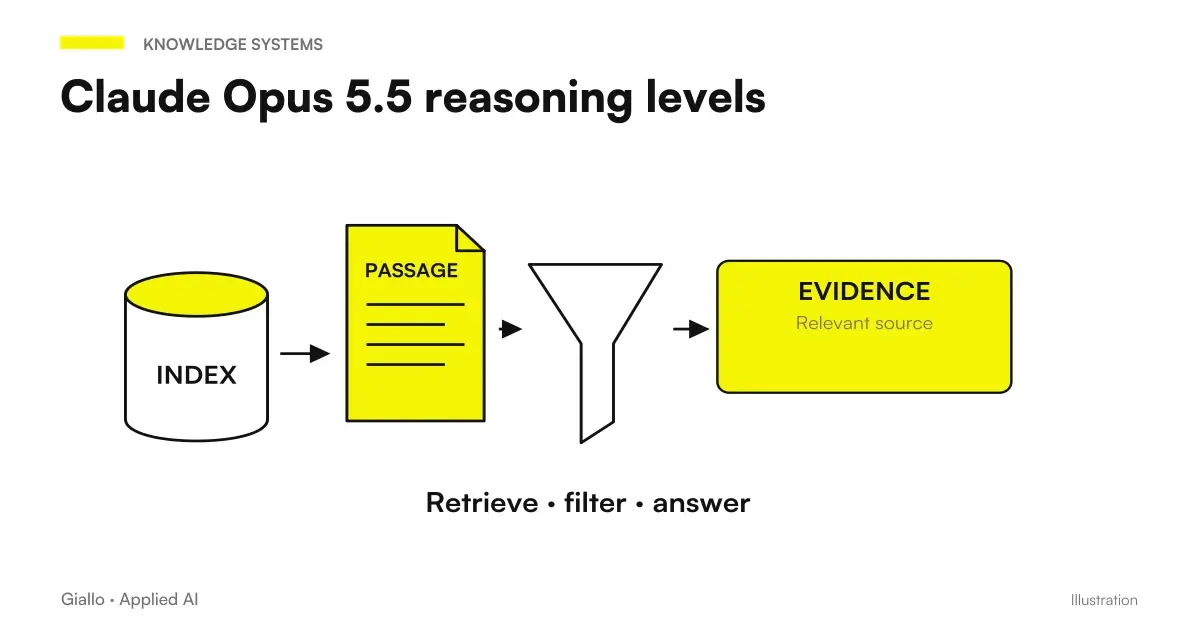 The levels of reasoning of Claude Opus 5.5: what they are and when to raise them
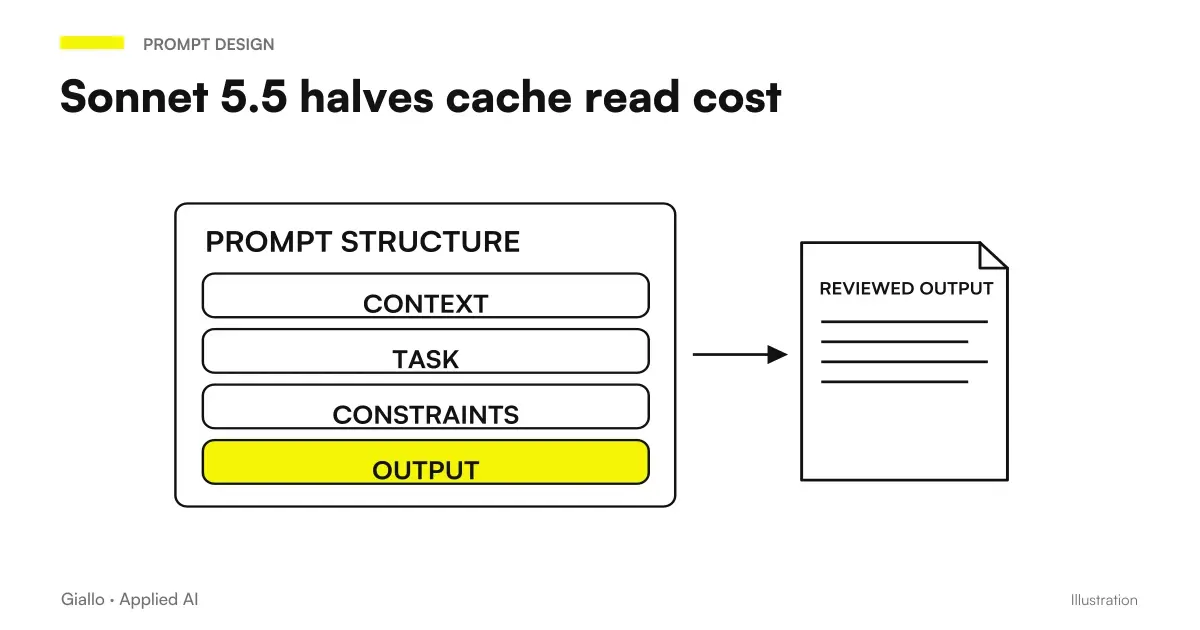 Sonnet 5.5 halves cache read cost: how much the API bill changes
 Mods by Claude: what they are and when they are needed in Claude Code
 Claude Code Hooks: a practical guide in Italian
 GPT-6 Sol vs Claude Opus 5.5: the official numbers and when to use which
FAQ
Which Claude models should you compare for a current project?
The verified catalog on October 9, 2026 includes Haiku 5.5, Sonnet 5.5, Opus 5.5 and Fable 5.1. The choice depends on the task, its relevant errors and the cost of the full route. The manufacturer's descriptions guide the candidates, but do not demonstrate a ranking on your process.
When to try Haiku 5.5?
It is a candidate for classification, routing and extraction, consistent with Anthropic positioning. It should be tried on ordinary, ambiguous and incomplete inputs. Price and declared speed do not replace the measurement of accepted outcomes.
What is the difference between Sonnet, Opus and Fable?
Sonnet 5.5 is presented as a balance between speed and capability; Opus 5.5 for long agentic coding tasks and knowledge work; Fable 5.1 for demanding reasoning and long agentic workflows. These are uses described by the vendor. A useful comparison checks what results they produce under the same task specification.
Does a million context tokens guarantee correct answers?
No. It is a declared input capability, not a measure of accuracy on long documents. What matters is the selection of sources, missing information, contradictions and verification of the result.
Can you turn off reasoning in Opus and Fable?
For Opus 5.5 and Fable 5.1 adaptive reasoning is always active according to the official model pages. Parameters and settings must be verified for the chosen model. Do not transfer a configuration of one model to another without a compatibility test.
How to change the model without losing control of the system?
Prepare cases with expected results, verify API compatibility, and compare quality, consumption, and latency. The new model can be tried without effect on real systems. Migration must have acceptance criteria, monitoring, and a restorable previous configuration.