
Claude vs Perplexity
Claude vs Perplexity: writing and document analysis versus research with sources. Differences, a comparison table and when to use them together.
Reading time: 10 min
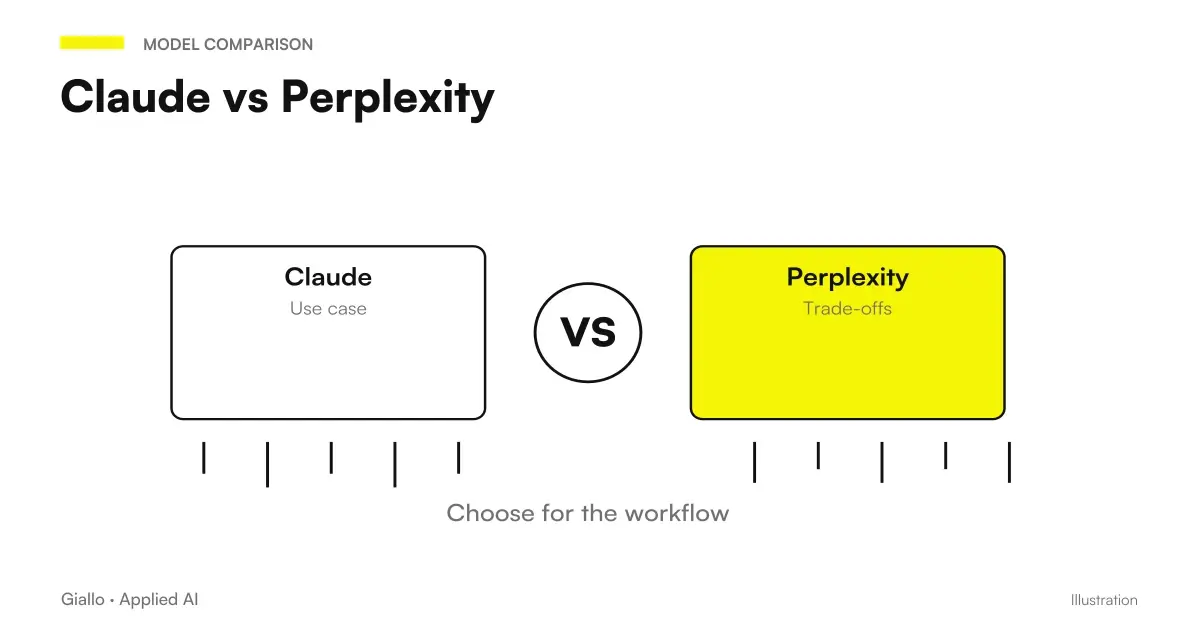
Claude and Perplexity are not the same kind of tool, and this is the most important thing to understand before choosing one. Claude is an AI assistant specializing in writing and reasoning: you give him a text — a contract, a relationship, a series of emails — and he analyzes it, synthesizes it, rewrites it. Perplexity is an answer engine: you ask him a question and he goes looking for up-to-date information on the web, returning a synthetic answer with the cited sources. One works on the content you bring to him; the other recovers content you don't have.
The question "Claude or Perplexity?" is therefore misplaced in most cases. The right question is: Am I writing/analyzing a document, or am I looking for information that I don't own? In the first case it weighs Claude, in the second Perplexity. And very often, in a real job, they serve both in the same stream: first look, then write.
In this guide we see what each of the two does well, where they stand out clearly, a comparison table on the criteria that matter and when it is best to use them together. Without electing an absolute winner, because it does not exist: it depends on the task.
In summary
- Claude is an assistant in writing and analysis: he excels at long documents, synthesis, rewriting and reasoning on a text that you provide him with.
- Perplexity is a response engine: it searches the web for up-to-date information and responds by quoting the sources, useful when you don't already have the information.
- They are not direct competitors: they perform different tasks and in practice they are often complementary.
- Typical flow: Perplexity to collect up-to-date sources and data, Claude to write and analyze the final document.
- In both cases the sources and numbers go always verified hand: a citation does not guarantee that the data is correct or authoritative.
What is good for Claude
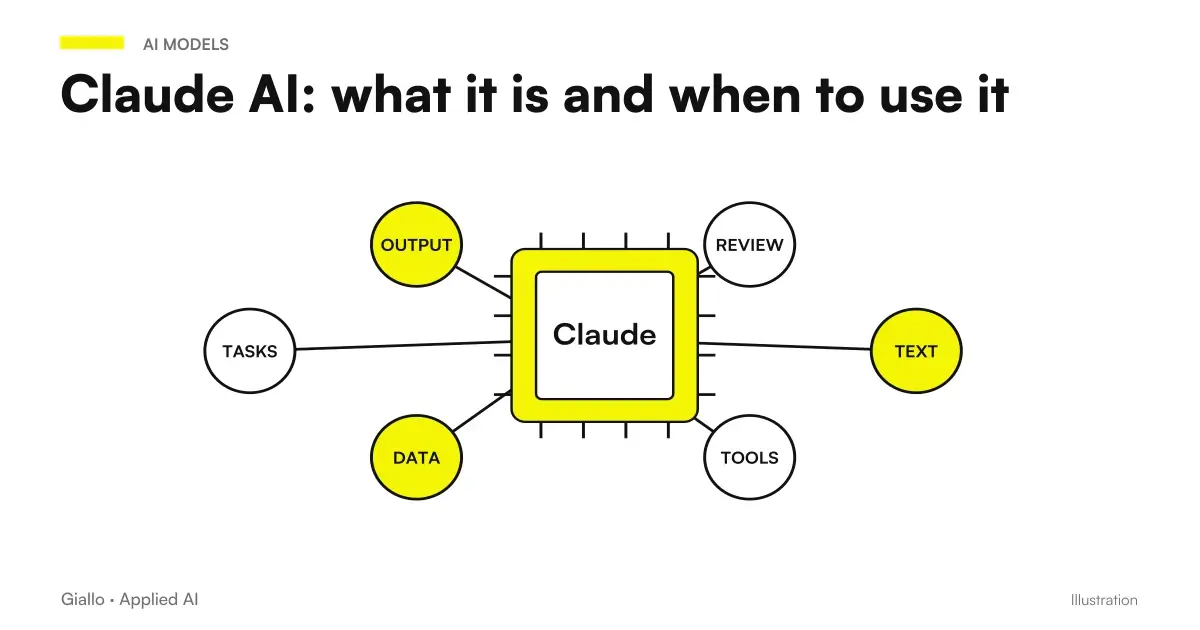
Claude was born as writing assistant and reasoning. His natural ground is a text you provide him: you glue it to him (or load him) and ask him to work on it. Summarize a thirty-page chapter, rewrite a relationship in a more formal tone, extract critical clauses from a contract, turn messy notes into a structured document. He is good at maintaining consistency over long texts and to follow articulated instructions.
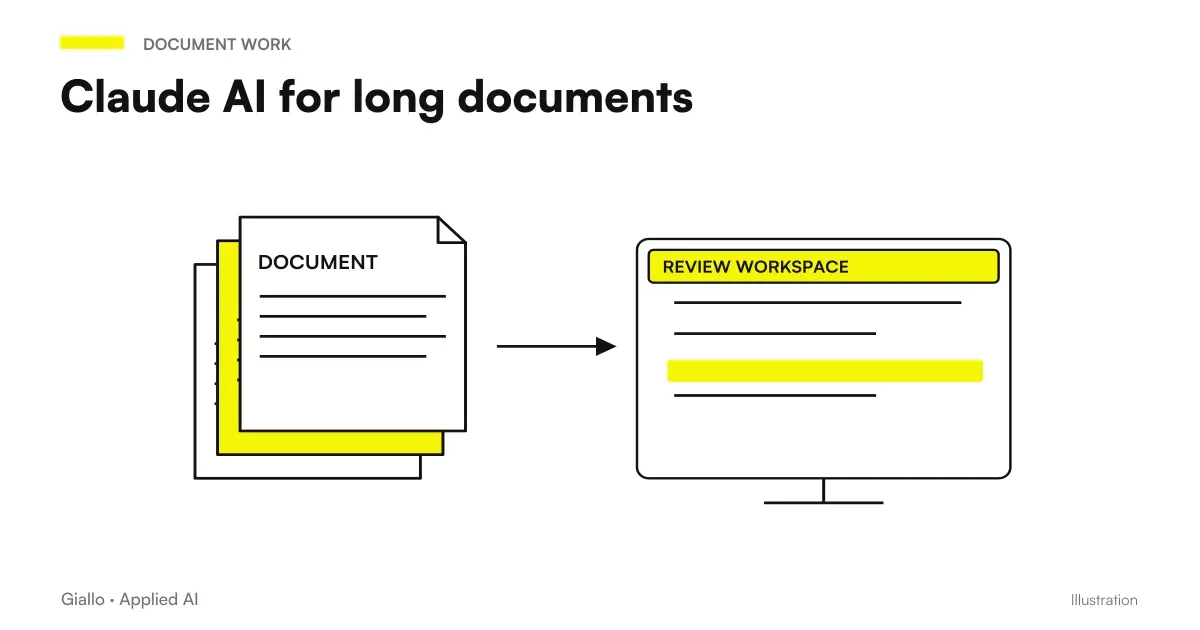
The least obvious strength is the management of the long context: Claude can take many pages into account at the same time, which makes him suitable for jobs where the document is the raw material. If you have to compare two versions of a contract or synthesize a technical report, that's where it gives the best. Let's deepen this aspect in the guide Claude for long documents.
What not is his native job: go look for fresh information on the web. Claude thinks about what you give him; he's not designed to retrieve yesterday's latest news, latest price or updated legislation. For a complete overview of the instrument, see Claude AI: what is it.
What Perplexity Does
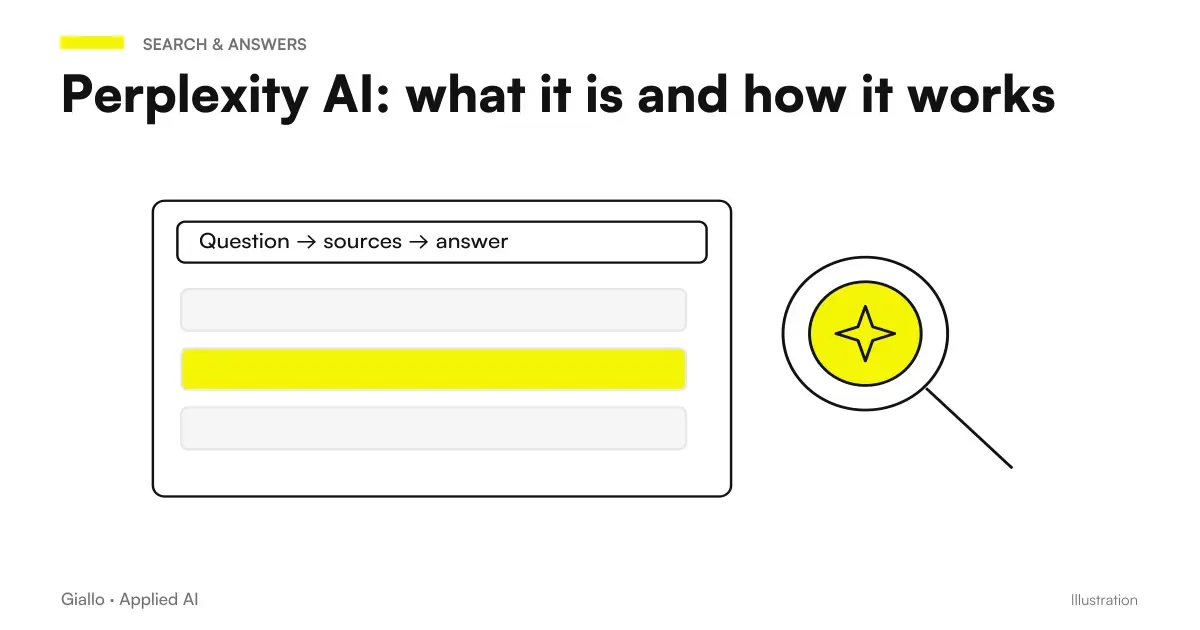
Perplexity is a response engine: a middle ground between a search engine and an AI assistant. You ask him a question in natural language and, instead of giving you a list of links like a traditional engine, he gives you a synthetic response with references to the sites from which it was taken. The advantage is double: you get a ready summary and you can click the sources to verify.
It is the right tool when information You don't already have it and needs to be updated: a market research, the state of a technology, an industry data, the synthesis of multiple articles on a theme. Where a "pure" writing assistant risks inventing (the AI Hallucinations), Perplexity anchors the response to real and linked sources.
The limit to keep in mind: the cited source is not a guarantee of truth. Perplexity can cite an unauthorized article, forum, or dated page, and the summary can simplify or distort. Sources should be opened and read, not just seen. For the instrument overview, see Perplexity AI: what is it.
Claude vs Perplexity: the difference in a sentence
If we were to compress everything in one line: Claude thinks about what you give him, Perplexity finds what you don't have. The first is a collaborator to whom you deliver a document; the second is a researcher to whom you ask to go to retrieve information and sources.
From this difference everything else descends: the type of task, the way you control the result, even the main risk. With Claude the risk is that he invents when he doesn't know (check the facts); with Perplexity the risk is to trust a weak source (check the quality of the sources).
Comparison table
Here are the two tools compared on the criteria that really matter for professional use. The bold cell indicates where each is typically strongest — not an absolute vote.
| Criterion | Claude | Perplexity |
|---|---|---|
| Main Task | Writing and analyzing a text you provide | Search updated information with sources |
| Long Documents | Strength (synthesis, rewriting, analysis) | It's not his job. |
| Updated information from the web | Limited/non-native | Strength (search + link) |
| Sources cited | Only if you give them to him | Yes, quoted by default |
| Quality of Writing | Elevated (tone, structure, consistency) | Good for short answers |
| Reasoning on a given text | Strong | More oriented to dry response |
| Italian | Good | Good |
| Main risk | Inventing when it does not know → check the facts | Weak or dated source → verify sources |
| When you choose it | You already have the content, you have to work on it | You miss the content, you have to find it |
As with any comparison between AI tools, functions and availability often change: always check the official pages by Claude and Perplexity to understand what is included in the plan you are evaluating.
When to Choose Claude and When to Perplexity
Choose Claude when
- You already have the document and you need to synthesize it, rewrite it, or analyze it.
- Work on long texts: contracts, specifications, reports, reports.
- You need consistency of tone and structure on many pages.
- The task is to write, not to discover new information.
Choose Perplexity when
- Look for up-to-date information you don't own.
- You need cited sources that you can open and verify.
- You are doing market, industry or recent regulatory research.
- You want a quick multi-page summary, with references.
Practice rule: If the content is already in your hands, it's a work by Claude; if you have to go get it, it's a work by Perplexity. Most confusion arises from asking the wrong instrument for the other's task — asking Claude for a fresh market figure, or Perplexity to draft a ten-page contract.
Practical examples
Three realistic scenarios of Italian SMEs and professionals, to see the division of roles in the concrete.
1. Law Firm — research + drafting of an opinion. The lawyer uses Perplexity to quickly orient himself on a regulatory topic and gather up-to-date sources from which to start (judgments, articles, references). He then opens and verifies those sources, and passes the material to Claude to structure the draft opinion while maintaining a uniform tone. Perplexity finds, Claude writes. Industry Insight: AI for law firms.
2. Service company — analysis of a specifications. Here comes a forty-page race schedule. Here you don't need to search for anything on the web: the document already exists. Claude reads it, extracts requirements, deadlines and penalties, and prepares an operational summary for the team. It is a task of analysis on given text, where Claude is in his element and Perplexity has nothing to do with it.
3. Marketing of an SME — content based on industry data. To write an article, the marketer uses Perplexity to collect up-to-date data and trends with sources, then entrusts Claude with writing the final text, well structured and consistent with the tone of the brand. Two tools, two stages: research with sources, then writing.
In all three cases neither "wins": they win together, each in the right stage.
Using them together: the search flow → writing
The most effective way to use these tools is not to choose, but put them in sequence. Perplexity collects and quotes; you verify the sources; Claude turns the material into a finished document.
- Search with Perplexity. Ask the question, collect the summary and above all the cited sources.
- Check the sources by hand. Open links, check authority and date. Discard what is weak or old.
- Pass the verified material to Claude. Paste the data and points you have confirmed.
- Write and structure with Claude. Draft, rewrite, tone, final document structure.
- Read it again and you decide. AI prepares, the person approves. On numbers, standards and customer data human control remains mandatory.
Mistakes to Avoid
- Asking Claude for updated information from the web. It is not his native task: you risk a plausible but unverified answer. For search with sources use Perplexity. See also the guide Best AI for Research.
- Using Perplexity to draft long documents. It will give you excellent short answers with sources, but it is not the tool to write and refine an articulated text: there you need Claude.
- Trusting sources without opening them. The presence of the link does not guarantee quality: they must be read and dated, especially in the professional sphere.
- Treating the choice as "either". Often the best answer is "both, in different stages". Think in terms of flow, not single sample.
- Giving customers sensitive data without criterion. Entering personal data in public tools can violate the GDPR. Rules are needed on what you can share and where.
How to apply it in the company
For an SME or a professional firm, the decision is not "what instrument I buy", but "what task I am facing and at what stage". The choice between Claude and Perplexity is a consequence, not the starting point.
- Map Recurring Tasks: Which Are Of search (information you don't have) and which of writing/analysis (texts you already have).
- Assign tool to task: search → Perplexity, drafting and analysis → Claude.
- Define the flow for mixed works: first Perplexity, then Verification, then Claude.
- Establish data rules: what is forbidden to paste into public tools.
- Always have human control over the critical points before using the output.
If you want a bigger picture to orient yourself between the various tools, the guide how to choose an AI model helps you reason by criteria instead of fashion. And when these tools are integrated into real processes — not just open in a browser — you need to draw the flow: it's the work of automation of business processes.
If you want to go into detail about specific models, Claude Fable 5.1 vs GPT-6 Astra and Which AI benchmarks matter?.
Conclusion
Claude vs Perplexity is not a challenge with a winner: it is a division of roles. Claude is the assistant who writes and analyzes the documents that bring him; Perplexity is the researcher who finds up-to-date information and cites it. Asking one another's trade is the most common mistake. In the daily practice of an SME the two combine: Perplexity collects and quotes, you verify, Claude writes. The rule that applies to both is the same: the AI prepares, the person decides, and the sources and numbers always control each other. From here you can continue with Perplexity AI: what is it and with Claude for long documents to see each instrument in detail.
AI becomes useful when it enters processes. Giallo Studio helps SMEs and teams build concrete, measurable and sustainable automations — or take a look at the experiments of The Lab.
Giallo Studio guides: methodology and sources
How we apply it in the company
Related resources
 Claude AI: what it is and when to use it
 Perplexity AI: what it is and how it works
 Claude AI for long documents
 Best AI to do research
 How to Choose an AI Model
 How much does business AI adoption cost?
 AI prompts for social media: ready-to-use posts, captions and content
 AI for call centres: what changes?
Other direct comparisons
The same criteria applied to other model pairs.
- Claude vs Gemini: Which to Use
- Claude Fable 5.1 vs Sonnet 5
- Claude vs DeepSeek: Which to Choose
- Gemini 3.6 Flash vs 3.5 Flash
- ChatGPT vs Perplexity: Research or Generation
- ChatGPT vs Gemini: which subscription is worthwhile in October 2026?
- ChatGPT vs Grok
- Gemini vs Copilot: Which to Choose
- ChatGPT vs Gemini: practical differences
- GPT-5.6 Sol vs Terra: which makes sense?
- ChatGPT vs DeepSeek: Which to Choose
- GPT-6 Astra vs Claude Fable 5.1
FAQ
What is the main difference between Claude and Perplexity?
Claude is an assistant that reasons about text you provide: it writes, rewrites, summarises and analyses long documents. Perplexity is an answer engine that searches for current information on the web and responds by citing sources. Claude works on the content you give it; Perplexity retrieves content you do not have.
Can Claude search for up-to-date information on the internet such as Perplexity?
In some versions and configurations Claude can access the web, but it is not its native strength: it was designed as a writing and reasoning assistant. Perplexity is designed around research with cited sources. For an updated and verifiable search, Perplexity is more direct; to write or analyze a document, Claude is more suitable. Always check the active functions on the official page of each.
Is Claude or Perplexity better for writing a long document?
Claude. It is designed to handle long texts: summarising a contract, rewriting a report, and maintaining a consistent tone across many pages. Perplexity gives you excellent answers with sources, but it is not the right tool for drafting and refining a complex document.
Does Perplexity really cite sources? Can I trust it?
Perplexity shows the links to the sources from which it drew the answer, and this is its main advantage. But the presence of a source does not guarantee that it is authoritative or that the synthesis is correct: they should always be opened and checked, especially for data, regulations and numbers used in the professional field.
Can I use Claude and Perplexity together?
Yes, and it is often the best combination. Use Perplexity to gather up-to-date information and sources on a topic, then pass the results to Claude to write, structure or analyze the final document. They are complementary rather than alternative.
Which offers better value for an Italian SME?
It depends on the task, not the company. If the main work is drafting and analysing documents (contracts, reports, specifications), Claude carries more weight. If it is market research, regulations or current information with sources, Perplexity carries more weight. Many companies keep both and use them at different stages of the same work.