
Dots for marketing an SME: content and materials always up to date
Dots for SME marketing: approved briefs, drafts from transcripts and consistent launch materials. Sources, review and limitations before publishing.
Reading time: 12 min
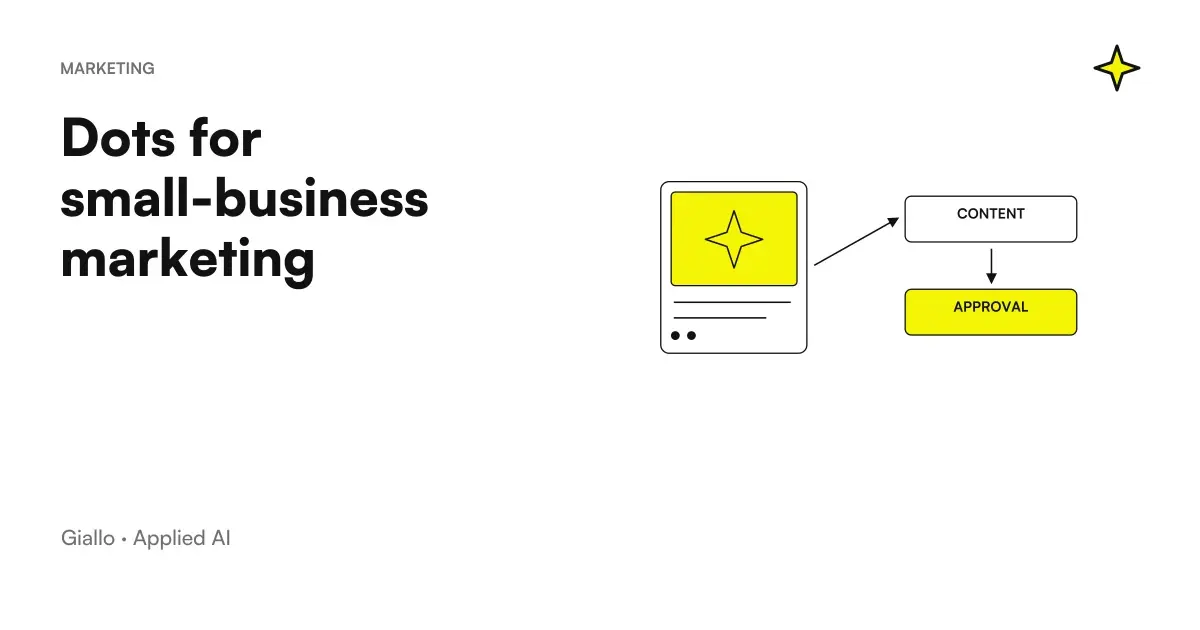
Dots can help an SME's marketing by following material consistency over time, instead of just generating a single text. OpenAI presents examples of launch materials updated to project changes and transcripts transformed into social notes and drafts. They are examples of the vendor, not evidence of economic results obtained by Italian companies. Official announcement Dots.
The useful project starts from an approved brief and ends with a reviewable material. Prices, features, dates and promises must remain linked to the sources. Creativity can produce variations; it must not transform a hypothesis into a certain availability. A personal dot may coordinate this responsibility, but publication is a separate phase.
The guide is updated to verified sources on 9 October 2026. For Italian access read Dots, plans and costs; for the role of the product in the continuity of the work returns to OpenAI Dots: What They Are. All cases described here are hypothetical.
In summary
- The first editorial assignment must have a brief and a prevalent source.
- Launch materials and drafts from transcripts are examples documented by OpenAI.
- A content must distinguish approved data, proposals, and missing information.
- Connecting an app does not automatically keep all materials up to date.
- The number of texts generated does not demonstrate quality, savings or economic return.
- Publishing and sending require a path distinct from preparation.
What marketing responsibility should be assigned to the dot?
Choose a responsibility with recognizable inputs and an output that someone can evaluate. "Manage marketing" is too broad. "Help me keep drafts of this launch consistent with the approved brief" defines a project instead. You can add the expected result: list of differences, text proposals and questions that require a decision.
Distinction is important because marketing mixes facts and interpretations. A technical feature is a fact to be verified. A title is a creative proposition. A commercial promise can have external consequences. If you put everything on the same plane, an elegant sentence can hide a substantial error. So ask that the dot distinguish the reason for each change: fidelity to the source, clarity or creative variation.
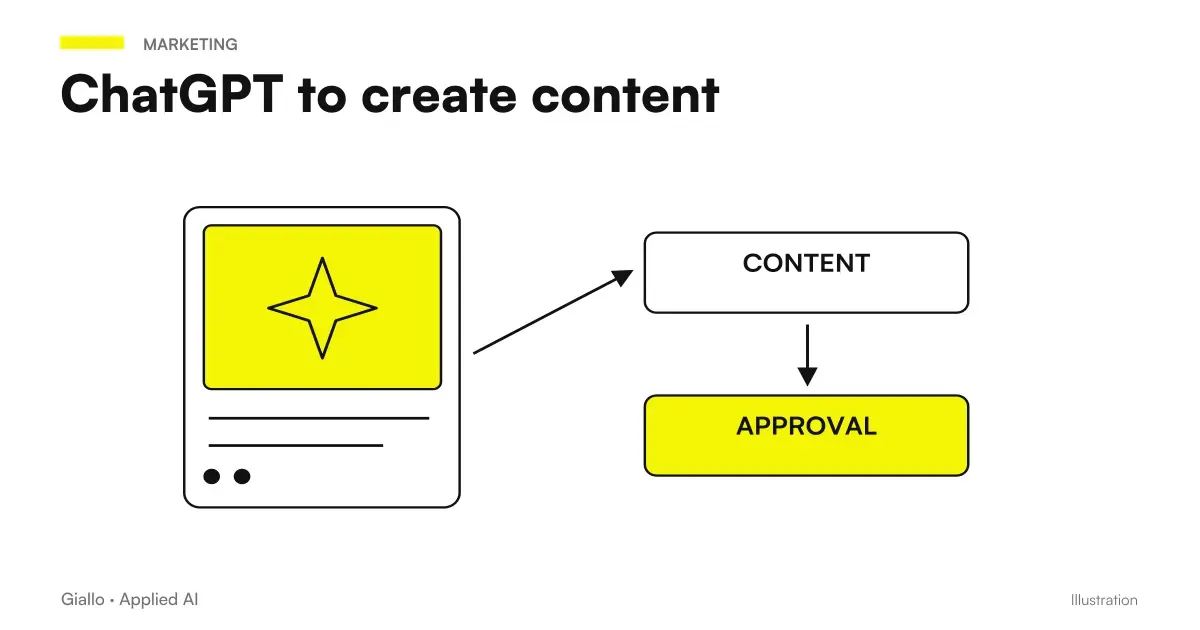
A good first output is a map of the materials: product card, presentation, email and expected posts, with the source that each must respect. There is no need to produce every text immediately. Understanding which materials depend on the same information allows one to see the impact of a change. The Guide to ChatGPT to create content helps set the single deliverable; Dots adds the ability to follow a continuous responsibility according to the assignment.
Responsibility should also have an owner. It can be the owner, marketing manager or a contact person of the agency. The dot must not become the point at which positioning decisions are implicitly resolved. If two people ask for incompatible tones, the conflict must be made visible and resolved by the referent. The product can prepare alternatives, but the identity of the brand requires a recognizable choice.
How to prepare briefs and sources for a launch?
Prepare a short document with public, product, target of the material and approved information. Add a section for what is yet to be confirmed. An indicative date must be marked as such. A feature under evaluation must not appear among those available. Indicates which document prevails if the catalog and an old presentation are in contrast.
Then collect the authorized materials: text, selected images, data sheets and agreed tone. For each document, clarify its role. A transcript may be a source of cues and quotes, but it does not necessarily amount to an approved catalog. The dot should be able to distinguish a sentence spoken during a discussion from a promise ready for the public.
| Material to be prepared | Source to be provided | Most Important Review |
|---|---|---|
| Product Sheet | Approved data and features | Technical precision and variants |
| Commercial presentation | Brief, catalogue and recipient | Promises, availability and consistency |
| Draft Email | Message, Goal, and Conditions | Recipient, Content and Attachments |
| Social Draft | Transcript or Authorized Content | Context, tone and affirmations |
| Update Note | Changed Source and Affected Materials | Differences and Real Consequences |
The table does not guarantee a specific integration: it describes the work package. If the sources live in Drive or the conversation passes from Slack, check the access levels in the guide to Dots with Gmail, Drive and Slack. For the first test only one appropriate document can suffice. Avoid linking the entire editorial archive before knowing what information is needed.
Minimum editorial package to be delivered to the dot
Indicates the prevailing brief, audience, requested material, and confirmed information. Add the points yet to be decided, the terms to be avoided and who approves. Ask to show the source of the claims and to separate creative variants from necessary updates. The result must remain an internal proposal until the auditor decides how to use it.
How to turn a transcript into useful content?
OpenAI cites the transformation of transcripts into show notes and social drafts among the uses of Dots. Official announcement. For an SME, an equivalent path can start from a project demonstration meeting or an authorised intervention. The first request should extract themes, decisions, doubts and steps to verify, before creating public texts.
The revision of the transcript must look at attributions and context. A misreported sentence may seem like a statement from the holder. A hypothetical example can become a business outcome. A possibility discussed by voice can turn into a promise. Ask the dot to leave these states visible and to use cautious formulations when the source does not support a certainty.
After the content map, choose one or two formats with a precise goal. A post may explain a product choice; a note may collect questions that have emerged; an email draft may propose the next step. Do not distribute the same paragraph on each channel by changing only the length. The message must respond to the use of the material and to the intended reader.
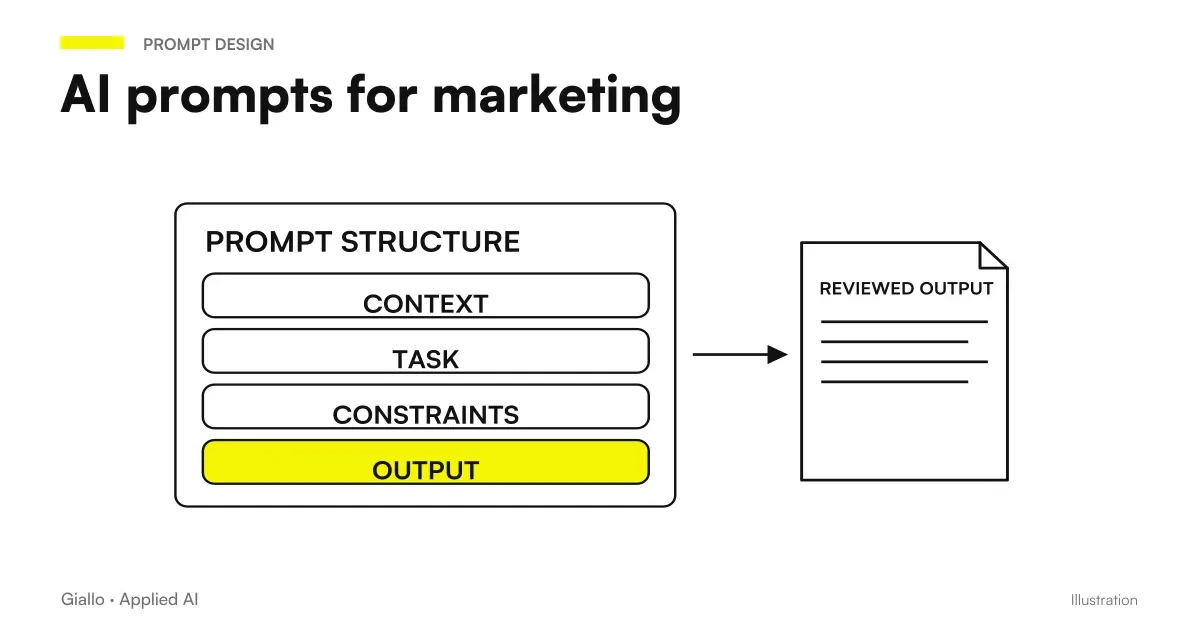
The auditor also checks what is missing. A fluid synthesis may omit an important limit present in transcription. For this reason the comparison with the source comes before the judgment on the style. The AI prompt for marketing can help to spell out public, format and tone, but do not eliminate the need to verify statements and quotes.
How to keep materials consistent when changing the project?
Continuity is useful when the same data appears in multiple materials. If a feature, availability, or recipient changes, the dot can help prepare an update map within the available sources and assignment. OpenAI presents this type of responsibility in the case of launch materials. Introducing dots.
However, do not assume that a connection detects any changes. Define the path: on-demand control, periodic reading, or event actually supported by the source. A scheduled task requires tasks, merge, term, and notifications; connecting an app does not automatically create programming. Tasks and memory. The guide to Dots Automations enters into this choice.
The result of an update should show the data changed, the materials concerned and the proposal. The auditor can thus confirm the change before using it. If the dot rewrites each text without highlighting the differences, the control becomes more difficult. For a first process, ask for traceable and motivated interventions, retaining the previous version when needed for comparison.
Keep the creative suggestion distinct as well. A price change requires consistency of information. A tone proposal requires an editorial decision. If both changes come together without labels, the team can approve a phrase for the style and unwittingly accept a different promise. The quality of the review depends on this separation.
Two hypothetical projects for marketing an Italian SME
An e-commerce prepares a new collection
Imagine an Italian e-commerce of home accessories. The manager delivers to the approved catalog dot, list of variants and launch briefs. The first output is a map of the statements in the tabs and in the email draft. The dot must highlight inconsistencies, missing data, and steps too certain with respect to the source.
When a variant is removed from launch, the handler asks for a new comparison or uses a separately defined recurrence. The result shows which materials cite it and proposes corrections. Prior to publication, the auditor checks the catalog, images, and conditions. No additional sales or savings percentages are attributed to this scenario: it is a way to make the consistency of the materials verifiable.
A manufacturer prepares a meeting with retailers
Imagine a furniture manufacturer who has an authorized transcript of an internal comparison. He wants to get a note for the presentation to the retailers. The dot distinguishes approved facts, ideas and open questions, then proposes a structure. The sales manager confirms what information is usable on the outside.
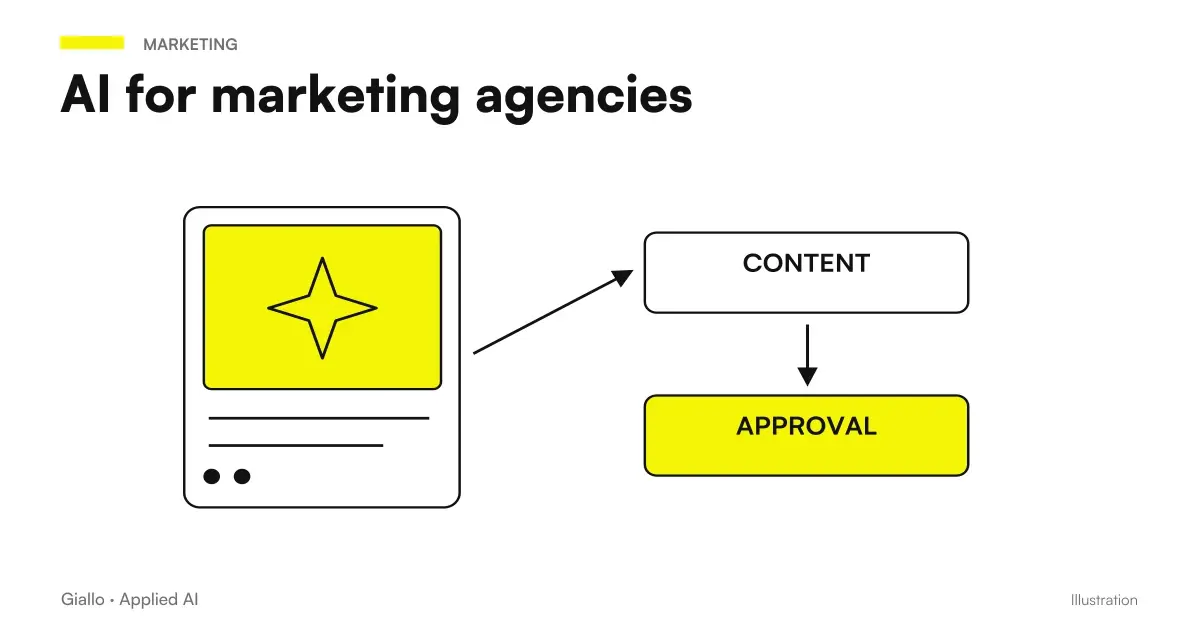
The draft can become a presentation and some social proposals, each with a different purpose. An internal comment is not turned into customer testimony. A date discussed as a hypothesis remains to be confirmed. The team uses the dot to prepare materials to be reviewed, retaining the commercial decision in the approved document. The Guide on AI for Marketing Agencies broadens the theme of coordination between production and revision.
How to evaluate quality and value without invented numbers?
Evaluate loyalty to sources first. It counts what information is needed, what is missing, and what needs correction. See if the dot keeps doubts visible or hides them in a generic sentence. Then evaluate the utility: does the material help the auditor make a decision or does it create additional work without a clear result?
It also records the revision path. A well-written text can require many substantial corrections; a list of inelegant differences can be very useful to the team. Compare similar assignments and note the causes of corrections: ambiguous source, incomplete brief, tone, unsupported information. These observations are more solid than a percentage of savings chosen without measurement.
Do not use the number of drafts as an indicator of success. If the team doesn't know which one to approve, the volume increases uncertainty. Ask for a few variations with a recognizable reason: one for a technical audience, one for a less experienced audience, for example. The choice remains editorial and must be compared with the brief, without promising that a variant will convert better in the absence of data.
For comparison between instruments, Kimi AI vs ChatGPT helps formulate needs on research, documents and work. It is not proof that a product exceeds Dots in continuity or connections. You need to compare the experiences actually available and your process, avoiding evaluating a persistent agent only as a generator of an answer.
What mistakes to avoid before publishing?
The first mistake is to use a transcript as the source of truth for each statement. The second is to omit the approval status of the data. The third is to ask for many drafts without deciding the reader and use. The fourth is to confuse continuous responsibility with automatic monitoring. In all these cases the dot can produce convincing text that the project is not ready to use.
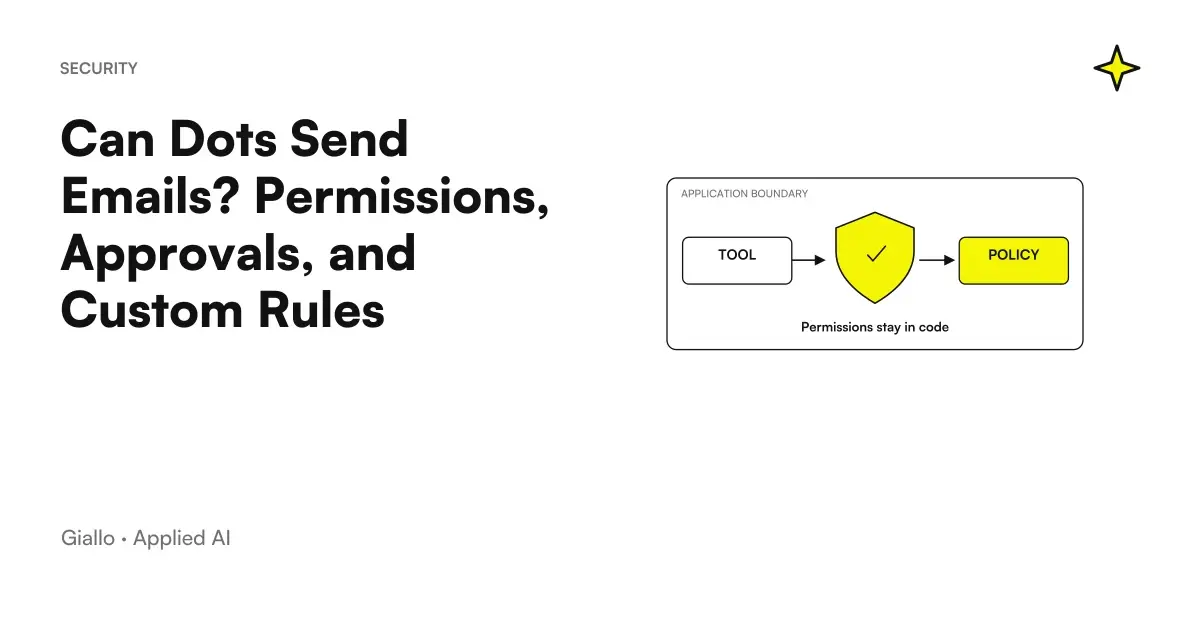
A further mistake is to consider a draft request as permission to publish or send. These are separate actions, with their own connections and controls. Official Controls. The guide to Dots permits and approvals helps to make the external passage visible, even when the text has already been revised.
Don't forget the data cycle. A transcript may contain information not necessary to the final material. If the data does not serve the project, select the source before delivering it. Disconnecting the plugin does not delete the context already obtained, as the Official Privacy FAQ. For the operational framework read Memory and Privacy Dots.
How to store your brand voice during review?
Provide a few approved examples and explain why they work: audience, tone, terms used, and type of promise. A list of adjectives such as "professional and engaging" leaves ample room for interpretation. An example with a reason makes the comparison more concrete. Ask the dot to propose variations consistent with those criteria, without turning each material into a copy of the same text.
The auditor must distinguish the voice of the trademark from the facts. A more incisive formulation can increase the certainty of a statement; a shorter sentence can eliminate an important limit. For this style and accuracy must be checked together. It preserves the approved choices in the editorial brief, so the continuity of the project does not depend only on the memory of a personal preference. When changing the audience or product, it also reviews tone examples instead of automatically applying them.
How to start with a useful editorial responsibility?
Choose a launch or material that has an approved handler and sources. Prepare the output map, ask for a first internal comparison, and have each substantive statement reviewed. Only then does it evaluate a continuity of work, with a defined path for changes. The first success is a faithful and usable material, not a calendar full of texts.
If you want to build an editorial flow that connects briefs, sources and review, Giallo can work on the AI Agent Design starting from your own type material. Before the setup, the path on how to create the first dot helps to choose a small assignment and to verify the understanding of the project.
Giallo Studio guides: methodology and sources
How we apply it in the company
Related resources
 OpenAI Dots: ChatGPT's always-active agents explained
 Dots automations: reminders, recurring checks and monitoring
 Connect Dots to Gmail, Drive and Slack: permissions and channels
 Can Dots Send Emails? Permissions, Approvals, and Custom Rules
 ChatGPT to create content
 AI for marketing agencies: content, reports and AI labels
 AI marketing prompts: copy, campaigns and content
 Kimi AI vs ChatGPT: which to choose for work?
FAQ
What can Dots do in an SME's marketing?
It can take responsibility for editorial work and coordinate proposals based on authorised sources. OpenAI gives examples of updated launch materials and transcripts turned into notes or social media drafts: these are illustrative vendor examples, rather than guaranteed results.
Does Dots publish content automatically?
You must not infer this from a draft request or an app link. Publishing and sending are separate actions, dependent on available capabilities, permissions, and controls.
How to avoid information invented in materials?
Specify an official source, ask for references and have it distinguish approved data, creative proposals and points requiring clarification. The review must pay particular attention to prices, features, dates and promises.
Does the Drive link keep every text up to date?
No, a connection does not automatically create monitoring. You need to define how to detect changes and what outputs to review; events and recurrences depend on the available support.
How to measure value without inventing a ROI?
Record completeness, fidelity to sources, necessary corrections and revision work. The economic result should be evaluated with real data from the process, not inferred from the amount of content generated.
Can an Italian SME access Dots with Pro?
As of 9 October 2026 Pro at launch excludes the EEA, therefore Italy. Business Premium is in worldwide rollout: eligibility and actual availability in the workspace must be verified.