
How much RAM and VRAM does Qwen3.8-27B really need?
How much RAM and VRAM does Qwen3.8-27B need? Distinguish theoretical weights, quantized files, caches, context and actual memory before choosing hardware.
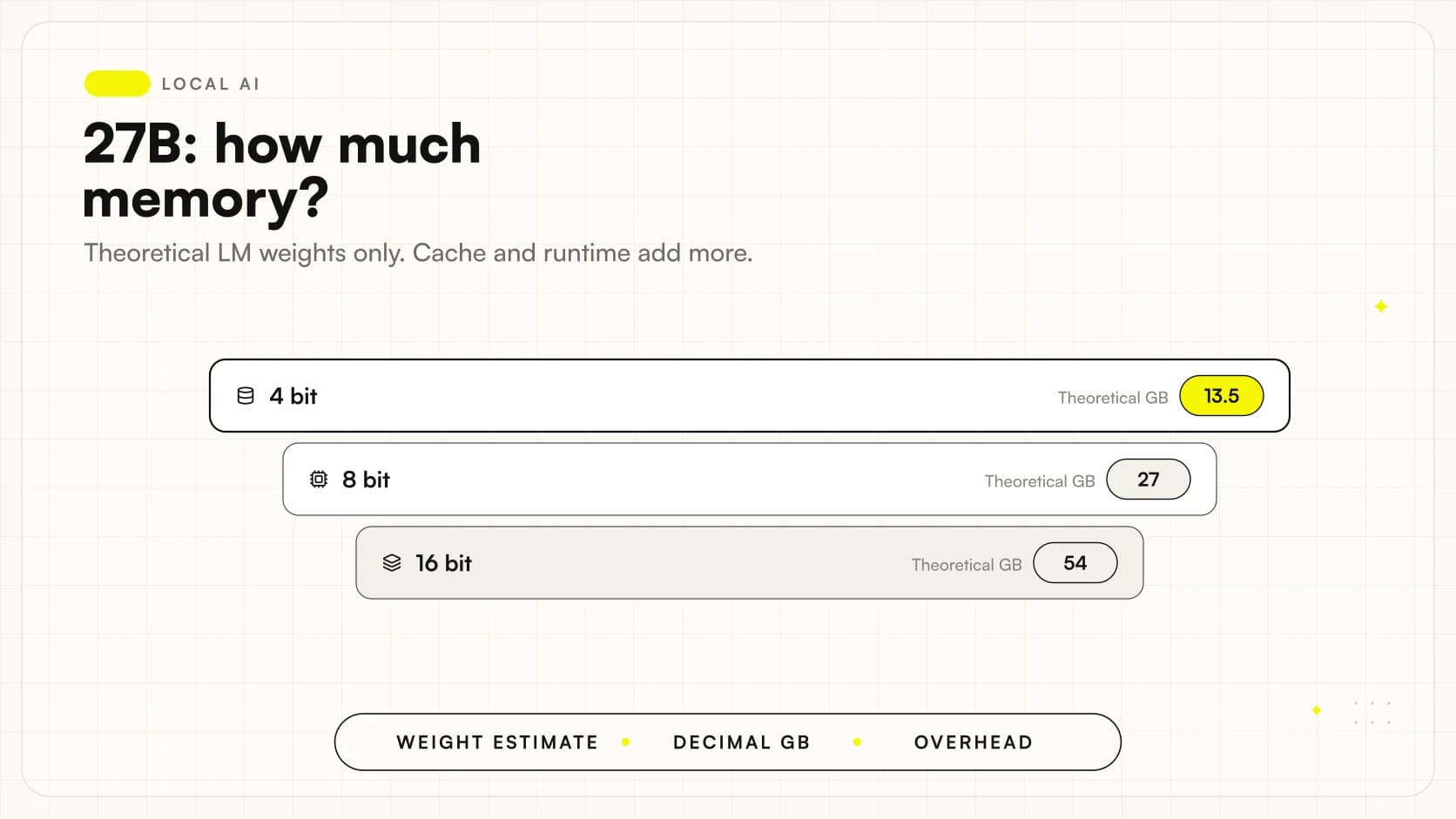
There is no single RAM or VRAM figure for every Qwen3.8-27B installation: weights are only part of consumption. A useful answer requires checkpoint, quantization, runtime, context and concurrent request count; a parameter formula does not establish that the model will work well on your computer.
For reference, the Qwen/Qwen3.8-27B repository identifies the model, while its official configuration describes the components. Sources were consulted on 27 October 2026. Giallo has not measured memory or speed on a sample machine: the formulas below are theoretical calculations explicitly separated from operating requirements.
In summary
- The 27B name does not describe all service memory.
- Theoretical four-bit language weights amount to about 13.5 decimal GB.
- An actual quantized file may contain components at different precisions.
- Context, images and concurrency change sizing.
- Approve the configuration after testing the intended workload.
How is the theoretical weight size of a 27B model calculated?
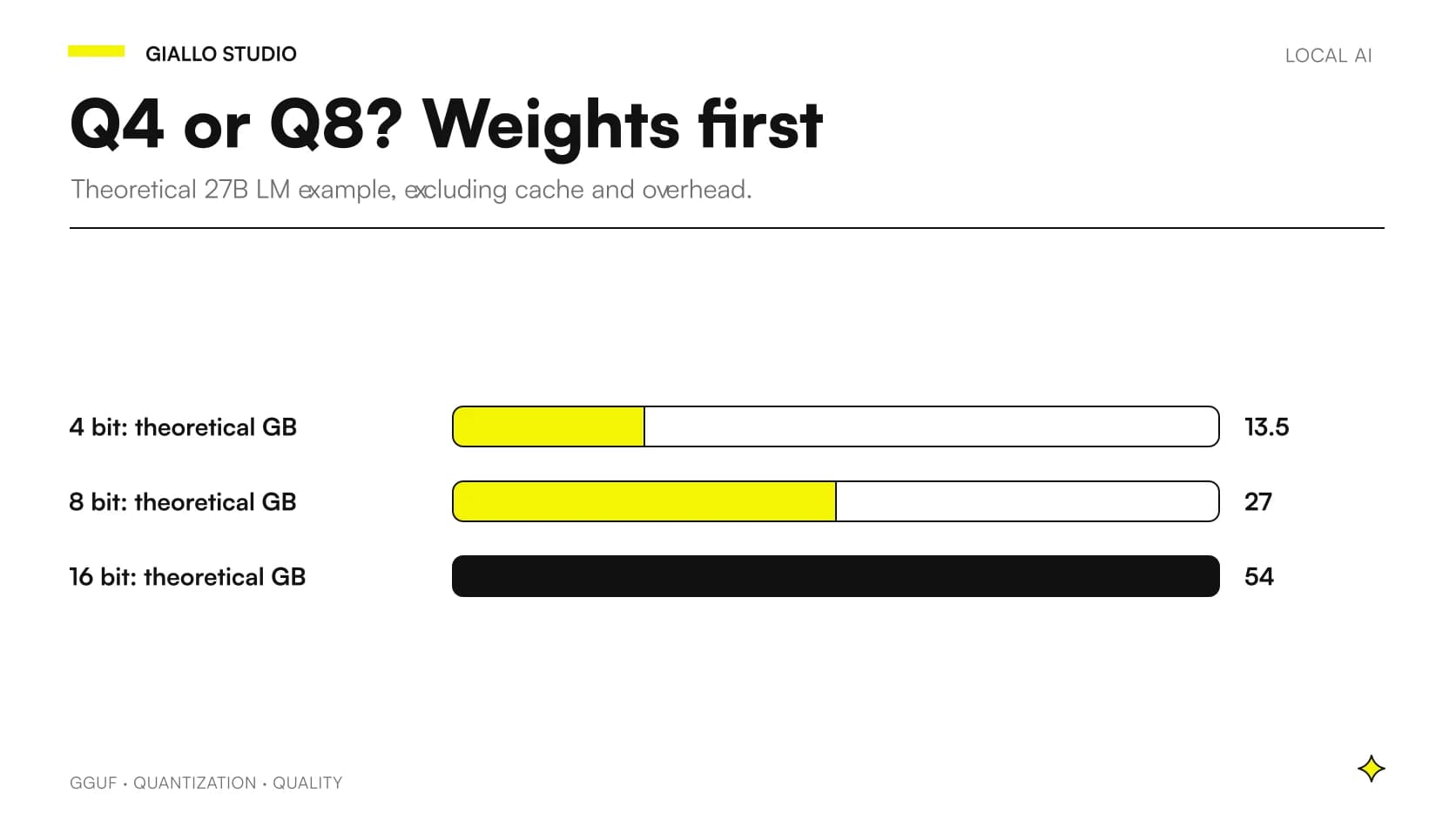
The basic formula multiplies parameters by bits per parameter and divides by eight. Using 27 billion as the language component alone gives these ideal values. The table is our mathematical calculation, not a measurement of the distributed checkpoint.
| Ideal weights precision | Calculation | Theoretical decimal GB | Approximate theoretical GiB |
|---|---|---|---|
| 16 bits | 27 billion × 16 / 8 | 54 GB | 50.3 GiB |
| 8 bits | 27 billion × 8 / 8 | 27 GB | 25.1 GiB |
| 4 bits | 27 billion × 4 / 8 | 13.5 GB | 12.6 GiB |
Decimal GB use billions of bytes; GiB use powers of two. This explains some differences between figures displayed by tools, but not all additional consumption. The calculation rules out unrealistic expectations before downloading large files. It does not justify calling a machine “compatible” when nominal memory only slightly exceeds the weights column.
Why is a Q4 GGUF not exactly four bits for every parameter?
Actual quantization may include scales, metadata and model parts retained at different precisions. Even similarly named formats may use different schemes. The Hugging Face quantization overview distinguishes methods and trade-offs: the choice requires model and hardware support.
Size for the actual file, retaining conversion author and revision. If the package contains multiple files, identify which will load and when. Reading a number in the label is insufficient. The guide to GGUF, Q4 and Q8 explains the difference; the hardware record should also note disk size without confusing it with peak inference memory.
Which components must be added to language weights?
A service may need visual components, cache structures, engine buffers and library memory. If the pipeline converts PDFs or processes images, other processes contribute to the overall workload. The operating system and user applications also have requirements that cannot be ignored.
Describe consumption as a budget: weights, additional components, request memory and computer workspace. Not every item is fixed. A model may load successfully and fail only when a demanding input arrives. Testing therefore does not end at the startup message. The Qwen installation procedure separates loading from application verification, keeping visible the stages where a request may exhaust resources.
RAM, VRAM and unified memory: what changes?
With a dedicated GPU, system RAM and VRAM are separate resources. A runtime may distribute some work through offloading, but that path has constraints and performance to observe. Simply adding nominal capacities neither describes an actual configuration nor guarantees model usability.
On Apple Silicon, unified memory is shared by the system and compute components. Comparing it with a dedicated GPU therefore requires attention to overall workload, not direct conversion between commercial labels. Start a purchase decision from the workflow: individual use, a workstation running other programs or a shared service. The guides to Macs with 16, 24 or 32 GB and GPUs and VRAM on Windows cover the respective testing approaches.
How much does context affect memory?
Context includes the material a model uses during a request, not just the question you have typed. It may include instructions, previous conversation, documents, tool results and generation space. Raising its limit may change runtime memory use even when weights stay identical.
The Hugging Face cache guide shows strategies with different memory and performance trade-offs. Avoid generic formulas without understanding the architecture and implementation. Define normal input, the longest permitted case and response limit for sizing. “Supports a very large context” is a declared model capability; “this machine sustains that context” is a separate result to verify.
Why does Qwen3.8 need care with cache estimates?
The specific vLLM recipe describes a hybrid architecture with different attention components. Do not treat every layer as a standard full-attention transformer and derive an apparently precise figure from that assumption. The result may be far from the actual engine's behaviour.
The SGLang cookbook also includes specific memory-allocation settings. These references show why an estimate must identify the runtime. A business proposal need not reproduce every technical detail, but it should include a documented configuration and workload measurement. Optimizations for one accelerator do not automatically become valid recipes for a laptop or another backend.
Can images and video change test results?
A text-only test does not cover visual-document workloads. Resolution, image count and pipeline transformations may change the required work. The same PDF may become extracted text or a sequence of images, following different operating paths. The sample must represent actual use.
The test also records content preparation: conversion, crops and components active alongside the server. Measuring only the main process may hide some cost. For an office reading scans, the guide to local multimodal AI helps separate reading quality from processing consumption. Choose the model after deciding which pipeline is needed, not before.
Why does one chat not size a shared service?
Two users may overlap requests, documents and generations. The runtime must manage that state alongside loaded weights. A service that looks adequate in an individual demonstration may behave differently when team work arrives at the same time.
Establish how many requests must be active and which can wait. An explicit queue may be simpler than immediately expanding hardware if the process tolerates it. Conversely, a continuously interactive workflow cannot be sized like overnight processing. There is no universal percentage to add to RAM: simulate intended conditions and observe errors, memory use and timings. Application architecture contributes to sizing as much as the checkpoint.
A scenario: a 16 GB laptop already used for work
Imagine a professional with a 16 GB laptop, browser, email and professional applications open. This is an illustrative scenario. A theoretical 13.5 GB calculation does not establish that the quantized 27B leaves enough room for that workload. Observe the entire computer, not just whether the file loads.
A reasonable approach is to start with a smaller candidate covering the task and compare the 27B only when a compatible configuration exists. Assess useful outcomes, not parameter-count prestige. If the larger model makes the computer difficult to use, other activities bear the cost too. The guide to how to choose an AI model links size and capability to a verifiable objective.
A scenario: an internal server processing document batches
In a second hypothetical example, a business prepares a service that reads document batches while users are inactive. The requirement may allow queues and delays but needs the complete batch processed without losing state. Test longer inputs, any images and behaviour after errors.
Limiting concurrency and maintaining a repeatable queue may help rather than loading more requests than necessary. Test settings on the chosen runtime. If a document exceeds the scope, the service must flag it and handle continuation explicitly rather than imply the job is complete. The financial assessment includes administration, updates and checks: the local and cloud cost comparison helps connect resources to the workflow.
Which measurements should be kept to approve the configuration?
- Actual checkpoint, revision, conversion and precision.
- Machine, system, accelerator and runtime version.
- Configured context, input size and output limit.
- Concurrent requests, other applications and multimodal pipeline.
- Observed memory use, errors and reference-sample timings.
For Ollama, when the checkpoint is supported, the context length page documents context and offloading checks. Other runtimes expose their own logs and indicators. Distinguish reserved memory, actual use and system resources: an isolated, undefined figure is insufficient for comparing configurations.
Which shortcuts should be avoided before buying hardware?
The first mistake is buying a machine from a weights-only formula. The second is transferring a measurement between precisions. The third is applying another model's published requirement to Qwen. Official estimates can help but remain tied to definitions and environment: for example, Google explicitly distinguishes loading from context in its Gemma tables.
Another mistake is treating the ability to use disk-backed memory as equivalent to available compute memory. The operating question is not only “does it start?” but “does it sustain this work within the agreed limits?”. A test on available hardware can answer before purchase, provided configuration and conditions are recorded precisely enough to interpret the result.
How can two configurations be compared without confusing consumption?
Changing precision, context and concurrency together makes observed differences difficult to interpret. Set a reference and change one variable at a time, keeping inputs and output limit the same. Distinguish initial loading from requests with an already-ready model; also identify processes remaining active from a previous test.
Record what each figure means: file size, process memory, runtime-reserved allocation or accelerator use. These measurements answer different questions. A smaller disk file does not automatically imply a proportionally smaller peak; a large reservation alone does not mean the service has failed.
The final sheet should include a normal case and the most demanding case the process permits. If the second fails, decide whether to reduce the requirement, change configuration or choose another environment. Hiding it behind an average makes the machine look adequate but leaves the problem to the operator when the real document arrives. A sustainable choice preserves unfavourable outcomes and the reasons a configuration was excluded.
How can GB figures become a business decision?
Define a task, sample and acceptable limits for errors and waiting. Then compare a configuration leaving operating headroom with smaller alternatives. If requirements grow, repeat testing before promising longer documents or new users. The Italian-language local benchmark maintains precisely this link between quality and resources.
If you want to size Qwen for your workflow before investing, AI consulting by Giallo Studio can define workload, measurements and acceptance criteria. The outcome is a documented choice of environment with explicit limits, rather than a RAM figure presented as a guarantee for every use.
Giallo Studio guides: methodology and sources
How we apply it in the company
Related resources
 DeepSeek R1 Distill 32B vs Qwen3.8-27B locally
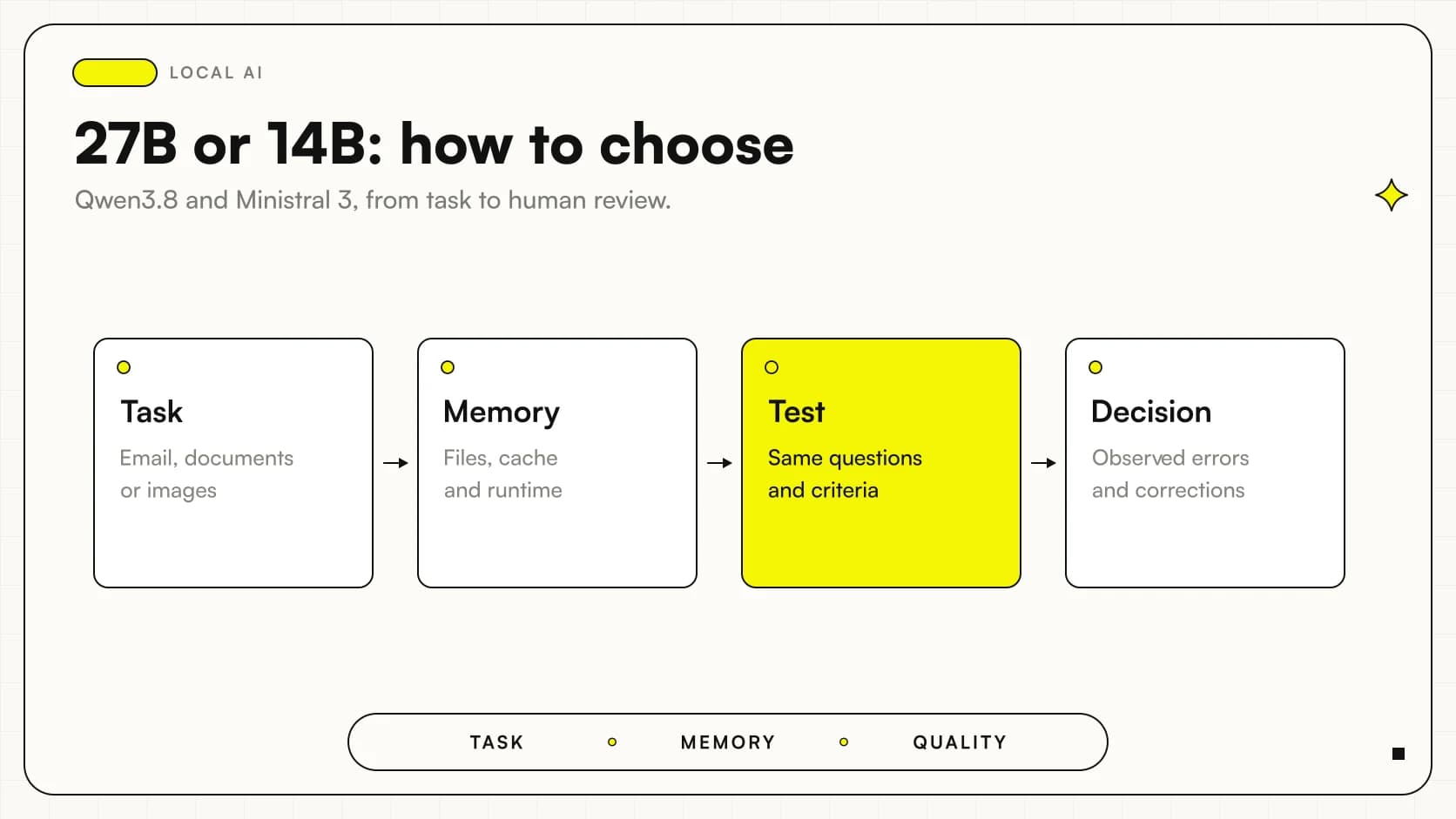 Qwen3.8-27B vs Ministral 3 14B: choosing local AI
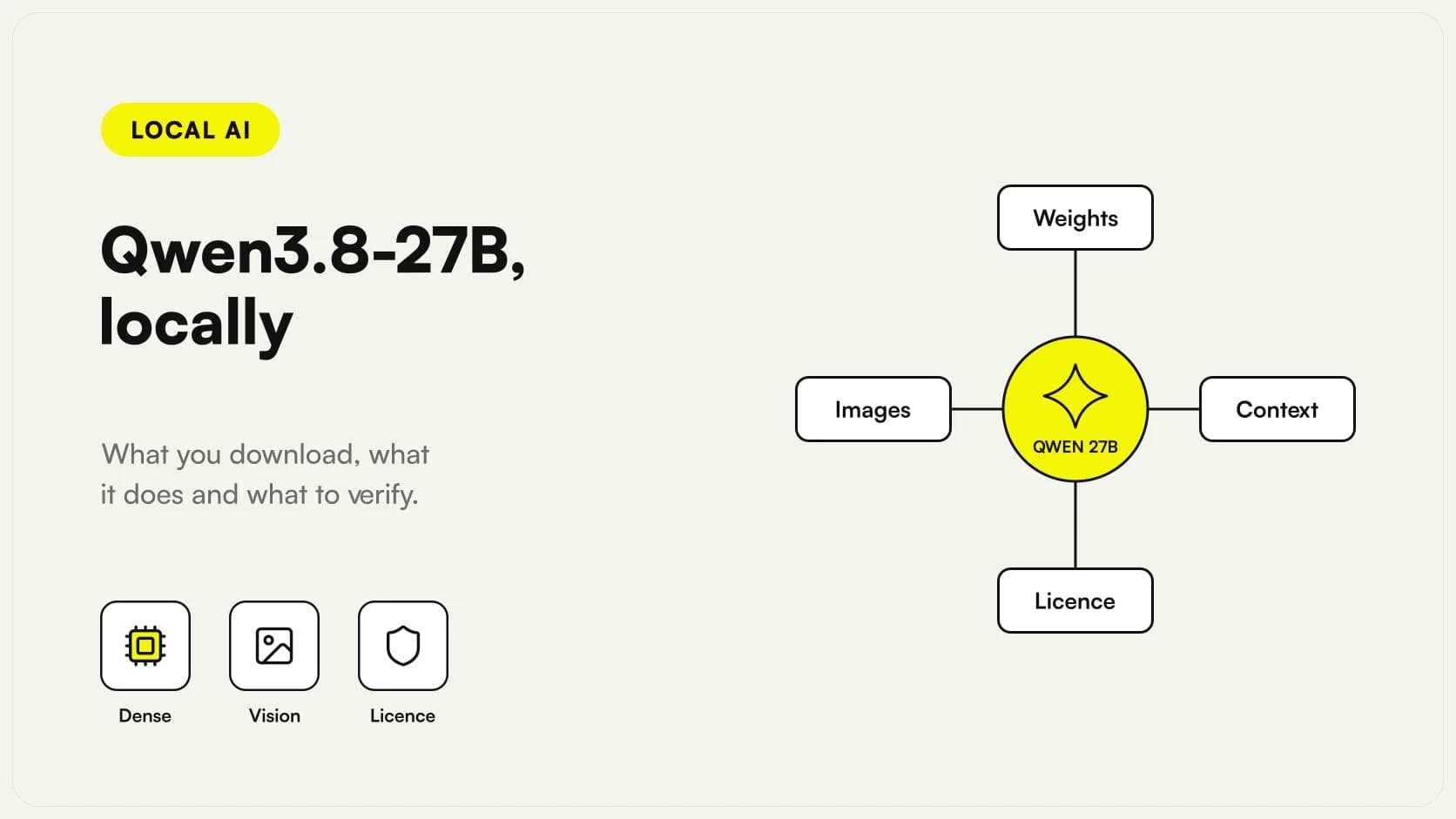 Qwen3.8-27B locally: capabilities, limits and requirements
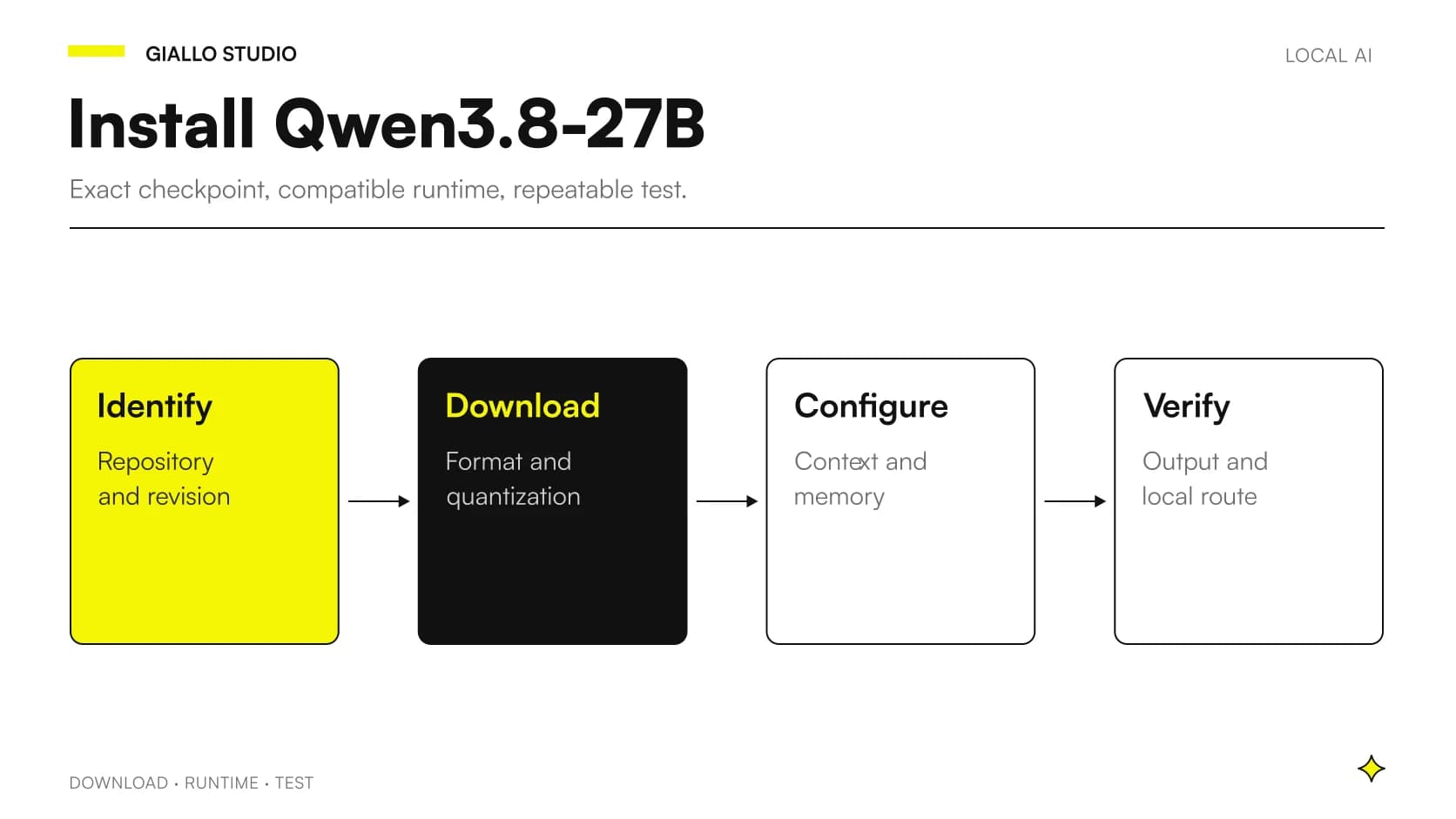 Install Qwen3.8-27B locally: checks and workflow
 GGUF quantization: Q4 or Q8 for local LLMs?
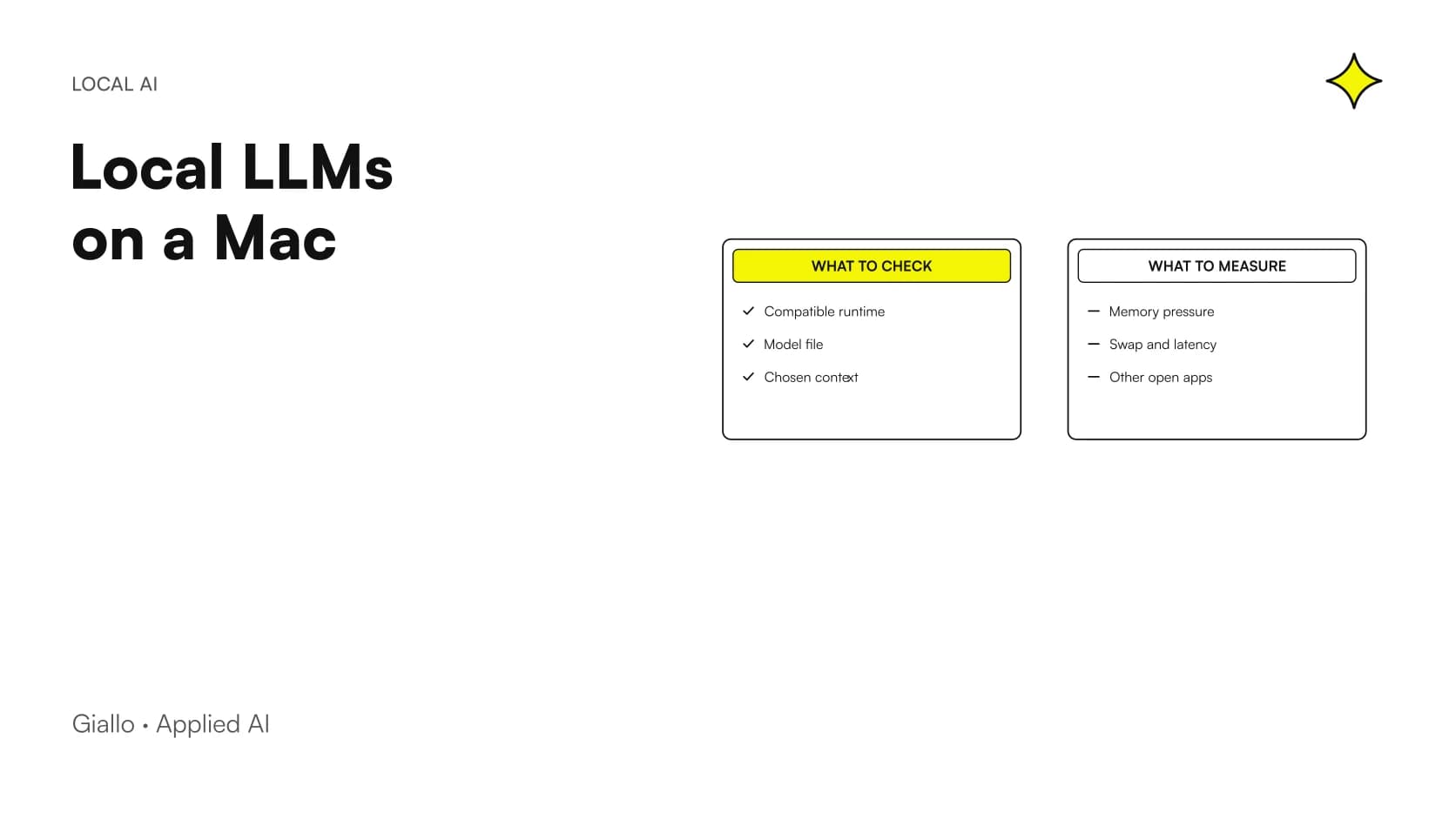 Local LLMs on a Mac with 16, 24 or 32 GB
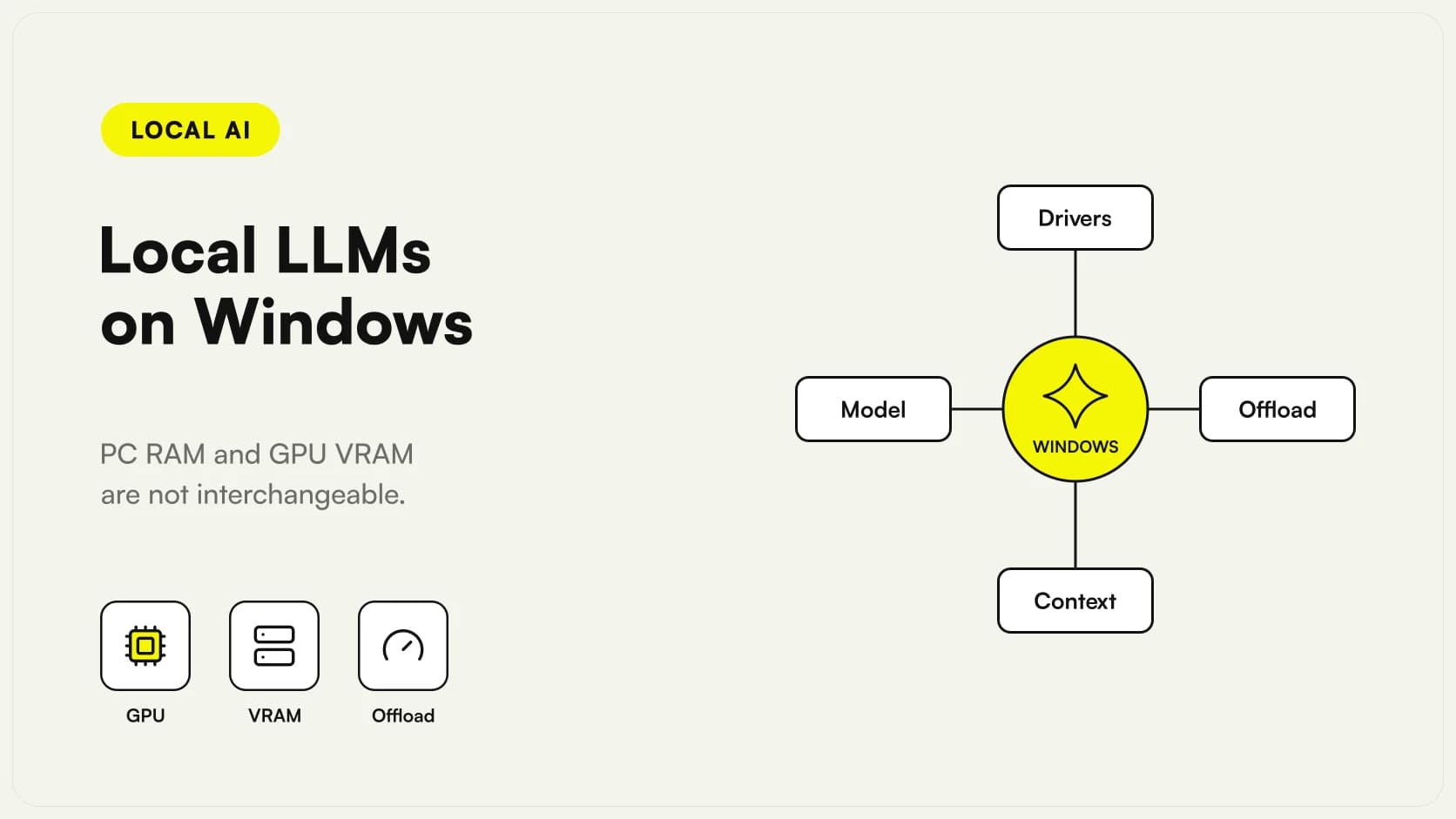 Local LLMs on Windows: GPU, VRAM and practical limits
FAQ
Does Qwen3.8-27B need only 13.5 GB at four bits?
13.5 decimal GB is a theoretical calculation for the 27 billion language parameters alone at exactly four bits. Metadata, additional components, caches, buffers and the operating system are excluded: it is not a sufficient requirement.
Can a Mac with 16 GB run it well?
Nominal memory cannot guarantee that. Check the exact file, available memory and workload; a weights-only estimate does not establish that the system has room to operate.
Can RAM and VRAM automatically be added together?
No. With a dedicated GPU, they are separate resources; a runtime may distribute some work through offloading, with consequences to measure. Unified memory is organized differently and remains shared with the system.
Does maximum context indicate the RAM required?
No. Model-supported context and hardware-sustainable context are different limits. Cache, attention type, precision, concurrent requests and runtime affect memory use.
Where can the most useful memory figure be found?
In tests of the actual configuration: file, runtime version, context, inputs and concurrency must be recorded alongside logs and observed peaks. Measurements from other environments are bounded references.