
Local multimodal AI for business PDFs and images
Local multimodal AI for PDFs, scans and images: OCR, visual models, citations and checks. Design a verifiable workflow around your documents.
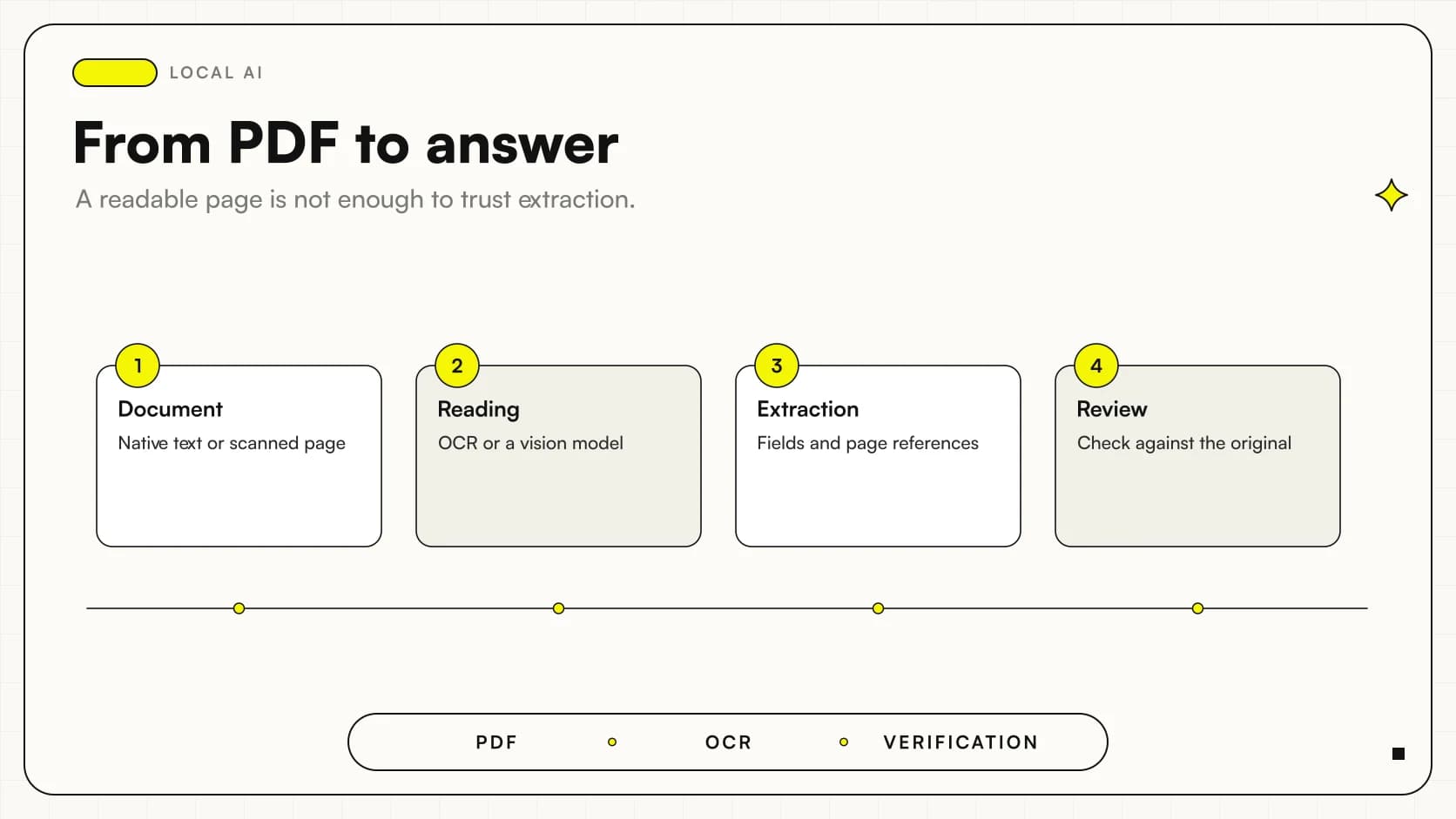
Local multimodal AI can interpret images and help read documents without necessarily using a cloud model, but uploading a PDF to a chat does not make its interpretation reliable. Distinguish digital text, scans and visual content, then check that each answer is supported by the correct document.
For an SME, the practical problem is often less spectacular than a demo: reading a table, identifying a reference, comparing a marginal note or reconstructing a condition. A useful workflow must preserve this information and let the operator check it. Model capabilities are one component; extraction, source links and error handling complete the work.
In summary
- A digital PDF and a scan require different pipelines.
- Visual capability does not mean exact extraction of every field.
- Text, page and version must remain linked.
- A citation must be checked against the source document.
- The test must include difficult pages and missing data.
Does the PDF contain text or just photographs of pages?
The first check concerns the file, not the model. A PDF generated by business software may contain extractable text; a scan may contain only images; another file may mix both. The pypdf extraction documentation explains why text extraction does not replace OCR and may not return the content of a scanned page.
Selectable text is a useful clue, not a guarantee of correct order. Columns, headings and tables can produce an ambiguous sequence. To prepare the project, sample actual files and inspect the result before passing it to AI. If an amount is assigned to the wrong row during extraction, changing models may not solve the problem. Diagnostics must keep intermediate steps visible.
When should you choose text extraction, OCR or vision?
Text extraction is an initial candidate when the document is digital and relevant structure is preserved. OCR can produce a useful transcription of scans. Vision becomes relevant when layout, symbols, images or relationships lost in transcription matter. These are options to test on the sample, not a universal ranking.
| Document or question | Pipeline to test | Decisive check |
|---|---|---|
| Straightforward digital contract | Text extraction | Clause order |
| Scanned form | OCR or visual model | Ambiguous fields and characters |
| Table with merged cells | Structured extraction and vision | Matching rows to values |
| Photograph of a label | Visual model | Legibility and useful detail |
| Archive with multiple versions | Indexing and retrieval | Authorized version |
A document may need multiple pipelines: text for clauses, images for a floor plan. Evaluate the result against the specific question. Do not indiscriminately convert every page into an image when the necessary information is already available in a more controllable form.
What do Qwen and Gemma declare about visual content?
The Qwen3.8-27B model card describes text and visual input. The Gemma 4 model card distinguishes variants and supported modalities. These are vendor-declared capabilities, checked on 27 October 2026; they do not show that the two systems read an invoice, table or blurred photograph in the same way.
Selection starts with the requirement: what information is missing when using text alone? If the issue concerns relationships between page elements, the sample must make them necessary for answering. The guide to Qwen3.8-27B locally describes the checkpoint; model comparisons should separate content recognition from subsequent reasoning. An error on a stamp must not be confused with an incorrect conclusion about a correctly read clause.
Why must the runtime support the full multimodal pipeline?
Downloading language weights does not establish that images reach the model. The llama.cpp multimodal guide also documents the multimodal projector component and its configuration. Check the format and file combination required by the actual pipeline.
One subtle mistake is accepting an attachment in the interface and assuming it was interpreted. The minimum test must ask a question answered only by the image, without filename clues. If the system answers incorrectly, determine whether the attachment was discarded, resized inadequately or processed badly. Input verification comes before any judgment of model quality.
How can page, file and version be preserved during processing?
Each fragment should retain a stable identity: document, revision and reference to the original page. If the system splits or converts pages, it must preserve the mapping. Otherwise, an apparently precise citation may open the wrong file or show the converted page number rather than the number visible in the document.
Design must also define what “correct version” means. An approved quotation and a draft may contain different values. Retrieving both without distinguishing them produces contradictory answers even with an excellent model. Address this before indexing by assigning file status and validity. In local RAG for business documents retrieval is more than semantic search: it must respect workflow metadata and access permissions.
How can an answer with citations be verified?
Asking “cite your source” is insufficient. The test checks three things: the reference leads to the correct document, the passage exists and it actually supports the generated sentence. A page may contain similar words without justifying the connection made by the model.
For each sample question, prepare an expected answer and its supporting evidence. Include cases where the answer is absent: the system should state the limitation rather than construct a plausible reference. Distinguish incorrect citations from incorrect answers because they suggest different interventions. A broken link may require a document-workflow correction; an unsupported inference may require instructions, context selection or a narrower task boundary.
Can a correctly read table produce an incorrect total?
Yes: reading and calculation are separate operations. First check headings, units, rows and notes, then verify the calculation. There is no point rewarding an answer that happens to reach the right total using wrong values. Likewise, an arithmetic error does not establish that the image was misinterpreted.
For workflows involving amounts or quantities, extract fields with provenance and let deterministic software calculate. AI can explain an anomaly or identify rows to review while arithmetic remains repeatable. Sample tables should include blank rows, decimal separators and notes that change the meaning of numbers. Approve the correctness of the workflow, not the fluency of the final explanation.
A scenario: delivery documents and handwritten notes
Imagine a distributor receiving delivery documents with handwritten annotations. This is an illustrative case. The task is to flag disputed quantities and order references while keeping the page accessible. Uncertain handwriting must trigger a check, rather than become a definite quantity simply to fill every field.
The test uses representative fictional documents: clean print, a tilted photograph, a note near another row, a partially covered sheet. Observe whether the system distinguishes a read value from a hypothesis. Operators benefit from seeing the relevant crop alongside the extracted field and verification status. The project can begin by preparing a review list, leaving business-software updates for a later step. This boundary makes usefulness measurable without immediately giving the model autonomous write access.
A scenario: technical manuals with images and revisions
In a second hypothetical example, a workshop consults manuals for similar equipment. Images may help identify a component, but the answer must concern the correct model and revision. A technically plausible instruction taken from another manual remains unacceptable for the workflow.
The sample includes almost identical pages and a missing reference. Check whether the system asks for the equipment identifier before answering and distinguishes descriptions from operating instructions. For activities requiring specific expertise and responsibility, AI must stay within its assigned role and refer to the official procedure when necessary evidence is missing. Multimodality can improve information access; it does not itself change who may authorize an intervention or verify correct execution.
When does document chat become a RAG project?
The LM Studio document documentation distinguishes including content in context from retrieving relevant portions. Attaching a few files may suffice for a personal trial. A shared archive introduces updates, permissions and source-selection rules that must be explicit.
The design question is which material may influence each answer. If the user can see only some documents, retrieval must respect that boundary. If a file is withdrawn, the system must stop suggesting it. Verify these behaviours with concrete cases rather than infer them from a “chat with PDFs” feature. The introductory RAG guide explains the technique; business adoption requires a more precise operating agreement.
What should be checked before declaring everything local?
- Page conversion and OCR process files in the intended environment.
- The visual model and any embeddings use identified local weights.
- Tools, logs and synchronized folders have a known data path.
- The answer remains accessible alongside the document version used.
The official page LM Studio offline describes local functions and operations requiring network access. Your project may include other components, however. Checks must therefore follow the document through storage and answer export. “The model runs here” is necessary information, but does not describe the full workflow. The review of privacy and offline operation examines this scope in detail.
Errors hidden by a perfect-PDF demonstration
A demonstration on a clean page does not measure reliability across a real archive. Lost column order, mismatched values and confused revisions may remain invisible. Selecting only favourable files can also make a comparison misleading without falsifying any individual answer.
The sample must include difficult but representative documents and record refusals. A pipeline that correctly flags “unreadable” may be more useful than one that always completes an answer. Also agree who corrects an extraction and whether that correction is retained for subsequent processing. Without this rule, operators may manually fix the same error every time, while the project looks automated only in superficial statistics.
How can a sample represent the archive?
The sample should not simply comprise the easiest files to open. Someone who knows the process can group documents by origin, quality, structure and frequency of use, then select examples from each group. Include exceptions that cause manual work: rotated pages, missing attachments, descriptions spread across sheets and documents with apparently conflicting information.
Verification questions need an operational purpose. “Summarize this document” leaves considerable room for subjective judgment; “which condition changes between these revisions, with its supporting passage?” allows a more precise check. For each question, retain the expected outcome and define how to assess partial answers, incomplete references and correct statements that answering is impossible.
Keep a subset out of instruction tuning and use it only to verify the final configuration. Otherwise, the team may perfect the system on its own examples and mistake familiarity for general reliability. The record also distinguishes deliberately excluded documents from those the system attempted unsuccessfully: both help define a credible operating boundary.
What result should be approved before integration?
A concrete result is a verifiable answer to a defined set of questions, with visible provenance and limitations. Before adoption, measure errors in important fields, incorrect references and review time; record runtime, models and configuration. The Italian-language benchmarking protocol lets you repeat the test after an update.
Start by choosing one document family and a bounded task, such as preparing a discrepancy list for the operator. Extend the workflow only after understanding where it fails and how it recovers. If you want to design PDF reading around your archives, Giallo Studio develops custom-made software that connects extraction, models and checks to the actual process, without confusing a well-written answer with data already verified.
Giallo Studio guides: methodology and sources
How we apply it in the company
Related resources
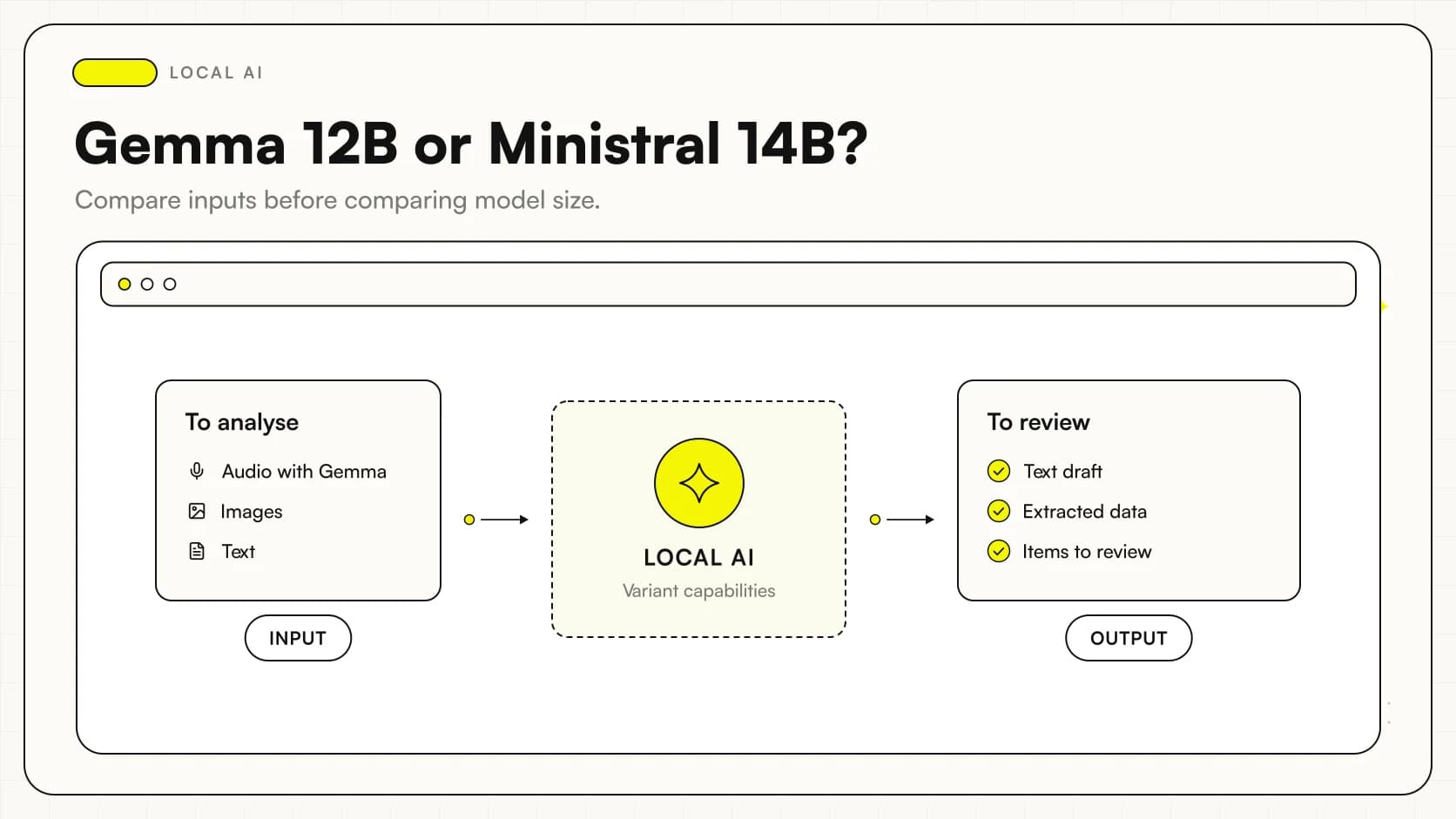 Gemma 4 12B vs Ministral 3 14B: compact local AI
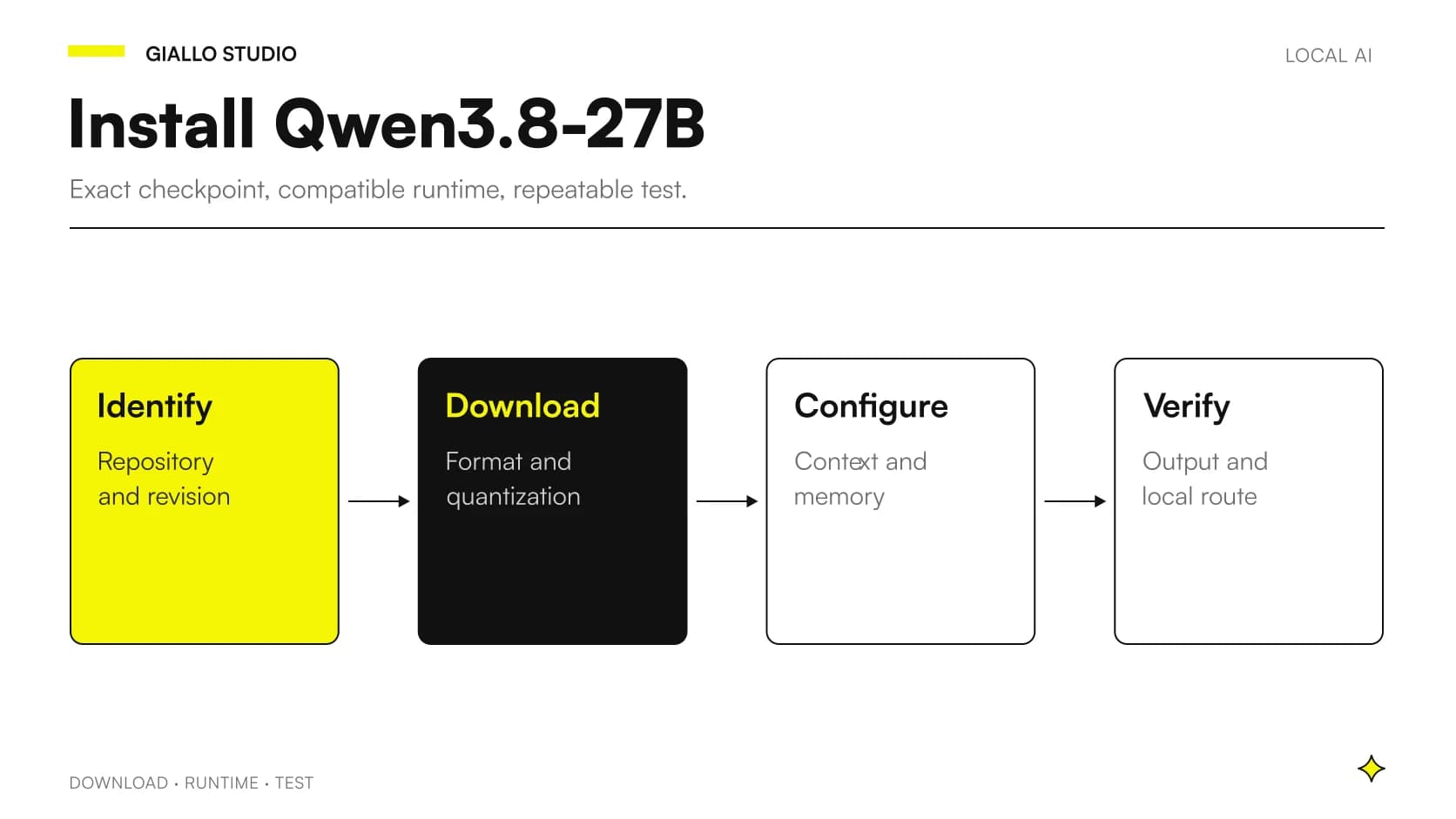 Install Qwen3.8-27B locally: checks and workflow
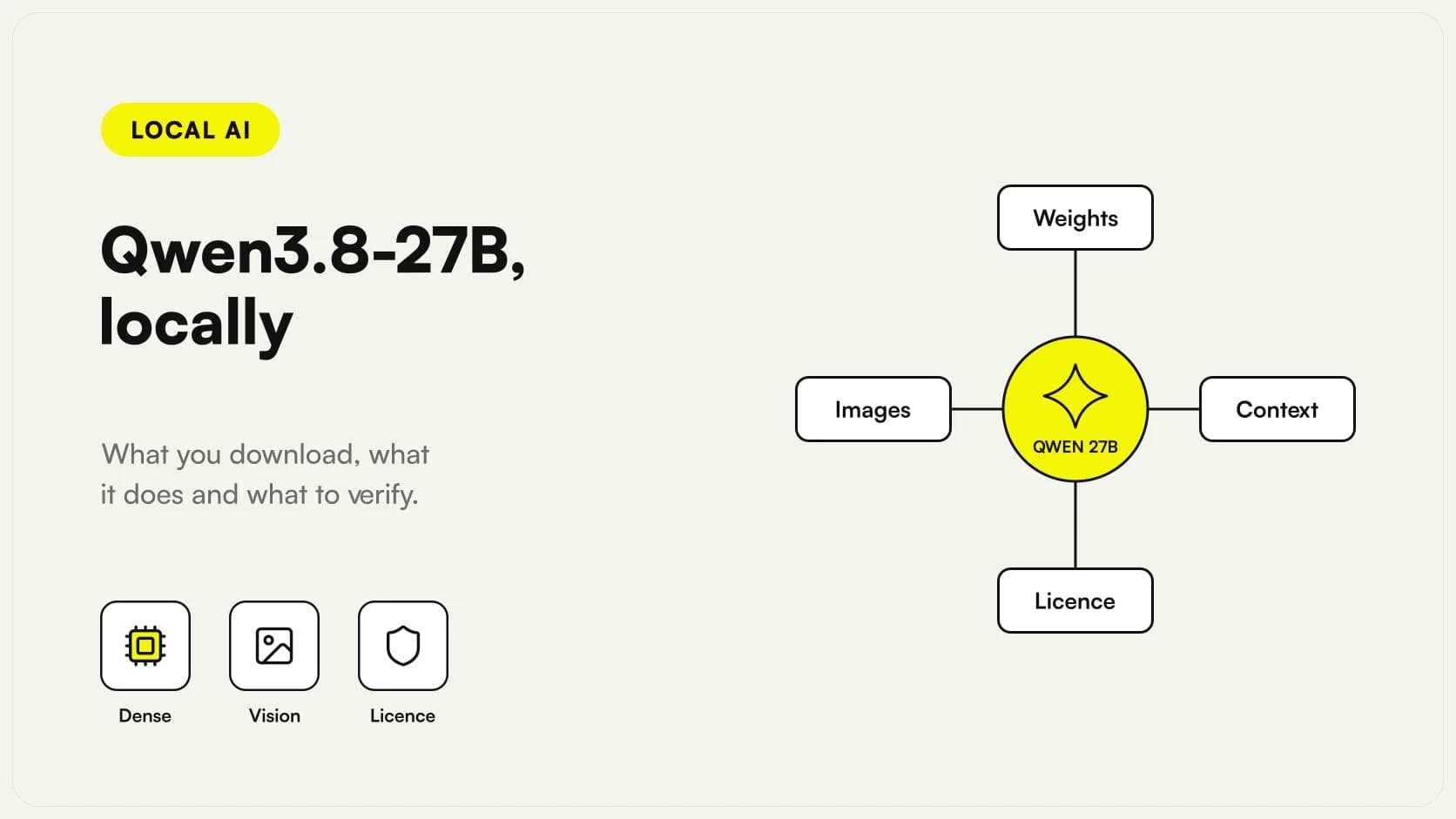 Qwen3.8-27B locally: capabilities, limits and requirements
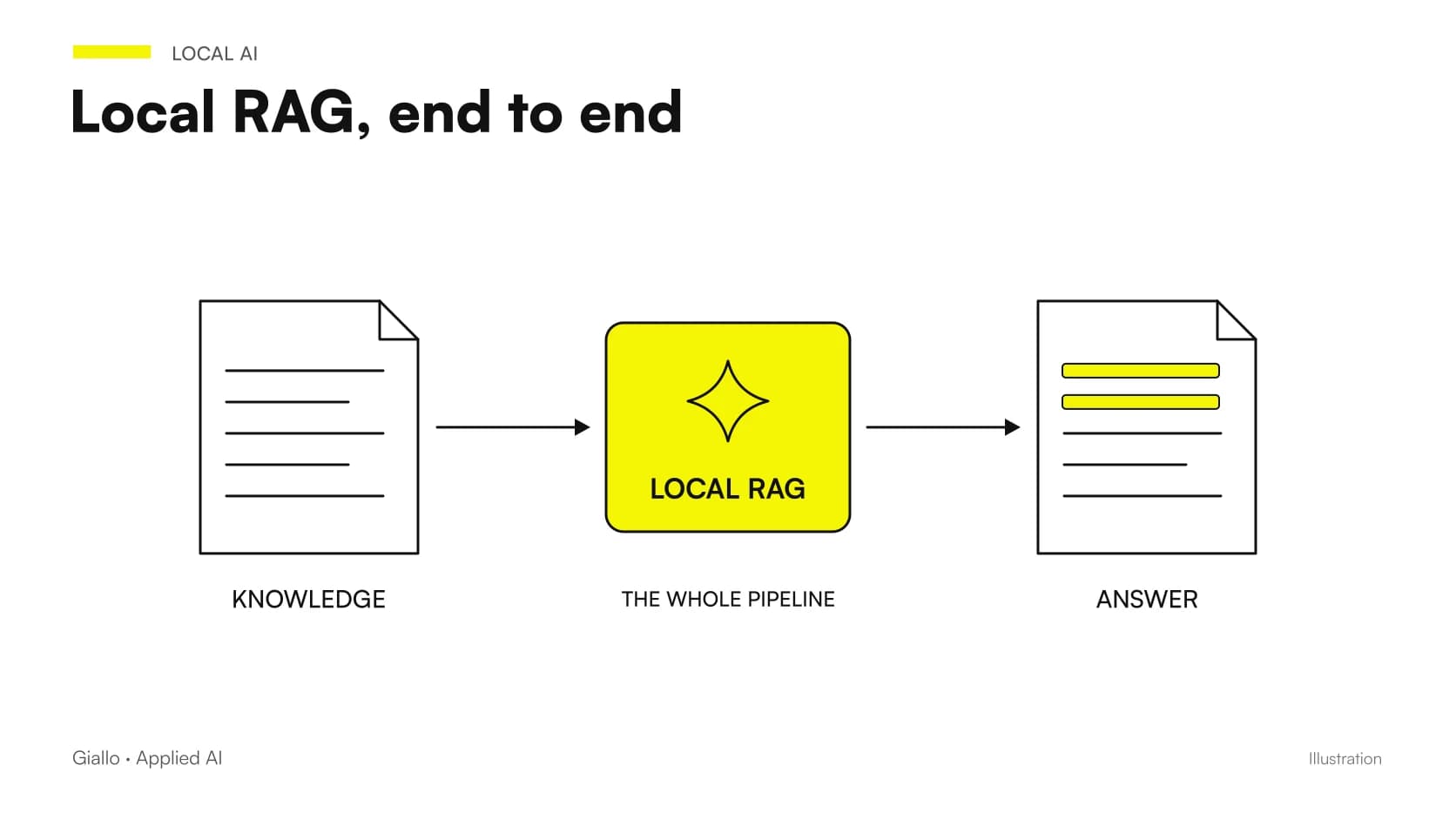 Local RAG for business documents: a practical design
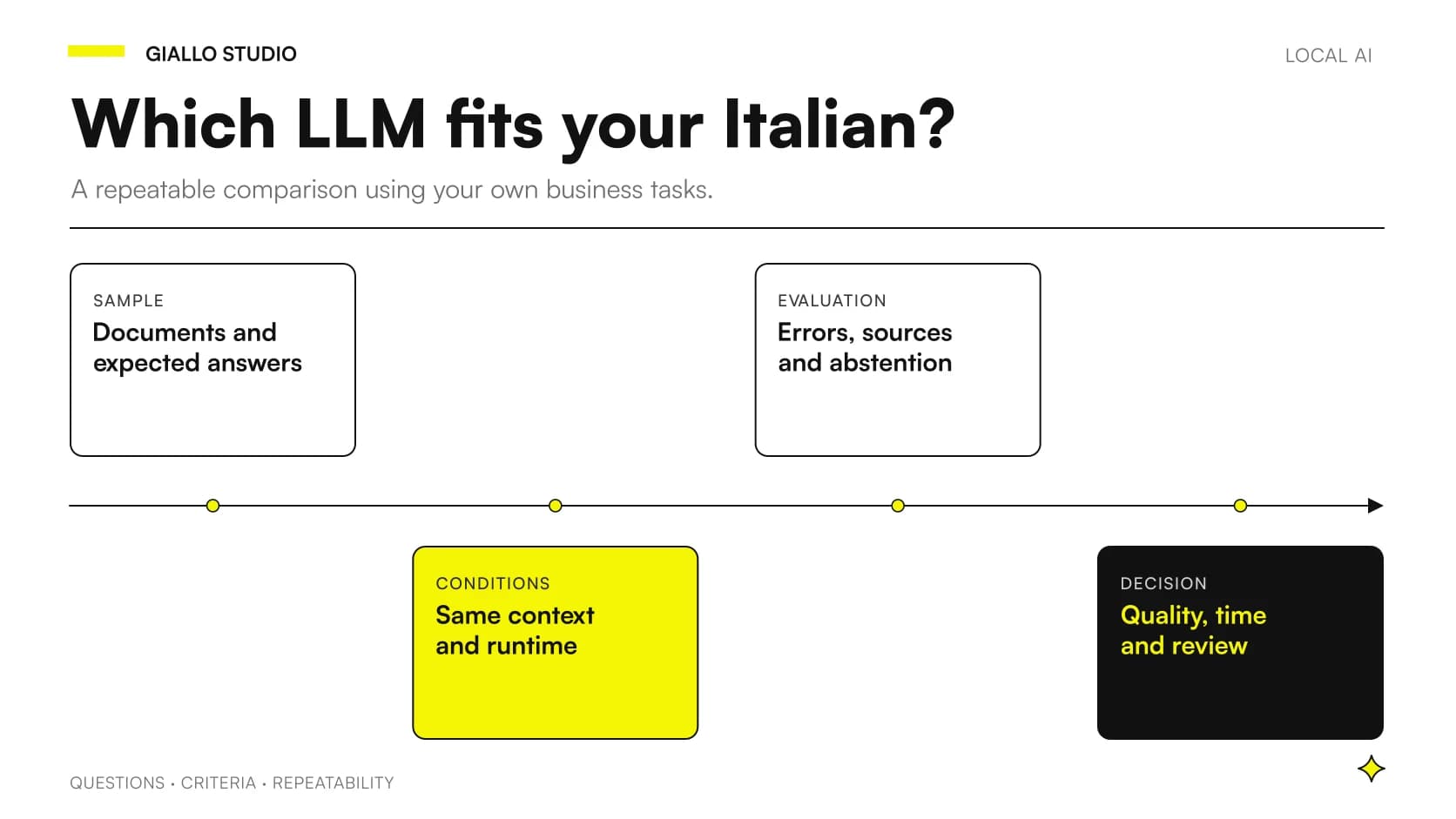 Local LLMs in Italian: comparing without misleading tests
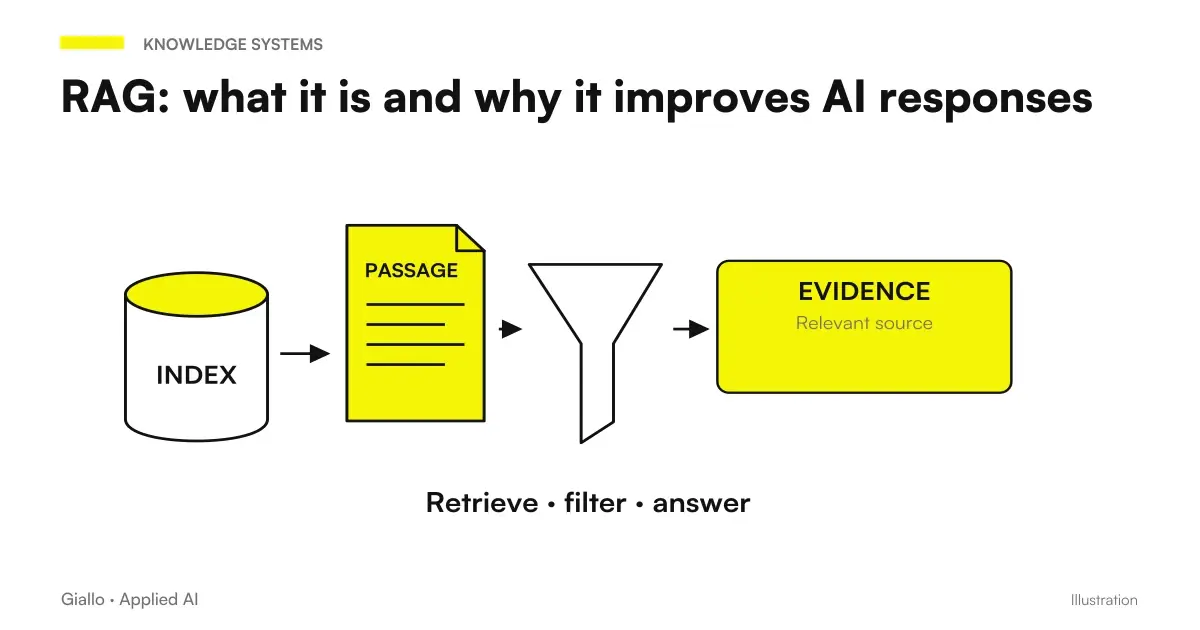 RAG: what it is and why it improves AI responses
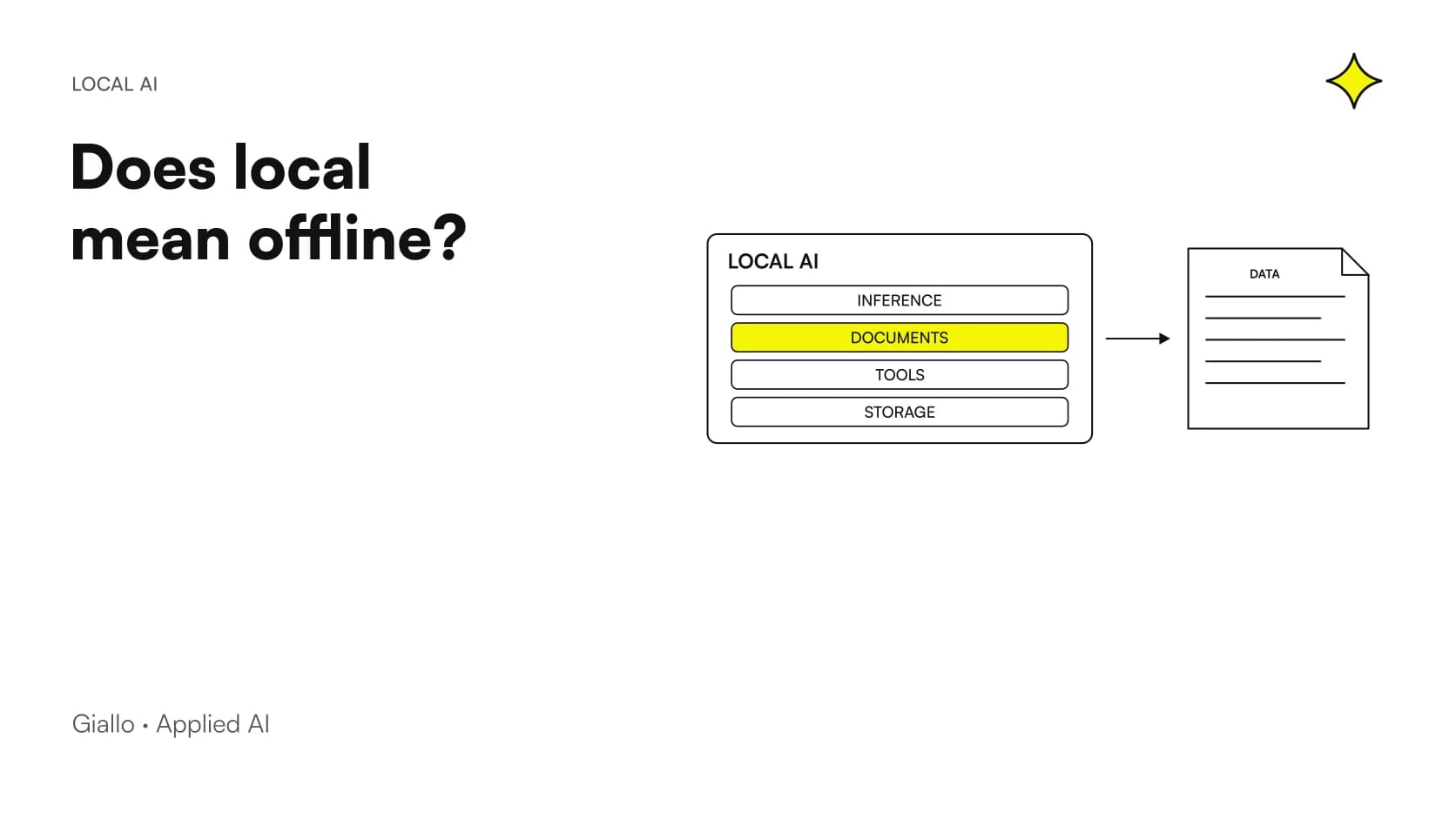 Local AI privacy: verifying an offline workflow
FAQ
Can a multimodal model read any PDF?
No. The PDF must pass through a compatible pipeline that may extract text or convert pages into images. Scan quality, layout and runtime components affect the result.
Does reading a scan always require separate OCR?
A compatible visual model can interpret the image directly, but does not guarantee exact extraction. Separate OCR remains an option to compare, especially when searchable text and field-level checks are needed.
Can Qwen3.8-27B and Gemma 4 read images locally?
Their cards declare visual capabilities. However, the exact checkpoint and complete runtime support must be checked, including the required multimodal components.
Does a citation with a page number prove an answer is correct?
No. The page must exist, be the one actually analysed and contain a passage supporting the statement. A reference alone does not establish that the answer is supported.
How can you check that documents remain local?
Follow PDF conversion, OCR, embeddings, tools, logs and storage too. A local model does not automatically make all these components local.