
OpenAI and Atlassian expand Rovo: Jira and Confluence in working with AI
Rovo OpenAI expands work with Jira and Confluence. Connect context, permissions and tasks while distinguishing announcements from available features.
Reading time: 11 min
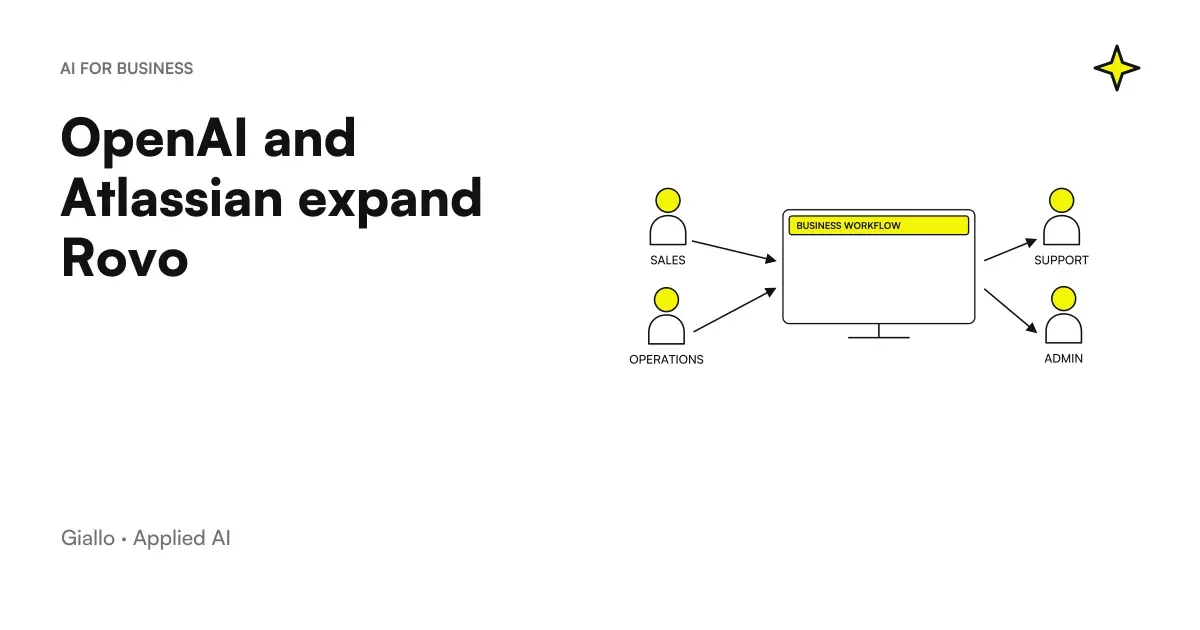
OpenAI and Atlassian expand their collaboration to bring the context of work into AI-assisted activities. The announcement of the 6 October 2026 describes the use of GPT-6 in the Atlassian platform and in Rovo, along with the context of the Teamwork Graph. These elements are given in the OpenAI official communication: the point for an SME is to link what the team knows to what it has to do.
Jira and Confluence contain tickets, documents and decisions, but an assistant does not become useful just because he can look for them. It must distinguish up-to-date and outdated material, recognize the correct design and respect accesses. The right context is relevant, authorized and understandable, not the maximum amount of documents attainable.
In summary
- The announcement expands an already existing collaboration and integration path.
- Documents and activities must retain legible references and permissions.
- A job proposal does not amount to its authorised execution.
- Available functions should be checked in the applicable tenant and plans.
- The first pilot should measure the correctness of the context and usefulness of the proposal.
What's new compared to the already existing Atlassian plugin?
The update should not be told as the birth of the link between Atlassian and OpenAI tools. The Atlassian communication describes evolutions of the plugin, including references through to people and objects of work and a Home of the Atlassian plugin that can be fixed in ChatGPT and Codex. The perimeter is indicated in Official Atlassian Community Post, which must be verified together with the conditions of its environment.
For those who manage a team, this can make the recall of a project or activity more direct. However, it remains necessary to check that the reference is the one desired. Similar names, archived projects, and people with changed roles can produce ambiguity. The interface facilitates the connection, while the company must keep the meaning of the recalled objects neat.
The announcement also describes the assignment of agents from Jira and monitoring of results as an explored area, not as a function guaranteed indiscriminately to everyone. It is an important distinction when preparing a project: a development direction can drive an evaluation, but the operational budget must be based on capabilities that are actually available and verifiable.
What does it mean to bring the Confluence context into an activity?
A page can contain goals, constraints, decisions, and historical material. To propose a useful task, the assistant must know which part has current value. A record recording a discarded alternative should not become a requirement. A page with the client's name may relate to a previous project and not to the current contract. The link to the documents then requires a reading of their status.
The team can improve the context without rewriting the entire archive. Just start from the pilot's perimeter and make visible owner, status, validity date and relationship to the project. Important decisions must be distinguishable from discussions. The links between the page and ticket help the operator to verify the proposal and to understand which document an instruction comes from.
The AI analysis of business documents becomes more reliable when the source is recognizable. An elegant but no-reference summary requires the team to repeat the search. A shorter proposal, accompanied by the relevant steps, may be more useful because it makes it possible to check before assigning the work.
What permissions must remain visible in the project?
The connection between systems must not erase the differences in access. A contributor can read a ticket and have no right to see a page with confidential business information. The design must verify the identity with which the consultation takes place, the perimeter of the contents and the behavior when a source is not accessible. An authorization error should not be circumvented by copying the document to another area.
| Subject matter | Context Control | Access Control |
|---|---|---|
| Confluence Page | State and Decisions Still Valid | Who can read it in the project |
| Ticket Jira | Project, manager and current status | Who can edit it |
| Quoted person | Actual role in the activity | Information visible to the applicant |
| Attachment | Relevance and version | File proper permissions |
| Assistant's proposal | Explicit sources and assumptions | Recipient authorised to receive it |
Verification must include a user with limited access, not just the administrator who configures the pilot. If a proposal reveals confidential content or cites a source that the user cannot control, the project requires a correction. It is an essential part of the link between AI and business collaboration.
How to turn a documented decision into a verifiable ticket?
The useful result can be a draft ticket with goal, reference to the decision and completion criterion. The draft should separate information from sources and hypotheses proposed by the assistant. If a deadline is missing, the system can report it; it should not invent one and present it as a team commitment. The same is true for managers, priorities and dependencies.
Before rescue, a person checks that the activity belongs to the correct project and does not duplicate an already open job. The completion criterion must be observable: updating a card, verifying a requirement or delivering a draft are controllable outcomes. Improving the quality or optimizing the process are too broad formulations if they are not linked to a concrete result.
The distinction between proposal and execution is central to the AI Agents for Companies. The first pilot can stop at the draft and already produce a benefit. Adding automatic creation or modification only makes sense after verifying the content and defining the permissions of the next action.
Can a software house prepare the transition from commercial to project?
Hypothetical scenario. A small Italian software house uses Confluence for the startup document and Jira for technical work. The assistant prepares a summary of the approved decisions and proposes initial activities. The manager compares each proposal with the agreement and the team notes. Requests that have not yet been approved remain highlighted as points to be clarified.
The test sample also includes a conversation with a discarded alternative and an updated page after the meeting. The aim is to verify whether the system recognizes the current decision and does not transform all the ideas discussed into work to be carried out. It records how many activities are accepted, which are rewritten and which should not have been proposed.
The economic result depends on the reduction of searches and corrections, not on the number of tickets generated. Creating many tasks can increase the project manager's load. A useful draft should make the passage clearer, while retaining the ability to reconstruct the origin and responsibility of the request before involving the developers.
Can a service company update recurring procedures and activities?
Second hypothetical scenario. A technical assistance company maintains operational procedures in Confluence and opens in Jira updating activities. The assistant compares an organizational decision with the relevant pages and proposes where to intervene. It does not independently modify all procedures that contain a similar word: the manager checks the perimeter and the effect on the work of the operators.
The pilot must include procedures that are only valid for certain customers and pages that describe exceptions. The assistant could recognize the same term and propose too wide a modification. Human control serves to distinguish general rule and local condition. The useful metric is properly identified work, accompanied by the number of proposals out of perimeter.
When a procedure changes, open tasks must maintain the reference to the version used. Otherwise a later correction makes it difficult to understand why some action had been proposed. This link also allows a new manager to resume the practice without asking who followed each step to reconstruct it by heart.
When do you need a classifier instead of a larger agent?
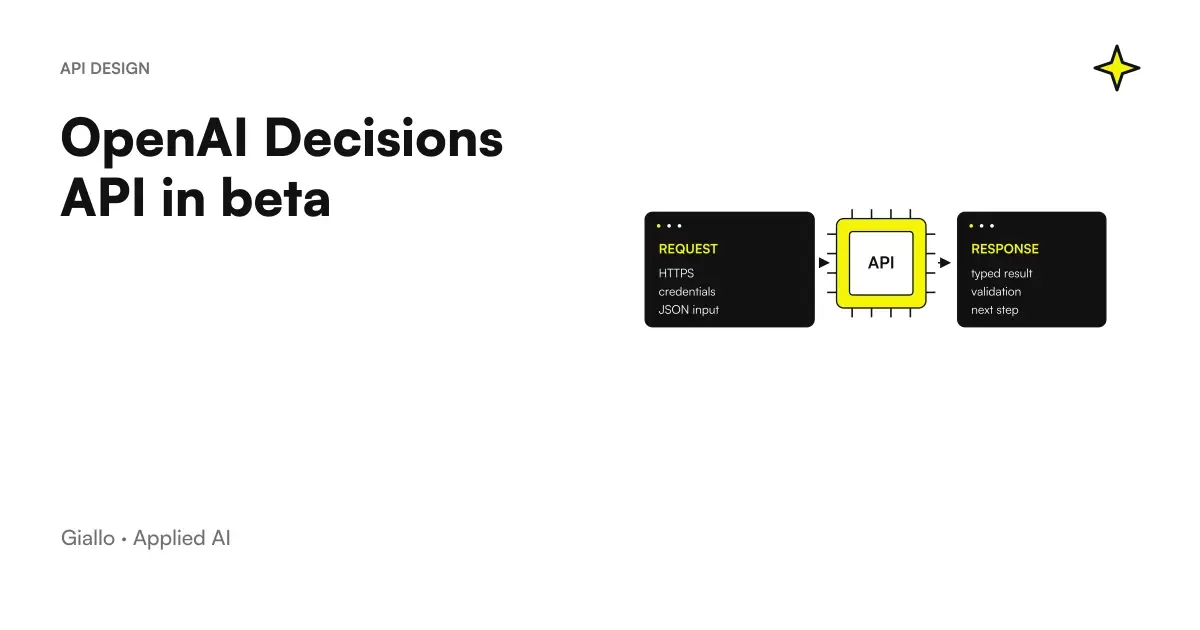
If the task is to choose between fixed categories, a classifier may be sufficient. A ticket can be routed to a department without giving the system the ability to explore the entire archive or modify tasks. The API Decisions It addresses this type of structured response: the choice depends on the task, not the amount of functions available in the platform.
When it is necessary to reconstruct a decision between several pages, propose passages and consult different objects, the process may require more articulated tools. Also in that case it is better to separate reading, proposal and action. Each step has a completion criterion and appropriate control. This separation prevents a successful search from becoming implicitly authorized to change the project.
The AI integration with existing systems It starts from these boundaries. If the management software already contains rules and responsibilities, the assistant should use them instead of introducing a second version of the process into a conversation that is difficult to maintain.
What external links require a separate assessment?
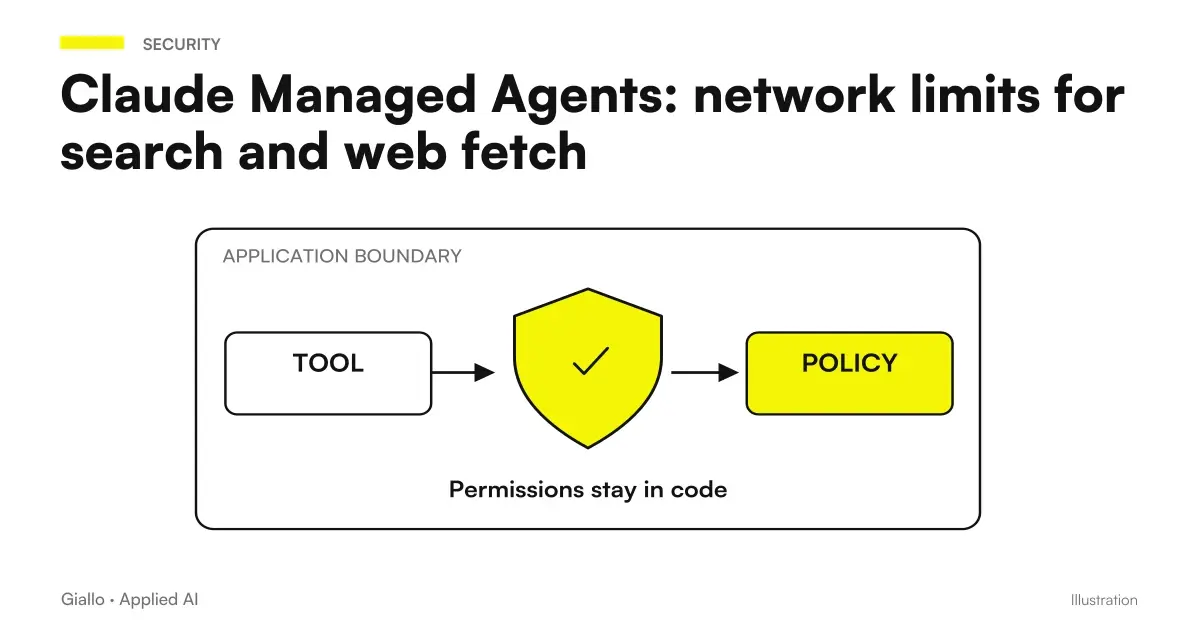
A stream may require information outside of Jira and Confluence. At that time, searchable domains, tools, and content should be defined. The news about Claude Managed Agents network restrictions concerns another environment, but helps distinguish source availability and permission to reach it. A link within a document does not automatically constitute an operating permit.
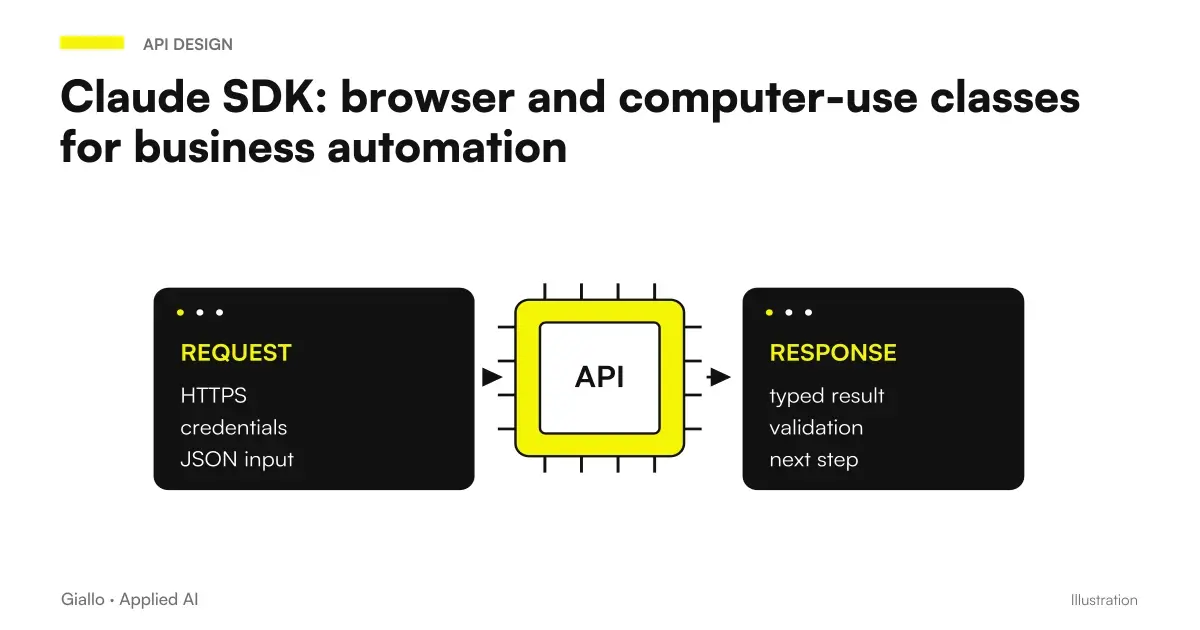
If instead the process has to interact with a portal, the browser use of the Claude SDK It requires its own infrastructure and controls. It is not advisable to present all integrations as a single simple link. Each surface has different authentication, error possibilities, and consequences when the agent performs an action.
Document retrieval also has a distinct level. Foundry IQ, SharePoint, and metadata for RAG shows why describing sources well is important. Linking multiple archives does not replace the job of defining which documents are relevant and which version should be used.
How to test the context before entrusting changes to the system?
The first test uses cases with known outcome: an approved decision, a discarded alternative, an outdated document, and a source not accessible to the user. The person responsible compares the proposal with the evidence and records the cause of the errors. The result must make it possible to understand whether the problem concerns retrieval of the source, interpretation of the content or subsequent application rule.
A second test involves conflicts and absences. If two pages give different directions, the system should make the conflict visible and ask for a choice. If necessary information is missing, the proposal must stop at that point. The ability to admit a limit is more useful than a complete activity only in appearance.
The team should finally verify revocations and role changes. A user who loses access to a source should not continue to receive information from it through a later summary. Testing must be carried out in the actual perimeter of the tenant; an administrator test does not demonstrate the behaviour for all collaborators.
Before accepting a ticket proposal
Open the source and verify that the decision is in force. Check project, manager, and dependencies. Distinguish present data and hypothesis of the system. Look for an equivalent activity that is already open. If an approval is missing or the document is not accessible to the recipient, keep the proposal under review and clarify the point before saving.
Who maintains context after the first configuration?
The quality of the pilot also depends on internal editorial responsibility. Each document area must have someone who can distinguish current procedure, historical material and drafts. There is no need to start a general cleanup of the archive before experimenting. Instead, it is necessary to keep reliable the sources that enter the chosen stream, making visible the points that require confirmation.
The process manager should receive a summary of recurring fixes: confusing projects, missing deadlines, contradictory documents, or duplicate tasks. These signals help to understand whether to improve assistant instructions, page structure, or team rules. Correcting only the individual proposal leaves the cause intact and obliges operators to repeat the same verification.
A perimeter review is useful when changing organization, customers or tools. A source that was relevant may no longer be relevant, while a new procedure may introduce constraints not present in the initial sample. Keeping examples of the corrections allows the test to be updated without transforming the project into an indefinite maintenance activity: the criterion remains the concrete work entrusted to the system.
What mistakes make assisted work noisy?
Specific errors are treating the discussion as a decision, using archived material, duplicating tickets, and assigning responsibility only on the basis of a mention. To these is added a project error: measure the volume of the created tasks instead of their utility. An assistant that multiplies the backlog can make team work harder even if each ticket appears well written.
No universal price has been verified for a new joint package in the sources consulted. Concrete availability, licenses and permits depend on the tenant and applicable plans. The pilot should then produce an evaluation of his own process, without promising generalized access or functions still described as exploration.
To connect sources and activities with a recognizable goal, the design of AI agents It can start with a documented decision and the draft work that the team expects to get.
Giallo Studio guides: methodology and sources
How we apply it in the company
Related resources
 Claude Managed Agents extends network limits to search and web fetch
 Claude SDK browser and computer use classes: automating business software
 OpenAI Decisions API in beta: classify tickets and requests with controllable answers
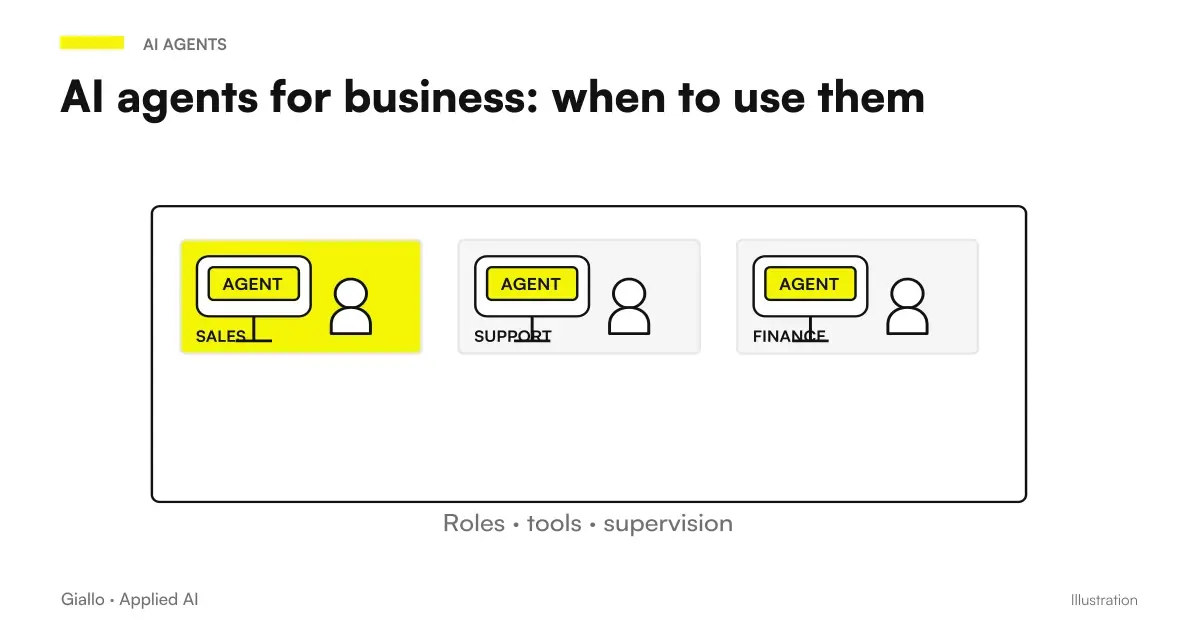 AI agents for business: when they are useful and how to adopt them
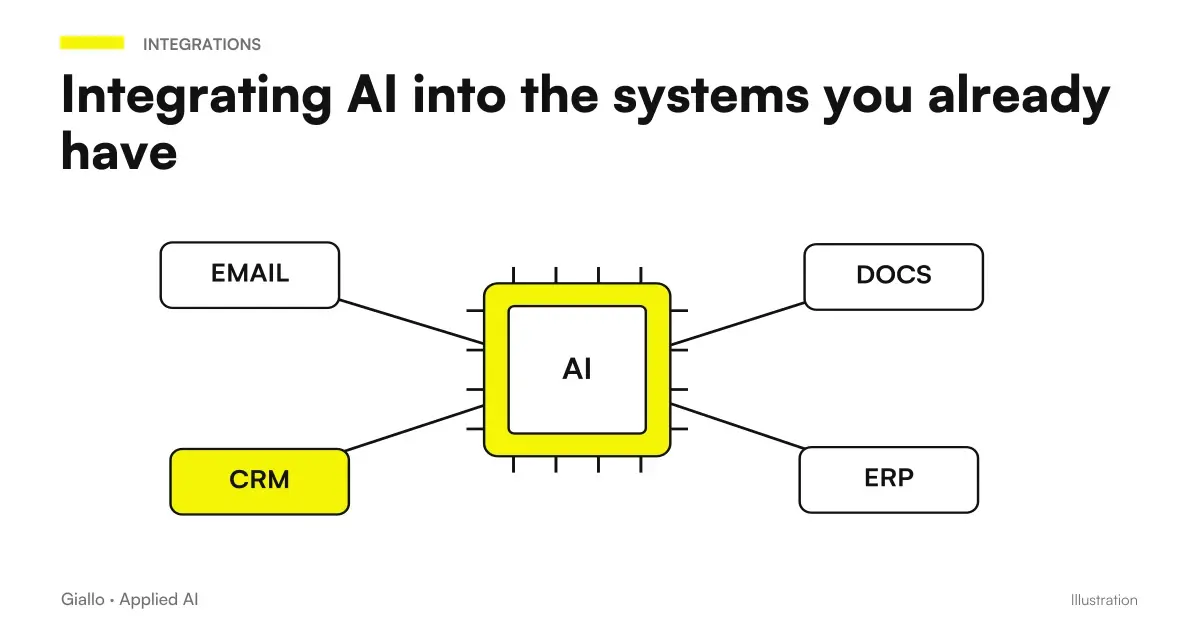 Integrating AI into the systems you already have
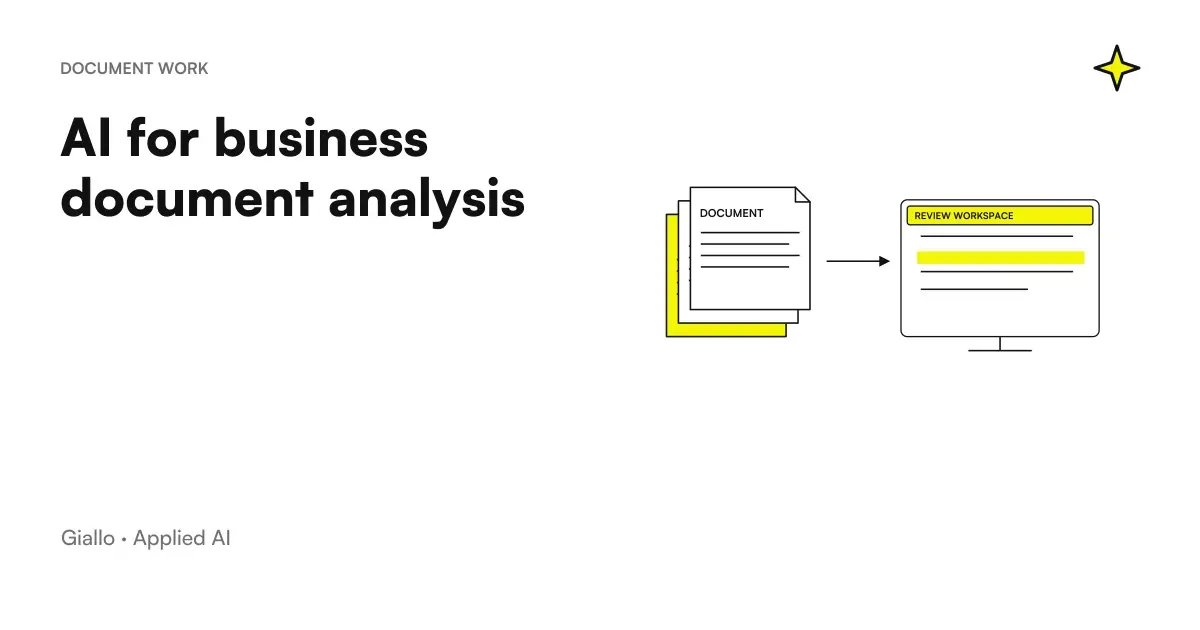 AI for business document analysis: a practical guide
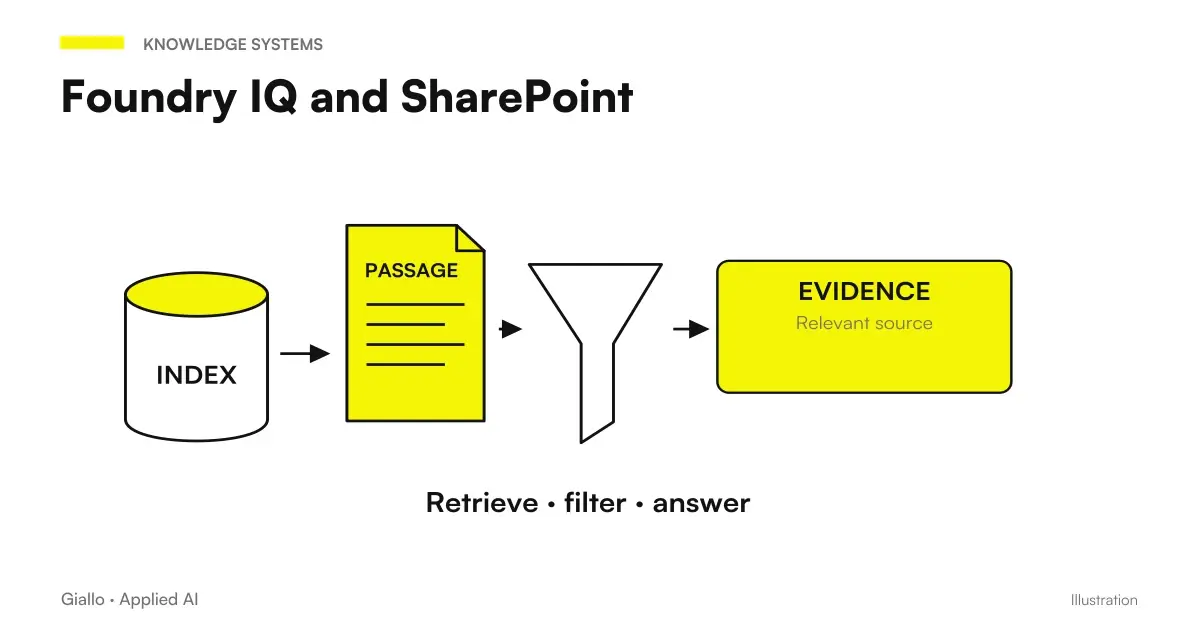 Foundry IQ and SharePoint: why metadata changes knowledge base responses
 How to use Kimi AI in Italian: a practical guide
FAQ
Is this announcement the launch of the Atlassian plugin?
No. The announcement concerns an expansion of the collaboration and updates of the already existing route. Availability must be verified in your environment.
Can Rovo see every corporate document?
The project must comply with applicable permissions. Connecting a system does not make it appropriate to make all content accessible to each user.
Can Jira already assign any task to an agent?
Agent assignment and monitoring of results are described as an explored area. They should not be presented as a guaranteed feature for all accounts.
What changes with references to people?
Updates describe references to people and work objects in the plugin path. It remains necessary to verify that the reference identifies the correct content and recipient.
Is there a single price for the joint package?
No universal price has been verified in the sources used. Licences, tenant availability and integration work should be assessed separately.
Where to start in an SME using Jira?
From a small workflow with up-to-date documents, a person responsible and a verifiable outcome. The pilot should propose tasks before making extensive changes.