
Claude Mythos cybersecurity: who can use it and what it really does
Claude Mythos cybersecurity explained: the Cyber Verification Program, who gets Mythos 5.2 access, what the benchmarks say and what SMEs should do.
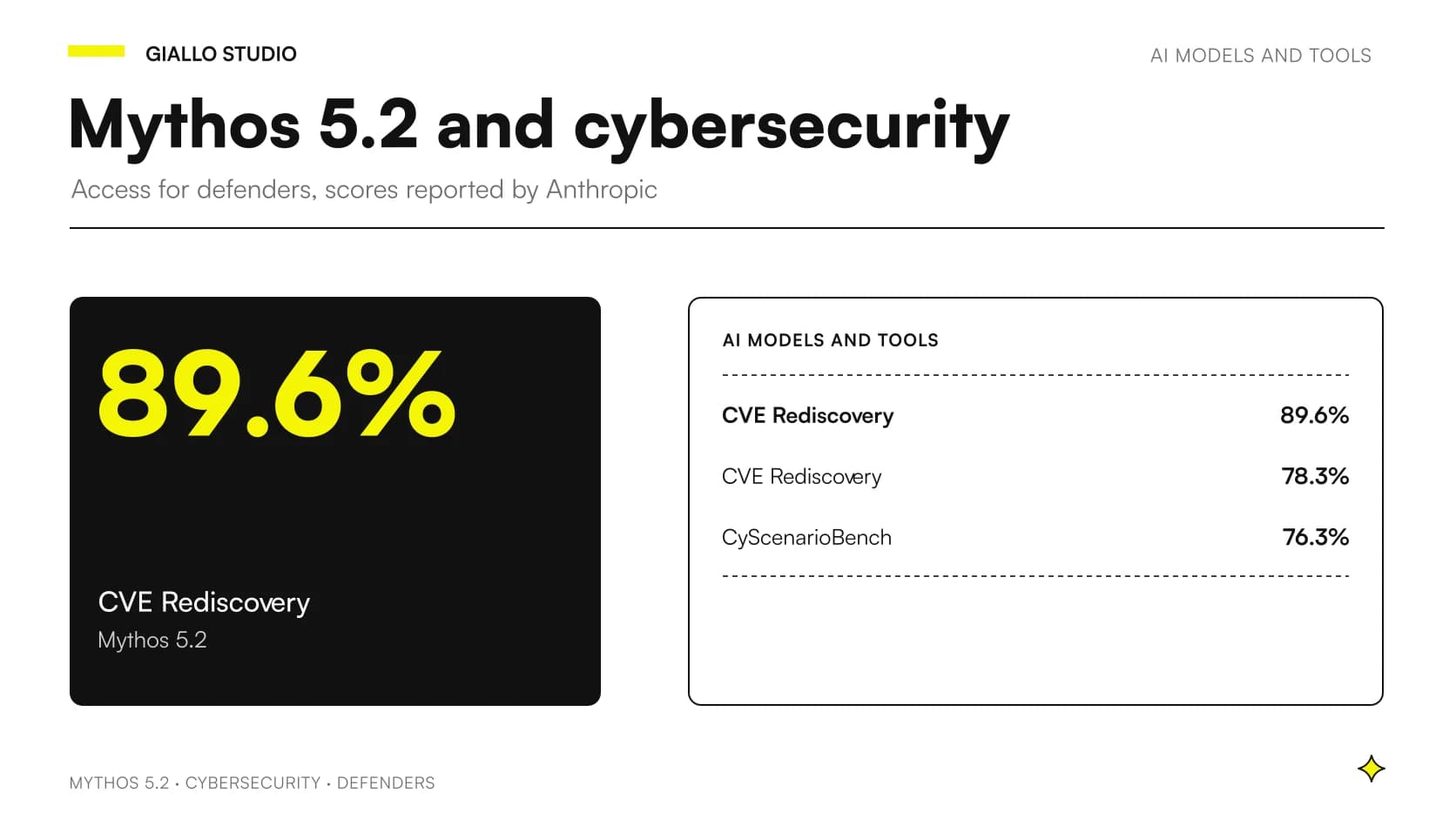
Claude Mythos cybersecurity means using Mythos 5.2, released by Anthropic on 9 November 2026, to find, reproduce and fix vulnerabilities: it is the same model as Fable 5.2, but without the safeguards that block high-risk cyber activity. It is not a product you can buy: access goes through the Cyber Verification Program and, according to the Anthropic official announcement, is reserved for verified organizations that work on defense.
For an Italian company, the right reading is this: Mythos is not a shortcut for doing yourself what security professionals do, and it is not a weapon. It is a tool for people who defend for a living, with rules, verification and retained data. This article explains who can get it, what Anthropic claims about its performance, what is available to everyone and how an SME should think about it. It contains no offensive operational details. For the big picture, read Claude Mythos 5.2: what it is and the Fable 5.2 pillar guide.
In summary
- Mythos 5.2 is Fable 5.2 without cyber and biology safeguards, and it is available to verified organizations through the Cyber Verification Program.
- Anthropic states that in its internal CVE Rediscovery evaluation Mythos 5.2 scores 89.6%, against 78.3% for Mythos 5.1 (announcement).
- Claude Enterprise customers can use Claude Security, which now also runs on Mythos 5.2, without being part of the verification program (announcement).
- The program is designed for defense: the nature of the work, verification, legal context and end recipients decide eligibility (support page).
- For an SME that does not do security for a living, the generally available models are enough for code review and alert triage.
- Program data is retained: zero data retention requires an exemption already granted by the provider.
How does Mythos 5.2 differ from Fable 5.2 in cybersecurity?
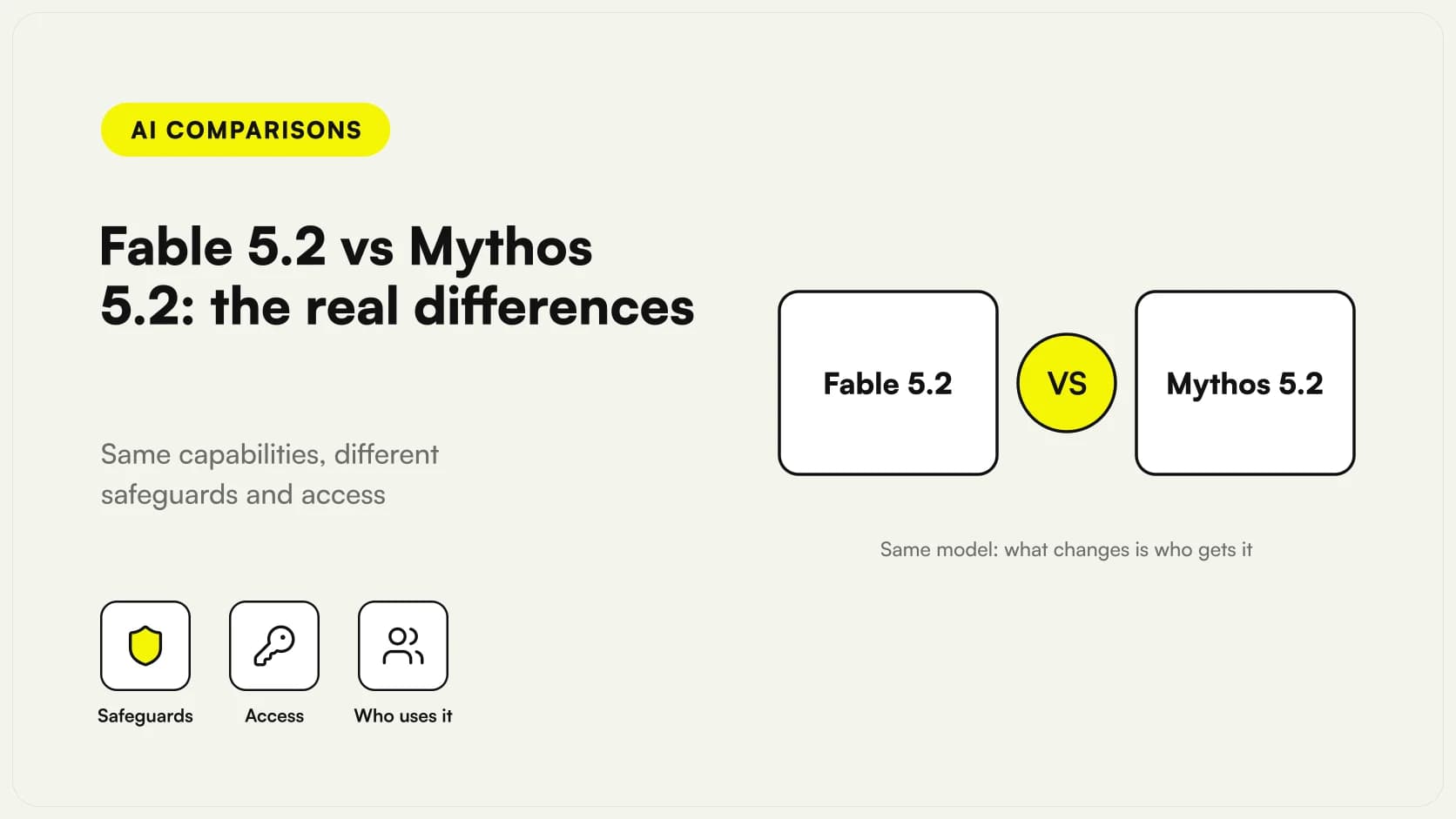
The base capabilities are the same. The safeguards differ. As Anthropic explains in the announcement that Fable 5.2 uses classifiers that block high-risk cyber activity, including penetration testing, exploit generation and vulnerability analysis on binaries, and routes the answer to Opus 4.8. Mythos 5.2 has no such block and is offered to verified organizations that work in these areas.
Anthropic also states that needless Fable blocks have dropped: about 55% fewer than Fable 5.1 and about 60% fewer in cybersecurity, according to early tests on claude.ai, Claude Code and Cowork. For the full point-by-point comparison, see Fable 5.2 vs Mythos 5.2. Price and specifications are the same as Fable 5.2, as stated on the official model page accessed on 9 November 2026.
What can Claude Mythos 5.2 do against vulnerabilities, according to Anthropic?
Anthropic calls it its most capable model for security engineering: it finds more vulnerabilities than earlier models and reproduces and fixes them better. These are the vendor's claims. Here are the numbers, from the announcement accessed on 9 November 2026.
| Test (Anthropic internal evaluation) | Mythos 5.2 (%) | Mythos 5.1 (%) |
|---|---|---|
| CVE Rediscovery | 89,6 | 78,3 |
| CyScenarioBench | 76,3 | 61,7 |
CVE Rediscovery, according to the announcement, measures how many vulnerabilities already published in the CVE list a model can find on its own, starting from a copy of the project from before the fix. According to Anthropic, Mythos 5.2 found 10.2% more vulnerabilities than Opus 5.5 and 14.4% more than Mythos 5.1, and in the October 2026 run on 1,829 CVEs it beat them at every effort level. In the same table, Opus 5.5 without safeguards reaches 81.3%. On CyScenarioBench, Anthropic notes that each lab uses its own tasks, so comparisons between different companies mean little: in the official table, Opus 5.5 without safeguards scores 67.6% and GPT-6 Cyber 61%, but on tasks that are not identical.
There is also third-party feedback, all reported by Anthropic in the same announcement. A security firm found that one in six confirmed bugs among those found by Mythos 5.2 had escaped every other frontier model it tried. A tester observed that earlier models had overrated severity in about 1 report in 20, while Mythos 5.2 had overrated none. Mozilla, which uses Claude models to harden Firefox, says its vulnerability-discovery metrics have roughly doubled compared with Mythos 5.1.
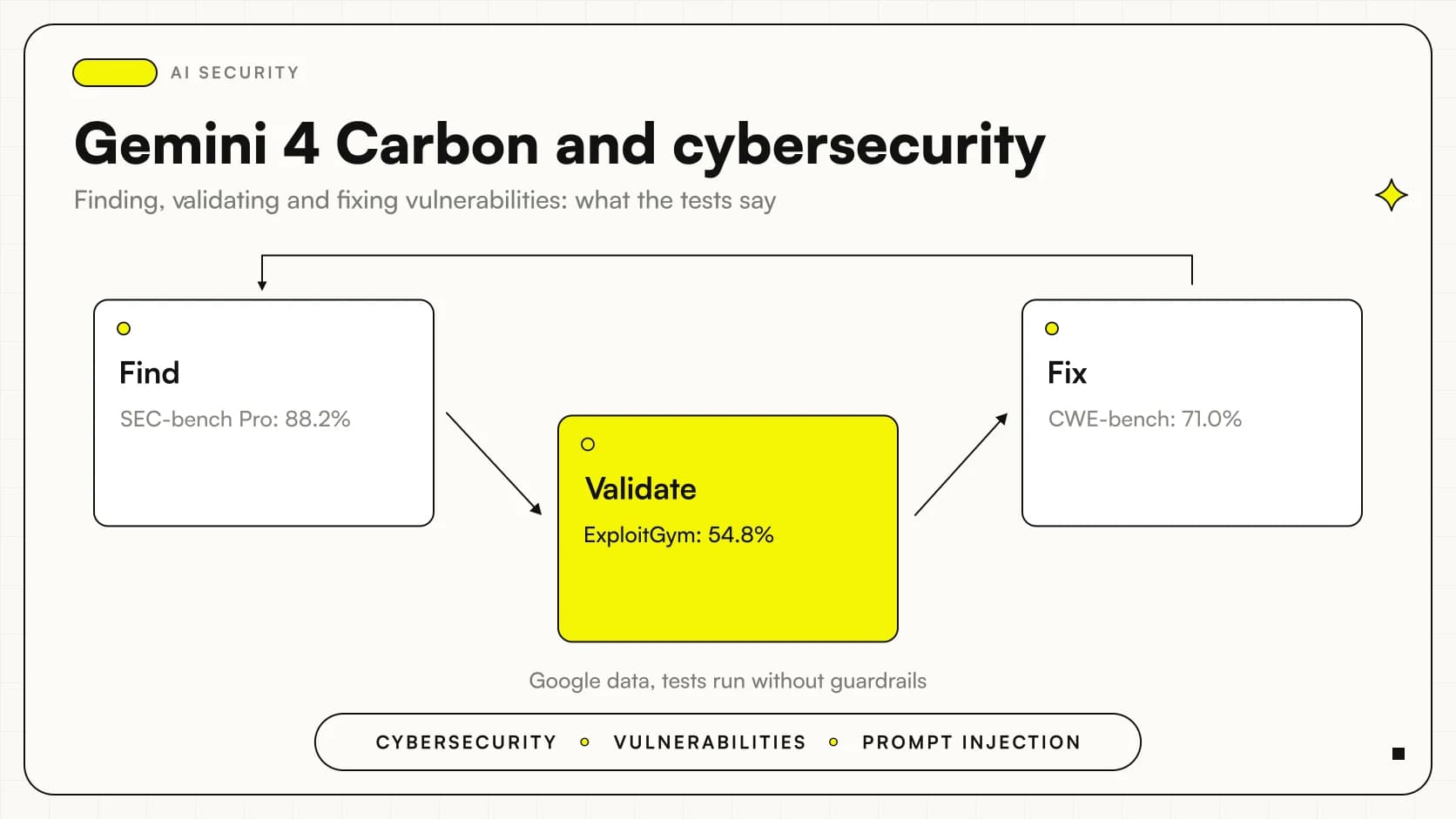
For the comparison with the direct rival on the defensive side, see the article on Gemini 4 Carbon and cybersecurity; for the other offering in the field, see OpenAI's GPT-6 Cyber.
What is the Cyber Verification Program and who can get it?
It is the program through which Anthropic makes advanced cyber capabilities and less restrictive blocking classifiers available to qualified security professionals. The support page, updated in October 2026 and accessed on 9 November 2026, describes three access levels: Defense Access, Red Team Access and Specialized Access. It covers Mythos 5.2, Mythos 5.1, Opus 5.5, Sonnet 5.5 and future models.
Eligibility is not automatic. According to the same page, five factors count:
- The nature of the work. The program is built for defense; organizations whose main activity is something else may not be eligible.
- Verification. Anthropic must be able to confirm who the organization is and what it does.
- The environment it operates in. The legal and regulatory context counts, as does the risk that advanced capabilities are diverted and the risk that access could be compelled by law.
- The end recipients of the work. The risk of transfer or reuse is higher for those who mainly serve military, intelligence or law enforcement customers, and in that case Anthropic is more cautious.
- The level requested. Requirements grow with access: for Specialized Access, each organization is thoroughly assessed together with the US government, and current Project Glasswing members move to this level without new approval for the current models.
Anthropic writes that it is working with the US government to widen the set of eligible organizations, including internationally: for an Italian organization the outcome is not a given.
How do you apply, and how long does it take?
The application is submitted once per organization on the Verification Portal, with the details of the organization and of the person filling it in, a description of the security work and an attestation of the controls for the level requested. Anthropic aims to respond within seven business days. Individual researchers, maintainers and bug hunters apply as individuals, but for now only for the Defense level and, according to the support page, with a paid plan.
- Question. One per organization, from the Verification Portal; individual internal users do not apply separately.
- Decision. A reply or a request for information within seven business days, as a stated goal.
- Activation. Approval does not switch anything on by itself: the administrator assigns access to a workspace in the Console, to an Enterprise role or to a linked cloud account. On the Team, Ultra, Max and Pro plans, the program applies at organization level.
- Third-party clouds. On AWS, Google Cloud and Foundry, access to Mythos arrives about five business days after approval.
Two constraints weigh on companies. The first: the Defense level must adopt phishing-resistant multi-factor authentication and stop using API keys by 15 December 2026; until then multi-factor authentication is required anyway and API keys expire every seven days. It is the same principle we discuss in 2FA on your business management software. The second: on Amazon Bedrock the program is available only to customers with a data retention exemption for Fable 5.2 or 5.1, according to the page's FAQ (elsewhere the same page refers to customers with Enterprise Frontier Safeguards).
What if I do security work for other people? The IT provider case
This is the point for anyone who manages other people's systems. The support page distinguishes use on your own infrastructure from use for clients. Program access covers work on the code, products and infrastructure of the organization that obtains it. Using it on client systems requires a separate approval, one for each service or product offered.
An example, labeled as such: a managed service provider (MSP) looks after the networks of about ten small professional firms. If it wants its technicians to use Mythos to analyze the code or configurations of one of those firms, it falls under the managed service case: the provider's technicians use the model on systems the client owns, and the client receives only a report or a fix, never access to the model. Applications for these services are open. If instead it wanted to put a tool built on the model into the firms' hands, even just to launch or configure, that would be a product: the page says applications for products are not yet open and only allows you to register interest.
For the provider, then, there are three steps: first obtain approval for the organization, then register the managed service with the six required security commitments and the name of the company officer who signs, and in the meantime use the access only on your own systems. For the client firms, the usual questions about who processes their data remain: you will find them in Fable 5.2 and privacy.
What is Claude Security, and does an SME need it?
Claude Security is Anthropic's tool that scans code repositories for vulnerabilities with its most capable models, and according to the announcement it now includes Mythos 5.2. Claude Enterprise customers can use it even if they are not members of the Cyber Verification Program. A recent update lets you follow repositories as the code changes, check that reported issues have been fixed, learn from additional context and connect to other tools through API and MCP.
For an SME the requirement is the Enterprise plan, which is usually not the plan of a small company. If the project is open source, there is also Anthropic OSS Scanner, with dedicated scans for eligible projects.
What can you do with the models available to everyone?
More than you might think. The support page states that generally available models can still be used by everyone for secure code review, threat modeling, patching known issues, finding vulnerabilities in your own code and triaging security alerts. Other work, such as malware analysis or exploit validation, may be interrupted by the classifiers.
| Tasks | Generally available model | Verification program required |
|---|---|---|
| Secure review of your own code | Yes | No |
| Threat modeling | Yes | No |
| Patching known vulnerabilities | Yes | No |
| Triage of security alerts | Yes | No |
| Malware analysis, exploit validation | May be interrupted | Yes, at the right level |
| Penetration testing | Blocked on Fable 5.2 and routed to Opus 4.8 | Yes, at the right level |
A second example, labeled as such: a ten-person company with an in-house order portal asks a generally available model to reread the login and file-upload parts and propose fixes; a technician checks every report and applies the patches in a test environment. No Mythos, no program. For anyone who already has agents or tools connected to the web, a good complement is understanding how to limit which hosts an agent can reach.
How safe is the model itself? Sandbox escape and external tests
A model with strong cyber capabilities raises a question: does it behave well when left to work on its own? Anthropic answers with internal and third-party tests in the announcement; the numbers below come from there.
- Sandbox escape (announcement). In a hostile experiment with more than 1,800 scenarios, most of them unsolvable without leaving the sandbox, which had a deliberate weakness, Mythos 5.2 used credentials or files placed outside the environment in 3.1% of cases. Opus 5.5 was at 3.3%, Sonnet 5.5 at 5.1%, and the Mythos 5 and 5.1 versions at 39% and 21%.
- Behavioral audit. On about 1,900 scenarios Mythos 5.2 scores 2.67 (lower is better), against 3.28 for Mythos 5.1, 2.79 for Opus 5.5 and 3.10 for Sonnet 5.5.
- External evaluators. Before release the model was tested by the UK AI Security Institute, Frontier Design and METR. Anthropic notes that these organizations did not review the text of the announcement or the system card and do not necessarily share its claims.
Anthropic judges the risk of misaligned behavior in high-impact situations to be low, but admits two limits: on one measure (harmful actions after wrongly concluding it is in a simulation) Mythos 5.2 is slightly worse than Opus 5.5, and it states more often that it suspects it is being evaluated, which makes real-world behavior harder to predict. For anyone adopting it the message is simple: isolated environments, minimal permissions, no irreversible action without human approval.
What data does Anthropic keep under the program?
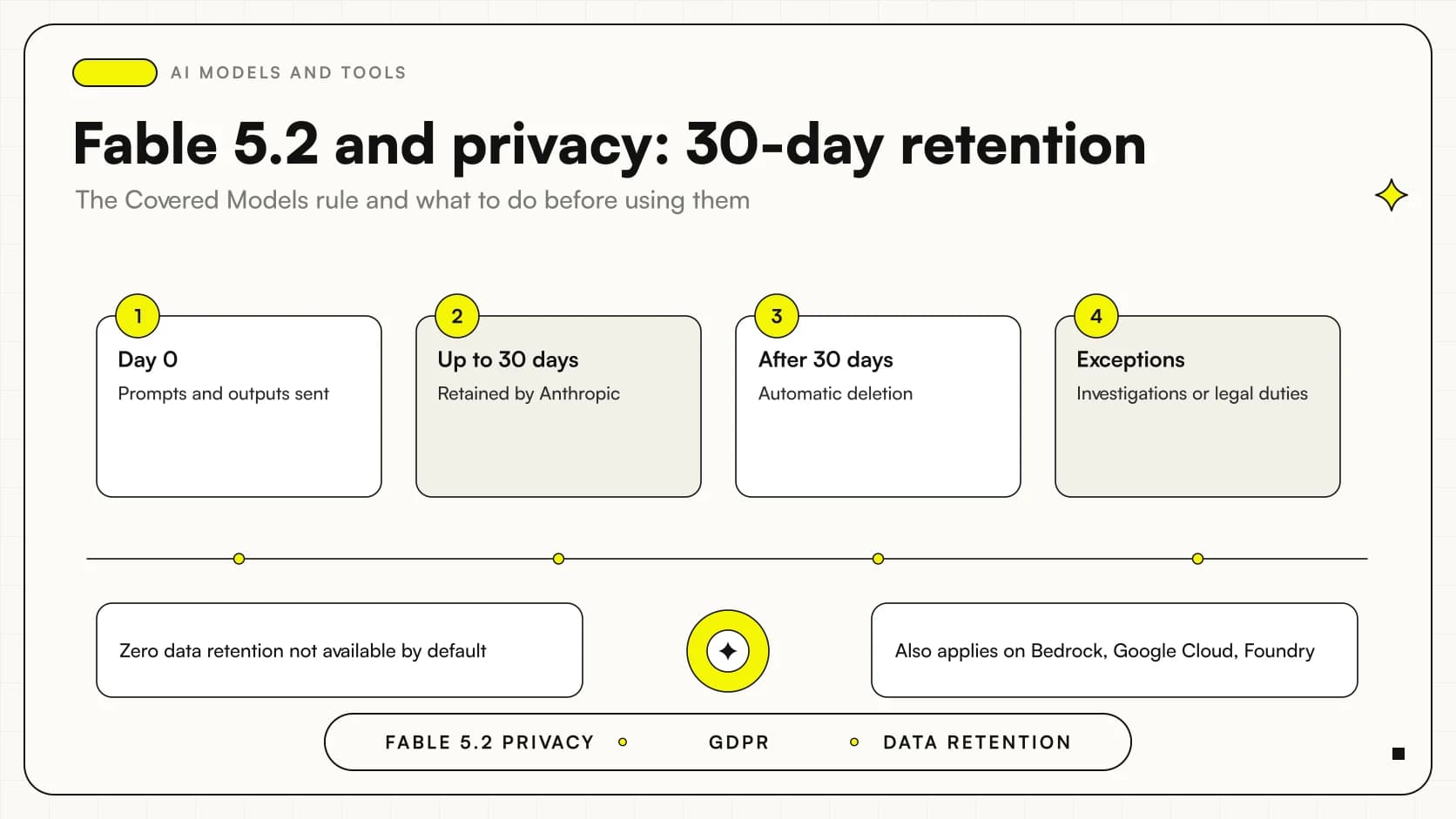
The Cyber Verification Program requires data retention, to detect harmful use. The support page adds that, until Enterprise Frontier Safeguards is available (in private beta today, according to the announcement), organizations with an exemption already granted for Fable or Mythos models can also use the program with zero data retention. For everyone else, the 30-day minimum for “Covered Models” applies, as explained on Anthropic's dedicated page.
Prompts end up containing code, configurations and sometimes client data: before joining, ask your privacy adviser what can be sent. EU processing regions are not indicated in the pages consulted on 9 November 2026.
Which Claude plans include Mythos?
According to the support page, on the Pro, Max and Ultra plans, Mythos models follow Fable's rules. On the Pro plan they are used only with usage credits enabled and do not consume the included usage. On Max and Ultra, Mythos and Fable share a single quota of up to 50% of the weekly limit, which also counts toward normal limits; once the quota is used up you can continue with credits or switch to another model. Details in Fable 5.2 on Pro, Max and Team.
Mistakes to avoid with Mythos and cybersecurity
- Requesting access out of curiosity. The program is for people who defend for a living.
- Believing the model certifies security. A list of findings is not an audit: you need human verification, priorities and accountability. We explain this in AI and data security in business.
- Using the access on client systems without approval. The program covers your own infrastructure; work for third parties requires registering the service.
- Giving the model broad permissions. The fewer accesses a security agent has, the less damage a mistake can do.
How an SME should proceed: three realistic choices
When it makes sense to consider the program
- You provide security services, testing or incident response to other companies.
- You have an in-house team that handles defense and can meet the required controls.
- You can demonstrate your identity, your activity and your use of the model to a reviewer.
When Not Needed
- You want your code reread or an alert clarified: the generally available models are enough.
- You have no staff able to verify what the model reports.
- You want a ready-made solution: consider Claude Security, if you have Enterprise, or a security service.
From software house we work like this: first the perimeter (which systems, which data, which people), then the tool. If you have a management system or a portal and want a code review with AI and human oversight, Giallo Studio can set it up with you, without promising what no model can guarantee.
Giallo Studio guides: methodology and sources
Want to apply this to your business?In 30 minutes, free of charge: the first process to automate and its estimated return, in writing.
Book the free auditHow we apply it in the company
Related resources
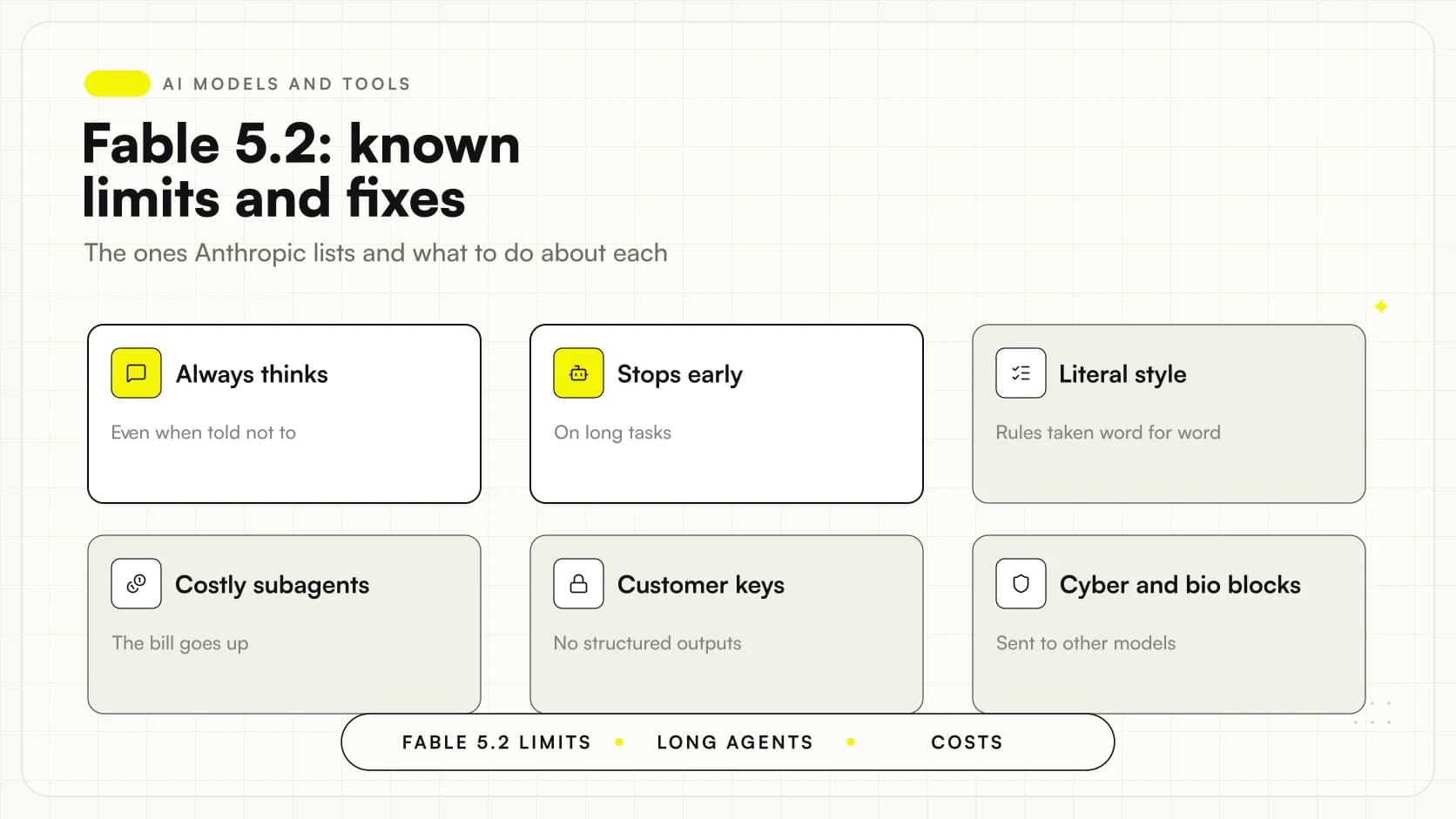 Claude Fable 5.2 limitations: the known ones and how to work around them
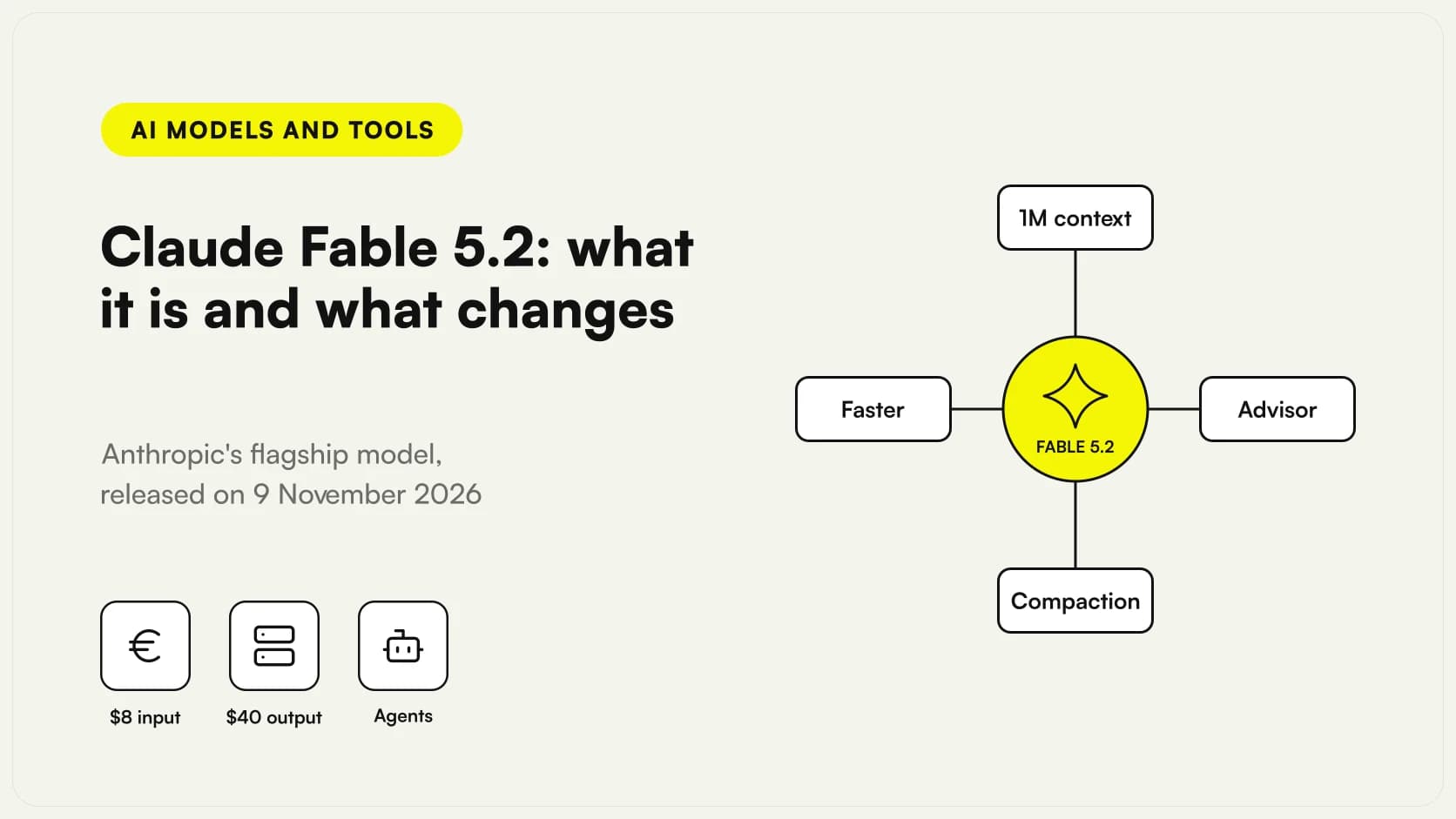 Claude Fable 5.2: What It Is, What Changed and What It Costs
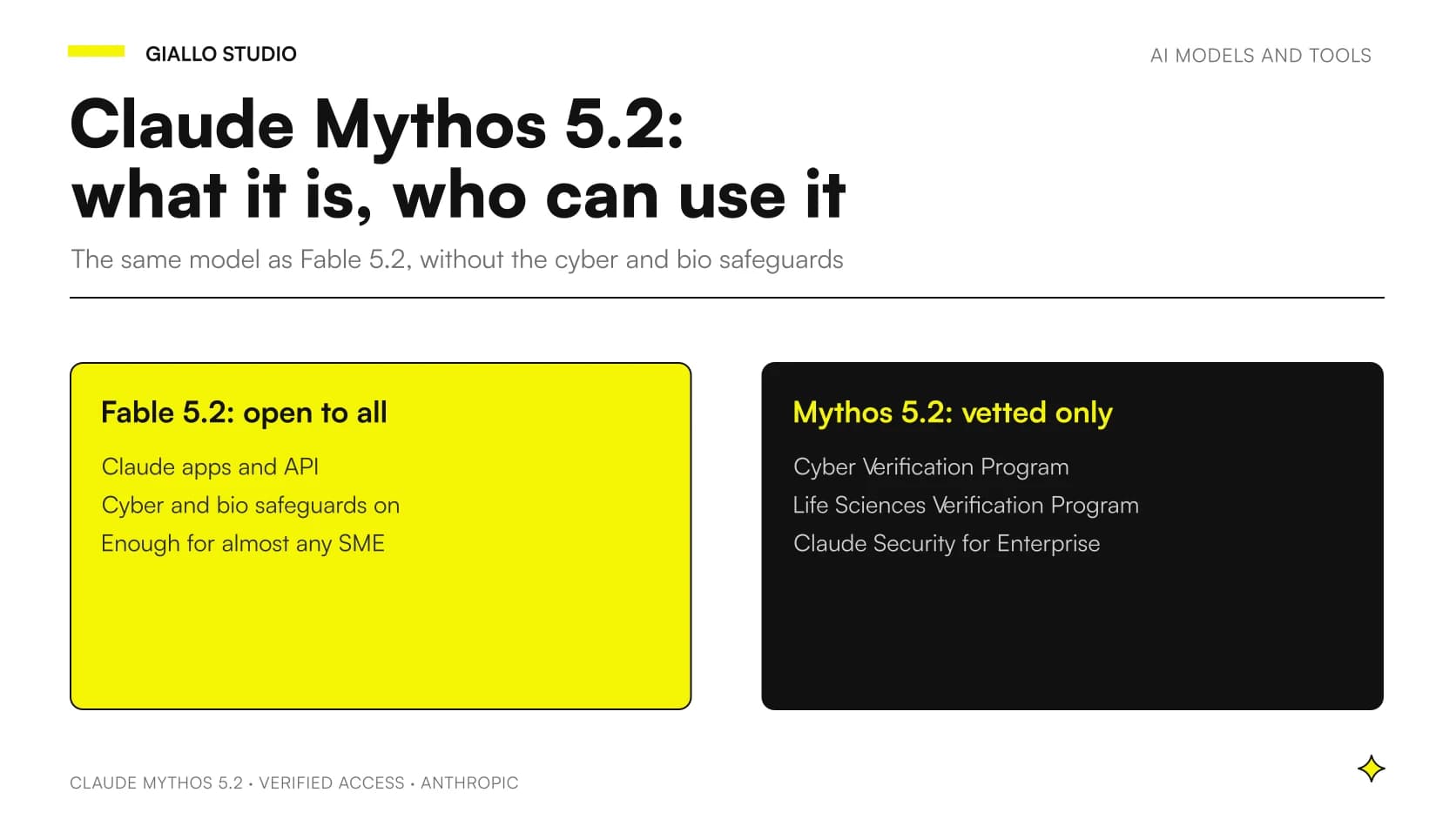 Claude Mythos 5.2: what it is and who can use it
 Claude Mythos vs Fable 5.2: the real differences and who can use them
 Fable 5.2 Privacy: 30-Day Data Retention and What an SME Should Do
 Gemini 4 Carbon cybersecurity: finding, validating and fixing vulnerabilities
 Anthropic OSS Scanner: free AI scans for eligible open-source projects
 Mandatory 2FA for business software: why and how to implement it
 AI and data security: concrete risks and how to manage them
 GPT-6 Cyber: What OpenAI's Cybersecurity Model Is and What It Changes for SMEs
FAQ
What is Claude Mythos 5.2 in cybersecurity?
It is the version of Claude Fable 5.2 without the safeguards that block high-risk cyber activity. On 9 November 2026 Anthropic described it as its most capable model for security engineering. It is not on sale to the public: only verified organizations use it.
How do you get access to Mythos 5.2?
You submit an application to the Cyber Verification Program through Anthropic's Verification Portal, one per organization. Anthropic says it aims to reply with a decision or a request for information within seven business days. Approval is not enough: an administrator must then assign access to a workspace, a role or a linked cloud account.
Can an Italian SME get Mythos 5.2?
It depends on the work it does. The program is built for defense and weighs the nature of the work, identity verification, legal context and end recipients. A company that does not do security for a living usually does not need it: the models available to everyone are enough to review its own code.
Can Fable 5.2 help with cybersecurity?
Yes, within clear limits. According to Anthropic, the generally available models can still be used for secure code review, threat modeling, patching known vulnerabilities, finding flaws in your own code and triaging security alerts. Penetration testing, exploit generation and binary analysis are blocked and routed to Opus 4.8.
What is Claude Security and who can use it?
Claude Security is Anthropic's tool that scans code repositories for vulnerabilities. According to the 9 November 2026 announcement, Claude Enterprise customers can use it even if they are not part of the Cyber Verification Program, and it now also runs on Mythos 5.2.
Are the Mythos 5.2 cyber benchmarks reliable?
Treat them as indications, not guarantees: they are stated by Anthropic and partly internal. Anthropic itself notes that a tester's counts are raw results from a single audit. On the internal evaluations, vulnerability identification is roughly on par with Opus 5.5.
Does Mythos 5.2 retain data?
Yes. The Cyber Verification Program requires data retention to monitor for abuse. Zero data retention is possible only with an exemption already granted for Fable or Mythos models, or in future with Enterprise Frontier Safeguards, which is in private beta today.