
Fable 5.2 Privacy: 30-Day Data Retention and What an SME Should Do
Fable 5.2 privacy: Anthropic keeps prompts and responses for at least 30 days, with no zero data retention. What it means for an SME's GDPR duties.
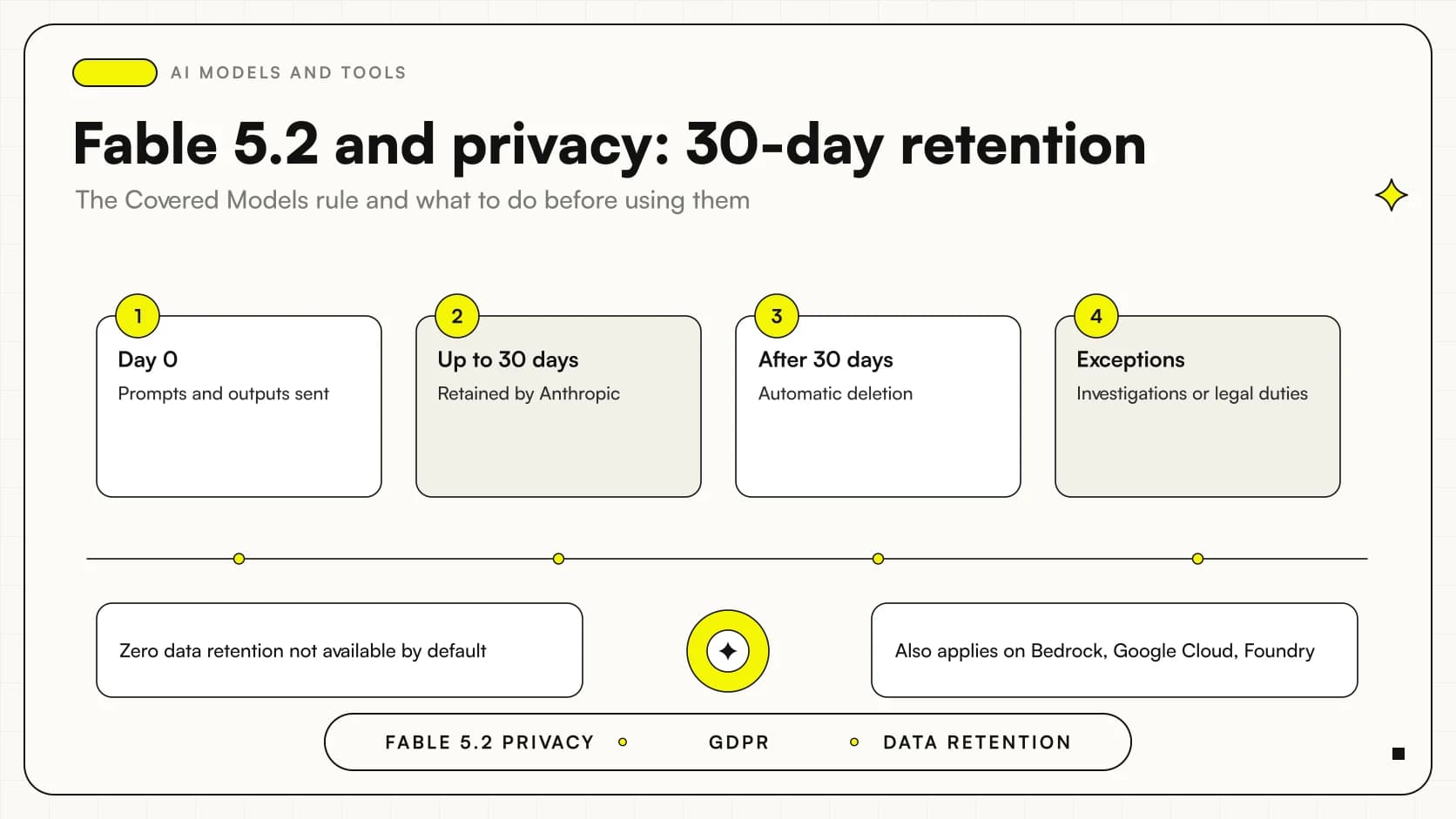
Fable 5.2 privacy: Claude Fable 5.2, released by Anthropic on 9 November 2026, is a “Covered Model”, so prompts and responses are kept for at least 30 days. Zero data retention, meaning a commitment not to keep data after processing, is not available, not even for Enterprise customers or on third-party platforms, unless Anthropic expressly authorizes it. This comes from the Covered Models page, checked on 9 November 2026.
For an Italian SME this means one simple thing: every text you send to Fable 5.2 stays in the vendor's systems for at least 30 days. If it contains data about customers, patients or employees, that month becomes part of your record of processing activities. Here we explain what the official sources say, what they do not say, and which questions to bring to your data protection officer. For the model's technical profile, see the guide to Claude Fable 5.2.
In summary
- Fable 5.2 and Mythos 5.2 are Covered Models as of 9 November 2026: prompts and responses are kept for at least 30 days, then deleted automatically (official page).
- Retention can last longer if there is a security investigation or a legal obligation, and the retained data is checked by automated security systems.
- Zero data retention is not available by default, not even in Enterprise or on Bedrock, Google Cloud and Foundry; there is a time-limited option for eligible customers.
- Enterprise Frontier Safeguards, in private beta according to the announcement of 9 November 2026, keeps monitored data in the customer's own infrastructure (Anthropic Announcement).
- Processing regions in the European Union are not listed on the official pages we checked: ask in writing.
- This is not legal advice: the GDPR applies to your processing, not to the model's name, and the assessment is up to your DPO or consultant.
What is a Covered Model and why does Anthropic keep the data?
A Covered Model is a model that Anthropic designates as such when its capabilities make a sharp leap over previous generations, for example in software engineering, agentic workflows, scientific reasoning or cybersecurity. The official page explains the reason: some forms of misuse only become visible when you look at many requests together, so safeguards have to work over a window of retained data and not one request at a time.
The announcement confirms the same pattern. According to Anthropic's announcement, models like Fable 5.2 and Mythos 5.2 rely on safeguards that watch a span of usage. For customers without a different agreement, monitoring is based on 30 days of retention.
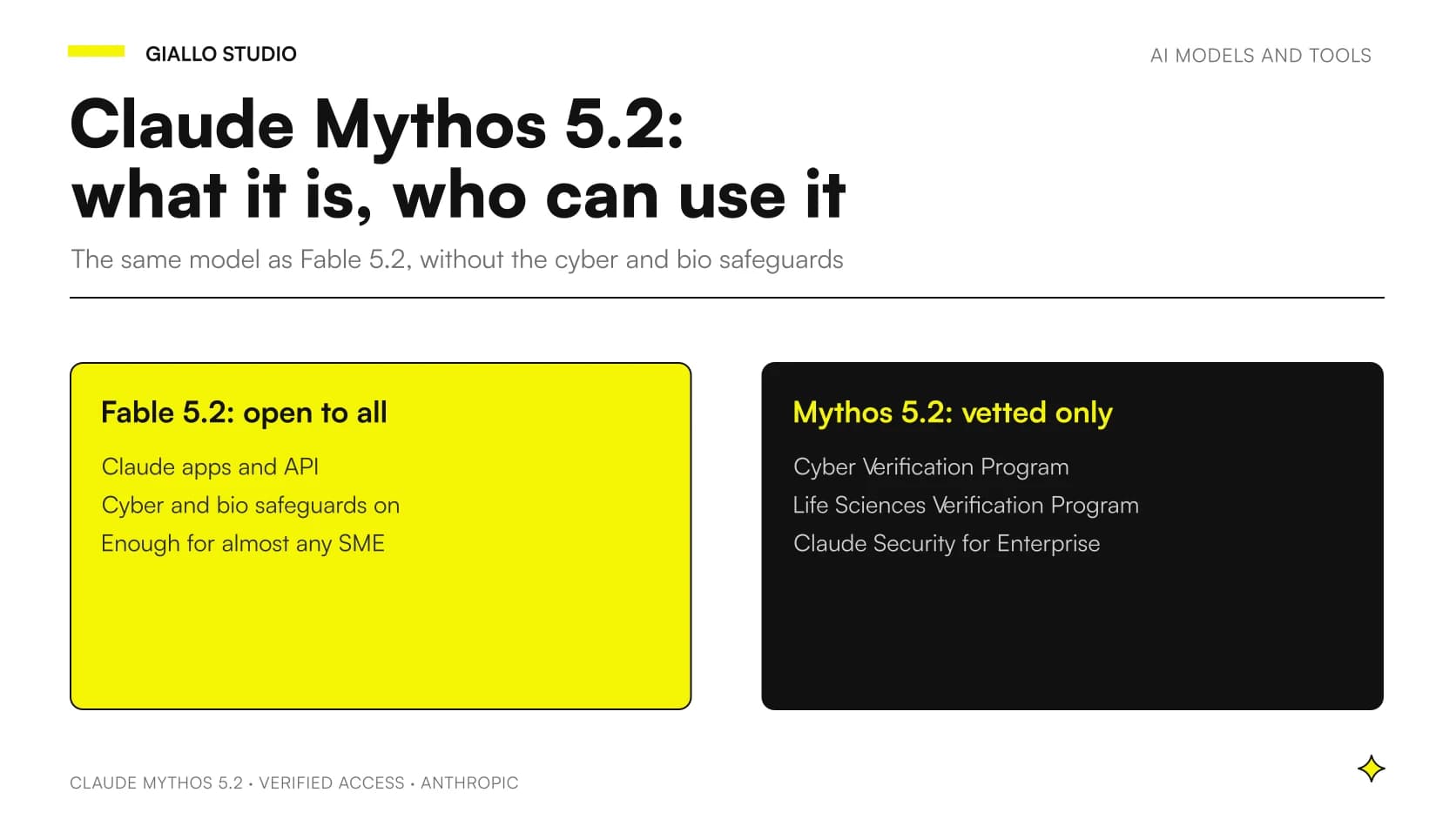
This is not new with this release. The same page also lists Fable 5 (designated on 9 June 2026) and Fable 5.1 (31 August 2026) as Covered Models, along with the corresponding Mythos versions. Anyone already using Fable 5 or 5.1 therefore already has these rules. It changes things for those coming from Opus 5.5 or other models: Mythos 5.2 follows the same rule, and there too retention is the price of access.
What exactly does the Covered Models policy say?
The rules, on the page checked on 9 November 2026, can be summarized like this:
| Appearance | What the official page says |
|---|---|
| Conservation | Prompts and responses kept for at least 30 days, then deleted automatically |
| Exceptions to deletion | Ongoing security investigation or legal obligation |
| Zero data retention | Not available in workspaces, Enterprise organizations and third-party platforms, unless authorized |
| Review | Retained data is evaluated by automated security systems |
| Where it applies | On all surfaces: Claude apps, Claude Platform, Amazon Bedrock, Google Cloud, Microsoft Foundry |
| Data breach | Notification under the organization's agreements with Anthropic and under its Data Processing Addendum |
| Other models | Remain under the existing agreement and retention settings |
Two useful clarifications. The page refers to Anthropic's Privacy Center for how input and output are used on commercial and consumer plans: that is a different document, and it should be read for the plan you actually have. In this article we say nothing about the use of data for training, because the Covered Models page does not address it.
The list also includes a note for customers with a BAA, the US instrument for healthcare services. It is a contract under US law: it does not replace the data processing agreement required by the GDPR.
Does it also apply on Bedrock, Google Cloud and Microsoft Foundry?
Yes. The rules “follow the model” and apply wherever it is offered, third-party platforms included. The technical pages list these access routes for Fable 5.2: the Anthropic API, Amazon Bedrock and Claude Platform on AWS, Google Cloud (both Anthropic-managed and Google-managed), and Microsoft Foundry on Anthropic infrastructure. Sources: model card and what's-new page.
Choosing a platform can change who your vendor is, which contract you sign and who is responsible. For the 30-day minimum, nothing changes. Anyone hoping to get around retention by going through a third-party cloud is on the wrong track: the page states expressly that zero data retention is not available there either.
Can you get zero data retention with Fable 5.2?
Not by default. The page does describe three routes, though, and it is worth keeping them apart.
- Time-limited option. Eligible customers will get the option to use zero data retention with Fable 5.2, 5.1 and 5 for their own internal applications. It is presented as a transition and for a limited period. Anthropic or the cloud provider contacts eligible organizations directly, and you can ask to be assessed through a form. Anthropic can change or withdraw it.
- Enterprise Frontier Safeguards (EFS). Security monitoring runs on prompts and responses stored in the customer's own infrastructure, so it is compatible with zero data retention. According to the announcement it is in private beta with customers such as Bridgewater, Salesforce and Stripe, and Enterprise companies can ask their Anthropic contact for access. The Covered Models page speaks of a phased rollout starting in fall 2026.
- Staying on earlier models. Customers already eligible for zero data retention can keep using earlier Claude models under current conditions.
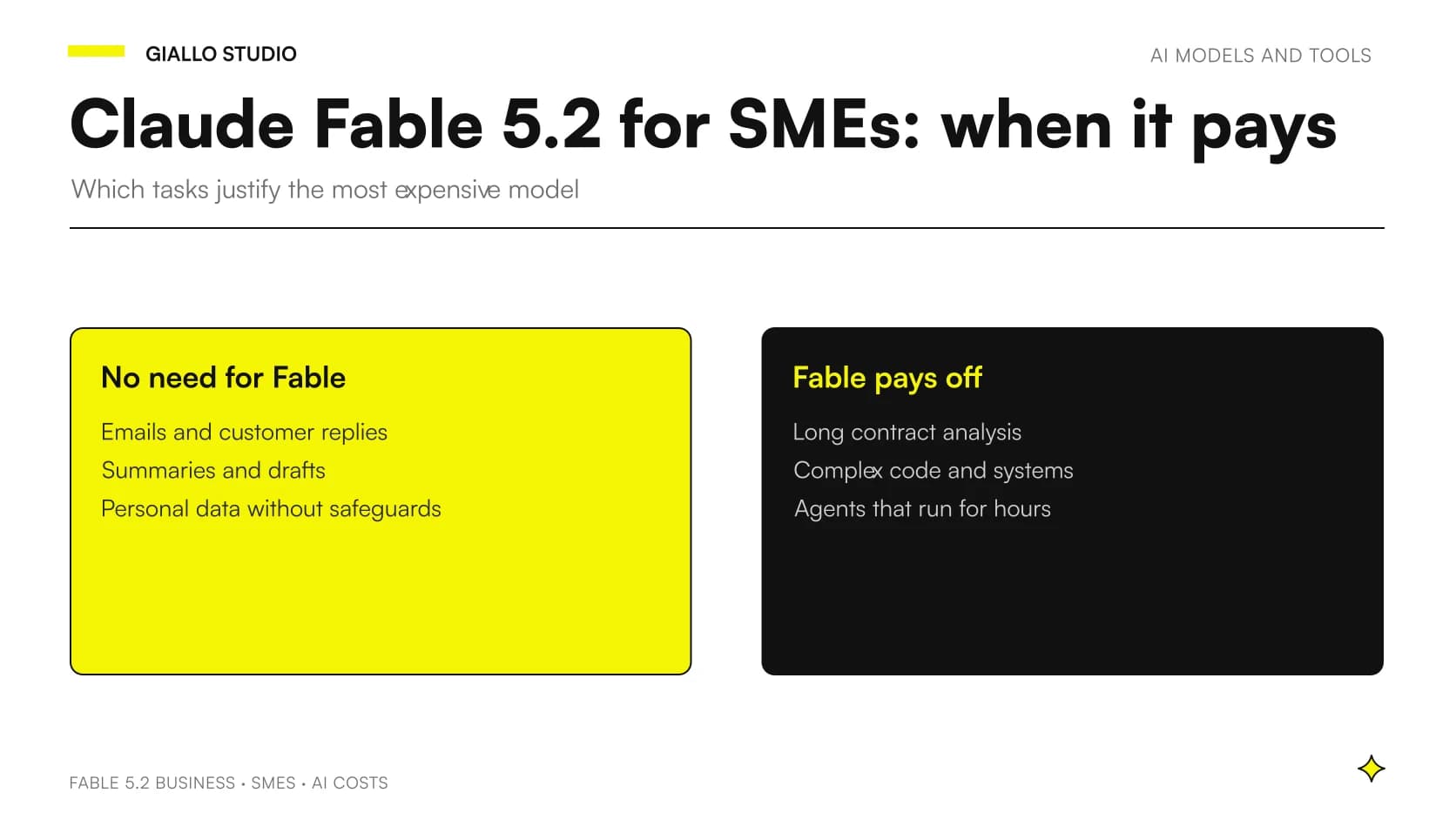
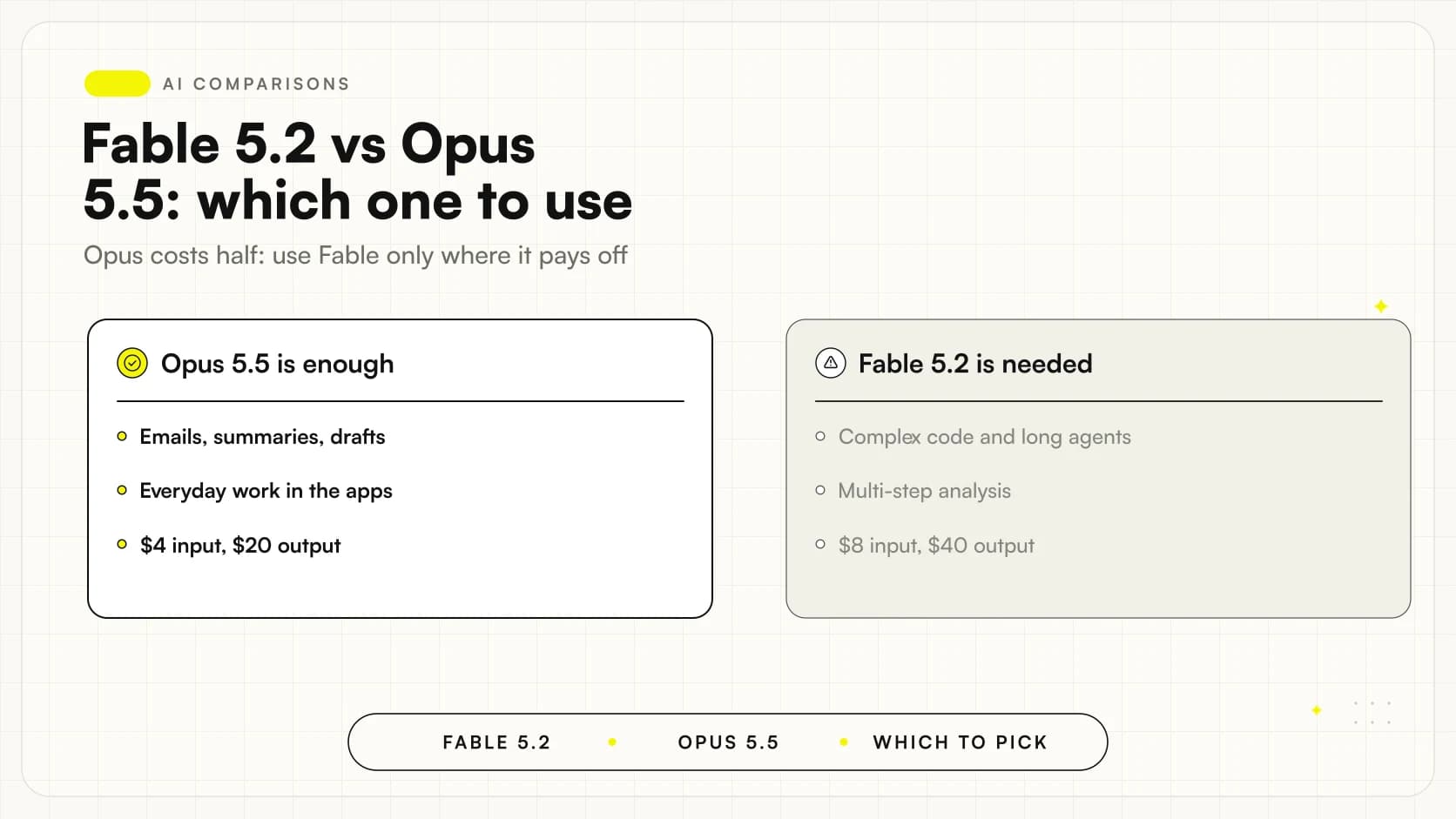
For a small business, the first and second routes are rarely within reach: they require a direct relationship with Anthropic or the cloud provider, and the third applies only to those who already have the right to zero data retention. For workflows with sensitive personal data, assess whether a model like Opus 5.5 is enough: in the comparison of Fable 5.2 and Opus 5.5 you will find where the capability gap is really felt.
Is the data kept in Europe?
We do not know, and the sources we checked do not say. The model card and the what's-new pages, checked on 9 November 2026, do not list processing regions in the European Union for Fable 5.2. The pages mention a price list for data residency, but we cannot derive any options for Europe from it. The point remains open.
Do not infer anything from the silence: neither that the data is in Europe nor that it is outside. Ask in writing, to the vendor you have the contract with, and keep the answer. If there is no answer, or it is unclear, a model or route for which you have guarantees is better for that processing.
What does this mean for an SME's GDPR obligations?
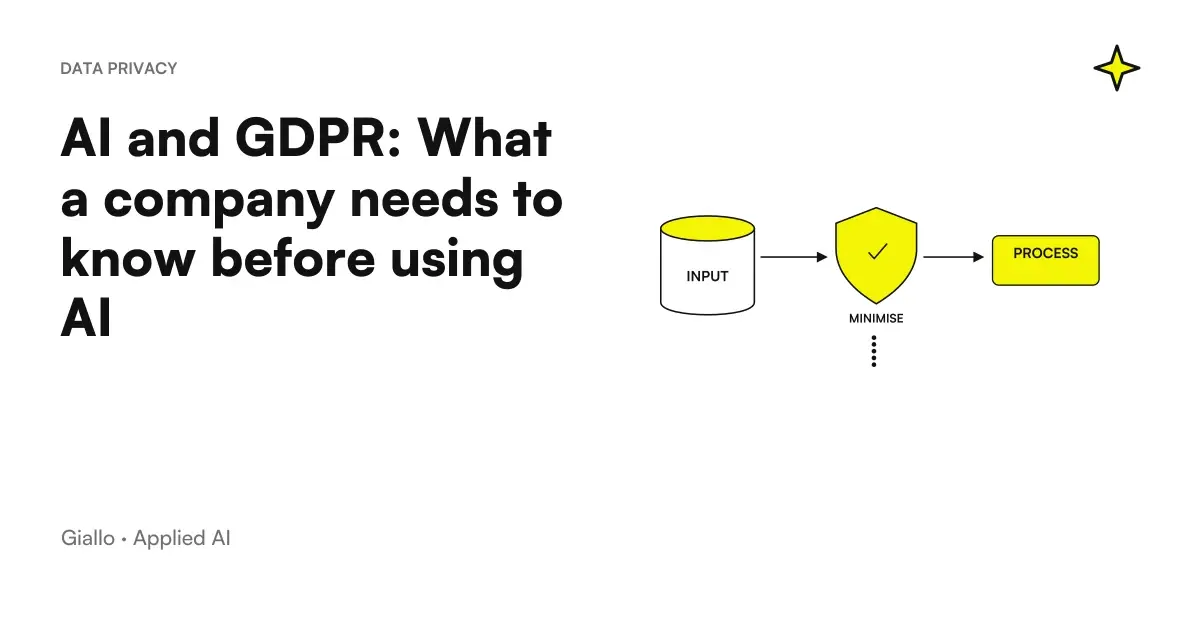
The EU data protection regulation does not prohibit using a model that retains data. It requires you to know what you do with that data and to be able to prove it. This is a working outline, not legal advice: the final assessment is up to your DPO or privacy consultant. For the general picture, see the guide to GDPR and AI in the company.
- Privacy notice. If personal data enters the prompts, the notice must state the purposes, the recipients (by category is fine) and the retention periods (Arts. 13 and 14). The vendor's retention of at least 30 days must be taken into account.
- Contract with the supplier. You need a data processing agreement (Art. 28). The page points to Anthropic's Data Processing Addendum: read it, and check that it applies to the platform you use.
- Minimization. The less data goes in, the less stays. Remove names, tax codes and unnecessary references before sending, when the task allows it.
- Special categories and criminal-offence data. Health, political opinions and similar data (Art. 9) and criminal-offence data (Art. 10) have stricter rules. Before sending them to a service that retains them, ask for an assessment.
- Data subject requests. If a person asks for erasure, what does the company answer for a copy the vendor keeps for at least 30 days? It is a question for the DPO, not something to improvise.
- Impact assessment. It is required when the processing may present a high risk (Art. 35): whether that is your case is for the DPO to assess. Also, the AI Act adds obligations in some cases: the Guide to the AI Act for Companies helps you work out whether it concerns you.
Example: a private medical clinic in Rome
Imagine, as an example, a private multi-specialty clinic in Rome that wants to use Fable 5.2 to read years of medical reports in bulk and propose a summary per patient. The temptation is strong: the document is long, the model handles 1 million tokens of context (a figure from the official page), and the result is convenient.
The problem is that those reports are health data, a special category. Sending them to a service that keeps them for at least 30 days, with EU regions unconfirmed and without zero data retention, is not a decision to take in an afternoon. First you need the legal basis, the privacy notice for patients, the contract with the vendor, the impact assessment if required, and the answer on where processing takes place.
A more prudent route: use Fable 5.2 on material with no identifying data, for example to write internal protocols, prepare form templates or tidy up the price list of services. For the medical reports, consider a separate route, perhaps with data made anonymous in a truly irreversible way or with local infrastructure, as in the article on local AI for privacy. The sector has its own rules: for the day-to-day work of a medical practice, see AI for medical practices and clinics.
A second case: customer support at a software company
Another example, labeled as such: a company that sells management software and wants to use Fable 5.2 to analyze support tickets and find recurring problems. The tickets contain names, emails and sometimes excerpts of customers' databases.
Here the solution is technical before it is legal: a step that strips names, addresses and identifiers from the text before sending it to the model, and a log of what was sent and when. The analysis runs on the cleaned texts, the result comes back with the ticket codes and is linked to customers inside your own systems. The model sees the problem, not the person.
Fable 5.2 is a good fit when
- The texts contain no personal data or are made non-identifiable before sending
- The task truly requires Fable's level of capability
- You have read the contract and the Covered Models page for the chosen platform
- The privacy notice and the record of processing are up to date
Avoid Fable 5.2 when
- You would have to send health data or other special categories without an assessment
- The customer or the contract requires zero data retention
- You do not know where processing takes place and that information is needed
- A cheaper, non-Covered model is enough for the same task
Which questions should you take to your DPO before using Fable 5.2?
A short list, to print and bring to the meeting. Get the answers in writing.
- Which personal data would go into the prompts, of which categories and how many people?
- Which platform will we use (Claude apps, API, Bedrock, Google Cloud, Foundry) and under which contract?
- Who is the data processor for that route and where does processing take place?
- Is retention of at least 30 days compatible with our privacy notice and our record of processing?
- How do we handle an erasure request while the vendor still keeps the copy?
- Do we have customers whose contracts forbid us from using services that retain data?
- Can we reduce the data before sending, or use a non-Covered model for this task?
- Is an impact assessment needed before we start?
Mistakes to avoid with Covered Models
- Choosing Fable 5.2 out of habit. Anthropic itself names Opus 5.5 as the everyday model. A less powerful model that is off the list can solve the task with fewer constraints on data.
- Believing a third-party cloud removes the retention. The rules follow the model on every platform, as seen above.
- Expecting zero data retention because “we're Enterprise”. The page excludes Enterprise organizations, unless authorized.
- Changing only the model ID. Migrating from one model to another in a workflow already in production also moves the data processing. The comparison with Claude for business helps you review the picture, and for the cost impact there is the guide to Fable 5.2 for SMEs.
- Treating an article as legal advice. This text reports sources and proposes questions. It does not replace the DPO.
How we work on these cases
Before choosing the model, we ask what data passes through. Our order of work, when an SME asks us to put a model like Fable 5.2 into a process:
- Map the data. We list what goes into the prompts and what comes out, and whether there is personal data.
- Reduce. We remove, replace or aggregate everything the task does not require.
- Choose the right model. We try a non-Covered model first; we move to Fable 5.2 only if the quality justifies it.
- Document. Contract, platform, region requested from the vendor, privacy notice: everything in a file the DPO can review.
- Review every quarter. The official pages change: the time-limited option on zero data retention, for example, can be withdrawn. Always check the official page.
Where to start
The practical rule is short: until you know what you are sending to Fable 5.2, do not send personal data. Then decide the model, platform and contract with your data protection officer, and review everything when Anthropic updates the page.
If you want a data map and a technical opinion on the right model for your processes, before involving the DPO, the AI consulting by Giallo Studio starts from exactly this: what goes in, what is needed, what can be removed. Then we move to a trial on real cases.
Giallo Studio guides: methodology and sources
Want to apply this to your business?In 30 minutes, free of charge: the first process to automate and its estimated return, in writing.
Book the free auditHow we apply it in the company
Related resources
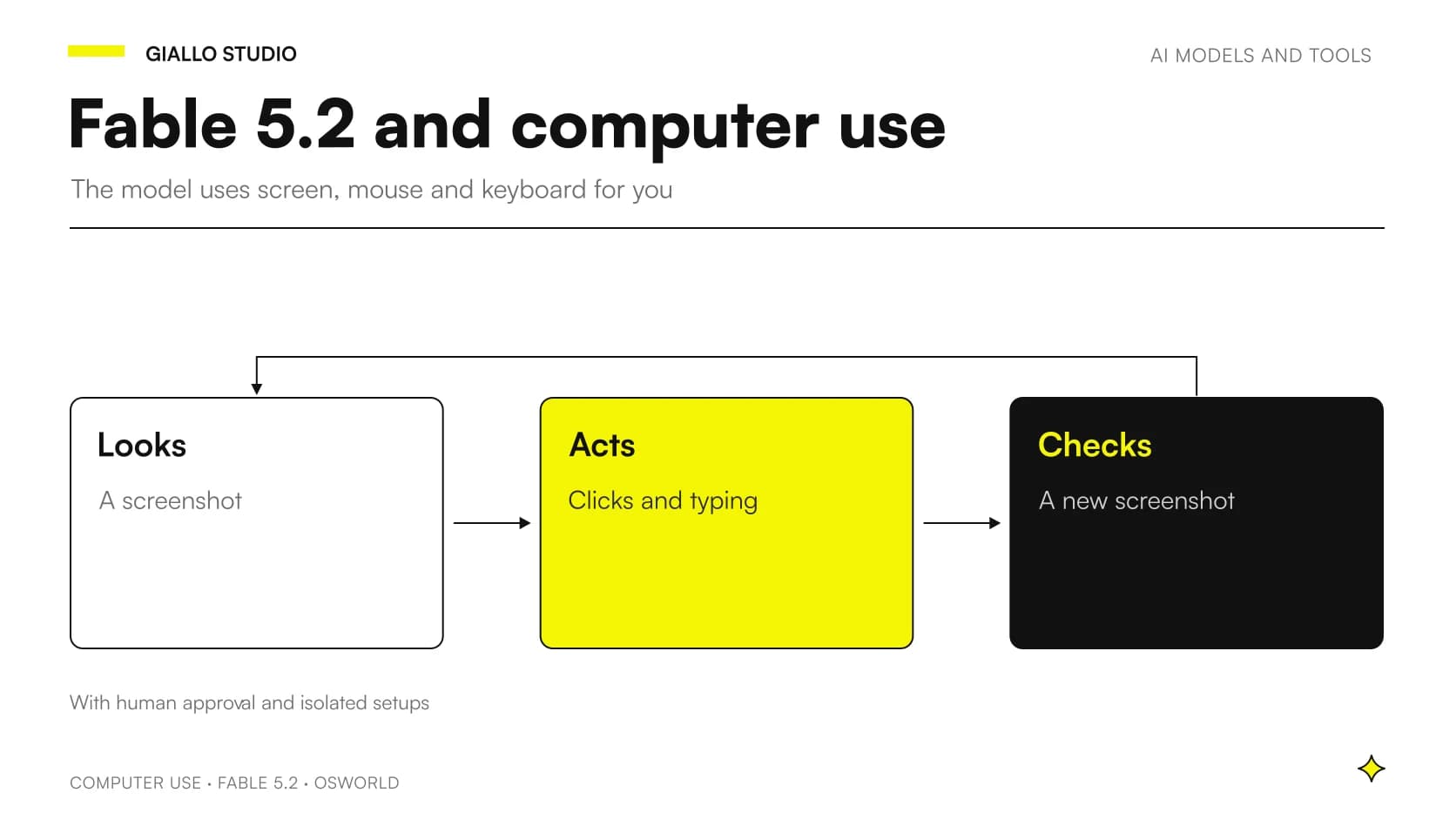 Claude computer use with Fable 5.2: letting the model operate a PC on its own
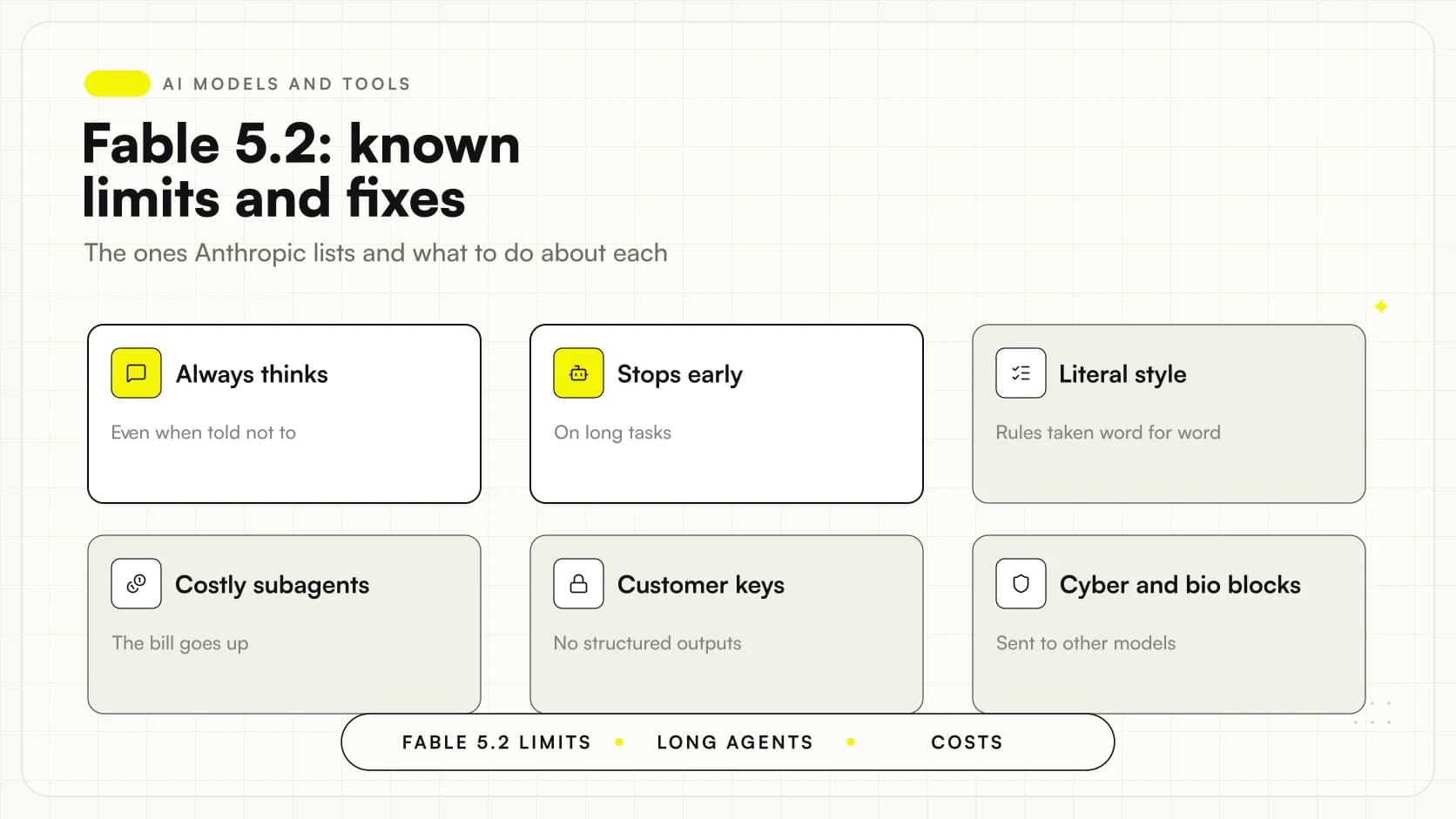 Claude Fable 5.2 limitations: the known ones and how to work around them
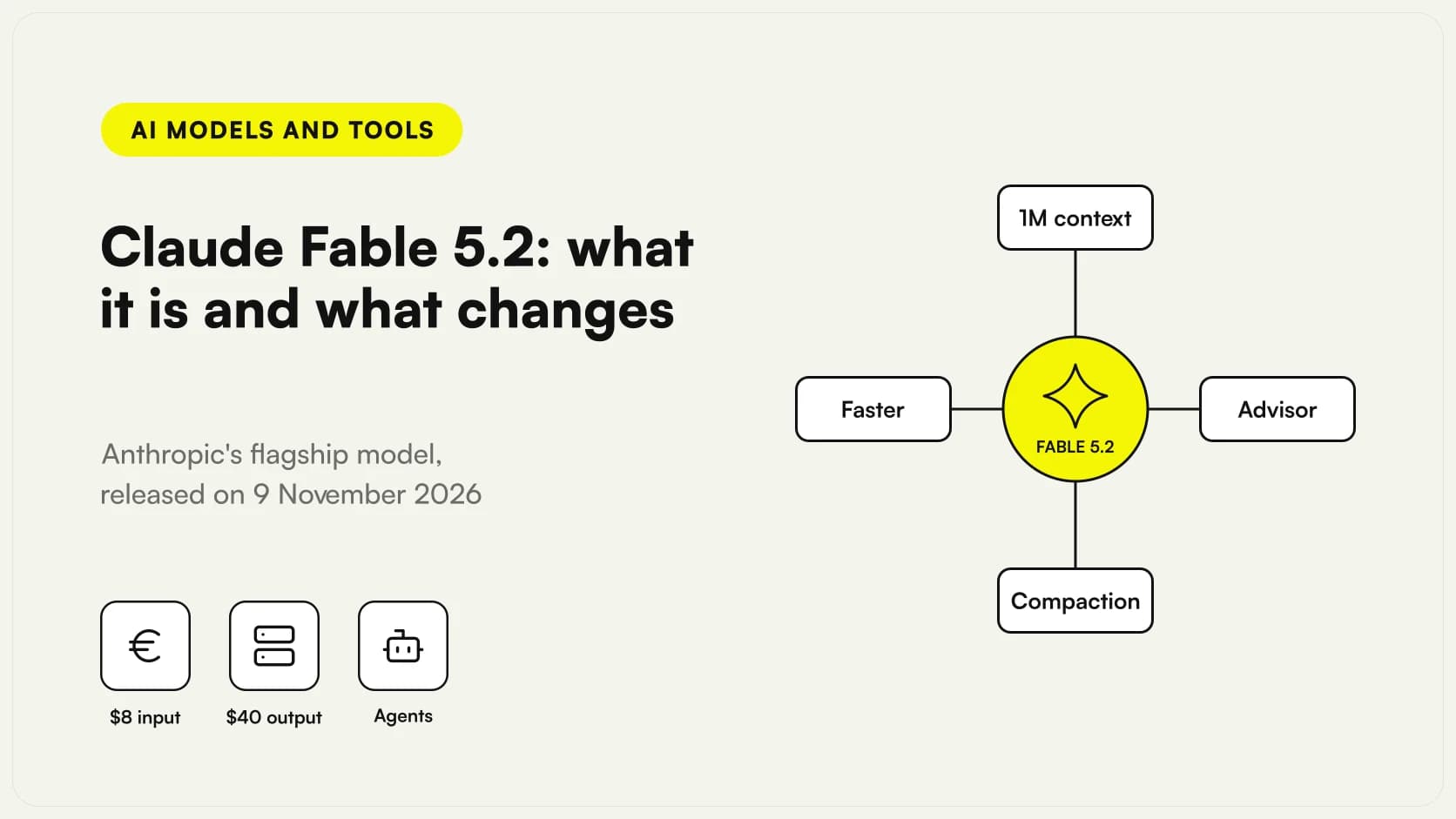 Claude Fable 5.2: What It Is, What Changed and What It Costs
 Claude Fable 5.2 for Business: When It Pays Off for SMEs
 Claude Mythos 5.2: what it is and who can use it
 Fable 5.2 vs Opus 5.5: which to use and when
 AI and GDPR: What a company needs to know before using AI
 AI and corporate privacy: what happens to your data in AI tools
 AI Act: what obligations does an SME really have
 Claude AI for companies
FAQ
Does Fable 5.2 store my data?
Yes. Fable 5.2 prompts and responses are kept for at least 30 days and then deleted automatically, unless there is a security investigation or a legal obligation. This comes from Anthropic's Covered Models page, checked on 9 November 2026. The retention exists for security checks, not as your archive.
Is Fable 5.2 available with zero data retention?
No, not by default. Zero data retention is not available even in Enterprise organizations or on third-party platforms. There is a time-limited option for eligible customers, which Anthropic or the cloud provider offers directly and which you can request through a form.
Does the 30-day rule also apply on Amazon Bedrock, Google Cloud and Microsoft Foundry?
Yes. According to Anthropic, the Covered Models rules follow the model on every platform where it is offered, third-party ones included. Choosing Bedrock, Google Cloud or Foundry instead of the direct API therefore does not change the 30-day minimum.
Can I use Fable 5.2 with customers' personal data and stay GDPR-compliant?
It depends on the case, and no article can say so in place of your data protection officer. You need a clear purpose, an up-to-date privacy notice, a data processing agreement with the vendor and only the data that is necessary. For health data or other special categories, maximum caution applies: ask for an assessment first.
What is Enterprise Frontier Safeguards?
It is a security monitoring system, described in Anthropic's announcement of 9 November 2026, that runs on prompts and responses stored in the customer's own infrastructure, so it is compatible with zero data retention. It is in private beta with some customers, and Enterprise companies can request access from their Anthropic contact.
Does Fable 5.2 keep my data in Europe?
We do not know: the official pages checked on 9 November 2026 do not list processing regions in the European Union for Fable 5.2. Before using it with personal data, ask the vendor in writing where processing takes place and where the retained data is kept.
Which Claude models are not Covered Models?
The official page's list includes only Fable and Mythos in versions 5, 5.1 and 5.2. Opus 5.5 is not in the list checked on 9 November 2026, and the page says other models remain under the agreement and retention settings already in force.