
Meta Personal Superintelligence: What Muse Spark Does
Meta personal superintelligence: Muse Spark announcements, features to verify in Italy and how to distinguish an assistant from a business system.
Reading time: 12 min
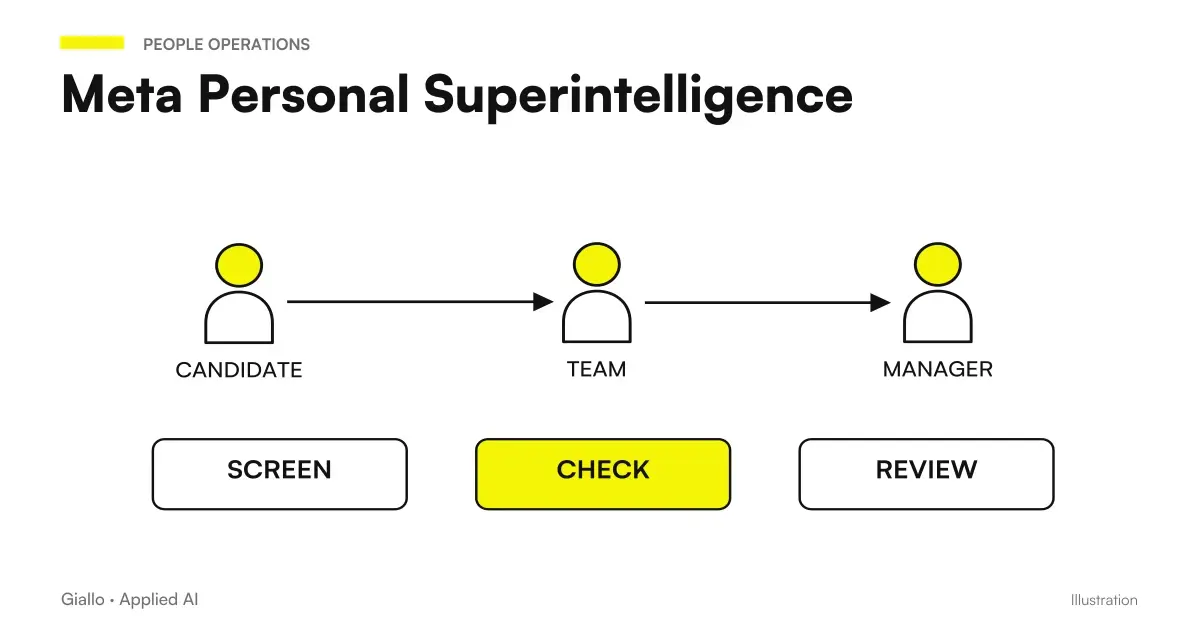
The Meta Personal Superintelligence is a product vision: an assistant who uses the user's context and carries out activities on his behalf. Meta presents Muse Spark as a step in that direction; this positioning does not prove, alone, the existence of an ASI, that is, a general artificial superintelligence. The distinction already emerges in the Official announcement of Muse Spark on April 8, 2026.
For an Italian SME, it is important to understand what is announced, what can actually be activated and what responsibilities remain with the company. Personal Superintelligence does not automatically replace "artificial intelligence": AI describes a broad set of technologies, while ASI indicates a much more challenging level of capability to demonstrate. The general picture is in the guide to Artificial superintelligence.
Here the point is to interpret the Meta project without turning each promise into an available function. The mentioned ads were verified on October 10, 2026. The availability of individual integrations for Italian accounts remains to be ascertained before using them in a real process.
In summary
- Personal Superintelligence is the term by which Meta communicates a direction of development.
- Muse Spark is the model; Meta AI is the application experience that exposes functions.
- An ad describes the capabilities and intentions of the provider, does not verify every Italian account.
- Personal context, company data, and action permits require different decisions.
- A business test must check authorized sources, results, and actions.
What does Meta mean by personal superintelligence?
The term emphasizes the relationship between assistant and person. The expectation is that the system will be useful because it includes a request in its context: preferences, appointments, activities and relevant materials. "Personal" then describes a intended use. It is not a scientific scale that allows the product to be automatically assigned a general superhuman capacity.
In daily work this distinction changes the questions to ask. If an assistant prepares an agenda consistent with the holder's commitments, we have observed an organization function. We have not verified that he can deal with any company problem better than any professional. A good experience of a delimited activity deserves a concrete evaluation, without adding conclusions that the experiment does not contain.
To talk about ASI you need to discuss generality and level of performance. The paper Levels of AGI proposes to distinguish these dimensions from autonomy: to be able to perform an action and possess superior general abilities are different properties. It is a proposed framework, not a mandatory product certification.
Those who want to clarify the terms can read the comparison between AI, AGI and ASI. In choosing a personal assistant, however, it is advisable to keep the speech close to the activities: what information he sees, what result he returns and who confirms any changes.
Muse Spark and Meta AI: where does the model end and the product begin?
Meta describes Muse Spark, in the April announcement, as a multimodal reasoning model that supports instruments and orchestration of multiple agents. It also presents Contemplating as a mode with parallel reasoning. These are vendor statements about the features of the system; they are not an independent demonstration of ASI. Technical Source Meta.
A model can interpret an image, but the application must allow you to upload it. It may propose action, but the environment must exhibit the necessary tool. He can formulate a coherent response, but to know an appointment he needs an accessible and up-to-date source. The ability to generate text and permission to access a calendar belong to different levels.
This distinction also helps when assessing a demo. The video shows a successful interaction; the business decision must reconstruct the conditions that made it possible. What data was available? Did the feature require a connection to be set up beforehand? Is the output a proposal or a change that has already been executed? The same question, asked without those conditions, may produce a different outcome.
The Guide to all Multimodal AI deepens the first level. To evaluate the second is more useful the difference between assistant, chatbot and agent: interface, ability and power of action do not coincide.
What functions did Meta announce in July 2026?
In the press release of 24 July 2026, Meta links Muse Spark 1.1 to scheduling, connections with email and calendar applications, search and create slides. The text describes a step towards one's own vision of personal assistance. It is an announcement from the manufacturer, to be read along with its availability limit: selected markets.
To assess their professional utility we can translate these function families into observable results. The planning should produce a proposal that meets the stated commitments. Research should make it possible to distinguish sources from a reworking of the model. A presentation should keep the correct names, dates and numbers provided by the firm. These are test criteria proposed for a test, not performance already established for each Meta function.
The shape of the output counts as much as its fluidity. An ordered slide may contain an unsourced statement; a well-organized calendar may ignore a constraint that has not been communicated. The material must be judged against the purpose for which it will be used. A personal reminder tolerates errors other than a proposal sent to a customer.
The word "acts" then requires precise reading. Suggesting a date, preparing an appointment and confirming it are distinct steps. In the test it is best to record them separately, even when the interface presents them as a single conversation.
How to check availability in Italy without making assumptions?
The July source announces a start in selected markets and a subsequent extension to other countries and areas. This does not allow you to guarantee all the functions in Italy, nor to set a date for the individual account. Meta rollout indications.
For an operational test it is necessary to verify the precise function in the interface used. The fact that you can converse with Meta AI does not prove that you can link a specific calendar. Similarly, seeing one mode on the site does not guarantee the same experience in another application. First you observe what is activable; then you design the flow.
A test card can contain check date, account used, platform, visible function and result obtained with demonstration data. There is no need to register credentials or personal information. It is necessary to be able to understand if, after an update, the same activity still follows the approved path.
If integration is not available, the test may remain limited to manual preparation of a draft. It is a useful result, as long as it is not presented as completed automation. To deepen this separation between future project and current use there is the guide on waiting for superintelligence or adopting available AI.
Personal assistant or business system: what differences to check?
The table is a grid of requirements. It does not attribute a specific endowment to each Meta product and does not anticipate features that are absent from your account.
| Need | Limited personal test | Shared Enterprise Process |
|---|---|---|
| Source of commitments | Demonstration information provided by the user | Official source with manager and updates |
| Required result | Draft or proposal to read | Output usable in the agreed flow |
| Permitted Actions | No external commitment without confirmation | Different permissions according to role and activity |
| Continuity | User resumes conversation | The team needs to know where the work stopped |
| Verification | Direct control of the holder | Common criteria and exception handling |
| Availability | Function observed on the test account | Integration verified before adoption |
An SME can start with the personal column when it wants to assess the quality of a draft. The transition to a shared job, however, requires making explicit the information that today only the holder knows. The system cannot reconstruct with certainty rules left in the team's habits.
How could a ceramic workshop in Faenza use it?
Hypothetical scenario, not client case. The owner of a ceramic workshop in Faenza prepares a meeting with a shop interested in a collection. He wants to collect notes, pictures of the pieces and issues to discuss. The goal of the test is to obtain a readable playlist, without authorizing the sending of offers or the confirmation of appointments.
For a first test use demonstration photographs and a brief without confidential data. Specifies which products are examples, which descriptions are definitive, and which details must remain to be confirmed. The system should separate the information in the material from editorial proposals. If it invents a processing technique or stock availability, the draft does not pass the control.
The holder can compare the result with their list of topics: features of the collection, samples to show, questions about the needs of the store. It does not assign a value to the test because the assistant "seems to understand the brand". It assigns it if the output makes the correct elements visible and leaves those still open recognizable.
This flow is inspired by the idea of contextual assistance. It does not assume that every Meta function can be activated in Italy. If the slide generation is not available on your account, the test may stop at the playlist and the sorting of materials.
The transition point to a business system would come with shared listings, orders and availability. At that time a controlled link to the operating sources would be needed: the memory and business context would become a requirement to be designed, without attributing to the assistant knowledge that he does not possess.
What would change for a translation agency in Trieste?
Second hypothetical scenario. A translation agency in Trieste must prepare an internal meeting on a multilingual project. The coordinator wants a summary of the open topics and a proposal for an agenda. Use demonstration documents that represent phases and responsibilities, without entering confidential customer texts.
The test must verify a concrete distinction: “translation completed” and “translation approved” are not the same status. If the system confuses them, it could propose a schedule based on a delivery that is not ready. The coordinator therefore prepares material with both cases and observes how the draft handles the ambiguity.
An acceptable result indicates the document that supports each state and leaves a question when confirmation is lacking. A weak result fills the voids with a reassuring formulation. The problem is not solved by asking generically "be more precise": it is necessary to describe what evidence is needed to use the approved word.
The possible connection to a calendar should be tested separately, only if it is available and compatible with the conditions of the enterprise. Reading a commitment should not automatically turn into the power to move it. The coordinator maintains confirmation of deadlines and verifies that drafts do not become external notifications without a conscious transition.
Here the difference between AI Agents and Superintelligence is practical: the autonomy granted to the software concerns the allowed actions; it does not certify its general capacity.
A test before connecting the calendar
Prepare a demonstrative agenda with a certain commitment, one to be confirmed and a proposal incompatible with both. Ask the assistant to arrange the work and indicate what information he or she lacks. It checks whether it keeps the difference between confirmed and proposed, whether it recognizes the conflict, and whether it stops before engaging other people. The test checks the behavior on the chosen case; it does not assign a certification to the model.
What errors make a Muse Spark rating misleading?
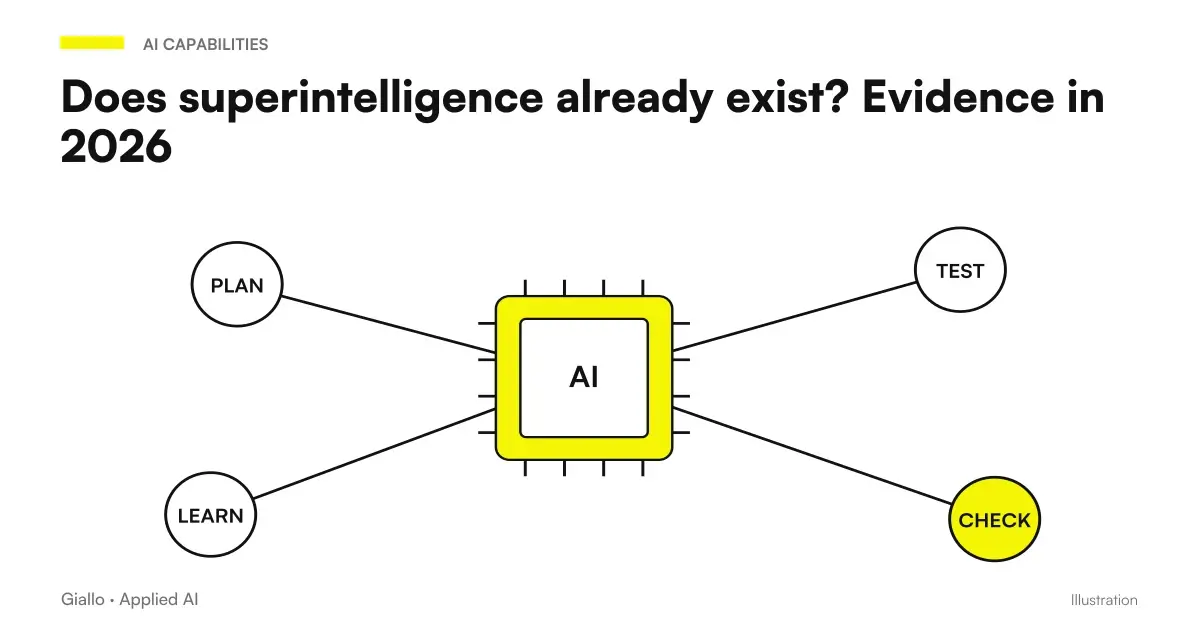
The first mistake is using positioning as a technical test. The word personal superintelligence may describe an interesting ambition, but it does not answer the question of the quality of the individual activity. For the theme of available evidence, the in-depth study remains useful Does superintelligence already exist?.
The second is to confuse the availability of the model with that of a link. Before drawing a job on email or calendar, you must observe the connector on your account and verify that it performs the intended step. A promotional screen is not enough as a technical requirement.
The third is to test only easy and well formulated requests. In reality a commitment can change, a document can contradict a note, a date can be incomplete. The test should include these cases, because this is where a convincing draft risks becoming a wrong decision.
The fourth is to go directly from personal materials to shared data. A document that can be used by the holder may not be used by a collaborator. The source should be selected according to the work and authorized persons, avoiding using the convenience of conversation as an access criterion.
The fifth is to measure only the appearance of the output. An elegant presentation does not prove the contents correct, as well as a quick response does not prove completion of the process. They are different controls and deserve separate criteria.
What requirement to write before adopting a personal assistant in the company?
A useful requirement describes a delivery. For example: «Prepare an agenda using these materials, report missing information and leave the confirmation of appointments to the coordinator». The phrase allows you to verify a result without asking the supplier for a general promise of intelligence.
Then you list the allowed sources. An approved brief, a product sheet, and a demonstration agenda have different roles. The model must be able to distinguish them; the one controlling must know which prevails in the event of conflict. A richer memory does not automatically resolve a never-defined rule of precedence.
Finally, the stopping point is established. If confirmation of a delivery is missing, the system produces a question. If the information is incompatible, report the conflict. If an action is requested outside of the permits granted, the job returns to the person responsible. These behaviors turn an informal test into a useful test for choice.
The next step can be a personal assistant kept within those limits or a dedicated integration. The map of technologies towards superintelligence helps to understand which components are needed when the work exceeds the single conversation.
When does the Meta project become a concrete choice for the SME?
It becomes concrete when an observable function encounters a delimited need. The name of the model orients the search; the adoption depends on availability, data, permissions and quality of delivery. Meta ads describe a direction and some capabilities: the firm's test must determine whether those capabilities work in the conditions of their work.
To deepen the documentary sources there is the guide to Company RAG. To decide how much initiative to grant to the software it is advisable to return to the distinction between assistance and autonomy.
If you want to compare a personal test with an assistant connected to the team processes, we can define sources, delivery and action boundaries in the path of AI Agent Design.
Giallo Studio guides: methodology and sources
How we apply it in the company
Related resources
FAQ
What does Meta personal superintelligence mean?
It is the positioning Meta uses to describe a path towards more context-aware assistants capable of acting for the user. It is not certification of general artificial superintelligence. To assess a product, verify its individual features and the context in which they work.
Is Muse Spark already an ASI?
The announcements examined do not provide sufficient evidence for that conclusion. Meta presents Muse Spark as a step towards personal superintelligence. The model's capabilities and commercial ambition must be considered separately.
Are Muse Spark and Meta AI the same thing?
Muse Spark is a model in the Muse family, while Meta AI is the application experience through which users access features. A model capability does not guarantee that every integration is present in your account. Version, tools and actual availability matter.
Are the features announced by Meta available in Italy?
The press release of 24 July 2026 indicates a rollout in selected markets. From that source you cannot guarantee the Italian availability of each function. You must check your account and current documentation before planning a business use.
Can I entrust the company calendar to a personal assistant?
First, establish which information it can read and which actions it can execute. A trial with demonstration data can verify proposals and summaries. Changes that commit the company require defined responsibilities and approvals.
When do you need a business system instead of a personal assistant?
It is needed when work must respect shared permissions, record actions and connect to the company's operational sources. The choice depends on the process and integrations, not the word superintelligence. A personal assistant can still help prepare material for review.