
Automating business software without APIs: options and limits
Automating business software without APIs: assess imports, exports, supported integrations, RPA and computer use. Controls and a pilot before writes.
Reading time: 13 min
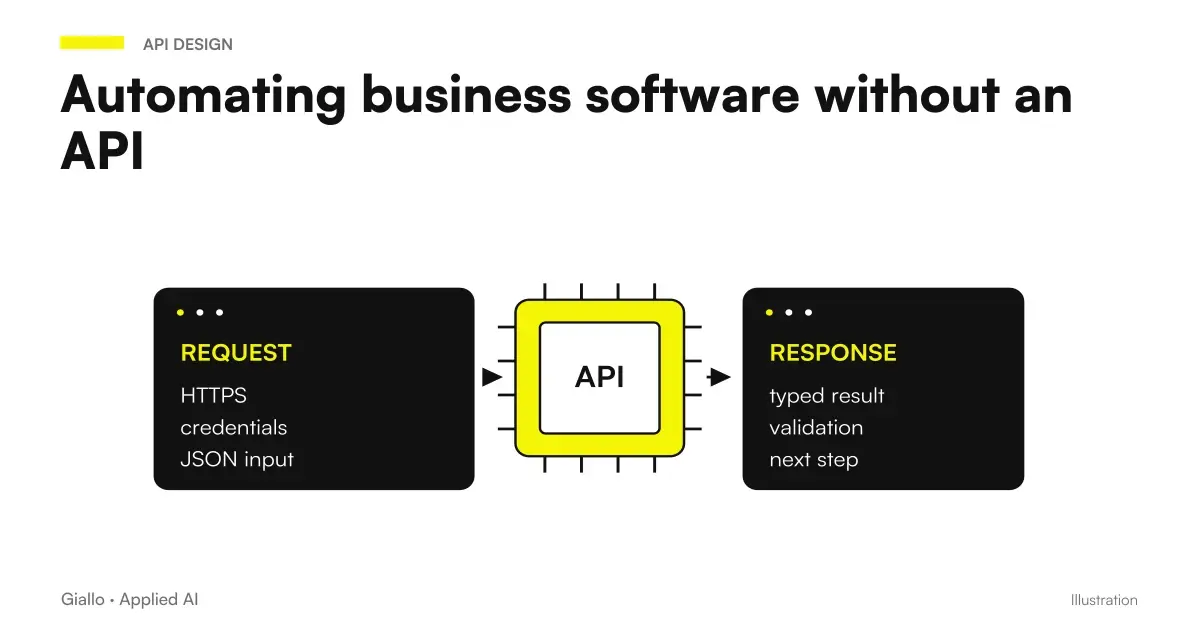
For automate a management software without API, starts from supported functions: import and export, supplier integrations and file exchanges. If these options do not cover the process, you can evaluate RPA or computer use on a controlled interface. The choice depends on what you need to register, the ability to verify the outcome and the cost of maintaining the link.
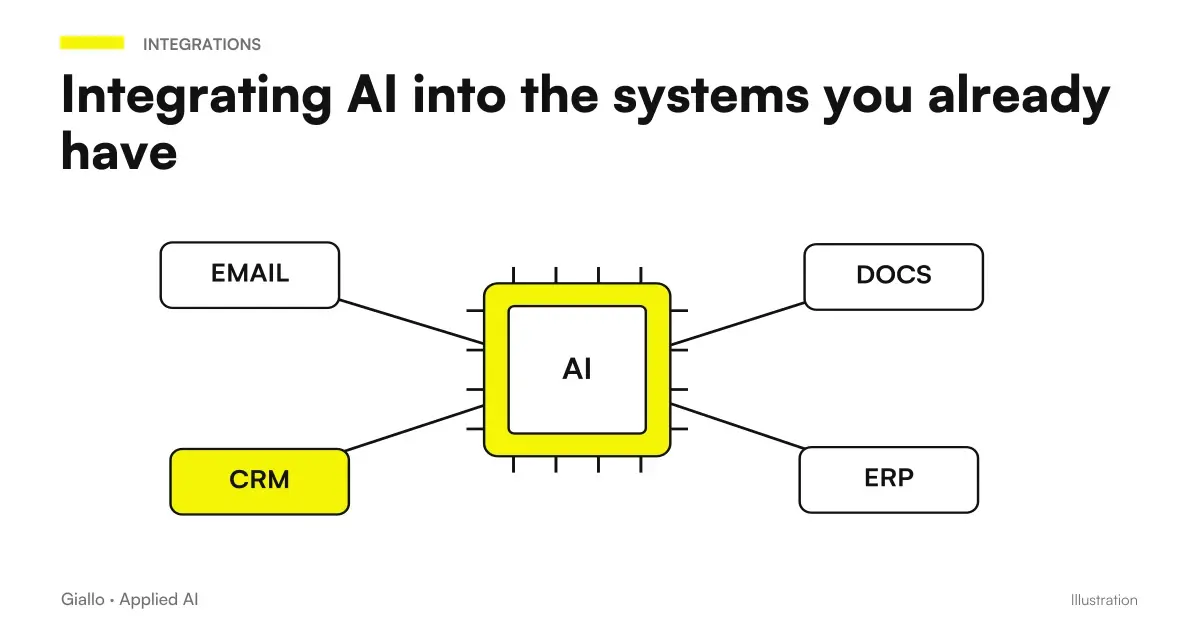
AI can help you read an order or interpret a document, but it does not eliminate software constraints. This guide helps an SME choose a path, with verified official sources on the 9 October 2026 and hypothetical scenarios. The AI Guide for Companies offers the context; the AI integration with existing systems presents the overall picture.
In summary
- Ask the supplier what exchanges and imports are documented and supported.
- Separate input reading, validation and registration in the management software.
- A successful click does not prove that the correct record has been saved.
- Changed interfaces, logins, and unexpected windows require a useful stop.
- Maintenance must enter the budget before the pilot.
What does "without API" really mean?
It can mean that the product does not display a documented interface, that the purchased plan does not include it or that a ready-made connector is missing. They are different situations. Before designing the automation, ask the supplier for a precise answer about available functions, license, limits and test environment.
A CSV export, import path, or official integration can solve the microprocessor even without an open API. Check what data they include, how they handle errors, and whether the operation is repeatable. A useful “import” button for an initial upload may have different rules for daily updates.
Do not assume that reading a database table also allows safe writing. The business software may apply checks, sequences and relationships that are not visible in the final data. Before using that route, you need confirmation that it is supported. The project must not bypass the application to make a difficult integration appear simple.
In what order to evaluate alternatives?
| Option | When it may be suitable | What to Check |
|---|---|---|
| Documented Import and Export | Already Structured Data and Periodic Exchange | Path, errors, and record updates |
| Supplier integration | Process predicted by the product | Perimeter, License, and Support Responsibility |
| Controlled file exchange | Periodic Latency Acceptable | Lot identity and completeness verification |
| RPA on the interface | Repeatable passes and stable screens | Recognisable elements and stoppage on unforeseen events |
| Computer use | Input or variable path to interpret | Isolated environment, allowed actions and review |
| Assisted entry | Full automation too fragile | Draft quality and operator residual work |
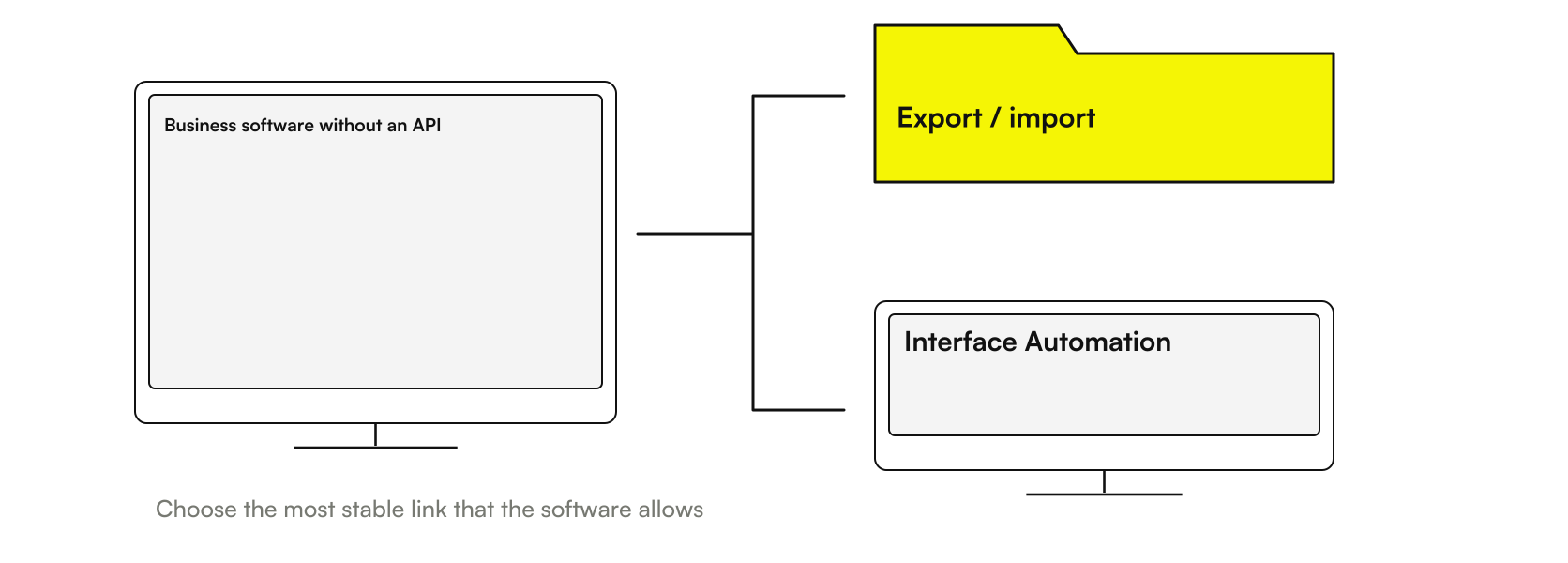
The sequence serves to prevent the most fragile part from becoming the first choice. An assisted mode can be a valid outcome of the project: the system prepares the data and the person performs the supported step. The benefit should be assessed on the full job, not on the promise to delete every click.
The comparison RPA and AI automation helps distinguish the tools. Here the choice concerns a specific entry point in the management software. If the import format works well, there is no need to replace it with a model that interprets the same table at every entry.
What data comes in and what controls precede writing?
Define an input with an identifier, source, date, operation type and the fields required by the business management software. An order needs customer references, items, quantities and relevant terms. For a price list update, codes and units become central. AI must not fill missing fields with plausible values.
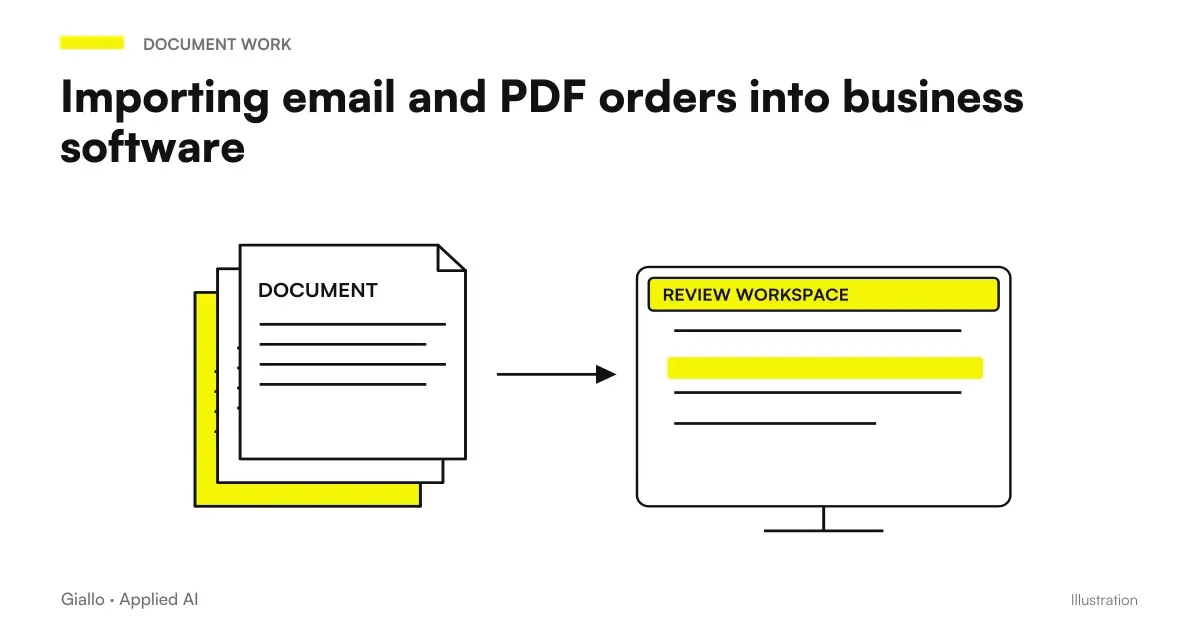
The flow of Importing PDF orders into management software addresses the reading of input. The flow of update supplier price lists treats normalization and versions. Both can prepare validated data, leaving the link to the management software to record and confirm the outcome.
Check formats, identifiers, amounts and references with explicit rules. If an article is ambiguous, keep the case to be verified. An integration without API must not become more permissive because the path is complicated. Information controls are useful whatever way you use to insert them.
A verifiable result beyond the click
For each operation, define what completion proves. It can be an assigned identifier, the presence of the correct lines and a consistent summary. A screen that disappears after "save" could indicate success, error or navigation. The system must read the expected result before marking the completed operation.
It preserves a trace of the attempt and its state. If the connection stops after saving, the restart must check if the record already exists. Do not repeat blind insertion. A queue with an "outcome to verify" status is more useful than a procedure that multiplies orders to appear resilient.
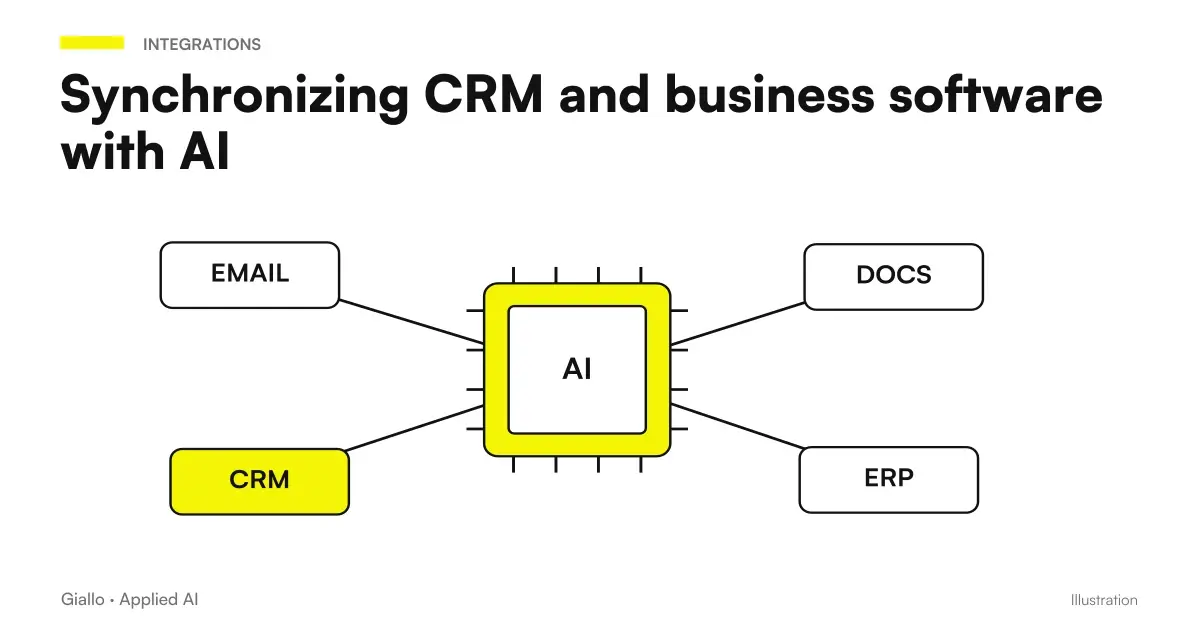
If the management system does not allow a reliable verification, limit the automation to a draft or an assisted passage. This limit should be reported in the proposal. The synchronization between CRM and management software requires even more precise identities and confirmations, because one error can propagate in the other system.
When can you consider the computer use?
The computer use can interpret the screen and operate through prepared tools. The Anthropic documentation on the computer use describes this capability and the risks related to untrusted content. The availability of the tool does not prove that a specific management software is supported or reliable for autonomous operations.
The pilot needs a separate environment, with trial data and circumscribed actions. Define which screens it can use, which operations require confirmation, and what must cause a stop. A content shown on the page must not be able to authorize an action other than the task assigned. The project must keep control out of the document text.
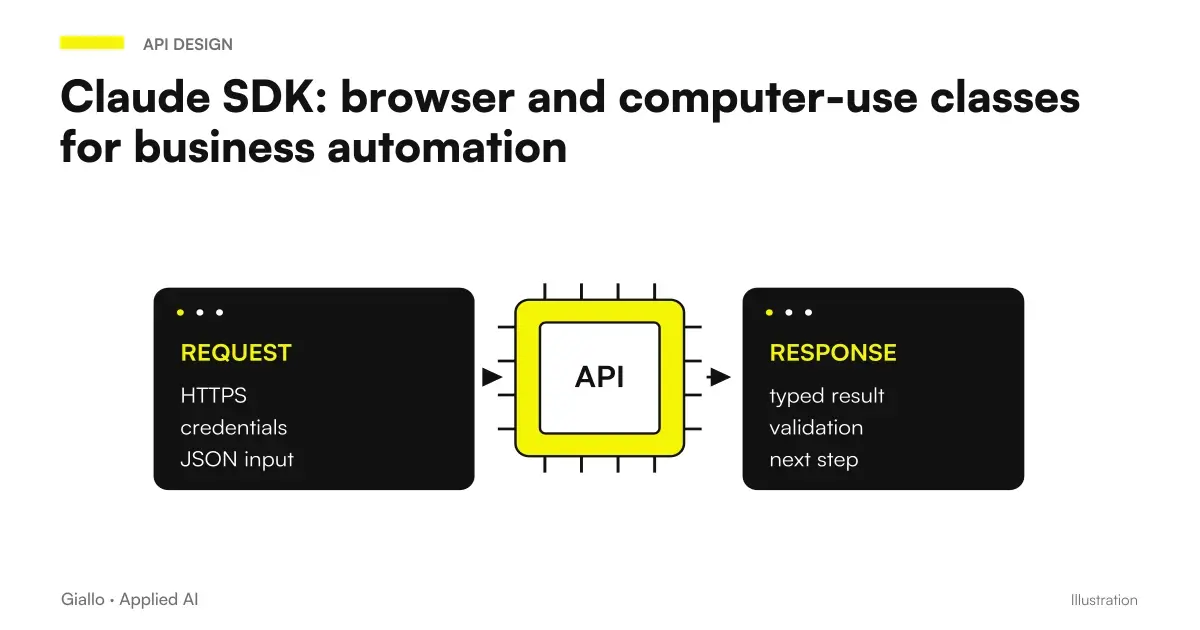
The Guide to Claude SDK, browser and computer use It deals with technical architecture. Here the adoption policy is operational: how often the path varies, how registration occurs and who intervenes when the screen changes. If these answers are missing, the demo is not enough to estimate the service.
Logins, unexpected windows and interface updates
An automation must use authorized credentials and permissions, with an identity that is suitable for the intended operations. The login may require verifications that must be adhered to. If the flow cannot continue, it must leave the practice in a recoverable state and request the intended intervention, without circumventing the protection.
An unexpected window can cover a field or change the meaning of the button. The procedure must stop when it does not recognize the expected state. For a computer use, this shutdown should not depend solely on the model's confidence: limits of action and path verifications help maintain an operational boundary.
Expect controls after management software updates, layout changes, or path changes. The automation provider must explain how these changes are detected and how much it costs to intervene. A convenient project the first month can become onerous if each update forces you to rebuild the flow.
Where to put the confirmation of the person responsible?
Confirmation should be about specific data and action: what record will be created or updated and with what values. Isn't a generic "proceeding" question enough? if the operator does not see the content. After a correction, the proposal needs to be updated and approval must relate to that version.
The n8n documentation on tools with human review describes a possibility of pause before execution. The project must still choose the location of the confirmation and verify that the next step uses the approved data. Not every screen requires review, but every operation must have a defined policy.
During the pilot, start with reading or preparation and add writes only when the outcome can be verified. Define the correction path for a confirmed error. If a record cannot be reversed through a supported function, that affects the level of autonomy possible.
Hypothetical scenario: a wholesaler in Mantua
In this hypothetical scenario a wholesaler receives orders in PDF and uses a management software with documented import. The system prepares a file in the intended path, checks customer and articles, and shows a summary. The ambiguous inputs are separated. The operator approves the lot before importation.
The management software returns a list of imported and rejected rows. The project links this outcome to the original requests, preventing a repeated batch from creating duplicates. An order rejected because its code does not exist still needs to be corrected. The model does not look for a similar item to get the entry accepted.
The pilot measures correct batches, readable waste, avoided duplication, and residual operator time. Compare this route with the complete manual entry. No savings are taken: the test must show if the preparation and verification cost less than the work they replace.
Hypothetical scenario: a workshop in Udine
A second hypothetical situation concerns a management software without a suitable exchange for a particular field. The workshop evaluates a procedure on the interface to update already verified information. The test environment reproduces screens and permissions, using test records. The flow performs only one class of operations.
A warning window and a record modified by a colleague appear in the sample. The procedure must stop and show the discordance, maintaining the initial proposal. A correct stop is part of the pilot result. You don't just evaluate how many operations get to the final screen when everything works.
The firm measures verified completions, necessary interventions, and the cost of adapting to a simulated change. If maintenance is too frequent, you can choose assisted insertion. AI can continue to prepare data even when registration remains with a person with access to management software.
Shared Sessions and Queue Operations
An automation on the interface should not compete with a person for the same session while recording data. Changing the window, record, or context can alter the intended action. Define a dedicated session, the conditions for using it, and a stop when the context is not what you expect. The operator must know what activities are in progress.
If more requests arrive, keep a queue with identifiers and states. The project must prevent two attempts from working on the same record without coordination. A limit of competition may be more useful than a higher nominal speed. The requirement should be chosen according to the product and the checks supported, without assuming that each session allows parallel operations.
During a restart, the queue must distinguish what has not started, what is complete and what has an uncertain outcome. Do not reopen everything from the beginning. Show the case to check and the available evidence so the person can decide how to proceed. Manual confirmation of the outcome must remain recorded alongside the attempt.
In the pilot, you interrupt a session and change the record displayed before an action. Verify that the system stops, without applying the data to the wrong context. It also counts the work needed to resume the queue. They are proof of the operational continuity that a linear demonstration, with only one stable screen, does not allow to evaluate.
Define a limit on attempts and the time of reporting. Retrying endlessly can block the queue and make it harder to reconstruct the initial operation to check.
What budget to ask before leaving?
Ask for a breakdown: verification of product functions, data preparation, test environment, automation, outcome control and maintenance. If a model is expected, evaluate current candidates on the actual task. The documentation by Claude Sonnet 5.5 can orient a candidate, without demonstrating results on the management software of your company.
Estimate volumes, frequency and work of exceptions from observations of the process. For a stream that requires an operator at each login, the intervention time must enter the account. For a periodic exchange, consider whether the delay is acceptable. A low running cost can be unhelpful if the data comes too late.
Define who maintains the link and who responds to a block. It also needs a ready manual path, with the same track as the practice. Continuity is not about letting the model try different actions until something seems to succeed. It consists of resuming work without losing data or creating uncertain recordings.
Concrete questions to take to the management software provider
- Is there a supported import to create and update these records?
- How are partial errors and identifications of operations communicated?
- Is a test environment available with the same version of the product?
- What integration paths are covered by the support?
- How are changes to tracks, screens and controls announced?
Choose the link after a delimited test
Bring a small queue of operations, the input format and the expected proof of saving. Check the documented options first and measure the complete work. A successful pilot must also explain what happens on error, how to restart and which activities remain with the person responsible.
The Service custom software can build the connection around these constraints. The first useful delivery is a verifiable route for a class of records, with explicit maintenance cost. From there you can decide whether to extend the automation or maintain an assisted passage.
Giallo Studio guides: methodology and sources
How we apply it in the company
Related resources
 Integrating AI into the systems you already have
 RPA vs AI automation: differences, costs and when to use which
 Claude SDK browser and computer use classes: automating business software
 Import email and PDF orders into business software: AI, checks and confirmation
 Synchronise CRM and business software with AI: data, conflicts and retries
 Update supplier price lists with AI: changes for approval
 AI for businesses: a complete guide to getting started
 Copilot Studio and Power Automate: agents and workflows
FAQ
Can business management software be automated without APIs?
It can be possible with supported import and export, supplier integrations or interface automation. The choice depends on available functions, controls and maintenance. Before simulating clicks, check the documented alternatives of the product.
Is AI needed to enter data into a business management system?
Not always. A structured file can be managed with rules and a supported import. AI can help extract or interpret variable inputs, while validation and recording the data follow defined controls.
What is the difference between RPA and computer use?
An RPA can follow repeatable steps of the interface. The computer use uses a model to interpret the screen and propose actions, with its own limits. Both require verification of results and management of software changes.
Can I write directly to the business management system’s database?
The presence of an accessible database does not make writing a supported integration. It is necessary to check with the provider rules, constraints and authorized path. A direct change can circumvent controls that the program applies in the interface.
How to manage logins and interface blocks?
Use the authorized path and foresee the necessary intervention when the system requires a verification. Automation must stop on an unexpected state. It must not bypass a protection to continue the insertion.
How to estimate the cost of the project?
Include data preparation, access, test environment, verification and maintenance. Also consider work after interface updates. Savings should be measured on the pilot, counting fixes and restarts.