
OpenAI API limits: Build, Launch and Grow arrive, what changes for automations
OpenAI API limits with Build, Launch and Grow: thresholds, budgets and handling 429 errors for automation that can withstand usage peaks.
Reading time: 11 min
OpenAI API limits are reorganized into Build, Launch, and Grow levels: they are not three new ChatGPT subscriptions. The Change of 6 October 2026 reduces previous paid tiers and provides for automatic migration, according to the official update published by OpenAI. For those who manage automations, the useful verification is to understand how much capacity their account has and how the software reacts when it exceeds it.
A process can work well during a trial and stop when many requests come together. The total number of the month can be contained, but the concentrated peak puts pressure on the limits of requests or tokens. The new level name helps to read the offer; queue, budget and error management remain the responsibility of integration.
In summary
- Build, Launch, and Grow are API layers, separated from chat plans.
- Purchase of credits, usage limit and actual invoice are different sizes.
- The limits of requests and tokens also depend on the model used.
- A capacity error requires a waiting and recovery procedure.
- A higher capacity does not correct duplicates, cycles, or mispriorities.
What thresholds do they change with Build, Launch and Grow?
The OpenAI installment limit guide reports purchase thresholds of credits of 5, 100 and 500 USD, with monthly usage limits of 500, 5,000 and 200,000 USD. The figures belong to different categories: the threshold is not a fee, the limit is not free credit and neither automatically represents the invoice. Conditions should be reviewed on the official page and in your account.
| Voice to Read | What it describes | Error to avoid |
|---|---|---|
| Organization level | Applicable capacity range and conditions | Consider it a chat plan |
| Purchase of credits | Expected economic requirement | Treat it as mandatory monthly consumption |
| Limit of use | Maximum indicated for level | Count it as credit already available |
| Requests per minute | Call capabilities over the period | Compare it only to the monthly total |
| Tokens per minute | Processed Content Capability | Ignore length of inputs and responses |
| Actual expenditure | Consumption Really Turned On | Confusing it with the theoretical roof |
In the estimate of an automation these entries deserve separate lines. The company can have a high limit and still choose a much smaller internal budget. Or it can have sufficient budget but reach a technical limit during an import. A good reading of AI API distinguishes access to the service from the choices with which the software uses it.
Why can few requests block an entire queue?
The demands are not all the same weight. A short classification and analysis of a long file can contribute differently to the available token capacity. Counting only processed documents hides this aspect. Before estimating the load, one must observe the size of the inputs, the expected duration, the response required, and the number of attempts required to achieve a usable outcome.
Time distribution also matters. An activity that receives messages throughout the day is different from a management system that sends a bulk archive. If each item starts immediately, the service can receive a burst of calls while the rest of the day remains almost empty. The queue allows to distribute the work according to the actual capacity and to leave room for interactive requests.
Documentation distinguishes limits by model and mode; Standard and Ultrafast have separate capabilities, to be verified in the Official Guide. It is not advisable to deduce the values from those of another model or from a screen shared by another company. The operational data is that applicable to the organization and call path used by the project.
What to record when a 429 error appears?
The code alone is insufficient for diagnosis. The log must retain the error type, request time, model, case identifier and attempt status. It is useful to know whether the problem concerns a spike, a usage limit or a financial configuration. Logs must not become indiscriminate copies of inputs: counts and internal references are often enough to understand capacity.
The operator should see a state as understandable as waiting for processing, rather than a generic failure. The procedure can try again when appropriate, applying an increasing wait and respecting the directions of the service. However, it must not send back the same request all the time. An uncontrolled retry cycle increases traffic and can delay even practices that could have been completed normally.
It is also necessary to distinguish unsuccessful call and subsequent action already performed. If the processing has created a draft in the CRM but the confirmation has not reached the caller, repeating everything can generate duplicates. The system must recognize the practice and resume from its state. The prevention of duplication is a part of integration, independent of the tier purchased.
How to organize queues and priorities without complicating the project?
A simple queue contains the job identifier, the status, the number of attempts and the next useful time to try again. Sensitive content can remain in the original management software. The process only extracts what the task needs and updates the status in a verifiable way. For an SME this visibility is often worth more than a higher theoretical speed of the individual model.
Priorities must be stated. A request from the waiting operator in front of the customer may take precedence over the nightly updating of a catalogue. Mass import must have a pace that does not occupy all available capacity. The exceptions must be few and legible, otherwise each department considers its own flow urgent and the system loses the choice.
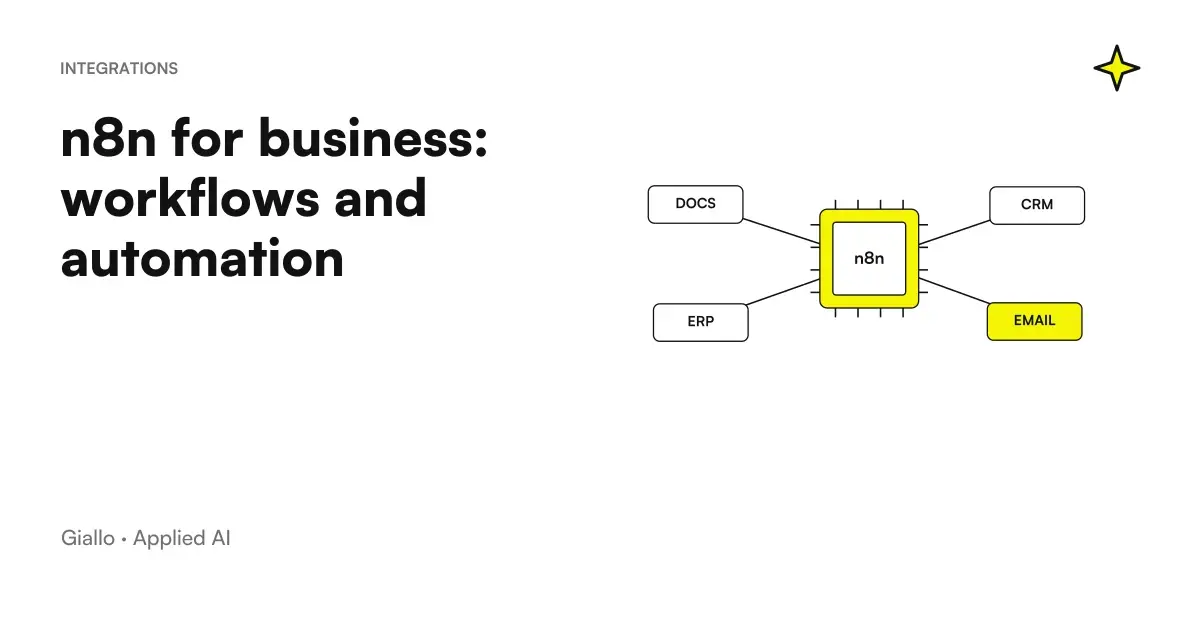
In the automations with n8n the point is to prevent each node or event from generating independent calls without a view of the overall load. Even with a visual builder you need to know where the job is born, how it is queued and who can stop it. Simplicity is achieved by limiting paths, not omitting error states.
Can a distributor import the catalog without blocking the commercial?
Hypothetical scenario. A distributor updates descriptions and attributes of a product catalog, while commercials use an assistant to read reseller requests. The two streams share the same API organization. If the import starts all processing at the same time, it can consume the capacity the interactive assistant needs even when the budget of the month is widely available.
The project can separate queues and reserve a priority to the demands of the operators. The catalog is processed in controlled batches, with stop and resume from a saved location. Each already completed article is recognized, so an interruption does not require you to repeat the entire archive. The company measures queue delay, useful outcomes, and number of attempts, rather than just looking at how many calls have left.
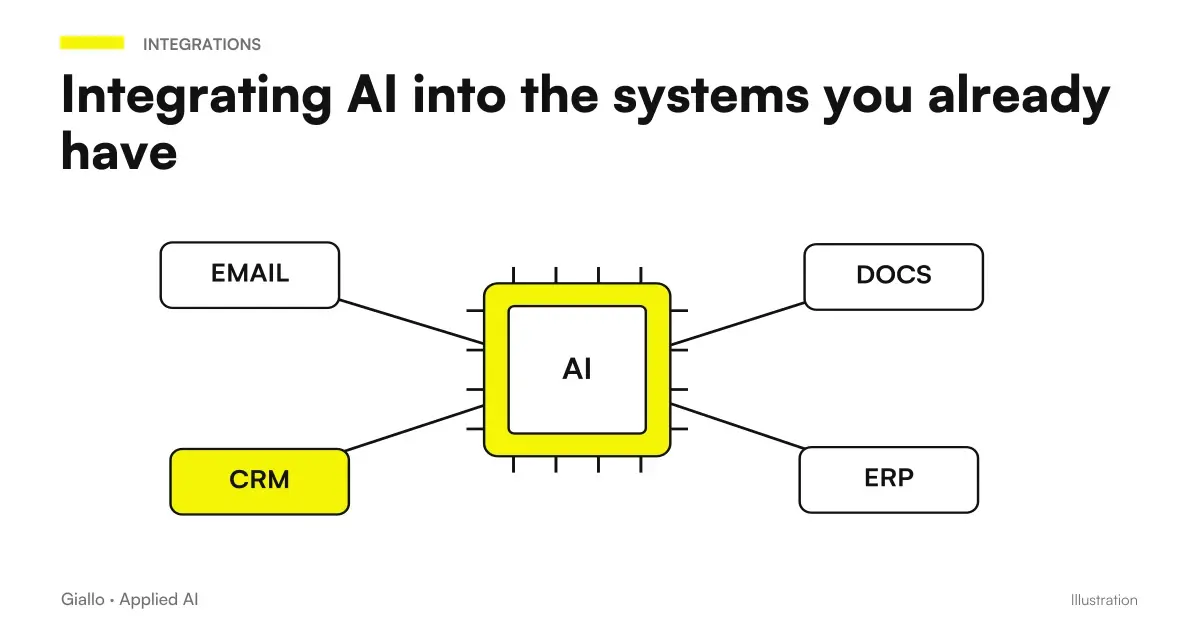
A correct choice can also reduce the work required to the model. Attributes already present in the management software must not be rediscovered from the text; identical descriptions do not require a new processing if the result is still valid. Load control starts from the process and the Integration with existing systems, before evaluating a higher level.
Can a study handle attachments that have all come together?
Second hypothetical scenario. A professional firm receives a group of documents close to a deadline. Automation prepares a card for each practice and reports missing attachments. The priority is not to complete any document as quickly as possible: it is to deliver to the operators a clear work order and not to lose the requests that the service fails to process immediately.
The pilot can assign the statuses received, queued, processed and requiring verification. Unreadable attachments go to a person, while temporary blocks remain pending. The case deadline belongs to the business management software and is not freely inferred by the model. Operators can organise work without mistaking an incomplete draft for completed verification.
The load test uses documents of different sizes and a distribution similar to that expected. The results are hypothetical until the test is performed: it is not enough to state that the tier is suitable. For the economic part there is gross consumption, any facilitations and residual work. The Claude Monthly Credits, when relevant in a comparison, they remain a distinct benefit from the capacity of OpenAI limits.
What interventions make sense before changing the level?
The first correction is to eliminate duplicate calls and steps that request more content than necessary. The second is to distinguish immediate and deferrable work. The third is to adapt the queue’s pace to verified capacity. Only after these checks can the team determine whether the limit is a real constraint or a symptom of a procedure sending work without coordination.
The choice of the endpoint also matters. For decisions between fixed alternatives, the API Decisions has a different contract than an open conversation. It should not be adopted just to chase a price: first we need to verify that the task is compatible and that the categories are reliable. A less suitable endpoint can generate more corrections and nullify an eventual economic advantage.
The Sonnet Caching Prompt Instead, it addresses the reuse of context in another service. It is a useful reminder: reduction of the invoice, reduction of the latency and increase of the capacity are not synonymous. Each optimization must be measured on the item that really changes, without automatically transferring the benefits from one supplier to another.
How to simulate a peak in a controlled way?
Before production, a set of representative requests is prepared and what behavior to observe is decided. The test is not used to consume the full capacity of the account. It can use a more cautious internal limit to verify queues, waits and messages to operators. The test was successful when each practice retains a consistent state and can be resumed without duplicating the work already done.
It then simulates a link interruption and an application error following the model response. They are different conditions: in the first case the request may not have arrived, in the second the model may have responded but the CRM did not save the outcome. The procedure must recognize where it stopped and decide whether to try again, ask for review or keep the practice blocked.
The manager reads waiting times and causes of failure, not just the average time of the single call. A quick process in simple cases can leave the most difficult practices in the queue. Testing must therefore include a completion criterion for each state and a way to identify jobs that have remained stationary too long, according to the needs of the company.
If Automation Stops: Verification Order
Read the details of the error and check the organization involved. Compare the model and mode with the actual limits of the dashboard. Check for spikes, repeated attempts, and duplicate jobs. Then check out available budgets and credits. Resume only when the cause is clear and the queue can advance without recreating tasks already completed.
What inventory does it take to figure out who consumes the capacity?
Before assigning a peak to the model, it is advisable to census the integrations that share the same organization. An old test, a planned import, and an assistant used by the commercial can generate traffic at the same time. Each stream should have an owner, a description of the task and a way to be suspended. An updated list avoids increasing capacity while a forgotten process keeps repeating unnecessary work.
The inventory must also indicate dependencies: where the request enters, which system retains the result and who receives a warning when the flow stops. No credentials are needed in the document. Instead, we need references to those responsible and a restart procedure. The value lies in being able to quickly recognize the component involved, even when the person who built the pilot is not available.
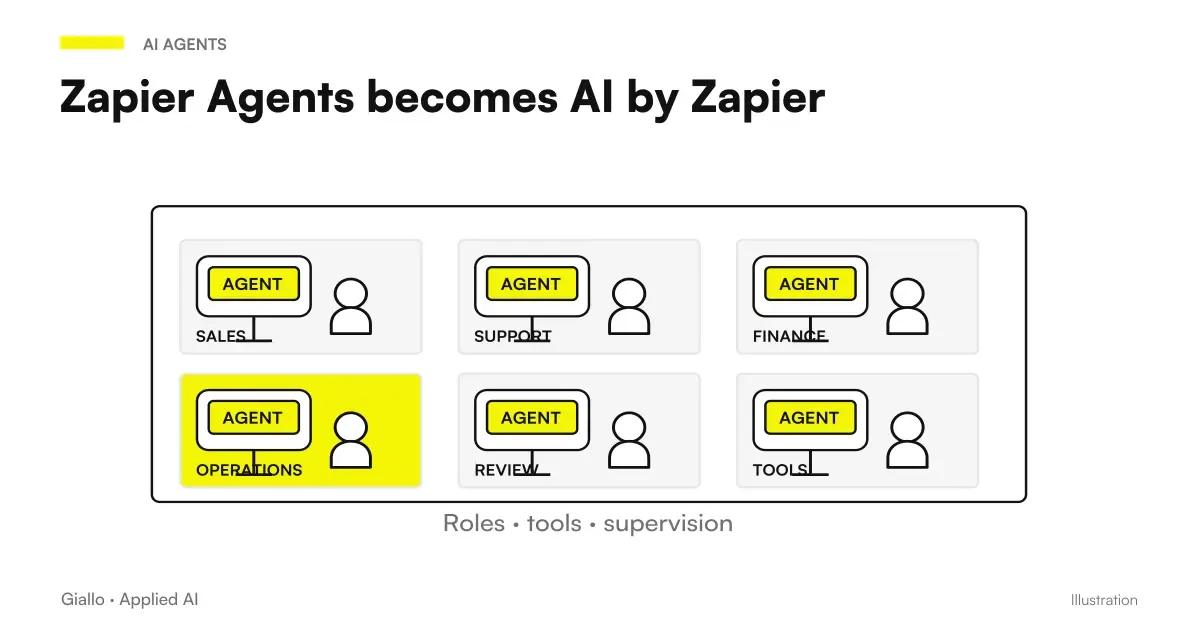
For those who combine multiple platforms, the Zapier Agents and AI migration by Zapier remember that product changes and model capacity are distinct verifications. An automation can continue to correctly call the API and still have an application step to update. In the process log it is therefore better to write down both dependencies, so that the upgrade of a platform is not mistaken for a rate limit problem.
How to decide the operating budget after migration?
The internal budget should reflect useful requests and unexpected tolerance, not the maximum rated tier. We need a manager who can read the notices and can suspend a specific process. A manual mode is also needed when automation is unavailable: the customer must be able to receive assistance while the team solves the technical problem. This continuity is not acquired by changing the band.
Italy is among the API countries supported by OpenAI; Availability and limits of the individual account should be verified in the dashboard. Migration is the right time to make queues, consumption and responsibilities readable. If a procedure becomes blocked in the peaks, an intervention of automation of business processes It can start with the error sequence and the work that is left on hold.
Giallo Studio guides: methodology and sources
How we apply it in the company
Related resources
 OpenAI Decisions API in beta: classify tickets and requests with controllable answers
 Claude Max and Team monthly API credits: amounts, caps and permitted uses
 Sonnet 5.5 halves cache read cost: how much the API bill changes
 AI APIs: what they are and how they work
 n8n explained: how it works and how to use it in business
 Integrating AI into the systems you already have
 Zapier Agents becomes AI by Zapier: migration, approvals and sources still missing
 OpenAI Dots: ChatGPT's always-active agents explained
FAQ
Are Build, Launch and Grow subscriptions?
These are API usage levels with dedicated conditions and limits. They should not be confused with a monthly fee or ChatGPT plans.
Does migration require new integration?
The announced update includes automatic tier migration. However, you must read the actual account limits and verify the behavior of the automations.
Is the monthly limit equal to the invoice?
No. It indicates the usage capacity provided by the tier, while actual spending depends on the calls made and services consumed.
Does a 429 error always mean credit ran out?
No. You have to read the detail of the error and compare it with the applicable limits. Peaks of requests and tokens are problems distinct from the budget.
Does upgrading to a higher tier resolve every block?
No. Queues, repeated attempts and poorly designed workflows can cause problems even when more capacity is available.
Where do you read the valid limits for your company?
In the organization dashboard, along with official documentation. Accounts, model and actual usage must be verified.