
Claude Max and Team monthly API credits: amounts, caps and permitted uses
Claude Max and Team API credits fund small pilots. Check eligibility, deadlines, the Console and costs to measure before starting.
Reading time: 11 min
Claude Max and Team API credits are a monthly budget included to experience integrations, distinct from using Claude in chat. Anthropic announced the news on October 7, 2026, with progressive distribution in the following days: the presence of the plan does not prove that the credit is already visible in each account. The date and rollout are reported in the Claude's official notes.
For an SME the advantage is concrete when there is a circumscribed activity to be verified: classifying requests, preparing drafts from documents or extracting fields from attachments. Credit can absorb some of the cost of the model during the pilot. It does not automatically pay for integration, maintenance, control of responses or people's time. The useful question is therefore what result to measure before the pilot becomes a stable service.
In summary
- API credits are separated from messages available in the Claude app.
- The program covers Max and Team eligible, with an overall cap for Team.
- Unused monthly credit is not carried over.
- You need to connect a Console organization with the correct roles.
- A pilot must also measure the cost without promotion and verified quality.
How much credit do Max and Team receive?
Documentation assigns 100 USD per month to Max 5x and 200 USD to Max 20x. For Team are provided 20 USD per Standard seat and 100 USD per Premium seat, with a maximum overall pool of 500 USD monthly. Free, Pro and Enterprise are excluded from this specific benefit. Amounts and recipients should be double-checked on Subscriber Credit Page, because conditions and plans can change.
Team roofing is important for those who rate multiple positions. Credit belongs to an organizational logic, not to a potentially unlimited sum for each collaborator. Before you attribute it to a project you need to figure out who administers the Console, what other processes consume the same pool, and who receives the alerts. Without this view, two departments can count on the same credit and find out too late that the available budget was shared.
It is advisable to keep three lines of the internal estimate separate: plan fee, gross API consumption and credit actually applied. The comparison between plans remains a different problem, dealt with in the guide to prices and models Claude. Buying a plan only because it includes credit only makes sense if the plan is also useful to the people who will use it.
Which uses are covered and which are left out?
The credit covers the first-party uses indicated by Anthropic, including API, Managed Agents, Agent SDK and API Playground. It should not be confused with the Claude app, with interactive Claude Code or with consumption on third-party providers. The distinction, along with the need to connect a Console organization, is described in official documentation of the program.
| Expected activity | Check before starting the pilot | Voice to be separated |
|---|---|---|
| Integration using first-party API | Connected Console Organization and Active Benefit | Model consumption |
| Application built with Agent SDK | Authentication modes and services actually used | Execution and infrastructure |
| Interactive use of chat | Rules of your subscription | App Fees and Limits |
| Model via external provider | Contract and billing of that provider | External expenditure on credit |
| Multiple automations in the same Team | Pool owner and attribution by project | Breakdown of credit |
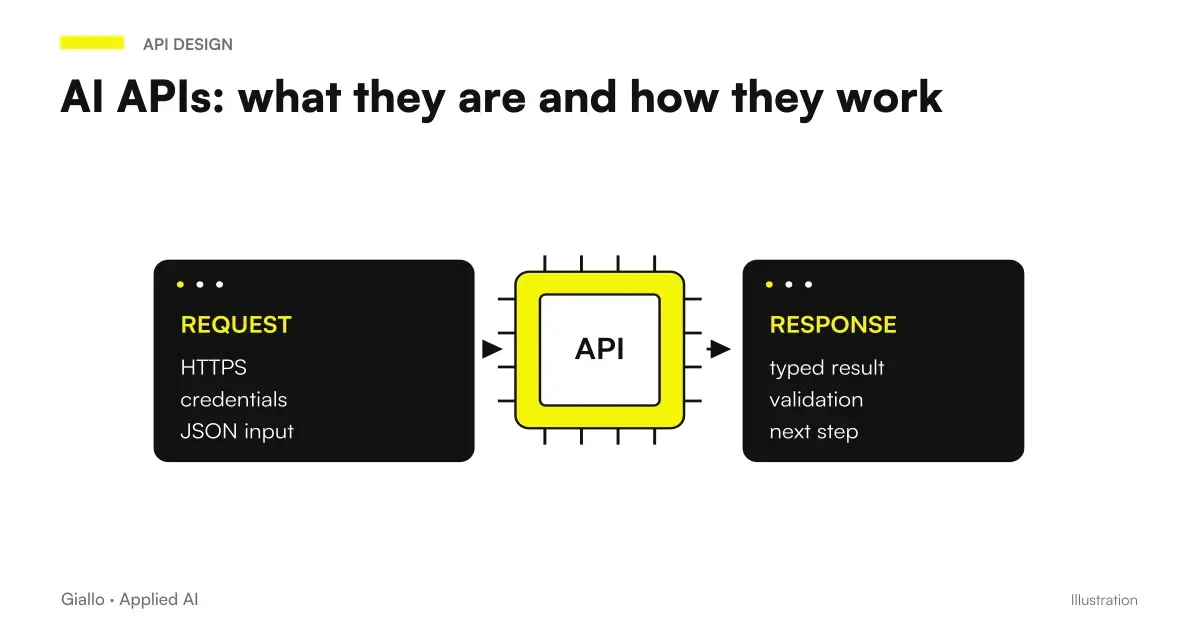
An API key and login access to the plan may have different rules. The word SDK identifies tools to develop, not a guarantee that any access mode consumes this benefit. To orientate between application, model and calls it is advisable to start from What are AI APIs, then reconstruct the real path of the request in your project.
How to connect the Console without losing control of consumption?
The first operational step is to identify the Console organization that belongs to the company. Using a personal organization for a shared procedure creates a continuity problem: who sees consumption, who can revoke a key, and what happens when the collaborator changes roles? The configuration should be entrusted to those who have the required permissions, preventing the pilot from being born around credentials passed informally in chat.
Before linking, note the name of the organization, administrator, project recipient and economic manager. After linking, verify that the benefit appears where expected and that a small test request is correctly attributed. This is a proposed procedure, not a product test performed by Giallo. In the absence of visible credit, the team must know whether to stop or continue with an already approved ordinary budget.
The choice of the organization also deserves attention because a subsequent change may require Anthropic support, as indicated in the Credit Guide. It is better to decide first on the technical property, instead of treating the link as an administrative detail to be corrected after the release.
Does the apparent free month hide a full-run cost?
The gross cost of the process should also be measured when the invoice is offset by credit. If an automation uses many repeated instructions, a low net amount could depend on the benefit or good context management. The two have different implications. In the first case sustainability depends on the plan; in the second the process could maintain a lower cost even without credit.
In the pilot's log it is better to save completed requests, failed requests, additional attempts, worn-out tokens and human interventions. It is not enough to divide the invoice for all the requests sent: an unusable answer is a cost with no result. A more useful measure is the gross cost per practice accepted by the manager, accompanied by the time needed to control it. The credit applied appears separately, so it does not alter the judgment on the trial.
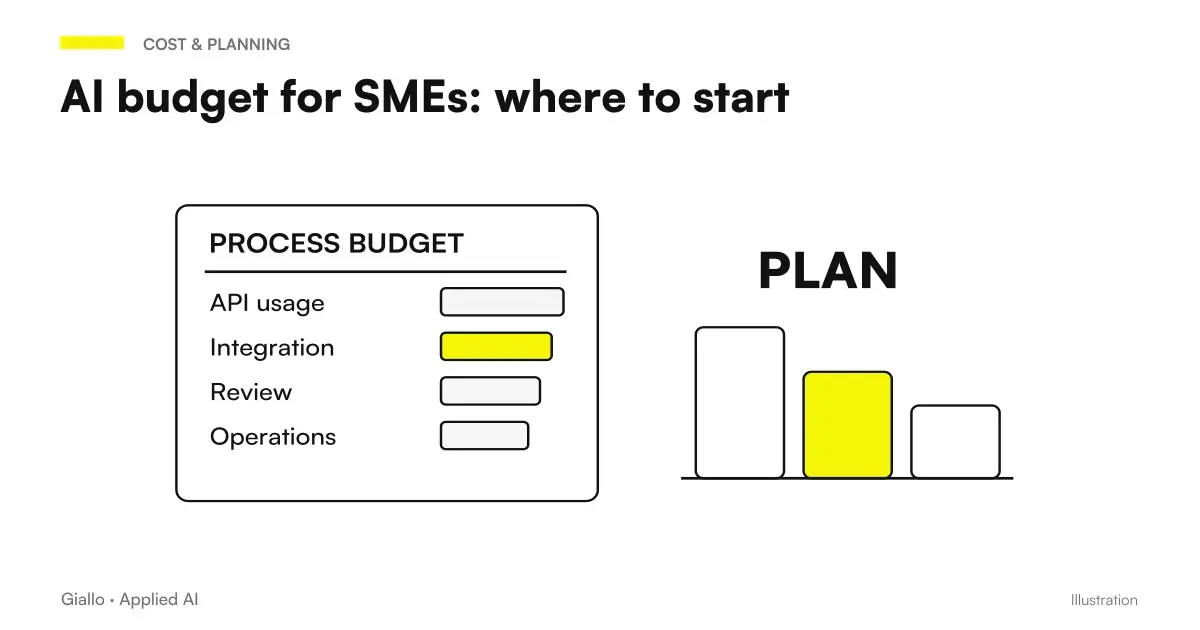
An entirely hypothetical example: a pilot consumes 60 USD of API and produces 300 accepted drafts. The gross model cost per draft is 0.20 USD; any credit may reset that invoice item, but does not change the technical report. They are illustrative numbers, not promised prices or observed results. The full picture also requires the other entries of a AI budget for SMEs.
Can an Italian distribution use it for retailers' requests?
Hypothetical scenario. A component distributor receives requests with incomplete descriptions and article codes written in different ways. The pilot could only propose category, missing information and draft response for the operator. No orders are created and no emails are sent automatically. Credit funds the calls needed to understand whether the classification is useful enough to merit integration with management software.
The sample should also contain out-of-print items, unreadable attachments and requests that mix assistance and new purchase. The operator records why it corrects a proposal: incorrect code, missing data, unsuitable tone or unauthorized commercial interpretation. These causes orient the next work more than a single grade to quality. An error on the codes may require a search in the catalog, not a more expensive model.
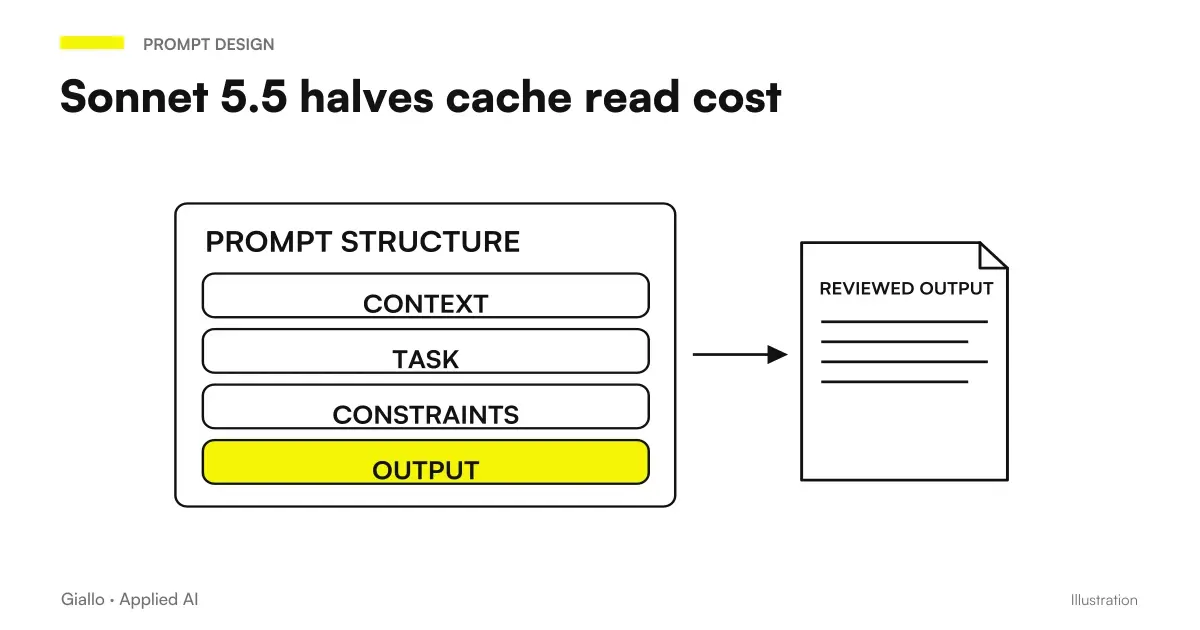
For this case the repetition of instructions and catalog makes relevant the novelty on the cost of Sonnet cache. Savings, however, should be measured on the tokens actually reused. If the catalog is rewritten at each request, the credit can hide an inefficient process that will remain expensive after the pilot.
Can a professional firm start from the documents received?
Second hypothetical scenario. A technical practice wants to turn received attachments into a preliminary case record. The assistant extracts the property address, the subject of the engagement and the documents cited, always indicating where it obtained the information. Unreadable data becomes fields to verify. The practice retains responsibility for checking and does not use the draft as confirmation of administrative completeness.
Before the test, minimized copies of the documents are prepared and it is decided what data can enter the service. The person in charge compares the proposal sheet and source, distinguishing omissions from fabricated information. The useful measure may be the proportion of correct fields on the labelled sample, accompanied by the number of corrections needed. Any numerical objectives must be chosen by the study on the basis of risk, not derived from the value of the credit.
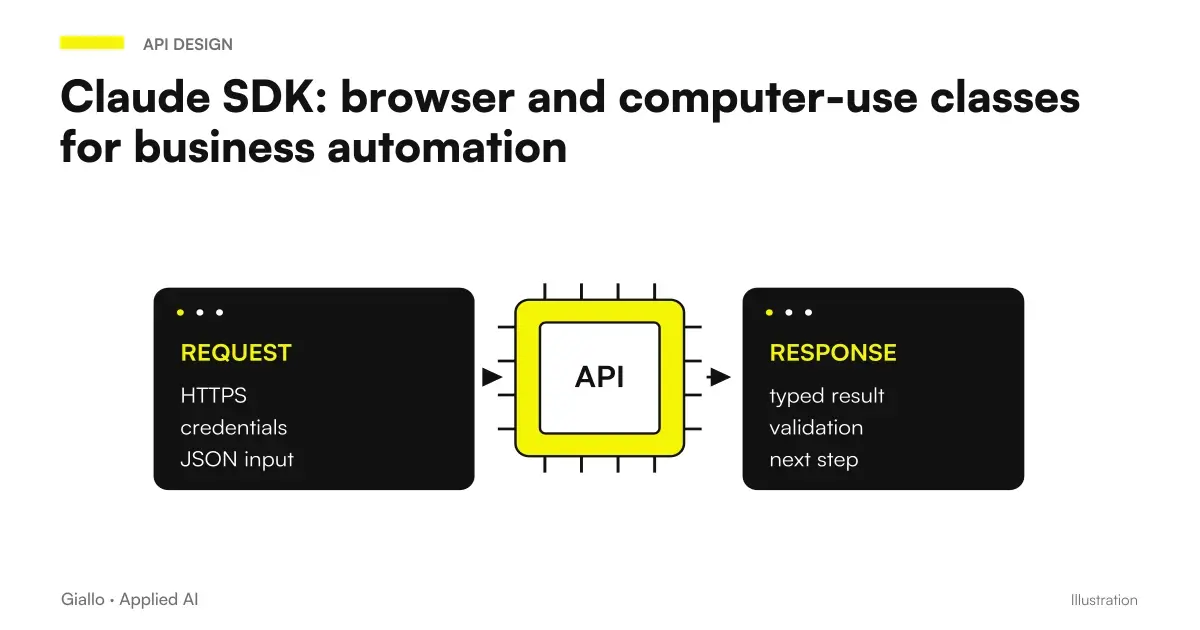
If the work requires interacting with a portal without API, the design changes. The new classes of the Claude SDK for browsers and computers use can help developers, but environment, credentials, approvals and controls remain to be built. An economic benefit does not make it safe to automatically send a practice.
What mistakes consume credit without producing learning?
The first mistake is to start multiple indistinct experiments in the same pool. In the end, there remains a consumption total without knowing what activity created value. Better attribute requests to a project and retain a description of the task. The second is to enlarge the inputs before verifying the process: unnecessarily long documents increase cost and revision work without ensuring better answers.
A third mistake is to plan consumption according to the deadline. The monthly credit is not reported according to the Official Guide, but consuming it in activities without an acceptance criterion does not recover value. It can actually generate more drafts to control than the team can handle. Human review capability is an operational limit to be considered along with the budget.
Finally, you must not automatically add together different programmes. The expansion of Claude Startups has its own recipients and deadlines. Whether it can be combined with this monthly credit has not been verified in the documentation used for the article. The financial plan must therefore treat the two benefits separately until the terms of the account clarify this point.
Before starting the first request: check the manager
Identify the correct Console organization and project owner. It verifies the benefit actually available, the service covered, and the expected behavior when the credit runs out. Prepare a sample with expected answers, a record of gross consumption and a person authorized to stop the pilot. If these elements are missing, credit is available but the experiment is not yet ready.
How to prevent a trial from becoming an open expense?
Economic control must exist even when credit seems sufficient. Before opening the integration to users, the team defines what operations can generate calls and how repeats are recognized. An attachment loaded twice should not automatically become two independent elaborations, if the previous result is still valid. Similarly, a temporary error must not trigger a chain of attempts without an explicit limit.
Notifications must reach a person who can act. An alert received from an unattended box records the problem, but does not contain it. The procedure should include a reduced mode: when the available budget or the number of errors exceeds the threshold chosen by the company, the system retains the requests and switches to manual flow. The operator sees that the practice is on hold and does not confuse the silence of automation with a confirmation of completion.
Another choice concerns the allocation of costs. If business and administration share the organization, each request should have a reference to the process, without entering personal data in project names or log labels. This allows to read the consumption by activity and to interrupt only the problematic pilot. Internal identifiers and document categories are often sufficient for evaluation, while complete content can remain in the system that already manages it.
Before expanding the service, also check a case of simulated budget exhaustion. Control can be conducted with an internal test threshold, without intentionally consuming credit. The goal is to see if automation stops neatly, if operators receive clear instructions, and if a request can restart without duplicating actions. These tests do not prove the quality of the model, but make the pilot economically controllable.
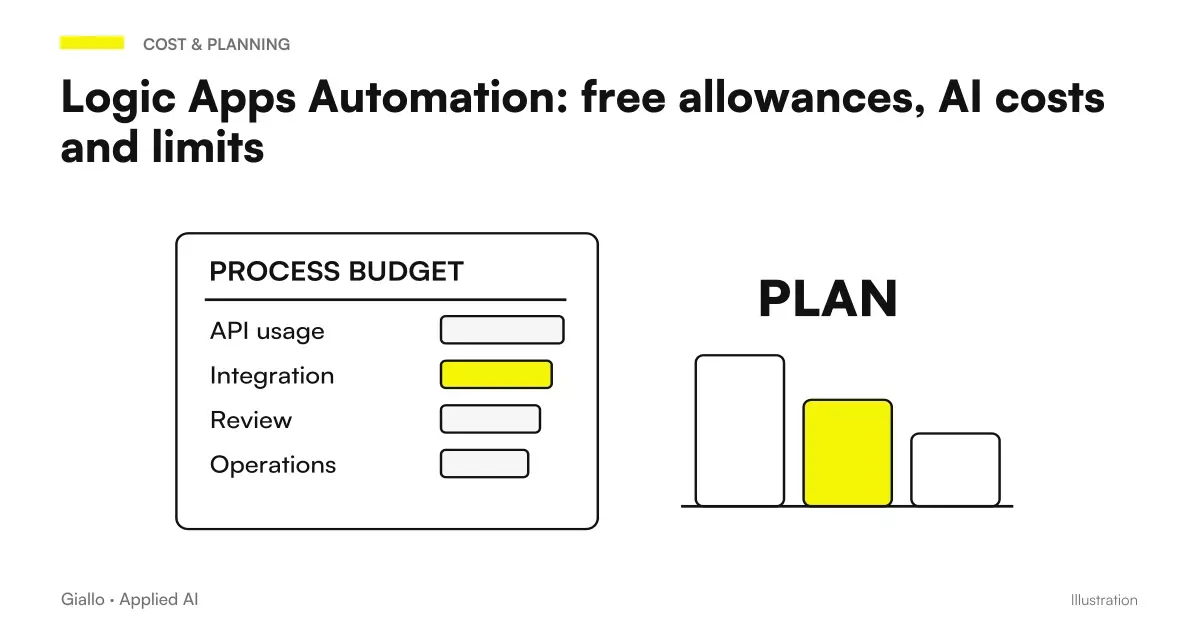
The same criterion helps to read the free quotes and the costs of Logic Apps Automation: an initial benefit should be separated from the cost of the full process. The useful comparison covers successful requests, integration and handling of exceptions, not just the credit highlighted by the provider.
What decision to make at the end of the pilot?
The closure should produce a legible choice: continue on the same perimeter, correct the process or stop it. Accepted and rejected examples, gross consumption by result, and residual human labor are needed to decide. A quick but frequently incorrect response may have an overall cost higher than a well-organized manual procedure. On the contrary, a draft that really helps the operator can be useful even without full autonomy.
Italy is among the Countries supported by Anthropic; this does not verify the activation of the benefit on the individual account. Commercial availability should be checked in your Console, while the decision on the project should be made on the results of the sample. To turn credit into an experiment with a metric and a full-run cost, work on AI agents can start from only one verifiable activity.
Giallo Studio guides: methodology and sources
How we apply it in the company
Related resources
 Claude Startups expands: a year of Team and API credits, requirements and deadlines
 Sonnet 5.5 halves cache read cost: how much the API bill changes
 Claude SDK browser and computer use classes: automating business software
 Claude model pricing: API rates and the cost of getting work done
 AI APIs: what they are and how they work
 AI budget for SMEs: where to start
 Logic Apps Automation: free quotas, AI costs and limits to check
 Claude Code Notifications: local hooks and permissions
FAQ
Are API credits also included in Claude Pro?
The novelty concerns the Max and Team plans that are eligible. Free, Pro and Enterprise do not fall within the program described in the documentation.
Does credit reduce subscription fees?
No. It is a balance available for permitted API usage, separate from the subscription price and usage within the app.
Does unused credit roll over to the next month?
No, the monthly credit does not roll over. It is better to plan a useful pilot without generating traffic just to consume it.
Can you use credits on third-party providers?
The program covers the first-party services indicated by Anthropic. An integration on a third-party provider requires a separate verification of the related conditions.
Does Team accumulate credit without a cap?
No, there is an overall limit on the organisation’s pool. You must not multiply the number of seats while ignoring that limit.
Is a subscription enough to put an agent into production?
No. You need a connected Console, appropriate access, usage monitoring, and a procedure for errors. Credit covers a cost item, rather than the design work.