
Claude Startups expands: a year of Team and API credits, requirements and deadlines
Claude Startups expands Team and API credits for eligible businesses. Requirements, deadlines and ongoing costs for a sustainable MVP.
Reading time: 11 min
Claude Startups expands benefits for eligible startups, but does not make Claude free for any business. The expansion announced on 6 October 2026 provides one year of Team up to five Premium seats for companies new to Team and 1,000 USD one-time API credits. Duration and amounts are shown in the official announcement of the program.
The value for an Italian startup is to be able to verify an MVP with a part of the initial costs covered. The risk is to build the economic model on a temporary promotion. A sustainable product must work even when credit ends: you need to know consumption by useful activity, the cost of human control and service behavior when traffic increases.
In summary
- The program requires application, requirements, and approval.
- Teams and API credits are distinct benefits, with deadlines to read separately.
- Additional benefits through partner investors are not automatically up to everyone.
- Credit does not pay for the development, integration and maintenance of the MVP.
- The economic assessment must show the gross cost without promotion.
Which startups can apply?
The Claude Startups page indicates startups founded in the last five years or funded in the last two years, including bootstrapped and pre-seeded nominations. These conditions do not amount to automatic approval. The official page remains the reference for actual suitability and for any changes in requirements.
The application needs a Console, an email address on the site domain and the information requested by the program. There is no explicit Italian exclusion in the sources consulted, but the support of the individual project depends on the policies and approval. A startup should therefore avoid promising members or customers an unallocated benefit. In the cash plan, application and available credit were different.
The preparation of the application can be an opportunity to clarify who owns account, domain and technical organization. If the MVP lives within a personal account of the founder, the promotion does not solve the continuity problem. Before linking services and data it is advisable to define administrators, economic manager and project recipient of consumption.
What does the offer include and where are the limits?
First-party API credits expire six months after assignment. The ability to receive up to 100,000 USD additional instead passes from partner investors and does not apply indiscriminately for all applications. Deadline and distinction between routes are reported on the program page. One should not confuse the theoretical maxim with the approved credit for one's startup.
| Benefit or condition | How to read it | What Not to Presume |
|---|---|---|
| Team Promotion | Access for new and eligible companies | Free for every business already a customer |
| Initial API Credit | Budget assigned with a deadline | Permanent Availability |
| Partner Investor Path | Additional benefit with own requirements | Maximum guaranteed amount |
| Partner offers | Conditions to be assessed individually | Money available to pay for development |
| First-party API | Program-specific perimeter | Automatic coverage of third-party providers |
The announcement also cites partner offers up to 45,000 USD of maximum value at list prices: they are neither cash nor an amount that can necessarily be accumulated, as must be read together with the announcement and all contract addendum. Only relevant, approved and truly usable benefits enter the operational budget.
Why do Team duration and API expiration require two calendars?
People can continue to use the plan while the API credit follows a different window. If the team plans development, testing and launch as a single indistinct phase, it can get to production when some of the benefit has already expired. The calendar should show assignment, pilot start, result verification and decision on continuation with ordinary billing.
The deadline must not push to consume unnecessary traffic. It is preferable to complete a small experiment with a clear result than to build more functions without a shared measure. Credit has value when it reduces the cost of learning: knowing whether documents are interpreted correctly, whether the user accepts the proposal or whether integration really eliminates a manual step.
The team should also write down when they expect to be able to evaluate the product with real users. An MVP blocked by data accesses, permissions, or external dependencies may not be ready in the useful period. The application for the program must be linked to a workable plan, without making the entire development sequence depend on the time of approval of the promotion.
Which MVP is worth financing with credit?
A good MVP has an identifiable user, an available input and a verifiable result. "An AI platform for SMEs" is too broad; "a draft data sheet drawn from a file, with a link to the sources" allows a sample and an acceptance criterion to be defined. The initial product should isolate the passage that represents the greatest risk, not reproduce all the functions imagined for the final version.
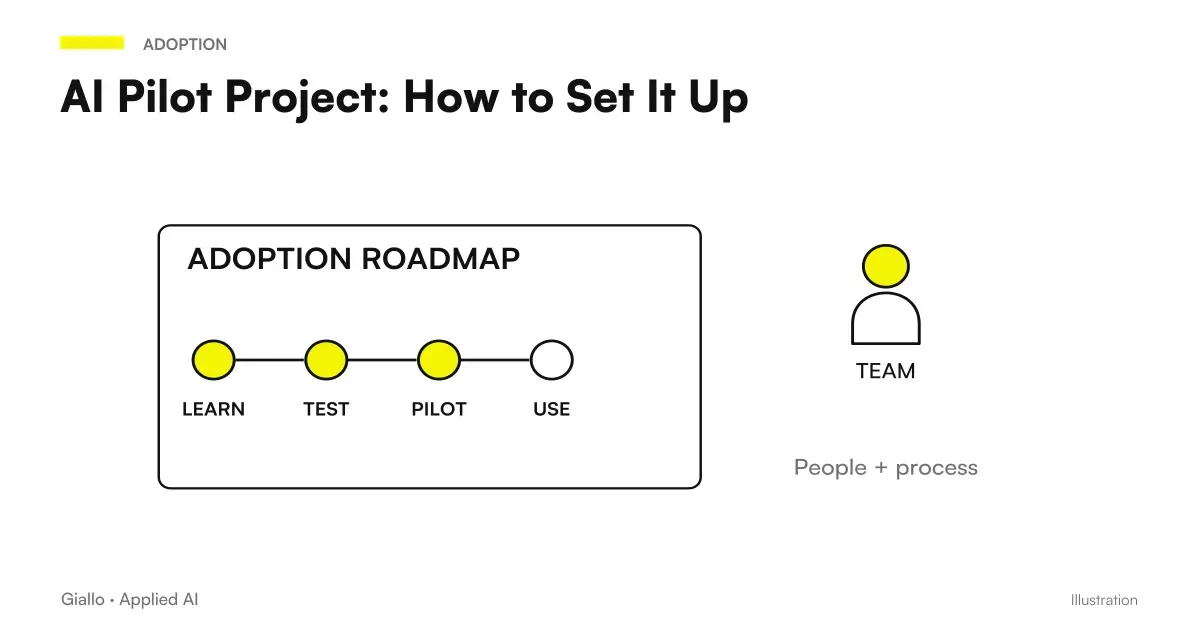
Before writing complex integrations it is better to describe the manual flow. Who receives the document? What field do you copy? Where does he control error? What outcome do you accept? The answer allows you to understand whether the model really solves a problem or adds a new interface to a process that remains identical. The AI Pilot Project serves to verify this difference before expanding the product.
The MVP must also predict a negative outcome. If the document is not readable, if information is missing, or if the task is not within the perimeter, the system returns a verification request. A demonstration that only works on clean inputs can convince during a presentation and fail when the first users upload real material.
Can a B2B startup prove it on the specifications?
Hypothetical scenario. An Italian startup prepares a tool for suppliers who have to read specifications and identify commercial requirements. The first product extracts requests for documentation, delivery conditions and points to be deepened. Each item reports the reference to the document, while the decision to participate remains with the commercial manager. No offers are sent automatically.
The sample includes brief documents, technical annexes and specifications with inconsistent formulations. The team evaluates omissions and information added without source, distinguishing them from a simple layout problem. The economic result also depends on the control time: a seemingly complete but difficult to verify card can cost more work than reading the document directly.
Common instructions and repeated context make it useful to measure the Sonnet caching prompt. Reuse, however, must be observed in the real process, without assuming that each request gets the benefit. For the product, the central data remains the gross cost per file accepted, to which to add storage, interface and assistance to users.
Can a startup in commerce prepare product cards?
Second hypothetical scenario. A team builds a service that turns supplier cards into drafts for a small e-commerce. The MVP proposes title, features and missing fields, separating the data present from the editorial formulations. The operator shall verify measures, materials and compatibility prior to publication. The model does not invent details to fill an incomplete card.
The pilot must contain similar products, ambiguous acronyms and multilingual descriptions. A test with very different articles may seem convincing, but it does not show whether the system distinguishes almost identical variants. The team records which fixes are repetitive and which require product knowledge. This helps decide whether rules, catalog search, or a stable human passage are needed.
If loading takes place in a panel without API, the Claude SDK for browser use concerns a further problem: environment, credentials and confirmation of actions. It is often more useful to validate the drafts first and only then to automate the insertion. Credit does not require you to build the entire chain immediately until publication.
How to calculate the cost after promotion?
The register separates gross model consumption, applied credit and other expenses. At each test, input, accepted outcome, number of attempts, and residual human work are noted. The unit of measurement must reflect the product: verified file, approved card or managed request. The single call is useful for technical analysis, but does not always match the value the customer buys.
An entirely hypothetical example: processing a card requires an initial call and, in some cases, a correction. The budget cannot use only the cost of the first call if the second step is frequent. It is necessary to observe the entire route and read separately the cases that are abandoned. All these numbers should be measured in the pilot, without turning initial estimates into commercial results.
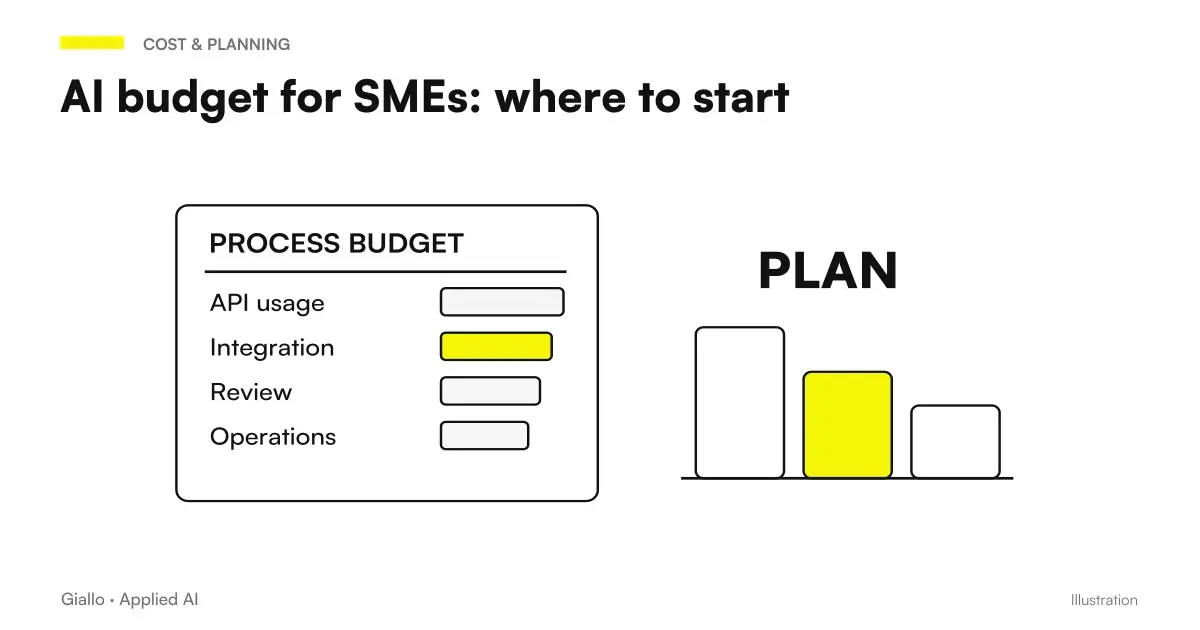
The AI budget for SMEs must also include interface, integration, monitoring and assistance. A promotion may make the cost of the model low during development, but it does not prove that the future sale price is sufficient. The cost at full capacity must be discussed before promising volumes or conditions to users.
What changes from Max and Team monthly credits?
The Startups Program and the Max and Team monthly API credits have different logics: the first concerns an application with promotional benefits, the second an advantage associated with eligible plans. They should not be added automatically. In the sources used for this article the cumulation has not been verified, so a prudent plan keeps them distinct until the applicable conditions are clarified.
The same caution applies to the provider. Using Claude through another platform does not mean that consumption falls within the assigned credit. The Startups page describes the first-party perimeter: Bedrock and Vertex are not to be considered covered by this promotion. The choice of technical path must also be made on the basis of contract, data and integrations, not just the availability of the benefit.
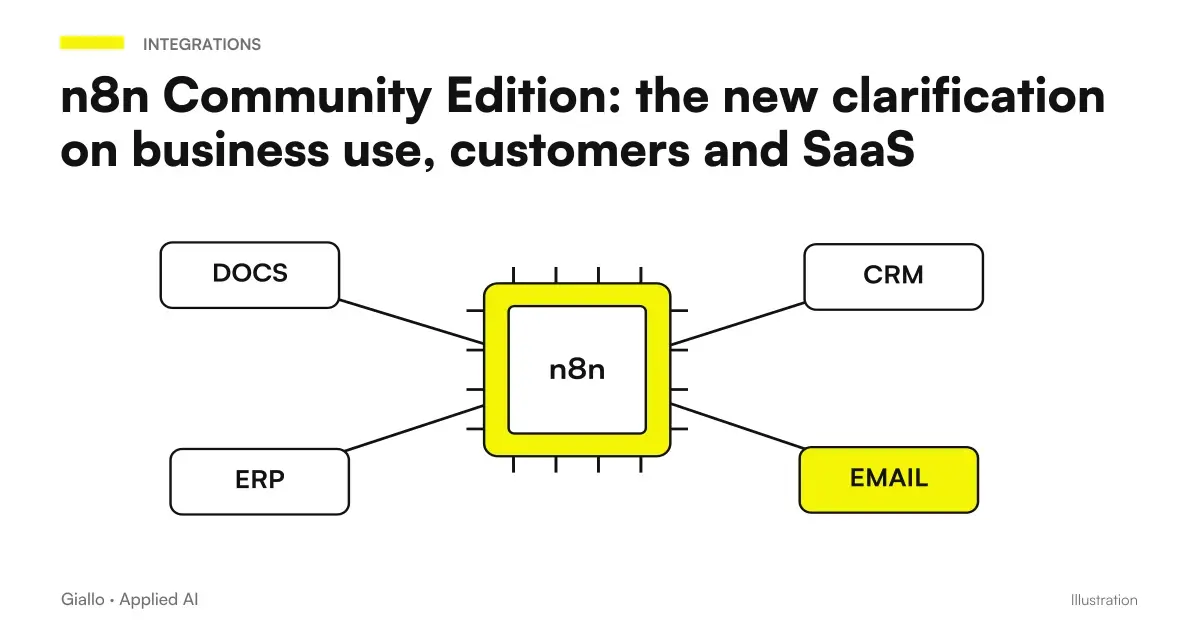
Another comparison concerns the platforms used around the model. The n8n Community Edition license for business use requires a separate valuation from that of the tokens. An MVP can use multiple components, each with its own conditions. The manager must know what rights are necessary for the service model he intends to offer.
What mistakes to highlight before applying?
The first mistake is to consider the advertised maximum as a certain budget. The second is to start the usage window when data, users, or indispensable accesses are still missing. The third is measuring only compensated consumption and ignoring gross cost. The fourth is to build a product that requires a human review not expected in the price or operational capacity of the team.
A less visible error is using the same technical organization for personal experiments and business MVPs. It becomes difficult to attribute spending, manage roles, and rebuild what has been approved. The project should have a clear responsibility and a register of technical decisions. Promotion facilitates startup, but ownership of assets must be readable even when it ends.
Before sending the question: items to have ready
Describe user, activity, and result of MVP. Verify Domain, Console, and Administrators. Prepare a usable sample and the criterion by which it will be evaluated. It separates certain benefits, required benefits, and assumptions. Add a creditless continuation plan, with a stop mode if the results or costs are not adequate.
What elements must remain transferable after the benefit?
An MVP becomes more solid when instructions, assessment sample, and application rules don't just live inside a development session. The team should keep them with a readable version and know which configuration produced a result. It does not mean immediately building a complex system to change the model at all times. It means being able to understand and modify the component that generates responses without losing knowledge of the process.
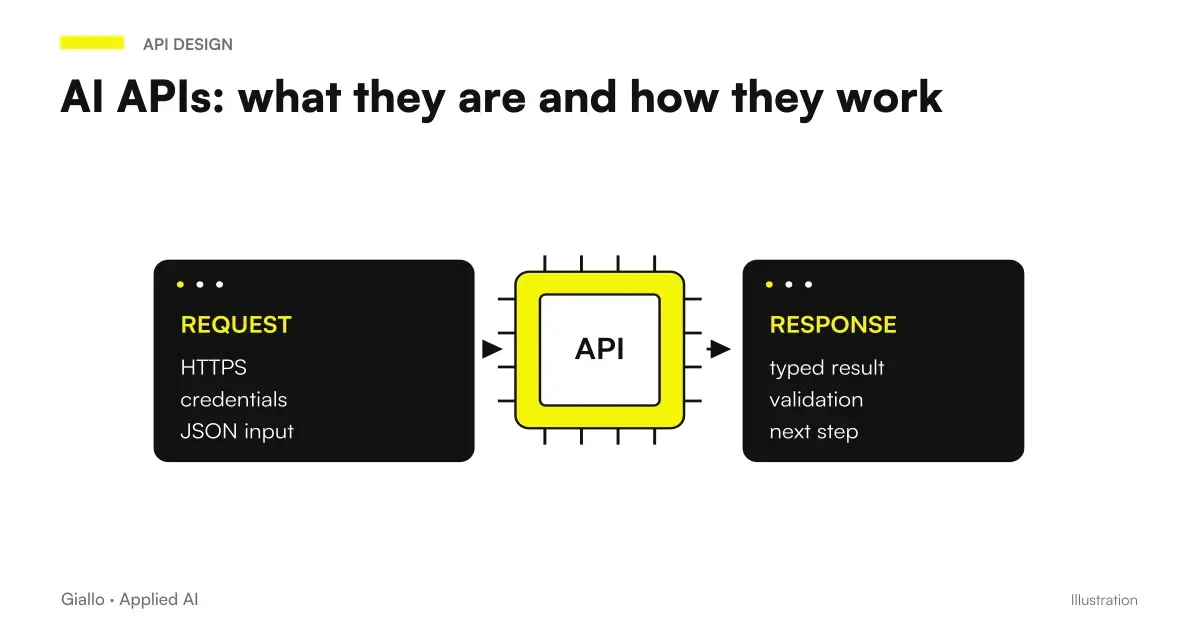
The Guide to AI API helps distinguish this integration from personal use of chat. The application must handle authentication, errors, data, and saving outcomes. If a founder manually performs steps that the product does not yet know how to perform, these steps must be stated in the cost and perimeter of the pilot. An assisted demonstration can be useful, as long as it is not evaluated as an already autonomous service.
Finally, it is advisable to separate the test sample from the production data and clarify who can access each. The approval of a commercial benefit does not automatically authorize the processing of any document. The project chooses the necessary inputs, limits what it retains, and prepares a procedure to correct or withdraw a result. These choices remain useful even if the startup changes plan, provider or interface after the promotion.
How to get to the launch with a sustainable decision?
The team should close the pilot with a short document: verified problem, examples of result, observed limits and cost without promotion. Additional functions enter the next stage only if they are used in the demonstrated use case. This reduces the risk of consuming credit for a broad platform before you know which part users really find useful.
Claude Startups is therefore an opportunity to reduce the cost of a well-defined experiment. However, the MVP must have responsibilities, criteria and an economic perspective independent of the benefit. To translate the use case into a product with clear boundaries, the work on custom software can start from the stream to be validated and the cost of its ordinary version.
Giallo Studio guides: methodology and sources
How we apply it in the company
Related resources
 Claude Max and Team monthly API credits: amounts, caps and permitted uses
 Sonnet 5.5 halves cache read cost: how much the API bill changes
 Claude SDK browser and computer use classes: automating business software
 AI Pilot Project: How to Set It Up
 AI budget for SMEs: where to start
 AI APIs: what they are and how they work
 n8n Community Edition: the new clarification on business use, customers and SaaS
 Claude Code hooks for subagents and teams
FAQ
Is Claude Startups also open to bootstrapped businesses?
The programme page also accepts applications from bootstrapped and pre-seed startups. Applications remain subject to its requirements and the required approval.
Does the Team benefit apply to any company?
No. The promotion described concerns eligible companies new to Team. An already subscribed company must not presume to receive the same benefit.
Do API credits expire?
Yes, they have a window of use after the assignment. The date should be recorded and distinguished from the duration of the Team promotion.
Can credits be spent on Bedrock or Vertex?
The benefit concerns first-party APIs according to the conditions of the program. It should not be transferred automatically to third-party providers.
Are the highest credits guaranteed to every startup?
No. Additional benefits linked to partner investors have a distinct path and do not constitute an automatic allocation.
Can you add the program to the Max and Team monthly credits?
Whether the benefits can be combined has not been verified in the sources used for this article. The prudent budget keeps the two benefits separate until account conditions clarify the point.