
AI budget for SMEs: where to start
How to build an AI budget for an SME: how much to allocate in the first year, how to divide it and how to assess whether it was spent well.
Reading time: 9 min
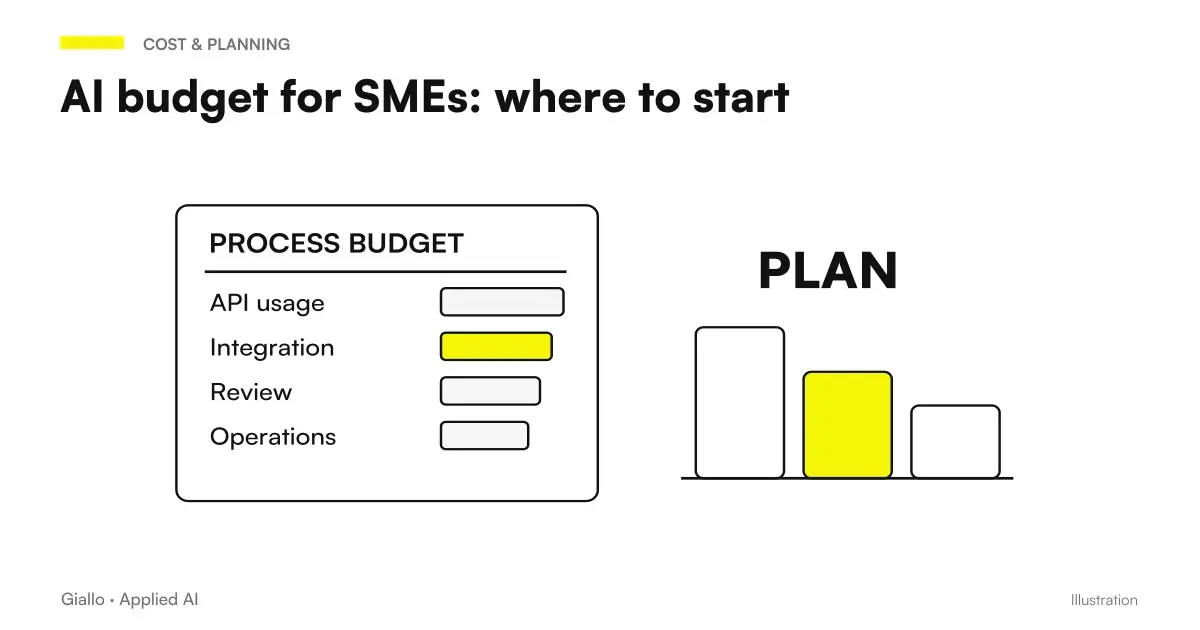
The question ‘how much budget is needed for AI’ is asked as if there is a fair percentage of turnover. It does not exist, and the proposer is selling. The sensible AI budget for an SME is built backwards: you start with the cost of an existing process and decide if it is worth replacing.
This article proposes a method of allocation that works well in companies under one hundred people, where there is no dedicated function and every euro must justify itself.
In summary
- There is no correct turnover percentage: the budget is built from the cost of processes.
- First echelon: subscriptions, a few hundred euros, to understand where there is value.
- Second echelon: one project only, on the process with the highest annual cost.
- Better three small projects in sequence What a great one.
- A fee must be reserved for operation and maintenance, not just for realization.
- Without a starting point measure, the budget cannot be evaluated retrospectively.
The Three-Scale Structure
Scaglione 1 — Understand (a few hundred euros). Subscriptions to generic tools for people who can benefit from them, for at least three months. It serves to find out where AI impacts real work. It's the only expense I would even recommend to a company that has decided not to make plans.
Scaglione 2 — Build (1,500 – 8,000 €). One process, the one with the highest annual cost and the smallest exceptions. Not two, not three: one.
Scaglione 3 — Maintain and extend. An annual quota for consumption, maintenance, evolution, plus possibly the second process after verifying the first.
How to choose the process to be funded
The criterion is a ratio of two quantities: annual cost of the process and number of exceptions.
- Lists the company's repetitive processes.
- For each calculate: times per month × minutes × hourly cost × 12.
- For each one the exceptions count: "what happens when it doesn't go as planned?"
- Sort by decreasing cost and discard those with too many exceptions.
- The first one that's left is your project.
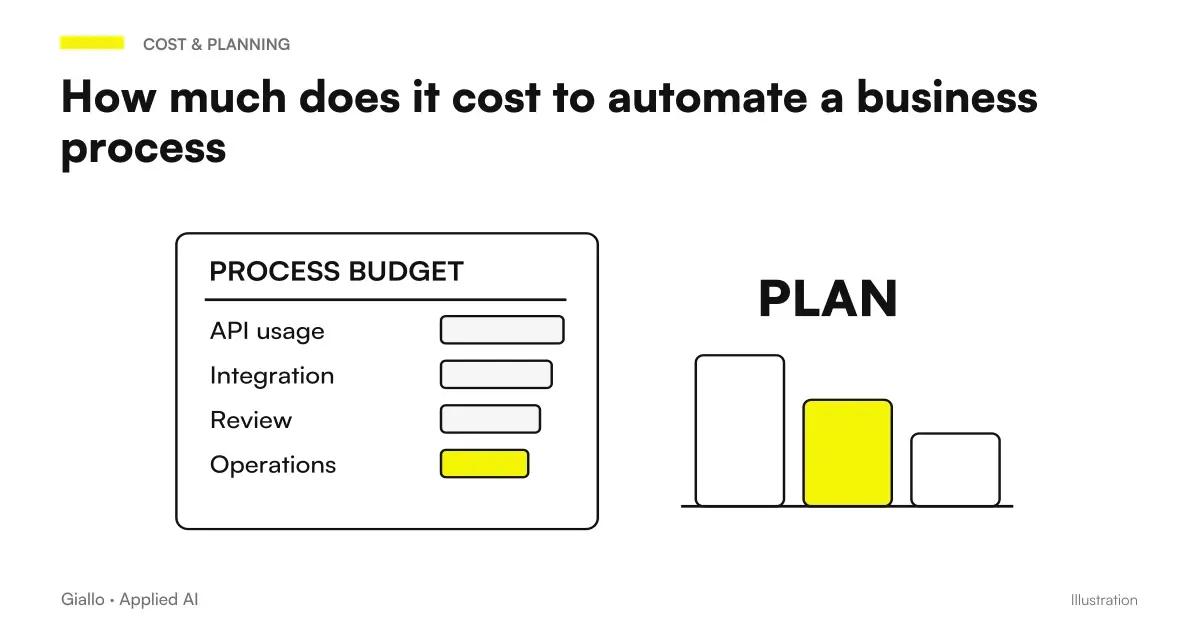
This exercise lasts an afternoon and changes the quality of the decision more than any advice. The method of calculation is deepened in how much it costs to automate a process.
The recommended breakdown
For an SME facing the first year of AI investments, a breakdown that works:
| Voice | Indicative share | Note |
|---|---|---|
| Subscriptions and tools | 10-15% | Continuative, for people |
| Project on the first process | 55-65% | The big one, once |
| Training and Adoption | 5-10% | Small but decisive |
| Variant Reserve | 10% | Exceptions emerge |
| Exercise and maintenance | 10-15% | Consumption and corrections |
The two cost items cut to zero first are training and contingency, and this is a predictable mistake: the first determines whether the system will be used, while the second avoids having to stop the project at the first unexpected exception. Read more in hidden costs of AI projects.
Practical examples
Professional studio, 8 people. First year: subscriptions for five people, plus a small project on automation of sorting and recurring responses. Order of total size contained, return measurable in hours of the secretariat. The second year is considered to extend to the preparation of the practices.
Commercial company, 25 people. The most expensive process is the insertion of passive invoices. Project in the mid-range, plus subscriptions for the commercial area. Reserve planned and used for two exceptions emerged in the course of work.
Craftsmanship, 5 people. Here the bill says that no process justifies a project: volumes are low. The correct answer is to stop at echelon 1, which however produces benefit. It is an answer worth accepting instead of forcing an investment.
How to defend an AI budget in the company
Getting the budget is a different problem than calculating it, and in SMEs you play in a short conversation with who decides. There are three ways of setting it, and two work badly.
Doesn't work presenting it as an investment in innovation. It is generic, has no comparison term and invites the question "what if we wait?". Doesn't work even present it as staff savings: it puts on the defensive who will have to use the system, and in the practice of SMEs that saving rarely materializes as staff reduction.
Works present it as a replacement for an already existing and measured cost. "This business costs us 9,000 € per year in hours, automation costs 4,000 one-off plus 600 per year of operation, the tie comes within the first year." It is a verifiable phrase, which can be discussed on the merits and which does not ask for confidence.
To get to that sentence you need the work described above: measure the process first. And it's also why it's better to do it even if you already have the budget — because the starting number is the only thing that will allow you, a year later, to say if it went well.
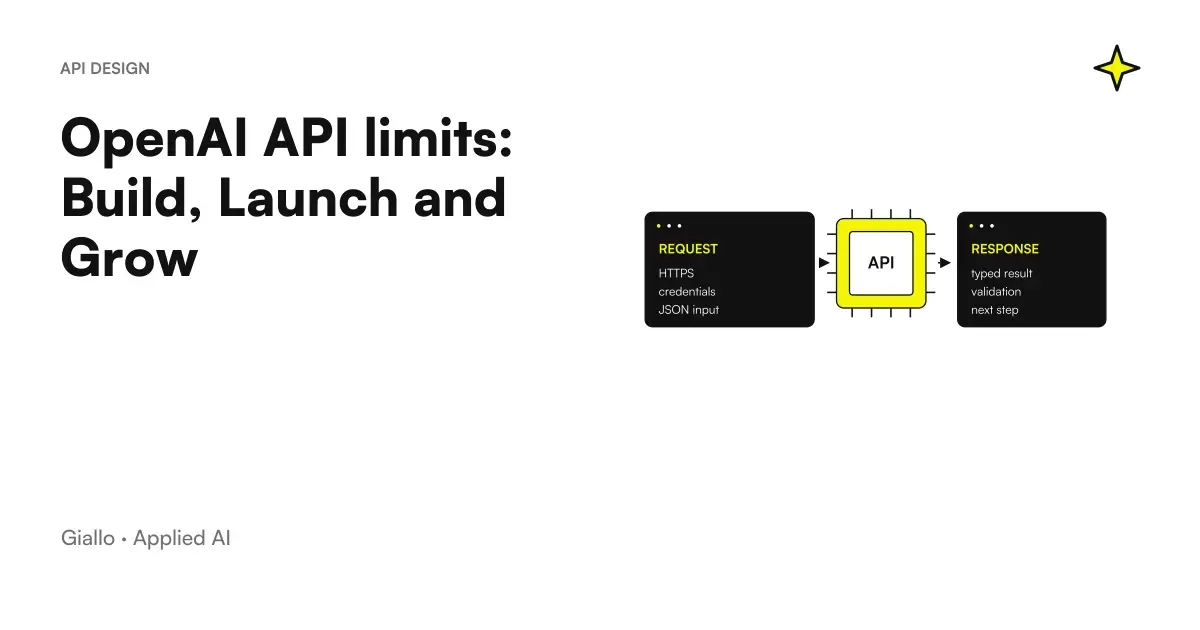
When using APIs, the quote must distinguish available capacity and expected consumption. The levels OpenAI Build, Launch and Grow They affect the limits of the service; they do not indicate for themselves how much the project will spend.
For a new business it is worth checking the incentives before allocating the expenditure. Claude for Startups provides facilities subject to requirements and deadlines: in the ordinary budget enter only those actually recognized, with a separate forecast for the following period.
The Second Year
Almost all the literature on the AI budget is about the first investment. The second year is the one in which you decide things, and it has a different structure: there is no more to discover, there is to consolidate what works and close what did not return.
The question to ask is only one, on the project of the year before: are today's numbers better than those you had measured before you left? If so, it makes sense to extend to the same or adjacent process, and the second project will cost less because some of the integrations already exist. If not, it is worth figuring out if the problem is the system or adoption, before spending any more.
Most common allocation errors
Beyond the overall figure, the way the budget is distributed determines the outcome more than its size.
The typical misallocation focuses everything on realization and zeros outline and follow. The result is a well-built system that no one has learned how to use and no one maintains: in the second year it is still.
The allocation that works always leaves two small but not zero entries: something for training and adoption, something for variants. They are the two voices that seem to be renounceable in the planning phase and become decisive in the reality phase.
The theme is deepened in hidden costs of AI projects and in how much it costs to maintain an AI system.
Mistakes to Avoid
- Setting a percentage of turnover. It doesn't relate to the value of your processes.
- Funding three projects together. It concentrates risk and prevents learning.
- Cutting training and contingency to zero. It is the small voices that determine the outcome.
- Not planning for ongoing operation. From the second year the system remains maintenance-free.
- Not measuring the starting point. It makes the budget unevaluable.
- Forcing a project when the numbers say no. Stopping at subscriptions is a legitimate choice.
How to apply it in the company
Build the budget in this order and not in the reverse one: first measure the processes, then decide how much to allocate. The figure emerges from the numbers instead of being decided a priori and then filled with content.
Present it internally as a replacement for an existing cost, not as an investment in technology. "This process costs us 9,000 € a year, automation costs 4,000 one-time plus 600 exercise" is a phrase that defends itself. "We invest in AI" is not.
The price framework by project type is in how much AI costs in the company, and the choice between internal resources and supplier in DIY AI or agency.
A final criterion, especially valid for the first year: always prefer a smaller budget spent well to a larger budget spent quickly. The first project has a value that goes beyond the immediate result, because it teaches the company how to do these jobs. A contained, measured and completed project is worth more than an ambitious investment that no one can follow.
Finally, a note on the relationship between budget and timing. An investment spread over two financial years, with one project per year, is almost always more effective than the same amount concentrated at once. Not for financial reasons, but because between the first and second project the company has learned something that changes priorities: almost never the second project is what you would have chosen at the beginning, and it is good to be able to decide it later.
Conclusion
The AI budget of an SME is not decided by looking at turnover: it is built by measuring processes. Subscriptions to understand, a project only to build, a quota to maintain.
The discipline that makes the difference is one: measure the current cost before spending. It is what makes spending defensible before and evaluable after, and in most companies it is also the only thing that is missing.
If you want to understand what processes in your company can be automated with AI, Giallo Studio can help you turn the problem into a real workflow.
Giallo Studio guides: methodology and sources
How we apply it in the company
Related resources
 How much does AI cost in the company: a guide to real prices
 The hidden costs of AI projects
 Subscription or custom AI: which makes sense?
 How much does it cost to automate a business process
 DIY AI or agency: how to decide
 AI models for high volume work
 OpenAI API limits: Build, Launch and Grow arrive, what changes for automations
FAQ
How much should an SME spend on AI in the first year?
There is no valid percentage for everyone, and be wary of who proposes it. A more useful criterion is starting from the bottom: a few hundred euros of subscriptions for three months, and only later, with data to hand on where there is value, evaluate a project in the 1,500 – 8,000 € range for the first process.
Better a big project or many small ones?
Many small projects, in sequence. A large project concentrates risk and delays learning; three small projects in sequence let you correct course after the first. The second also costs less than the first because some of the integrations are already in place.
How do you justify the budget internally?
With the current cost of the process you want to automate, not with the potential of AI. Occurrences per month multiplied by time multiplied by hourly cost: that number is the basis of the discussion. A budget presented as an investment in technology is difficult to defend; presented as a replacement for an existing cost is much more solid.
How much should be reserved for recurring costs?
An allowance must be budgeted for usage, maintenance, and further development. A prudent approach is to budget an annual percentage of the development cost, in addition to estimated usage. A budget that covers only implementation leaves the system without maintenance from the second year.
What if I don't have a budget for a project?
Start with subscriptions, which cost a few tens of euros per month per person. It is already a full-fledged AI investment, and in most SMEs it produces measurable results on daily work before even thinking about a tailor-made project.
How do I know if the budget has been well spent?
Only if you have measured the starting point. The time the process took before, the errors it produced, the waiting days. Without those numbers any ex post evaluation becomes an opinion, and AI projects are judged on the impression instead of the facts.