
Italian Revenue Agency (Agenzia delle Entrate) letters to a firm's clients: how to prepare them for the accountant with AI
Letters from the Italian Revenue Agency brought in by clients: AI transcribes and sorts them and prepares a summary sheet for the accountant, who decides.
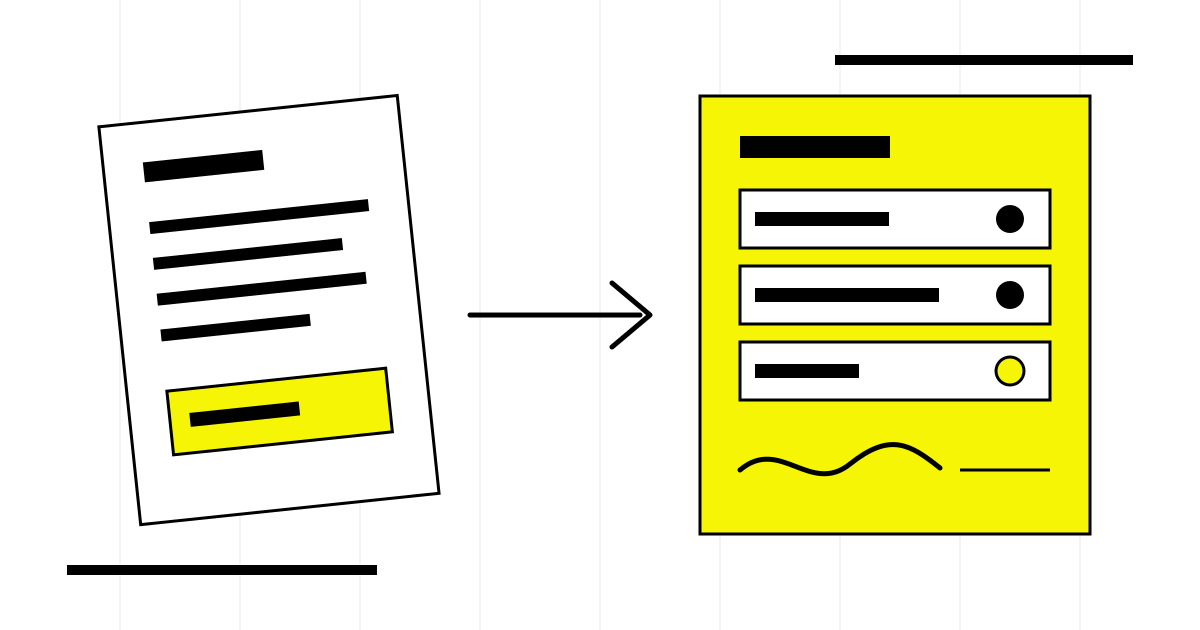
With AI, an accountancy firm can turn the Italian Revenue Agency (Agenzia delle Entrate) letter a client photographed into a summary sheet ready for the professional: type of letter, tax period, amounts, deadline written in the document and the file for that period already retrieved from the practice management system. The work removed is transcribing, searching and reconstructing. Assessing the notice and replying to the client remain with the accountant.
Anyone working in a firm knows the scene. The client sends a photo of a letter on WhatsApp, folded and shot against the light, with the question “should I be worried?”. Someone copies it out, looks up the return for the year cited, checks the payments, and only then can the professional say anything. Multiplied by a few hundred clients, it is work that piles up in the worst periods.
This article describes how to organize that step with an AI agent, where it stops and which rules to keep. It is not a tax guide: the legal references are there to understand the boundaries, and were checked on Normattiva on 8 November 2026. The examples are simulated.
In summary
- The agent transcribes the letter, classifies it and extracts the period, amounts and deadline written in the document.
- It retrieves the return and payments for the period cited from the practice management system and places them next to the letter.
- It does not calculate deadlines and does not assess the notice: it reads what is written and highlights it.
- Paying, asking for clarification or contesting is always the professional's decision.
- Professional secrecy, the contract with the provider and the notice to the client must be sorted out before starting.
Which tax letters do clients bring in most often?
The letters clients bring to the firm are not all the same, and the first useful thing an agent can do is recognize the type. The most frequent families are letters that follow checks on tax returns (automated or formal), letters inviting you to verify possible anomalies, collection notices and requests for documents.
In its guide to letters that follow checks on tax returns, the Revenue Agency first asks the taxpayer to verify that the data in the letter match their own documents (guide “Communications on checks of tax returns”, Agenzia delle Entrate, edition of 16 December 2019; always check the latest edition on the Agency's website). This is exactly the comparison work an agent can prepare: the letter on one side, the firm's data on the other.
| Type of letter | What the agent extracts | What the professional decides |
|---|---|---|
| Letter following a check of the tax return | Period, section or tax, amounts, deadline stated | Whether the request is correct and how to proceed |
| Letter flagging possible anomalies | Period, data cited, reply channels indicated | Whether there is an error and how to correct it |
| Collection notice | Body, amounts, references to earlier notices | Possible routes and priorities |
| Request for documents | List of documents requested, deadline stated | What to produce and with which cover letter |
| Unrecognized letter | Full transcription and a note “type not recognized” | Everything, starting from reading it |
The fifth row matters: an agent that cannot classify a letter must say so, not force it into the nearest category.
How does the flow from photo to summary sheet work?
- Intake. The letter arrives through the firm's official channel (email, portal or the firm's WhatsApp, not the owner's personal phone) and is linked to the client.
- Transcription. A model able to read photos and scans converts the document into text and flags unreadable parts instead of guessing them.
- Classification and extraction. The agent recognizes the type of letter and extracts the tax period, amounts, references and deadline exactly as written.
- File retrieval. From the tax practice management system it takes the return and payments for the period cited, read-only.
- Summary sheet. It prepares a page for the professional with the letter, the firm's data alongside, clear differences and the deadline at the top.
- Draft for the client. Only if requested, it writes an explanation in plain words that the professional corrects or rewrites.
The piece that saves the most time is the fourth: putting the data the firm already has next to the letter. That is where the professional understands within minutes whether the letter stems from a taxpayer's error, a missing data point or a mismatch to be clarified.
Why should the agent not calculate deadlines?
Because the rules on deadlines change, and a wrong calculation made with confidence is worse than none. A concrete example: on Normattiva, art. 2 of Legislative Decree 462/1997, which governs payment of sums due after automated checks, appears as repealed by Legislative Decree no. 141 of 5 August 2026, with the text in force from 1 January 2027 (art. 2 of Legislative Decree 462/1997, Normattiva, consulted on 8 November 2026). Legislative Decree 141/2026 approves the consolidated text of the provisions on filings and assessment (Legislative Decree 141/2026, Normattiva).
A rule written today into an agent's instructions could therefore be out of date within a few months. The more solid choice is another: the agent reports the deadline the letter states, highlights it and leaves the professional to check it against the rules in force. If the document does not show a legible deadline, the summary sheet says so in red.
Professional secrecy, personal data and notice to the client
Tax letters contain clients' personal and tax data. Before letting an agent work on these documents, a firm must sort out three things.
- Professional secrecy. Members of the Italian register of accountants and accounting experts (Albo) are bound by professional secrecy (art. 5 of Legislative Decree 139/2005, Normattiva): the agent accesses only the file of the client it is working on.
- Provider as data processor. Whoever supplies the model processes data on the firm's behalf, so you need a contract with the safeguards of art. 28 GDPR (Regulation (EU) 2016/679, EUR-Lex), excluding use of the data for training.
- Notice to the client about AI. Law 132/2025 requires professionals to tell the client which AI systems they use, in clear, simple and comprehensive language, and limits AI to instrumental and supporting activities (art. 13 of Law 132/2025, Normattiva).
The third point also has a practical effect: describing in the engagement letter what the agent does forces the firm to decide precisely where it stops. For the general aspects see AI and GDPR and business data and privacy with AI.
A simulated case in a firm with two partners
A firm with two partners and four staff handles a few hundred clients, including individuals, flat-rate taxpayers (forfettari) and small companies. Tax letters arrive irregularly, often as photos on WhatsApp.
On a Monday three letters arrive. The first is legible: the agent classifies it as a letter following a check of the tax return, extracts the period and amounts, retrieves the return and payment forms for the year cited and highlights that the system shows a payment with a different tax code from the one expected. The second is a cropped photo: the agent transcribes what it can, flags that the second page is missing and prepares the request to the client. The third matches no known type and ends up in the queue as “to read”.
The partner who looks after the clients opens three summary sheets, not three conversations to reconstruct. He decides on the first, sends off the request for the missing page and reads the third. The three decisions remain his; the agent took away the research part.
Where firms go wrong when they start with a generic assistant
Works
- An official firm channel for receiving letters.
- Deadlines read from the document and verified by the professional.
- Summary sheet with the firm's data alongside the letter.
- A trial on letters already handled before new ones.
Causes problems
- Photos uploaded to a personal assistant with no contract with the provider.
- Deadlines calculated by the model with hand-written rules.
- Replies to the client on the substance without passing through the professional.
- Unrecognized letters forced into the nearest category.
A generic assistant is perfectly fine for writing a draft letter from an already verified text, as in the prompts for accountants. It is not designed to receive client documents, link them to the right file and leave a trace of who decided what.
How to fit it into the firm's work
Tax letters are one piece of a wider flow. The collection of client documents uses the same logic of an expected list and reminders; the sorting of emails and attachments decides which queue each message goes to; the accounting with AI covers the bookkeeping entries. Starting with the letters has an advantage: they are few, high-value and easy to measure on an archive that is already closed.
What you need for a trial on letters already handled
About twenty letters from the last two years, anonymized, with the decision the firm took on each; read-only access to the tax software exports for the same periods; the name of the partner who will review the summary sheets. You measure letters classified correctly, data extracted correctly and the time taken to reach the decision.
The agents we design for accountancy firms, including the one for tax letters, with models, connected tools and sign-off point, are described on the page AI agents for accountants; the overall picture for the sector is in AI for accountants. If clients' letters still reach your firm as photos to be reconstructed, write to us: we start from an archive that is already closed and show you the summary sheets before touching your day-to-day work.
Giallo Studio guides: methodology and sources
Want to apply this to your business?In 30 minutes, free of charge: the first process to automate and its estimated return, in writing.
Book the free auditHow we apply it in the company
Related resources
 Collect client documents with AI: checklists and case status
 AI prompts for accountants: ready-made examples for documents, analytics and clients
 AI for Accounting: What It Can Really Do
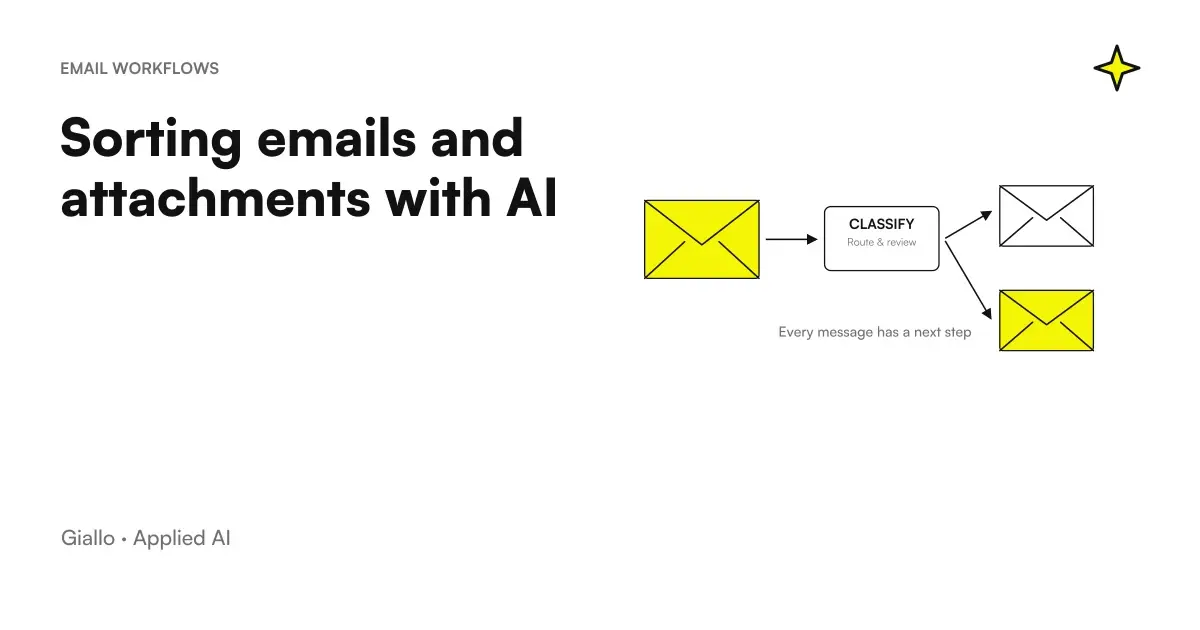 Sorting emails and attachments with AI: a single queue for sales and administration
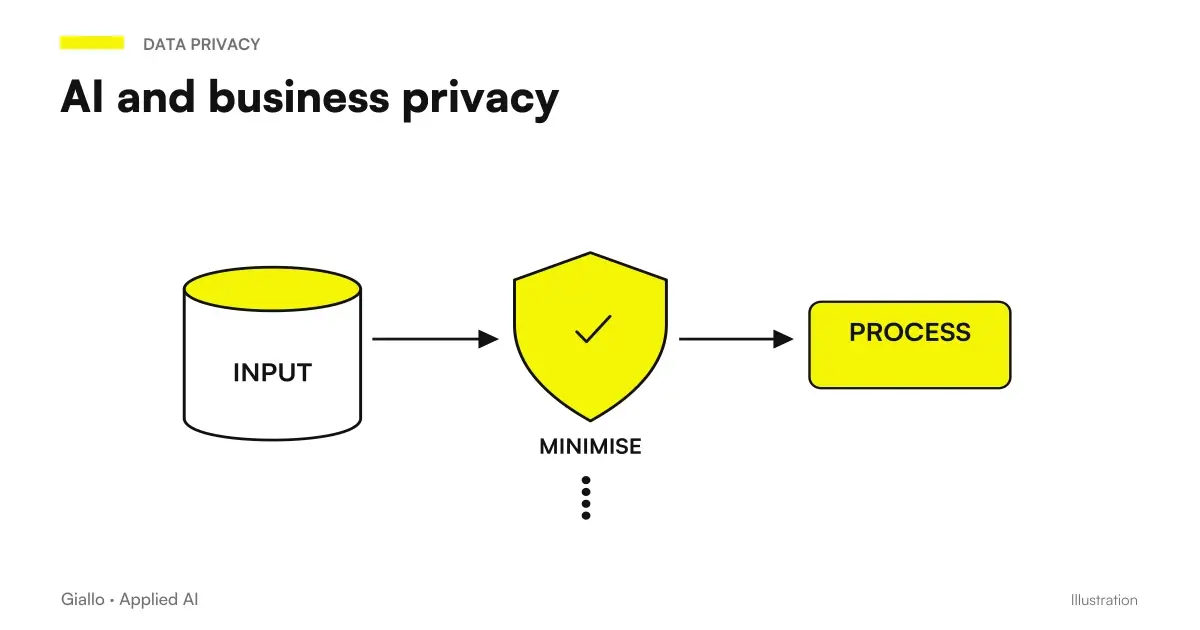 AI and corporate privacy: what happens to your data in AI tools
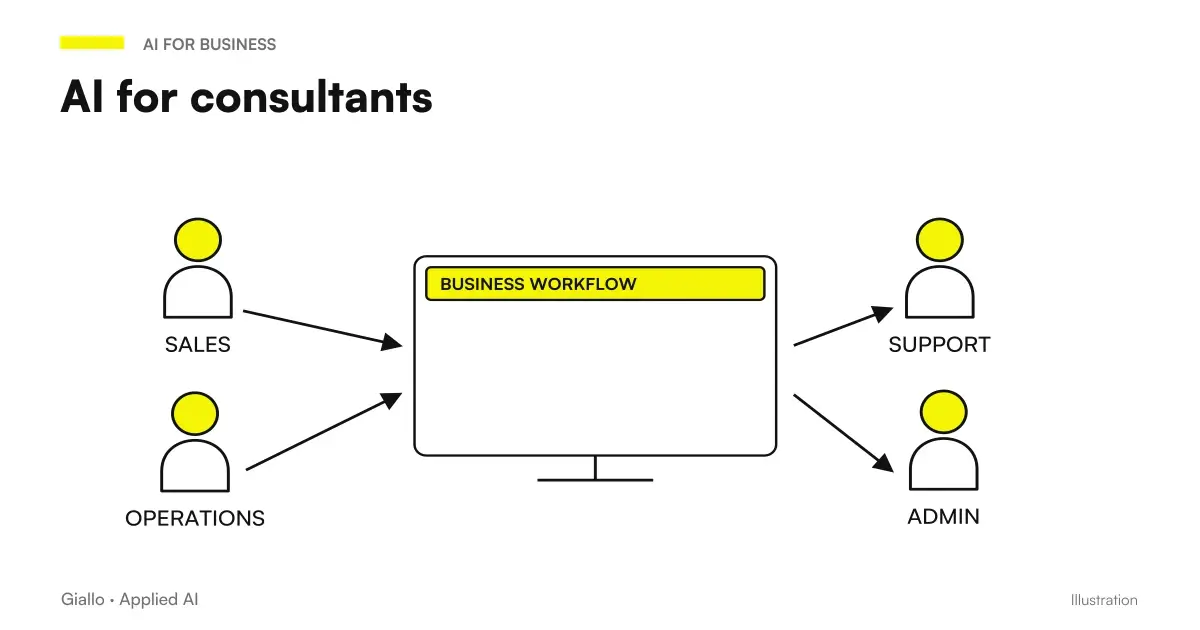 AI for consultants: proposals, client data and project delivery
FAQ
What does AI do with a Revenue Agency letter a client brings in?
It transcribes it even if the photo is crooked, recognizes the type of letter, extracts the tax period, amounts and deadline stated in the document, retrieves the file for that period from the practice management system and prepares a summary sheet for the professional. It does not assess the notice and does not answer the client on the substance.
Can AI calculate the deadline to pay or reply?
It should not. The deadline is read in the letter and checked against the rules in force: rules change, and from 1 January 2027 part of the framework moves to the new consolidated text on filings and assessment (Legislative Decree 141/2026). The agent highlights the date written in the document, and the professional confirms it.
Can I upload clients' letters to ChatGPT or another assistant?
With caution: these are documents with personal and tax data covered by professional secrecy. You need a provider with a data processing agreement (art. 28 GDPR), access limited to the relevant file, and no use of the data to train models.
Do I have to tell clients that the firm uses AI?
Yes. Art. 13 of Law 132/2025 requires professionals to inform the client about the artificial intelligence systems used, in clear, simple and comprehensive language. The text goes in the engagement letter and must describe the tools actually in use.
Who answers the client?
The professional. The agent can write a draft explanation in plain words, but the choice between paying, asking for clarification or contesting, and the message to the client, stay with the firm.
Where do you start?
From an archive of letters already handled: you let the agent work on those and compare its summary sheets with what the firm actually decided, before using it on new letters.