
AI purchase approvals: complete requests and traceable decisions
AI purchase approvals: organise requests, budgets and attachments, handle approval limits and absences, and prepare a pilot with traceable decisions.
Reading time: 12 min
The approval of purchases with AI is a stream that prepares a complete request and takes it to the manager provided by the company rules. AI can read motivations and attachments; budgets, delegations and decisions must be explicit. The result is a practice with a tracked outcome, distinct from the order to the supplier and the payment.
The concrete problem is the transition between those who ask for an expense, who controls the budget and who can authorize it. The choice of the supplier is addressed in the guide to compare supplier quotes; here we follow the request until the decision. Technical sources verified the 9 October 2026 and Italian scenarios declared hypothetical.
In summary
- The request must have amount, currency, cost center, motivation and relevant documents.
- Thresholds and delegations are company rules, not model suggestions.
- Absent and missing data handlers require distinct states.
- A substantial change after approval must be recognizable.
- The pilot measures completeness, waits, and corrections before extending the flow.
What request does the manager have to make?
A good practice presents the need and the cost without obliging the approver to rebuild everything from the mail. It includes who requests, what it serves, why, when and what budget it belongs to. The economic data must clarify the currency, quantities and items included. A total read from a PDF does not prove on its own that transport or ancillary services are included.
The requester must be able to see and correct the proposal prepared by AI. If the reason is ambiguous, the system can suggest a question; it must not invent a cost centre to move the request forward. Completeness is not cosmetic: it determines who receives the request and which threshold applies.
The purchasing department remains the owner of the rules of the process. AI for purchases and suppliers offers the general picture; the guide to AI for businesses helps to choose this microprocessor over other projects. The first automation should concern a recognizable category, not all the expenses of the enterprise.
What fields and attachments make the practice verifiable?
| Field | Expected source | Check before sending |
|---|---|---|
| Required ID | Intake system | Does not match an already open duplicate |
| Applicant | Corporate Identity | You can ask for that category of spending |
| Subject matter and motivation | Applicant and Attachment | Distinguish need from supplier preference |
| Amount and currency | Offer or data declared | Total and entries have the same reference |
| Cost Center | Company list | Proper existing and responsible code |
| Reference Budget | Administrative source | Recognisable update date |
| Annex and version | Document received | Source readable and consistent with the amount |
| Decision | Authorised approver | Registered outcome, motivation, and time |
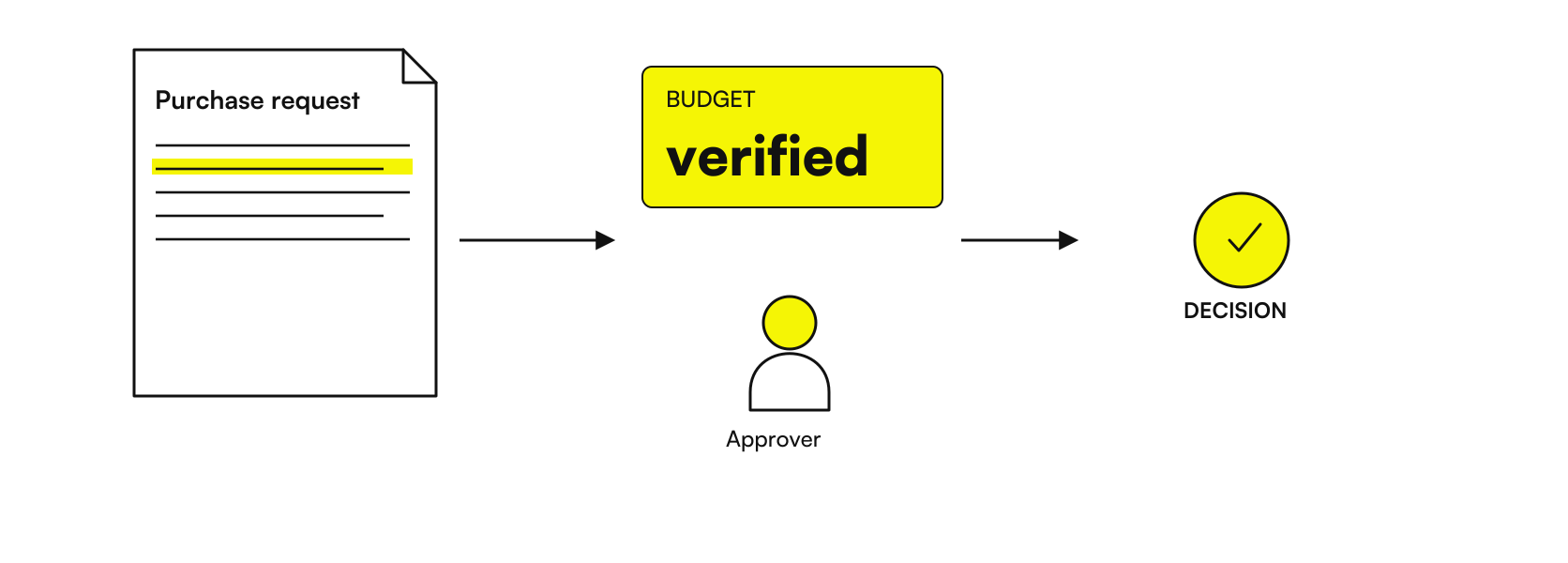
The cells describe a proposed application contract, not mandatory fields of a specific product. A company may have other data, but each field should serve a decision. If no one uses information, collecting it out of habit makes the practice longer and introduces material to be protected.
The annex must remain linked to the extracted values. If the person responsible reads a total, he must be able to open the document from which he comes. The comparison with a updated supplier price list may be useful, but price list and offer are not automatically equivalent: conditions and validity must be compared in the context of the request.
Expenditure thresholds: which part must follow rules?
The approval matrix must indicate who decides by category, amount and cost center. Thresholds can be defined by the company for the pilot; there is no universal amount that makes an automatically approveable purchase. The rule must also clarify whether currency, taxes, and ancillary expenses enter the comparison.
AI can interpret a motivation in natural language or propose a category, but an uncertain category must be reviewed. If the choice changes the approver, the doubt is operational. Do not use a confidence score as a substitute for the role matrix. The person responsible must be able to recognize how the system came to the proposal.
An important case is a fractional request: two similar practices could refer to the same need. The project can report them for comparison, without automatically declaring improper behavior. It checks the subject matter, period and reference of the applicant, leaving the person responsible for the interpretation. The aim is to prevent the process from losing the overall picture.
How to separate preparation, approval and registration?
Use understandable states: received, to be integrated, ready, waiting, approved, refused and recorded. They don't necessarily have to be these names, but every transition has to have a condition. A well-written draft is not a decision; a decision is not proof that the order has arrived in management software.
n8n documents a human review before the execution of specific tools, with approval or rejection. It is a primitive that can support the control point; it does not prove that your company's purchasing workflow is already configured correctly. Human review of tools.
The person must approve recognizable content, not a generic ‘executed’ label. Presents practice, data version, and next action. If the registration fails, it retains approval and shows the error without declaring the order created. The connection to the systems is treated in Integrating AI into existing systems.
What to do if the approver misses or refuses?
Absence does not authorize an expense. Prepare a substitute with explicit delegation or a waiting status with a referent. A notification may remember the passage, but must not create implicit approvals. If the process today lives on phone calls and informal arrangements, clarifying this point may bring value before introducing the model.
The rejection should have a useful motivation: budget, category, insufficient data or unconfirmed need. The applicant may supplement or reformulate without losing the relationship with the initial practice. It must not open indistinguishable copies as long as it finds a more favorable path. A queue with history and status is more useful than scattered messages.
A request is refused: which path remains open?
Preserve the outcome and motivation. Distinguish a request to be supplemented by an unauthorized expense. Allow a revision related to the original practice when the need changes or a document arrives. Show the approver what is different and request a new decision where the change is substantial.
The amount changes after approval: is the decision still worth it?
The project must determine what changes require new approval. Amount, currency, quantity, supplier and cost center can change the meaning of the choice. Do not let the system replace an attachment by retaining only the old ‘approved’ state. The decision must refer to an identifiable version.
A useful register preserves who decided, what set of data they saw and what action was authorised. It must not become an indiscriminate copy of all conversations. The minimum content is used to explain the transition and to compare any changes. If the process gets to the invoice, the DDT control, orders and invoices faces a next step with different verifications.
Two hypothetical scenarios for purchases and services
Hypothetical example: a workshop in Reggio Emilia requires tools. The foreman sends a note with an offer. The system prepares quantity, amount, currency and cost center, showing the document. An ancillary item is unclear: the practice remains to be integrated instead of immediately moving on to the responsible. The applicant corrects the data and the total is rechecked.
The approver is absent. The matrix indicates an authorized substitute, who sees the request and its budget reference. After the decision the management software receives only the expected passage. No payment is made by the agent. The evidence checks that rejection and absence do not produce the same transition as approval.
Hypothetical example: a professional studio in Cagliari buys an annual service. The request includes an initial cost and a recurring entry. The system presents them separately, without hiding the renewal in the start total. The manager can figure out which budget covers each period and ask for clarification on the conditions.
A new version of the offer comes with different quantities. The practice retains the relationship with the previous one and signals the change to the decision-maker. The group does not measure how many times the system has written ‘approved’, but whether the decisions relate to the correct data. The case remains hypothetical and does not represent a customer or a realized savings.
Urgency, cancellations and overlapping requests
Provide a path for the urgent request, with a verifiable reason and a designated approver. The stated urgency may change the order of the queue, but it must not remove the controls on the supplier or the amount. The manager must be able to see which activity is blocked and which alternatives are available before the decision.
A purchase can overlap with an already open request. The system can report the same department, similar good or close period, showing the practices involved. It must not automatically merge them only to reduce the count. Two similar quantities could serve to different locations; a true duplicate could instead be the same message forwarded twice.
Define who can cancel a request and what happens to the steps already performed. An annulment of internal practice does not prove that an order sent to the supplier has been cancelled. The state must distinguish these activities and ask for the relevant verification, preventing the applicant from reading "cancelled" as confirmation of the whole route.
If the process keeps a budget available, clarify when the request commits that availability and when it frees it. An unapproved proposal, a confirmed purchase, and a completed registration are different times. The rule must be implemented in the system that manages the budget, with a single source and controls on competing changes.
The pilot should include an urgent request refused, two similar practices and a cancellation after a registration. Observe if states remain understandable and if each passage reaches the correct handler. These cases measure the holding of the process more than a long sequence of ordinary approvals without exception.
It also checks the validity of the supplier's proposal when the practice restarts after a wait. Internal approval does not prolong an expired condition. The manager must see the new situation before the process records the purchase.
What model to evaluate and where is a rule enough?
Do not use a model to check whether a cost centre code exists or to add up entries that are already structured. These checks must be deterministic. AI is a candidate for free-text explanations, classification and preparing a proposal for review. Separating the parts reduces ambiguity and makes errors traceable to the correct step.
Haiku 5.5 is a candidate to be evaluated by classification and extraction, according to its official page. It's a routing proposal, not a ranking on your document. A more capable model enters the test only if complex cases justify it. There is no need to pay long reasoning to apply an already defined threshold.
How to set up a pilot that measures the process?
Choose a category of purchases with known managers and attachments. Prepares anonymised or representative synthetic practices: complete, incomplete, duplicated, rejected and amended after the decision. In the first phase the system prepares proposals while the current process remains the reference. Compare fields, assignments, and transitions before automating registration.
It measures complete requests at the first pass, necessary integrations and time between states. If you calculate a percentage, define denominator and criterion: comprehensive practices divided evaluated practices, not documents read divided received messages. If the queue accelerates but the approvers have to correct everything, the problem has been moved.
In the budget, separate role configuration, connection to the business management software, document preparation, call costs and maintenance. Also count the person responsible’s time to review cases. We do not give a fixed price without knowing access, data quality and how frequently things change. The guide to AI workflow helps to describe these addictions.
What errors block the adoption of the purchasing office?
The first is to confuse "below the threshold" with "always authorized". The second is to send a request without a source of the amount. The third is to consider the silence of the approver a consensus. The fourth is to modify the data while maintaining the old approval. The fifth is to use a single state for decision and registration, hiding management software errors.
Correct these points in the flow contract and on the screen, before adding notifications and integrations. The applicant must understand what is missing; the decision-maker must know what authorizes; the administration must recognize what has actually been recorded. If one of these steps remains ambiguous, the model cannot solve it through more fluid text.
From what request do you start in your company?
Take a recent case and reconstruct its inputs, checks, waiting times and outcome, without sending sensitive data to tools outside the agreed setup. Identify the step where the team loses time because of missing information or unclear responsibilities. That is the first candidate for the pilot; you do not need to redesign the entire purchasing office.
To prepare a flow of Business Process Automation, Giallo starts with an anonymised request and a matrix of the people responsible. The comparison with Supplier Price lists and AI for Purchases helps to keep separate data, business choice, and spending authorization.
Giallo Studio guides: methodology and sources
How we apply it in the company
Related resources
 Compare supplier quotes with AI: prices, quantities and terms on a common basis
 Update supplier price lists with AI: changes for approval
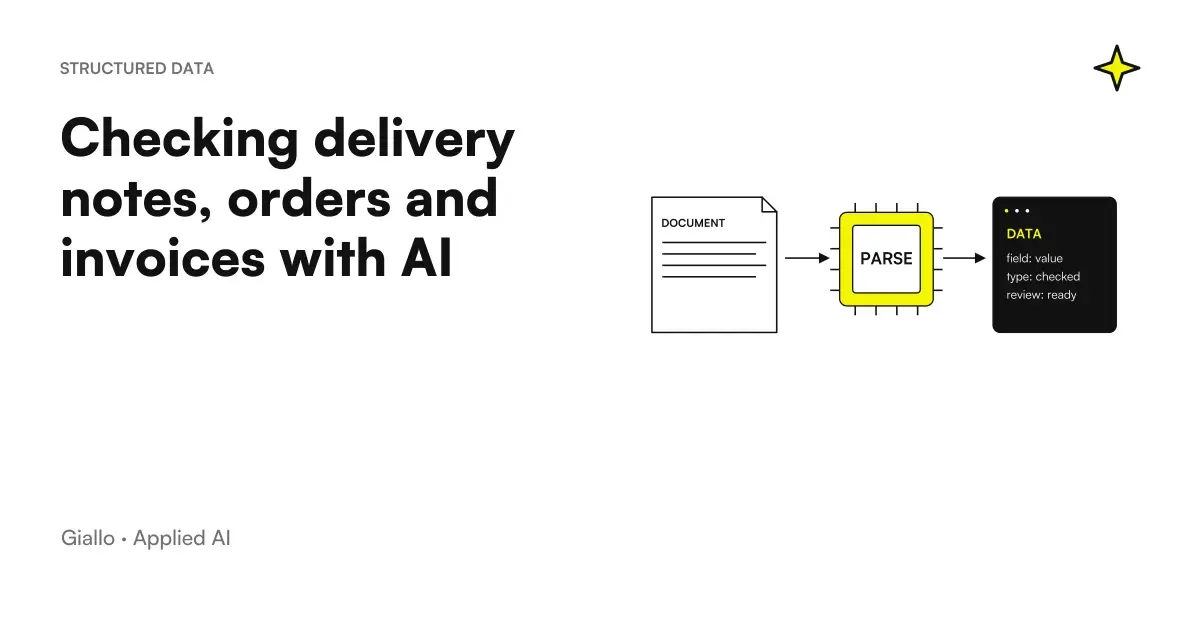 Check delivery notes, orders and invoices with AI before recording them
 AI for procurement and supplier management
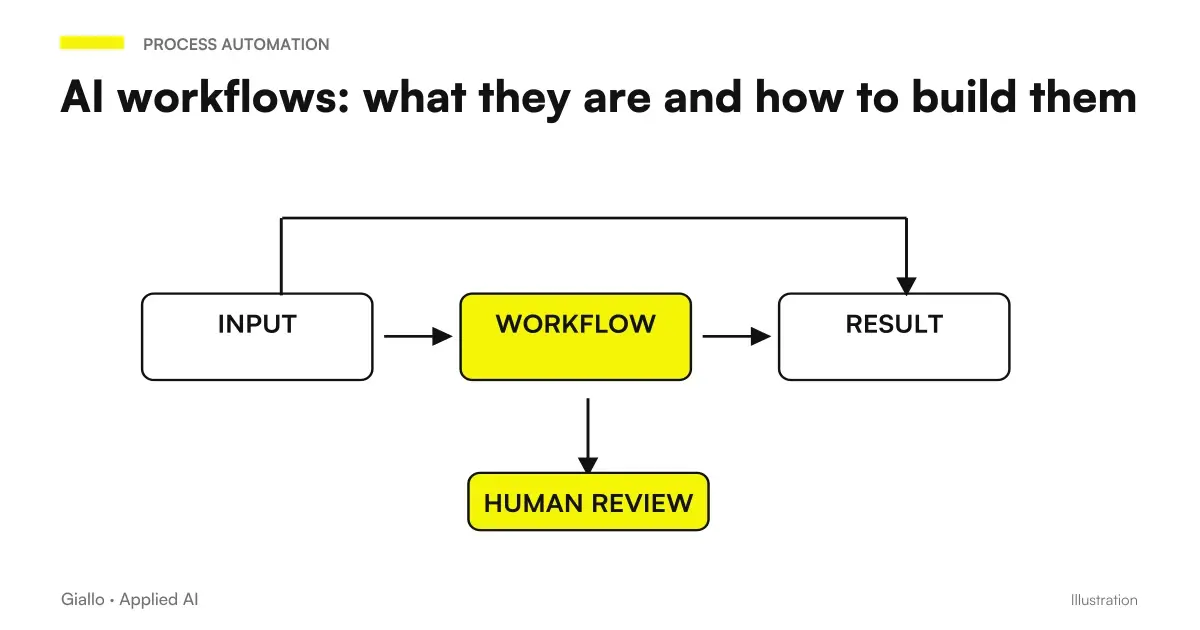 AI workflows: what they are and how to build them
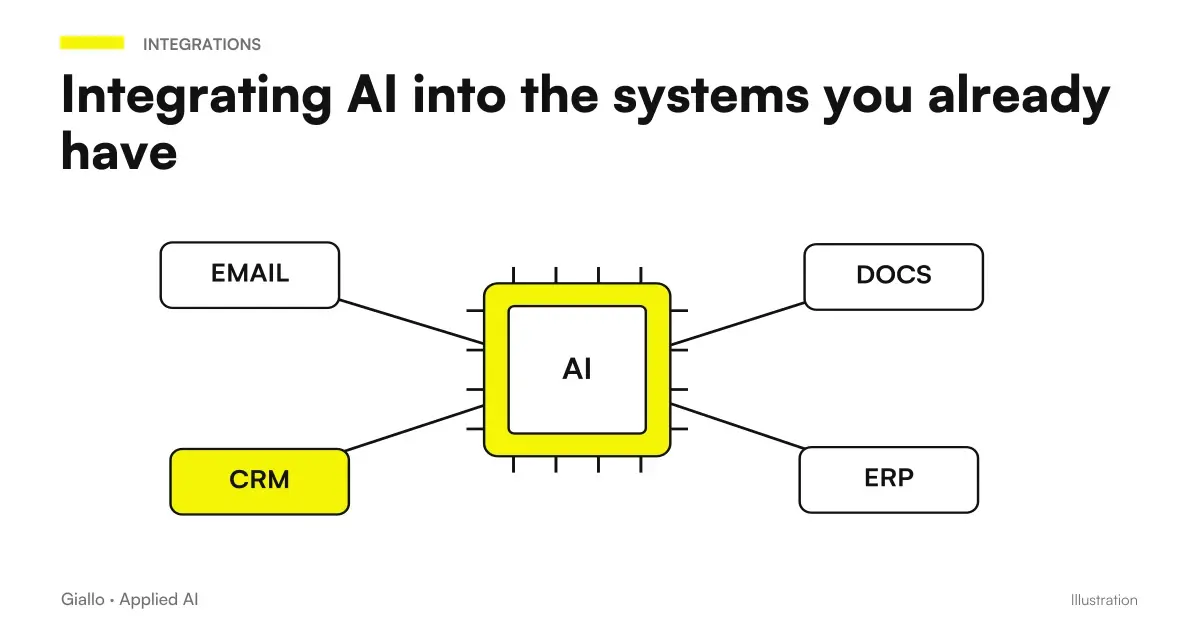 Integrating AI into the systems you already have
 AI for businesses: a complete guide to getting started
 Copilot in Outlook: email, threads and shared mailboxes
FAQ
What does AI automate in purchase approval?
It can prepare the request, read the attachments and report missing data. Budget thresholds and assignment must follow explicit business rules. The decision remains with the intended manager, without automatically turning into order or payment.
Can AI approve a sub-threshold purchase?
A threshold can drive a deterministic workflow if the company authorizes it, but it must not be invented by the model. Before the pilot define perimeter, delegations and excluded cases. A low value does not automatically make the expense irrelevant.
What happens if the person responsible is absent?
The request must remain pending or be assigned to the authorized substitute. Define this path in the role matrix. Silence should not be interpreted as consent.
How to handle an incomplete request?
Show the missing fields and keep the case in a status separate from "ready for approval". The presence of an attachment does not prove its amount or version is correct. The requester must be able to add the data without creating another duplicate.
Does the approval also include payment?
No. Request, decision, order, and payment are separate steps. The project must clarify which transitions are included and which remain in the business management system or administrative process.
What metrics to measure in the pilot?
Measure initial completeness, time between statuses, reassigned requests, justified rejections, and corrections. Compare similar cases with the current process. Do not use the number of approvals as the sole proof of usefulness.