
PEC management with AI: sort messages, attachments and receipts without losing the thread
AI for PEC certified email: link originals and receipts, assign owners and flag anomalies. Delivery differs from reading; deadlines need checking.
Reading time: 12 min
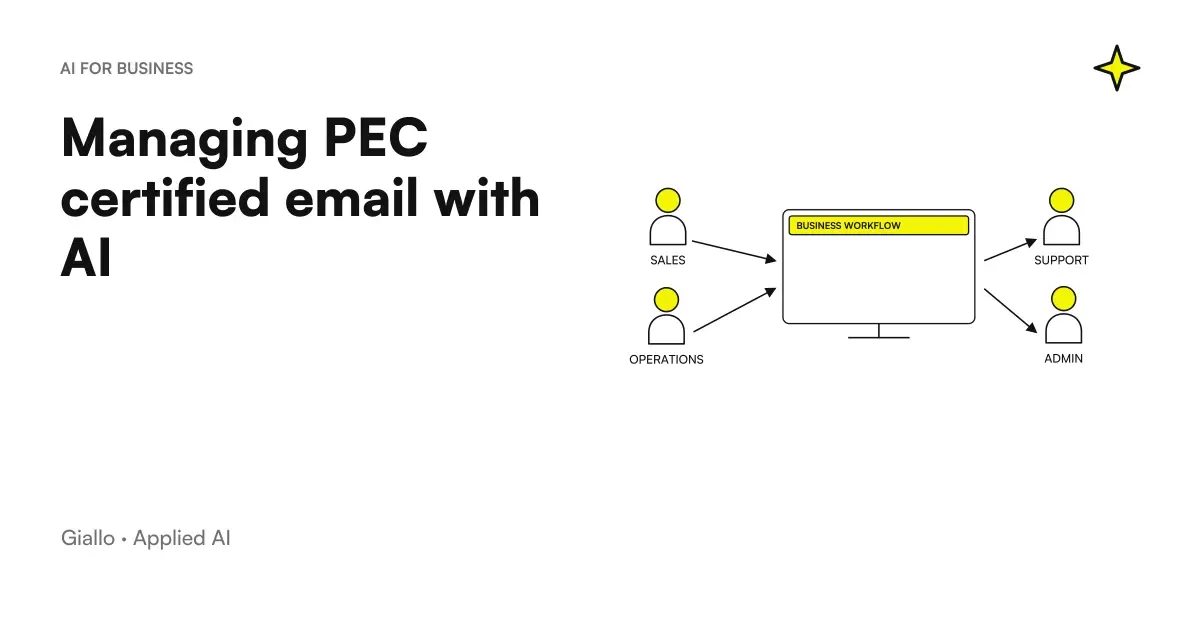
PEC management with AI can prepare sorting, assignment and controls while keeping the original message, attachments and receipts connected. The operational goal is to build a readable practice for the referent, with anomalies and data to verify. A generated synthesis does not replace the content received or decide a deadline on its own.
PEC requires a distinction that ordinary mail does not make evident: shipping, delivery in the box and human reading are different events. Article 6 of Presidential Decree 68/2005 describes receipt of acceptance and receipt of delivery, specifying that the latter does not depend on the recipient's reading. We use this historical text published by AgID for the technical distinction, without attesting here to the overall validity of the discipline. DPR 68/2005, Article 6.
Sources were consulted on 9 October 2026. The project should be included in the framework of AI for businesses; Examples are hypothetical and do not set legal retention periods or protocol obligations for each SME.
In summary
- Message, attachments and receipts remain linked to the same practice.
- Acceptance, delivery and reading were not equivalent.
- The classification must produce a referent and a next action.
- An unrelated receipt remains an anomaly to verify.
- Confirmed dates and deadlines must be distinguishable.
- Originals and decisions about their management have their own path.
What elements must a PEC practice include?
Prepare a structure that collects the original message, documents received, and references of relevant receipts. Each element maintains its own type: do not convert everything into an indistinct text. The contact person must be able to understand whether he is reading the sender's content, a receipt from the manager or a summary proposed by the system. This clarity serves before any classification.
The AgID glossary distinguishes original message, transport envelope, acceptance receipt and delivery receipt. They are different elements of the PEC stream, not interchangeable documents. AgID Trust Services Glossary. The structure of the practice should retain its links without attributing to an AI synthesis the characteristics of the original.
| Item | Information to be maintained | Operational control |
|---|---|---|
| Original message | Sender, recipient, content and reference | Source openable by the referent |
| Attachments | Name, type, and link to the message | Presence and readability |
| Acceptance Receipt | References and Relevant Status | Distinguished from delivery |
| Delivery Receipt | Recipient and time reference reported | Distinguished from human reading |
| Proposed summary | Theme and data excerpts | Comparison with the originals |
| Assignment | Responsible and next action | Confirmation of taking charge |
A receipt may arrive at a time other than the message it concerns. The system must be able to update the practice without creating a new one only because the input is later. The relevant identifier and metadata comes before the object's similarity. If the link is not certain, the proposal remains to be verified and shows the available evidence.
The Guide to the email automation with AI treats the box in a general way. Here the perimeter is more precise: keep the relationships between the certified elements and make visible who has to work on the content. You don't need to rewrite the message to have an organized practice.
How to classify PEC without interpreting its effects?
The categories should reflect the work: document to be verified, administrative request, supplier communication, dispute or case to be addressed to a contact person. The classifier proposes the theme; it does not automatically establish the legal meaning of the communication. Motivation must use facts present in the text, without turning a delicate word into a professional conclusion.
n8n documents a Text Classifier with described categories, multiple classification, and input management without clear match. These primitives can support sorting, but do not prove that a workflow is certified for PEC or accurate on your documents. Official documentation.
Keep a queue for unrecognized cases. A message with an unreadable attachment, mixed theme, or missing reference must not disappear. The referent sees the source and decides on the category and internal recipient. The Guide to mail sorting and attachments deepens classes and take charge, while PEC adds specific work of correlation of receipts.
If a practice involves two functions, establish a coordinator and related activities. Do not distribute content indiscriminately to all departments. The person verifying a date may need an attachment other than the one controlling an administrative data. The access map must follow the need for the role, not just the technical possibility of forwarding the message.
How to correlate message and receipts without inventing links?
Use the available references in the source and path of the service first. Similar object, same sender or close time may be context signals, but they are not enough on their own for a certain relationship. The result should show the reference used and the correlation status: verified in the intended path, proposed to be checked or not found.
If a receipt is left without a message, it creates a recognizable anomaly. If a message does not yet have the relevant receipt, do not fill in the field with the status of another send. A box may contain multiple communications on the same project; the arrival order does not guarantee that the items match. The revision must be able to see the originals involved in the doubt.
The distinction between acceptance and delivery derives from the cited text of Article 6: the first concerns the shipment to the sender's operator, the second the arrival in the recipient's box. The delivery does not prove a human reading. DPR 68/2005. The system must use labels consistent with these events, without showing "read" as a synonym of delivered.
A correct correlation does not equal the closure of the practice. Content may require a subsequent decision or review. Keep the transmission status separate from the operating state: "associated receipt" and "reporter took charge" answer different questions. This distinction makes it possible to prevent a technically complete file from also being considered worked.
How to deal with proposed dates and deadlines?
The AI can extract a date reported in the message and indicate where it appears. It can also highlight a sentence that requires a check. A date extracted is not yet a confirmed deadline: the date, conditions and relevance must be assessed by the appropriate contact person. The stream should have distinct fields for found data, source, proposed interpretation and verification.
n8n documents the extraction of structured information through attributes or schema. The function allows you to prepare the required fields, not to prove the correctness of the contractual or legal interpretation. Information Extractor. If the text does not support a date, the output must indicate the missing data instead of producing a plausible day.
When the contact confirms an operational deadline, the reminder must show owner and next step. If the document changes, the entry should be reviewed. For a timetable with sources and versions use the guide to deadlines and renewals of contracts with AI. Do not activate a cancellation or external communication as an implied consequence of the extraction.
Tab for a date to check
Shows the date shown, the original passage and the relevant attachment. It indicates what is missing to interpret it, the referent and the state "to be verified". Once the entry is confirmed, it retains the decision and the source in the intended path. The reminder must remain distinct from the preparation or sending of a communication.
How to store sources and make access visible?
The proposed process maintains the originals and the necessary links at the location provided by the organization. Extracting data does not authorize the deletion of sources. Document retention and related obligations require a separate assessment: this page does not set universal durations or extend to SMEs protocol procedures specific to public administration.
Define who can read the content, who can correct the proposal, and who decides the next step. The practice may include personal data or confidential information; the first evidence may use demonstrative material. For the treatment framework read AI and GDPR, while the Document Automation broadens the theme of sources and materials produced.
You also plan to manage the connection to the box. The manager needs to know if the access works and what happens when it fails. An empty queue does not prove that no messages have arrived. The flow must distinguish absence of new demands and problem of acquisition, so the person can resume work without trusting an ambiguous silence.
Two hypothetical scenarios in Italian companies
A maintenance company receives documents about an order
Imagine a Lombard company receiving a PEC with attachments related to a salesperson. The flow preserves the elements, proposes the theme and indicates the technical referent. A data in an attachment is shown with the reference to the page. If the reading is uncertain, the field remains to be verified and the operator opens the original.
The contact person confirms what is needed for the next activity. An associated receipt documents the relevant broadcast event, without attesting that anyone has read the content. If a date emerges, the operating state remains open until it has been verified. The system organizes the practice, does not decide effects or obligations on the basis of the synthesis alone.
A professional firm receives incomplete materials
Imagine an Emilian study receiving a PEC with an annex different from the one mentioned in the text. The system proposes an anomaly and assigns the case to the referent. The tab shows what has arrived and what would be needed, avoiding marking the complete practice because there is at least one file.
The contact person can request a verification of the material or prepare an answer in the authorized path. If the practice includes a checklist of expected documents, the topic is deepened in the customer document collection with AI. No submission is deducted from the simple assignment; the integration request remains an action to be decided.
What PEC anomalies must remain visible in practice?
A first anomaly is the unrelated receipt. The card must show the received document and the available references, without linking it to the message with the most similar object. The contact person can verify the relevant route or leave the case open. A proposed report must be distinguishable from a confirmed report: otherwise an ordered table may hide a wrong link.
A second anomaly is the file that does not contain what the text announces. Shows the name of the attachment and the reason for the verification, without automatically calling complete the practice. The source may be readable but not relevant, or relevant but unreadable. These states require different activities. The referent must know whether to search for a correct document or to verify a data in the available original.
A third is the duplication of the input. A copy or forwarding can re-propose the same items without creating a new communication to manage. Keep the references and report the possible report. Do not automatically delete the second file: it may contain an integration. The process must verify the difference before treating it as a simple copy.
A fourth problem is the proposed deadline without premise. A date can appear in an attachment without describing the activity that the company has to perform. The system must submit the passage and application, not just the day. The contact person verifies the relevance and the next step with the appropriate skills. The graphical accuracy of a calendar does not make the interpretation certain.
Finally, make the acquisition failure visible. The handler must know when the source has not been checked, distinguishing it from the absence of new messages. Managing a broken access belongs to the technical and operational path, not to the content classification. The test card should then include who receives the obstacle and how the work is resumed. It does not promise coverage of every event: it describes what the project needs to verify.
What trials and costs to consider before extending the flow?
The test must include messages, separately received receipts, missing references, and problematic attachments. The referent prepares the expected result and compares classification, ties and proposed states. It measures correct correlations, undetected anomalies, and false links. Also check the take charge: an orderly file but no referent does not solve the job.
The budget includes access to the box, practice structure, extraction, overhaul and maintenance. Ask for an agreed limit for the test and how it will be monitored. It is neither a standard rate nor a savings estimate. The most important part to clarify is what elements the project deals with and what decisions remain with the manager.
Avoid "read" labels for a delivery, object-only correlations, invented deadlines, and deletions of the originals after extraction. Start from a circumscribed stream. An anonymized example of a message, attachments, and receipts allows Giallo to evaluate your automation of business processes with concrete fields, controls and responsibilities.
Giallo Studio guides: methodology and sources
How we apply it in the company
Related resources
 AI for businesses: a complete guide to getting started
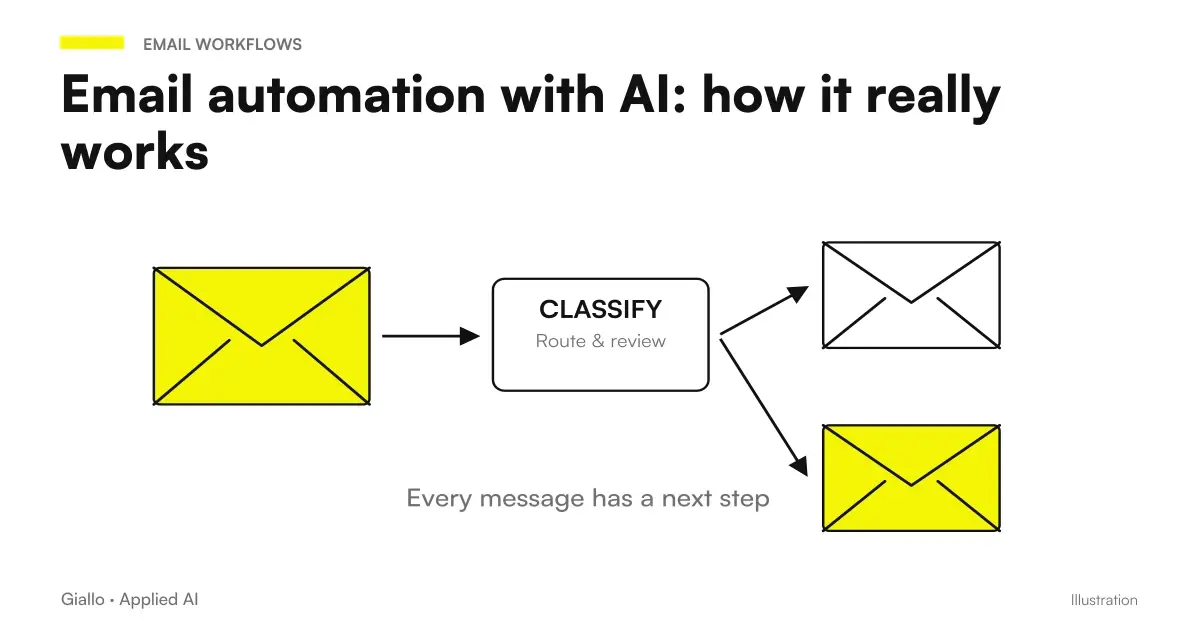 Email automation with AI: how it really works
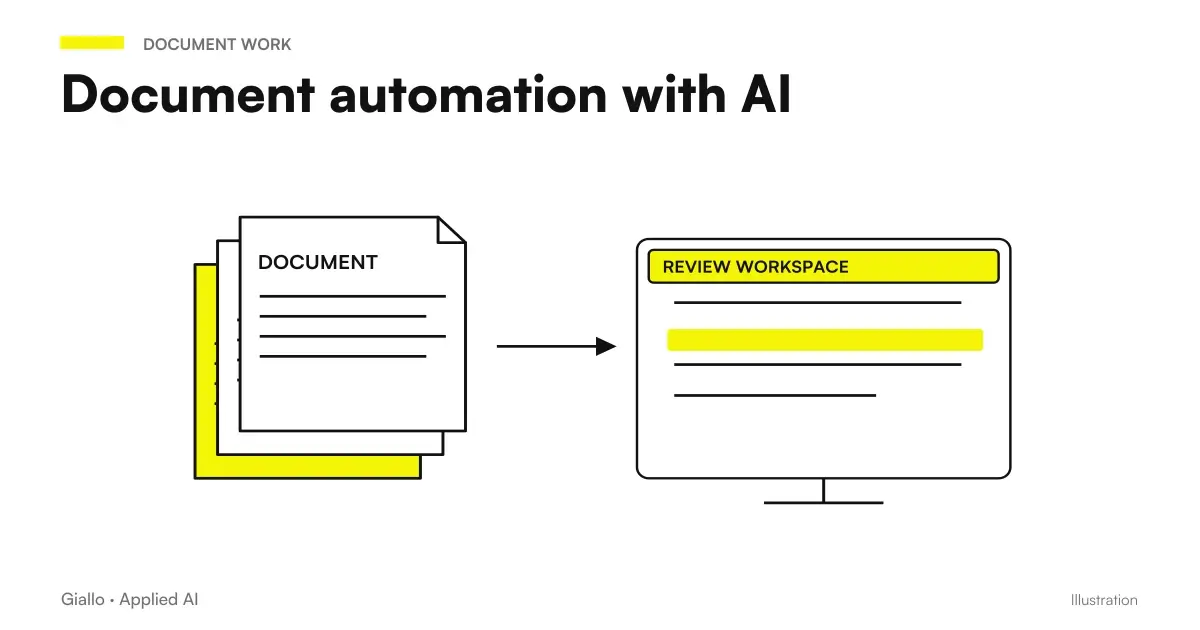 Document automation with AI: contracts, forms and PDFs automatically
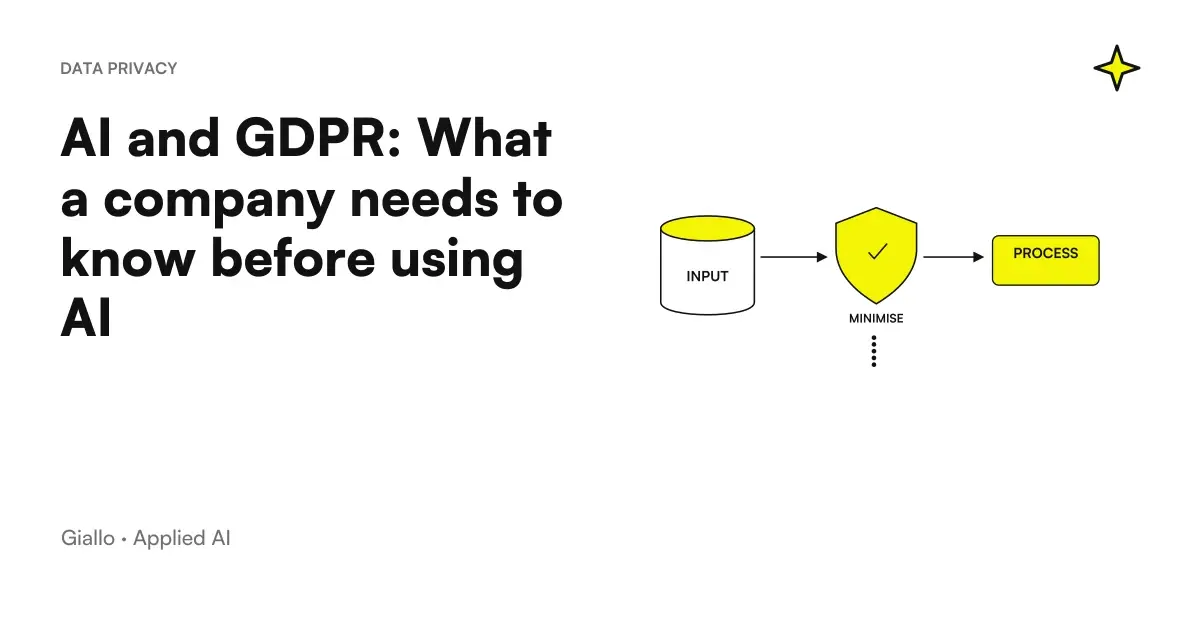 AI and GDPR: What a company needs to know before using AI
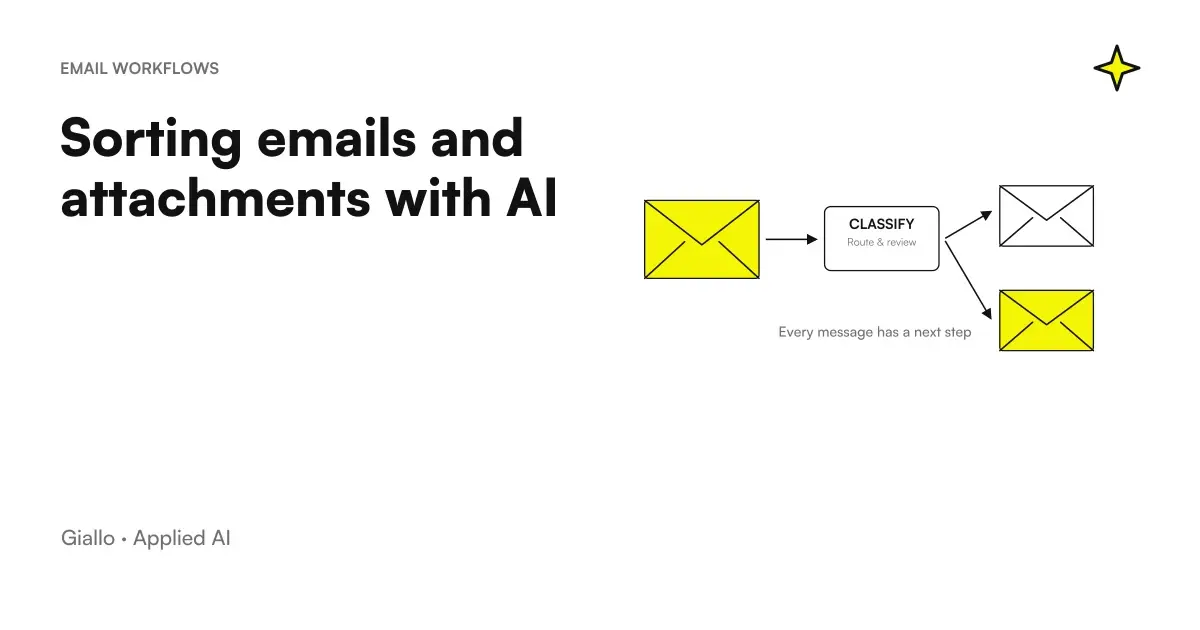 Sorting emails and attachments with AI: a single queue for sales and administration
 Deadlines and renewals of contracts with AI: building a verifiable schedule
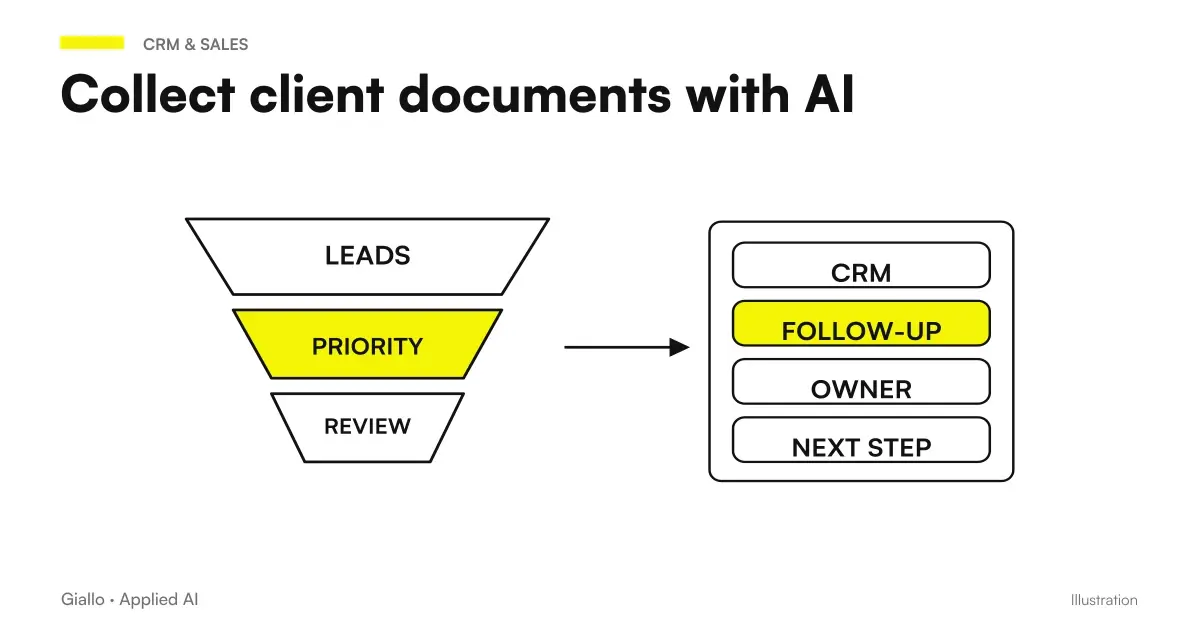 Collect client documents with AI: checklists and case status
 Hooks and MCP: filters and handlers in Claude Code
FAQ
What is the role of AI in PEC management?
It can prepare classification, assignment and data for verification, preserving the links between the original message, attachments and receipts. It does not replace assessment of content or deadlines by the appropriately responsible person.
Does a delivery receipt prove that a person has read the message?
No. DPR 68/2005, Article 6, distinguishes acceptance from delivery to the recipient’s mailbox; delivery must not be described as proof that a person has read the message.
Can I delete the originals after extraction?
The project must preserve originals and the necessary links within the process established by the organization. Extracted fields are not an equivalent copy of the message; retention decisions must be assessed separately.
Can AI calculate every deadline automatically?
It can extract a date or suggest something to check, identifying the source. Interpreting start dates and time limits requires appropriate verification: a proposed date must not become a confirmed deadline.
How should you handle a receipt with no linked message?
Flag it as an anomaly with the available references. The workflow must not invent a connection based solely on a similar subject line.
Does the guide impose document registration obligations on SMEs?
No. It describes how to organize a workflow; it does not extend public administration document registration rules to SMEs or establish legal retention periods.