Skip to content
Giallo

AI for payroll consultants: a month of payroll with less chasing of client companies.

This page follows the day and the month of a payroll firm: for each moment you'll find the agent we propose, the tools it works with, the model we choose and what still needs a signature. It's written for owners and office managers who handle many client companies, each with its own habits for sending data.

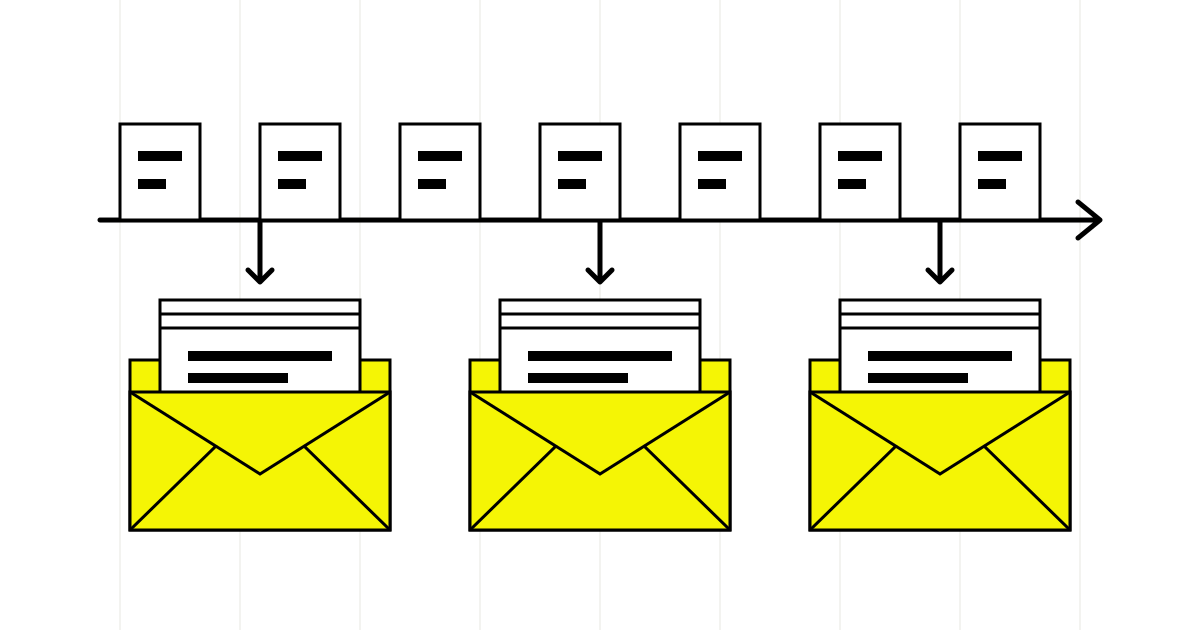
Attendance cards move along a track and gather into neat stacks inside three identical yellow envelopes, ready for HR paperwork

Where does AI actually help a payroll consulting firm?

AI for payroll consultants works before and after payroll processing: agents that put in order the timesheets sent by client companies, route hiring requests, answer employees' payslip questions and read collective agreement renewals. Giallo Studio builds them to measure with Claude, GPT and Gemini; calculations and filings stay with the consultant.

A working day, agent by agent.

The month-end close on a conveyor belt: client companies' submissions arrive in different formats and leave as uniform rows for the payroll software; the row with an anomaly is set aside to clarify with the company, and the payroll clerk checks and uploads the finished file.
  1. During the monthly close, when client companies send attendance, vacation and overtime.

    Attendance agent

    Turns the companies' submissions into a uniform layout for the payroll software and highlights what doesn't add up.

    1. Collects submissions from the dedicated inbox or the firm's portal, whatever the format.
    2. Extracts, for each employee, days worked, absences, vacation, leave and overtime.
    3. Compares the data with the previous month and the contractual schedule, and flags anomalies.
    4. Prepares a message for the company with only the rows that need clarifying.
    5. Generates the import file for the payroll software, which the clerk checks and uploads.

    Connects to: The firm's payroll software · Client companies' spreadsheets · Clients' time clocks · Dedicated email inbox

    GPT
    Extracts tables from mixed files and photos into a strict format, ready for an automatic check before import.
    Codex
    Writes and maintains the import file generator, which must match the payroll software's layout; it works on the code, never on employee data.

    Who approves. The file is never uploaded on its own: the payroll clerk checks and imports it. Flagged anomalies are resolved by a person with the company.

  2. Every morning when the inbox is opened, and immediately when a request marked urgent arrives.

    Client requests agent

    Recognizes hires, extensions, conversions and terminations in client emails, checks that all the data is there and prepares the case file.

    1. Reads incoming emails and separates operational requests, questions and informational messages.
    2. For each operational request, checks for the required data, such as applicable agreement, job level, hours and start date.
    3. Writes the company a precise request for the missing data.
    4. Creates the case card and assigns it to the clerk who handles that client.

    Connects to: Office email · Case management system · Client company records

    Claude Haiku
    The first sorting of emails is fast and frequent: a lightweight model is enough and keeps costs low on peak days.
    Claude Sonnet
    Writes follow-up requests to companies in the firm's tone, without inventing data the client hasn't provided.

    Who approves. Mandatory filings with the authorities are always sent by the consultant or an authorized clerk, after checking the case card.

  3. In the days after payslips are delivered, when workers' questions come in.

    Payslip assistant for employees

    Explains payslip items to client companies' employees, using only their own data and the rules written by the firm.

    1. Identifies the worker through a personal login provided by the company or the firm.
    2. Reads that month's payslip and the running totals of vacation and leave.
    3. Explains the items in plain words and, when needed, points to the relevant clause of the applicable collective agreement.
    4. When the worker disputes an amount, opens a ticket for the firm with their question and the month's data.

    Connects to: Employee portal · Payslip archive · Applicable collective agreements

    Claude Sonnet
    Follows strict instructions on what not to say, such as opinions on labor disputes or legal advice, and explains figures and items patiently.

    Who approves. The firm and the company approve the allowed answers and the assistant's introduction text. Every dispute goes to a clerk and is never resolved by the agent.

  4. At the end of the week, gathering the agreement renewals and circulars published in the previous days.

    Renewals and circulars agent

    Reads the new texts, identifies which client companies are affected and prepares an internal note and a draft notice for the consultant.

    1. Collects the sources the firm follows, such as renewal agreements and agency circulars.
    2. Summarizes what changes, from when and for which categories of workers.
    3. Matches the content against the collective agreement each client applies.
    4. Prepares the note for the consultant and a draft letter for the companies concerned.

    Connects to: The firm's circulars archive · Client records by applicable agreement · Drive or shared folders

    Claude Opus
    Renewal texts are long and full of internal cross-references: you need a model that reasons over the whole, and it runs only a few times a week.
    Gemini
    We choose it when the firm works in Google Workspace, because it reads and writes directly in shared Drive files and Sheets.

    Who approves. Interpreting the renewal and deciding what to tell clients is up to the consultant, who signs every letter.

Where time gets lost today.

These are the points we hear about most often. Each one is a possible first agent.

Timesheets arrive in a different format every time

Some send a tidy spreadsheet, some a photo of the attendance log, some an email saying “same as last month, plus two days off.” Staff retype everything into the payroll software right before the close.

An agent reads every submission, maps it to a single layout and flags doubtful rows before processing starts, so questions go out to the companies right away, not on the last day.

Client requests get lost in the inbox

Hires, extensions, terminations and schedule changes reach the consultant, a colleague or the front desk by email. Essential data is often missing, and you only find out when the filing is due.

Requests are recognized, assigned to the right person and completed with a list of missing data already sent to the company, before they turn urgent.

Employees call to understand their payslip

Remaining vacation days, a deduction that doesn't add up, back pay: client companies' workers call the firm or their own HR office, which in turn calls the firm.

An assistant explains the payslip items from that employee's own data and passes on to the firm only real disputes, with the question already clear.

Renewals and circulars to read for every client

When a collective agreement changes or a public agency issues a notice, someone reads it, works out who it affects and writes to the companies concerned, one client at a time.

An agent reads the text, matches it against the agreement each client applies and prepares an internal note with the list of affected companies and a draft notice.

Which AI model we use, and for which task.

We don't tie you to a single provider: we work with Claude by Anthropic, GPT and Codex by OpenAI, and Gemini by Google, and we choose the version during testing, on your own cases.

GPT

  • Attendance agent. Extracts tables from mixed files and photos into a strict format, ready for an automatic check before import.

Codex

  • Attendance agent. Writes and maintains the import file generator, which must match the payroll software's layout; it works on the code, never on employee data.

Claude Haiku

  • Client requests agent. The first sorting of emails is fast and frequent: a lightweight model is enough and keeps costs low on peak days.

Claude Sonnet

  • Client requests agent. Writes follow-up requests to companies in the firm's tone, without inventing data the client hasn't provided.
  • Payslip assistant for employees. Follows strict instructions on what not to say, such as opinions on labor disputes or legal advice, and explains figures and items patiently.

Claude Opus

  • Renewals and circulars agent. Renewal texts are long and full of internal cross-references: you need a model that reasons over the whole, and it runs only a few times a week.

Gemini

  • Renewals and circulars agent. We choose it when the firm works in Google Workspace, because it reads and writes directly in shared Drive files and Sheets.

How we choose between models: the best AI model for agents.

From timesheet file to payroll layout

Send us a typical timesheet submission, even a messy one, with the names removed: we'll use it to show you how the agent would bring it into your payroll software's layout.

Prefer the full form? Go to the contact page.

No spam or sales pitches. Response within 1 business day.

We use this data to contact you and, if we work together, to manage the project. We store it in Giallo's internal management system, on servers in the European Union, where only our team can see it; by email we only receive a notice, without your data. If you do not become a client, we delete it 3 months after our last contact. Details and your rights: privacy policy.

Do you prefer to write or call us?

How we work with you.

  1. A payroll month, observed up close

    We follow one monthly close to see how timesheets arrive, which clients always send incomplete data and where the office loses days.

  2. One agreed layout

    With the clerks we define the format in which the agent must deliver the data, the same one the payroll software accepts for import.

  3. Rules for talking to workers

    Together with the consultant and the companies we write down what the assistant can explain, what it doesn't comment on and how it hands over to a person.

  4. Testing on a month already processed

    We rerun an already closed month with the agent, using anonymized data, and compare its layout with the one the clerks uploaded.

Frequently asked questions, straight answers.

There isn't just one. To extract timesheets from different files we often use GPT, to talk with employees Claude Sonnet, to read collective agreement renewals Claude Opus; we choose after a test on your anonymized data.

No. The calculation stays with the payroll software and the clerk's review. The agents work before, putting the data in order, and after, explaining the payslip and handling questions.

We test it on a month that has already been processed, with anonymized data, and compare its output file with the one your staff uploaded. We start on real clients only when the result is convincing.

Yes, always. The assistant introduces itself as such in the first message and explains how to reach a person at the firm or the HR office.

In most cases, through the import files the software already accepts. If programming interfaces exist we assess them, always with minimal permissions and writing only after human review.

They never enter the agents. The data needed for the calculation, meaning the days of absence and the event code, comes from the flow the firm already uses; the documents stay in the usual archives.

AI agents for payroll consultants

Which day of the month would you like to lighten?

Send us a typical timesheet submission, even a messy one, with the names removed: we'll use it to show you how the agent would bring it into your payroll software's layout.