
Custom CRM or off-the-shelf business software: how to choose
When to build a custom CRM or buy off-the-shelf business software: two deciding questions, real costs and the risk of vendor lock-in.
Reading time: 9 min
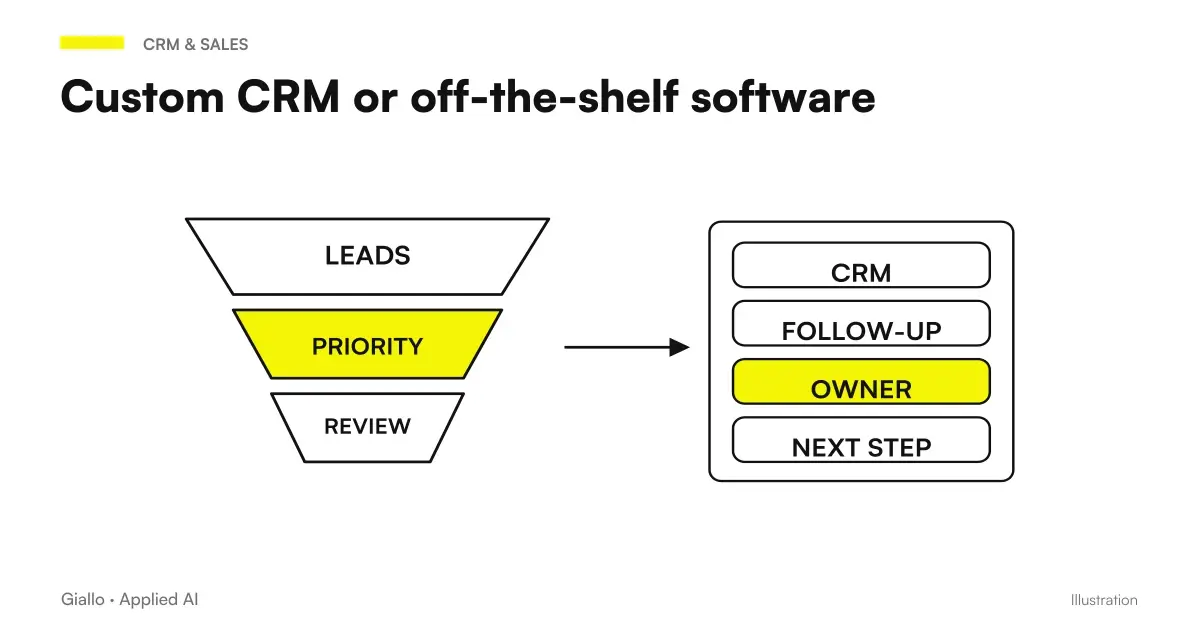
Custom CRM or off-the-shelf business management software It is a decision that is taken badly almost always for the same reason: you compare the functions instead of the questions.
The honest answer, first of all: In most cases, the ready. Cost less, exists today, has assistance, does not commit anyone to maintenance and receives improvements that do not pay. Tailored is justified in a precise and rather rare situation.
This article describes the criterion used in a real case il the CRM for car rental of Rial Rent dove where the choice fell on the tailored for two reasons alone, and neither was the interface.
In summary
- In most cases, the Ready-made business management software: it costs less and does not commit you to maintenance.
- The custom is justified on the Operational Questions to which the ready-made product does not respond, not on the functions it lacks.
- Both roads create dependency: from a software provider or a development one. The customized moves it, does not eliminate it.
- The maintenance It is the voice that surprises: it must be budgeted before deciding.
- Often the best solution is not to replace but add the only missing part above the existing management software.
The criterion: questions, not working
The typical error is to make the list of desired functions, compare it with that of the product and count the missing boxes. It always produces the same result —something is missing —and it doesn't help to decide.
The criterion that works is different: What operational questions does your company ask itself every week, and which ones does the software not answer?
In the rental project the questions discovered were two:
- How much did this single car make this year? Not the turnover: the margin, with the real costs of that medium in it.
- Who was driving on May 17 at 17:14? Question that comes at every fine, and that hand requires you to scroll through contracts.
Everything else —records, vehicle listings, contracts —the ready-made product did. Tailor-made was justified on those two, and would have been unjustifiable without it.
The comparison, without discounts
| Criterion | Ready-made business management software | Custom CRM |
|---|---|---|
| Time to leave | Days | Months |
| Initial cost | Low | The Development Project |
| Recurring cost | Canon, often by post | Infrastructure + maintenance |
| Functions | Those provided by the product | The ones you decide |
| Improvements | They come without you paying | You pay them. |
| Data | On the provider's infrastructure | Where you decide |
| Assistance | Supplier, with known times | Who built it |
| Risk | Supplier changes prices, closes or changes direction | Who built it becomes untraceable |
| Adaptation | Adapt the process to the software | Adapt software to the process |
The last line is the one that weighs the most in the daily and that you underestimate the most in the choice phase. Adapting the process to a product is not always bad: sometimes the product incorporates better practices than yours. It becomes a problem when your process is your competitive advantage.
The two risks, specular
Risks of the ready
- The supplier increases prices or changes license model.
- A function you use is removed or changed.
- Your data is on an infrastructure you don't control.
- The product goes in a different direction than yours.
Tailor-made risks
- Whoever built it becomes untraceable.
- No documentation: software exists but no one can touch it.
- Maintenance is postponed until something breaks.
- No one improves the product unless you pay for it.
Tailored does not eliminate addiction, the move. The difference is that in the first case the dependency is on a company structured with so many customers; in the second case it is on a supplier that could be small. It should be handled with documentation, access to the code, and a handover provided in writing — not with confidence.
The Third Way That Hardly Anyone Considers
Between "I keep what I have" and "I make everything" there is an intermediate road that is often the best: add above.
If the current management system exposes the data — via API, exports, database access — you can build the only missing function and leave the rest where it is. The profitability account can live outside the management software and read the data; an operational screen can rely on the existing registry.
It costs a fraction, does not require migration, and keeps product support ready on everything else. The constraint is only one, and must be verified first: the management software must make its data accessible. If it is closed, this road does not exist.
Starting from the ready is often the right move
If you don't have any system yet, the almost mandatory choice is the product ready — even if you suspect it won't be enough.
A year of real use teaches you what questions you really ask, what functions you use, and what you asked and then ignored. It is the best specification that exists for a possible custom, and it costs infinitely less than a theoretical analysis done before you've ever handled the process with an instrument.
In the rental project it went exactly like this: there was a generic management software, and the historical data was imported from there. That period was not lost time: it was the one that made the two questions clear.
How to estimate the cost over three years
The comparison made on the first year is almost always misleading, because it compares a concentrated development cost with a diluted canon. Over three years the picture changes, in both directions.
- Ready-made business management software. Fee per location multiplied by the number of users expected in three years, not today. If the team grows, spending grows.
- Tailored. Initial development, more recurring infrastructure, more annual maintenance. The latter is the item that you forget and should be estimated explicitly at the time of quote.
- Indirect costs of both. Training, data migration, internal time of those who follow the project: they exist in both cases and rarely appear towards.
Questions to Ask a Tailored Software Provider
If the choice falls on the tailored, these are the questions that separate a serious supplier from one that delivers and disappears.
- Is the code accessible to the company, and in what form?
- What is documented, and who needs that documentation?
- How does maintenance work after delivery, and how much does it cost?
- What happens if the company wants to switch providers in two years?
- Does the project include a security check made by someone who didn't write the code?
- What infrastructure will it run on, and who has the credentials?
The last one is the one that turns out to be late and in the worst way. The credentials of the infrastructure on which a business software runs must be the company's, not just the supplier's: it's the difference between a supply ratio and an addiction.
The topic of application security, which must be contracted and not left implicit, is dealt with in 2FA on management software.
Practical examples
A company evaluating replacement. The management system covers everything except a screen used every day. The right question is not "we can build it" but "who will keep it in two years." If there is no answer, you add it on top or keep it as it is.
An activity with a peculiar process. The way of working is what sets the company apart from its competitors, and every ready-made product forces it to denature it. Here tailor-made makes sense, and is an investment in competitive advantage.
An SME without technical resources. No one internally can interface with a development provider or evaluate a technical estimate. The ready product, even imperfect, is almost always the correct choice.
A figure that is missing but is calculable. If the manager has the data but does not make the account, often it is enough to build the account. It is the case described in profitability by vehicle.
Mistakes to Avoid
Counting only the initial development. Maintenance is recurrent and should be estimated earlier, not discovered later.
Building to save on the canon. Counts almost never come back, and the wrong motivation leads to an undersized project.
Reconstructing what exists. Every function replicated by a ready-made product is time spent without advantage.
Not planning for handover. Software without documentation is a debt to the future of the company.
Confusing "miss a function" with "doesn't answer a question". The first is almost always around; the second is not, and is the one that justifies the investment.
How to apply it in the company
- Write operational questions that you place yourself every week and mark to which current software does not respond.
- It checks whether the data to answer exists. If no one records a cost, no software will calculate it.
- Check if the management system exposes the data: opens the way of adding over instead of replacing.
- Estimate the cost over three years, not on the first: development, infrastructure, maintenance.
- Decide who keeps it and put it in writing, along with documentation and access to the code.
If the choice falls on the tailored, the themes that immediately follow are safety — treated in 2FA on management software ' and the organization of data and documents, described in Digital Vehicle Documents.
Conclusion
The choice between Custom CRM and ready-made business management software You don't decide by counting functions: you decide on unanswered operational questions. If they are zero or one, buy. If there are two or more and they recur each week, the custom gets into the reasoning — along with the maintenance cost and the question of who will keep it alive.
The third way, almost always neglected, is to add the only missing part above what you already have: it costs a fraction and does not require you to do anything again.
Do you want to understand what processes in your company can be automated with AI? Giallo Studio can help you turn the problem into a real workflow. The service is described in custom software and the typical cost ranges in prices.
Giallo Studio guides: methodology and sources
How we apply it in the company
Related resources
 Custom CRM for car rental: the full case study
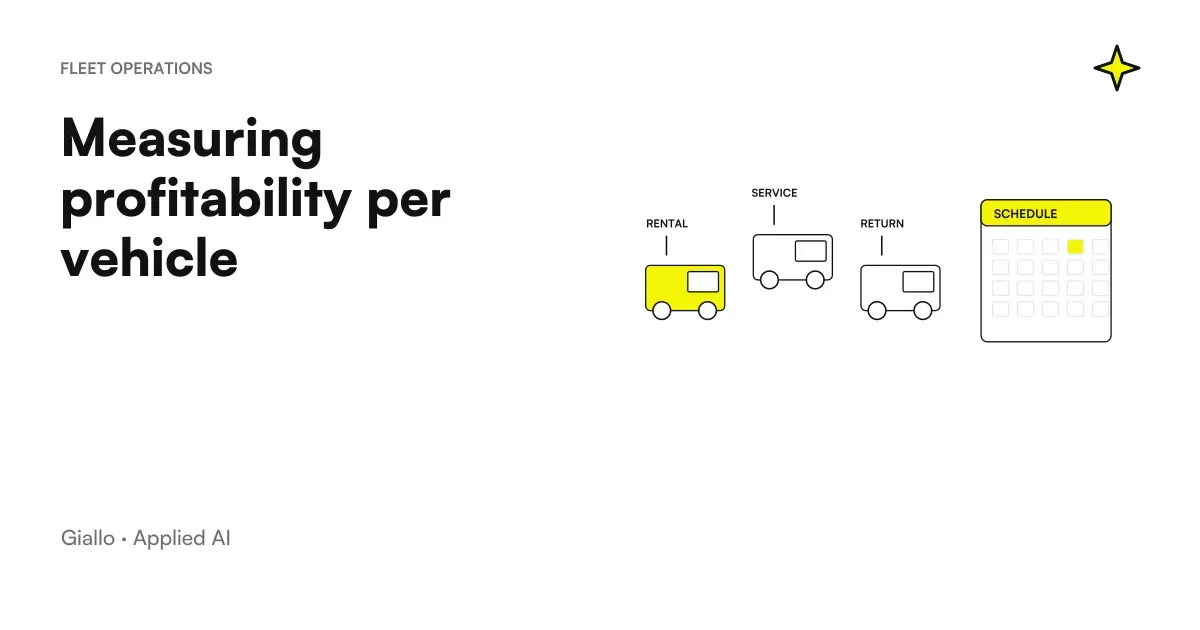 Profitability per vehicle: see which vehicles earn money
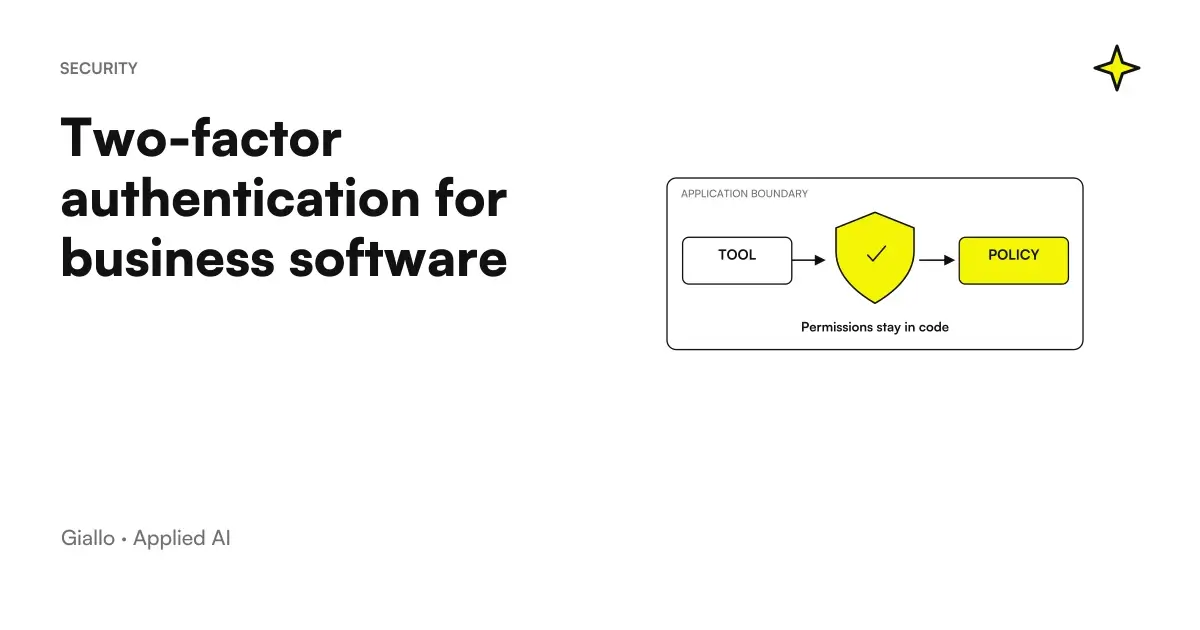 Mandatory 2FA for business software: why and how to implement it
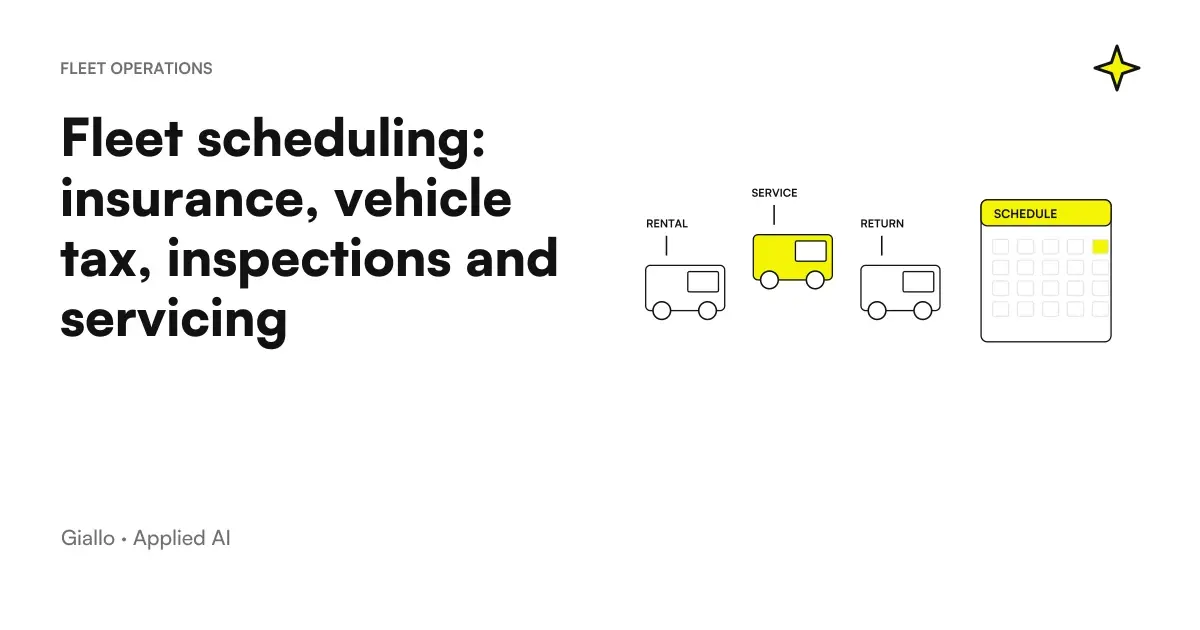 Fleet deadlines: insurance, road tax, inspections and servicing
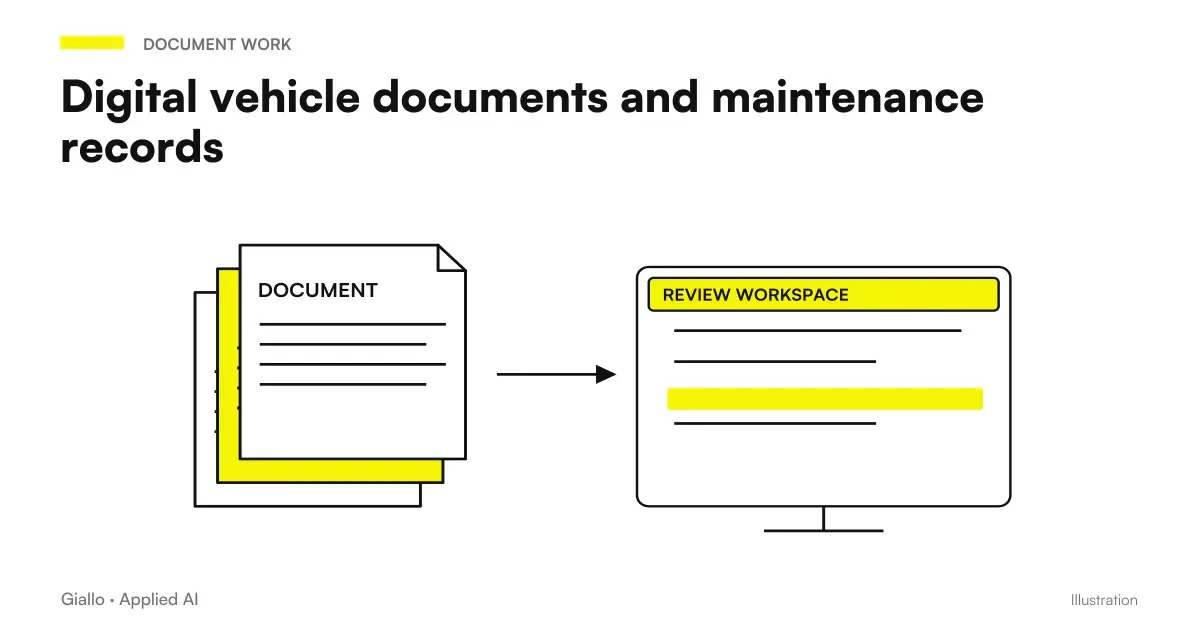 Digital vehicle documents: registration, servicing and vehicle records
 Subscription or custom AI: which makes sense?
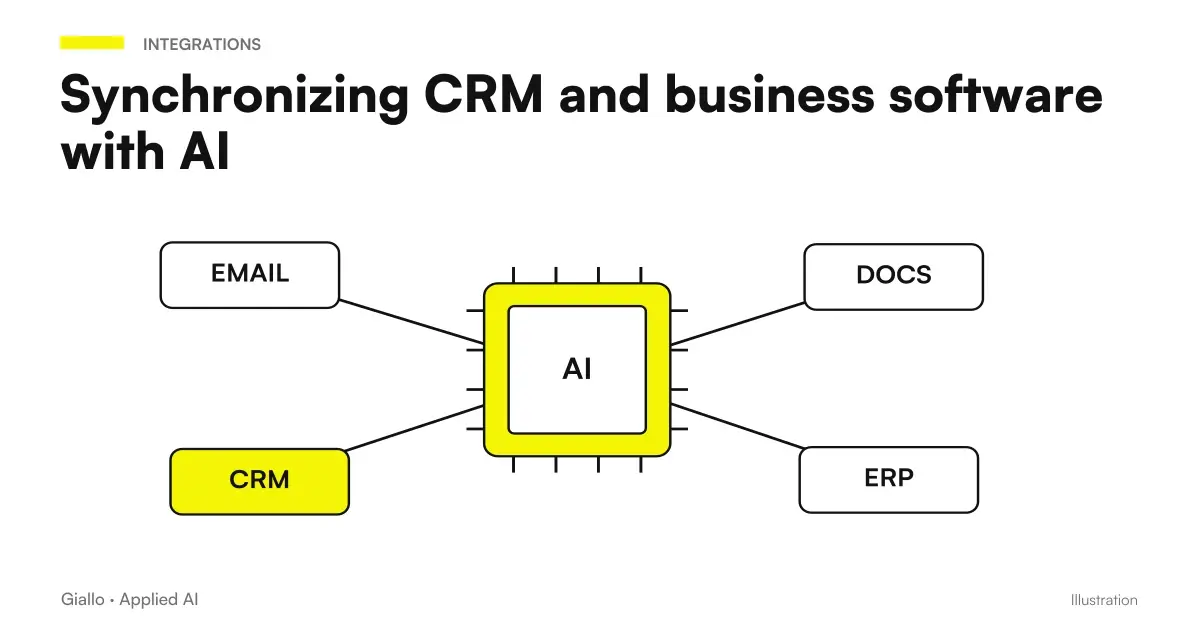 Synchronise CRM and business software with AI: data, conflicts and retries
 Deduplication with Jev AI: connecting records without merging the wrong ones
FAQ
When is a custom CRM worth it?
When there are one or two central operational questions that no off-the-shelf product answers, and the company needs to answer them every week. If an off-the-shelf product covers everything else, custom software is justified only by those questions, rather than by appearance or convenience.
Is ready-made software always cheaper?
In the short term, almost always yes. In the long term, it depends on how costs grow: many products charge per seat, so spending grows with the team. Custom software has a high initial cost and recurring maintenance costs, which must be budgeted for and not forgotten.
What is the main risk of custom software?
Dependence on who built it. If that supplier becomes unavailable and there is no documentation, the company has software that no one can modify. It is a manageable risk, but it needs to be managed: documentation, accessible code, expected handover.
Can you start with off-the-shelf software and move to custom software later?
Yes, and it is often the most sensible route. Using an off-the-shelf product for a year teaches you which questions really matter and which features are actually used: these form the best specification for a possible custom system, and cost much less than a theoretical analysis.
Do you need to redo everything or can you add only the missing part?
You can often add the missing part. If the business management system exposes its data, you can build just the missing feature on top of it instead of replacing the whole system. It is the cheapest option and the one considered least often.
How do you assess the total cost of a custom-made software?
Adding up the initial development, recurring infrastructure and maintenance over a period of a few years. The development cost is the most visible item and is not the dominant one in the long run: maintenance should be estimated explicitly, not left implicit.