Skip to content
Giallo

AI for recruiting: agents that free recruiters from the inbox, not from the decision.

What can an AI recruiting agent do without choosing for the recruiter?

AI for recruiting pays off most on the work around the hiring decision: collecting applications from job boards and email, scheduling interviews, organizing interviewers' notes and replying to every candidate. Giallo Studio builds these agents to measure with Claude, GPT and Gemini, connected to the ATS or the team's inbox; the recruiter decides who to reject and who to hire.

We write for HR departments at SMEs, search and selection firms and staffing agencies that receive more applications than they can read carefully. Here you'll find the agents we design, from the recruiting chatbot that answers candidates to the queue of end-of-process replies: when they kick in, which tools they touch, which model we choose and where the law requires a person to decide.

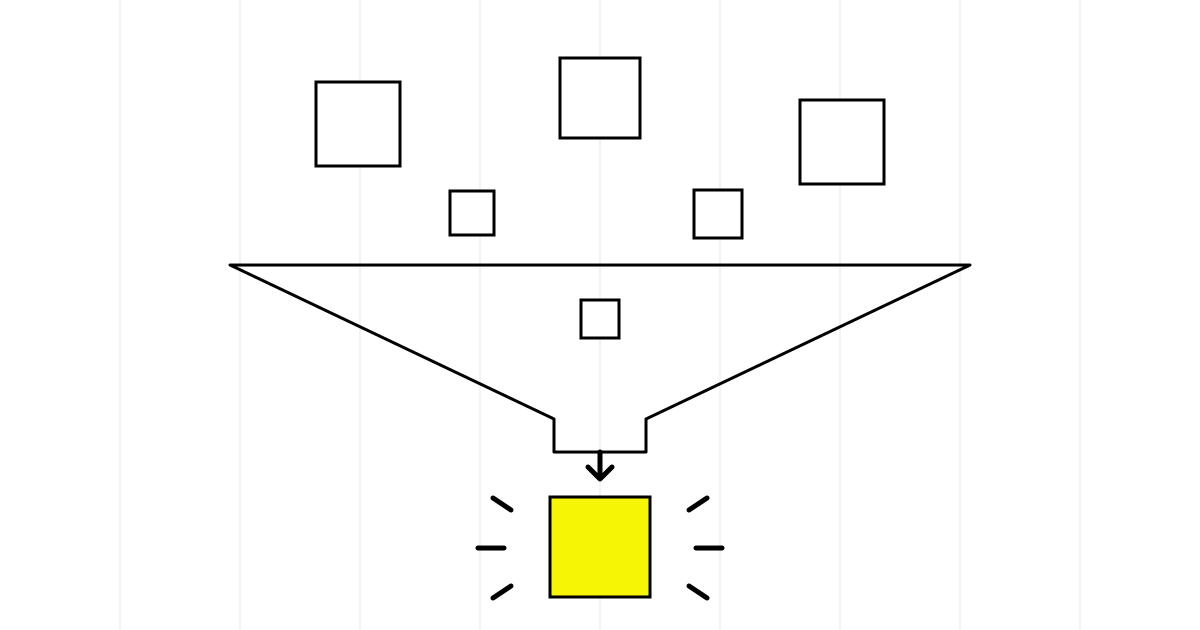
A transparent funnel takes in many white cubes, symbolizing applications. The AI agent selects the right profile: a single bright yellow cube emerges from the bottom

The AI agents we design, one by one.

The application intake agent reads a CV line by line: experience, education, languages and requirements go into the position's profile, while photo, age and marital status are ignored. The requirement to check stays highlighted, the duplicate merges into the existing profile and the candidate gets an acknowledgment of receipt.

Application intake agent

Brings every CV into the same database with a readable profile, without deciding who deserves attention.

With every new application, whether it comes from a job board, an email or the website form.

  • HR inbox
  • Job boards
  • ATS or applications spreadsheet
  • Website form
GPT
It turns PDF and Word CVs, never in the same layout, into structured fields, with a fixed schema that the connector validates before writing to the database.
Gemini
We choose it when the team works in Google Workspace: it reads attachments from Gmail and Drive and writes to the Sheets the team already uses.
How it works, step by step
  1. Reads applications from the team inbox, the job boards and the “work with us” form.
  2. Extracts experience, education, languages, availability and location, ignoring photos, age, marital status and any data the job ad doesn't ask for.
  3. Checks whether the person is already in the database and merges duplicates instead of creating new ones.
  4. Marks the objective requirements stated in the job ad, such as a driver's license or a certification, as present, missing or to be verified.
  5. Adds the profile to the position in the ATS and sends the candidate an acknowledgment of receipt.

Who approves. The recruiter approves the profile schema and the list of data to ignore once. The agent rejects no one, not even when a requirement turns out to be missing.

Interview and scheduling agent

Finds a time that works for everyone and guides the candidate through to the day of the meeting.

When the recruiter moves a candidate to the interview stage.

  • Google Calendar or Outlook
  • WhatsApp Business Platform
  • Email
  • ATS
Claude Haiku
Replies about times are short and numerous: you need a fast model that turns a preference expressed in words into a precise calendar slot.
Codex
We use it to write and maintain the link between calendars and the ATS. It doesn't read candidate data, and its code goes through our team's review.
How it works, step by step
  1. Reads who needs to attend and the duration set for that stage of the process.
  2. Cross-checks the calendars of the recruiter and the department head and picks a few free slots.
  3. Writes to the candidate by email or WhatsApp and understands the reply even when it's vague, like “late afternoon works better.”
  4. Confirms the appointment, sends the address or the video call link and a reminder the day before.
  5. If the candidate withdraws or doesn't show up, it updates the stage and notifies the recruiter.

Who approves. The recruiter decides who moves to interview: the agent only schedules meetings with people already moved to that stage and says nothing about the outcome.

Candidate assistant

Answers applicants' practical questions and tells them where their application stands.

Always, on the careers page and on WhatsApp, evenings and weekends included.

  • Careers page
  • WhatsApp Business Platform
  • ATS
  • Open position profiles
Claude Sonnet
It follows long instructions full of prohibitions and keeps a friendly tone even with disappointed candidates: every sentence it writes represents the company in front of someone looking for work.
Claude Haiku
It answers repetitive questions on its own, like the office address or the documents to bring, and leaves sensitive conversations to the more capable model.
How it works, step by step
  1. Introduces itself as the HR team's automated assistant.
  2. Answers about location, hours, contract type and hiring stages using only what is published in the job ad.
  3. Shares the stage the application is at, without anticipating any assessment.
  4. Asks nothing about health, family, opinions or personal plans and, if the candidate brings them up, doesn't record that information.
  5. Hands off to a person any requests outside the script, such as an accommodation for the interview or a complaint.

Who approves. The HR team approves the allowed answers for each position. Questions about outcomes, unpublished pay or personal situations always go to a person.

Interview scorecard and outcome agent

Organizes interviewers' notes and prepares candidate replies for outcomes already decided.

Right after each interview, and when the recruiter closes a stage of the process.

  • Dictated or written notes
  • ATS
  • The team's reply templates
  • Email
Claude Opus
It comes into play only a few times per position: it handles long, messy notes from several interviewers and compares them with the requirements without losing nuance.
Claude Sonnet
It writes candidate replies in the company's voice, without adding reasons the recruiter didn't give and without phrasing that sounds like a judgment of the person.
How it works, step by step
  1. Receives the written or dictated notes from whoever conducted the interview.
  2. Transfers them to the position's scorecard with the same fields for everyone, linking each observation to a requirement in the job ad.
  3. Removes references to data that must not weigh on the decision, such as age or private life, and tells the interviewer.
  4. When the recruiter records an outcome, writes a draft reply suited to the stage the candidate reached.
  5. Gathers the drafts into a single queue that the recruiter reviews and sends.

Who approves. The assessment belongs to the interviewers, the decision to the recruiter. No automated score goes into the scorecard and no reply goes out unless they send it.

Before and after the agent, in everyday work.

Applications arrive from too many places

Today. CVs from the job board, the general inbox, the website form, forwarded by colleagues with a “take a look at this.” Someone saves them in a folder, others stay in the mailbox, and the same person shows up twice with two different emails.

With the agent. An agent collects applications from every channel, spots duplicates, fills in a uniform profile and attaches it to the right position. No application is rejected: they all arrive, in order.

Scheduling an interview takes more messages than the interview itself

Today. A proposed time, the candidate can't make it, a new proposal, the department head moves their meeting. A single interview keeps the recruiter busy on and off for days, between emails and phone calls.

With the agent. The agent checks the calendars of everyone who needs to attend, offers the candidate only slots that are truly free, handles rescheduling and sends the address or the video call link.

Candidates who aren't selected never hear back

Today. Those who don't pass the first round wait for weeks and then stop hoping. It isn't carelessness: writing personal feedback to each one doesn't fit in the day, and the company's employer brand suffers.

With the agent. For each outcome the recruiter decides, the agent prepares a courteous reply that fits the stage reached. The recruiter skims it, corrects where needed and sends everything from a single queue.

Interview notes stay in notebooks

Today. Each interviewer takes notes their own way, on paper or in a personal file. At the final debrief people reconstruct from memory who said what, and the criteria shift from one candidate to the next.

With the agent. Notes, dictated ones included, become a scorecard with the same fields for every candidate for the position, tied to the job ad's requirements and ready for the interviewers' debrief.

Frequently asked questions, straight answers.

No, and we do not recommend it. An AI recruiting chatbot answers practical questions, collects availability and documents and schedules the meeting; assessing the person stays with whoever is hiring.

Not in the agents we build. The agent flags whether an objective requirement in the job ad is present, missing or to be verified, but the application stays visible and the recruiter decides on rejection. That way a badly formatted CV doesn't vanish because of a reading error.

Usually yes, if the ATS offers APIs or exports. Otherwise we start from the team inbox and a shared spreadsheet, which for many SMEs is already the applications database, and add the ATS connection later.

Yes, and it is simple: the chat assistant introduces itself as AI in its first message, and we help you write a clear paragraph for the careers page.

It depends on the CV formats and the team's tools. Often GPT to extract the data, Gemini if everything lives in Google Workspace, Claude for interview notes and candidate replies. The choice is made during testing, on the same anonymized CVs.

Only with the information published in the job ad. If pay isn't stated, it says so clearly and passes the question to a person; it doesn't negotiate or hint at offers.

Yes, when applications all arrive at once when a position opens. In that case we start with a single agent, usually application intake or interview scheduling, and keep it on only while a search is underway.

How we work with you.

  1. One hiring process, retraced from job ad to final reply

    We take a position that's already closed and rebuild every step with you, to see where emails, waiting and unanswered applications pile up.

  2. The list of data nobody looks at

    Before writing code, we agree with the HR team on what the agent does not extract or keep, and turn it into rules we can verify.

  3. Connecting the ATS, email and calendars

    We check what your tools offer through APIs or exports and give each agent only the permissions its task requires.

  4. Testing on anonymized applications

    We test the agents on CVs and notes without names, compare the models and check that no application is ranked based on personal characteristics.

Your next open position, with less email

Tell us where your applications come from and how you schedule interviews today: we'll tell you which agent to build first and how to connect it to the ATS or inbox you already use.

Prefer the full form? Go to the contact page.

No spam or sales pitches. Response within 1 business day.

We use this data to contact you and, if we work together, to manage the project. We store it in Giallo's internal management system, on servers in the European Union, where only our team can see it; by email we only receive a notice, without your data. If you do not become a client, we delete it 3 months after our last contact. Details and your rights: privacy policy.

Do you prefer to write or call us?

AI agents for recruiting

Which stage of hiring eats up the most days?

Tell us where your applications come from and how you schedule interviews today: we'll tell you which agent to build first and how to connect it to the ATS or inbox you already use.