Skip to content
Giallo

AI agent for lawyers: less paper to chase, more time for case strategy.

What can an AI agent do in a law firm?

An AI agent for lawyers prepares the work that comes before professional judgment: it sorts certified email (PEC) and court notices, gathers the facts from new clients, organizes the documents in the case file and writes first drafts. Giallo Studio designs it inside the firm's own tools, choosing Claude, GPT or Gemini depending on the task. Signature, strategy and legal opinion stay with the lawyer.

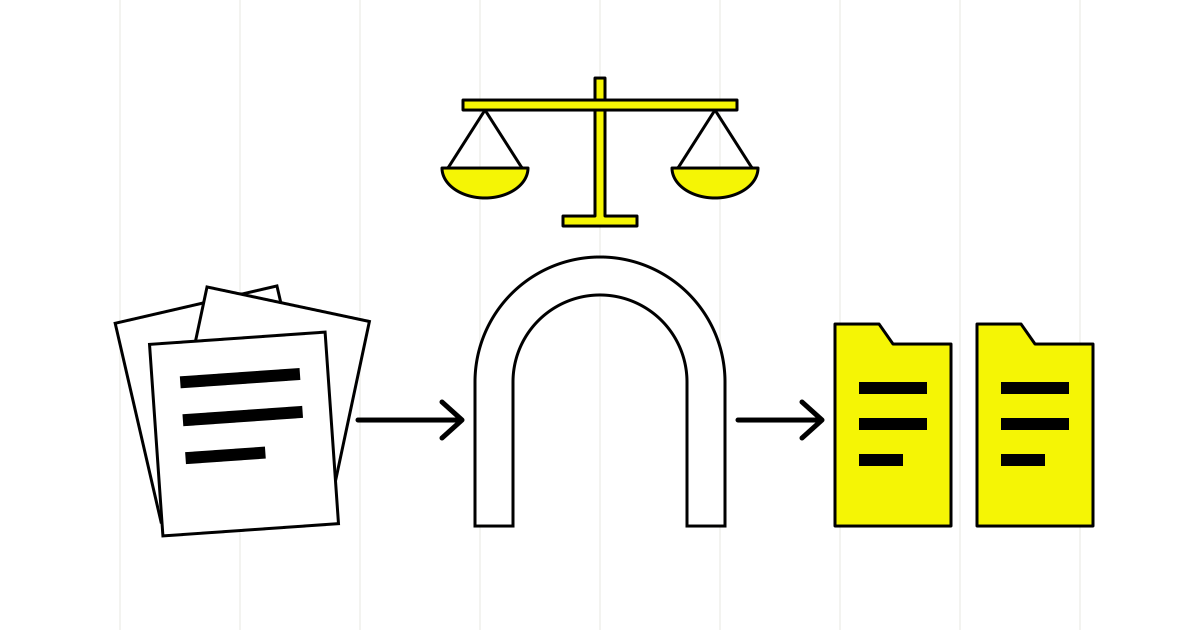
Messy sheets pass through a white arch and become organized case files, beneath a thin yellow balanced scale

We write for law firm owners, partners and office managers who want to know which agents we build, how they connect to PEC, the practice-management system and the case file archive, and where the lawyer remains the only one who decides. We don't sell a legal database: we design assistants that work on your documents, with your rules.

Where time gets lost today.

These are the points we hear about most often. Each one is a possible first agent.

The morning PEC inbox is a minefield

Between court registry notices, messages from opposing counsel and bar association newsletters, someone opens every message, downloads the attachments and renames them by hand for the right case file. A filing from the other side can sit at the bottom of the inbox until evening.

An agent reads the inbox as soon as mail arrives, recognizes the type of communication, matches it to the matter and puts anything that starts a deadline running at the top of the list. The office staff confirms instead of searching.

First contact always comes at the wrong moment

People who write through the website or call while you're in court tell their story in no particular order. A meeting gets booked without knowing whether the matter is one the firm handles or whether there's a conflict of interest with an existing client.

A virtual assistant asks a few targeted questions, collects dates, opposing parties and available documents, and prepares an intake sheet. The lawyer reads it in two minutes and decides whether to schedule the consultation.

Case files of hundreds of pages to read before writing

For a defense brief or a notice of appeal you reread hearing transcripts, expert reports, email exchanges and earlier judgments, with notes scattered between Word and notebooks. The trainee lawyer spends days building timelines.

The agent builds the timeline of facts with a page reference to every document, flags contradictions between versions and leaves the lawyer to choose what to use and how.

Clients ask where their case stands

Calls and messages asking if there's any news interrupt the people drafting filings. Often the answer is that nothing has happened, but it still has to be given tactfully.

An agent prepares periodic updates on the status of the matter from the practice-management system, in plain language, and queues them for the lawyer, who rereads them before they're sent.

The AI agents we design, one by one.

The firm's PEC inbox as a river that splits: every certified communication is recognized and takes its own lane; a served notice gives rise to a proposed deadline, which goes into the calendar only when the lawyer confirms it.

PEC and court notices agent

It classifies certified communications, links them to the matter and proposes the deadlines to add to the calendar, without ever deleting or replying on its own.

Every time a message lands in the firm's PEC inbox, plus a summary before the office opens.

  1. It reads the PEC envelope and attachments and recognizes whether it's a court registry notice, service of a document, correspondence between lawyers or mail to ignore.
  2. It looks up the matching matter in the practice-management system using docket number, parties and court.
  3. It saves the attachments in the case file folder with a consistent name decided by the firm.
  4. It proposes the calendar entry with a reference to the document it comes from, leaving the final calculation of the deadline to the lawyer.
  5. It sends the office staff a summary sorted by urgency and by the lawyer responsible for each matter.

Connects to: Office PEC mailbox · Law firm practice-management system · Case file archive on a server or in the cloud · Shared calendar

Claude Haiku
Classifying messages is a short task repeated many times a day: it needs speed and low cost, with an output format that never changes.
GPT
It extracts from the attachments the fields needed to link them to the matter, such as docket number and court, in a structured format that the connector checks before writing.

Who approves. No deadline goes into the calendar without confirmation from the office staff or the lawyer in charge. The agent proposes; it does not calculate procedural deadlines in place of the person accountable for them.

First contact assistant

It gathers the essential facts with guided questions, checks the parties' names against the firm's client records and prepares an intake sheet for the lawyer.

When a prospective client writes through the website or WhatsApp, or leaves a message after hours.

  1. It states right away that it's an automated assistant and does not give legal advice.
  2. It asks about the area of law, opposing party, relevant dates and available documents, with different questions for family, employment, condominium or debt collection matters.
  3. It compares the names of opposing parties with the client list to surface a possible conflict of interest.
  4. It fills in the intake sheet and proposes open slots for the consultation, which the office staff confirms.

Connects to: Website form and chat · WhatsApp Business Platform · Client records in the practice-management system · Lawyers' calendars

Claude Sonnet
It keeps a respectful tone with people who are often worried and strictly follows the rule of giving no legal guidance, even when the other person insists.

Who approves. The lawyer decides whether to take on the matter. The agent's conflict check is a signal for a person, not a final verification.

Case file review agent

It reads the entire case file and returns a timeline, a list of evidence with page references and the points where documents contradict each other.

When the lawyer starts preparing a filing or an opinion on a matter that already holds many documents.

  1. It receives only the documents of the specified matter, uploaded to a separate space for that case file.
  2. It reconstructs the sequence of facts with the date, source and page of every step.
  3. It flags inconsistent statements across hearing transcripts, expert reports and correspondence.
  4. It prepares an evidence table the lawyer can filter by topic or by witness.

Connects to: Case file archive in PDF · Filings and transcripts downloaded from the e-filing system · Word or the firm's editor

Claude Opus
It's the model we use when the task means holding many long documents together and reasoning about inconsistencies; it runs only a few times per matter, so the cost stays under control.
Gemini
We propose it when the case file contains many scans and photos of paper documents that have to be turned into readable text before the analysis.

Who approves. The timeline is an internal working tool: every reference is checked against the original document before it ends up in a filing.

Drafts and updates agent

It writes first drafts of letters, formal demand letters and matter status updates, starting from the firm's templates and the data in the practice-management system.

When the lawyer asks for a draft, and on a schedule set by the firm for client updates.

  1. It starts from the forms and model letters the firm considers well written, not from generic texts.
  2. It fills in the matter data and adjusts the register: technical for a fellow lawyer, plain for the client.
  3. It highlights in yellow every passage that contains an assessment, so the lawyer rewrites or confirms it.
  4. It puts the draft in the responsible lawyer's queue and records who approved it.

Connects to: Firm templates and forms · Law firm practice-management system · Regular email and PEC · Custom connector to the archive

Claude Sonnet
It writes clean legal Italian and respects the ban on inventing facts or references that aren't in the documents provided.
Codex
It's for us, not for client data: it writes and maintains the connector between practice-management system, archive and approval queue, with code reviewed by our team.

Who approves. Every text goes out with the name of the lawyer who reviewed it. Citations of statutes and case law are checked against the firm's official legal databases before signing.

Which AI model we use, and for which task.

We don't tie you to a single provider: we work with Claude by Anthropic, GPT and Codex by OpenAI, and Gemini by Google, and we choose the version during testing, on your own cases.

Claude Haiku

  • PEC and court notices agent. Classifying messages is a short task repeated many times a day: it needs speed and low cost, with an output format that never changes.

GPT

  • PEC and court notices agent. It extracts from the attachments the fields needed to link them to the matter, such as docket number and court, in a structured format that the connector checks before writing.

Claude Sonnet

  • First contact assistant. It keeps a respectful tone with people who are often worried and strictly follows the rule of giving no legal guidance, even when the other person insists.
  • Drafts and updates agent. It writes clean legal Italian and respects the ban on inventing facts or references that aren't in the documents provided.

Claude Opus

  • Case file review agent. It's the model we use when the task means holding many long documents together and reasoning about inconsistencies; it runs only a few times per matter, so the cost stays under control.

Gemini

  • Case file review agent. We propose it when the case file contains many scans and photos of paper documents that have to be turned into readable text before the analysis.

Codex

  • Drafts and updates agent. It's for us, not for client data: it writes and maintains the connector between practice-management system, archive and approval queue, with code reviewed by our team.

How we choose between models: the best AI model for agents.

How we work with you.

  1. A day of certified email

    We start from the PEC inbox and the phone calls of a typical day, to understand which communications really matter and which are just noise.

  2. Map of case files and names

    We study how the firm names matters, folders and documents, because the agent has to find them the way the tidiest trainee lawyer does.

  3. Professional conduct rules written into the agent

    With the partners we set what the assistant never says, when it hands over to a lawyer and which areas of law it doesn't handle at all.

  4. Testing on closed matters

    We test on archived, anonymized case files, compare the models on the same timelines and measure how much the lawyer has to correct.

A week at your law firm under the lens

Describe a typical week of PEC and first contacts, without sending us filings or client data: together we'll find where the firm loses the most hours and which practice-management system and archive the agent needs to work on.

Prefer the full form? Go to the contact page.

No spam or sales pitches. Response within 1 business day.

We use this data to contact you and, if we work together, to manage the project. We store it in Giallo's internal management system, on servers in the European Union, where only our team can see it; by email we only receive a notice, without your data. If you do not become a client, we delete it 3 months after our last contact. Details and your rights: privacy policy.

Do you prefer to write or call us?

Frequently asked questions, straight answers.

No. The assistant we build gathers facts, books appointments and answers questions about office hours, documents to bring and the firm's payment methods. Any question that calls for a legal assessment is passed to a lawyer with the intake sheet already filled in.

It can write a draft, not sign it. Starting from your forms and the case file, the agent prepares a first draft with the evaluative passages highlighted; the lawyer decides arguments, objections and tone, and checks every reference.

A legal database searches statutes and case law; the agent works on your firm's documents and workflows. The two can coexist: the agent prepares timelines and drafts, while case law research stays on the professional tools you already use.

No. We use professional versions of the models, which do not train on your documents, and each case file stays separate from the others.

It depends on how many workflows you connect and how open your practice-management system is. An agent on PEC alone is a different project from one that reads entire case files: in the first call we look at your volumes and give you a quote for that scope.

No. We connect to what you have, through APIs if they exist or through the firm's folders and exports. If your case files live in shared folders today, the agent works there, with read-only permissions where possible.

AI agents for lawyers and law firms

Which case file do you want to start with?

Describe a typical week of PEC and first contacts, without sending us filings or client data: together we'll find where the firm loses the most hours and which practice-management system and archive the agent needs to work on.