Skip to content
Giallo

Call center AI agent: tier one answers, operators stay where they're needed.

What is a call center AI agent and what does it do?

A call center AI agent is an assistant that works on the same lines as the operators: it answers repetitive requests, transfers calls with a summary, suggests the procedure during the conversation and writes the note in the CRM. Giallo Studio designs it for each client account with Claude, GPT and Gemini; complaints, exceptions and decisions stay with the operators.

This page is for managers of in-house and outsourced contact centers, team leaders and anyone evaluating artificial intelligence for call centers with several client accounts and different scripts. We compare how queues, after-call work and quality control run today with how they change with the agents we build to measure, one for each piece of the workflow.

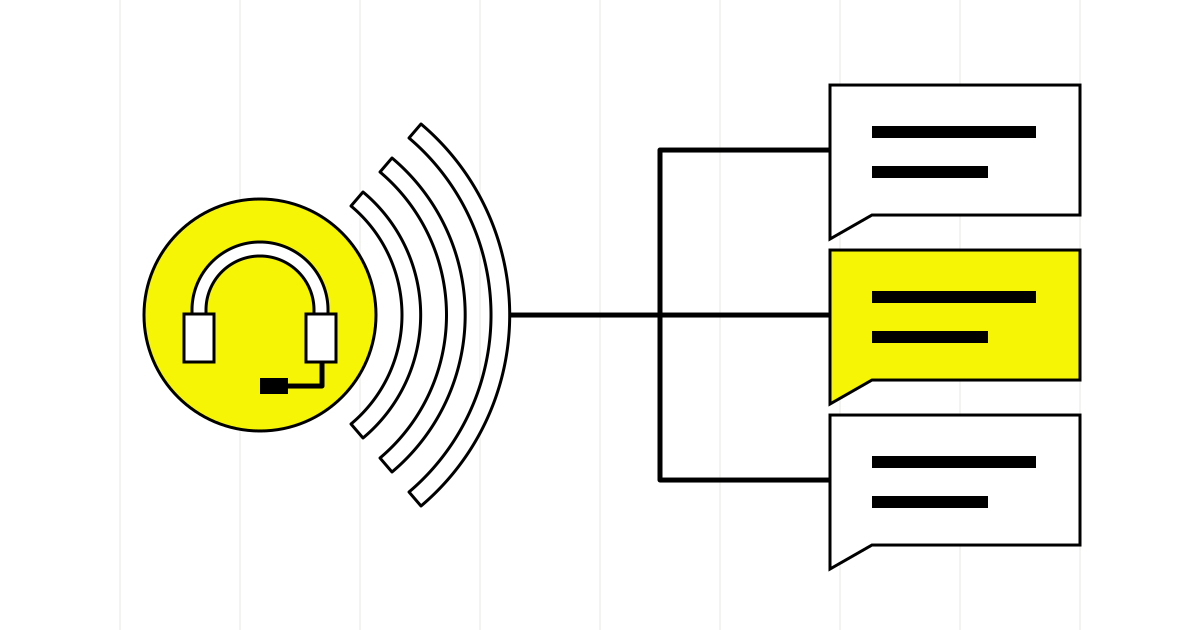
A yellow agent wearing a headset emits concentric white sound waves that split into three orderly conversation channels

Before and after the agent, in everyday work.

The Monday morning queue

Today. At peak time every line is busy with simple questions: the status of a request, opening hours, confirming an appointment. Callers with a real problem listen to the hold music along with everyone else.

With the agent. At peak time a voice agent takes the simple questions and closes them on its own. Callers with a real problem reach an operator sooner, with the reason for the call already written down.

The customer waits while the operator looks for the procedure

Today. The right answer is in a PDF for the account, in an email from the client or in the memory of the most experienced colleague. The operator puts the caller on hold and searches.

With the agent. The procedure appears next to the call while the customer is talking. The operator stays on the line and chooses whether to use it.

After every call, minutes of notes

Today. Once the call ends, the operator summarizes it by hand, picks the outcome from a long menu and fills in the CRM fields. Meanwhile the queue grows.

With the agent. Once the call ends, the agent proposes the note, outcome and completed fields. The operator checks, corrects and saves.

Nobody knows why customers call back

Today. Contact reasons are inferred from outcomes picked in a hurry and a few sample call reviews. The client gets numbers, not reasons.

With the agent. The reasons emerge from all the conversations, grouped by topic and without operator names. The client gets a report with concrete examples to start from.

The AI agents we design, one by one.

A call center's tier one as a plug switchboard: the voice agent connects to the calls and closes opening hours, request status and appointment confirmation on its own; the complaint goes to the operator, with the reason and verified data already written.

First-line voice agent

It answers the phone, understands the reason for the call, closes the simple requests the account allows and transfers the rest with a summary.

On every inbound call, before the queue.

Connects to: Contact center VoIP phone system · Account CRM · Account knowledge base

  1. It introduces itself as an automated assistant and says right away how to reach an operator.
  2. It asks for the reason for the call in the caller's own words, with no keypad menus.
  3. For the requests the account allows, it queries the CRM or the client's system and answers.
  4. For everything else, or if the person asks, it transfers to an operator with the reason, the data already verified and the tone of the call.
  5. It never collects payment card details by voice: it directs the caller to a dedicated channel or an operator.
Gemini Flash
On the phone, latency matters: understanding the reason and answering simple cases takes a fast model, which we test on the account's sample recordings.
Claude Haiku
We test it on the same recordings, especially on the transfer rules: the model that follows the list written with the client most consistently goes live.

Who approves. The client approves the list of requests the agent can close on its own; any new request is added only after their sign-off.

Operator assist agent

It follows the call transcript and shows the right procedure, answer or form from the account's knowledge base.

During the conversation, on the operator's screen.

Connects to: Operator desktop · Account knowledge base · Call transcript

  1. It follows the transcript in real time and recognizes the topic.
  2. It searches the account's knowledge base for the relevant procedures, only among the approved ones.
  3. It proposes a short answer to the operator with a reference to the internal source.
  4. It flags when the request goes off-script, for example a formal complaint or a cancellation request.
Claude Sonnet
It works with long instructions and different procedures for each account, and respects the ban on proposing answers that aren't in the approved documentation.

Who approves. The operator decides whether and how to use the suggestion: the agent never speaks with the customer at this stage.

Notes and dispositions agent

It writes the call note, proposes the outcome and fills in the structured fields in the CRM for the operator to review.

At the end of every call.

Connects to: Account CRM · Recordings and transcripts · Custom connector

  1. It reads the transcript of the call that just ended.
  2. It writes a short note with the request, the answer given and the commitments made.
  3. It proposes the outcome from those allowed by the account and fills in the CRM fields.
  4. It shows everything to the operator, who confirms or corrects before saving.
GPT
It returns structured fields and an outcome chosen from a closed list, which the connector checks before writing to the CRM.
Codex
It writes and maintains the connectors to each account's phone system and CRM; it doesn't work on conversations.

Who approves. No note is saved without confirmation from the operator who handled the call.

Contact reasons agent

It groups conversations by reason and prepares a report with growing topics, repeat calls and anonymized examples.

Once a week, for each account.

Connects to: Transcript archive · Account CRM · Document shared with the client

  1. It collects the week's notes and transcripts, removing customer names and operator identifiers.
  2. It groups the conversations by reason and flags new or growing topics.
  3. It identifies cases where the same customer had to call several times and works out why.
  4. It writes a report for the account manager with examples and proposed changes to scripts and procedures.
Claude Opus
It works once a week on many conversations at once: it needs the model best able to keep track of long texts and find common causes.

Who approves. The account manager reads and signs off the report before it reaches the client; the agent looks at the reasons for calls, never at individual operators.

How we work with you.

  1. Listening to one account

    We start from a single account: we listen to recorded calls, read scripts and procedures, and look at how operators use the CRM today.

  2. A list of what the agent closes

    With the client we write down the requests the automated tier one can close on its own and the phrases that trigger a transfer.

  3. Agreements with the people on the floor

    We involve team leaders and employee representatives before installing anything that listens to calls, so rules and limits are clear to everyone.

  4. Testing on recorded calls

    We test the agents on calls already handled, anonymized, compare the models, and only then open up part of the real traffic.

Which AI model we use, and for which task.

We don't tie you to a single provider: we work with Claude by Anthropic, GPT and Codex by OpenAI, and Gemini by Google, and we choose the version during testing, on your own cases.

Gemini Flash

  • First-line voice agent. On the phone, latency matters: understanding the reason and answering simple cases takes a fast model, which we test on the account's sample recordings.

Claude Haiku

  • First-line voice agent. We test it on the same recordings, especially on the transfer rules: the model that follows the list written with the client most consistently goes live.

Claude Sonnet

  • Operator assist agent. It works with long instructions and different procedures for each account, and respects the ban on proposing answers that aren't in the approved documentation.

GPT

  • Notes and dispositions agent. It returns structured fields and an outcome chosen from a closed list, which the connector checks before writing to the CRM.

Codex

  • Notes and dispositions agent. It writes and maintains the connectors to each account's phone system and CRM; it doesn't work on conversations.

Claude Opus

  • Contact reasons agent. It works once a week on many conversations at once: it needs the model best able to keep track of long texts and find common causes.

How we choose between models: the best AI model for agents.

Frequently asked questions, straight answers.

No, and that's not our goal. The agent closes repetitive requests and lightens after-call work; complaints, negotiations, sensitive cases and customers in difficulty stay with the operators.

It follows rules written with the client. It transfers when the request isn't on the list of those it can close, when it recognizes phrases like “I want to file a complaint” or when the person asks for an operator.

No. A chatbot works in writing, on a website or WhatsApp; a voice agent talks on the phone and has to handle interruptions, noise and pauses. Chatbot and voice agent often share the same account knowledge base.

It depends on how the phone system exposes calls, for example through SIP trunks or APIs. We check this at the start; if a direct connection isn't possible, the agent can start from notes and recordings.

Yes, and we do it naturally: the agent says so in the first sentence of every call, along with how to reach an operator.

One account, one week of recorded calls

Pick the account with the most repetitive calls and tell us about the phone system, CRM and client rules: we'll listen to the recordings with you and decide what the automated tier one can close.

Prefer the full form? Go to the contact page.

No spam or sales pitches. Response within 1 business day.

We use this data to contact you and, if we work together, to manage the project. We store it in Giallo's internal management system, on servers in the European Union, where only our team can see it; by email we only receive a notice, without your data. If you do not become a client, we delete it 3 months after our last contact. Details and your rights: privacy policy.

Do you prefer to write or call us?

AI agents for call centers and contact centers

Which account do you want to start with?

Pick the account with the most repetitive calls and tell us about the phone system, CRM and client rules: we'll listen to the recordings with you and decide what the automated tier one can close.