Skip to content
Giallo

AI agent for accounting: your finance team reviews instead of retyping.

What can an AI agent for accounting do in a company?

An AI agent for accounting prepares the repetitive work of the finance office: it matches supplier invoices to purchase orders and delivery notes, proposes how to reconcile incoming payments, writes payment reminders and checks expense reports. Giallo Studio builds it to measure with Claude, GPT and Gemini, connected to your accounting software; a person always confirms postings and payments.

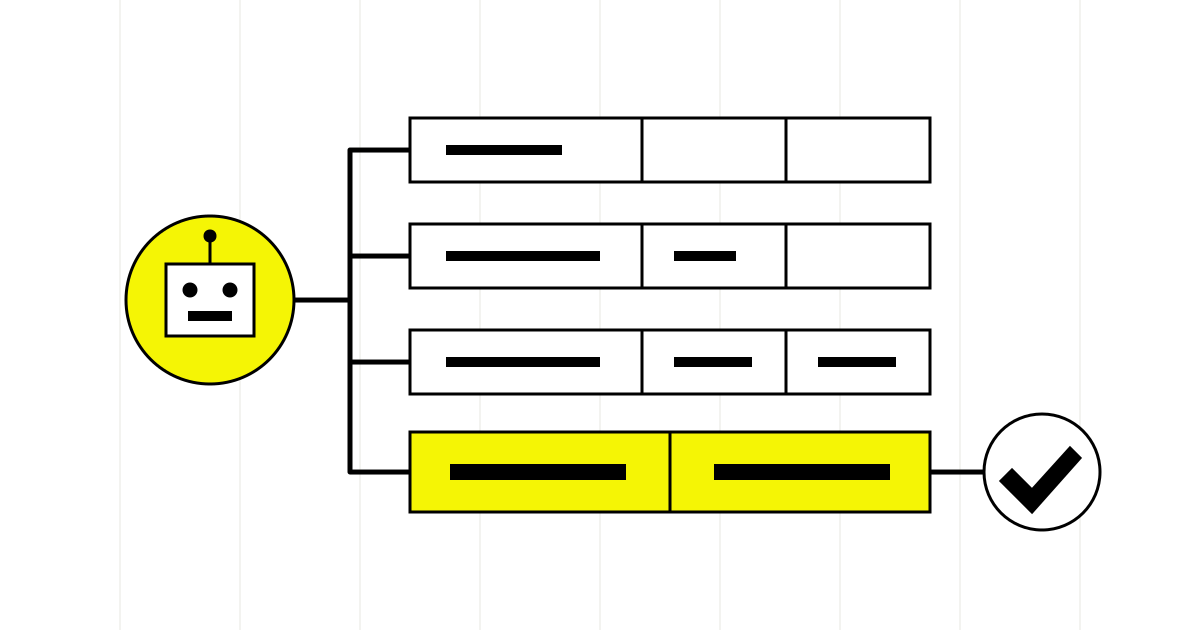
An agent gradually fills in three white rows of an accounting ledger. The yellow row at the bottom shows matching amounts and a check mark confirms the reconciliation

We write for finance managers, controllers and owners of SMEs that keep their books in-house, with accounting software and an outside tax advisor for filings. We are not talking about off-the-shelf accounting software: we show the AI agents for business accounting that we build around your tools, step by step, with the model chosen for each task and the checks that stay with your team.

Where time gets lost today.

These are the points we hear about most often. Each one is a possible first agent.

Supplier invoices don't match orders and delivery notes

Invoices arrive through the SdI exchange system and someone compares them by hand with the order and the delivery note: different quantities, prices changed without notice, partial deliveries. The discrepancies surface when the supplier chases payment.

The agent sets each incoming invoice beside its order and delivery note and flags only the lines that don't match, with the reason. Consistent invoices go to approval, the others to a queue with the explanation already written.

Incoming bank payments have no name

Transfers with incomplete payment references, lump-sum payments covering several invoices, deposits. Every morning someone opens online banking and tries to match transactions to open items; whatever doesn't match stays pending for a long time.

For each transaction the agent proposes the most likely open item or items and explains why, setting aside doubtful cases. The clerk confirms the safe matches and focuses on the uncertain ones.

Payment reminders go out late, or not at all

The receivables schedule shows who is late, but writing to each customer in the right tone takes time. Reminders go out in waves, when cash flow forces it, and the relationship with customers who pay on time suffers too.

The agent prepares graduated reminders, polite at the first delay and firmer afterward, taking open disputes and agreed arrangements into account. The finance team approves, and sending happens from the company mailbox.

Expense reports between faded receipts and internal rules

At the end of the month in come photos of receipts, hotel bills and tickets. Someone checks the internal rules one by one, asks for what's missing and retypes the amounts.

The agent reads receipts and photos, checks the limits and categories in the company policy and flags what doesn't add up before the report reaches the finance office.

The AI agents we design, one by one.

The payment reconciliation agent weighs a bank credit against the open items: it discards another customer's invoice with the same amount, recognizes the lump-sum payment of two invoices and writes the reason for the match. Confirmation is up to the clerk; the transfer with no payment reference stays with them.

Accounts payable agent

Compares each invoice with the order and delivery note and sends it for approval with any discrepancies already explained.

Every time a supplier invoice arrives through the SdI exchange system.

  1. Reads the e-invoice received and extracts supplier, lines, quantities, prices and due dates.
  2. Looks up the purchase order and related delivery notes in the accounting software.
  3. Compares line by line and flags differences in quantity, price or VAT rate with an explanation.
  4. Proposes the account and cost center based on previous postings for the same supplier.
  5. Sends consistent invoices to the budget owner and the others to a review queue.

Connects to: SdI exchange system and Revenue Agency tax drawer · Accounting software · Purchase orders and delivery notes · Internal approval workflow

GPT
It extracts data from invoices and delivery notes into a rigid schema, field by field, which the connector checks against the order before proposing any posting.
Codex
We use it to write the connector to the accounting software and the matching rules between invoice, order and delivery note; it never sees production accounting data.

Who approves. The budget owner approves the invoice, the finance team confirms the account and the posting. The agent posts nothing and schedules nothing for payment.

Payment reconciliation agent

Proposes matches between bank transactions and open items, with the reason for each proposal.

Every morning, when the previous day's bank transactions are available.

  1. Retrieves transactions from online banking or the bank feed the company already has in place.
  2. For each credit, looks among the open items for the one that matches on amount, customer and payment reference.
  3. Recognizes lump-sum payments and deposits and proposes how to split them across several invoices.
  4. Writes next to each proposal the reason for the match and how confident it is.
  5. Hands the clerk the proposals to confirm and the transactions with no clear match.

Connects to: Online banking or CBI bank feeds · Accounting software · Accounts receivable schedule

Claude Sonnet
It reasons over free-text, often truncated payment references and explains plainly why it proposes a match, so the clerk can decide quickly.
Gemini Flash
It makes the first pass on simple transactions, where amount and customer match, at a low cost even on days with many payments.

Who approves. The clerk confirms every match before closing the item. Doubtful transactions are never matched automatically.

Payment reminder agent

Writes reminders proportionate to the delay and logs customers' replies.

The day after each due date and, at the frequency the finance team chooses, on everything overdue.

  1. Reads the accounts receivable schedule and identifies overdue, unpaid invoices.
  2. Checks notes, open disputes and payment arrangements on record for that customer.
  3. Writes the reminder at the right level, from a polite nudge to a formal demand, in the customer's language.
  4. Attaches the list of open invoices and the payment details taken from the accounting software.
  5. Logs replies, such as promises to pay or disputes, and flags them to the finance team.

Connects to: Accounts receivable schedule · Accounting software · Company email · CRM, if any

Claude Sonnet
A reminder is a delicate text: clear about amounts, respectful of the relationship and never threatening action the company hasn't decided on.
Claude Haiku
It reads customers' replies and sorts them into promise to pay, dispute and document request, leaving decisions to the finance team.

Who approves. The finance team approves the templates for each level and every formal reminder. Customers with disputes or special arrangements always go through a person.

Expense report agent

Turns receipts into expense reports checked against the company policy.

When an employee uploads a receipt, and at the monthly close of expense reports.

  1. Reads photos of receipts, invoices and travel bills and extracts date, merchant, amount and category.
  2. Checks the company policy rules, such as meal limits or permitted travel classes.
  3. Asks the employee for what's missing, for example the purpose of the trip or the invoice made out to the company.
  4. Prepares the summarized expense report for the manager and the finance team.

Connects to: Receipt app or inbox · Company travel policy · Accounting or payroll software

Gemini
It reads photos of faded receipts and receipts in different languages, and it is the most convenient choice when expense reports already go through Drive and Sheets.
GPT
It turns each receipt into a structured line the accounting software accepts, with checks on amounts and dates before entry.

Who approves. The employee's manager approves the report and the finance team authorizes the reimbursement. The agent flags exceptions; it doesn't reject them on its own.

Which AI model we use, and for which task.

We don't tie you to a single provider: we work with Claude by Anthropic, GPT and Codex by OpenAI, and Gemini by Google, and we choose the version during testing, on your own cases.

GPT

  • Accounts payable agent. It extracts data from invoices and delivery notes into a rigid schema, field by field, which the connector checks against the order before proposing any posting.
  • Expense report agent. It turns each receipt into a structured line the accounting software accepts, with checks on amounts and dates before entry.

Codex

  • Accounts payable agent. We use it to write the connector to the accounting software and the matching rules between invoice, order and delivery note; it never sees production accounting data.

Claude Sonnet

  • Payment reconciliation agent. It reasons over free-text, often truncated payment references and explains plainly why it proposes a match, so the clerk can decide quickly.
  • Payment reminder agent. A reminder is a delicate text: clear about amounts, respectful of the relationship and never threatening action the company hasn't decided on.

Gemini Flash

  • Payment reconciliation agent. It makes the first pass on simple transactions, where amount and customer match, at a low cost even on days with many payments.

Claude Haiku

  • Payment reminder agent. It reads customers' replies and sorts them into promise to pay, dispute and document request, leaving decisions to the finance team.

Gemini

  • Expense report agent. It reads photos of faded receipts and receipts in different languages, and it is the most convenient choice when expense reports already go through Drive and Sheets.

How we choose between models: the best AI model for agents.

How we work with you.

  1. A month-end close seen from the inside

    We sit with your team during a month-end close to see where pending invoices, unmatched payments and requests to colleagues pile up.

  2. Chart of accounts and house rules

    We gather the chart of accounts, cost centers, expense policy and approval levels: they become the instructions the agent must follow.

  3. Read first, write later

    We start by reading from the accounting software through APIs or exports, if the software offers them; writing comes later, only for confirmed proposals and with dedicated user accounts.

  4. A trial on a month already closed

    We run the agents on a closed period and compare their proposals with the actual postings before using them on the current month.

  5. The tax advisor in the loop

    We share rules and results with the company's accountant, so accounting choices stay consistent with what they sign off on.

Less retyping for your finance office

Tell us which accounting software you use, how invoices, payments and expense reports come in and where they get stuck: we'll propose the first agent and a closed month to test it on.

Prefer the full form? Go to the contact page.

No spam or sales pitches. Response within 1 business day.

We use this data to contact you and, if we work together, to manage the project. We store it in Giallo's internal management system, on servers in the European Union, where only our team can see it; by email we only receive a notice, without your data. If you do not become a client, we delete it 3 months after our last contact. Details and your rights: privacy policy.

Do you prefer to write or call us?

Frequently asked questions, straight answers.

There is no single best model: it depends on the task. A receipt photographed at an angle and a hundred supplier invoices in PDF call for a model that is strong on documents, and there we often use Gemini or GPT; an ambiguous bank payment reference or a reminder that needs a tactful touch is better suited to Claude Sonnet. That is why an accounting team almost always ends up with several models, each on its own piece.

No. It works around the software you have, reading and proposing, and writes into it only what a person has confirmed. The connection runs through APIs or exports, if the software offers them.

No, not in our projects. The agent can prepare the list of approved invoices coming due, but initiating payments stays with whoever has signing authority on the account.

To understand a concept, yes; for company data, better not. A custom agent has limited access to the accounting software and keeps a trail of every proposal, which a generic free tool usually does not.

They receive books with fewer pending items and a trail of every choice. That's why we involve them in defining the rules, and decisions on filings and tax returns remain theirs.

Yes, if there is a lot of repetitive work. What counts is not how many people work in finance, but how many days each month go into matching invoices, payments or receipts: that is where the first agent pays off.

AI agents for accounting and administration

Which finance queue do we start with?

Tell us which accounting software you use, how invoices, payments and expense reports come in and where they get stuck: we'll propose the first agent and a closed month to test it on.