
Deepfakes and Voice Cloning: How an SME Spots the Scam
Cloned voices and AI-made fake videos: the signs to spot them, the mistakes SMEs make and the verification procedure to adopt.
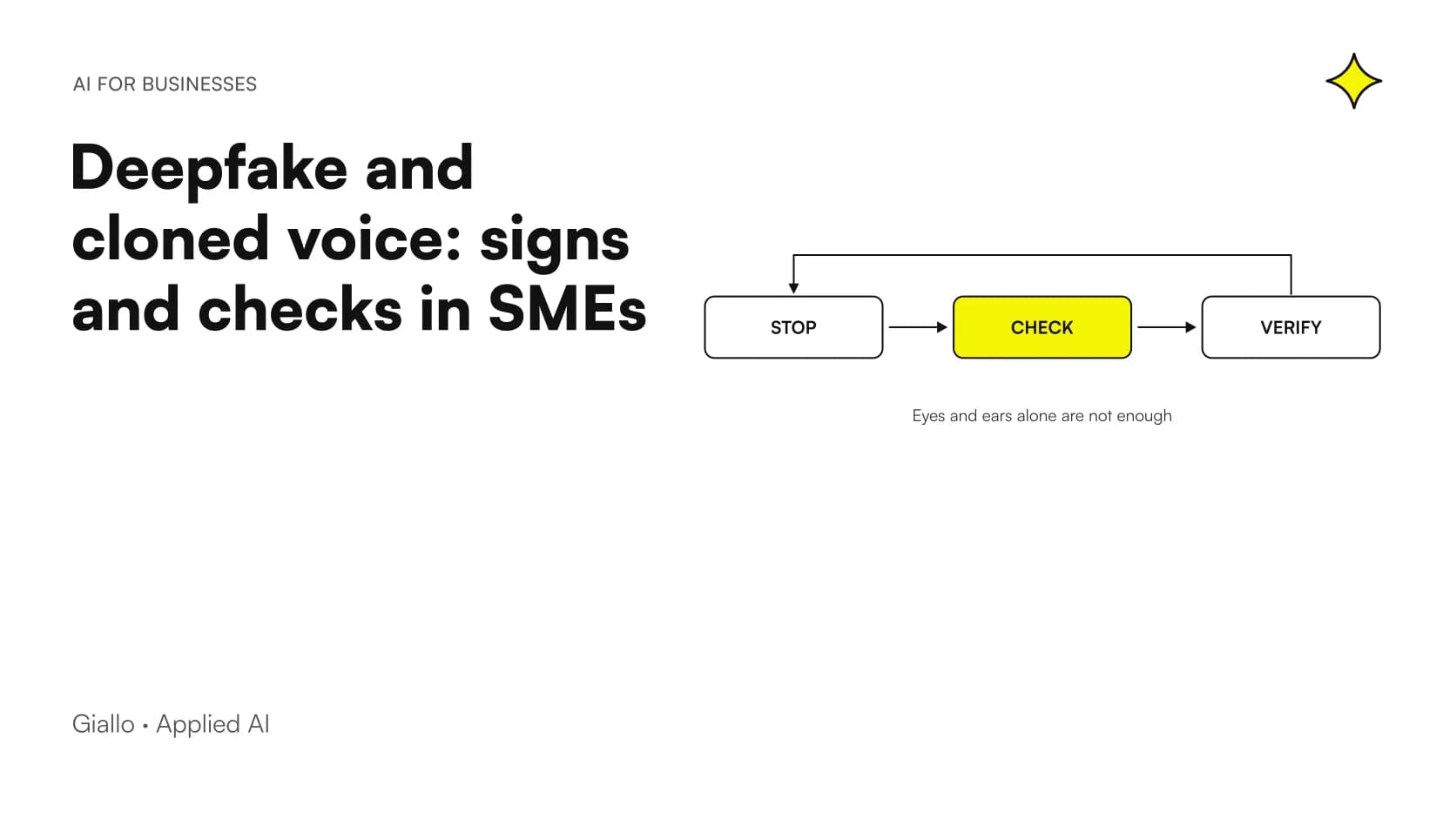
An SME spots a scam involving a fake voice or video mainly in two ways: by noticing small technical flaws in the content and, even before that, by noticing that the request has the classic shape of a scam, meaning it is urgent, unusual and tied to money or data. Eyes and ears alone are not enough, which is why the most solid defence is a check made through a different channel from the one the request came from.
A deepfake, according to the Bank of Italy, is an image, audio or video manipulated or generated with AI that reproduces existing people, objects, places, entities or events so closely that it appears authentic. Voice cloning is its most insidious variant for a company, because all it takes is a few seconds of audio of the original voice, perhaps taken from a video shared on social media, as pointed out by the same Bank of Italy.
In this guide, built solely on material from the Bank of Italy, the Polizia Postale and ACN, we look at the signs to watch for, the five mistakes that expose a small business the most, and a simple procedure to adopt. You won't find statistics: the material we consulted reports no figures on scams using fake voices or videos against SMEs, and we prefer not to invent any.
In summary
- A deepfake is audio, an image or a video generated or manipulated with AI that looks authentic; a few seconds of recording are enough to clone a voice.
- In some cases we can trust neither our eyes nor our ears, so we need a check that is independent of the message received.
- Hands, shadows, out-of-sync lips, a monotone voice and the absence of breaths are useful signs, but they are not definitive proof.
- When faced with a request for money, credentials or data, you don't act right away: you stop and check with a reliable source.
- If the damage has already happened, report it to your bank immediately; a refund depends on the specific case and on the diligence shown.
How can an SME spot a scam involving a fake voice or video?
The starting point is to accept an uncomfortable fact. The Bank of Italy observes that on social media and elsewhere online we may come across photos, audio and videos of real people that look authentic but are not. So, in some cases, we cannot trust our own eyes or ears, whether it is a voice message or a video.
For a small business this means shifting attention from “it sounds like the owner” to “what is this asking me to do, and why now”. The concrete risk, as we read it, is that someone imitates the owner or a superior with a voice or a video and urgently asks for payments or data. The most reliable signal is therefore not the quality of the audio, but the pattern of the request.
The Polizia Postale reminds us that cybercriminals use artificial intelligence techniques to reproduce faces, voices and movements with extreme realism, attributing to public figures statements they never made, as you can read on its page about fake investment offers. The same tool that imitates a well-known person can imitate whoever signs off the bank transfers at your company.
What technical signs can you notice in a deepfake?
The Polizia Postale, in its guide Come riconoscere un deepfake, explains that when a deepfake is made, more care goes into the face, while body posture, lighting and shadows are neglected. The aspects hardest to create artificially are eye movement, blinking, the definition of the teeth and perfect synchronisation between voice and lip movements.
The Bank of Italy adds anomalies in hands and shadows and, for audio, unusual voice traits such as monotony or the absence of breaths and small hesitations. The table gathers the signs by type of content.
| Content | What to look for | Source |
|---|---|---|
| Video | Odd hands and shadows, neglected posture and lighting, lips out of sync with the voice | Bank of Italy |
| Video | Eye movement, blinking, definition of the teeth | Polizia Postale |
| Audio | Monotone voice, no breaths or small hesitations | Bank of Italy |
| Online content | Authority of the source and whether the news is also reported by other channels | Polizia Postale |
Warning: these signs help, but they are not a guarantee. Audio with no obvious flaws is not authentic for that reason: checking through a second channel remains the decisive step.
What real-world examples can an SME run into?
The examples below are scenarios built to illustrate the risks, not episodes that actually happened to clients or other companies. They are based on the patterns described in the official material.
Example one: the craft business and the owner's voice message. A small window-fitting company receives a WhatsApp voice message that seems to come from the owner, who is travelling, asking the office administrator for an urgent transfer to a new supplier. The voice is plausible because the Polizia Postale reports audio that replicates the voice of family members and, by extension, of well-known people, as it writes on its page about artificial intelligence tools used for fraud. The administrator who stops everything and calls the owner back on the number she already knows avoids the damage.
Example two: the professional firm and the clone website. A consulting firm receives a well-written email, free of grammar mistakes and tailored to the recipient's profile, inviting them to log in to the bank's portal. The same Polizia Postale points to phishing messages enhanced with exactly these characteristics. Whoever types the official address into the browser themselves, instead of clicking the link, does not end up on the counterfeit site.
Example three: the fake expert's video. The owner of a retail business sees a video in which a well-known person promises a safe investment. The Polizia Postale's guidance says not to follow links or advertising banners that lead to unknown platforms: the statement may never actually have been made.
What mistakes should you avoid?
Five recurring mistakes emerge from the official material. Each has a concrete countermeasure.
Acting immediately because the request is urgent
This happens because urgency is the heart of the scam: it pushes you to skip checks. The Bank of Italy advises not to do right away what is being asked, for example giving out account credentials or personal data, sending money or downloading an app. How to avoid it: set the rule that no payment outside the standard procedure goes out without a verification pause, whatever the voice on the phone.
Trusting only the look of a page or a video
A clone website can be identical to the original. The Polizia Postale urges people not to trust the look of the page alone and to check the address carefully: even a small variation in the name, a different letter or an added character can hide a counterfeit site. How to avoid it: read the URL letter by letter before entering any data.
Following the link you received
Clone websites are reached through emails, text messages, social media messages or messaging apps, but they can also appear among online search results, according to the Polizia Postale. If in doubt, don't use the link, don't enter any data, and reach the service by typing the official address directly into the browser or by using the official app.
Sharing the suspected deepfake with colleagues and contacts
It seems a prudent move, but the Bank of Italy recommends not sharing suspected deepfakes, so as not to expose others to the threat. How to avoid it: report the case to an internal contact person and to the authorities, and don't forward the file in work groups.
Posting material on social media that is useful to scammers
The authorities recommend being careful about what you post on social media, because it can be used as raw material by scammers, as pointed out by the Bank of Italy. Since a few seconds of audio are enough, a video in which the owner speaks at length can become the basis for cloning their voice. How to avoid it: decide who at the company posts what, and assess which videos with the voice and face of senior leaders are truly needed.
How do you put a verification procedure in place at your company?
You don't need a big project. You need a short, written rule that everyone knows. Before you start, check that these prerequisites are in place.
- A list of trusted contacts for senior leaders and main suppliers, kept outside the channels through which requests arrive.
- A reference person to whom suspicions are passed on, instead of sharing them with everyone.
- An alternative channel, agreed in advance, to confirm unusual requests.
Then the procedure itself, to be applied to every out-of-the-ordinary request.
- Stop: don't immediately do what you are asked, whether it is a payment, handing over credentials or downloading an app, as the Bank of Italy.
- Check the content: look for the technical signs in voice and video and assess the authority of the source, following the guide from the Polizia Postale.
- Verify through a reliable channel: call the person back on a number you already know and confirm the request, without replying on the channel it came from.
- Don't use the link you received: reach the service by typing the official address or opening the official app, as the Polizia Postale.
- Report what happened, without forwarding the suspected deepfake to others.
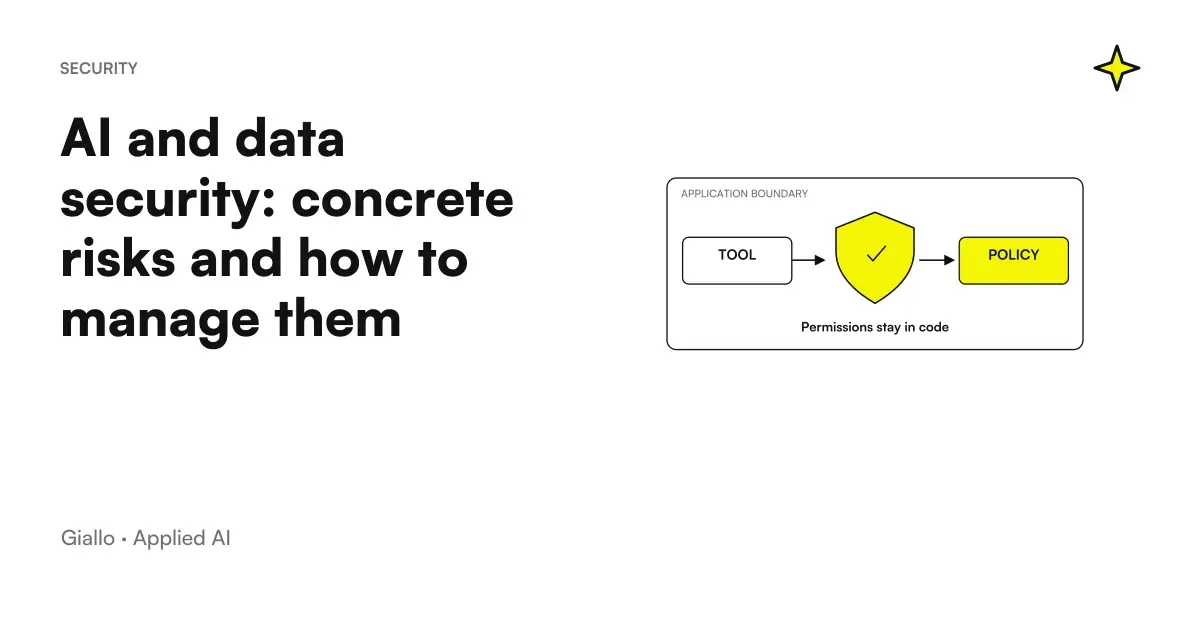
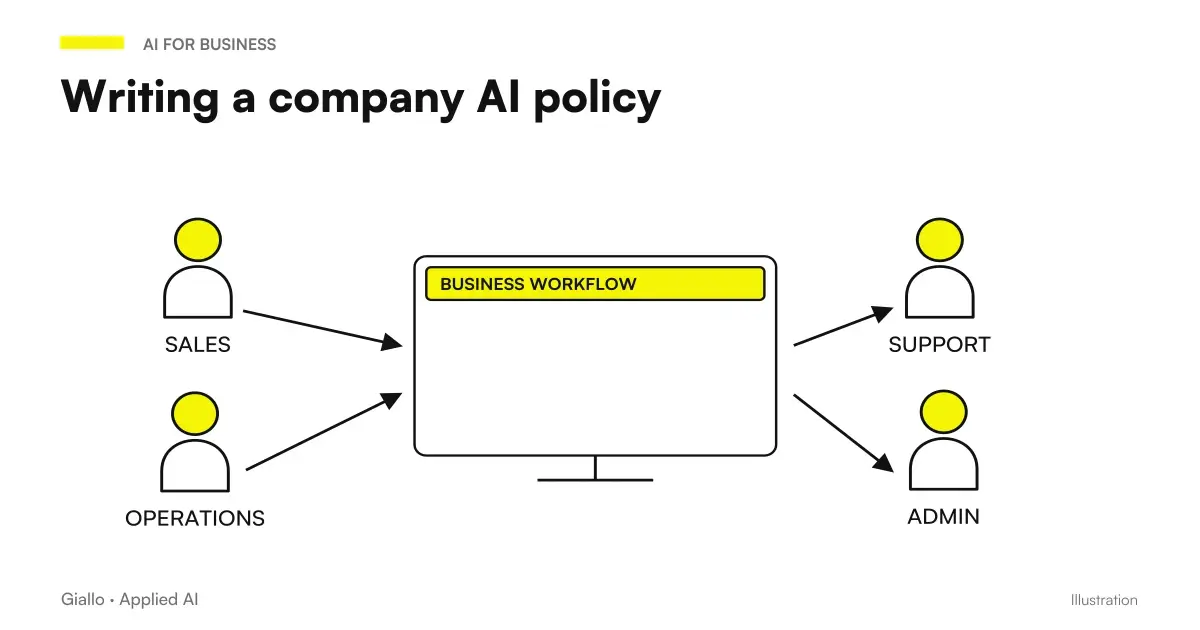
The procedure works better when it is part of broader internal rules. If you don't yet have a corporate policy on the use of AI, now is the time to write one. For preparing your people, the path to training the team on AIcan help. For the broader picture of risks, there is the guide on AI and Data Security.
Is there a tool to check whether content was generated with AI?
Signs spotted by eye and ear have limits, and the material we consulted does not point to a tool that gives absolute certainty. There are, however, detection tools for generated content: we cover them in the article on SynthID Detector and checking images, audio and video. The same logic applies as for checking AI answers before using them: a tool supports judgement, it does not replace it.
If your company itself uses voice assistants for customers or the switchboard, it is useful to understand where the boundaries lie between legitimate synthetic voice and imitation. This is covered in Voice AI for business and the mistakes to avoid with voice AI.
What should you do if the scam has already succeeded?
The Bank of Italy explains that all is not yet lost: you can report what happened to your bank to dispute the transactions and ask for a refund. Reporting to law enforcement is not essential to obtain a refund, but if you do, you can help fight scams.
There is, however, a condition: the right to a refund exists only if you acted diligently, meaning you adopted the behaviours that protect against scams. The rules depend on the bank and on the individual case, and the material does not state precise timeframes, amounts or procedures: for this reason it is best to contact the bank immediately and ask how to proceed. This is not legal advice.
One last note: the same source points out that there is a specific offence for spreading harmful deepfakes. Spreading, without consent, images, videos or voices manipulated with AI that can appear authentic and cause unjust harm to the person depicted can carry a prison sentence of one to five years, according to the Bank of Italy.
Will the problem grow?
The ACN reports that, among Trend Micro's forecasts, deepfakes are set to become the biggest threat linked to artificial intelligence and will be used to make already popular social-engineering scams ever more credible. These are forecasts, that is, projections and not measured data, and should be read that way. The practical message, though, is clear: the scams we know will become more credible, not stranger.
What can an SME do now?
Straight away: write down the rule of pausing and verifying through a second channel, check which content with the voice and face of senior leaders is public, and make colleagues aware of the signs described above. These are low-cost measures that require no technology. For a comparison of how to set up rules, training and tools in an orderly way, you can start from our AI consulting.
Giallo Studio guides: methodology and sources
Want to apply this to your business?In 30 minutes, free of charge: the first process to automate and its estimated return, in writing.
Book the free auditHow we apply it in the company
Related resources

FAQ
How much audio is needed to clone a voice?
According to the Bank of Italy, a few seconds of audio of the original voice are enough, perhaps taken from a video shared on social media. That is why it is worth assessing which content featuring the voice of senior leaders stays public.
How do I recognise a cloned voice?
Some unusual traits are monotony and the absence of breaths and small hesitations. They are not definitive proof: if the request involves money or data, verify through another channel before acting.
What should I do if I receive a suspicious video?
Don't immediately do what you are asked, and check the content through reliable sources. Don't share the suspected deepfake, so as not to expose others to the threat, and report what happened.
Can I get a refund if I pay by mistake?
You can report what happened to your bank to dispute the transactions and ask for a refund. The right exists only if you acted diligently, and the rules depend on the bank and on the specific case.
Do I have to report it to law enforcement?
It is not essential in order to obtain a refund. If you do, however, you can help fight scams.
How do I avoid clone websites?
Check the website address carefully, because a different letter or an added character can hide a counterfeit site. If in doubt, don't use the link you received: type the official address directly into the browser or use the official app.